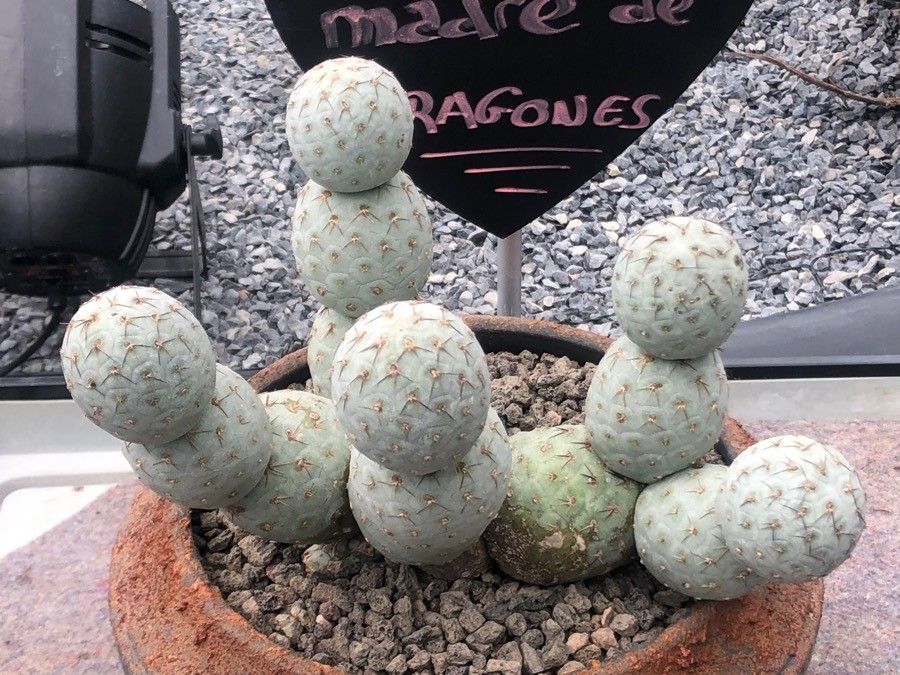
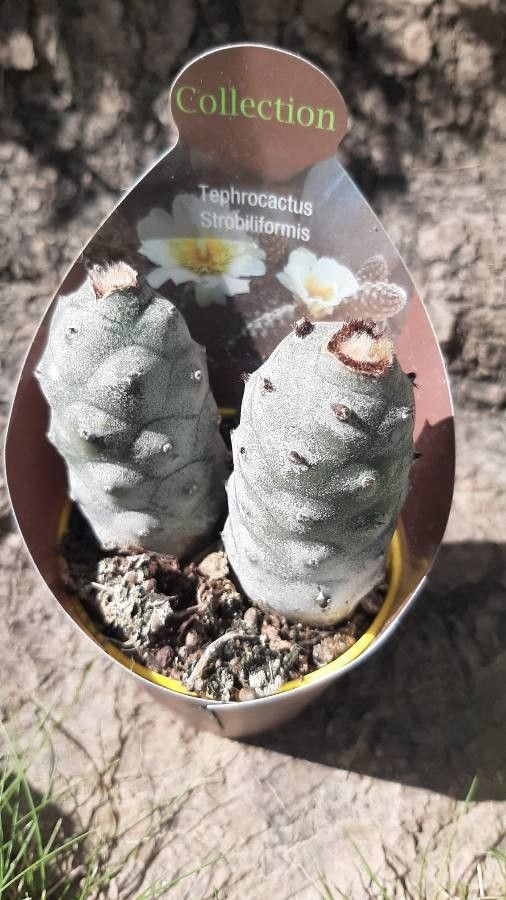
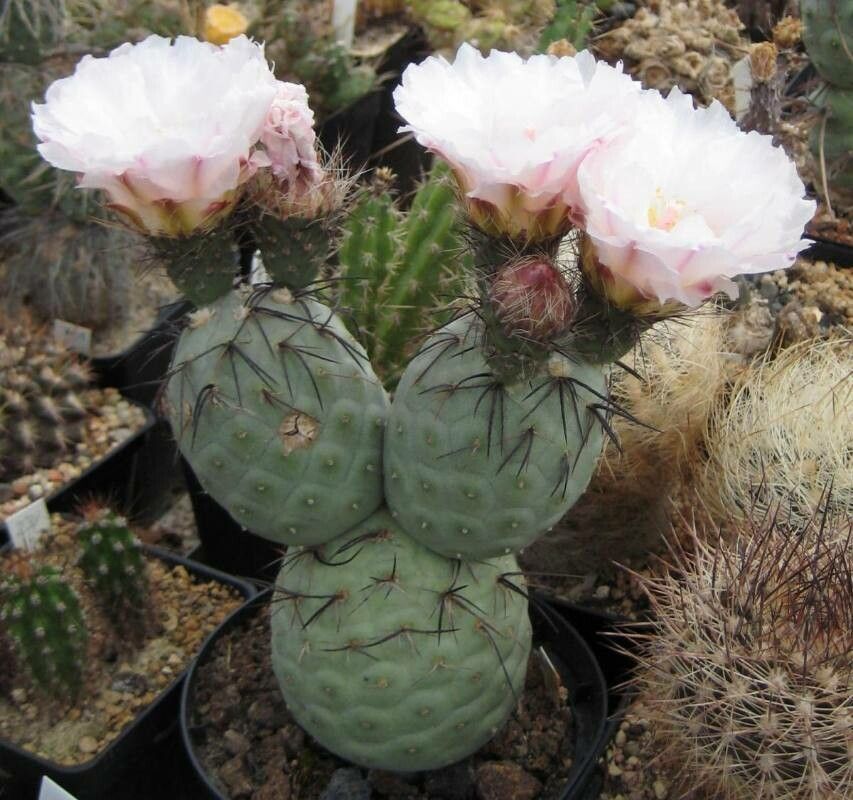
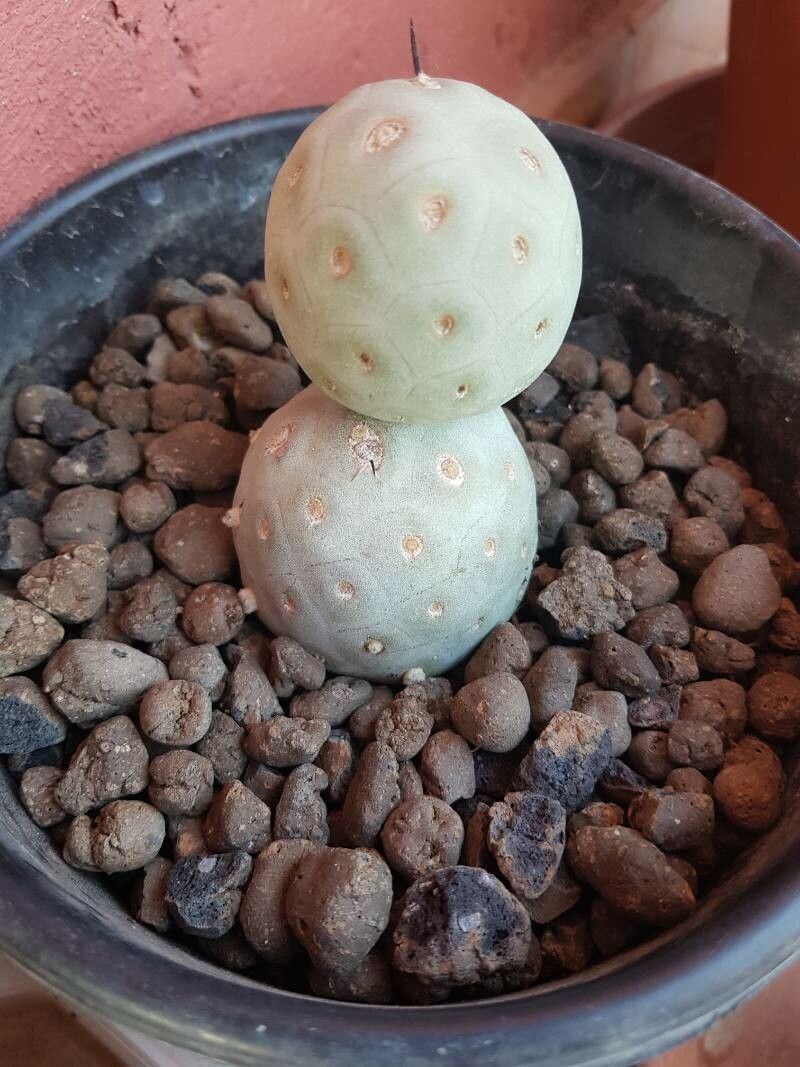
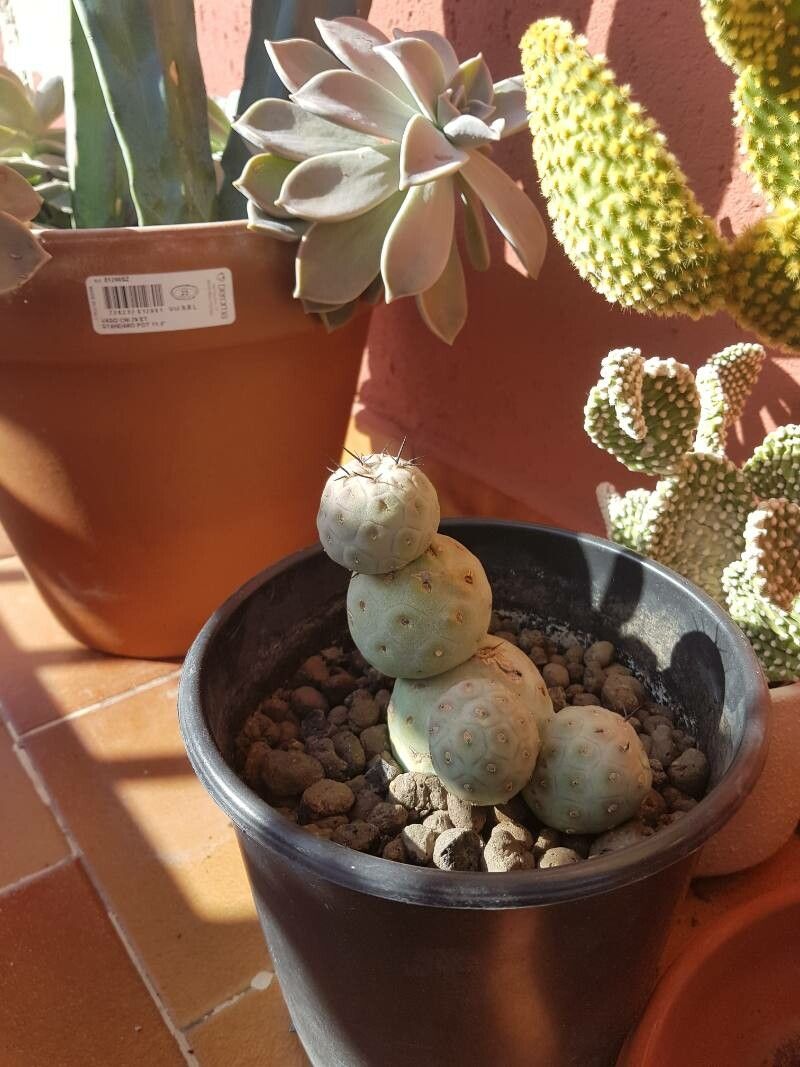
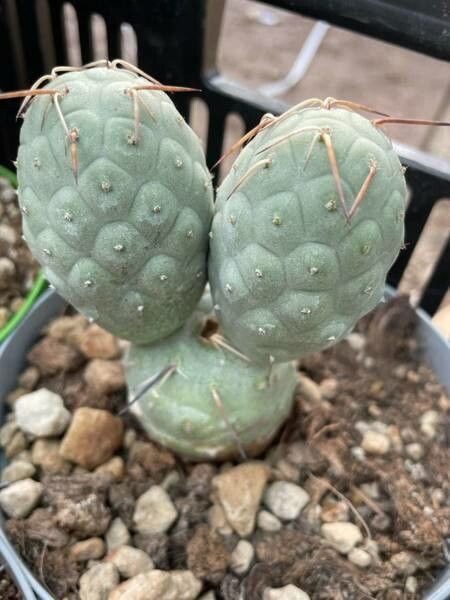
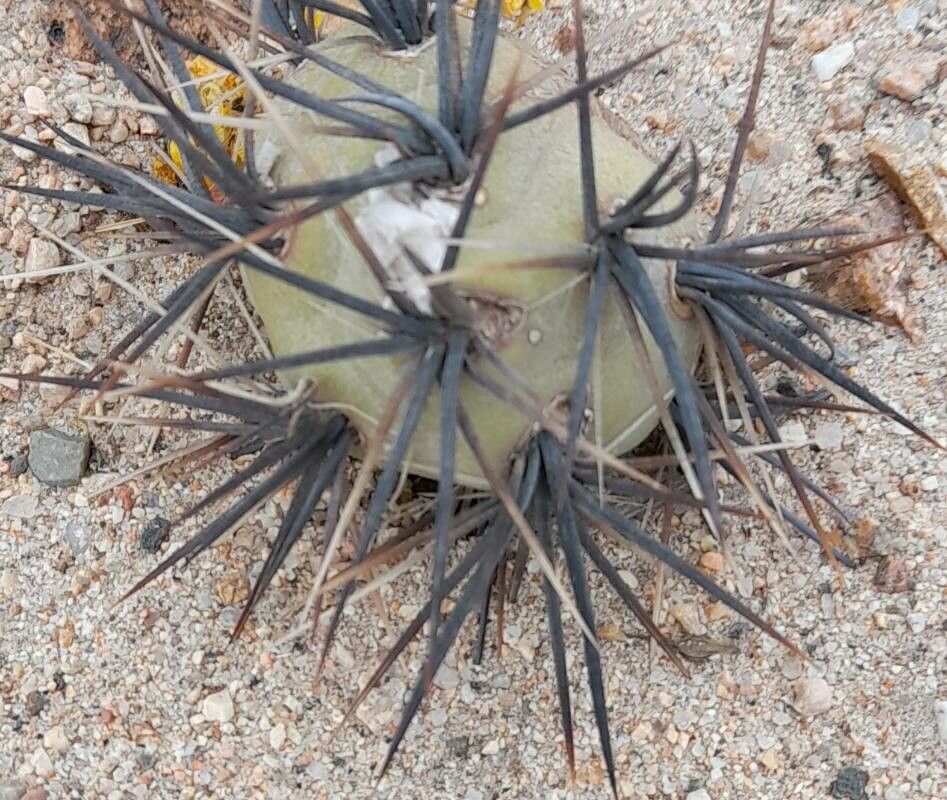
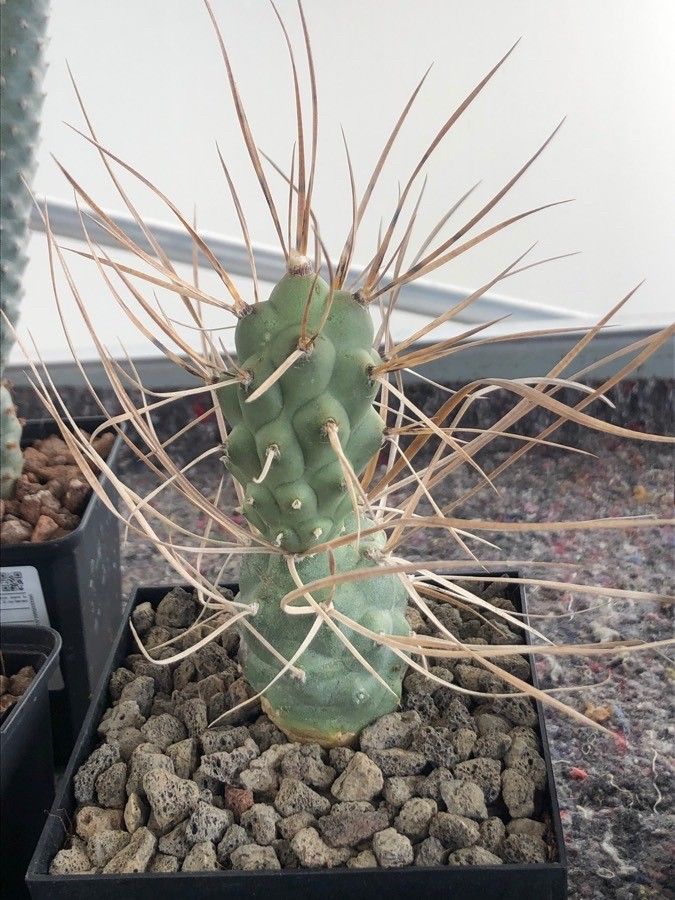
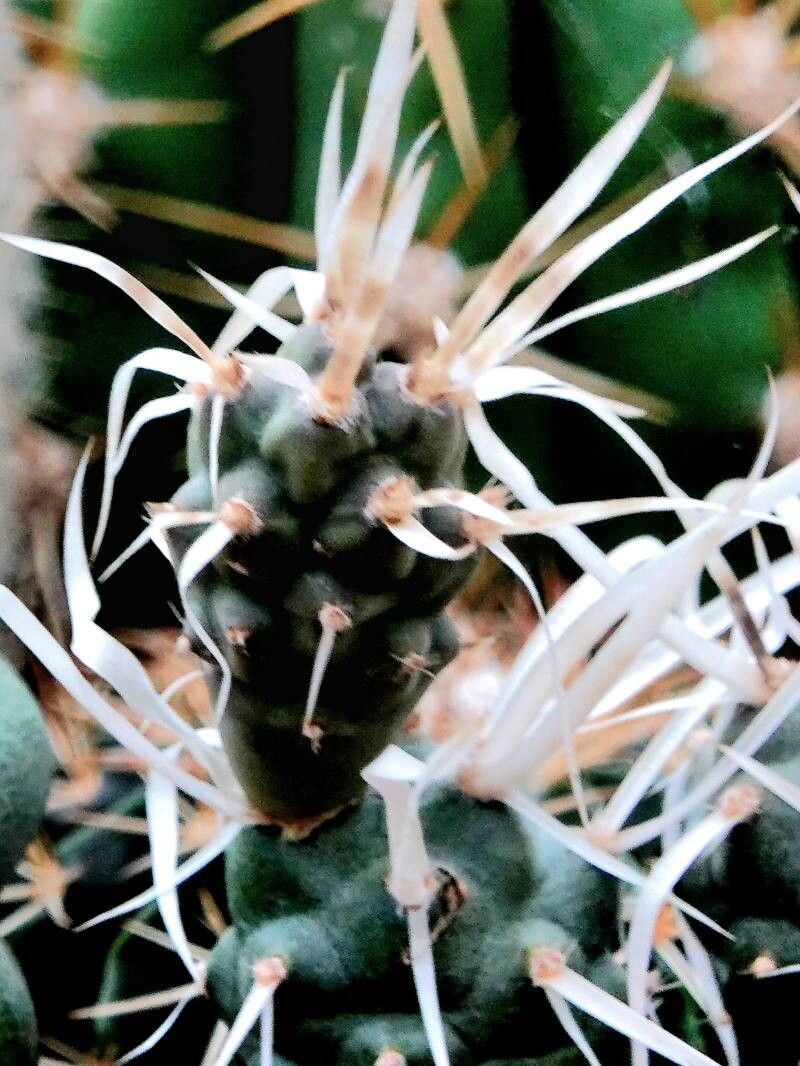
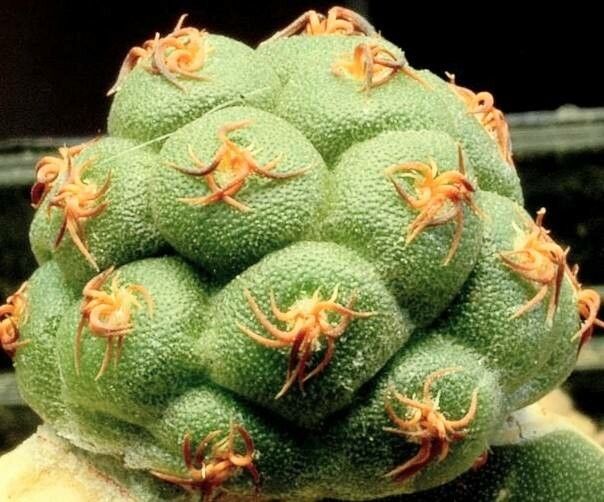
Tephrocactus geometricus is a cactus species native to Argentina. This small, low-growing cactus forms clusters of cylindrical stems that can reach up to 10 cm in height and 5 cm in diameter. The stems are adorned with small, white spines and feature distinctive geometric patterns of raised ridges and valleys.
Well-suited for container growing or rock gardens, Tephrocactus geometricus prefers well-draining soil and full sun exposure, though it can tolerate partial shade. It requires minimal watering during the growing season and should be kept dry during the winter months.
Beyond its unique appearance, Tephrocactus geometricus possesses medicinal properties due to its alkaloid content, which has been used for analgesic effects. However, it is important to note that the plant can be toxic if ingested and should not be consumed without proper preparation by an experienced practitioner.
Overall, Tephrocactus geometricus is a striking addition to any cactus collection or xeriscape garden, appreciated for its distinctive look and low maintenance requirements.
Opuntia geometricus shows strong resistance to diseases and tolerates normal care without becoming ill easily. It can, however, be vulnerable to mealybugs; these pests may inflict some harm but are usually not a major danger. Regarding care, Opuntia geometricus is drought-tolerant and does not require frequent watering. It can endure extended intervals without water and needs little fertilizer. Still, it is very prone to root rot if exposed to poor lighting and excess watering. In general, Opuntia geometricus is a good choice for those who prefer low-maintenance plants, but it remains important to know and satisfy its basic needs. It is especially appropriate for people who are away for long periods and might forget to water regularly.
How to keep Tephrocactus Geometricus.
Light
Originating in arid regions, Opuntia geometricus does best in full sun, as its native habitat offers intense sunlight and very little shade. It can also tolerate partial sun, providing some flexibility in its growth.
Water
Opuntia geometricus, native to arid environments, thrives with minimal water. It requires watering only every 2 to 3 weeks. As an outdoor succulent, it grows best in well-draining soil, mimicking its natural desert habitat, and it has developed unique strategies for conserving water.
Humidity
This plant prefers dry conditions, so don't mist it. However, watering it less often can also thrive in higher humidity.
Temperature
Although Opuntia geometricus can tolerate some heat, it mainly does best in cooler periods and goes dormant during summer. In hot summer conditions, provide shade to avoid scorching from strong sunlight. Watering should be reduced or stopped during the hottest season to prevent root rot. It shows vigorous growth in winter and spring, and as long as temperatures do not fall too low, it will continue to grow steadily.
Fertilizer
For Opuntia geometricus, light applications of fertilizer once or twice a year during the growing season are sufficient. Do not fertilize in winter or summer, when it is dormant. Reduce fertilizer for repotted plants and wait a couple of months after repotting before applying fertilizer. Fertilizing supports healthy growth and encourages blooms.
Pruning
Opuntia geometricus needs very little pruning. To promote healthy growth, it's best to remove any withered flowers and branches so the plant can allocate nutrients more effectively.
Pot & Repot
Repot Opuntia geometricus in spring or summer, picking a pot slightly larger than the current one with good drainage. Use a well-draining, sandy or gritty cactus mix. Handle it carefully to avoid the spines. Let the cactus dry out before repotting to help prevent root rot. After repotting, wait for a week before watering so the roots can heal.
Toxicity
The Tephrocactus Geometricus are generally considered safe for pets, but eating or consuming any part of the plant is not recommended. If eaten or swallowed by children, contact your doctor or see a medical professional for further assistance.
Further reading →
The toxicity and danger assessments provided are for reference only. We do not assure their accuracy, so it's crucial not to depend on them. Seek professional advice when necessary for accurate guidance.
Botanical profile.
- Plant Type
- Shrub, Succulent
- Life Cycle
- Perennial
- Genus
- Tephrocactus
- Family
- Cactaceae
- Hardiness Zone
- 9-11
- Mature Height
- 15 cm
- Mature Spread
- 15 cm to 20 cm
- Leaf Color
- Light Gray, Pale Green
- Leaf Type
- Evergreen
- Flower Color
- White, Pink
- Flower Size
- 3.05 cm to 4.06 cm
- Bloom Time
- Summer
- Planting Time
- Spring, Summer, Autumn
- Harvest Time
- Late summer, Early fall, Mid fall
- Native Area
- Argentina
Other names.