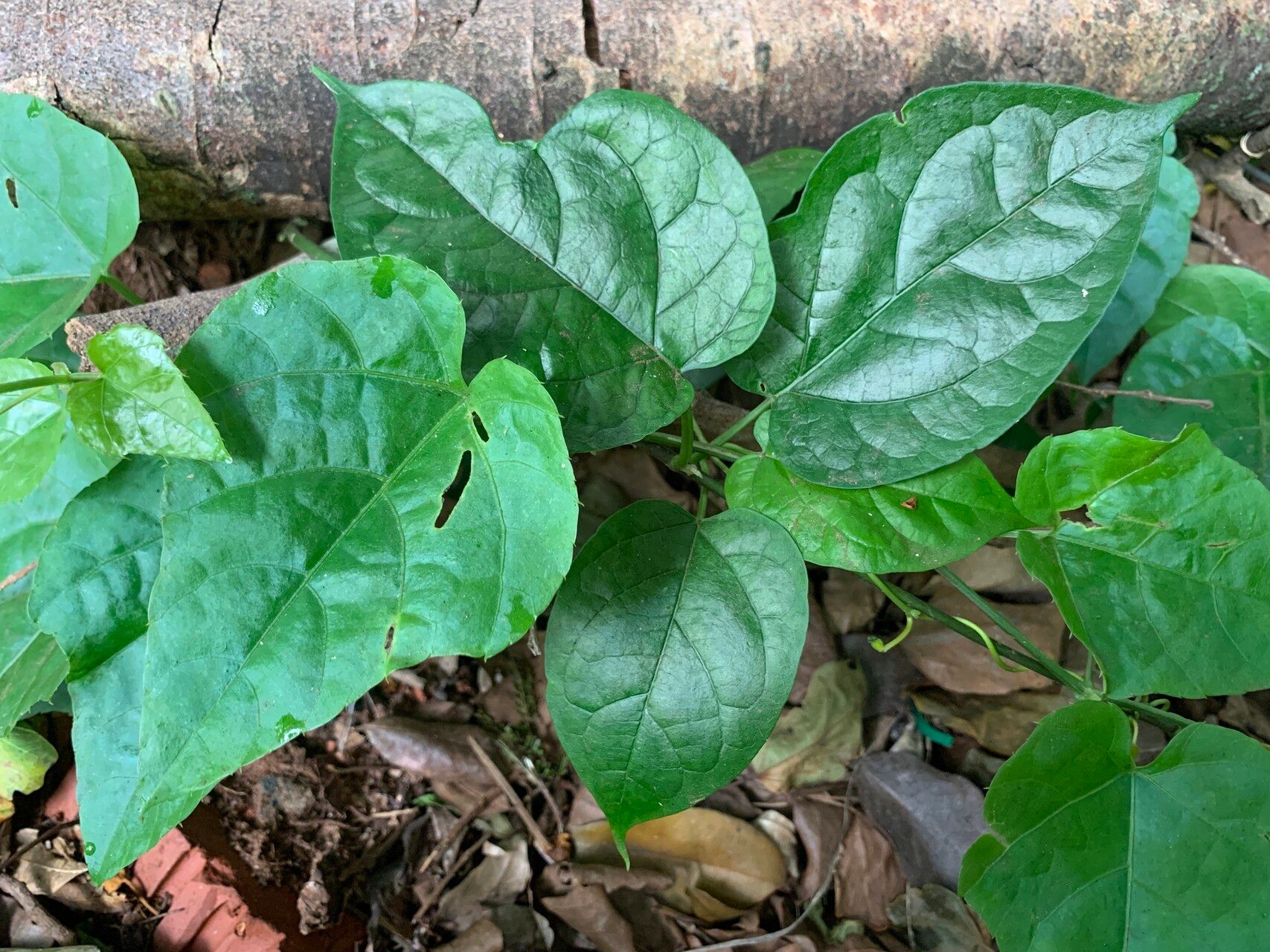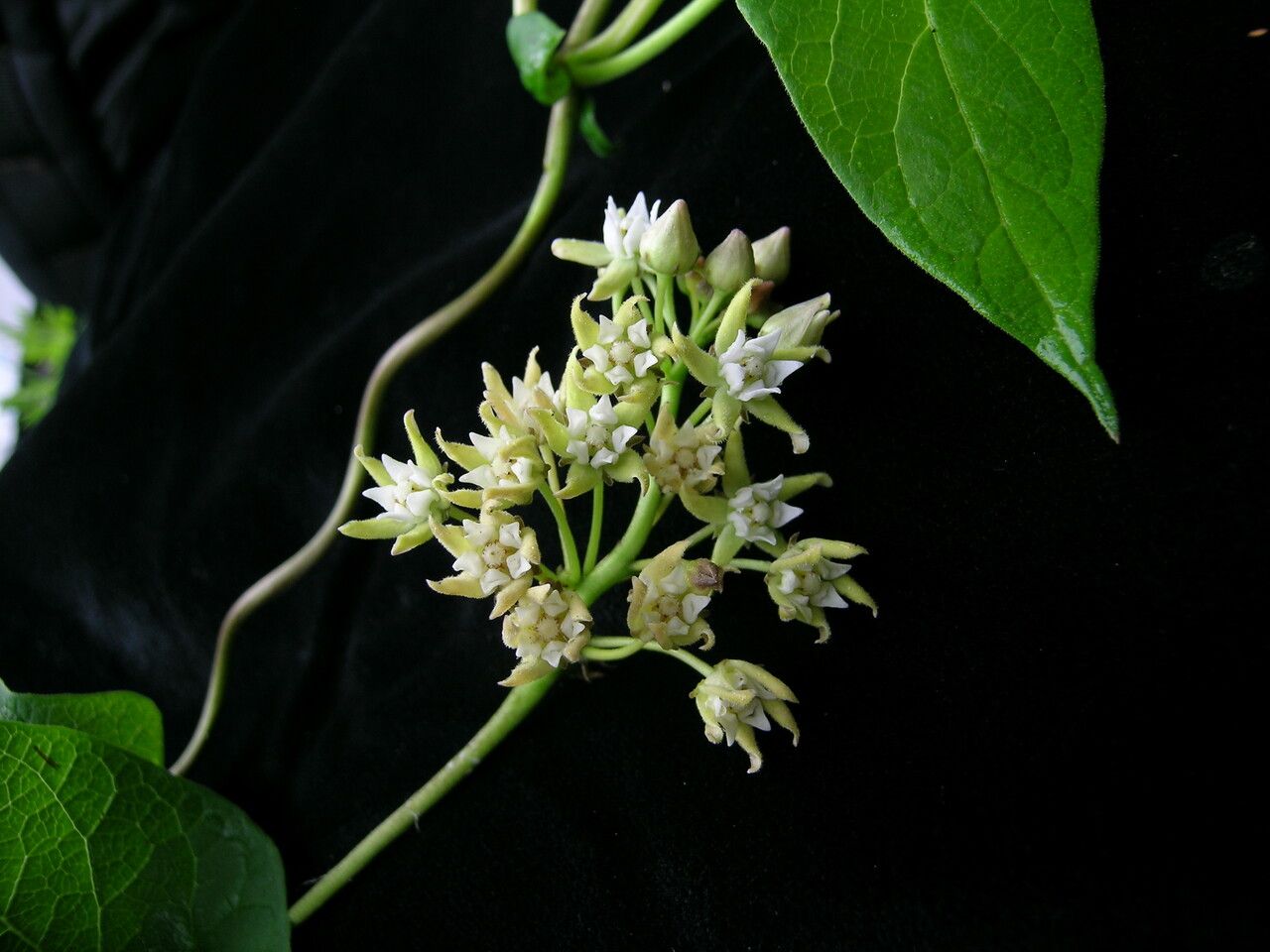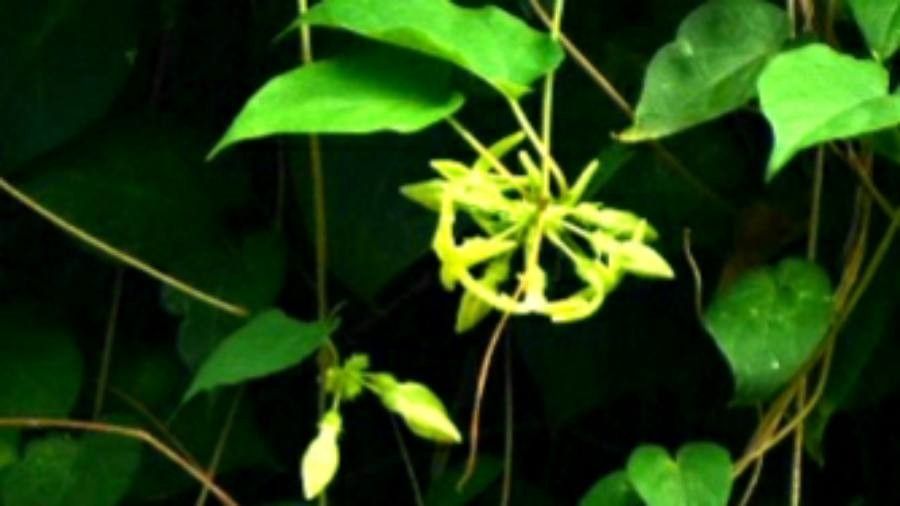
Telosma cordata is a species of flowering plant, native to China (Chinese: 夜來香) and Indo-China, in the family Apocynaceae (tribe Marsdenieae). It is cultivated elsewhere and may occur wild as an introduced species. Common names include Chinese violet, cowslip creeper, Pakalana vine, Tonkin jasmine and Tonkinese creeper. The plant bears clusters of golden yellow blooms along the vining stems during summer months. Individual blooms emerge successively over a period of weeks emitting a rich, heavy fragrance during the day and night.
The Chinese violet is resistant to disease and is generally not susceptible to illnesses. In terms of care, this plant is fairly low-maintenance. When grown outdoors it needs only light watering, and larger specimens usually do not require pruning. Smaller plants, however, should be pruned after they finish blooming. The Chinese violet is suitable for anyone with outdoor space, such as a garden or a deck, and does not demand a lot of gardening experience.
How to keep Telosma Cordata.
Light
Chinese violet thrives in strong sunlight and can also tolerate locations with moderate light. Greater sunlight encourages its growth. Insufficient light may cause weak growth and paler leaves. Excessive sun exposure can result in leaf burn.
Water
Native to tropical regions, the Chinese violet thrives in high humidity and consistent moisture. Water it every 1 to 2 weeks, being careful not to over-saturate the soil. Although it is typically grown outdoors, this plant benefits from natural light and needs evenly moist soil to achieve optimal growth during its active growing season.
Temperature
Chinese violet is native to temperate regions, preferring warmth and thriving at temperatures between 68 and 100 °F (20 to 38 °C). Seasonal adjustments may be necessary to cope with temperature fluctuations.
Fertilizer
Early spring, when a Chinese violet breaks dormancy, is the best time to fertilize it. Fertilization at that time supports overall growth and the development of flowers. It improves the leaves, stems, and branches and encourages flowers that are larger, more vivid, and longer-lasting. It also helps transport nutrients from the roots to the blooms and enhances the plant’s health and resistance to disease.
Pruning
Chinese violet is a climbing plant known for its fragrant yellow-green flowers. To promote growth and improve air circulation, it's best to prune it in early spring. Remove any dead stems and trim back overgrown sections to boost flowering and overall plant health. Make sure to use clean tools to prevent disease, and always follow horticultural guidelines for optimal care.
Botanical profile.
- Plant Type
- Vine
- Life Cycle
- Perennial
- Genus
- Telosma
- Family
- Apocynaceae
- Hardiness Zone
- 9-11
- Mature Height
- 3.05 m to 3.66 m
- Mature Spread
- 4.88 m
- Leaf Color
- Green
- Leaf Type
- Evergreen
- Flower Color
- Yellow
- Flower Size
- 1.52 cm
- Bloom Time
- Summer, Early fall, Mid fall
- Planting Time
- Summer
- Harvest Time
- Fall, Early winter, Mid winter
- Native Area
- India, Indonesia, Cambodia, Vietnam, Myanmar, Bangladesh, Laos, Pakistan, Thailand, China
Other names.
Reader questions.
What are the sunlight requirements for Chinese violet?
Chinese violet requires full sun, which amounts to above 6 hours of sunlight, though it can also flourish in partial sun, roughly about 3-6 hours sunlight. It's crucial to watch how sunlight moves through your garden to ensure you place your plants in spots that provide the ideal balance of light and shade, catering to the specific needs of your plants and ensuring their growth and health.
What is the ideal temperature range for Chinese violet?
Chinese violet thrives in temperate climates, preferring warm environments. The ideal temperature range for this plant is between 68 to 100 °F (20 to 38 °C). It is crucial to manage temperature fluctuations seasonally to ensure the plant's well-being. As a heat-loving plant, exposure to cold can be detrimental. During the colder months, it is advisable to bring outdoor-grown Chinese violets indoors and place them near a bright window, while also keeping them at a safe distance from heaters to avoid damage. Maintaining a temperature above 20°C during winter is beneficial for the plant's growth, and temperatures approaching 0°C should be avoided to prevent harm.
How does sunlight affect the growth and health of Chinese violet?
Sunlight plays a significant role in the growth and health of Chinese violet. Conditions of intensive sun exposure stimulate its growth, while moderate sunlight is also tolerable. An ample amount of sunlight prevents weak growth and pale leaf coloration. However, excess sunlight might cause leaf burn. When natural sunlight is insufficient, especially in indoor settings or during winter, artificial lighting can be vital by offering the necessary light spectrum, using LED lights for example, mimicking natural sunlight in terms of distance, duration, and intensity tailored to the plants' needs.
How should you care for Chinese violet in low temperatures?
Chinese violet prefers warm conditions and does not tolerate low temperatures well. It thrives when temperatures are above 20°C and requires protection during winter to stay above freezing point. Exposure to temperatures below -5°C can cause the leaves to lighten in color and, following frost damage, to turn brown or black with symptoms such as wilting and drooping. To care for a Chinese violet in low temperatures, trim off any frost-damaged parts and move the plant to a warmer indoor setting immediately. Positioning it near a south-facing window ensures adequate sunlight, but it's important to keep the plant away from heaters and air conditioning vents to avoid the air from becoming too dry.
What are the symptoms of light deficiency in Chinese violet?
Light deficiency in Chinese violet can be easily identified. Symptoms include smaller new leaves, leggy or sparse growth, faster leaf drop, slower or no new growth, and lighter-colored or irregularly patterned new leaves indicating a lack of chlorophyll. Additionally, symptoms like chlorosis indicate breakdown of chlorophyll due to excessive sunlight, while sunscald, leaf curling, wilting, and leaf scorching point to damage from intense sunlight. Each of these indicators helps in diagnosing and addressing light-related issues.
What are the effects of high temperature on Chinese violet and how can they be mitigated?
During the summer months, it is crucial to prevent the ambient temperature around a Chinese violet from exceeding 38°C. Temperatures above 43°C can lead to the leaves of the plant lightening in color and becoming more susceptible to sunburn. To mitigate the effects of high temperatures, trim away any sunburned or dried-up parts of the plant. Relocate the plant to an area that is shaded from the intense midday and afternoon sun. Additionally, watering the plant in the morning and evening will help keep the soil adequately moist, providing relief from the heat.
What solutions are recommended for managing light conditions for Chinese violet?
To ensure optimal growth in response to light conditions, gradually increasing sunlight exposure to at least 6 hours daily is recommended, using a south-facing window for indoor plants. Additionally, artificial lighting such as desk or ceiling lamps, or plant grow lights, can supplement light. For outdoor plants, a gradual move to sunnier spots helps. Reducing obstructions, pruning, or transplanting can also ensure ample light reaches your plants. Importantly, parts of the plant that suffered from insufficient light may not recover, but new growth will be healthy with improved light conditions.