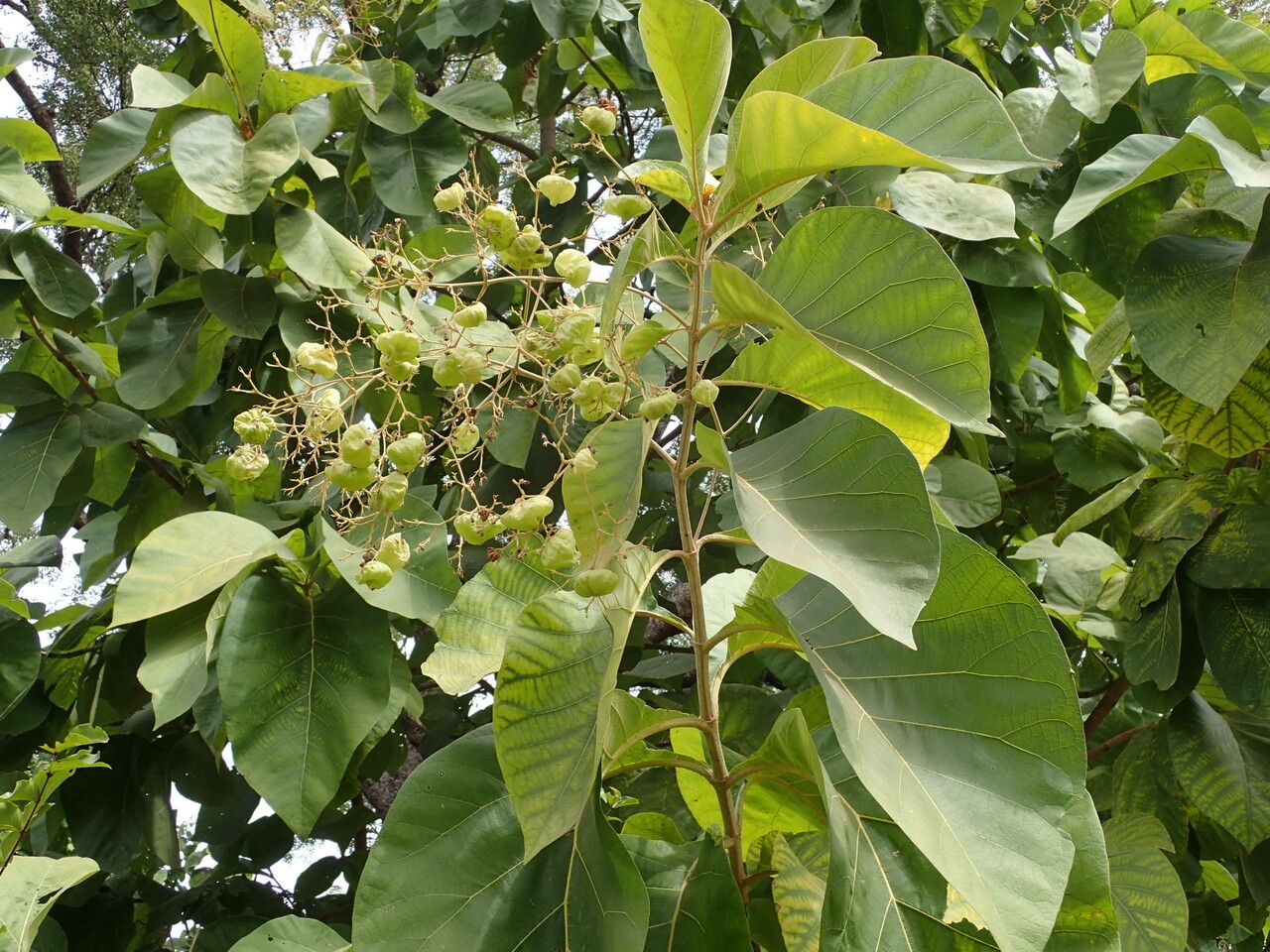
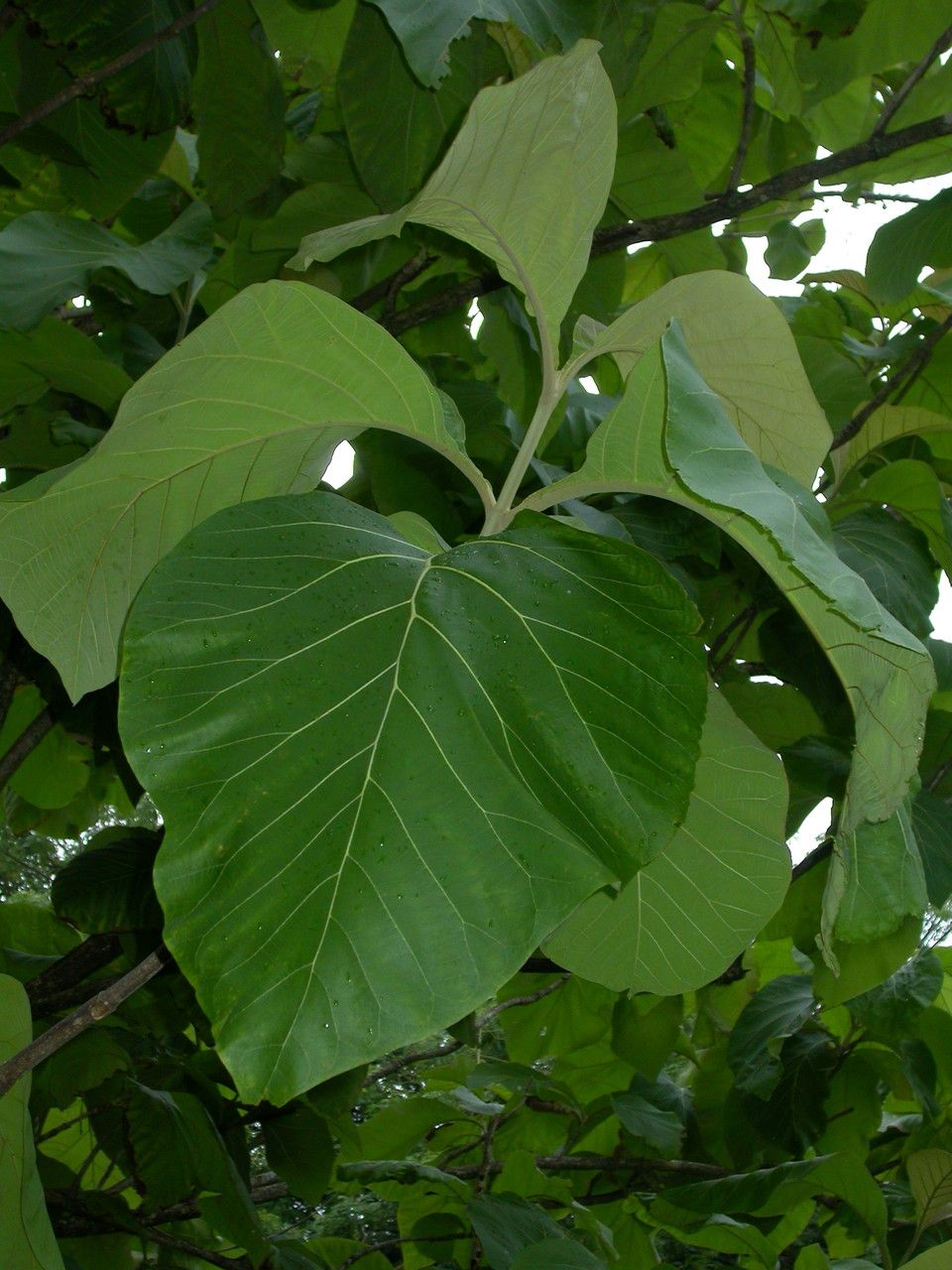
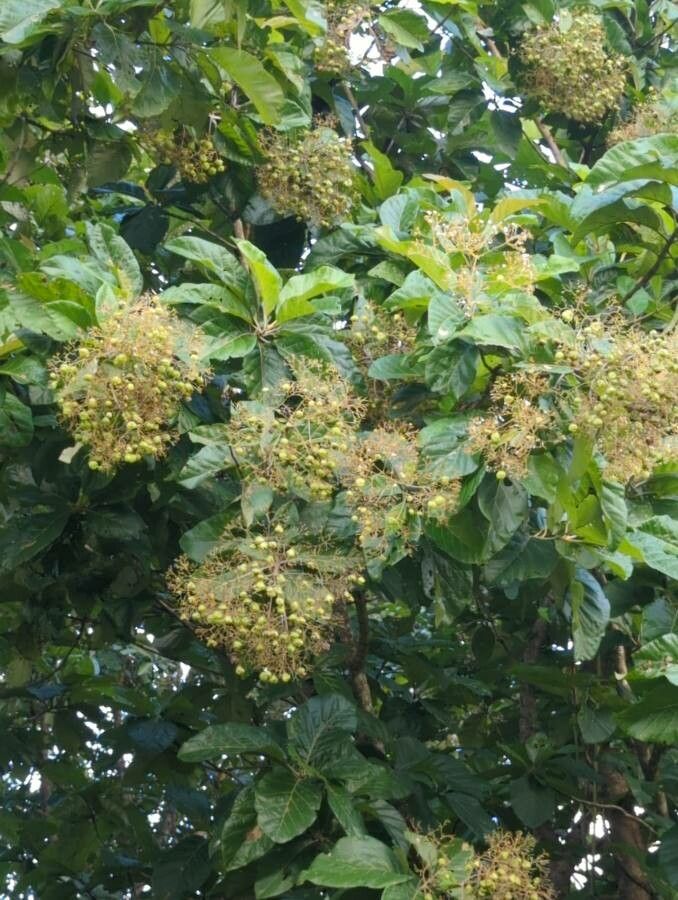
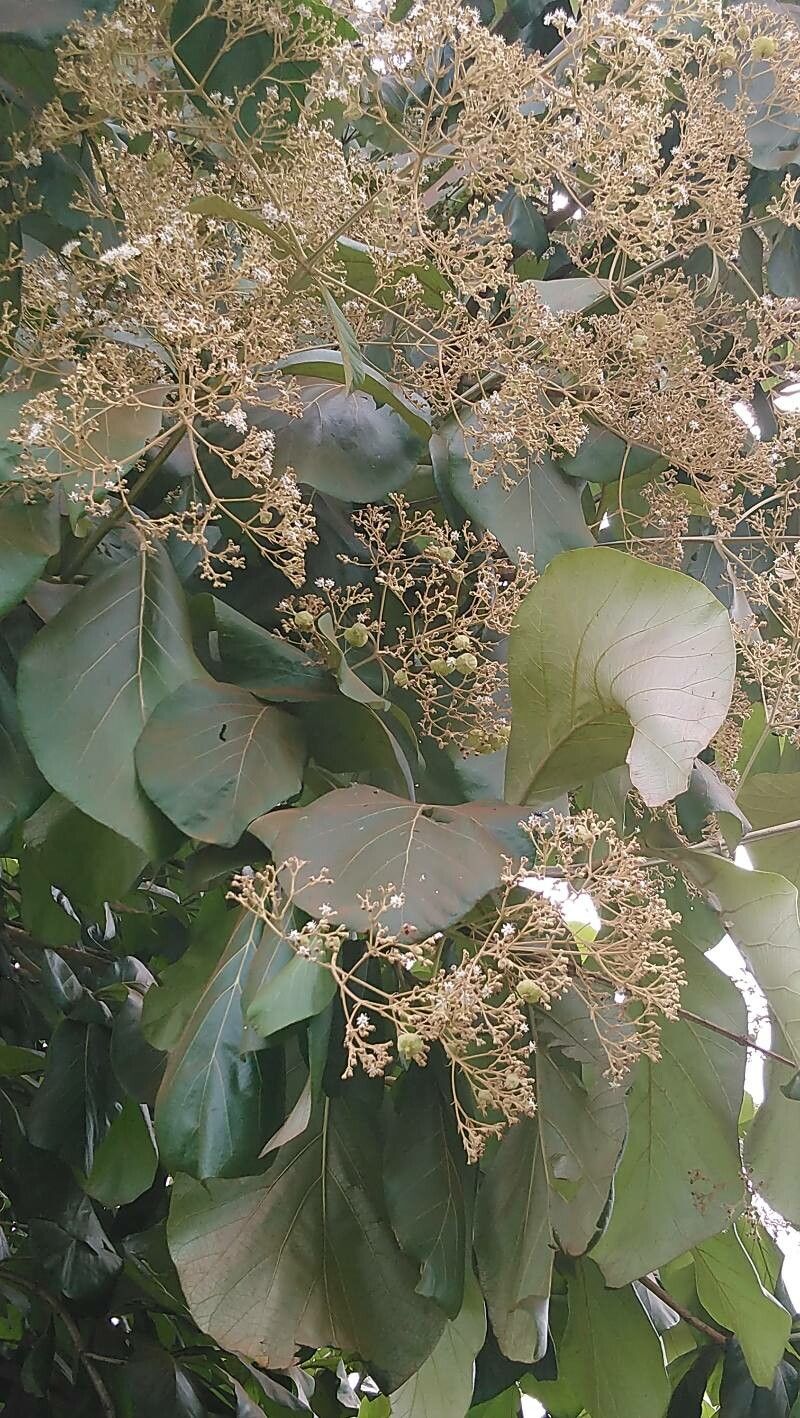
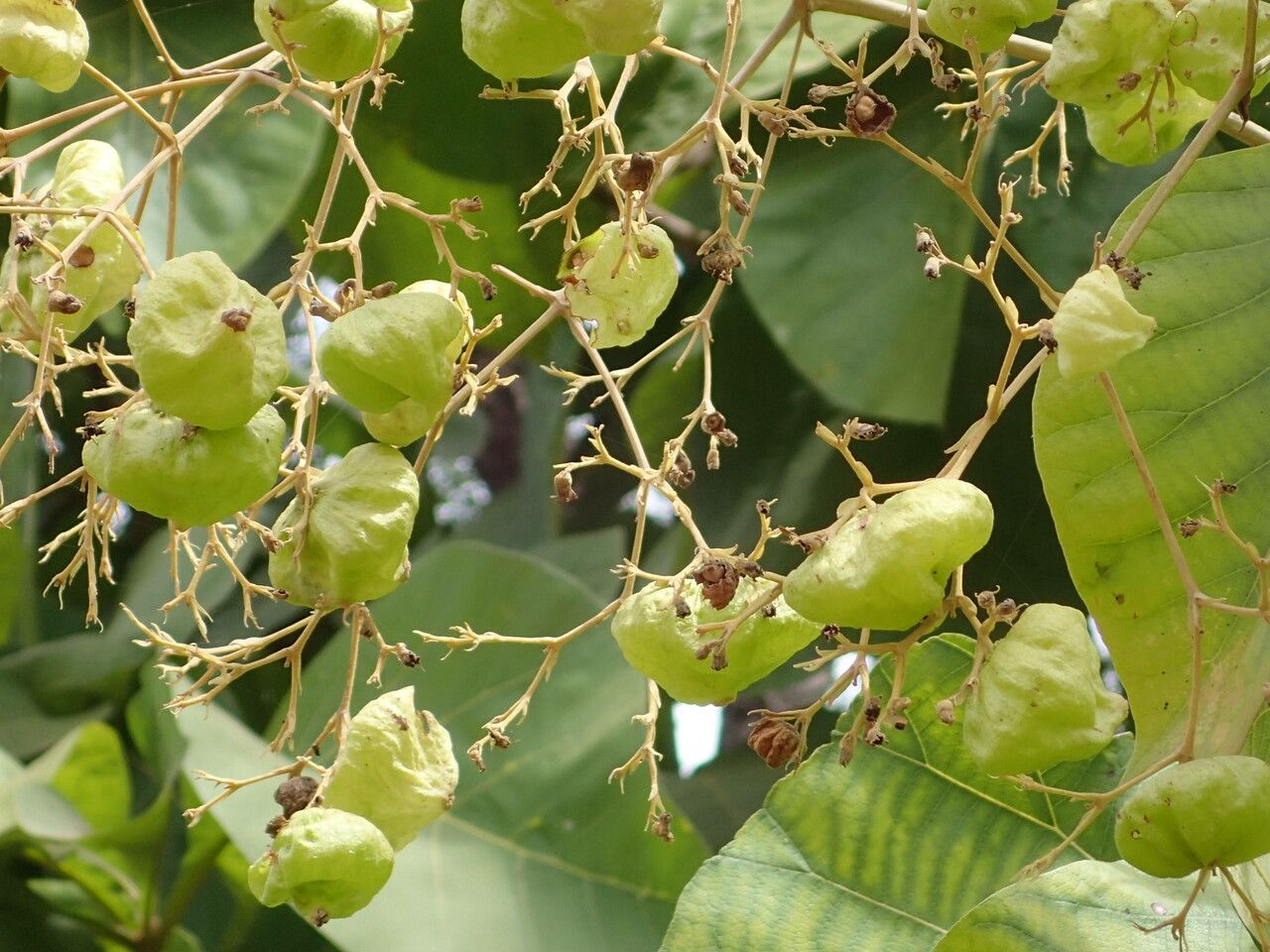
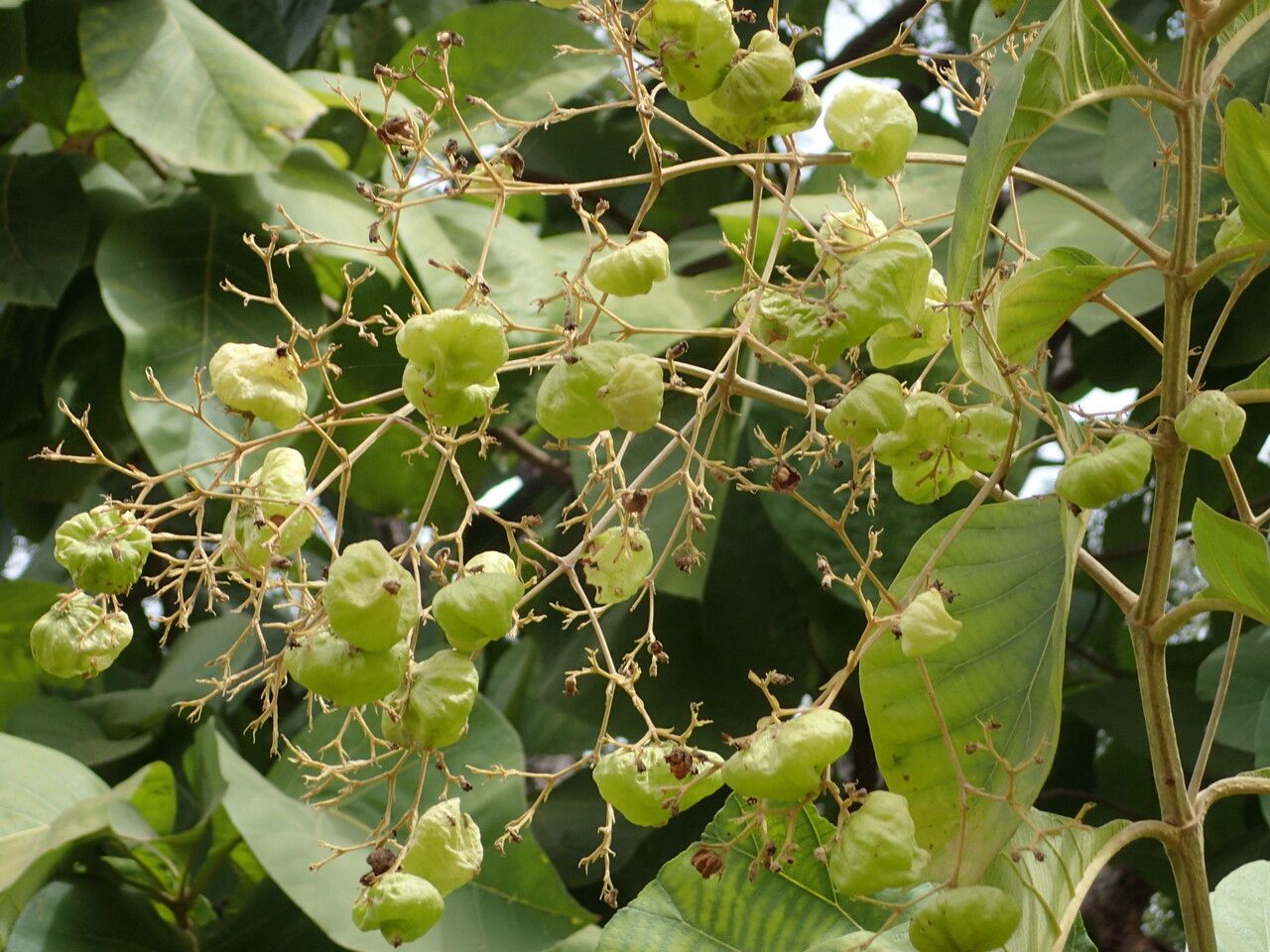
Teak (Tectona grandis) is a tropical hardwood tree species in the family Lamiaceae. It is a large, deciduous tree that occurs in mixed hardwood forests. Tectona grandis has small, fragrant white flowers arranged in dense clusters (panicles) at the end of the branches. These flowers contain both types of reproductive organs (perfect flowers). The large, papery leaves of teak trees are often hairy on the lower surface. Teak wood has a leather-like smell when it is freshly milled and is particularly valued for its durability and water resistance. The wood is used for boat building, exterior construction, veneer, furniture, carving, turnings, and other small wood projects.Tectona grandis is native to south and southeast Asia, mainly Bangladesh, India, Indonesia, Malaysia, Myanmar, Thailand and Sri Lanka, but is naturalised and cultivated in many countries in Africa and the Caribbean. Myanmar's teak forests account for nearly half of the world's naturally occurring teak. Molecular studies show that there are two centres of genetic origin of teak: one in India and the other in Myanmar and Laos.
Teak is resistant to many diseases and generally not susceptible to illnesses. When it comes to care, this plant is fairly low-maintenance. Planted outdoors it needs only light watering, and larger specimens typically do not require pruning. Smaller plants, however, should be pruned after they finish blooming. Teak is suitable for anyone with an outdoor area, such as a garden or deck, and does not demand much gardening experience.
How to keep Tectona Grandis.
Light
Teak prospers in environments that receive abundant sunlight throughout the day. Both too much and too little light can harm its growth. Its sunlight requirements remain constant at every stage of development, and its native habitat is one with plentiful sun exposure.
Water
Teak originates from monsoon climates, where it thrives under conditions of seasonal water fluctuations and moderate humidity. Once the plant is established, it becomes drought-tolerant and only needs watering every two weeks. When grown outdoors, teak benefits from deep watering, which mimics its natural environment of heavy rainfall and encourages strong root development.
Temperature
Teak comes from regions with temperatures between 68 and 100°F (20 to 38℃). It grows best in that warm climate. To cope with seasonal shifts, keep teak within this preferred temperature range as much as possible.
Fertilizer
Fertilizing is essential for Teak care. Regular feeding throughout the growing season preserves the energy needed for its showy foliage and aids overall growth. Failing to fertilize can cause unhealthy leaves, reduced ornamental value, and stunted or weak growth that is prone to breaking.
Pruning
Teak trees benefit from pruning in early spring to remove dead branches and enhance air circulation. This practice promotes growth, strengthens structural integrity, and improves the tree’s appearance. Be sure to use sharp, clean tools to make effective cuts and prevent infections.
Botanical profile.
- Plant Type
- Tree
- Life Cycle
- Perennial
- Genus
- Tectona
- Family
- Lamiaceae
- Hardiness Zone
- 10-12
- Mature Height
- 18.29 m to 24.38 m
- Mature Spread
- 9.14 m to 17.98 m
- Leaf Color
- Green
- Leaf Type
- Deciduous
- Flower Color
- White
- Flower Size
- 2.54 cm
- Bloom Time
- Summer
- Planting Time
- Spring, Summer, Autumn
- Harvest Time
- Late summer, Fall
- Native Area
- Nepal, Sri Lanka, India, Cambodia, Vietnam, Myanmar, Bangladesh, Thailand
Other names.
Reader questions.
How should I water my Teak tree?
Here are some tips for watering your plants effectively: - To promote good root development, place a garden hose at the base of the plant. Avoid spraying the leaves directly, as they don't need as much water. Keep in mind that leaves may require more watering if they're outdoors and exposed to direct sunlight. - Consider using bubblers to moisten the roots of each plant. Soaker hoses are another option, especially if you're adding or removing plants and need to cover the entire garden or flower bed. Make sure to drain any excess water and allow the soil to dry before watering again. - Watering at ground level is important to prevent diseases. However, on a sunny day, it can be beneficial to spray the entire bush with water to provide some relief. - Whether your plants are in pots or planted in the ground, it's important to remember that Teak prefers deep watering instead of just light sprinkling.
Why should I add fertilizer to my Teak?
Teak requires regular fertilization primarily because its showy leaves demand a significant amount of energy for their production and maintenance. The challenge lies in allocating enough energy not only for leaf health but also for the growth of stems, branches, roots, and other vital structures. Neglecting fertilization can result in two likely outcomes. Firstly, the Teak's leaves may lose their natural color and texture, appearing generally unhealthy and significantly diminishing its ornamental appeal. Secondly, overall growth may slow down or produce weak growth that is prone to breakage.
What are the sunlight requirements for Teak (Tectona grandis)?
Teak (Tectona grandis) thrives in full sun, requiring above 6 hours of sunlight daily for optimal growth. Its native habitat receives generous sunlight exposure throughout the day, making ample sunshine essential at all stages of its growth. However, it's important to observe how sunlight moves through your garden to find spots that offer a balanced amount of light and shade, ensuring the plants' overall well-being and happiness.
What is the native climate for Teak?
Teak is native to environments where the temperature ranges from 68 to 100°F (20 to 38°C). It thrives best in these warm climates. To encourage healthy growth, it's recommended to keep teak within this preferred temperature range as much as possible, especially adjusting for seasonal changes to maintain the optimal conditions for the plant.
What should I do if I give Teak too much or too little water?
Teak plants can suffer from overwatering, which is indicated by yellowing, dropping, and wilting leaves. The stems may also become mushy, giving the plant a dull and unhealthy appearance. To address these symptoms, it's advisable to adjust your watering schedule as needed. On the other hand, wilting can also occur as a result of under watering. In this case, the leaves will become crispy and dry. To ensure the plant receives enough water, check the soil regularly, and if it's dry, provide a thorough watering. Although sufficient watering will revive the Teak, the plant may still display dryness and yellowing leaves for a few days due to root damage. Once the plant returns to normal, the yellowing of leaves will cease. When keeping Teak indoors, always check the moisture levels in the pot and avoid overwatering. If you notice black spots, allow the soil to dry by refraining from watering for a few days. Overwatering can lead to root rot, so if you observe discolored and slimy roots, consider transferring the plant to a different pot. It's important to prevent root rot by avoiding excessively soggy soil. When planting Teak outdoors, dig a bit deeper and if the soil feels too dry, it suggests underwatering. Adequate watering is necessary for the plant's recovery.
When should I fertilize my Teak?
Teak plants do not require a fixed feeding schedule, but they do benefit from occasional feedings. One simple way to fertilize them is to apply fertilizer while watering them. During the growing season, Teak plants need a good amount of water. You can feed them once every two to three weeks, ensuring this continues whenever new growth is observed.
Can artificial lighting be used for Teak plants, and if so, how?
Yes, artificial lighting can be used for Teak plants, especially when they're grown indoors and natural sunlight is insufficient, like in winter or less sunny spaces. Artificial lights, particularly LED lights, are effective as they can provide specific wavelengths needed by the plants. For full sun plants, 30-50W/sq ft is recommended; for partial sun, 20-30W/sq ft; and for full shade, 10-20W/sq ft. The light source should be placed 12-36 inches above the plant to mimic natural sunlight, and the duration should match the natural daylight hours, usually 8-12 hours per day.
How should Teak be cared for in the autumn and winter?
In the autumn, it is advisable to bring Teak plants that are grown outdoors indoors to protect them from colder temperatures. They should be placed near a bright window, ensuring they are not too close to heaters to avoid damage. During winter, maintaining temperatures above 20°C is crucial for the teak's growth, as any temperatures approaching 5°C can be detrimental.
How frequently should I water my Teak?
Teak plants prefer deep and infrequent watering, especially when planted in pots. It is best to soak them in a gallon of water each time to account for the limited water storage in pots, which causes the soil to dry out faster. In cold regions, watering is needed every 3 to 5 days. Watering should be done early in the morning when the soil is dry, whether the plants are outdoors or indoors. To determine if watering is necessary, check the soil inside the pot. If the top 2-3 inches of soil are dry, it is time to water the plant thoroughly. During hot days, it is advisable to check the moisture daily as high temperatures can quickly dry out the soil in pots. If you have a garden, irrigation of the soil is also necessary. In hot climates, watering the plants once a week is sufficient. Only water the plants when about 2 to 3 inches of soil become too dry, whether they are outdoors or indoors. Take into account the amount of rainfall and avoid overwatering to prevent root rot. If there is abundant rainfall, additional watering may not be required. Teak plants typically grow during spring and fall. When grown outdoors, adding a layer of mulch about 3 to 4 inches deep helps conserve water. In sandy soil, more frequent watering is needed due to its faster drainage. Conversely, clay soil requires less frequent watering, allowing for 2-3 days to dry the plant without risking root rot. Keeping track of watering dates on a calendar can help avoid under or overwatering. Pay attention to the leaves, as drooping may indicate a need for watering.
When is it not a good idea to fertilize my Teak?
You can fertilize your Teak according to a regular schedule for most of the year, particularly during the active growing season of spring, summer, and early fall. However, it's important to note that during the winter, your Teak should not be given any fertilizer. This is because the plant goes into a dormant growth phase during this time, resulting in either no new growth or very minimal growth. Since the plant is using less energy during this period, fertilization is not necessary.
What are the signs of insufficient light for Teak plants?
Signs of insufficient light in Teak plants include small leaves, leggy or sparse growth, faster leaf drop, slower or no new growth, and lighter-colored new leaves. Such conditions indicate a lack of adequate sunlight, leading to less chlorophyll and essential nutrients for the plant. Moreover, excessive sunlight can lead to chlorosis (leaves turning yellow), sunscald, leaf curling, wilting, and leaf scorching. These symptoms highlight the balance needed in sunlight exposure for healthy plant development.
What are the symptoms and solutions for Teak exposed to low temperatures?
Teak plants exposed to temperatures below their preferred range may show symptoms such as leaves lightening in color, especially when the temperature falls below 1°C. Following frost damage, the affected foliage may turn brown or black, with wilting and drooping occurring. The solution includes trimming off frost-damaged parts and moving the plant indoors to a warm environment near a south-facing window for ample sunlight, while avoiding air vents to prevent air dryness.