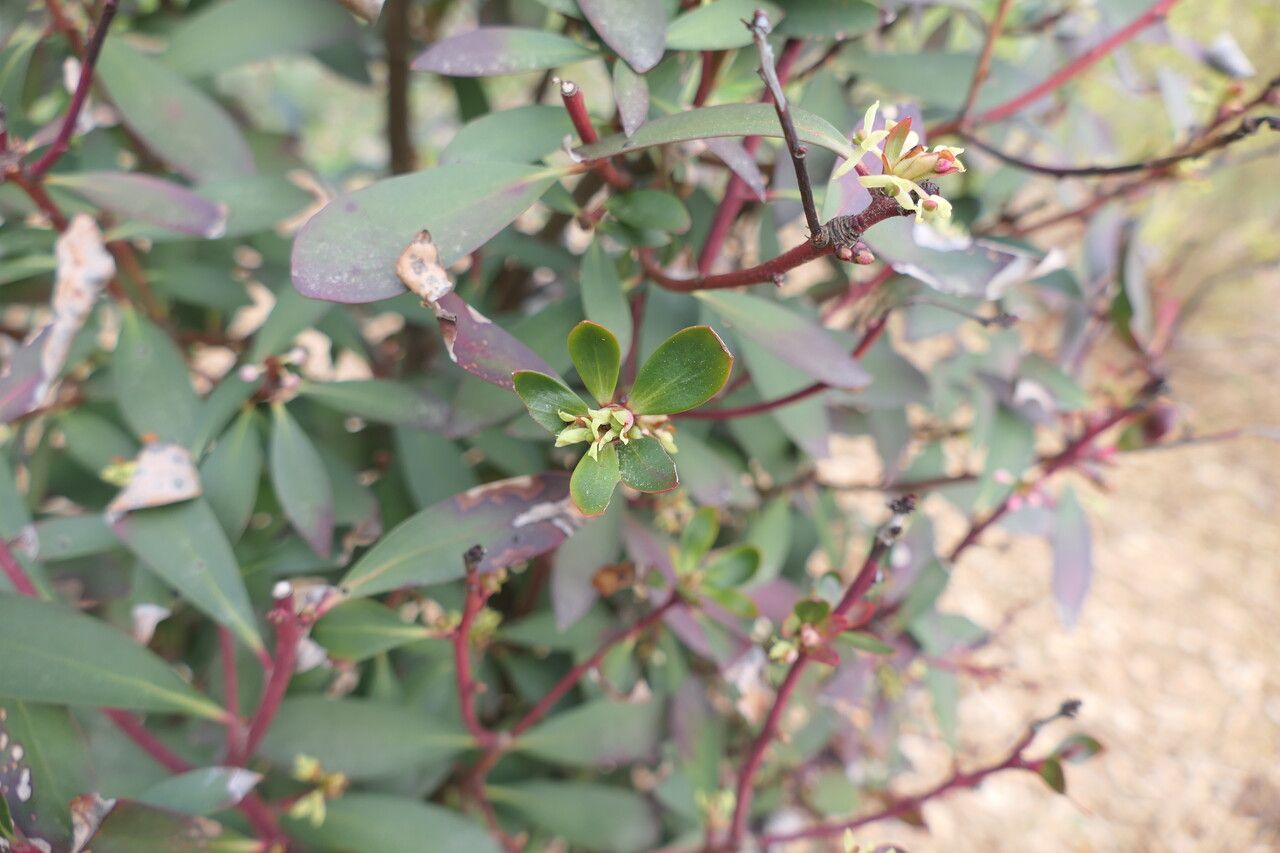
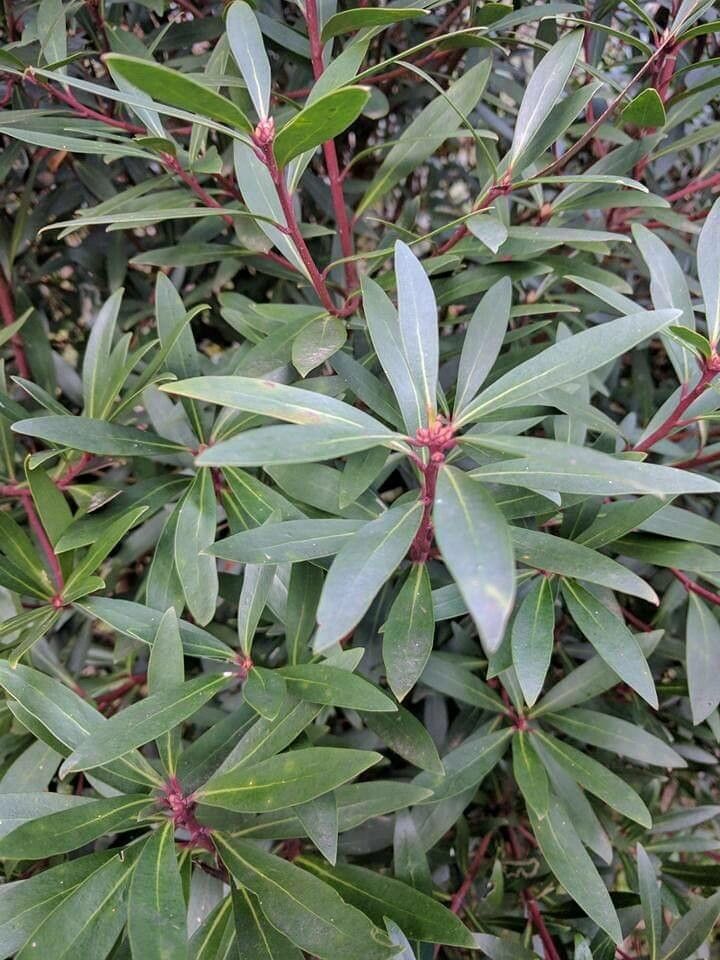
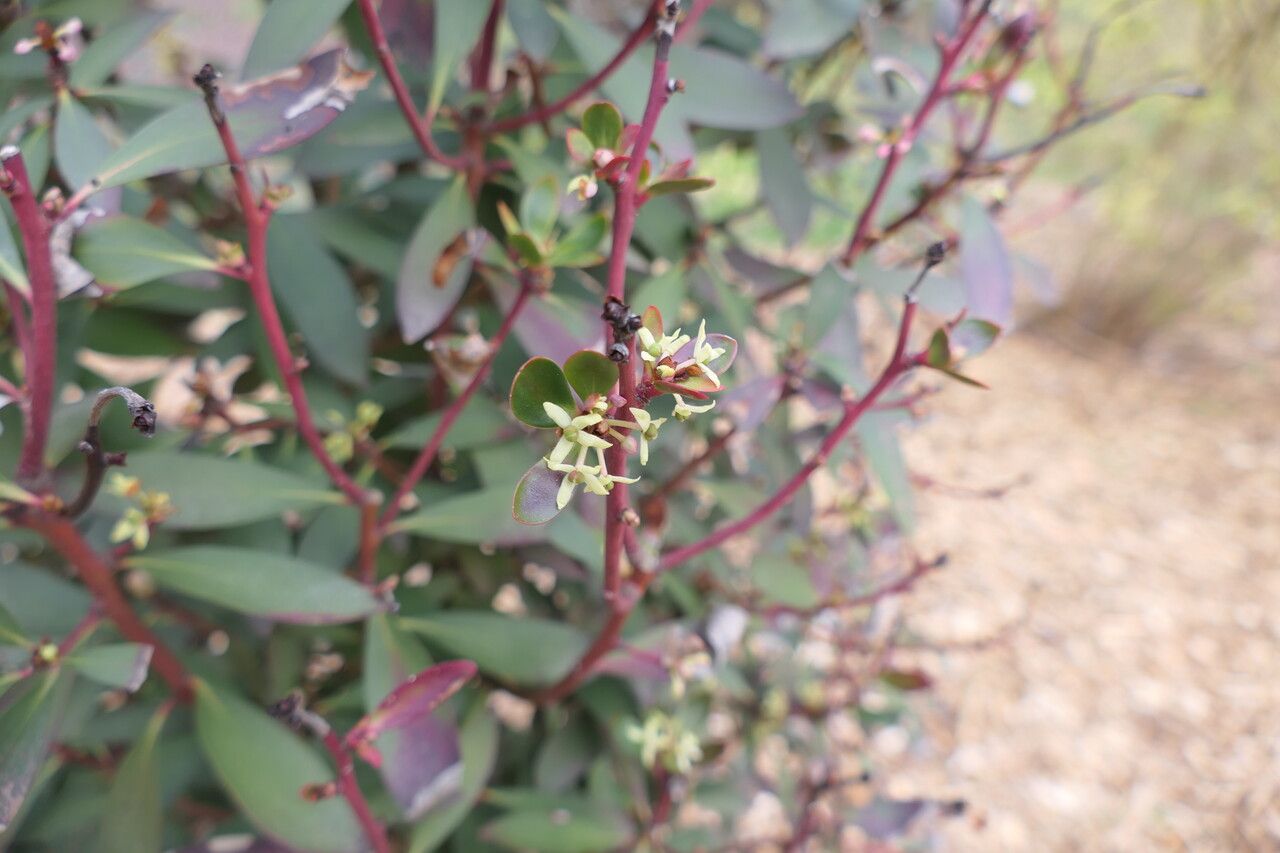
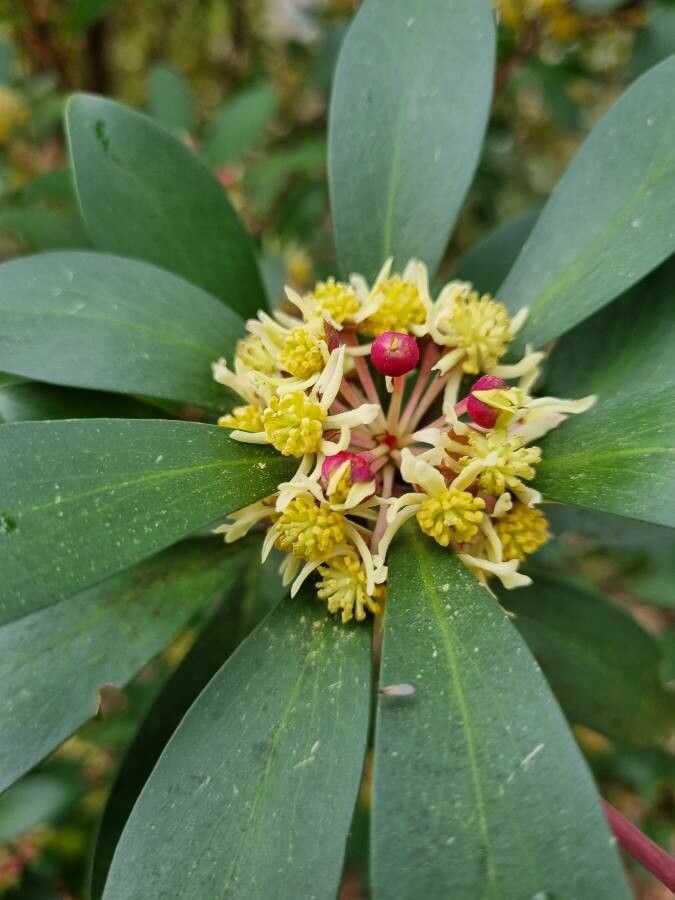
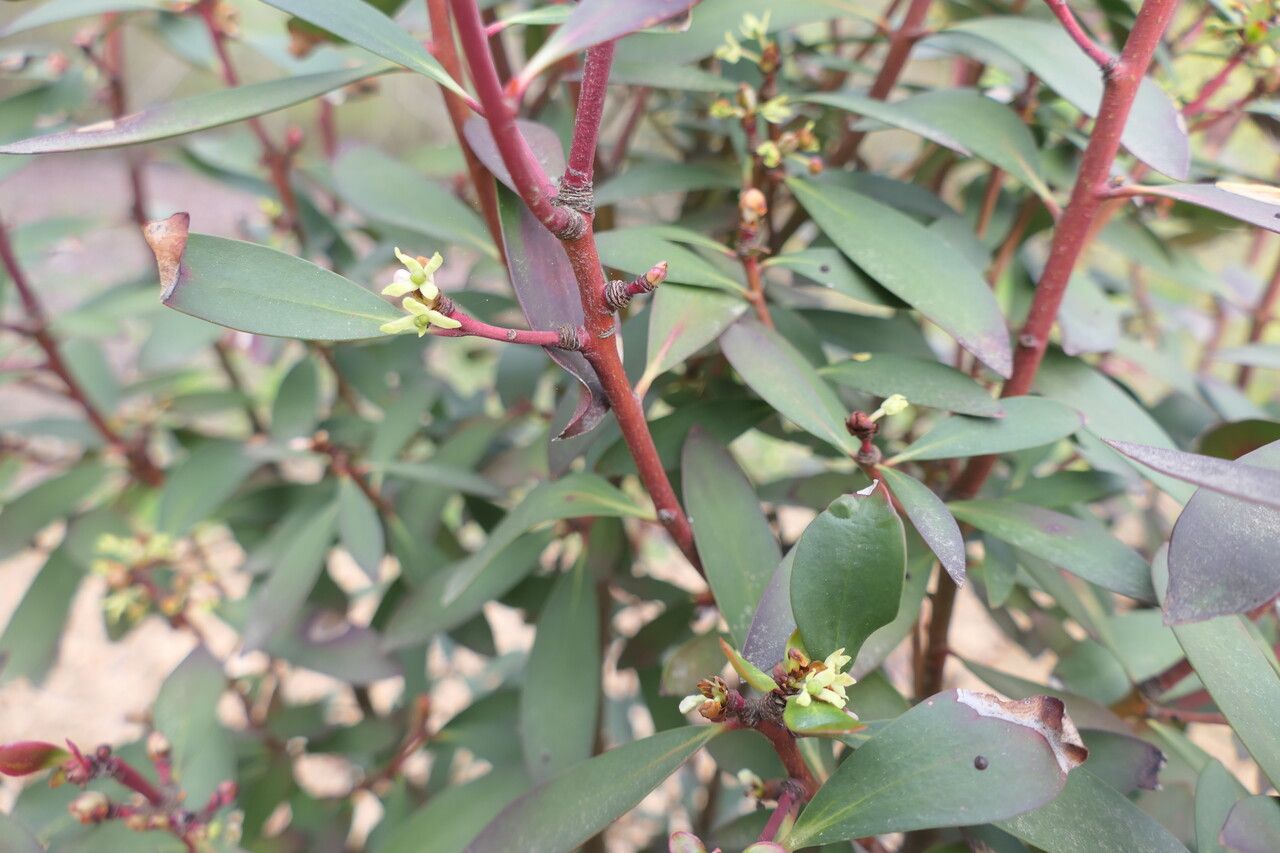
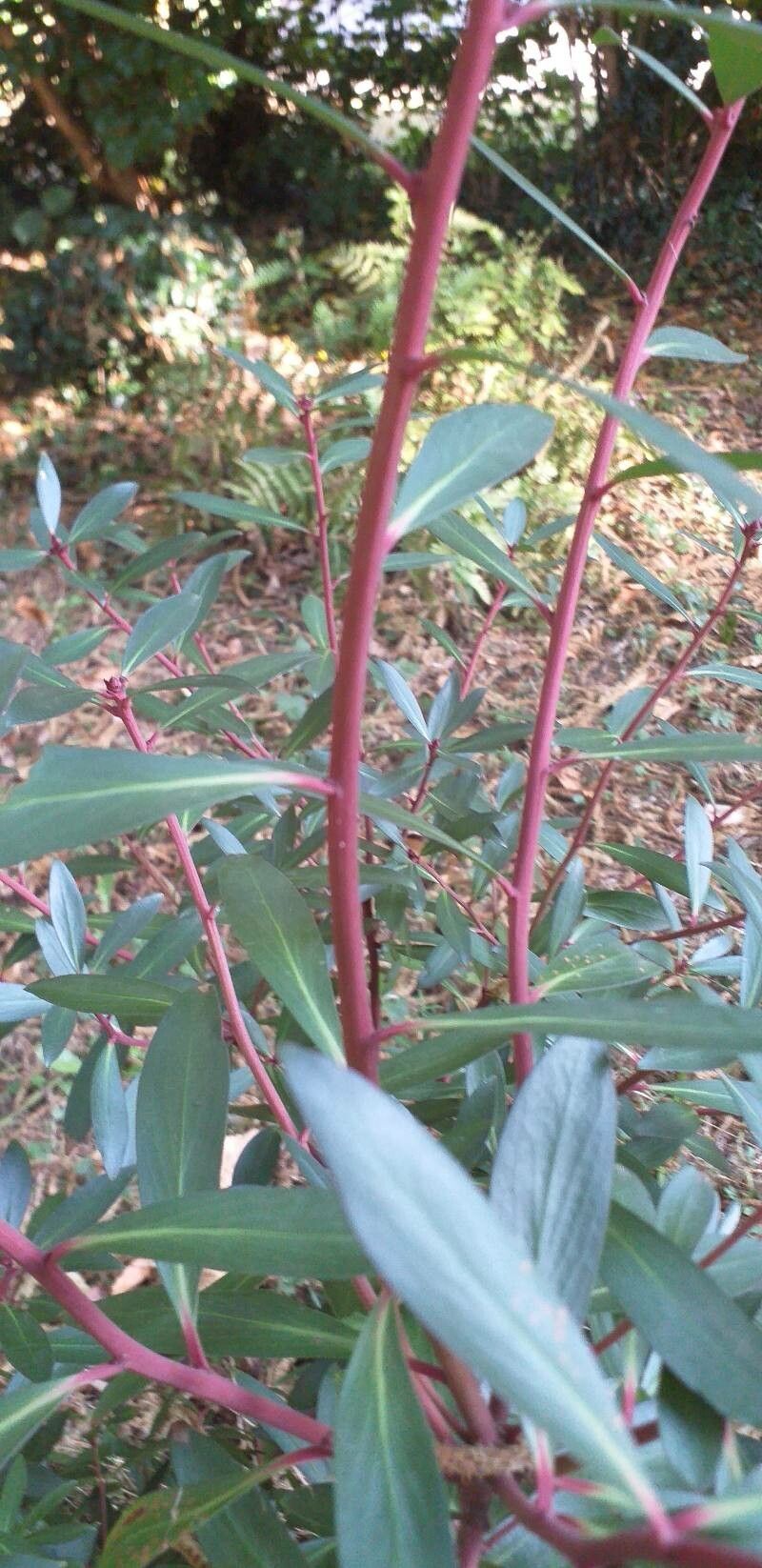
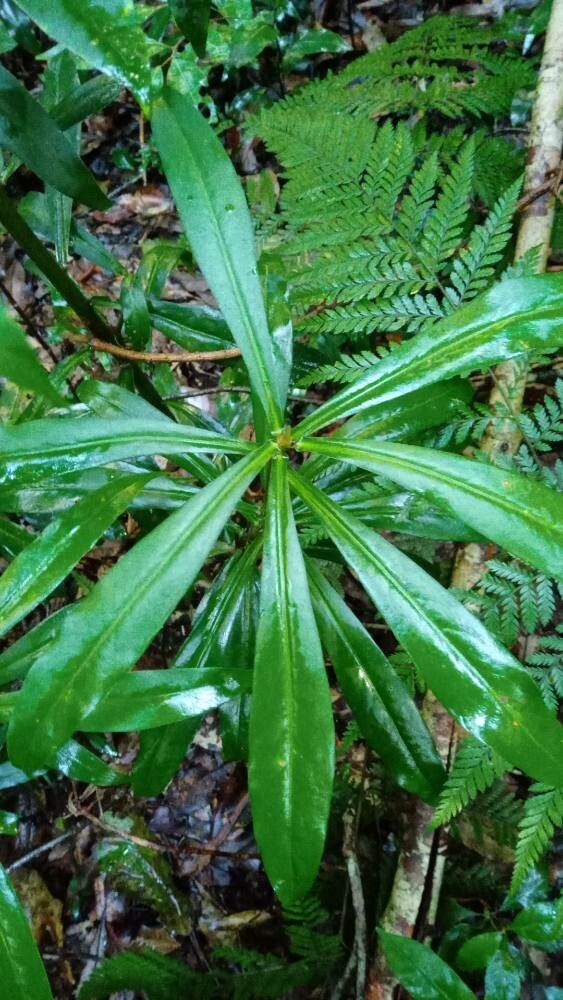
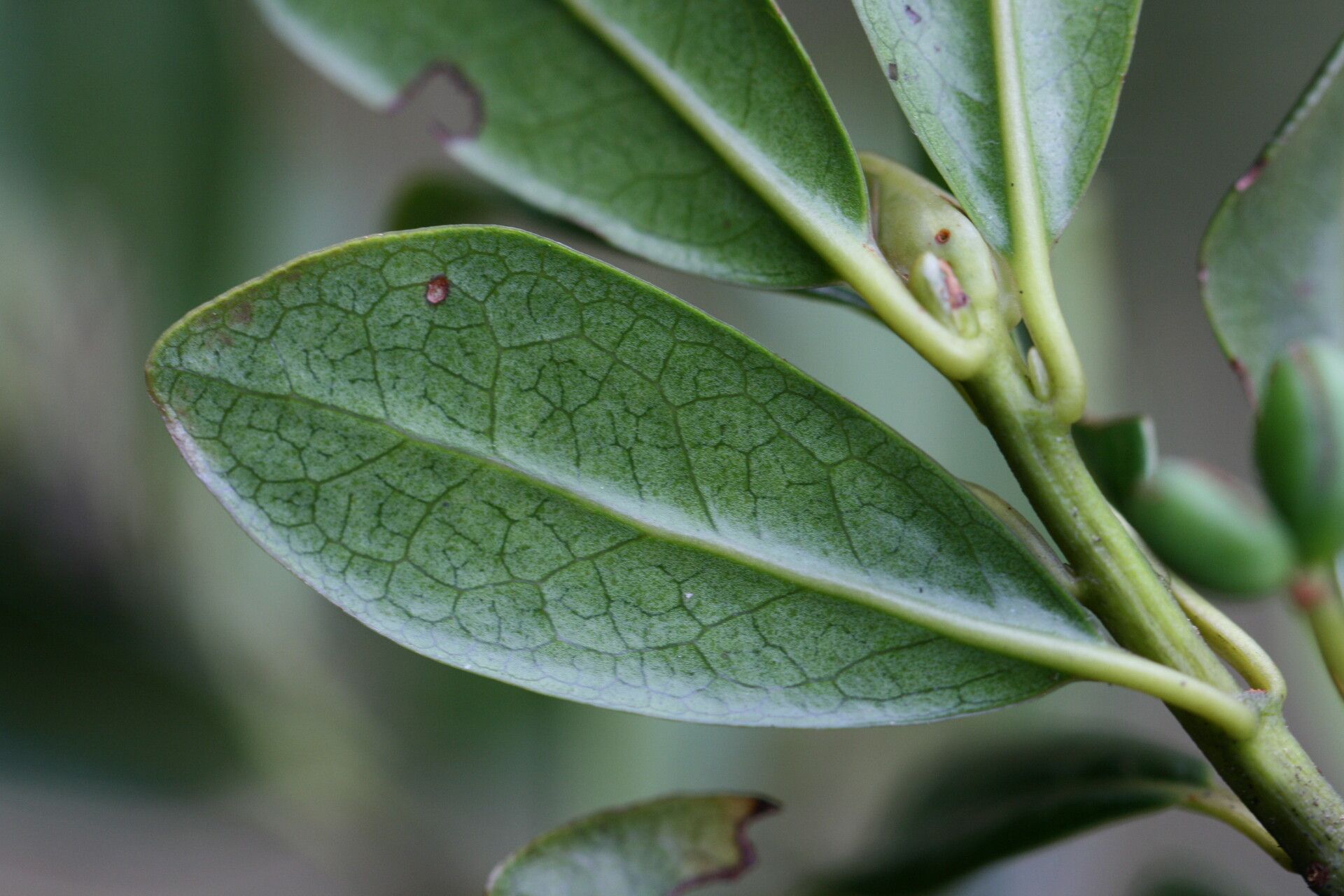
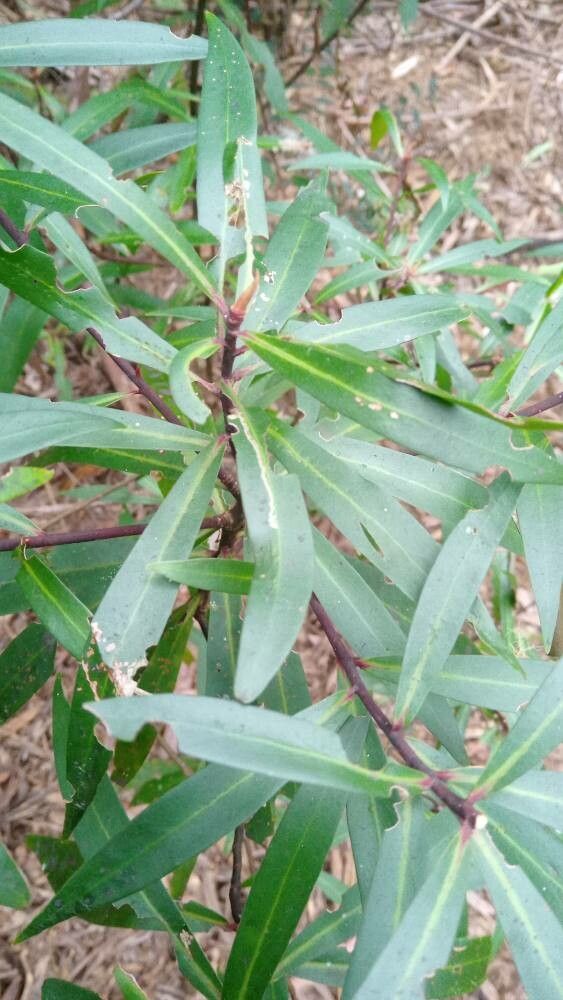
Tasmannia lanceolata (syn. Drimys lanceolata), commonly known as Tasmanian pepperberry or mountain pepper, is a shrub native to woodlands and cool temperate rainforest of south-eastern Australia. The shrub varies from 2 to 10 m high. The aromatic leaves are lanceolate to narrow-elliptic or oblanceolate, 4–12 cm long, and 0.7–2.0 cm wide, with a distinctly pale undersurface. Stems are quite red in colour. The small cream or white flowers appear in summer and are followed by black, globose, two-lobed berries 5–8 mm wide, which appear in autumn. There are separate male and female plants.Originally described by French botanist Jean Louis Marie Poiret, it gained its current name in 1969 by A.C. Smith. It had been known for many years as Drimys lanceolata. It is found in Tasmania and northwards through Victoria to Barrington Tops in New South Wales. It is found in gullies in rainforests.
Mountain pepper is resistant to disease and is generally not prone to illnesses. In terms of care, the plant is fairly low-maintenance. When grown outdoors it needs only minimal watering, and larger plants typically do not require pruning. Smaller plants, however, should be pruned after they finish blooming. Mountain pepper is suitable for anyone with an outdoor area, such as a garden or deck, and does not demand much gardening experience.
How to keep Tasmannia Lanceolata.
Light
Mountain pepper originates from habitats such as forest understories or rocky locations, where it naturally grows in shaded conditions. It prefers partial sun but can tolerate full sun or deep shade, reflecting its adaptable, hardy character.
Humidity
This plant will thrive in moderate humidity, which is probably the level in your home. However, misting it a few times a week can be very beneficial. Make sure the room has good ventilation.
Temperature
Mountain pepper is highly adaptable to a wide range of climates, from extremely hot summers to cold winters. However, it does have a preferred temperature range for healthy growth. If temperatures become too high, the plant can experience heat and humidity stress, which may lead to its death. In locations where temperatures approach the lower limit of its cold tolerance, it is important to provide insulation to protect the plant.
Fertilizer
Timing is key when fertilizing Mountain pepper. Apply fertilizer in early spring and continue monthly until early summer. Fertilizer encourages attractive blooms and supplies energy during both dormant and active growth periods.
Botanical profile.
- Plant Type
- Shrub
- Life Cycle
- Perennial
- Genus
- Tasmannia
- Family
- Winteraceae
- Hardiness Zone
- 8-10
- Mature Height
- 1.83 m to 3.05 m
- Mature Spread
- 2.44 m
- Leaf Color
- Green, Bronze
- Leaf Type
- Evergreen
- Flower Color
- Yellow, Green
- Flower Size
- 1.02 cm to 1.52 cm
- Bloom Time
- Mid fall, Late fall, Early winter
- Planting Time
- Summer
- Harvest Time
- Late winter, Early spring, Mid spring
Other names.