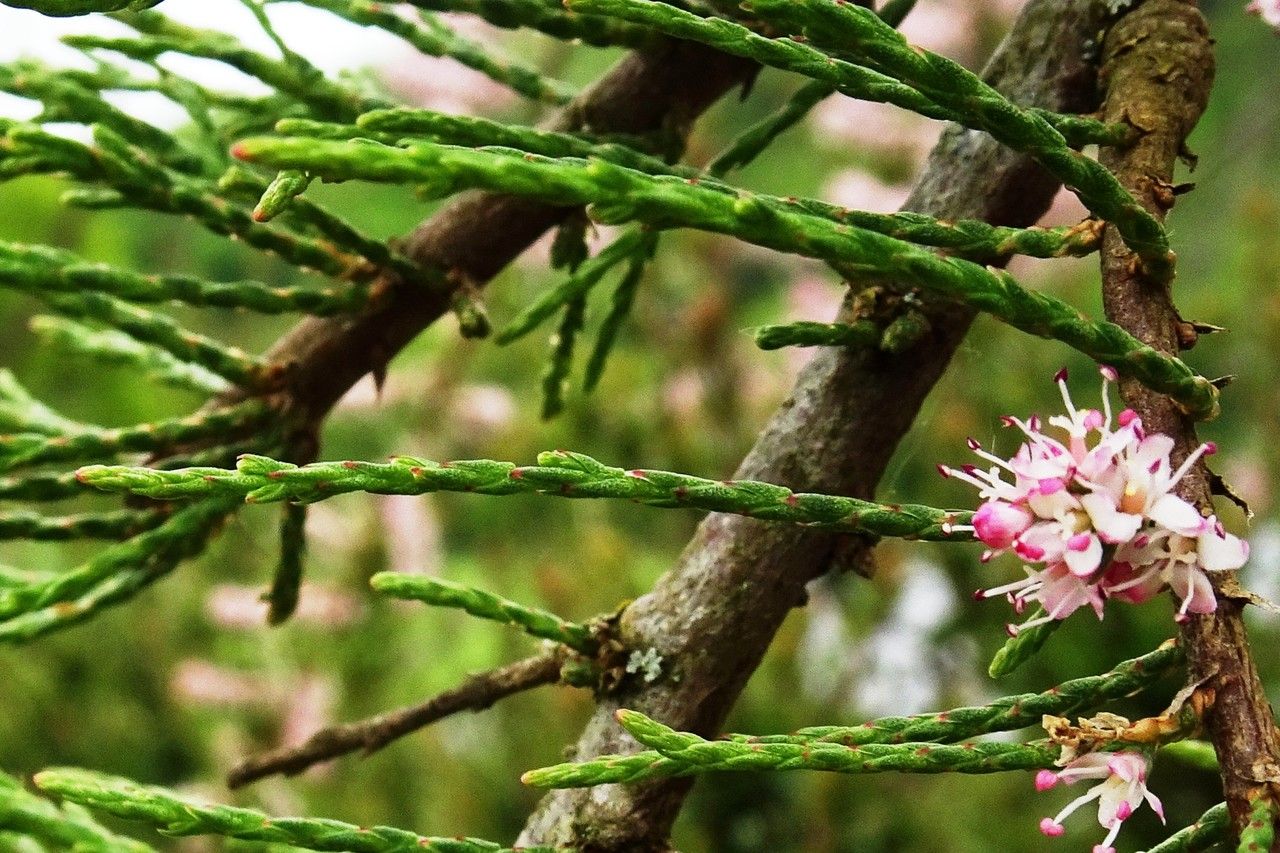
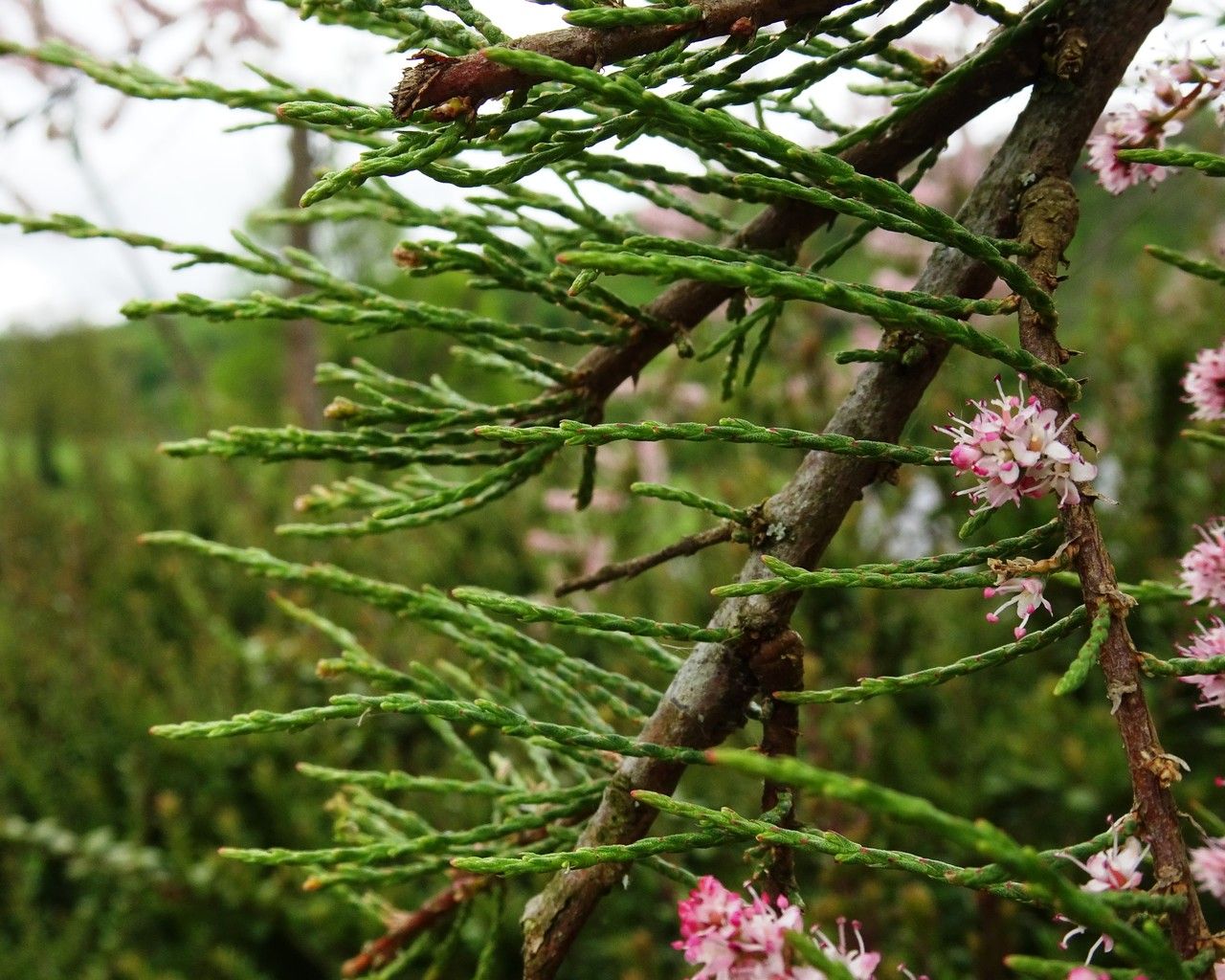
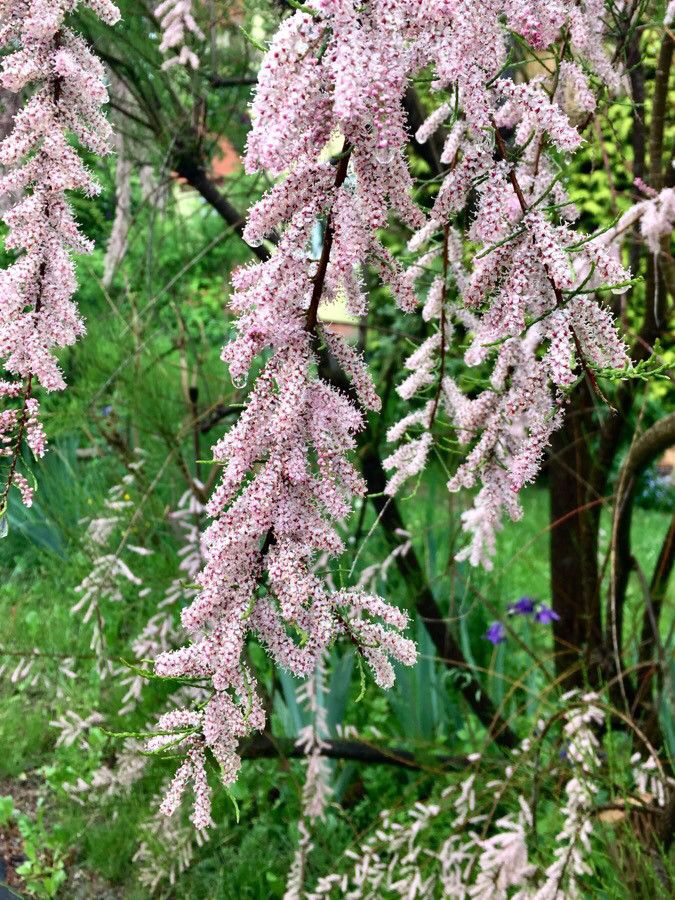
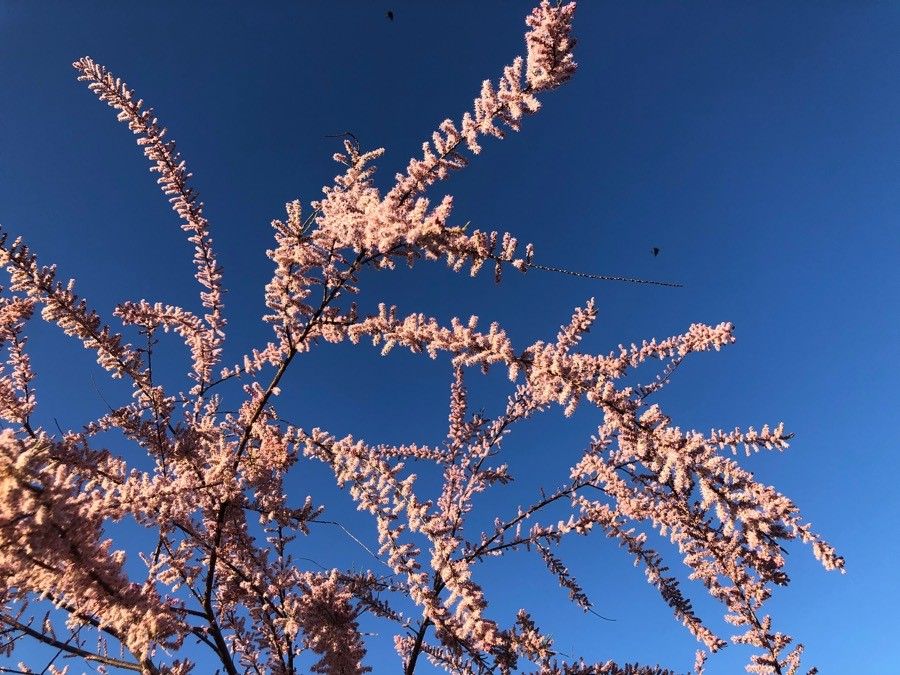
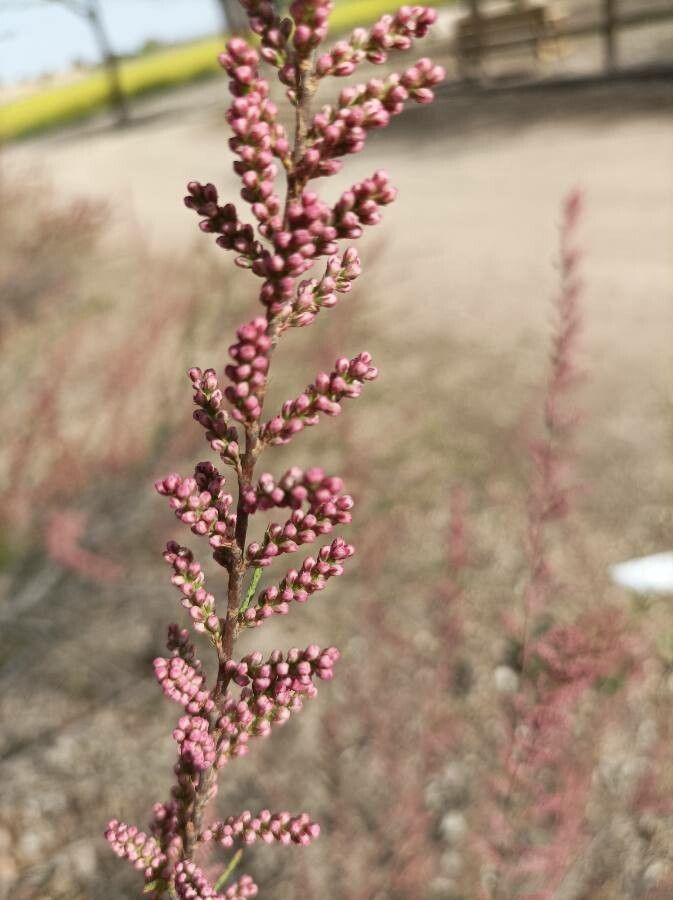
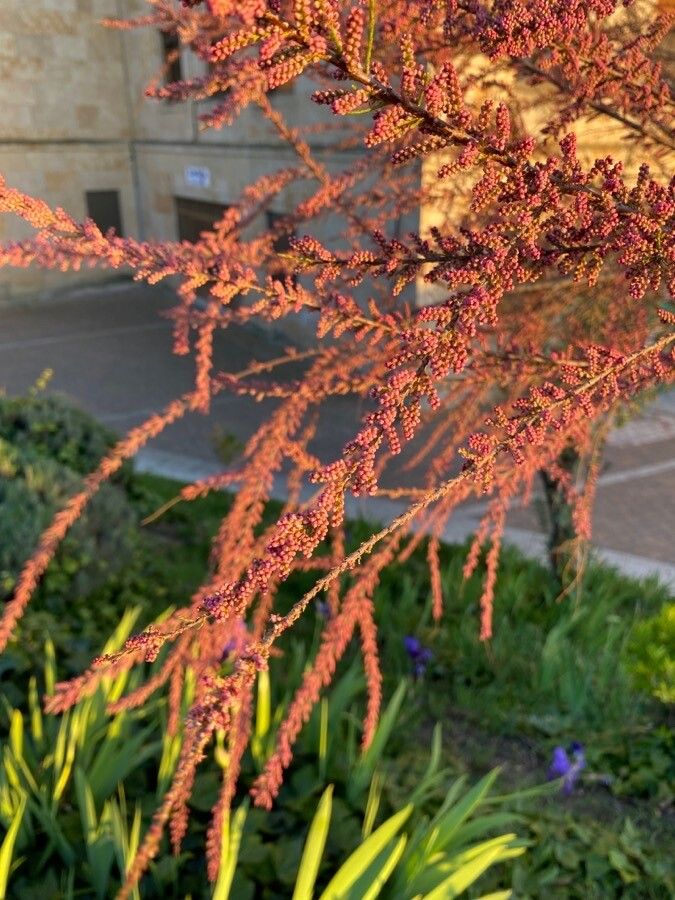
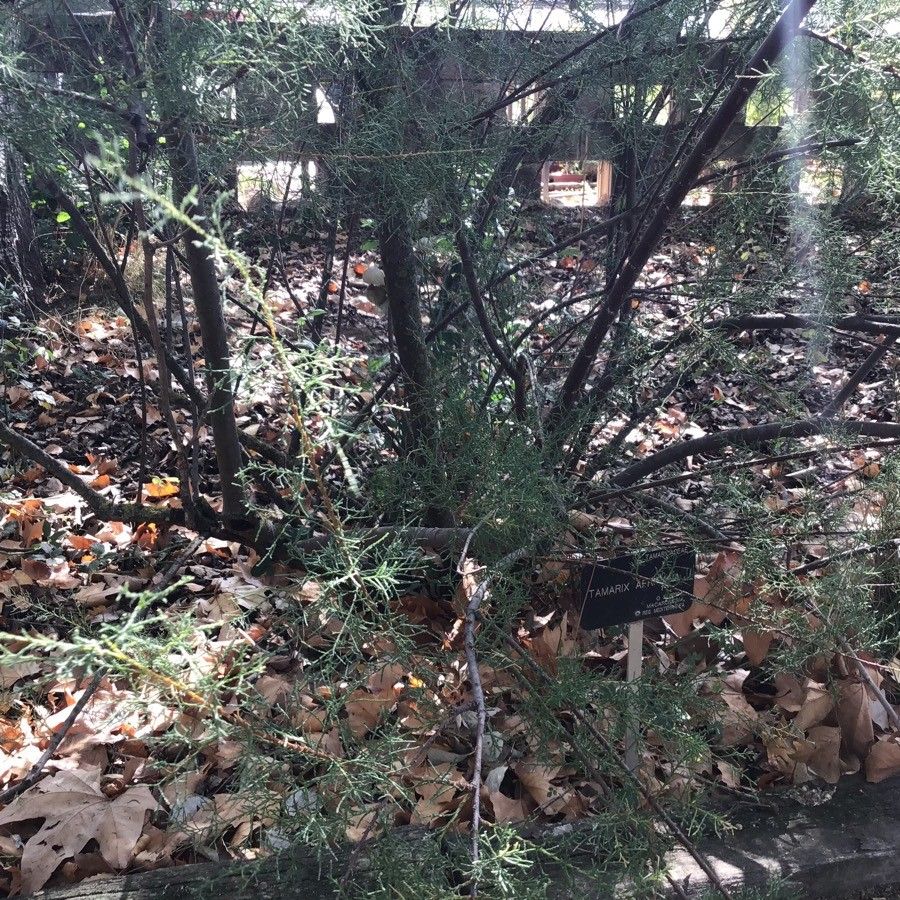
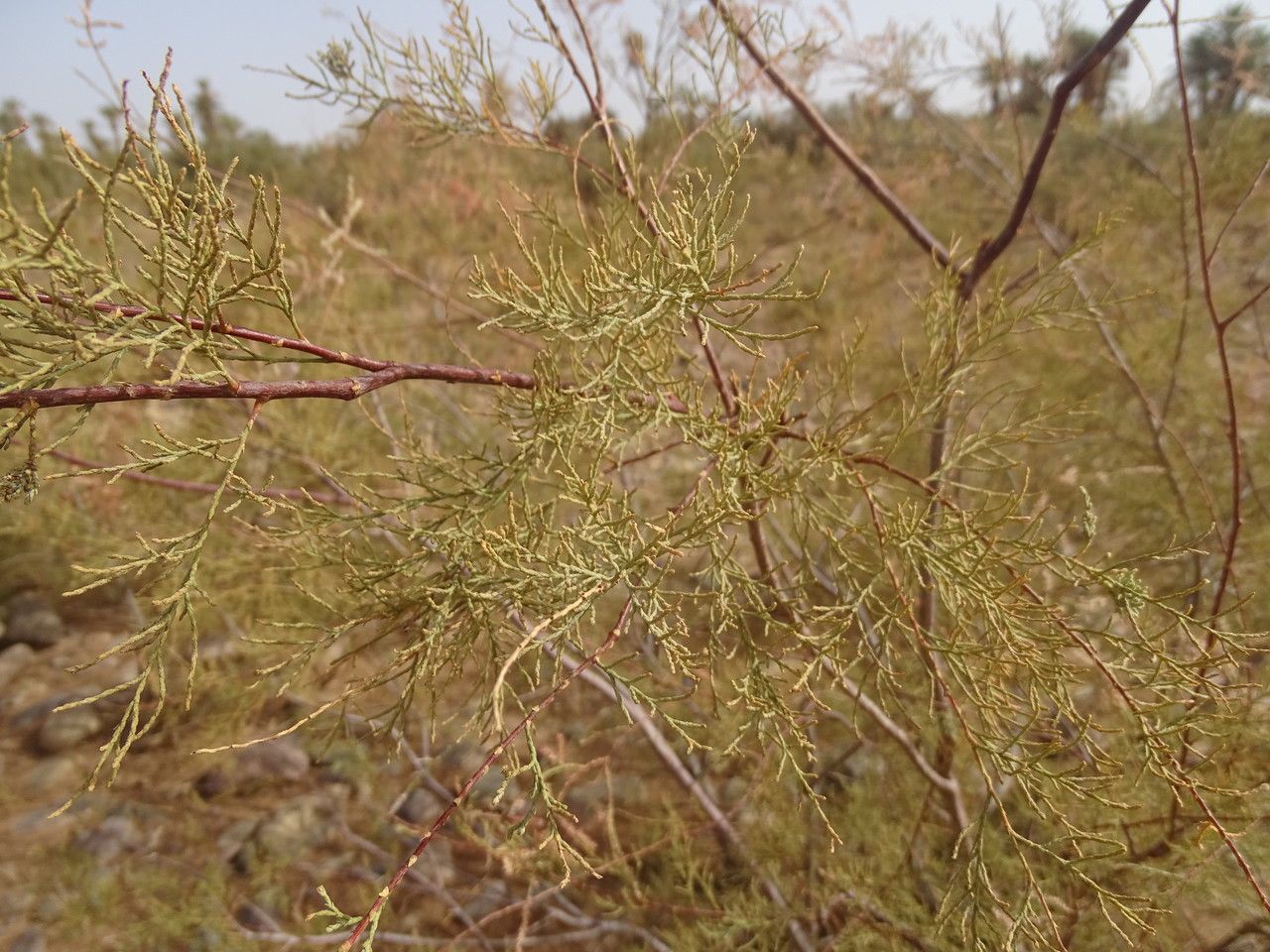
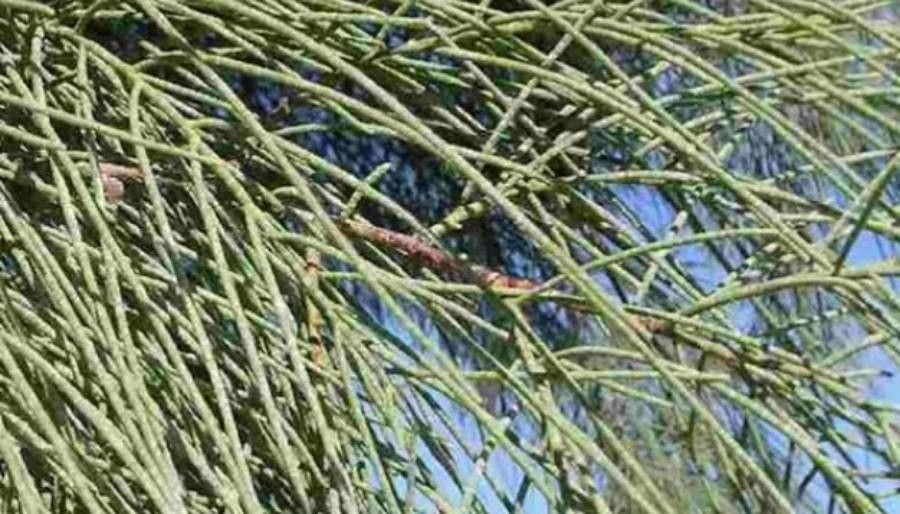
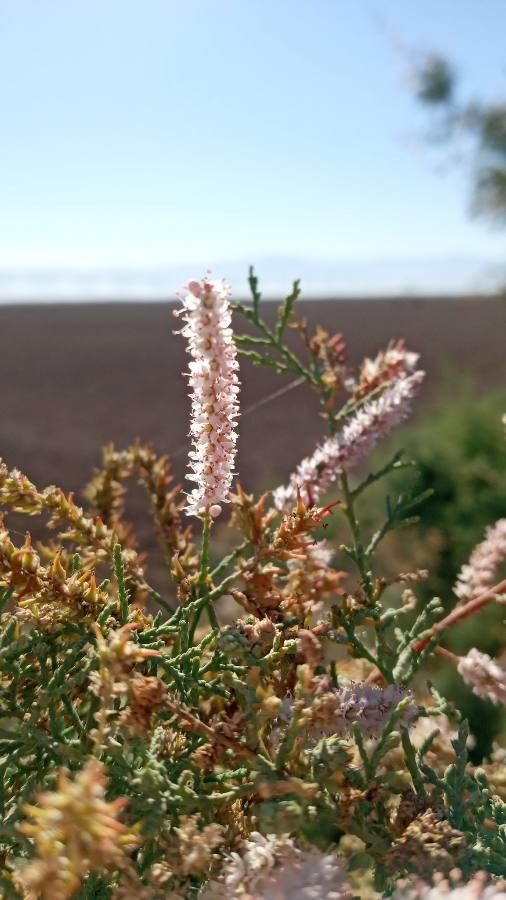
Tamarix parviflora is a species of tamarisk known by the common name smallflower tamarisk.It is native to south-eastern Europe (in Albania, East Aegean Islands, Greece, Crete, , Turkey, Turkey-in-Europe, Yugoslavia and to Iran and Palestine, (in Western Asia). It has been introduced elsewhere, in places such as; Algeria, Austria, Cape Provinces, Corsica, Italy, Libya, Mexico, Pakistan, Sicily, Spain, West Himalayas and western North America (Arizona, California, Colorado, Illinois, Kansas, Kentucky, Mississippi, Nevada, New Mexico, New York, North Carolina, Oklahoma, Oregon and Texas), where it is an invasive introduced species. It easily inhabits moist habitat, especially in saline soils. It is a shrub or tree growing up to about 5 meters tall. The branching twigs are covered in tiny linear leaves no more than 2 or 3 millimetres long. The inflorescence is a dense spike with flowers 1 to 4 centimeters long. Each tiny flower has four pink petals. It was first published and described by Augustin Pyramus de Candolle in Prodr. vol.3 on page 97 in 1828.
Smallflower tamarisk displays strong disease resistance and is usually not susceptible to illnesses. In terms of maintenance, this species is fairly low-maintenance. Planted outdoors, it needs only light watering, and larger specimens typically do not require pruning. Smaller plants, however, should be pruned after they finish blooming. Smallflower tamarisk is appropriate for anyone with an outdoor area, such as a garden or a deck, and does not demand extensive plant-care experience.
How to keep Tamarix Parviflora.
Light
The smallflower tamarisk does best when exposed to high‑intensity sunlight for many hours each day, which enhances its health and growth, especially in its native habitats. At the same time, it can tolerate somewhat lower light levels. However, light that is either too weak or too strong can damage its health.
Water
The smallflower tamarisk is a drought-resistant plant that thrives with minimal moisture and infrequent rainfall. It only needs to be watered every 2-3 weeks. Typically grown outdoors, it benefits from occasional rain during its active growth season. This natural precipitation supports its resilience by simulating its natural environment.
Humidity
This plant will thrive in moderate humidity, which is probably the level in your home. However, misting it a few times a week can be very beneficial. Make sure the room has good ventilation.
Temperature
Smallflower tamarisk is native to habitats where temperatures range from 32 to 90 °F (0 to 32 °C). During colder seasons it may need protection to keep the temperature within its preferred range. However, warmth is favored for optimal growth.
Fertilizer
The timing of fertilization is important for Smallflower tamarisk. Apply fertilizer in early spring and continue once a month through early summer. Fertilizer promotes attractive blooms and supplies energy during both dormant and active growth phases.
Pruning
The smallflower tamarisk is known for its small, clustered flowers and feathery foliage. Pruning in early spring is crucial; it involves removing dead wood and thinning the plant to improve air circulation, encourage growth, and control its size. Using clean, sharp tools minimizes the risk of disease, leading to better flowering and overall plant health.
Botanical profile.
- Plant Type
- Tree, Shrub
- Life Cycle
- Perennial
- Genus
- Tamarix
- Family
- Tamaricaceae
- Hardiness Zone
- 2-7
- Mature Height
- 4.88 m
- Mature Spread
- 6.1 m
- Leaf Color
- Green
- Leaf Type
- Deciduous
- Flower Color
- Pink
- Flower Size
- 2.54 cm
- Bloom Time
- Late spring, Early summer, Mid summer
- Planting Time
- Spring
- Harvest Time
- Mid summer
- Native Area
- Turkey, Italy, Spain, Israel, France, Albania, Algeria, Greece, Croatia, Slovenia, Serbia
Other names.
Reader questions.
How should I water my Smallflower tamarisk plant?
To promote excellent root development, it's best to place a garden hose at the base of your plants. Avoid spraying the leaves directly, as this can cause issues. If your plants are outdoors and in direct sunlight, the leaves will need additional watering. Using bubblers or soaker hoses is a great way to moisten the roots. When adding or removing plants, soaker hoses can cover the entire garden or bed, helping to ensure the roots are deeply watered. After watering, make sure to drain any excess water and allow the soil to dry before watering again. Watering at ground level is important to prevent diseases. On a sunny day, it may be beneficial to spray the entire bush with water. Whether your Smallflower tamarisk is potted or in the ground, remember that it prefers deep watering rather than light sprinkling.
Why is it important to add fertilizer to my Smallflower tamarisk plant?
Fertilizing your Smallflower tamarisk is important for several reasons. One of the main reasons is that it helps the plant produce beautiful flowers. To ensure the best blooms, it is recommended to fertilize in early spring. Additionally, fertilizer provides the plant with energy that it can store in the ground during its dormant phases. By giving your Smallflower tamarisk extra nutrients during fall planting or late spring, it will have more stored energy to use when it begins growing again.
What are the sunlight requirements for Smallflower Tamarisk?
Smallflower Tamarisk thrives best in full sunlight, which means it requires above 6 hours of sunlight each day. It can also tolerate partial sun, requiring about 3-6 hours of sunlight. It's essential to watch how sunlight moves through your garden to find spots that provide a perfect balance of light and shade, ensuring your plants' health and happiness. The plant's health and growth are significantly boosted when it's exposed to a high intensity of sunlight hours, especially in its native growth environments. However, it's important to note that both insufficient or excessive lighting can negatively impact the plant's health.
What is the ideal temperature range for Smallflower tamarisk?
Smallflower tamarisk thrives in environments with a temperature range of 32°F to 90°F (0°C to 32°C). It is essential to maintain this temperature range for the plant's optimal growth. Although Smallflower tamarisk is highly cold-tolerant, protective measures might be needed in colder seasons to preserve its preferred temperature conditions. In regions with warmth, no additional measures are required as the plant prefers warmer climates for optimal growth.
What should I do if I give too much or too little water to Smallflower tamarisk?
If a Smallflower tamarisk is overwatered, it will display symptoms such as yellowing, dropping, and wilting of leaves. The plant may also appear unhealthy with mushy stems. In such cases, it's advisable to adjust your watering schedule. Conversely, wilting can also indicate under watering, with leaves becoming crispy and dry. When the soil is dry and simply watering isn't enough, give the plant a thorough watering. However, even with proper watering, the Smallflower tamarisk may still have dry and yellow leaves for a few days due to root damage. Once the plant returns to normal, the yellowing of leaves will stop. When keeping a Smallflower tamarisk indoors, always check the moisture levels and avoid overwatering. Look out for black spots, and if present, allow the soil to dry out by not watering for a few days. Overwatering can lead to root rot, so if you notice discolored and slimy roots, consider transferring the plant to a different pot. Take precautions to prevent root rot and avoid excessively soggy soil. When planting the Smallflower tamarisk outdoors, ensure the soil is adequately moist. If your fingers reveal dry soil, it may require more watering to aid the plant's recovery.
When should I fertilize my Smallflower tamarisk?
To effectively fertilize Smallflower tamarisk, it is important to time it right. If fertilizer is applied too early, when the plant is still dormant, it will not be effective and will be washed away by rainwater, causing waste and pollution. To ensure proper fertilization, the first application should be done in early spring, and then continue fertilizing monthly until early summer.
How can artificial lighting be used for Smallflower Tamarisk?
Indoor Smallflower Tamarisk plants require adequate lighting for optimal growth, particularly when natural sunlight is insufficient, like in winter or less sunny spaces. Artificial lights offer a vital solution, promoting faster, healthier growth. You should choose the right type of artificial light, such as LED lights, which can be customized to provide specific wavelengths that your plants need. Full sun plants need 30-50W/sq ft, partial sun plants need 20-30W/sq ft, and full shade plants need 10-20W/sq ft of artificial light. The light source should be placed 12-36 inches above the plant, and most plants need 8-12 hours of light per day to mimic natural daylight hours.
Does Smallflower tamarisk require any special winter care?
While Smallflower tamarisk is highly cold-tolerant and does not require additional frost protection during the winter, it is advised to water the plant generously before the first freeze in autumn. This precaution ensures the soil remains moist and enters a frozen state, which helps in preventing drought and water scarcity for the plant during the winter and early spring months.
How frequently do I need to water my Smallflower tamarisk?
The Smallflower tamarisk prefers to be watered deeply but not often. If they are planted in pots, it is important to soak them in a gallon of water each time, as pot soil tends to dry out quickly. In cold regions, watering is needed every 3 to 5 days, preferably in the morning when the soil is dry. To determine if watering is necessary, check the top 2-3 inches of soil, and if it is dry, give the plant a thorough watering. On hot days, check the moisture daily as the soil can dry out rapidly. For garden plants in hot climates, watering once a week is sufficient, but only when the top 2-3 inches of soil are too dry. Avoid watering if there has been a lot of rainfall to prevent root rot. Adding mulch 3 to 4 inches deep can help conserve water when the tamarisk is outdoors. Sandy soil requires more frequent watering, while clay soil needs less to prevent root rot. Keeping track of watering dates on a calendar can help ensure the plants are not watered too late. If the leaves start to droop, it may be a sign that watering is overdue.
When is it not a good idea to add fertilizer to my Smallflower tamarisk?
To ensure optimal blooming, it is advisable to avoid using fertilizer with excessive nitrogen on Smallflower tamarisk. Instead, seek out fertilizers with lower levels of nitrogen in comparison to other nutrients. Furthermore, refrain from fertilizing the plant during late autumn to prevent excessive growth before winter sets in. Additionally, it is important to avoid fertilizing the Smallflower tamarisk during periods of hot and dry weather, as dry soil does not effectively deliver the fertilizer and can stimulate growth that requires additional water which may not be readily available. It is recommended to apply fertilizer earlier in the season when temperatures are cooler. Lastly, keep in mind that Smallflower tamarisk can absorb fertilizer that has been applied to neighboring plants or lawns, so exercise caution to avoid inadvertently providing the tree/shrub with a double-dose of fertilizer.
What are the symptoms of inadequate light for Smallflower Tamarisk?
When Smallflower Tamarisk doesn't receive enough light, it may exhibit various symptoms: smaller new leaves, leggy or sparse growth, faster leaf drop, slower or no new growth, lighter-colored new leaves, and conditions such as chlorosis, sunscald, leaf curling, wilting, and leaf scorching. These symptoms indicate the plant's struggle with insufficient sunlight, affecting its photosynthesis process, health, and overall growth.
What are the symptoms of inappropriate temperatures for Smallflower tamarisk?
Smallflower tamarisk shows remarkable resilience to low temperatures, tolerating conditions as low as -40°C. However, dropping below this temperature threshold can lead to the branches becoming brittle and dry by spring, without the emergence of new shoots. On the other extreme, temperatures exceeding 32°C are not well-tolerated, resulting in significant leaf drop and potentially the entire plant withering and dying. These conditions indicate the plant is in distress due to inappropriate temperature exposure.