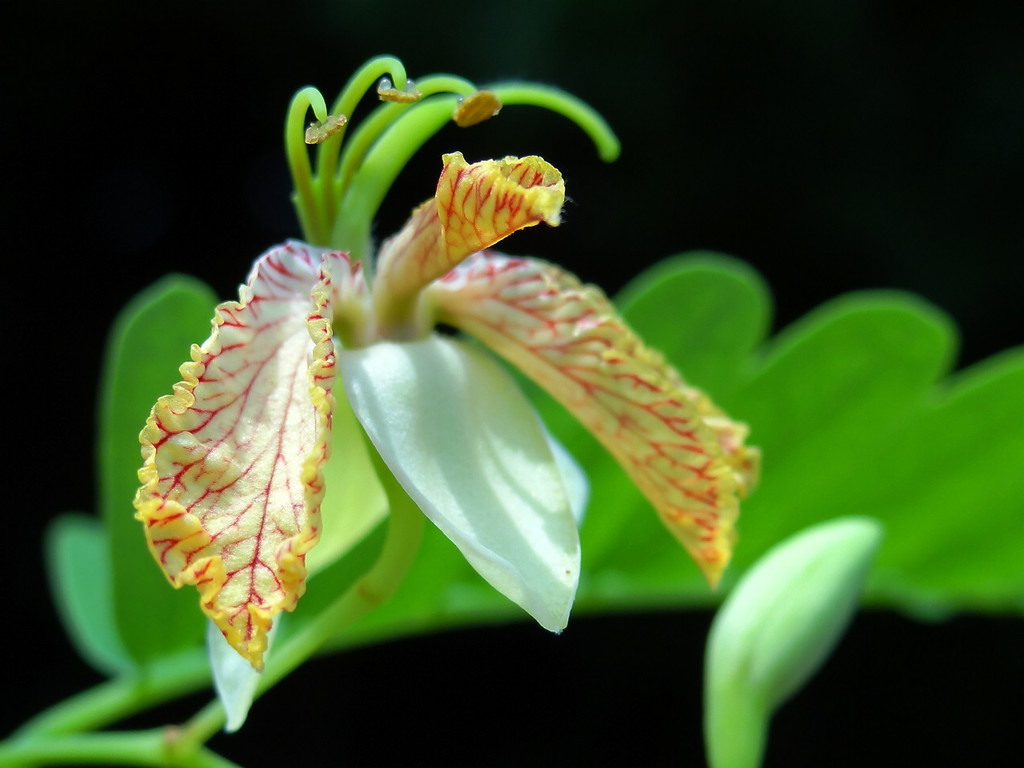
Tamarindus indica, commonly known as tamarind, is a tropical tree species in the Fabaceae family. Originally native to Africa, it is now widely cultivated in tropical regions worldwide. The tree can grow up to 25 meters tall and features a dense canopy of foliage with pinnate leaves measuring 10-15 cm in length.
The tamarind tree produces fruit in the form of brown, pod-like structures with hard outer shells and sticky pulp inside. This pulp is rich in tartaric acid, giving it a distinctive sour taste and making it a popular ingredient in sauces, chutneys, and beverages.
Beyond its culinary uses, tamarind boasts medicinal properties due to its high levels of antioxidants and anti-inflammatory compounds. Traditionally, it has been used to treat digestive disorders like constipation and diarrhea.
Tamarind trees are also valued for their timber, which can be used for furniture making or as fuelwood. Additionally, they provide much-needed shade in hot climates, making them popular as ornamental trees.
In summary, Tamarindus indica holds significant cultural importance due to its diverse applications, from culinary to medicinal, making it an important plant species globally.
Tamarind shows strong resistance to disease and is typically not susceptible to illnesses. In terms of care, the plant is fairly low-maintenance. When grown outdoors it needs little watering, and larger specimens usually do not require pruning. Smaller plants, however, should be pruned after they have finished blooming. Tamarindt is appropriate for anyone who has an outdoor area, such as a garden or deck, and does not demand much prior care experience.
How to keep Tamarindus Indica.
Light
Tamarind does best with abundant light, reflecting the loamy, open-forest habitat it comes from. Bright light enhances its growth and overall vigor. However, uneven light—either too little or too much—can hinder its development and lower fruit yield. It does not require any particular light exposure throughout its growth stages.
Water
Tamarind comes from semi-arid regions, making it naturally drought-tolerant and able to thrive with infrequent rainfall. Watering it every two weeks replicates its natural conditions. Usually grown outdoors, tamarind develops a strong root system that efficiently uses water during the growing season. This adaptability helps it survive in different climate zones.
Humidity
This plant will thrive in moderate humidity, which is probably the level in your home. However, misting it a few times a week can be very beneficial. Make sure the room has good ventilation.
Temperature
Tamarind is commonly cultivated in regions with temperatures ranging from 68 to 100.4 °F (20 to 38 °C). It prefers a warm tropical climate. In colder seasons, protect it from low temperatures that can negatively affect its growth.
Fertilizer
Select organic fertilizers (e.g., fish emulsion, compost) instead of chemical fertilizers for Tamarind. Supply young plants with higher nitrogen and phosphorus during spring. Incorporate compost or fertilizer before or after planting. For mature plants, supplement in spring with a balanced fertilizer or one aimed at specific deficiencies. Nutrient deficiency causes small leaves, short branches, yellow or bronze leaves, acidic fruits, premature fruit fall, and splitting.
Pruning
Tamarind trees have delicate, feathery leaves and produce pod-like fruits. Proper pruning techniques, such as removing dead branches and thinning out crowded areas, are essential for their health. The best time to prune is in early to mid-spring, as this improves air circulation and encourages healthy growth. For optimal results, always use clean tools when pruning.
Botanical profile.
- Plant Type
- Tree
- Life Cycle
- Perennial
- Genus
- Tamarindus
- Family
- Fabaceae
- Hardiness Zone
- 10-11
- Mature Height
- 12.19 m to 18.29 m
- Mature Spread
- 9.14 m to 14.94 m
- Leaf Color
- Green, Orange
- Leaf Type
- Evergreen
- Flower Color
- Yellow, Red
- Flower Size
- 2.54 cm
- Bloom Time
- Late spring, Early summer, Mid summer
- Planting Time
- Spring, Autumn
- Harvest Time
- Early spring, Mid spring, Late summer, Fall, Winter
- Native Area
- Burkina Faso, Djibouti, Somalia, Malawi, South Africa, Zambia, Madagascar, Sudan, Nigeria, Yemen, Kenya, Niger, Uganda, Tanzania, Zimbabwe, Mali, Guinea-Bissau, Benin, Chad, Sierra Leone, Cameroon, Liberia, Mozambique, Burundi, Togo, Ghana, Senegal, Ethiopia, Côte d'Ivoire, Congo (DRC), Central African Republic
Other names.
Reader questions.
How should I water my Tamarind tree in the best way?
You don't need to be too particular about how you water your Tamarind plant. You can use any standard watering tool like a watering can, hose, or even a cup. Just make sure to water directly onto the soil and distribute the water evenly to all parts of the root system. It's better to use filtered water to avoid harmful particles found in tap water. Also, try to use water that is at or slightly above room temperature, as really cold or hot water can be a bit of a shock to the plant. However, the Tamarind plant generally adapts well to any type of water you use.
Why should I put fertilizer on my Tamarind plant?
If the soil in your area is rich, fertilizing may not be necessary. But if the soil lacks nutrients, it can affect the growth of a Tamarind tree, resulting in insufficient leaves, flowers, and fruits. Conducting a soil test is the most reliable method to determine the nutrient levels in the soil, highlighting any deficiencies. Nutrient deficiency in Tamarind can lead to smaller leaves, shorter branches, yellowing or bronze-colored leaves, and less delicious fruits that are more acidic. In some cases, nutrient deficiency can also cause premature fruit dropping or splitting.
What are the sunlight requirements for Tamarind plants?
Tamarind plants, known by their botanical name Tamarindus indica, require above 6 hours of sunlight to thrive, reflecting their need for full sun exposure. It's crucial to observe the movement of sunlight through your garden to ensure that your plants receive a balanced combination of light and shade, which contributes to their optimal growth and happiness. Tamarind's health and fruit yield can be affected by both excessive and insufficient light, mimicking its natural habitat in loamy, open forests where it is accustomed to abundant light.
What is the ideal growing temperature for Tamarind?
Tamarind thrives in warm, tropical climates and prefers temperatures ranging between 68 to 100.4 °F (20 to 38 °C). It is extremely heat-loving, indicating that its growth is optimum within these temperature ranges. During colder seasons, it's essential to protect Tamarind from low temperatures, as they adversely affect its growth. Keeping the plant indoors in winter near a bright window, yet away from heaters, and ensuring the temperature stays above 20°C is beneficial for its health. It’s important to note that temperatures nearing 5°C can be detrimental to the plant.
If I give my Tamarind tree too much or too little water, what should I do?
Outdoor plants, especially newly planted ones or seedlings, are prone to lack of watering. It's important to consistently water them for a few months while they are small or newly planted. Once the roots are established, Tamarind plants can rely on rain most of the time. If your Tamarind plant is in a pot, overwatering becomes more likely. In the event of accidental overwatering, take immediate action to address the situation. Stop watering the plant to minimize the impact of overwatering. Then, remove the Tamarind from the pot and inspect its roots. If there are no signs of root rot, you can return the plant to its container. However, if root rot is present, trim away the affected roots and consider applying a fungicide to prevent further damage. Repot the Tamarind in well-draining soil. On the other hand, underwatering a Tamarind plant is relatively easy to remedy. If you notice the leaves drooping, drying out, or falling off, it indicates underwatering. Simply water the plant more frequently, and you should see the leaves quickly regain their fullness. Make sure to correct your watering frequency as soon as you notice underwatering.
When should I fertilize my Tamarind tree?
To support the strong growth of young Tamarind plants, it is recommended to use higher nitrogen and phosphorus fertilizer. The best time to apply this fertilizer is during the spring of the first growing season. Prior to or right after planting, it is also beneficial to incorporate compost or another fertilizer into the soil. For mature Tamarind plants, it is advisable to supplement with a balanced or deficiency-specific fertilizer every few years during the spring and summer, according to the needs of the soil in your specific area. It is important to avoid fertilizing Tamarind in the autumn or winter.
How can artificial lighting support Tamarind growth indoors?
Indoor Tamarind plants benefit greatly from adequate artificial lighting, especially when natural sunlight is insufficient, such as during winter or in less sunny spaces. Using the right type of artificial light, like LED lights, can provide the specific wavelengths required for optimal plant growth. Full sun plants need about 30-50W/sq ft, partial sun plants require 20-30W/sq ft, and full shade plants need 10-20W/sq ft of artificial light. Positioning the light source 12-36 inches above the plant and ensuring it receives 8-12 hours of light per day can mimic natural sunlight conditions, promoting healthier and faster growth.
What are the symptoms of Tamarind exposed to low temperatures?
When Tamarind is exposed to temperatures below its preferred warmth, its leaves may lighten in color as a response to the cold. Should the temperature fall below 1°C, frost damage may occur, turning the leaf color gradually brown or black, accompanied by wilting and drooping. It's crucial to keep Tamarind in environments above 20°C, especially during winter, ensuring the temperature remains above 5°C to prevent these adverse effects.
How often do I need to water my Tamarind tree?
Most plants can grow with sufficient rainfall. But if your area doesn't get enough rain, you should water your plants every 2 weeks in the spring and fall. In the summer, you'll need to water them more often. In winter, when growth slows down and plants need less water, you can water them less frequently or not at all. However, if your Tamarind is young or newly planted, you should water it more often to help it establish and grow into a drought-tolerant plant. For potted Tamarind plants, you have two options to determine watering frequency. One is to follow a set schedule, such as watering once a week or once every two weeks. However, this may not always be accurate for your specific plant's growing conditions. Another option is to check the soil moisture. Typically, it's best to wait until the top two to four inches of soil have dried out completely before watering again. This applies to about one-third to half the depth of the pot.
When is it best to not fertilize my Tamarind tree?
It is advisable to refrain from fertilizing Tamarind after pruning or when it is diseased, infested with insects, or under stress. Fertilizer is only effective in addressing nutrient deficiencies in the soil and cannot resolve other issues that may affect the Tamarind. It is important to accurately diagnose the problem before adding fertilizer, as there may be alternative causes. Additionally, avoid fertilizing Tamarind during winter or during excessively hot and dry periods in the summer.
What are common symptoms of light deficiency in Tamarind plants?
Tamarind plants exhibit several symptoms when suffering from light deficiency, including small and lighter-colored new leaves indicating a lack of chlorophyll, leggy or sparse growth due to the longer spaces between leaves or stems, and faster leaf drop as the plant conserves resources. A halt in new growth signals the plant’s shift to survival mode under poor lighting. Conversely, symptoms of excessive light exposure include chlorosis where leaves turn yellow, sunscald with pale or necrotic spots on leaves, leaf curling as a defense against water loss, wilting due to excessive transpiration, and leaf scorching characterized by brown, dry edges on leaves.
How should you care for Tamarind in low temperatures?
If Tamarind has been exposed to frost or low temperatures, the frost-damaged parts should be trimmed off immediately, and the plant moved indoors to a warm environment for protection against the cold. Placing the plant near a south-facing window will ensure it receives ample sunlight. Additionally, it's important to avoid placing the plant near heaters or air conditioning vents as this may cause excessive dryness in the air, further stressing the plant.