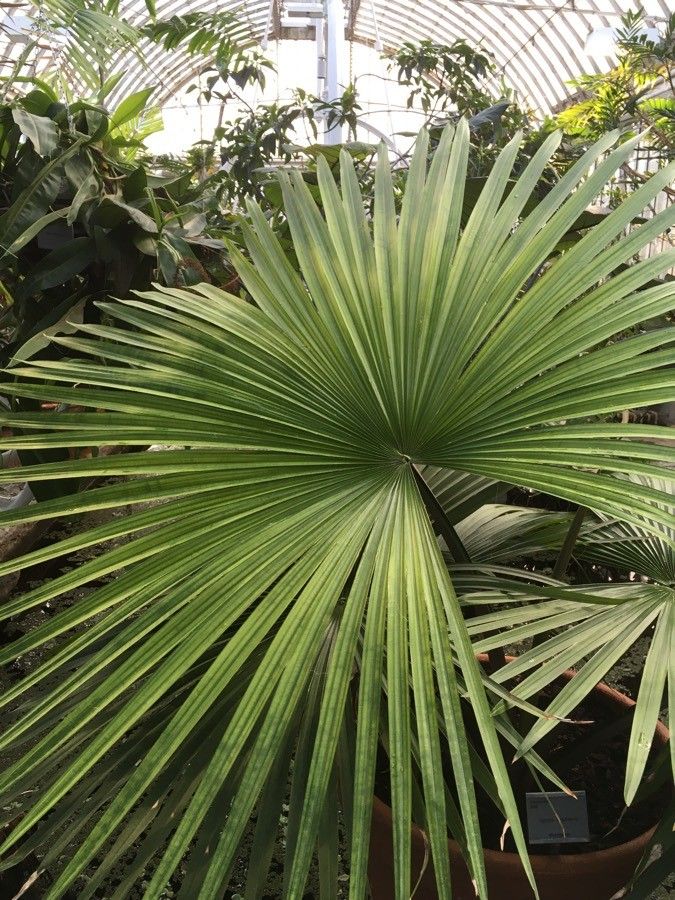
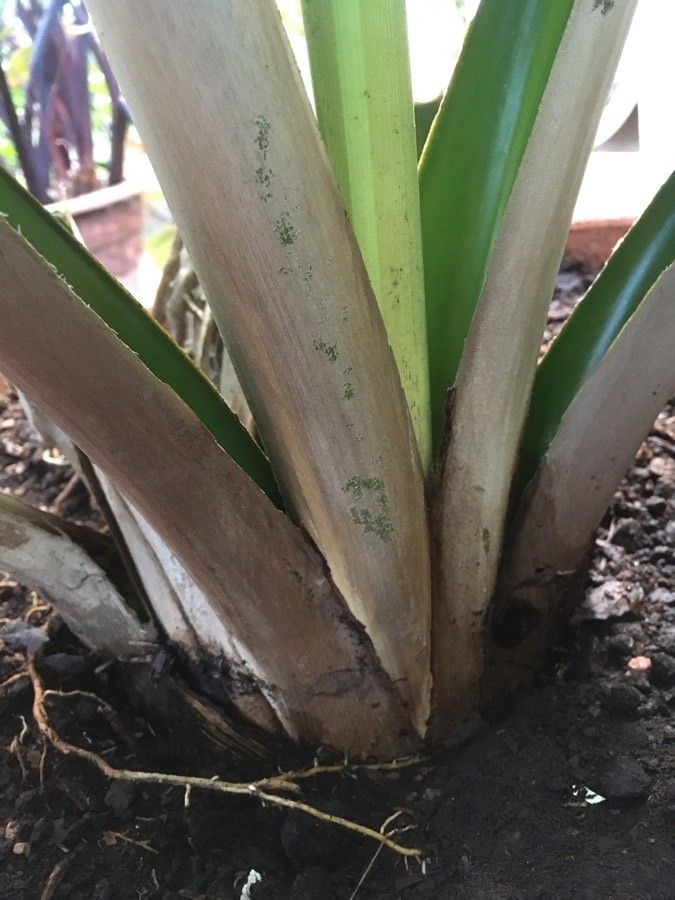
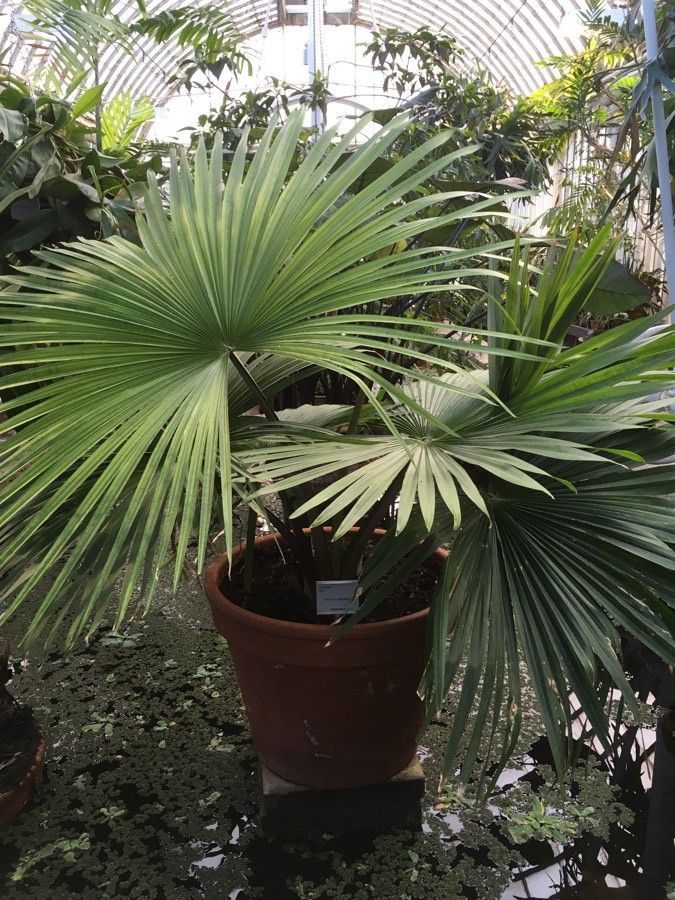
Tahina spectabilis, the tahina palm, also called blessed palm or dimaka is a species of gigantic palm that is found only in the Analalava District of northwestern Madagascar where its range is only twelve acres (4.8 hectares). It can grow 18 m (59 ft) tall and has leaves over 5 m (16 ft) across. The trunk is up to twenty inches (51 centimeters) thick, and sculpted with the most conspicuous leaf scars of any tree. An individual tree was discovered when in flower in 2007; it was first described the following year as a result of photographs being sent to Kew Gardens in the United Kingdom for identification. The palm is thought to live for up to fifty years before producing an enormous inflorescence up to nineteen feet (eight meters) in height and width, surpassed in size only by Corypha spp. and by Metroxylon salomonense and being monocarpicsubsequently dying. The inflorescence, a panicle, consists of hundreds or thousands of three-flowered clusters which bloom in three consecutive "cohorts". Fewer than one hundred adult individuals of the species are thought to exist and the International Union for Conservation of Nature has rated it as "critically endangered".
Botanical profile.
Other names.