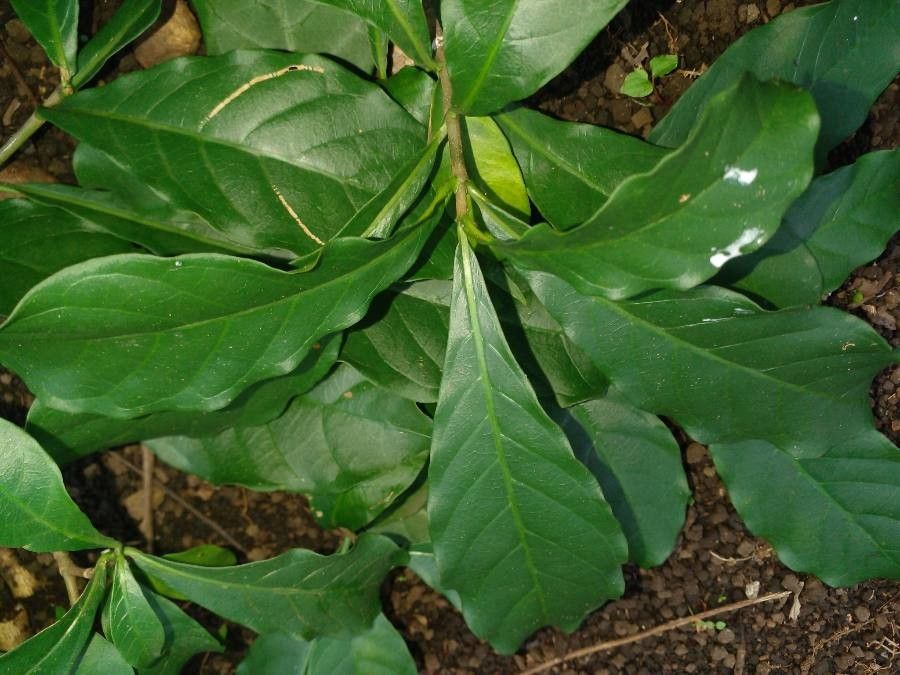
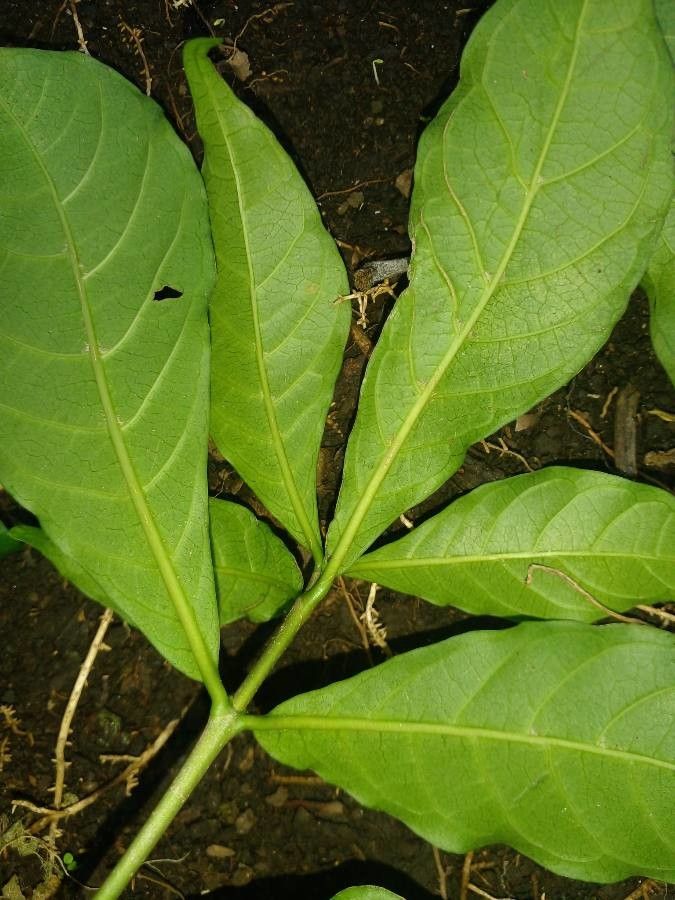
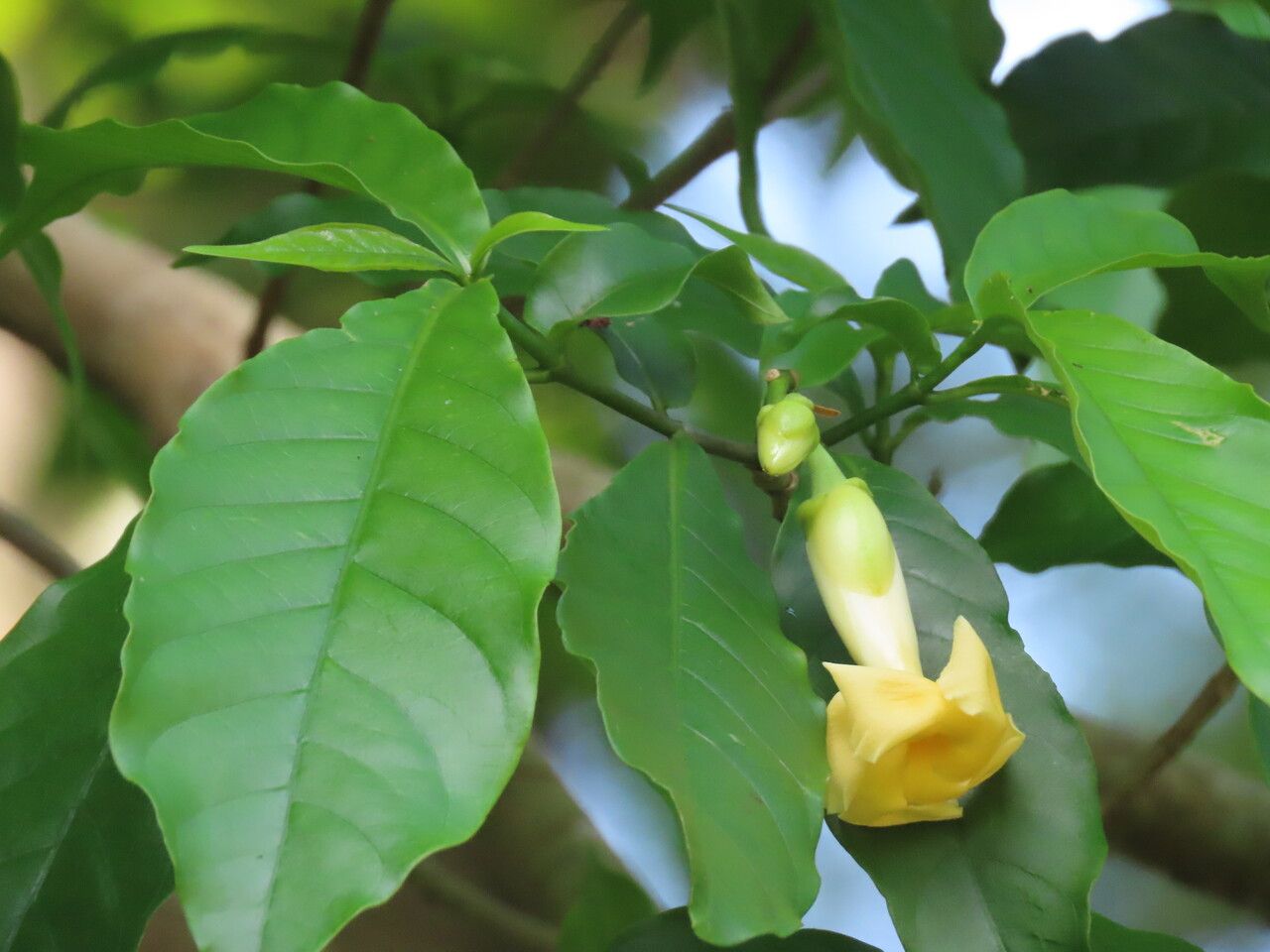
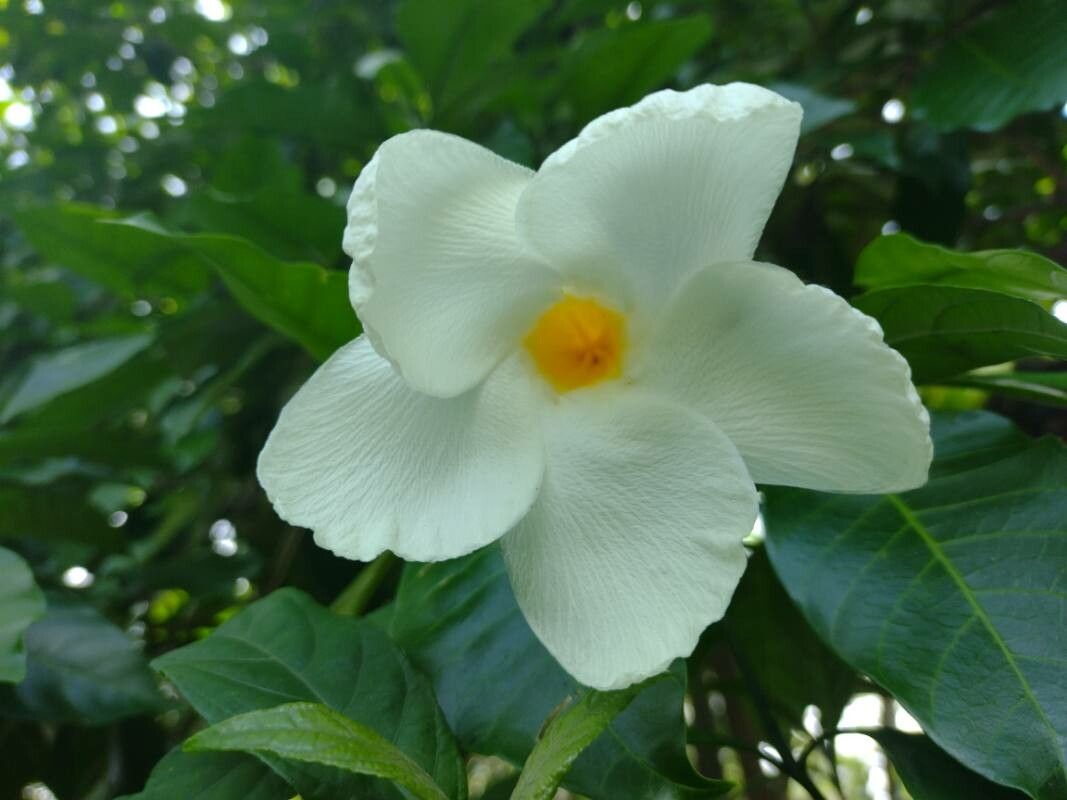
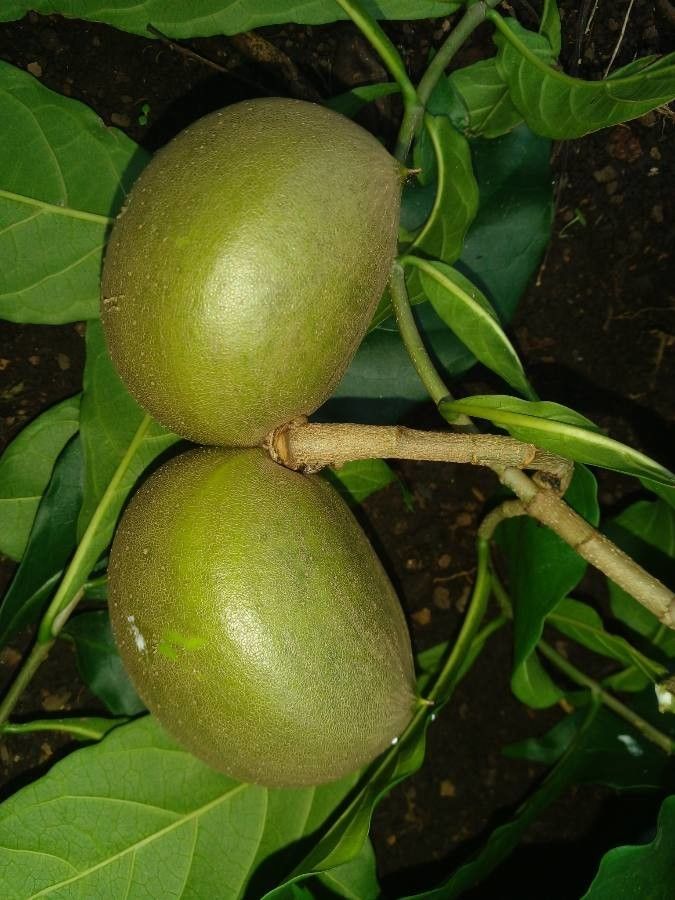
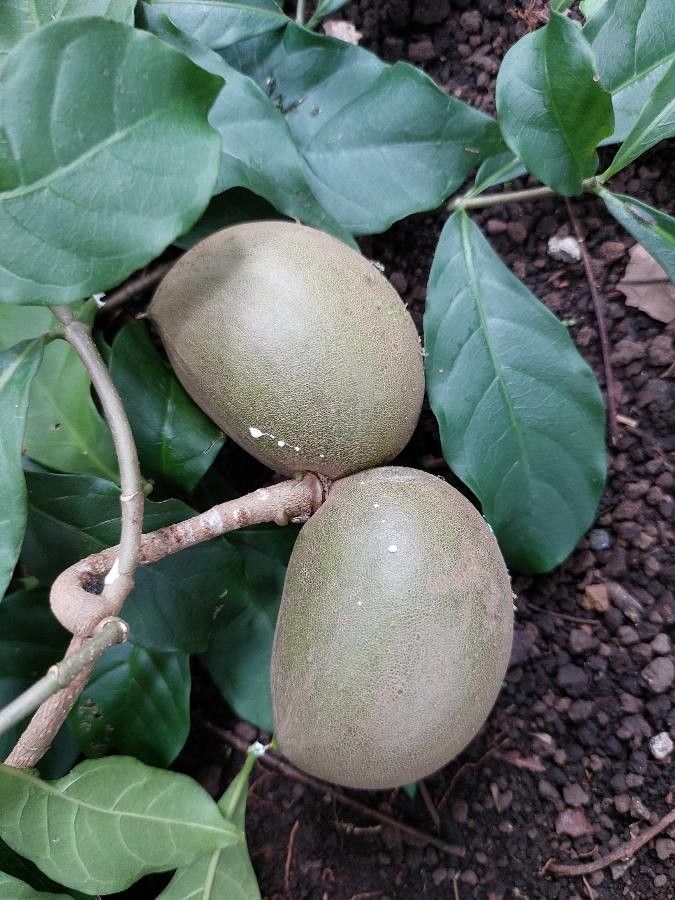
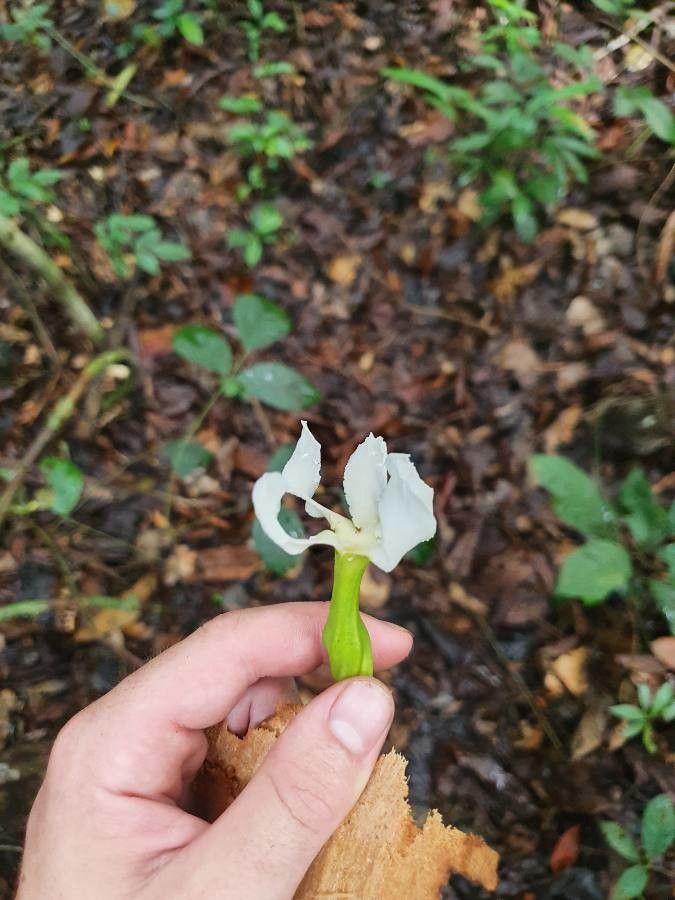
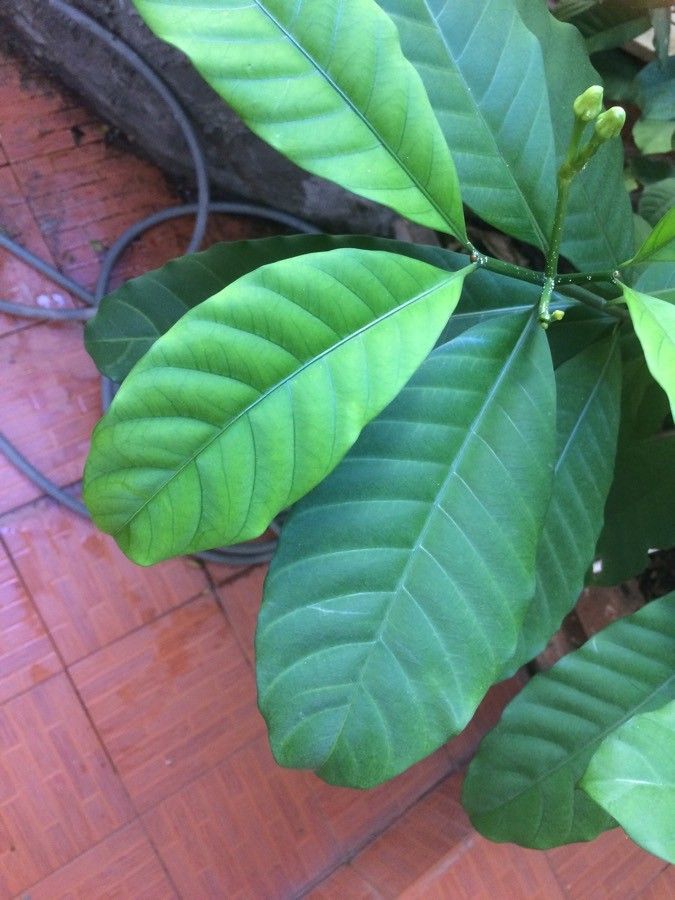
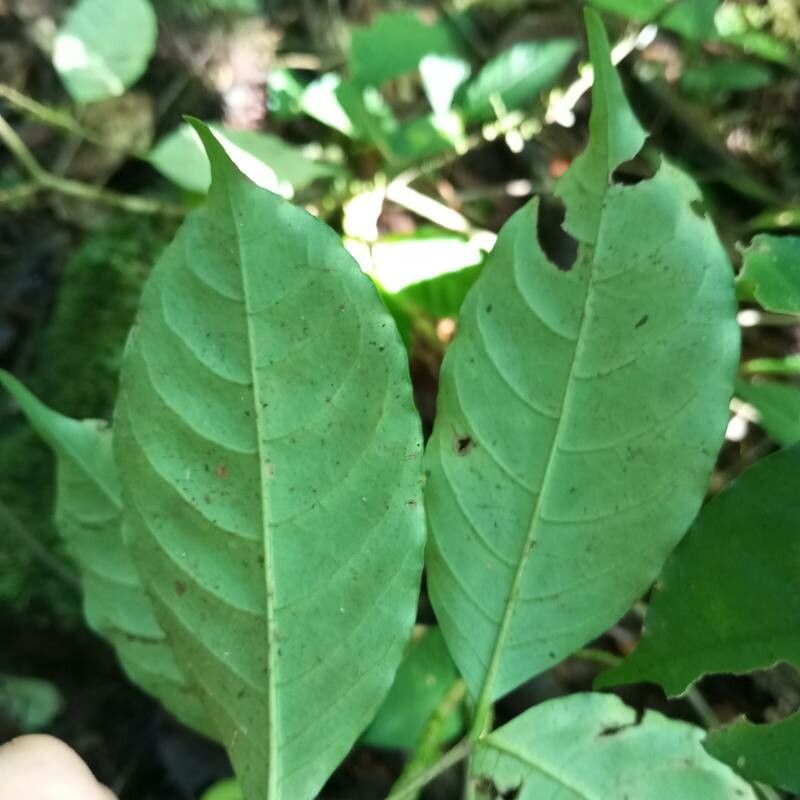
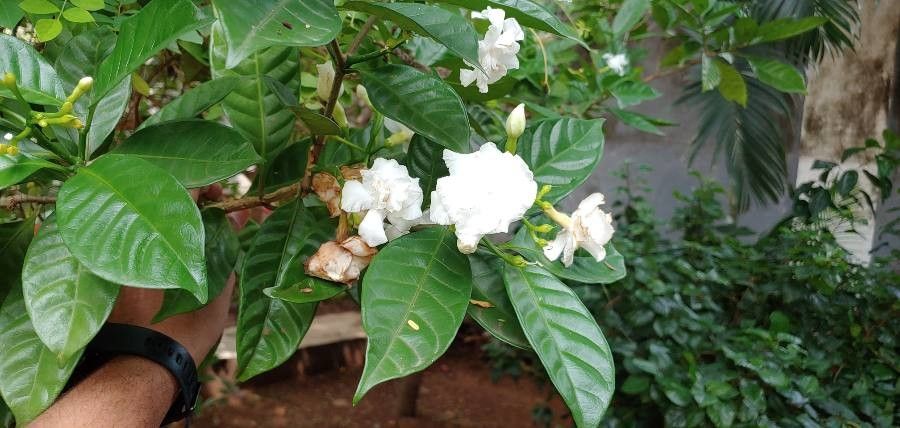
Tabernaemontana donnell-smithii is an evergreen tree in the dogbane family Apocynaceae commonly known as the horse balls tree. In Spanish, it is huevos de caballo, cojones de burro, cojón de mico, or cojotón. The name, huevos de caballo, comes from the oval shape of the tree's hanging fruit. It is native to Mexico and Central America. The type locality is San Felipe, Retalhuleu in Guatemala. Tabernaemontana donnell-smithii is similar to Tabernaemontana glabra, except that its leaves and flowers are smaller and its fruit is larger.Tabernaemontana donnell-smithii lives in a variety of habitats, including various types of forest, the forest edge, and pastures. It grows up to 20 metres (66 ft) tall, although the height is partially dependent on the habitat. Trees living in secondary growth areas, forest edges and pastures are generally shorter but broader than those in forests. The flowers are yellow, and may appear at different times of the year depending on the location. Foster and McDiarmid found that the slow growing fruit is about 7 to 10 centimetres (2.8 to 3.9 in) long and weighs an average of about 143 grams (5.0 oz). The fruit is enclosed in a woody husk which represents more than three-quarters of the fruit's weight. When the fruit is open, a slit forms in the husk permitting access to the arils, each of which covers a seed.The fruit of Tabernaemontana donnell-smithii is eaten by birds such as parrots, and by the white-headed capuchin, and the seeds are eaten by birds such as flycatchers, motmots, honeycreepers, manakins and woodpeckers. Many primarily insectivorous birds eat the fruits opportunistically late in the dry season, when the most of the fruit ripens and when insects are relatively scarce. Its seeds are dispersed primarily by birds. A study by McDiarmid, Ricklefs and Foster found that birds also help the seeds germinate, both by removing the arils from the seeds and also by scarifying the seeds.The bark contains the alkaloids tabernanthine and voacamine. The seeds contain the alkaloids coronaridine and tabersonine.
Horse balls have strong disease resistance and are generally not prone to disease. Regarding care, this plant is fairly low-maintenance. When grown outdoors it needs minimal watering, and larger plants usually do not require pruning. Smaller plants, however, should be pruned after they have bloomed. Horse balls are suitable for anyone with an outdoor area, such as a garden or deck, and do not demand much care experience.
How to keep Tabernaemontana Donnell Smithii.
Light
Horse balls is native to habitats such as forest understories and rocky areas, where it is naturally shaded. It prefers partial sun but can adapt to full sun or full shade, demonstrating its versatile and hardy nature.
Water
Horse balls originate from tropical rainforests, where they thrive in high humidity and require consistent moisture. To support their lush growth, they should be watered weekly, but care must be taken to avoid waterlogging. As an evergreen plant, horse balls need stable moisture levels throughout the year to maintain continuous foliage production, making them well-suited for indoor environments.
Temperature
Horse balls comes from tropical areas, where the climate is usually warm and humid. Consequently, it is well suited to high temperatures and humidity. It does not tolerate sudden temperature changes and prefers a steady temperature, so avoiding indoor temperature fluctuations is important. It generally cannot withstand cold and needs warmer conditions to grow. If the environmental temperature falls too low, the plant may stop growing or even die.
Fertilizer
The best time to fertilize a Horse balls is in early spring, when it breaks dormancy. This encourages overall growth and flower development. Fertilizer improves foliage, stems, and branches, while fostering large, vibrant, and long-lasting flowers. It assists in moving nutrients from the roots to the flowers and strengthens the plant's health and resistance to disease.
Pruning
Horse balls benefit greatly from early spring pruning. This process involves removing dead branches to improve air circulation and shape the plant. Thinning helps prevent overcrowding, promoting healthy growth and vigorous blooming in accordance with its growth cycle. Regular pruning is essential to maintain its attractive structure and overall health.
Botanical profile.
- Plant Type
- Shrub
- Life Cycle
- Perennial
- Genus
- Tabernaemontana
- Family
- Apocynaceae
- Hardiness Zone
- 10-12
- Mature Height
- 6.1 m to 10.06 m
- Mature Spread
- 3.96 m to 6.1 m
- Leaf Color
- Dark Green
- Leaf Type
- Evergreen
- Flower Color
- White
- Flower Size
- 3.05 cm to 5.08 cm
- Bloom Time
- Late spring, Summer, Early fall
- Planting Time
- Spring, Autumn
- Harvest Time
- Late summer, Fall, Early winter
- Native Area
- Belize, Honduras, Mexico, Guatemala, El Salvador, Nicaragua, Costa Rica, Panama
Other names.