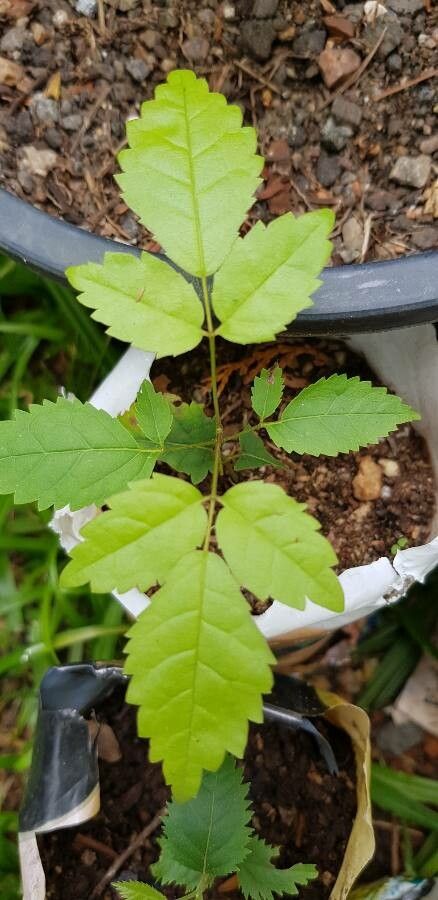
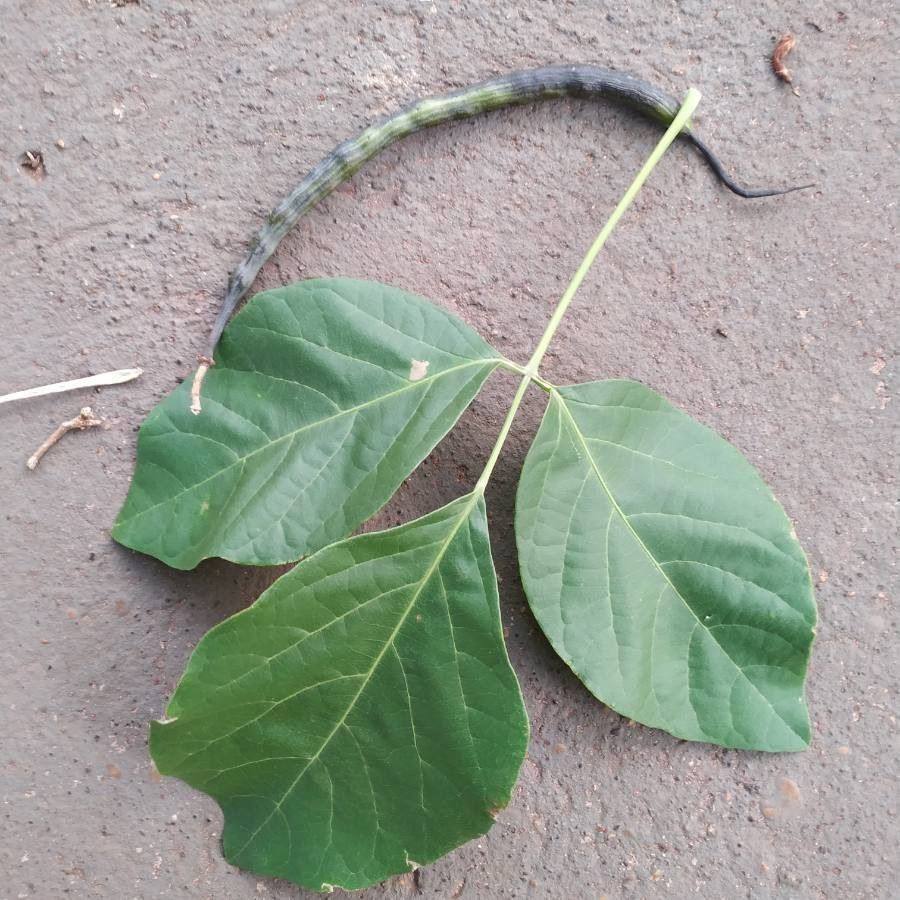
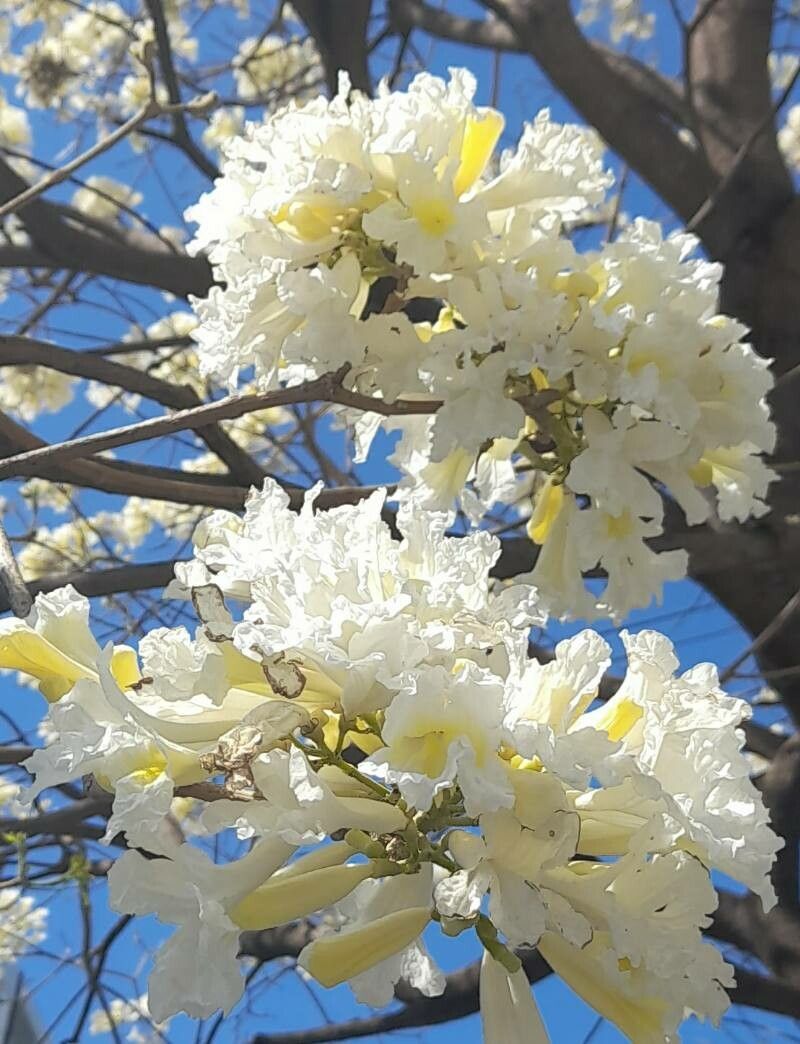
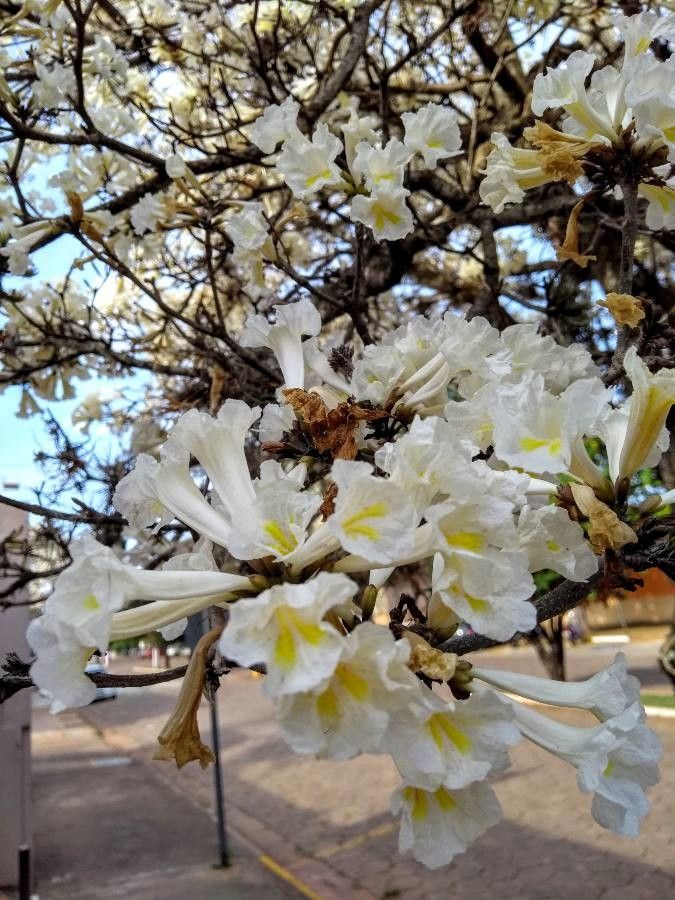
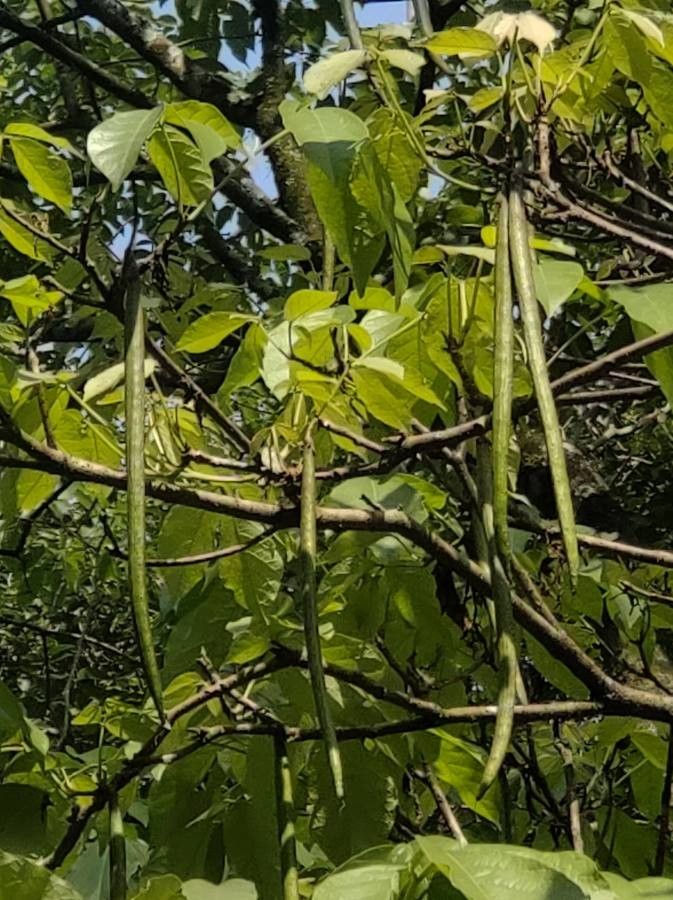
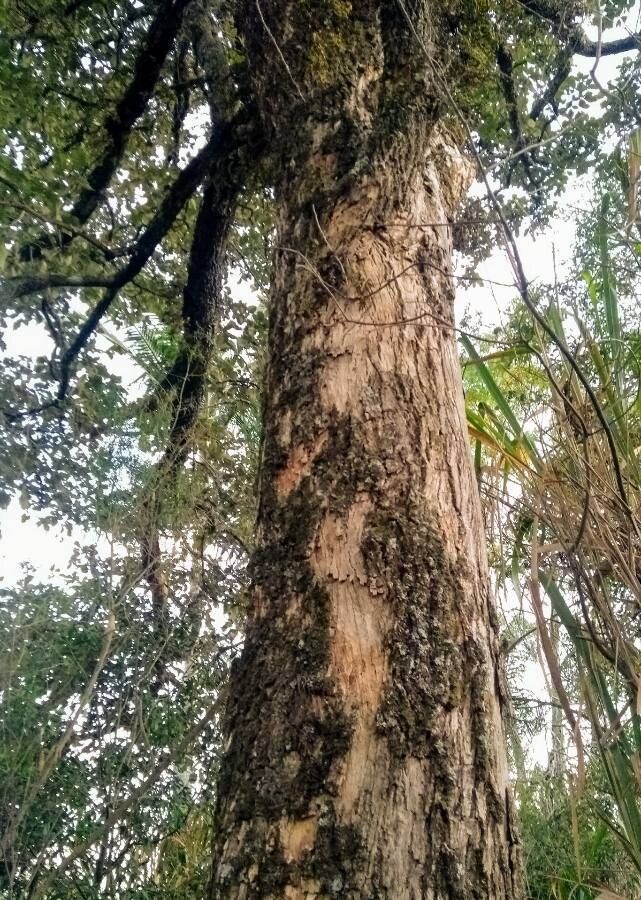
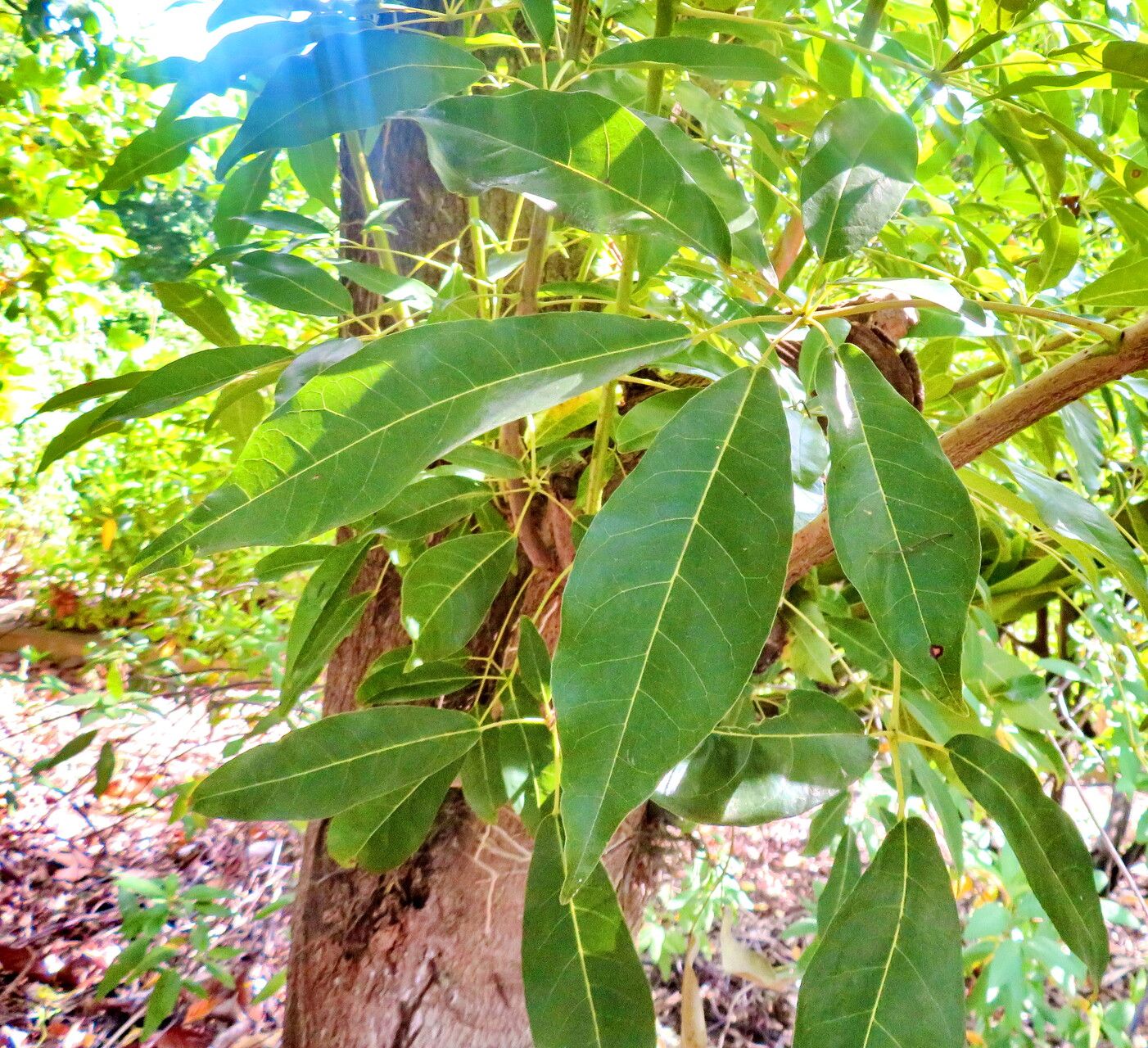
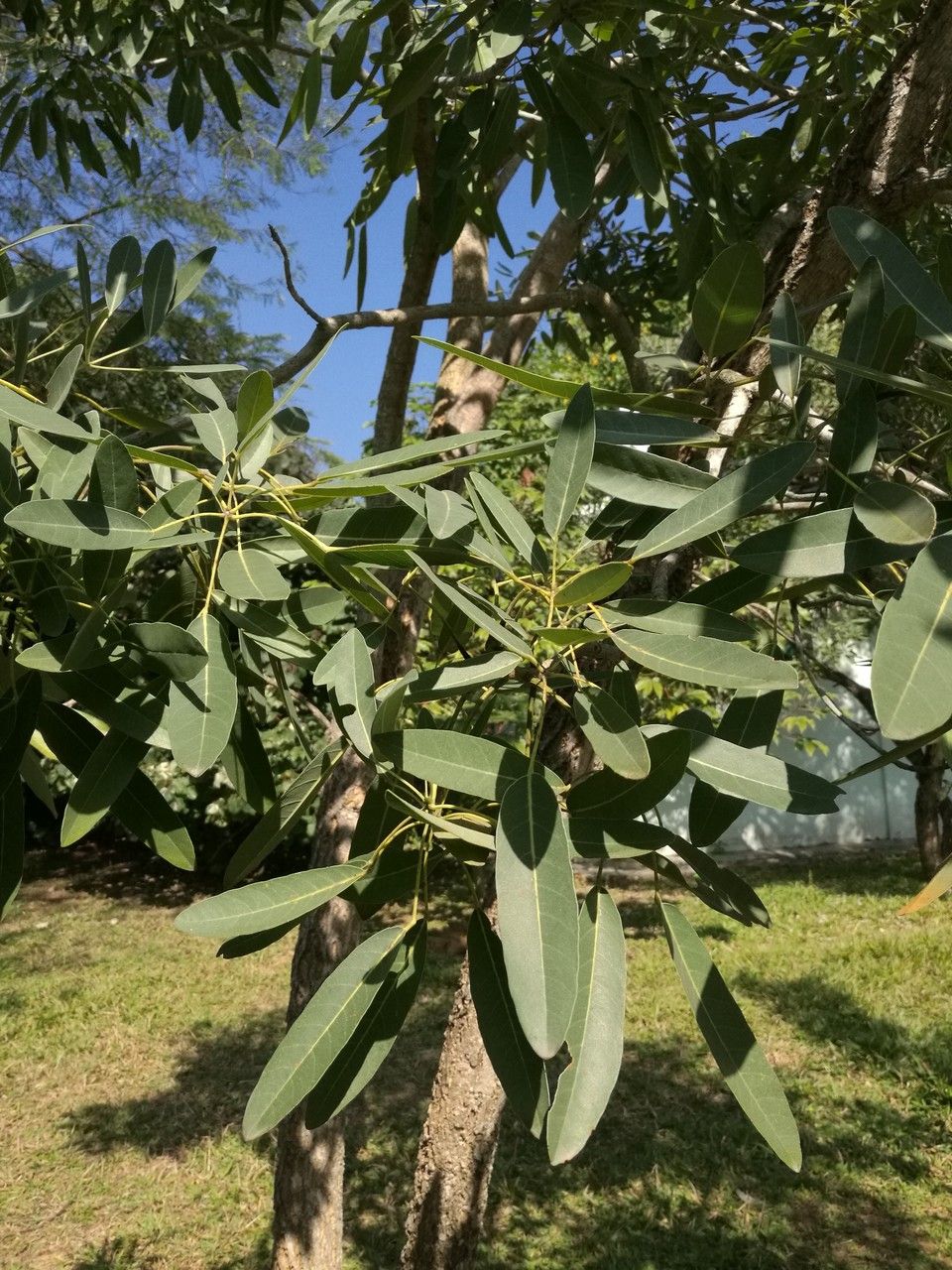
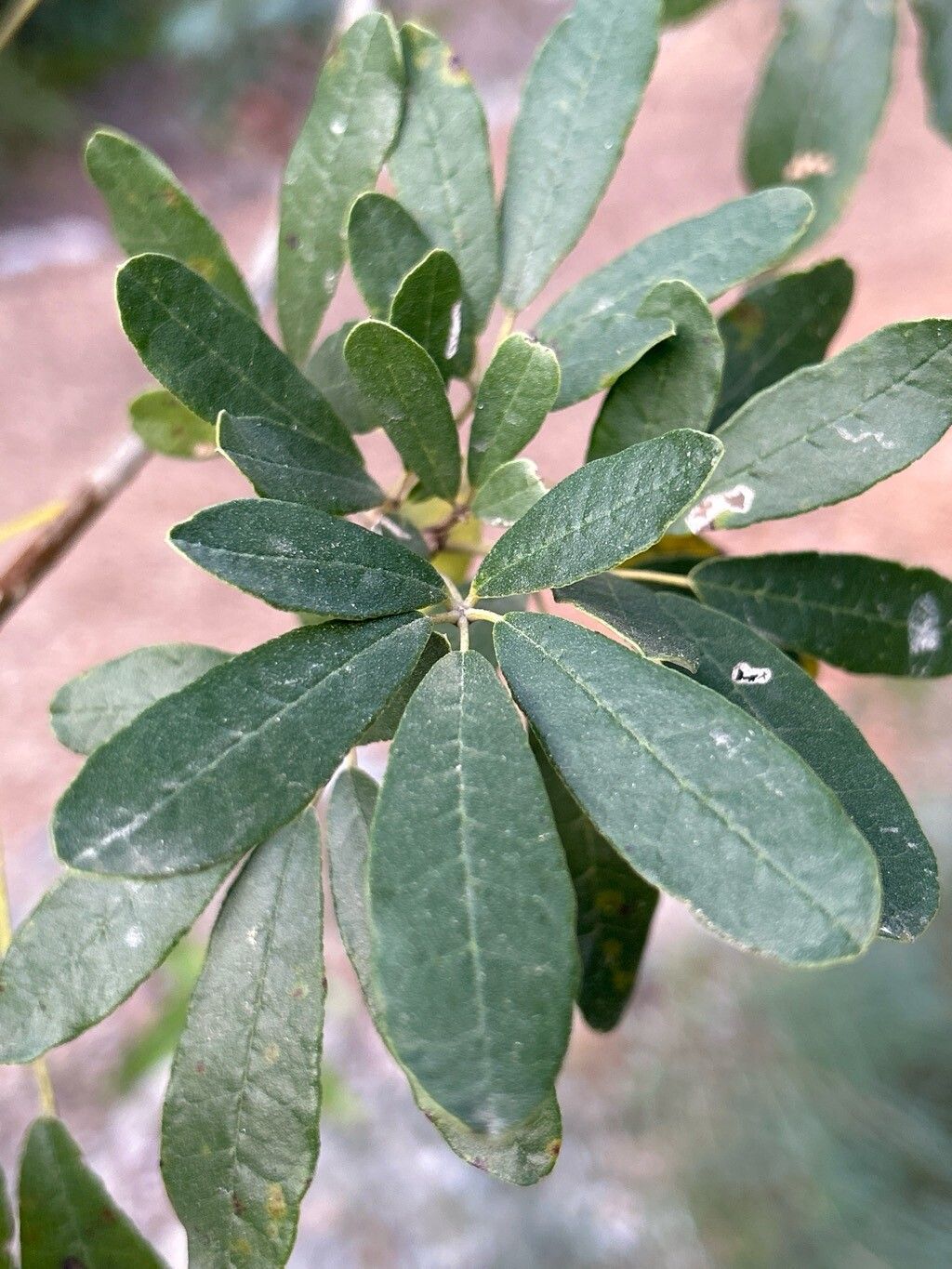
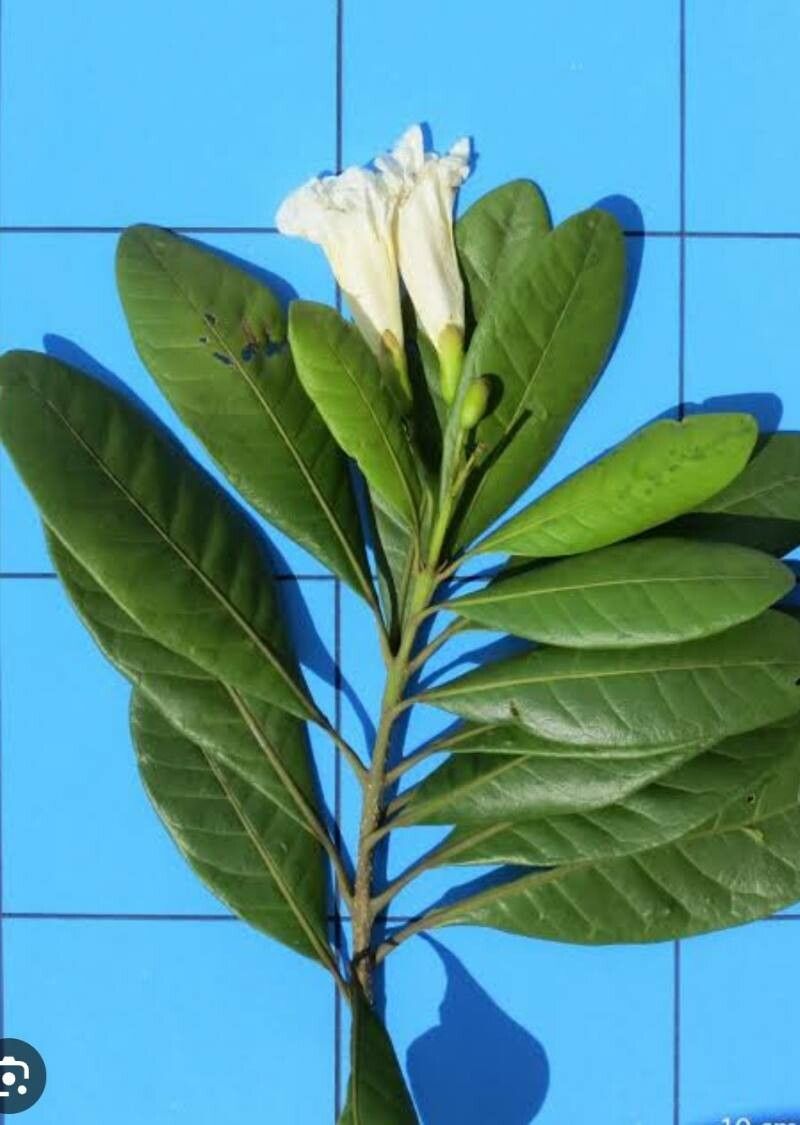
Tabebuia roseoalba, commonly known as the White Tabebuia or White Trumpet Tree, is a flowering tree species native to South America. It belongs to the Bignoniaceae family and can grow up to 20 meters tall. The tree has a straight trunk covered in grayish-brown bark and produces large, trumpet-shaped flowers that are either white or pale pink. The leaves are deciduous and compound, consisting of five green leaflets.
The White Tabebuia is commonly found in tropical regions of South America, including Brazil, Bolivia, Paraguay, and Argentina. It prefers well-drained soils and can tolerate drought conditions once established.
The tree has various medicinal properties, such as anti-inflammatory effects due to its high content of lapachol compounds found in its bark extracts. Additionally, it is used to treat respiratory problems like asthma because of its bronchodilator properties.
Tabebuia roseoalba is also popular for ornamental purposes due to its beautiful springtime blooms, making it an attractive addition to gardens and parks.
Overall, this plant species holds great significance both medicinally and aesthetically, making it a fascinating plant worth exploring further.
White Ipê shows strong resistance to disease and is generally not susceptible to illnesses. In terms of care, this plant is fairly low-maintenance. When grown outdoors, it needs minimal watering, and larger specimens usually do not require pruning. However, smaller plants should be trimmed after they have finished blooming. White Ipêt is appropriate for anyone with an outdoor area, such as a garden or deck, and does not demand a lot of care experience.
How to keep Tabebuia Roseoalba.
Light
White Ipê comes from open habitats, like sunlit meadows and forest margins, that provide abundant light. It prefers Full Sun but can also endure Partial Sun, adapting well to various light conditions.
Temperature
White Ipê comes from tropical regions, where the climate is usually warm and humid. As a result, it is well adapted to high temperatures and humidity. It does not tolerate sudden temperature changes and prefers a stable thermal environment, so it is important to avoid temperature fluctuations indoors. It generally cannot withstand cold and requires higher temperatures for growth. If the environmental temperature falls too low, the plant may stop growing or even die.
Fertilizer
The best time to fertilize a White Ipê is in early spring, when it breaks dormancy. Doing so stimulates overall growth and flower development. Fertilizing improves the foliage, stems, and branches, and encourages flowers that are large, vibrant, and long-lasting. It also helps move nutrients from the roots to the flowers and strengthens the plant's health and resistance to disease.
Botanical profile.
- Plant Type
- Tree
- Life Cycle
- Perennial
- Genus
- Tabebuia
- Family
- Bignoniaceae
- Hardiness Zone
- 9-11
- Mature Height
- 7.92 m to 11.89 m
- Mature Spread
- 6.1 m to 7.92 m
- Leaf Color
- Light Green, Dark Green
- Leaf Type
- Deciduous
- Flower Color
- White, Pink
- Flower Size
- 5.08 cm to 6.35 cm
- Bloom Time
- Mid spring, Late spring, Early summer
- Planting Time
- Spring, Summer, Autumn
- Harvest Time
- Mid summer, Late summer, Early fall
- Native Area
- Colombia, Bolivia, Peru
Other names.