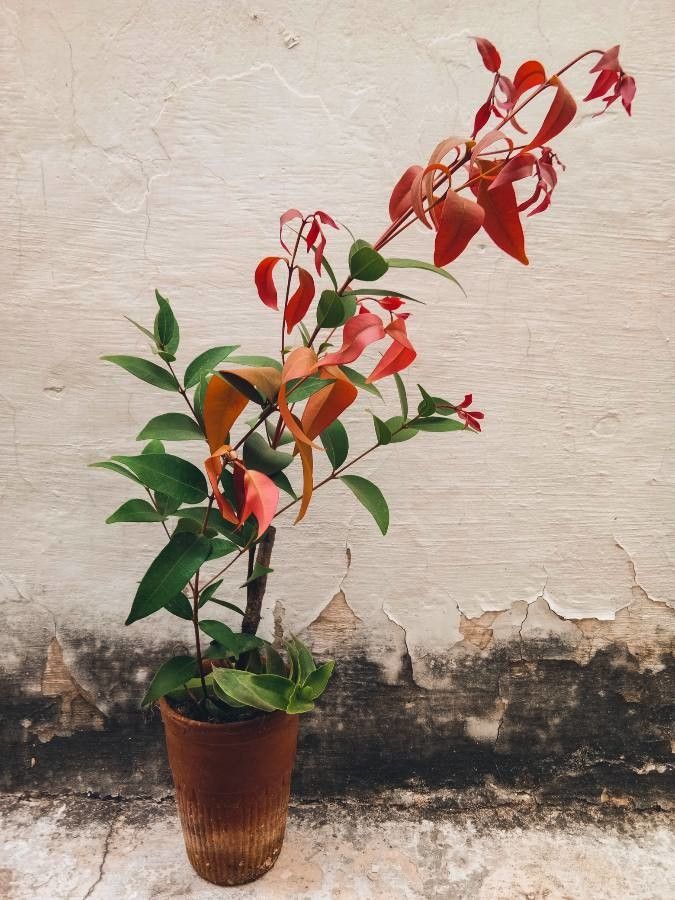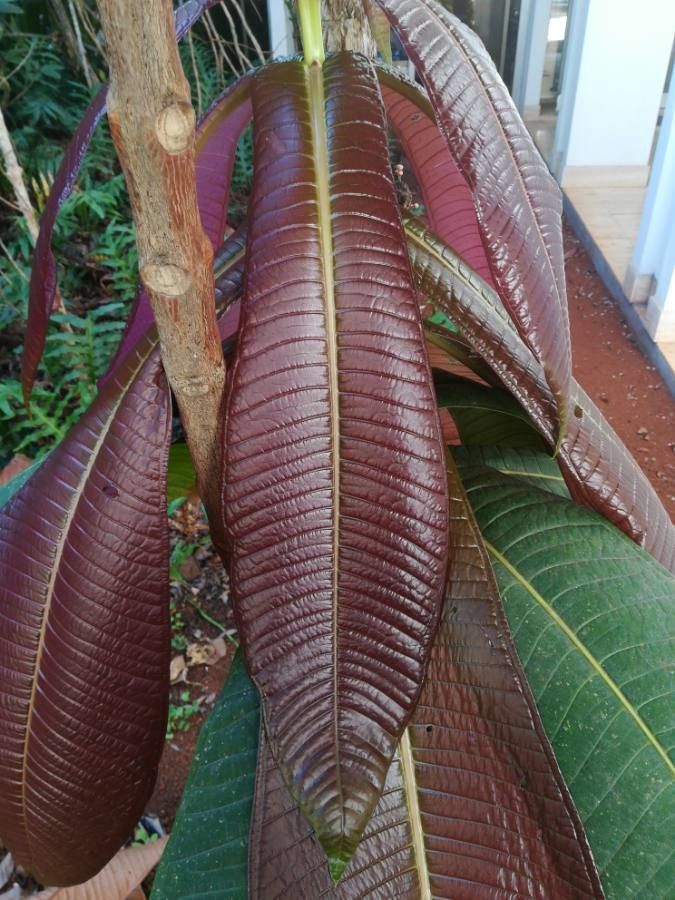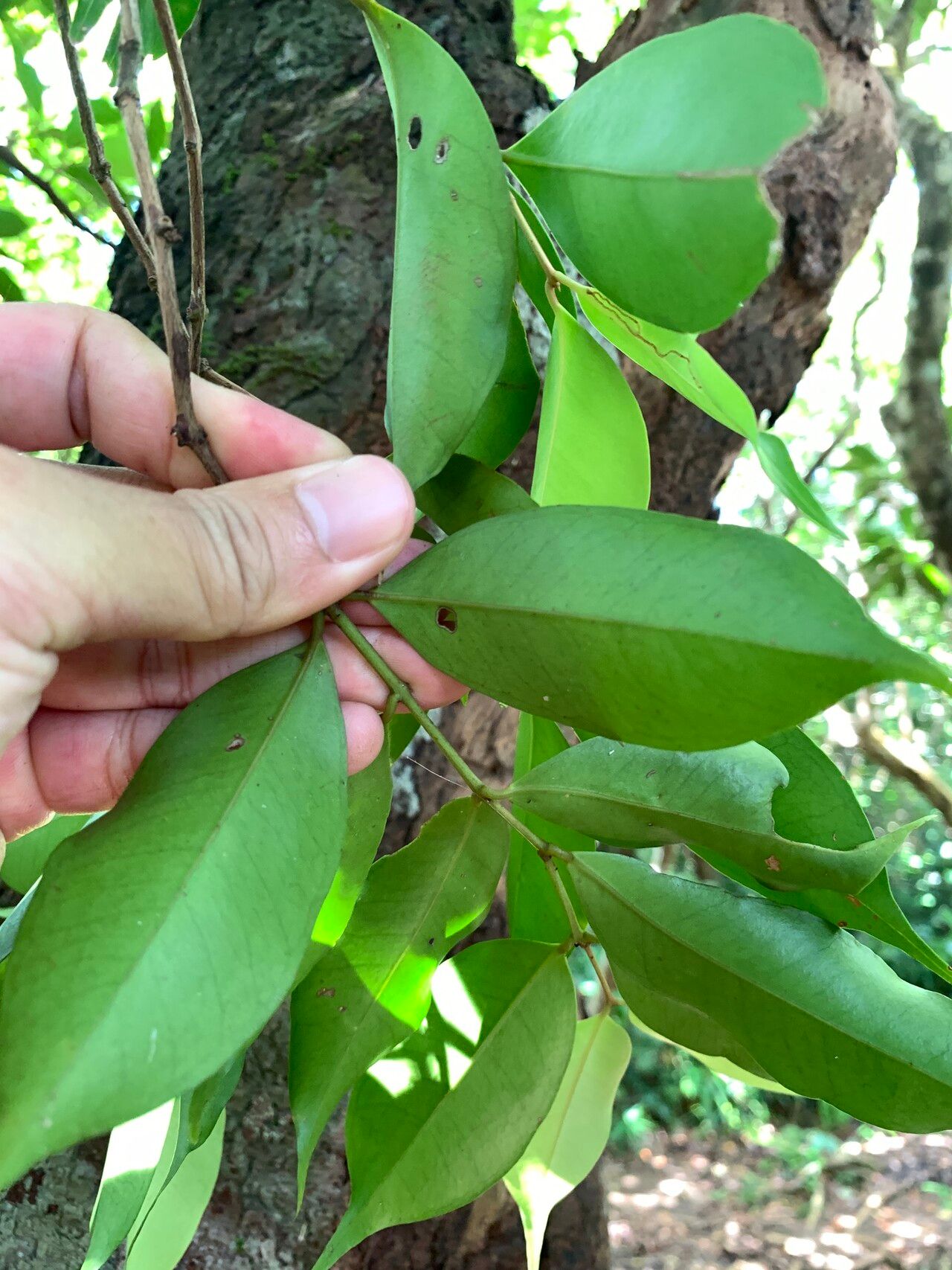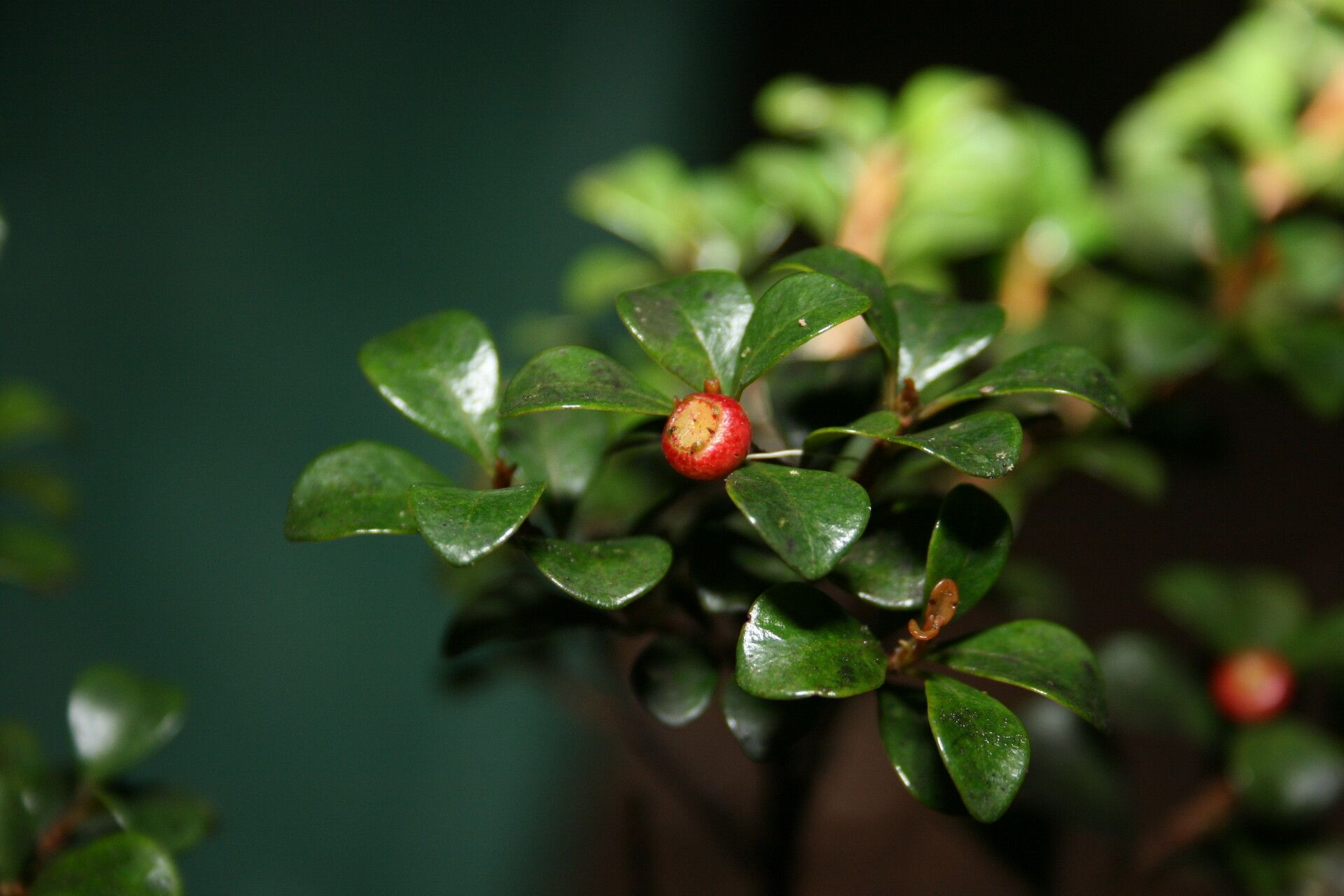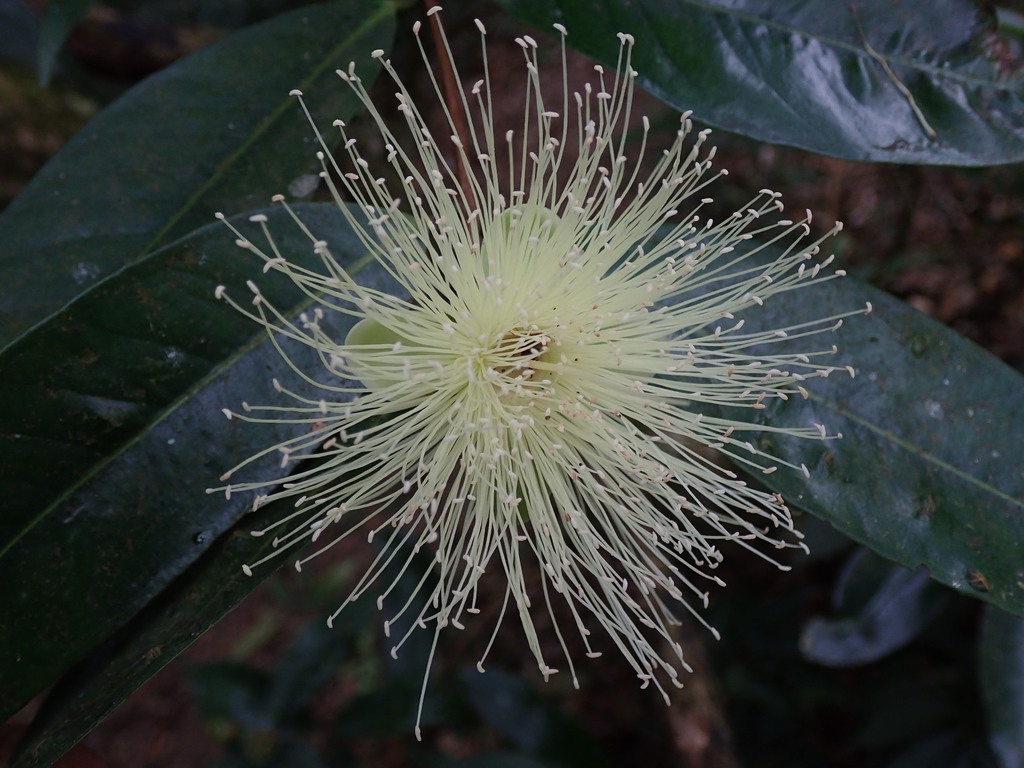
Syzygium jambos, commonly known as the rose apple or jambu, is a tropical evergreen tree native to Southeast Asia. Belonging to the Myrtaceae family, this tree can reach heights of up to 12 meters. It has a dense canopy of glossy green leaves and produces fragrant white or pink flowers that bloom in clusters.
The fruit of the Syzygium jambos tree is either round or pear-shaped, with a thin skin that varies in color from yellow-green to pink-red. The flesh is crisp and juicy, with a sweet flavor reminiscent of an apple, which explains its common name.
The rose apple tree thrives in warm climates with high humidity and well-drained soil. It can be grown from seed or propagated through cuttings. Besides its edible fruit, Syzygium jambos has medicinal properties and has been traditionally used to treat various ailments such as diarrhea, fever, coughs, and colds.
Overall, Syzygium jambos is an attractive ornamental plant that produces delicious fruit while also offering medicinal benefits for those who utilize it in traditional remedies.
The Malabar plum is resistant to disease and typically does not tend to suffer from illnesses. As for care, this plant is fairly low-maintenance. When grown outdoors it needs little watering, and larger plants usually do not require pruning. Smaller plants, however, should be pruned after they finish blooming. Malabar plumt is appropriate for anyone with an outdoor area, such as a garden or a deck, and does not need much gardening experience.
How to keep Syzygium Jambos.
Light
Malabar plum requires plenty of sunlight for optimal growth, though it can tolerate somewhat reduced light. It comes from an environment where sunlight richly bathes the terrain. Excessive light can stress the plant, while inadequate light may stunt its growth or lead to poor health.
Water
The Malabar plum thrives in humid environments, showcasing its tropical origins. While it has moderate drought tolerance, it requires watering every two weeks. It thrives best when grown outdoors, making it ideal for rain gardens or areas that mimic its native climate.
Humidity
This plant will thrive in moderate humidity, which is probably the level in your home. However, misting it a few times a week can be very beneficial. Make sure the room has good ventilation.
Temperature
The Malabar plum originates from areas where temperatures typically range between 68 and 100 °F (20 and 38 ℃). It favors warmth and sunlight and performs poorly in colder conditions. During cooler months, environmental adjustments may be needed to maintain a suitable temperature for growth.
Fertilizer
Choose organic fertilizer (e.g., fish emulsion, compost) rather than chemical fertilizers for Malabar plum. Give young plants higher nitrogen and phosphorus in spring. Incorporate compost or fertilizer into the soil before or after planting. For mature plants, apply a balanced fertilizer or one specific to any deficiency in spring. Nutrient deficiency causes small leaves, short branches, yellow/bronze leaves, acidic fruits, premature fruit fall, and splitting.
Pruning
The Malabar plum is prized for its fragrant flowers and edible fruit. To keep the plant healthy and productive, regular pruning is essential, especially from early to late spring. Pruning helps remove dead branches and thin out excessive growth, which encourages healthy regrowth and abundant flowering. This maintenance also helps the plant maintain an attractive size and shape.
Botanical profile.
- Plant Type
- Tree
- Life Cycle
- Perennial
- Genus
- Syzygium
- Family
- Myrtaceae
- Hardiness Zone
- 9-12
- Mature Height
- 3.05 m to 14.94 m
- Mature Spread
- 7.92 m
- Leaf Color
- Green
- Leaf Type
- Evergreen
- Flower Color
- White
- Flower Size
- 5.08 cm to 7.62 cm
- Bloom Time
- Late spring, Summer, Early fall
- Planting Time
- Spring, Summer, Autumn
- Harvest Time
- Early spring, Mid spring, Mid summer, Late summer, Fall, Winter
- Native Area
- Nepal, India, Malaysia, Indonesia, Cambodia, Vietnam, Bangladesh, Laos, Thailand
Other names.
Reader questions.
How should I water my Malabar plum plant?
Your Malabar plum is not picky about watering methods, so feel free to use any common watering tool like watering cans, hoses, or even cups. Regardless of the tool you choose, make sure to water the plant directly on the soil, ensuring equal moisture distribution to all parts of the root system. It's better to use filtered water to avoid harmful particles from tap water. Using water at or slightly above room temperature is preferable, as extremely cold or hot water may shock the plant. However, the Malabar plum generally responds well to any type of water.
Why should I put fertilizer on my Malabar plum plant?
Determining whether or not to fertilize depends on the richness of the soil in your area. If the soil lacks nutrients, it will adversely affect the growth and output of a Malabar plum plant, leading to insufficient leaves, flowers, and fruits. Conducting a soil test will help identify nutrient deficiencies and excesses. In the case of Malabar plum, inadequate nutrition can result in small leaves, stunted branches, yellow or bronze foliage, and less tasty fruits due to increased acidity. Some nutrient deficiencies can even cause premature fruit drop or splitting.
What are the sunlight requirements for Malabar plum?
Malabar plum requires abundant sun exposure for optimal growth and originates from environments with generous sunbathing. It thrives in full sun, which is above 6 hours of sunlight per day, but can also tolerate partial sun, about 3-6 hours of sunlight. Insufficient light can stunt its growth, while excessive light may stress the plant. It's crucial to observe the movement of sunlight through your garden to find the perfect balance for your plants.
What is the optimal temperature range for Malabar plum?
Malabar plum, or Syzygium jambos, thrives in warm environments with temperatures ranging from 68 to 100 °F (20 to 38 °C). It loves warmth and sun and does not do well in cold conditions. To ensure the plant grows satisfactorily, adjustments may need to be made during cooler months to maintain these temperatures. When autumn arrives, it's advisable to move outdoor plants indoors near a bright window, keeping them away from heaters, to avoid the cold harm. It's beneficial for the plant's growth to maintain temperatures above 20°C during winter, while temperatures near 0°C can be detrimental.
What should I do if I give too much or too little water to my Malabar plum?
Outdoor plants, especially new ones or seedlings, are prone to lack of watering. Make sure to water them enough for a few months after planting, as the roots will eventually rely on rain. When Malabar plum is grown in pots, overwatering is more likely. If you accidentally overwater, stop watering immediately and check the roots. If there is no root rot, you can return the plant to its pot. If there is root rot, trim affected roots and use a fungicide. Repot the plant in well-draining soil. Underwatering is easier to fix. If the leaves droop and dry out, water more frequently. Correct the watering frequency as soon as underwatering is noticed.
When should I fertilize my Malabar plum?
To support the strong leaf and root development of young Malabar plum for future growth, it is recommended to provide a higher nitrogen and phosphorus fertilizer. The best time to apply this fertilizer is during the spring of the first growing season. It is also beneficial to incorporate compost or another fertilizer into the soil before or right after planting. For mature plants, it is necessary to supplement with a balanced fertilizer or one that addresses specific soil deficiencies in your area, every few years during the spring and summer. However, it is important to avoid fertilizing the Malabar plum in the autumn or winter.
How can artificial lighting support Malabar plum growth indoors?
When natural sunlight is insufficient, especially during winter or in less sunny spaces, artificial lighting offers a solution for Malabar plum indoor growth. LED lights are popular for providing the specific wavelengths needed. Full sun plants require 30-50W/sq ft, partial sun plants need 20-30W/sq ft, and full shade plants 10-20W/sq ft of artificial light. Position the light source 12-36 inches above the plant, mimicking natural sunlight as close as possible, with most plants needing 8-12 hours of light per day.
How does low temperature affect Malabar plum, and what should I do?
Malabar plum prefers warm temperatures and does not tolerate low temperatures well. It best flourishes when the temperature is consistently above 20°C, and during winter, temperatures should be kept above 0°C. Exposure to temperatures below -5°C may cause the leaves to lighten in color, with subsequent frost damage leading to browning or blackening of leaves, wilting, and drooping. To mitigate this, trim off the frost-damaged parts and immediately move the plant to a warmer interior setting for cold protection. Placing it near a south-facing window ensures ample sunlight, but be cautious to avoid placing it near heaters or air conditioning vents, which may cause the air to become excessively dry.
How many times should I water my Malabar plum?
- Most outdoor plants can grow well with natural rainfall. If your area doesn't get much rain, water your plants every 2 weeks in spring and fall. In summer, they'll need more frequent watering. In winter, when plants grow slower and need less water, water them less often or not at all. Young or newly planted Malabar plum plants need more water to establish and mature. - For potted plants like the Malabar plum, there are two main ways to determine watering frequency. The first is to follow a set schedule, such as watering every week or every other week. However, this may not always work because it doesn't take into account the specific conditions of your growing environment. The second approach is to monitor soil moisture and wait until the top couple of inches of soil have dried out before watering again. This is typically the best indicator for when to water potted plants.
When is the best time to not fertilize my Malabar plum?
To ensure the health of your Malabar plum tree, it is important to avoid fertilizing it under certain circumstances. First, refrain from fertilizing after pruning or if the tree is already dealing with disease, insects, or general stress. Fertilizer is only effective in addressing nutrient deficiencies in the soil and cannot resolve other problems that may arise with a Malabar plum. Therefore, it is crucial to accurately diagnose the issue before adding fertilizer, as there may be an underlying cause that needs to be addressed. Additionally, it is best to avoid fertilizing the Malabar plum during the winter months or during excessively hot and dry periods in the summer.
What are the symptoms of light deficiency in Malabar plum?
Light deficiency in Malabar plum leads to several symptoms, including smaller new leaves, leggy or sparse growth, faster leaf drop, slower or no growth, and lighter-colored new leaves. Chlorosis, sunscald, leaf curling, wilting, and leaf scorching are other symptoms that indicate either too much or too little light. These symptoms signal the plant's struggle with inadequate sunlight or excessive exposure.
How should I care for Malabar plum during hot temperatures?
In the summer, it is crucial to keep the Malabar plum in conditions below 38°C to prevent heat stress. When temperatures exceed 43°C, the plant may show signs of stress such as lightened leaf color and increased susceptibility to sunburn. To care for a Malabar plum during high temperatures, you should trim away any sunburned or dried-up parts of the plant. Moving the plant to a shaded location, especially from the midday and afternoon sun, can help prevent further sunburn. Watering the plant in the morning and evening helps maintain soil moisture and supports the plant's well-being during hot conditions.