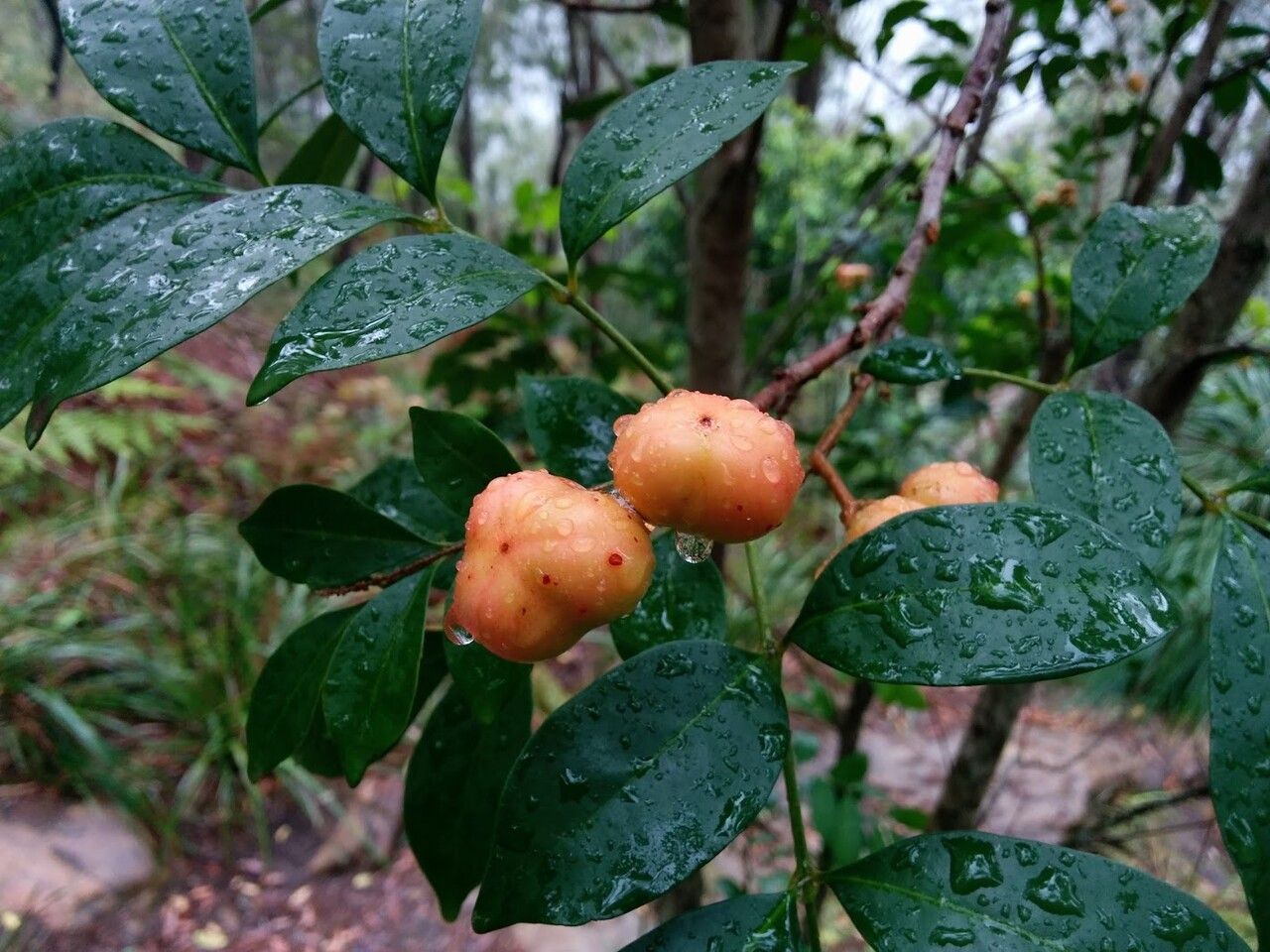
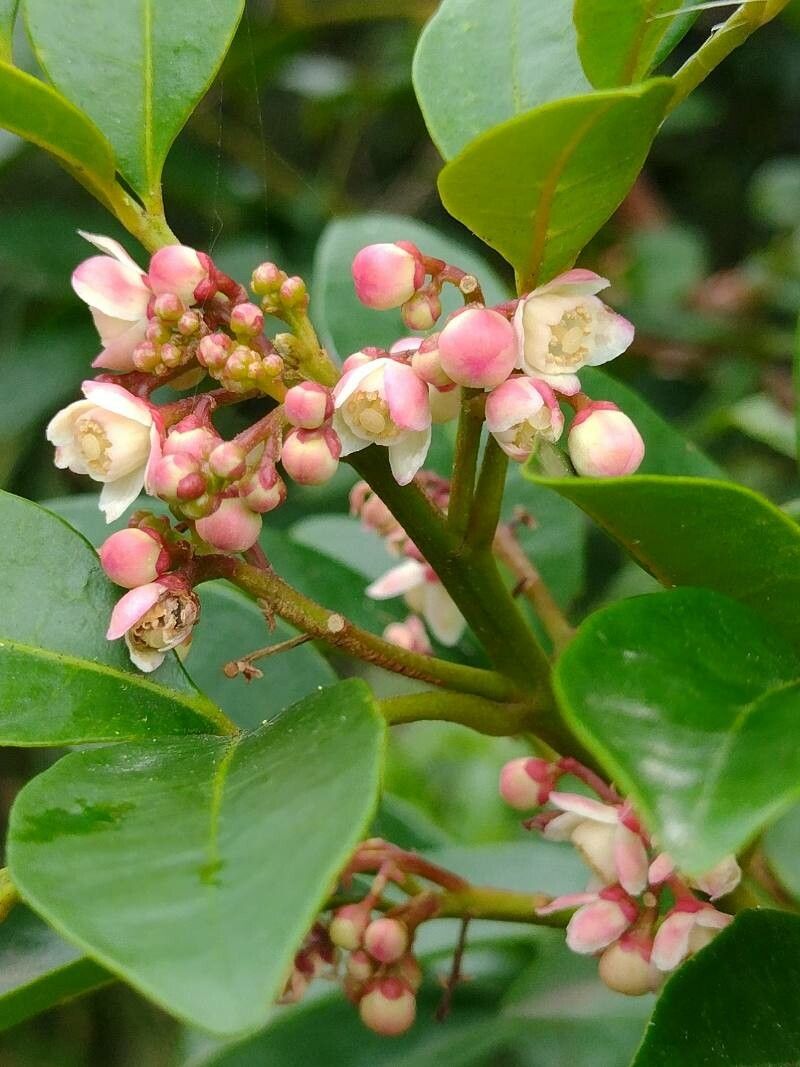
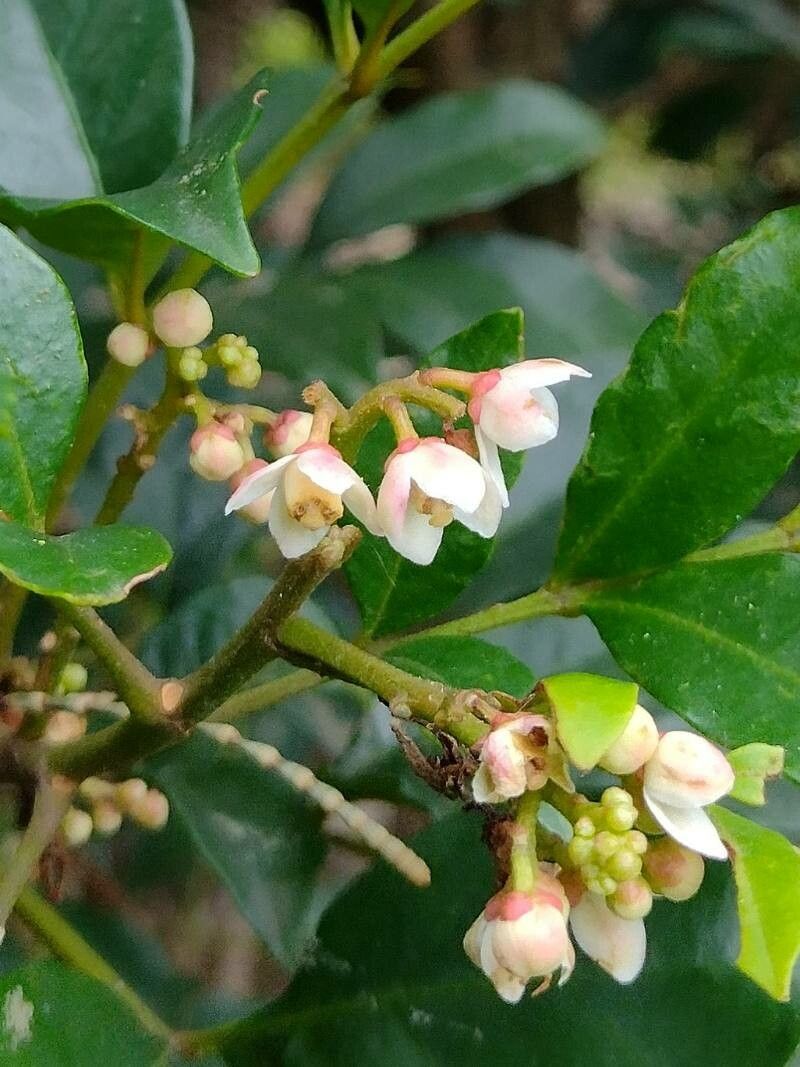
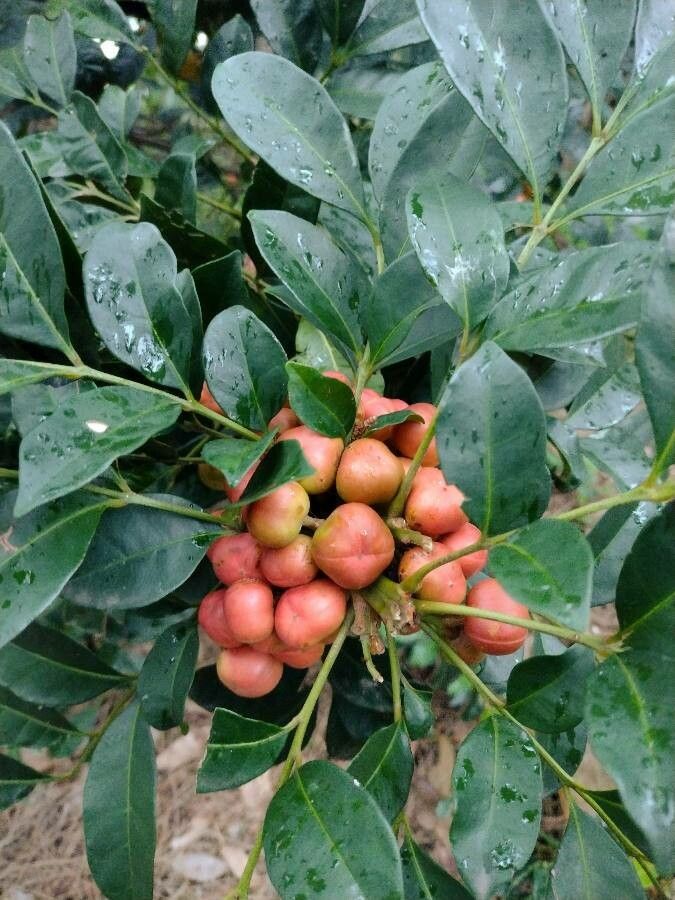
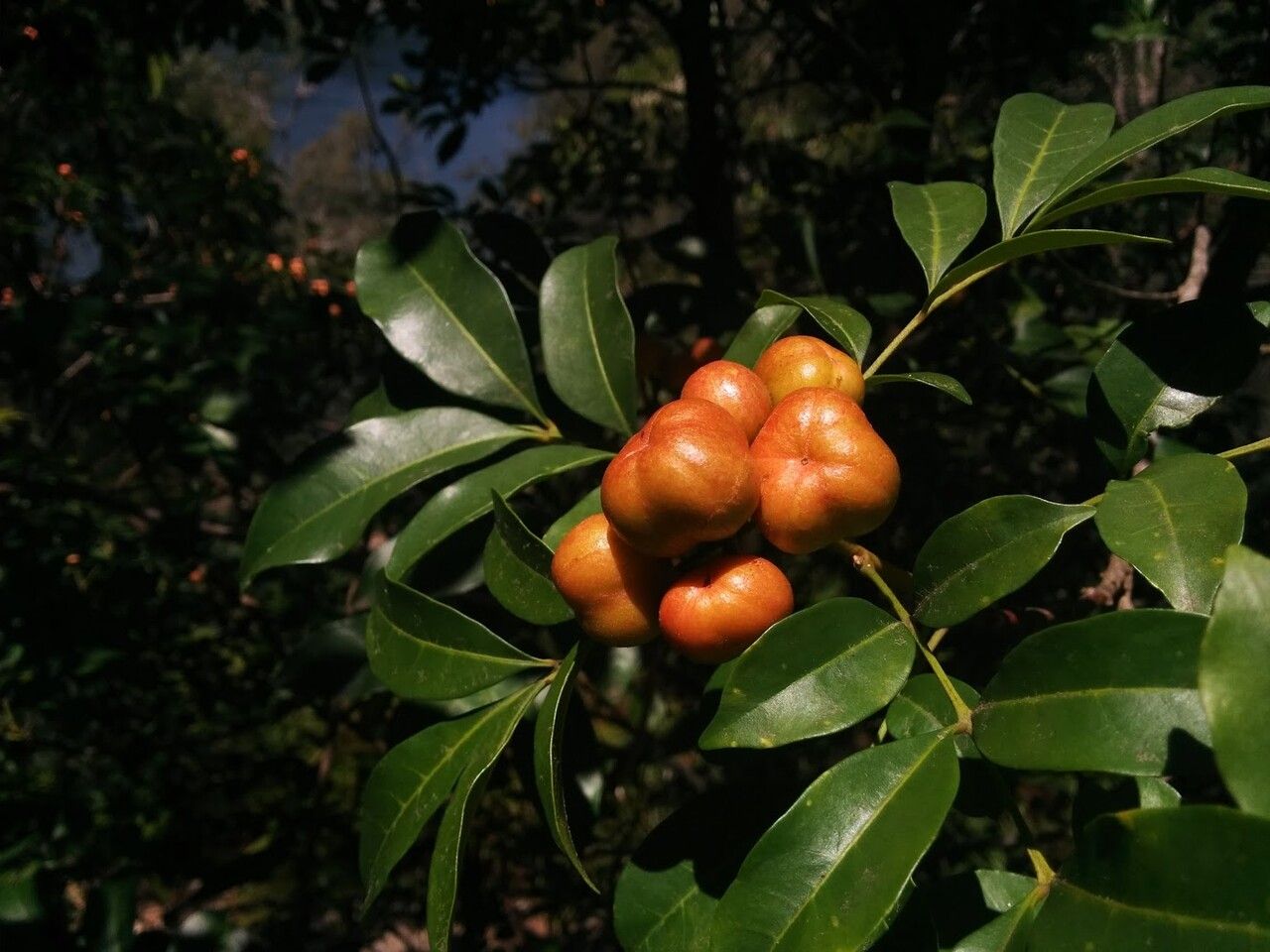
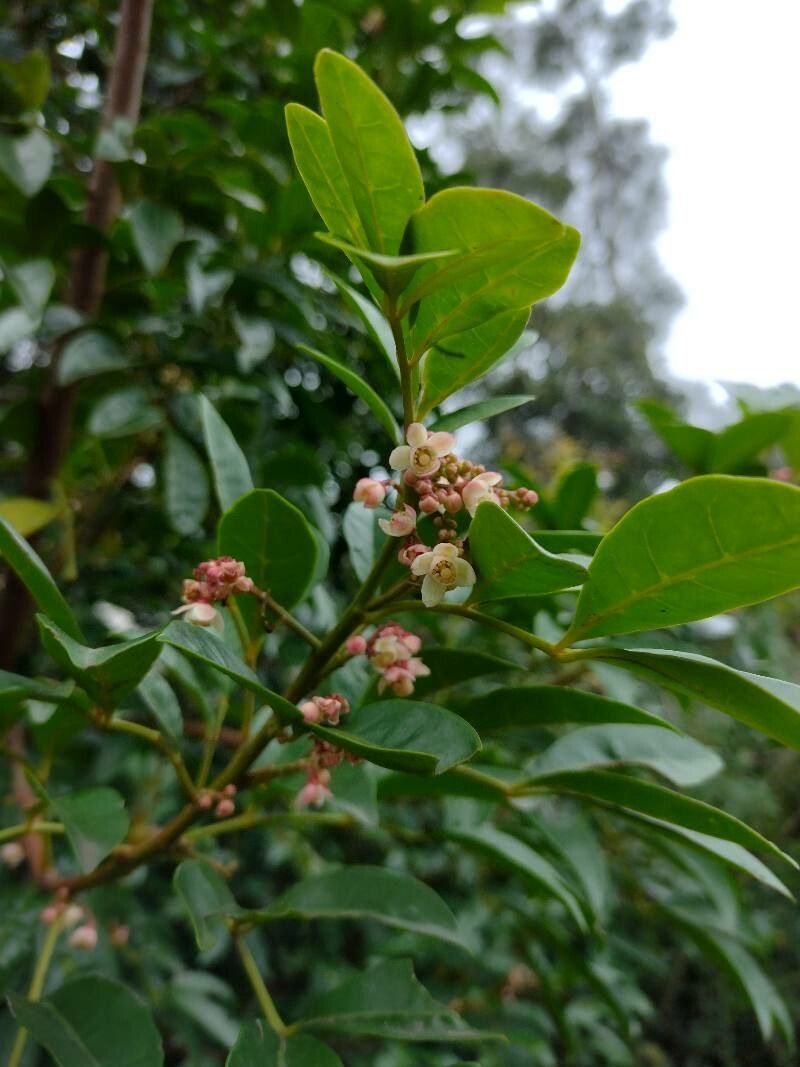
Synoum is a monotypic genus of evergreen tree in the family Meliaceae. It is endemic to Australia where it is found along the eastern sub-tropical to tropical coast, usually on the margins of rainforests, in Queensland and New South Wales. The genus was originally described by French naturalist Adrien-Henri de Jussieu in 1830.The only species recognized is Synoum glandulosum, known commonly as scentless rosewood. It resembles the related Toona, except that the leaves have 5-9 leaflets, whereas Toona has 8-20. Its fruit matures December to January and is a reddish three-lobed capsule that contains two or three seeds surrounded by a red aril. Germination from fresh seed is reliable and relatively fast. It is dioecious, with male and female flowers on separate plants.The timber of Synoum is used in local construction as sawn timber for general house framing, flooring, mouldings and joinery. It is also used for furniture, shop and office fixtures, panelling, turnery, carving, as structural plywood, scaffold planks, wood wool, paper products, particleboard, and medium density fibreboard.
Bastard rosewood has good resistance to disease and is usually not susceptible to illnesses. As for care, this plant is fairly low-maintenance. Planted outdoors it needs little watering, and larger specimens typically do not require pruning. Smaller plants, however, should be pruned after they have finished blooming. Bastard rosewoodt is appropriate for anyone with an outdoor area, like a garden or deck, and does not demand much prior care experience.
How to keep Synoum Glandulosum.
Light
Bastard rosewood occurs naturally in habitats like forest understories or rocky areas, where it experiences natural shade. It prefers partial sun but can adapt to full sun or full shade, demonstrating its versatile and hardy nature.
Temperature
Bastard rosewood is fairly adaptable to temperature, tolerating higher heat and wide temperature swings. In hot conditions, attention should be paid to irrigation and providing some shade to avoid sunburn. On the other hand, bastard rosewood is not very tolerant of low temperatures. Although it can endure a certain amount of cold, overly frigid conditions may cause frost injury.
Fertilizer
Correct timing is essential when fertilizing Bastard rosewood. Fertilize in early spring and continue monthly until early summer. Fertilizer encourages beautiful blooms and supplies energy during both dormant and active growth phases.
Botanical profile.
- Plant Type
- Tree
- Life Cycle
- Perennial
- Genus
- Synoum
- Family
- Meliaceae
- Hardiness Zone
- 10-11
- Mature Height
- 10.06 m to 14.94 m
- Mature Spread
- 4.88 m to 7.92 m
- Leaf Color
- Dark Green
- Leaf Type
- Evergreen
- Flower Color
- White
- Flower Size
- 0.51 cm to 0.76 cm
- Bloom Time
- Late fall, Early winter, Mid winter
- Planting Time
- Spring, Summer, Autumn
- Harvest Time
- Late winter, Early spring, Mid spring
Other names.