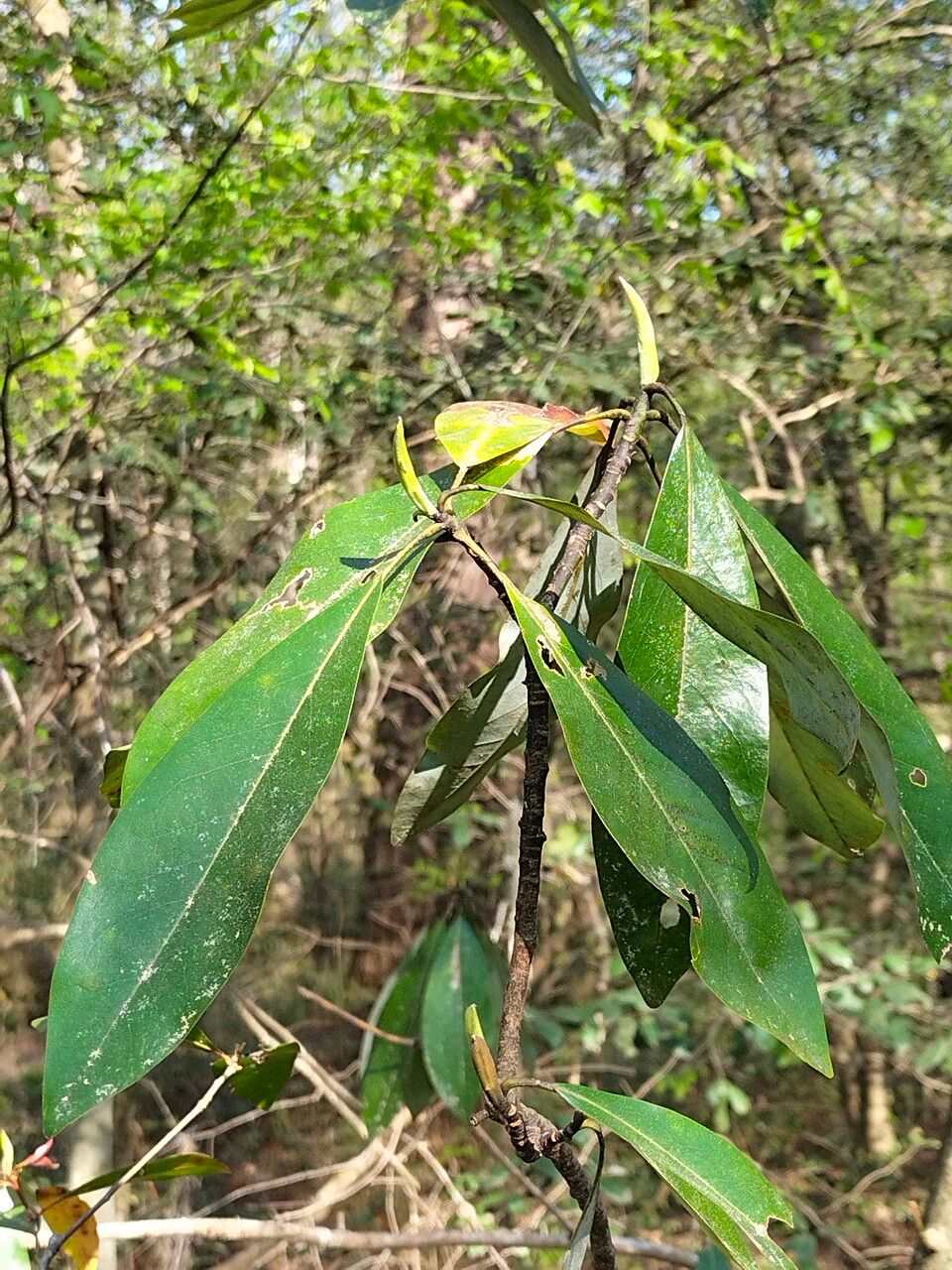
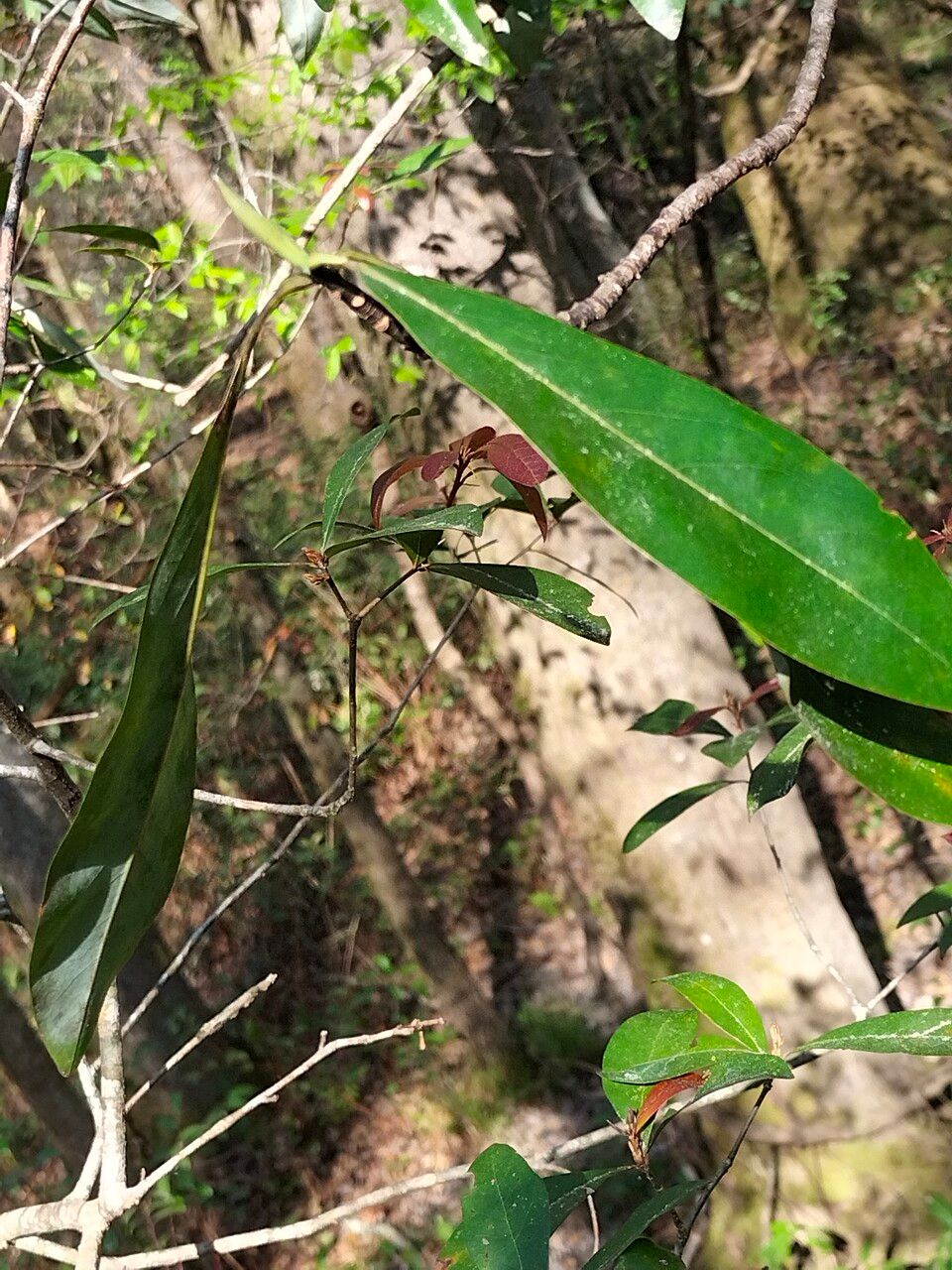
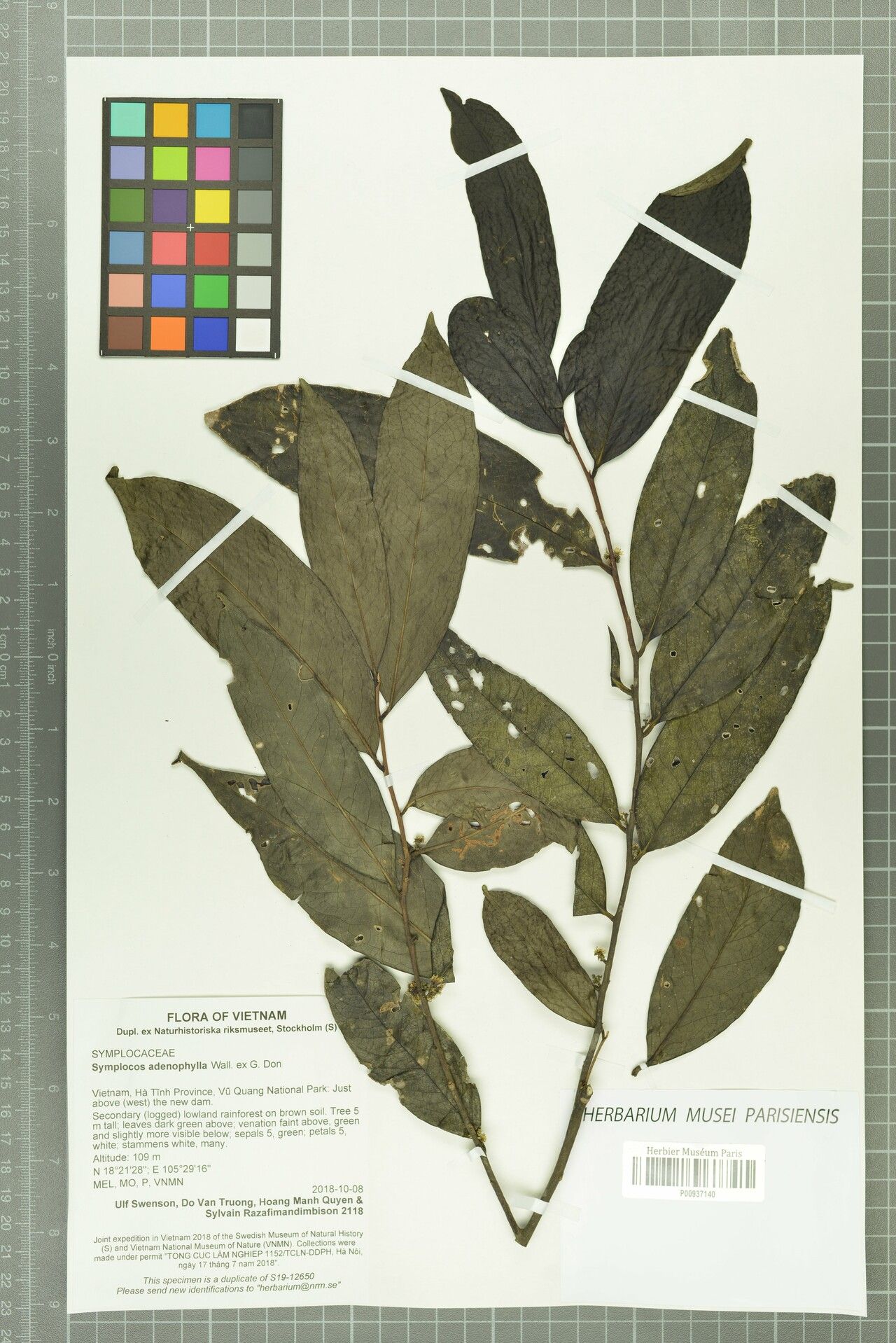
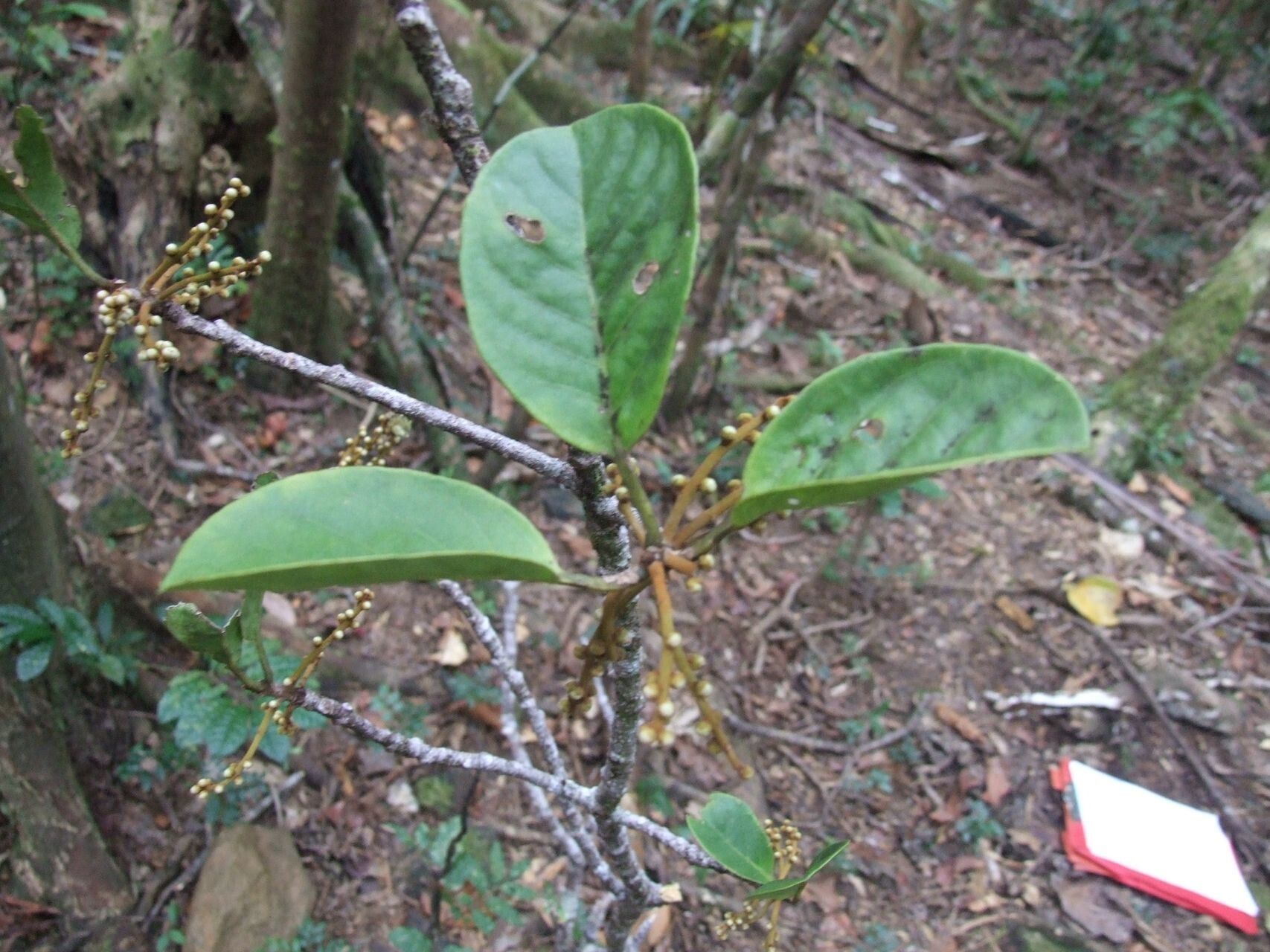
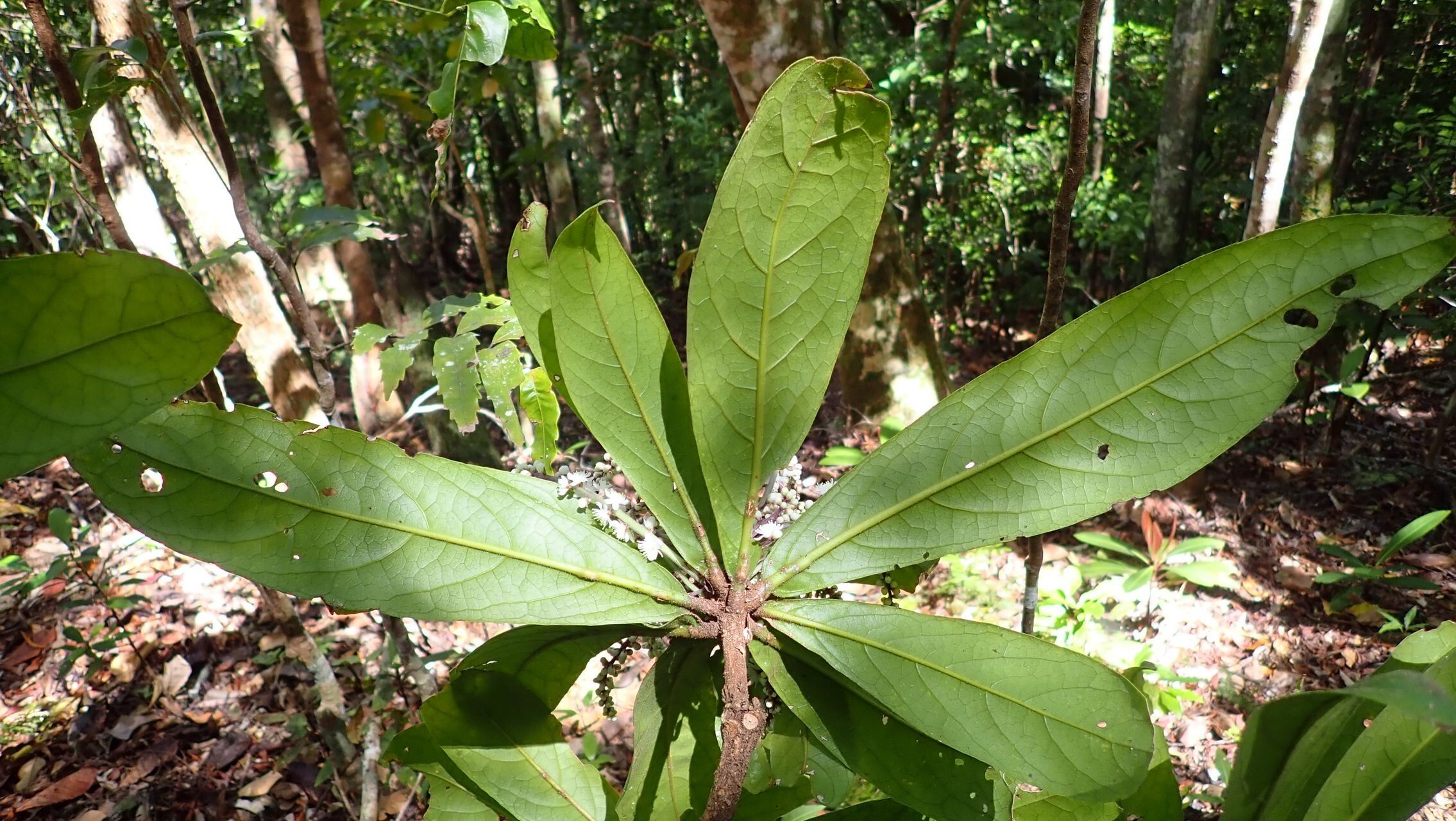
Symplocos tinctoria (the common sweetleaf, horse-sugar, or yellowwood) is a deciduous or evergreen shrub or tree. It is recognized by pith of twigs chambered; by foliage not notably aromatic when bruised, leaves finely hairy beneath. Shrubs or trees to 17 m tall by 36 cm DBH. The largest first-year twigs are under 3 mm across, terminal buds with acute tip, scales ciliate. Leaves are 7–15 cm long, margin entire or occasionally some teeth on the apical half, with a sweet taste that may be faint in old leaves. It is conspicuous when in flower; flowers opening before new leaves develop, fragrant, in clusters from axils of previous year's leaves or from just above the leaf scars if the leaves have fallen; the petals are creamy yellow to yellow, with one pistil. Fruits nearly cylindrical to ellipsoid drupes 8–12 mm long, with thin pulp and a hard stone containing 1 seed; the tip usually retaining parts of the sepals. Foliage is relished by browsing wildlife. A yellow dye may be obtained from bark and leaves. It flowers Mar to May.
Common Sweetleaf is resistant to disease and is generally not susceptible to illnesses. In terms of care, the plant is fairly low-maintenance. When planted outdoors it needs only minimal watering, and larger specimens typically do not require pruning. Smaller plants, however, should be pruned after they have finished blooming. Common Sweetleaf is suitable for anyone with an outdoor area, such as a garden or a deck, and does not require much prior experience in plant care.
How to keep Symplocos Tinctoria.
Light
Common Sweetleaf thrives in settings where it can receive abundant sunlight throughout the day, although it can also tolerate partly sunlit conditions. Exposing Common Sweetleaf to plentiful light encourages sturdy growth, while insufficient light can diminish its vigour. It is characteristic of areas that consistently experience abundant light.
Water
Common Sweetleaf thrives in humid woodland environments where the soil is consistently moist yet well-drained. It has moderate drought tolerance, generally needing water every three weeks. While it benefits from natural rainfall, additional watering is necessary during extended dry periods to keep its foliage lush and support its growth.
Temperature
The common Sweetleaf grows best in a temperate climate, favoring temperatures from 59 to 95 ℉ (15 to 35 ℃). In cooler months the plant can tolerate lows down to 41 ℉ (5 ℃), but care must be taken to avoid exposing it to frost. During hot summer periods, it may benefit from shading or misting to keep temperatures below 95 ℉ (35 ℃).
Fertilizer
Fertilize your Common Sweetleaf in early spring to encourage healthy growth. Regular feeding boosts overall health, leading to vigorous development, better tolerance of harsh conditions, and increased resistance to pests and diseases. Keep to a specific fertilization schedule for your Common Sweetleaf to ensure vibrant, deeply colored, and lush foliage.
Pruning
Sweetleaf is known for its aromatic leaves and small white flowers. To maintain its health and appearance, it is best to prune the plant in early spring before new growth starts. During pruning, remove any dead branches and thin out crowded areas to improve air circulation. This regular maintenance promotes bushier growth and enhances flowering. Remember to use clean tools to prevent damage and the spread of disease.
Botanical profile.
- Plant Type
- Shrub
- Life Cycle
- Perennial
- Genus
- Symplocos
- Family
- Symplocaceae
- Hardiness Zone
- 7-9
- Mature Height
- 7.62 m to 10.67 m
- Mature Spread
- 4.57 m to 6.1 m
- Leaf Color
- Green
- Leaf Type
- Deciduous
- Flower Color
- White
- Flower Size
- 2.54 cm to 5.08 cm
- Bloom Time
- Mid spring, Late spring, Early summer
- Planting Time
- Spring, Summer, Autumn
- Harvest Time
- Early summer, Mid summer
Other names.
Reader questions.
What are the sunlight requirements for Common Sweetleaf?
Common Sweetleaf thrives best when exposed to full sun, requiring above 6 hours of sunlight, but it can also survive in partial sun conditions, with about 3-6 hours of sunlight. It's crucial to observe the movement of sunlight through your garden to find the ideal spots that offer a balance of light and shade, ensuring the plants' well-being.
What are the ideal growing conditions for Common Sweetleaf?
Common Sweetleaf (Symplocos tinctoria) thrives in a temperate climate, with its preferred temperature range being between 59 to 95°F (15 to 35°C). It can adjust to lower temperatures down to 41°F (5°C) during cooler months, though frost exposure should be avoided. To cope with hot summer temperatures exceeding 95°F (35°C), measures such as shading or misting may be beneficial to prevent overheating. The plant possesses strong cold resistance, minimizing the need for special frost protection measures. However, in anticipation of winters colder than -15°C, it's advised to protect the plant by wrapping its trunk and branches with insulating materials. Additionally, abundant watering before the first autumn freeze helps the soil retain moisture, supporting the plant through winter into early spring.
How does the amount of sunlight affect Common Sweetleaf?
Ample sunshine is crucial for the robust growth of Common Sweetleaf, as it strengthens the plant. However, if the plant receives inadequate light, its vigor can be compromised. In environments with insufficient natural sunlight, especially during winter or in less sunny spaces, artificial lighting can be a valuable solution to promote healthy plant growth. LED lights are recommended for their ability to provide specific wavelengths needed by plants, with recommended wattage varying based on the type of plant and its sunlight requirements.
How does the Common Sweetleaf react to low temperatures?
Common Sweetleaf is notably cold-tolerant, best thriving when temperatures are above 15°C. It can withstand winters with temperatures staying above -10°C. However, when temperatures dip below -15°C, the plant itself might not show immediate distress during winter, but come spring, its branches may turn brittle and dry, and fail to produce new shoots. To mitigate these effects, it is recommended to prune any dead branches in the spring that have not sprouted new leaves.
What are the symptoms of light deficiency in Common Sweetleaf?
When Common Sweetleaf doesn't receive enough sunlight, it may show several symptoms including small or lighter-colored new leaves, leggy or sparse growth, faster leaf drop, slower or halted growth, and chlorosis. Too much sunlight, on the other hand, can lead to sunscald, leaf curling, wilting, and leaf scorching. These issues highlight the delicate balance required in managing sunlight exposure for the plant's health.
What should be done if Common Sweetleaf experiences high temperatures?
During the summer, it's important to keep the Common Sweetleaf below 35°C. Temperatures exceeding 38°C can cause the leaves to lighten in color, tips to become dry and withered, and increase the plant's susceptibility to sunburn. To address this, prune the sunburned and dried-up parts. Relocate the plant to a shaded area or use a shade cloth to protect it from the midday and afternoon sun. Additionally, watering the plant during cooler parts of the day, such as morning and evening, helps in maintaining soil moisture and overall plant health.
What solutions can help Common Sweetleaf with insufficient sunlight?
To address insufficient sunlight, gradually move the plants to a location where they can receive at least 6 hours of direct sunlight daily. For indoor plants that are large or hard to move, consider using artificial light, keeping a lamp on for a minimum of 8 hours a day or investing in professional plant grow lights. Outdoor plants should be moved to sunnier locations gradually to prevent sunburn. Additionally, minimize obstructions that block sunlight, such as pruning trees, or transplant smaller plants to sunnier areas during their dormant period for better exposure.