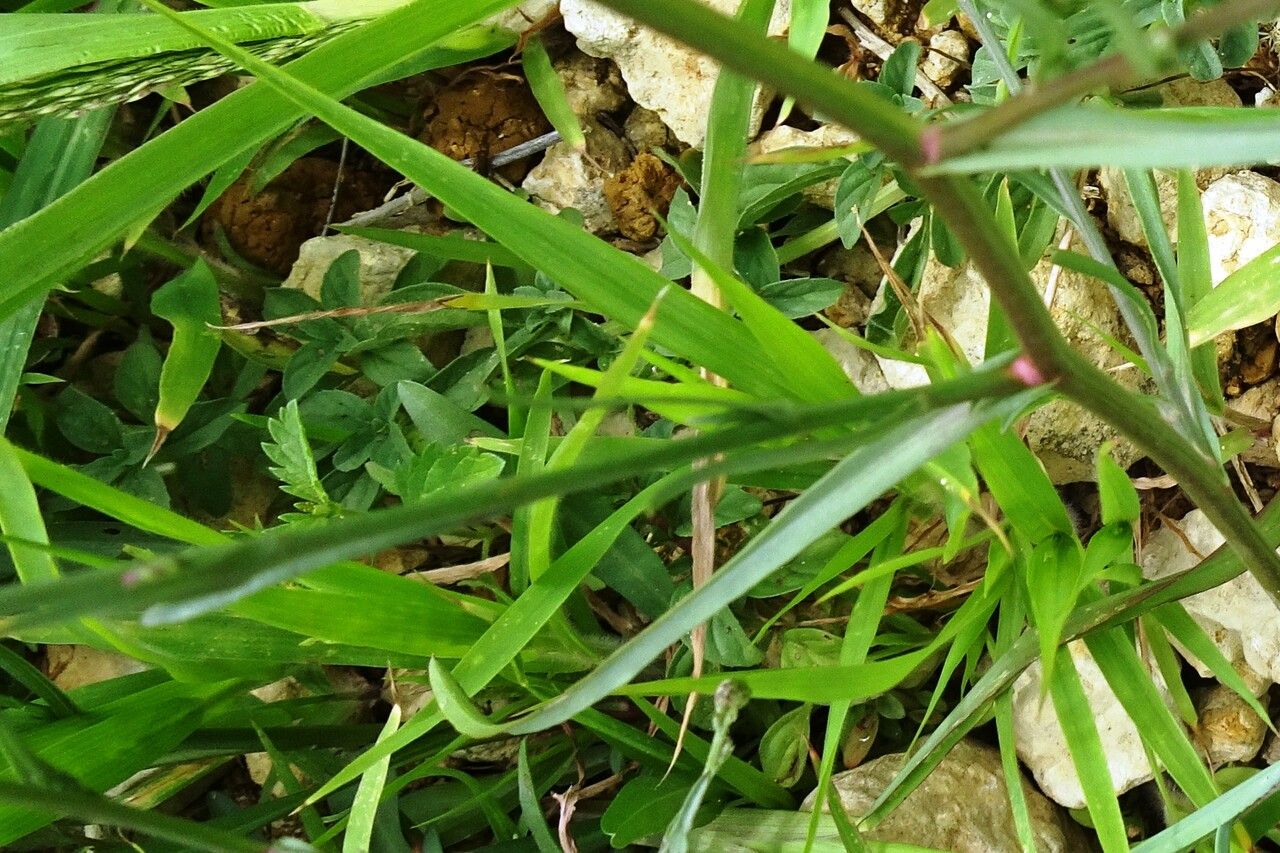
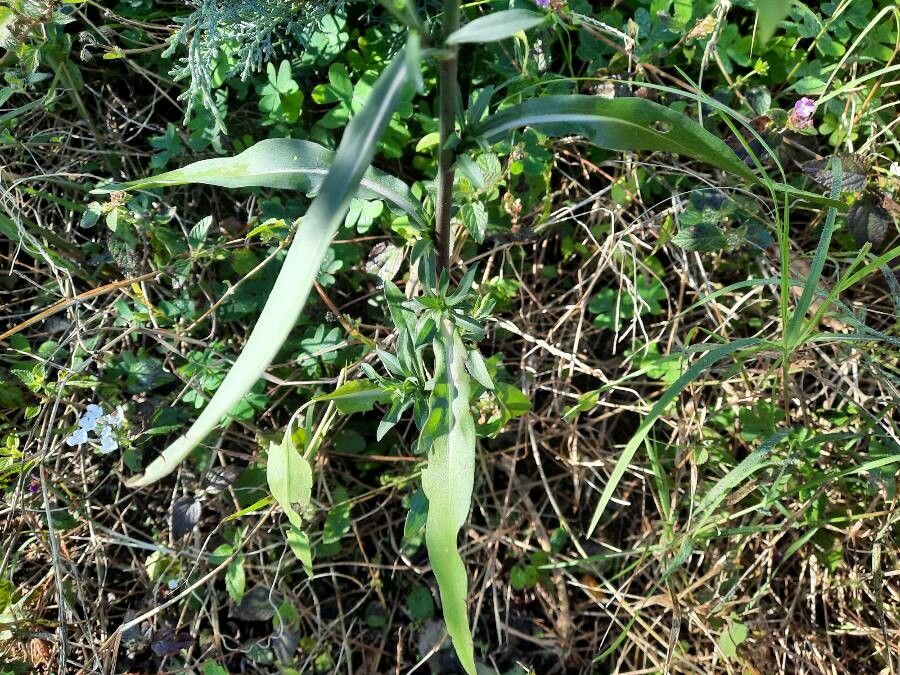
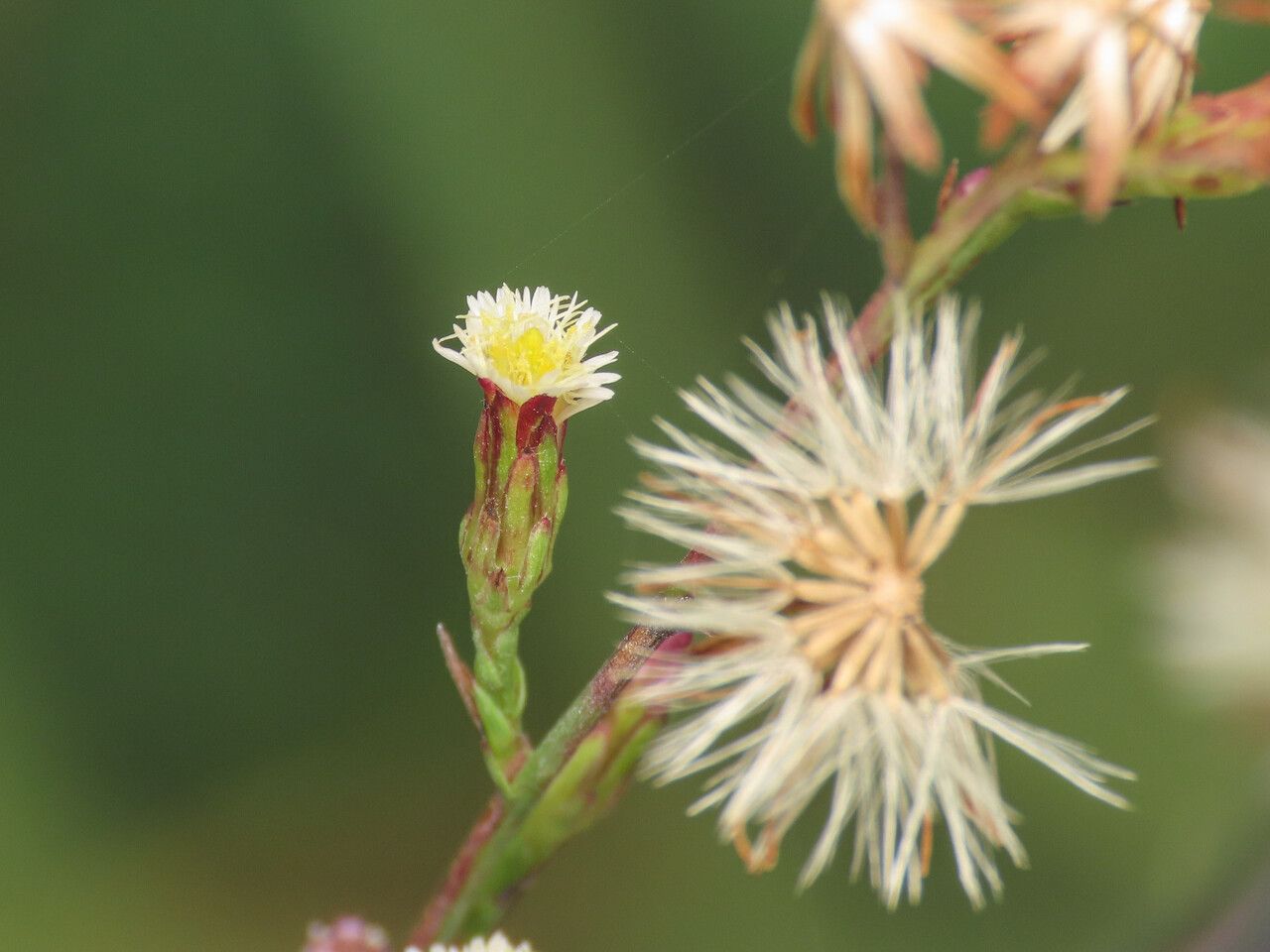
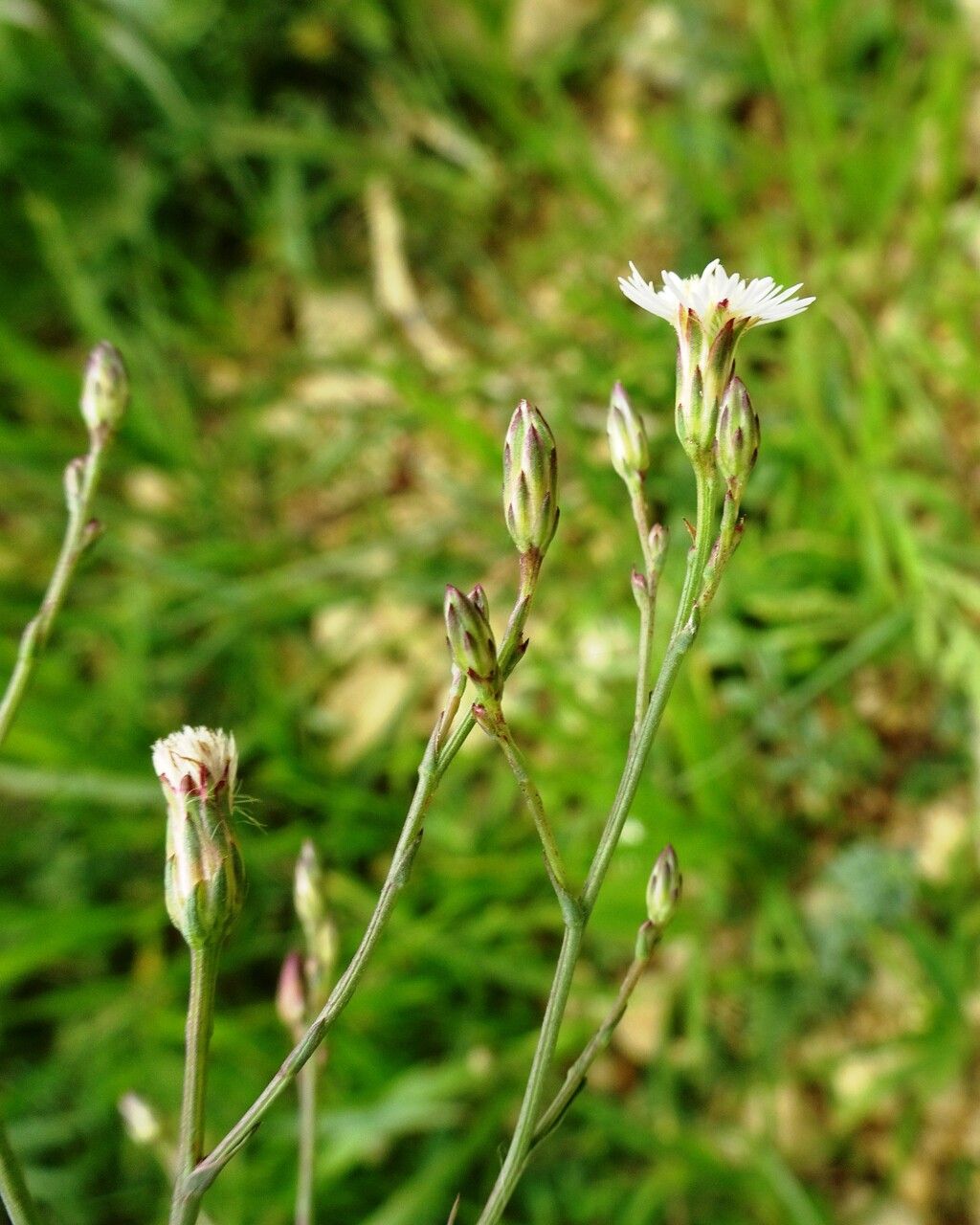
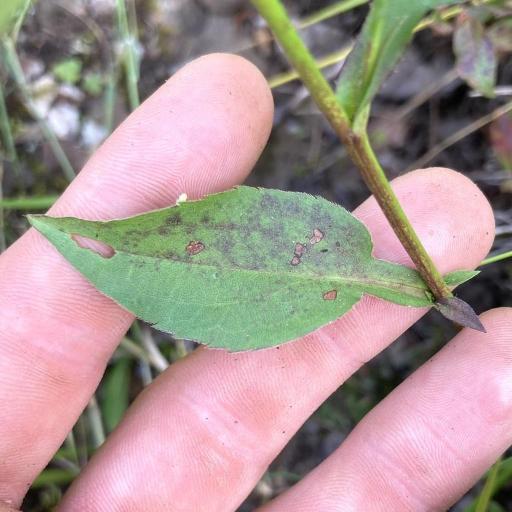
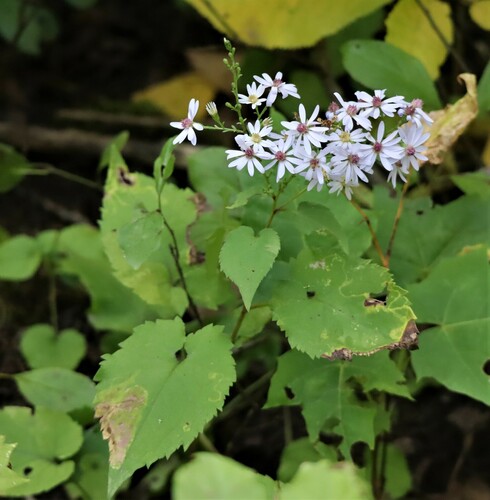
Symphyotrichum subulatum, commonly known as the eastern annual saltmarsh aster, is a herbaceous perennial plant in the Asteraceae family. This plant is native to North America and is typically found in salt marshes, wetlands, and coastal areas from Maine to Florida.
Growing up to 3 feet tall, the plant features narrow leaves that measure about 2-3 inches long. Its small, daisy-like flowers have white or pale blue petals surrounding a yellow central disk. These flowers bloom from August through October.
Symphyotrichum subulatum plays a crucial role in supporting wildlife, offering food for bees, butterflies, moths, and other insects. It also provides habitat for small animals like birds.
Native Americans have historically used this plant in traditional medicine to treat various ailments, including fever and respiratory issues.
Overall, Symphyotrichum subulatum is an attractive native perennial that adds beauty and provides ecological benefits to wetland areas along the eastern coast of North America.
Eastern annual saltmarsh aster has strong disease resistance and is generally not prone to illnesses. Still, it can be affected by pests and diseases present in its environment. Those infections are generally not severe. Carewise, the plant requires moderate maintenance. It should be pruned regularly to keep a tidy appearance and promote healthy growth. Fertilizing can also encourage flowering. This aster is appropriate for anyone with outdoor space, such as a garden or patio, and does not demand extensive plant-care experience. It may need more attention if grown indoors.
How to keep Symphyotrichum Subulatum.
Light
The Eastern yearly saltmarsh aster is a plant that flourishes under an abundance of sunlight for most of the day. Although it can survive in less lit areas or complete shadow, these conditions are not ideal for its development. Its original habitat is recognized for receiving broad daylight exposure daily. Cloudy weather can hinder its robust growth, and too much sunlight may lead to stress.
Water
The Eastern annual saltmarsh aster flourishes in moist, marshy environments and needs consistent weekly watering. Its growth is influenced by cycles of wet and dry conditions, as well as by soil drainage. This plant is ideal for outdoor settings, where it can benefit from natural rainfall that aligns with the precipitation patterns of its native habitat.
Temperature
The Eastern annual saltmarsh aster is indigenous to temperate climates and flourishes in temperatures between 68 and 95 °F (20 to 35 ℃). During seasonal transitions to colder settings, careful and gradual adaptations may be necessary to prevent shock.
Fertilizer
When the majority of the blossoms on the Eastern annual saltmarsh aster have unfolded completely, it indicates the onset of another fertilizing phase. Begin the fertilization process again on a regular basis of every three to four weeks coinciding with the time of maximum flower yield, provided conditions are favourable. However, once the Eastern annual saltmarsh aster starts producing fewer blossoms, cease the fertilization. There's no requirement for it when the plant lacks the ability to create more flowers.
Botanical profile.
- Plant Type
- Herb
- Life Cycle
- Annual, Biennial
- Genus
- Symphyotrichum
- Family
- Asteraceae
- Hardiness Zone
- 3-8
- Mature Height
- 91 cm
- Mature Spread
- 20 cm to 40 cm
- Leaf Color
- Green
- Leaf Type
- Deciduous
- Flower Color
- White, Purple
- Flower Size
- 1.27 cm
- Bloom Time
- Mid summer, Late summer
- Planting Time
- Spring, Summer
- Harvest Time
- Late summer, Early fall
- Native Area
- Bahamas, Belize, Cuba, Honduras, Mexico, Guatemala, Nicaragua, Jamaica
Other names.
Reader questions.
How should I water my Eastern annual saltmarsh aster?
There are various ways to water Eastern annual saltmarsh aster, such as using a garden hose with a spray nozzle or a watering can. This plant is not too particular about its water source, as it can thrive with rainwater, tap water, or filtered water. However, it's best to avoid watering from above, as it can harm the leaves and flowers and potentially lead to disease. Instead, a drip irrigation system is often recommended for watering, as it provides even and direct water to the soil. If you have a container-grown Eastern annual saltmarsh aster, you can use a cup, watering can, or tap water to water it directly into the soil.
What are the sunlight requirements for Eastern annual saltmarsh aster?
Eastern annual saltmarsh aster thrives in full sun, requiring above 6 hours of sunlight daily for optimal growth. It can also tolerate partial sun and full shade conditions, which means about 3-6 hours of sunlight, but this is not ideal for its vibrant growth. The native habitat of the plant is known for extensive daily sun exposure, indicating that the plant performs best under ample light conditions. However, it is crucial to watch how sunlight gracefully moves through your garden, choosing spots that provide the perfect balance of light and shade for your plants, ensuring their happiness.
What is the Eastern annual saltmarsh aster and where does it thrive?
The Eastern annual saltmarsh aster, botanically known as Symphyotrichum subulatum, is a plant native to temperate climates. It thrives in temperatures ranging from 68 to 95°F (20 to 35°C), indicating its preference for warmer conditions. As the seasons change, transitioning this plant to cooler environments should be done gradually to avoid shock. Despite its strong cold resistance, it's important to take steps to protect it if temperatures are expected to drop below -35°C, although special frost protection measures are usually not necessary.
What should I do if I give too much or too little water to my Eastern annual saltmarsh aster?
To prevent underwatering Eastern annual saltmarsh aster, simply water it more regularly. Overwatering, on the other hand, can be more dangerous as it can lead to diseases and death. To avoid this, choose a sunny spot with good drainage. If you overwater a potted aster, consider changing the pot to one with better drainage and using loose soil.
How does artificial lighting support indoor growth of Eastern annual saltmarsh aster?
Indoor plants like the Eastern annual saltmarsh aster require adequate lighting for optimal growth, especially when natural sunlight is insufficient. Artificial lights offer a vital solution, promoting faster, healthier growth. LED lights are popular for indoor plant lighting due to their customizability to provide specific wavelengths of light needed by plants. Full sun plants need 30-50W/sq ft of artificial light, partial sun plants need 20-30W/sq ft, and full shade plants need 10-20W/sq ft. Position the light source 12-36 inches above the plant to mimic natural sunlight and ensure the duration mimics natural daylight hours, generally 8-12 hours per day, for the species.
How should I protect my Eastern annual saltmarsh aster in winter?
To protect your Eastern annual saltmarsh aster during winter, especially if temperatures are forecasted to plunge below -35°C, consider covering the plant with soil or straw to insulate it from extreme cold. Before the onset of the first freeze in autumn, it's advisable to water the plant abundantly. This ensures that the soil, which should remain moist, enters a frozen state, helping to prevent drought and water scarcity for the plant during the colder months and into early spring.
How often should I give water to my Eastern annual saltmarsh aster?
The Eastern annual saltmarsh aster requires regular watering during the growing season. In spring, it should be watered about once a week. As the season progresses and temperatures rise, you may need to increase watering to two or three times per week. However, watering it too often can be harmful. It is important to keep the soil moist but not wet. If it is planted in a pot, the watering frequency should be increased compared to planting it in the ground, as the soil in pots tends to dry out faster. In most cases, a container-grown Eastern annual saltmarsh aster should be watered a few times per week, while an in-ground plant only needs to be watered once a week.
What are the symptoms of improper lighting for Eastern annual saltmarsh aster?
Improper lighting can cause Eastern annual saltmarsh aster to exhibit several symptoms, including small new leaves, leggy or sparse growth, faster leaf drop, halted growth, paler new leaves, chlorosis, sunscald, leaf curling, wilting, and leaf scorching. These symptoms indicate the plant's struggle with either too little or too much light – insufficient light results in energy conservation mode leading to smaller, pale leaves and sparse growth, while excessive sunlight causes stress symptoms like leaf scorch, sunscald, and wilting.
What are the symptoms of temperature stress in Eastern annual saltmarsh asters, and how can they be addressed?
Temperature stress in Eastern annual saltmarsh asters can manifest in several ways. In low temperatures, especially below -35°C, you might not notice immediate changes, but there could be a decrease in sprouting or even a complete lack of sprouting come spring. The remedy for spring is to remove any parts of the plant that fail to sprout. High temperatures above 35°C can cause the leaves to lighten in color, curl, become susceptible to sunburn, and in severe cases, result in the entire plant wilting and drying out. To manage this, trim away the sunburned and dried parts, relocate the plant to a shadier spot or use a shade cloth to protect it from the midday and afternoon sun, and water it in the morning and evening to ensure the soil stays moist.
How much water does my Eastern annual saltmarsh aster require?
Determining the appropriate amount of water for your Eastern annual saltmarsh aster can be done in a few ways. One method is to check the soil's moisture level by feeling it, and water until the top six inches are moist. Another option is to use a specific measurement, such as two gallons per week, based on factors like heat and soil dryness. However, it's important to avoid overwatering if your plant needs less than this amount. When growing in a container, you should ensure all soil layers are moist by testing with your finger or watering until excess water drains from the pot's holes.
What solutions can mitigate the effects of insufficient or excessive sunlight on Eastern annual saltmarsh aster?
To counter insufficient sunlight indoors, gradually move plants to sunnier locations until they receive at least 6 hours of direct sunlight daily, utilizing south-facing windows and keeping curtains open during daylight. For plants that are large or not easily movable, consider using artificial light, keeping a desk or ceiling lamp on for at least 8 hours daily or investing in plant grow lights. Outdoors, gradually move plants to better sunlight spots to avoid shock, and note that damaged parts may not recover but new growth will be healthy after light conditions improve. To increase outdoor sunlight exposure, identify and reduce obstructions like tree branches, or consider transplanting smaller plants to sunnier locations with ample sunlight and good drainage.
How can I know if I am giving enough water to my Eastern annual saltmarsh aster?
Avoiding overwatering your Eastern annual saltmarsh aster can be challenging due to its deep root system requiring regular moistening. However, these plants are highly susceptible to root rot and may exhibit browning when overwatered. Unlike underwatering, which they can tolerate for a period, neglecting to water your Eastern annual saltmarsh aster for extended periods can lead to wilting and dry leaves.