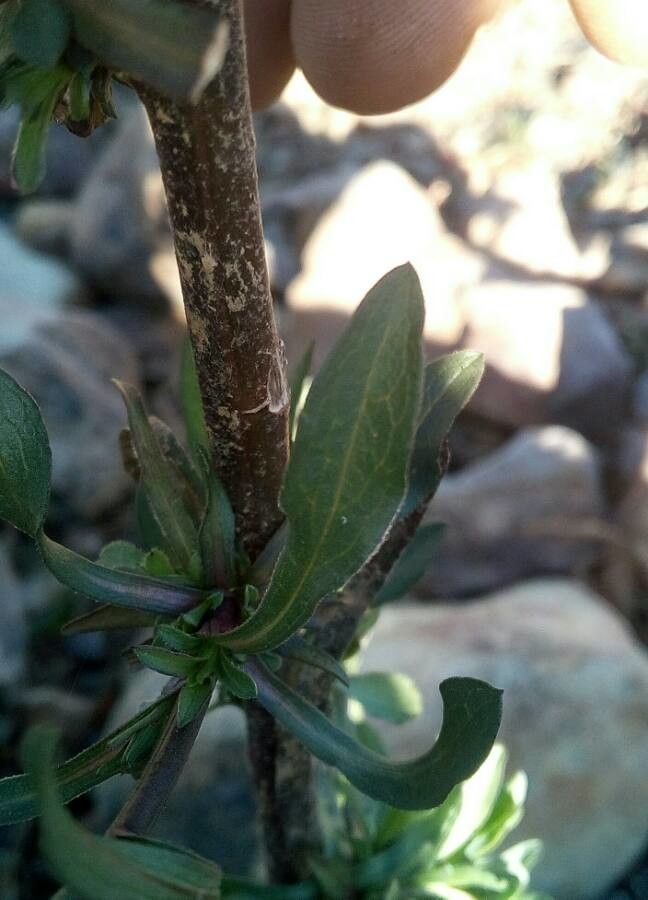
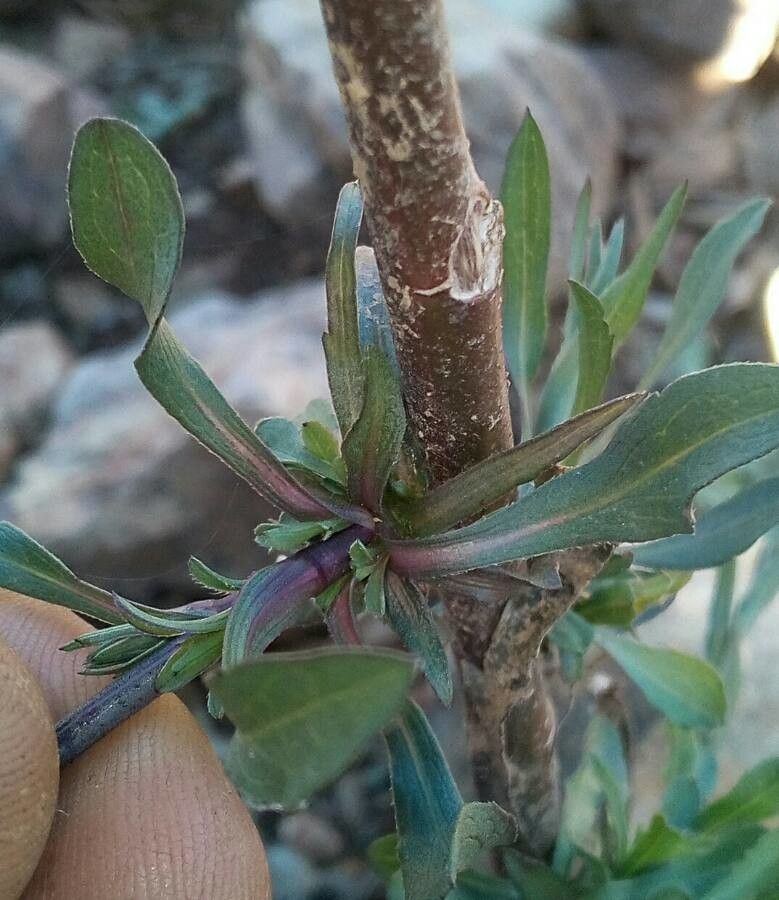
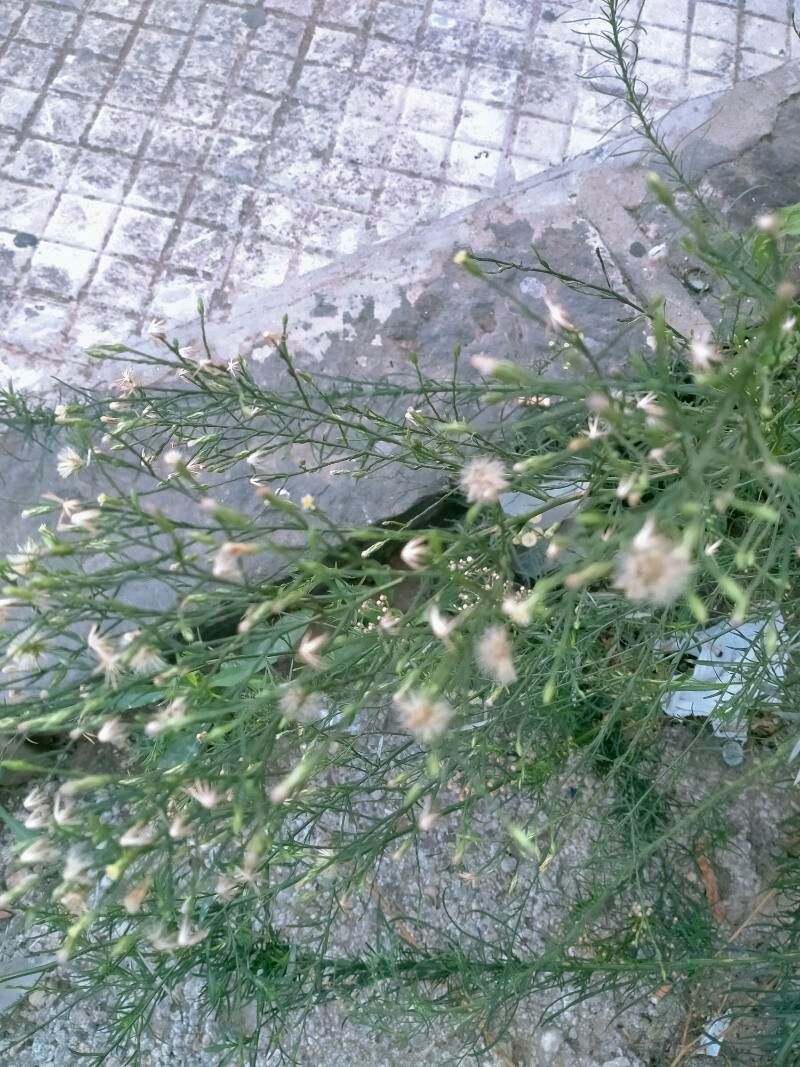
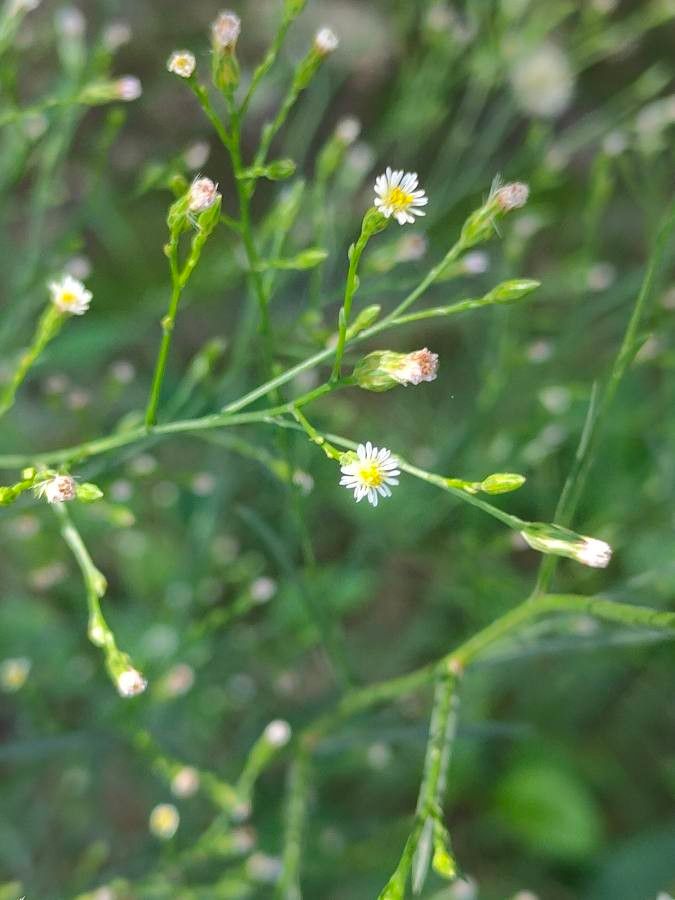
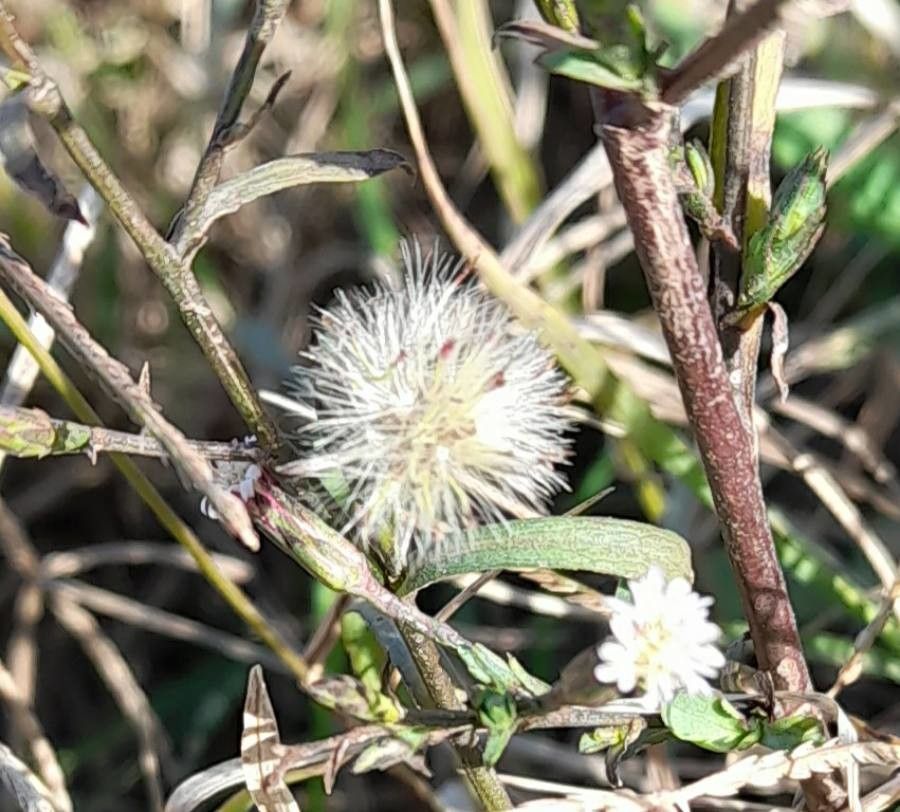
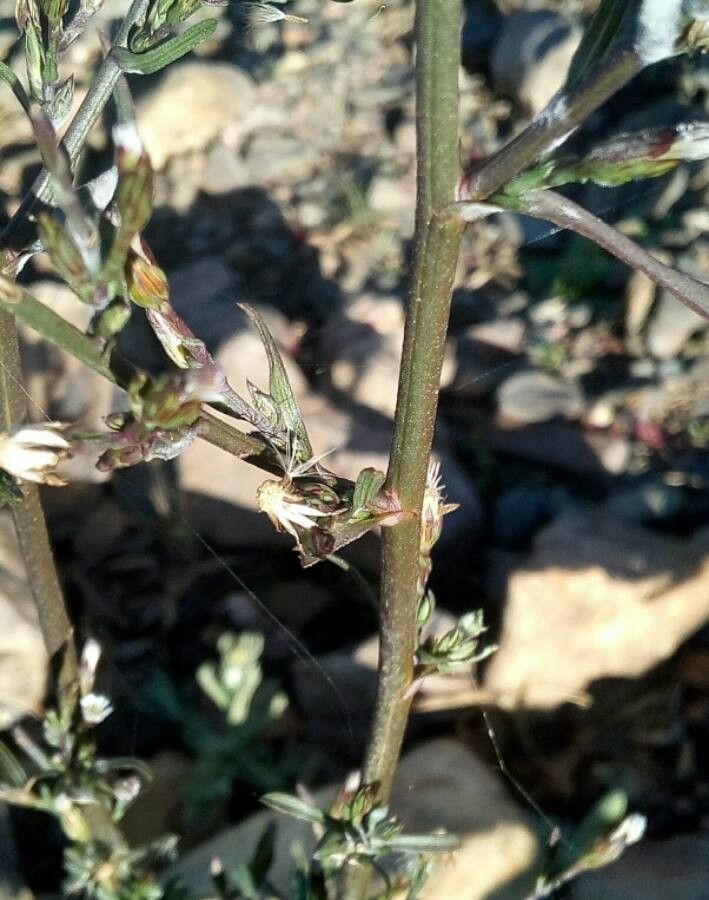
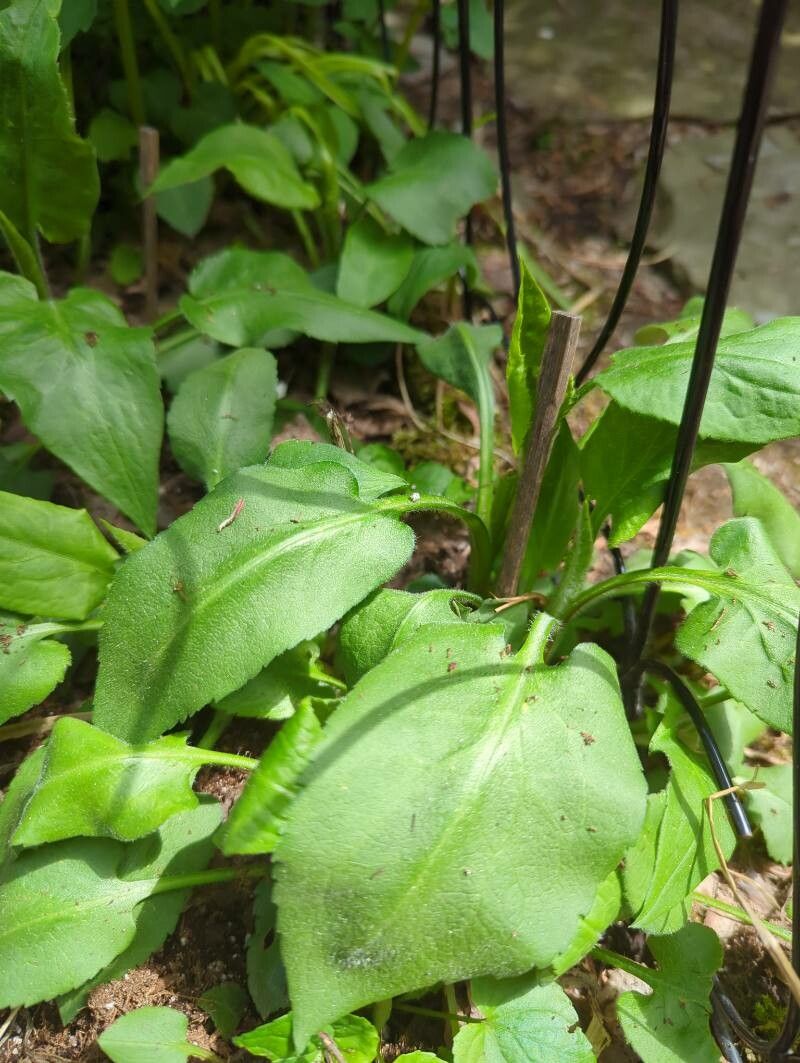
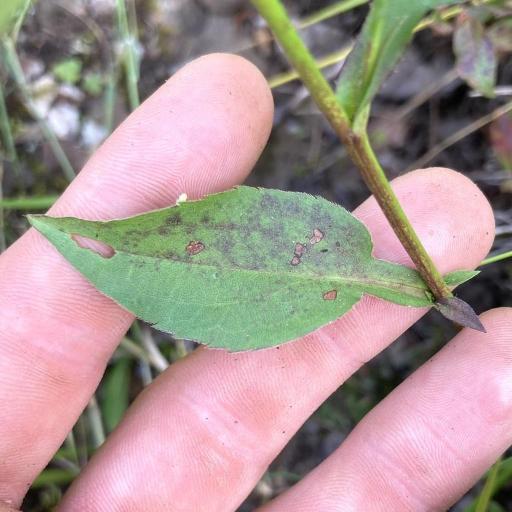
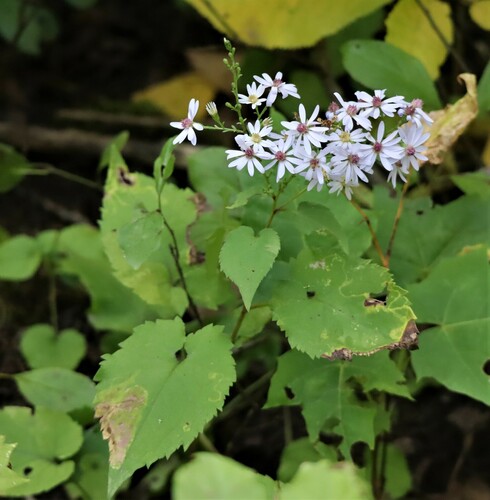
Symphyotrichum subulatum (formerly Aster subulatus), commonly known as eastern annual saltmarsh aster or, in Britain and Ireland where it is naturalized, annual saltmarsh aster, is an annual plant in the family Asteraceae native to the eastern United States and the Gulf Coast to Texas. The species grows primarily in coastal salt marshes, although in the Ozarks it occurs as a non-marine weedy variety.
Symphyotrichum subulatum var. squamatum is fairly resistant to disease and is generally unlikely to be affected by them. Nevertheless, it can be vulnerable to pests and diseases present in its surroundings. Such infections are typically mild. In terms of care, the plant requires moderate maintenance. Regular pruning is needed to maintain a neat appearance and promote healthy growth. Fertilizing can also help encourage flowering. Symphyotrichum subulatum var. squamatum is suitable for people with outdoor spaces, such as a garden or patio, and does not need extensive gardening experience. It may demand more attention if grown indoors.
How to keep Symphyotrichum Squamatum.
Light
Originating from open environments such as meadows and grasslands, Symphyotrichum subulatum var. squamatum is a perennial herbaceous plant that has a strong preference for sunlight. Although it thrives in full sun, it can also withstand conditions of partial sunlight.
Temperature
Symphyotrichum subulatum var. squamatum is native to tropical areas where the weather is consistently hot and moist. Therefore, it has adapted favorably to conditions of high heat and humidity. Sudden shifts in temperature are disliked by the plant, and it thrives best under steady temperature settings, so any drastic temperature fluctuations indoors should be averted. The plant generally doesn't fare well in colder conditions and necessitates warmer temperatures for its growth. Prolonged exposure to significantly low environmental temperatures could stunt its growth or even result in its death.
Fertilizer
The variety squamatum of Symphyotrichum subulatum necessitates the highest amount of fertilizer during its phase of active growth, typically happening in spring, summer, and the beginning of fall. There's a need for fertilization to supply crucial nutrients which might be deficient in the ground, supporting healthy growth of roots and stems, and contributing to the appealing leaves, an important characteristic of this specific plant.
Botanical profile.
- Plant Type
- Herb
- Life Cycle
- Perennial
- Genus
- Symphyotrichum
- Family
- Asteraceae
- Hardiness Zone
- 7-10
- Mature Height
- 30 cm to 91 cm
- Mature Spread
- 20 cm to 49 cm
- Leaf Color
- Green, Dark Green
- Leaf Type
- Deciduous
- Flower Color
- White
- Flower Size
- 0.51 cm to 1.02 cm
- Bloom Time
- Late summer, Fall
- Planting Time
- Spring
- Harvest Time
- Fall, Early winter
Other names.