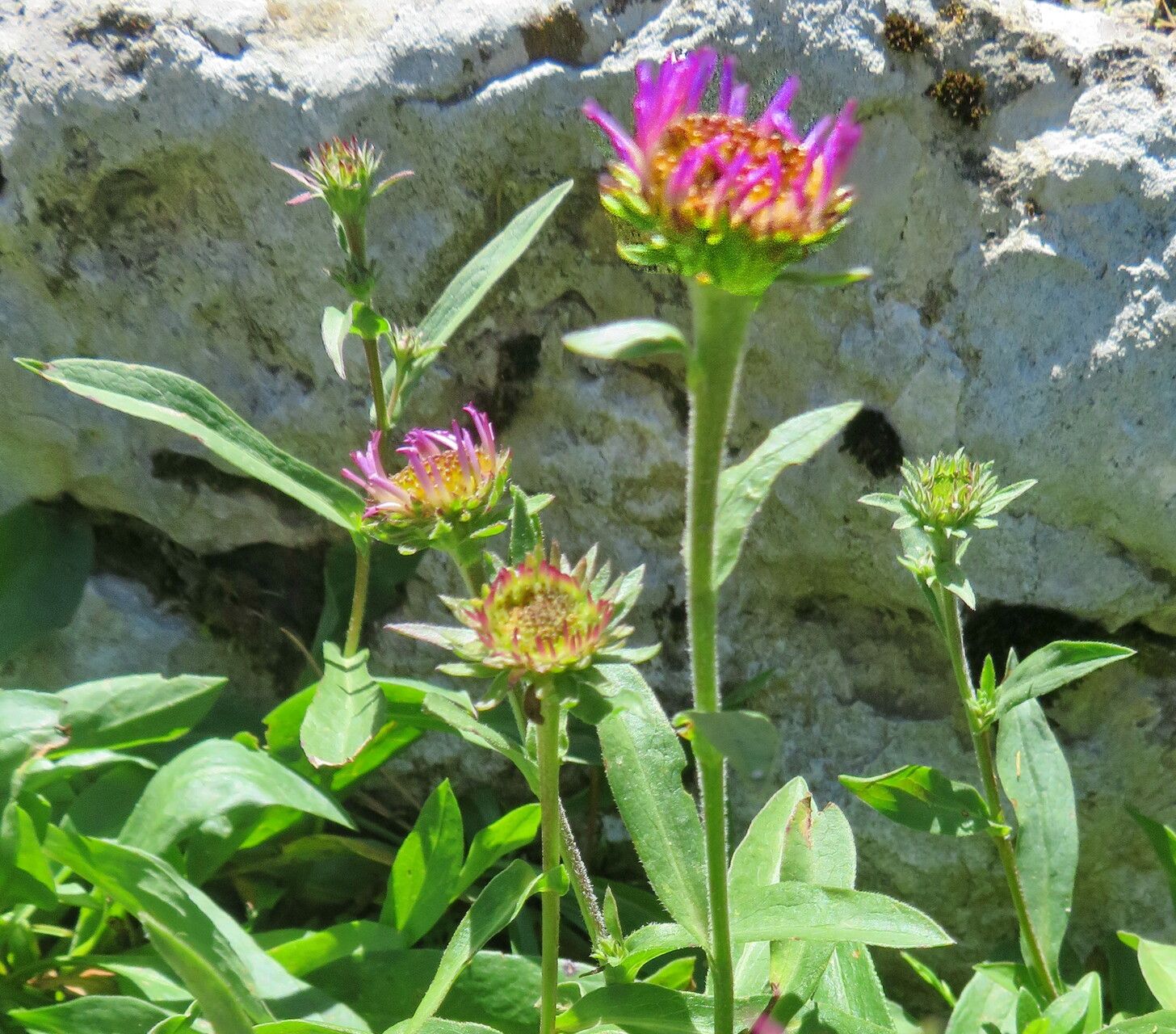
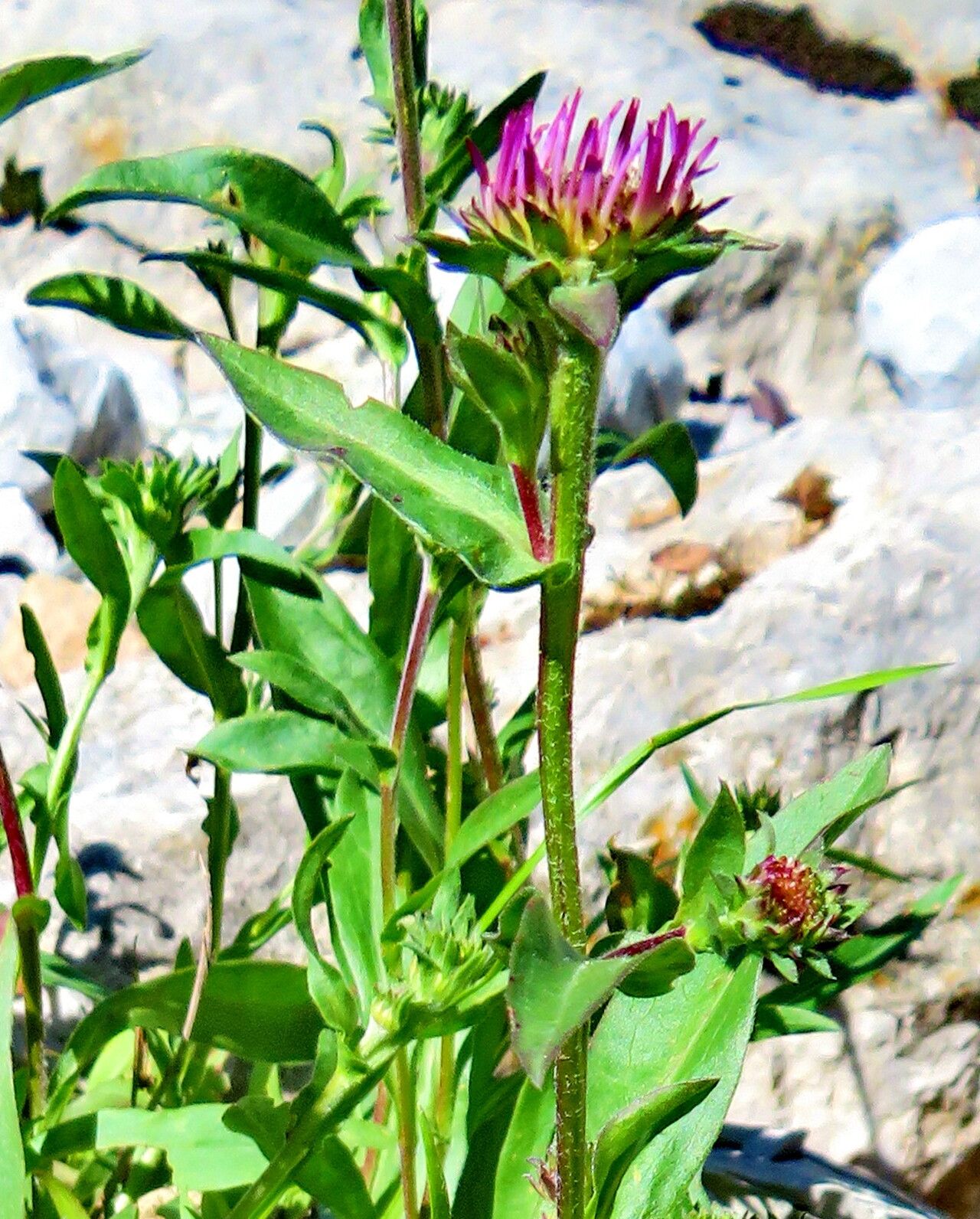
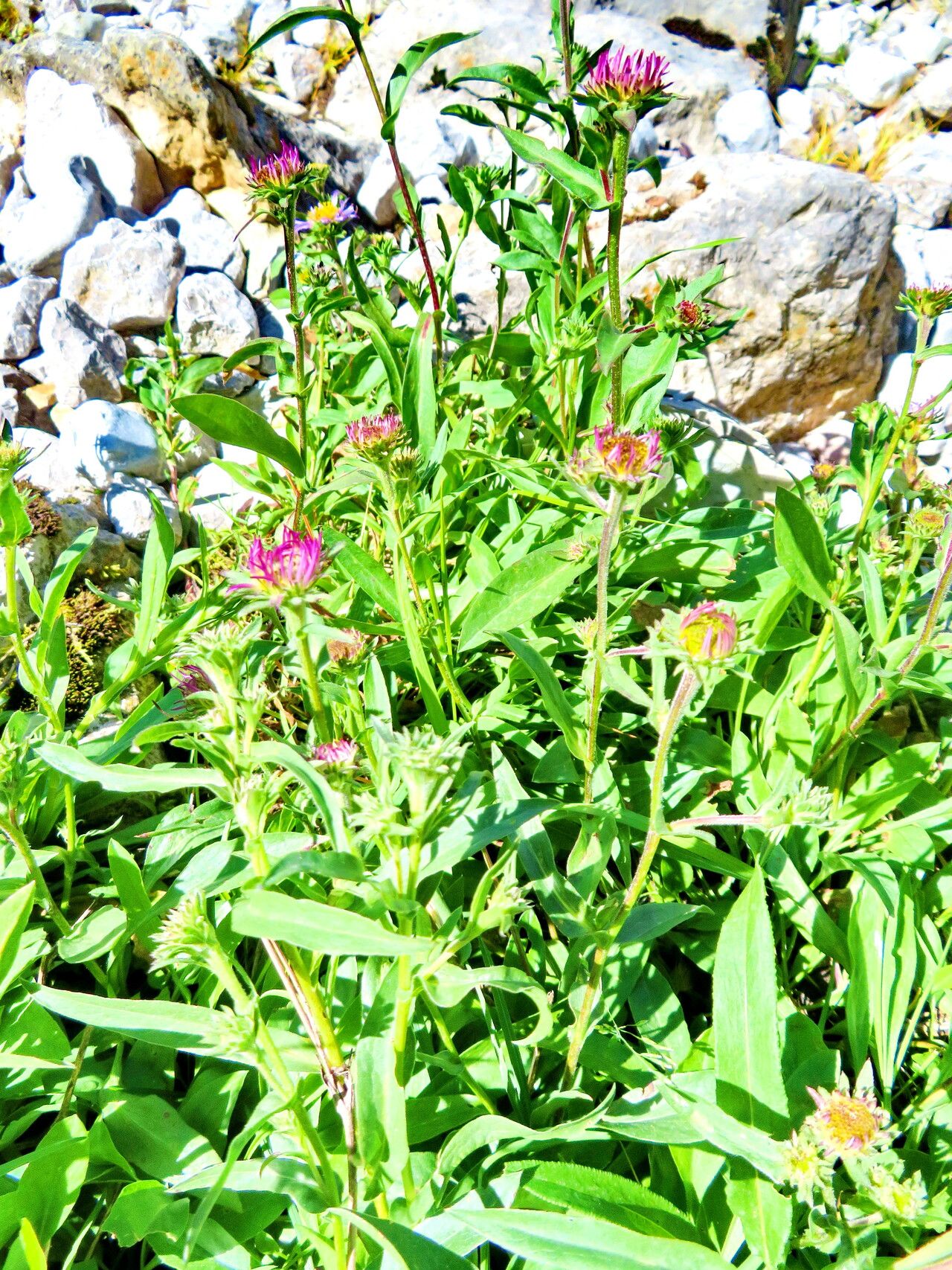
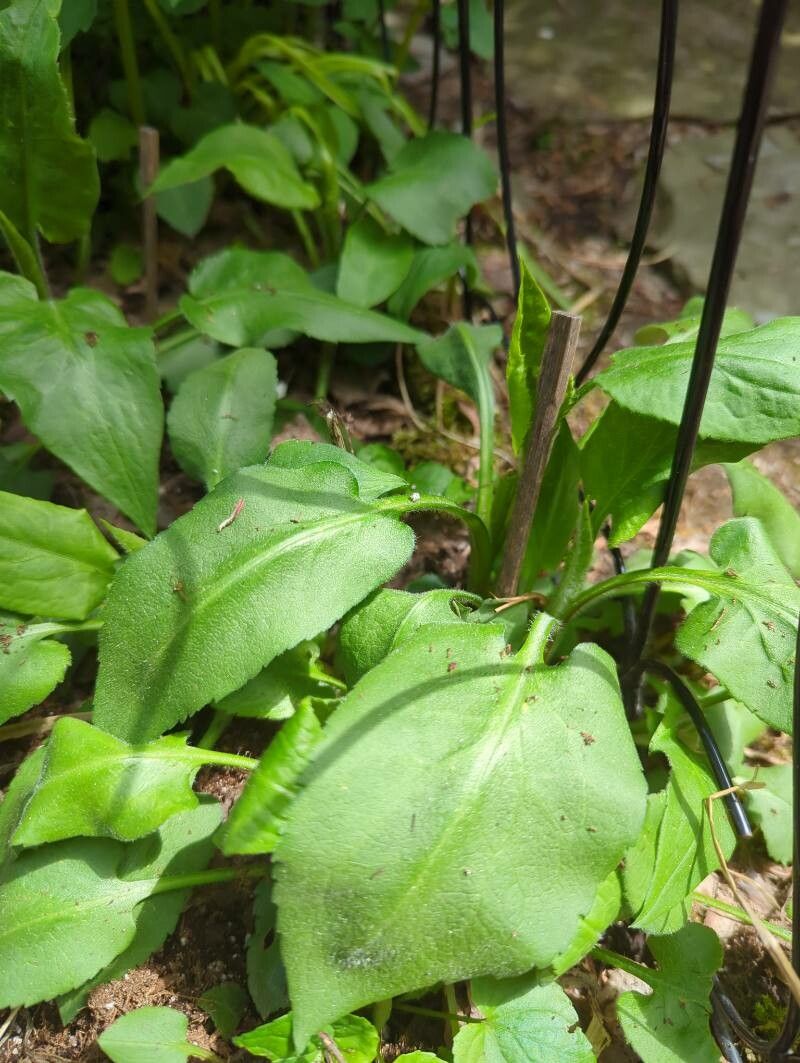
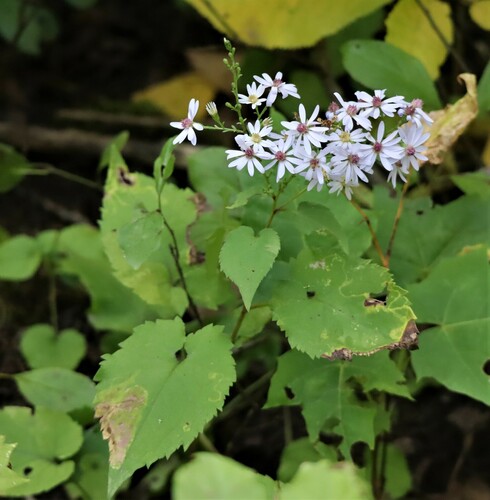
Symphyotrichum spathulatum is a species of flowering plant in the family Asteraceae native to western North America including northwestern Mexico. Commonly known as western mountain aster, it is a perennial, herbaceous plant that may reach 20 to 80 centimeters tall. Its flowers, which open in July and August, have violet ray florets and yellow disk florets.
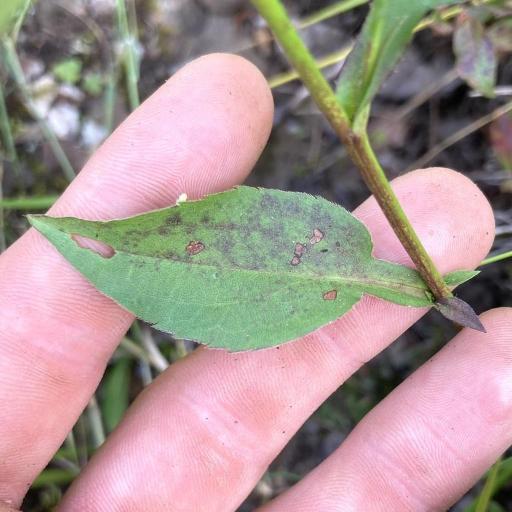
Western mountain aster is fairly resistant to disease and is generally not likely to suffer from illnesses. Still, it can be vulnerable to pests and diseases present in its environment, though these problems are typically mild. Regarding care, this plant requires a moderate level of maintenance. It should be pruned regularly to keep a neat appearance and healthy growth. Feeding with fertilizer can also encourage flowering. Western mountain aster is suitable for anyone with outdoor space, such as a garden or patio, and does not demand extensive plant-care experience. It may need more attention when grown indoors.
How to keep Symphyotrichum Spathulatum.
Light
Western mountain aster is a sun-loving perennial herbaceous plant native to open habitats, commonly found in meadows and grasslands. It prefers full sun but can also tolerate partial sun.
Temperature
Western mountain aster can tolerate a wide range of temperatures, but its distribution may still be restricted by different combinations of water availability and heat. It grows best in warm summer conditions with sufficient rainfall or irrigation. Extended stretches of cloudy, rainy weather and prolonged high temperatures can increase the chance of Western mountain aster dying. In winter, providing proper protection from cold can raise the plant's survival rate.
Fertilizer
The best time to fertilize a Western mountain aster is in early spring, as it comes out of dormancy and begins active growth. Fertilization supplies essential nutrients needed for healthy development. Although the Western mountain aster has fairly low fertilizer requirements, an annual application can improve its survival and encourage better, longer-lasting blooms.
Pruning
The Western mountain aster is known for its vibrant purple flowers and bushy appearance. To promote healthy growth, it's important to prune it annually in early spring. During this time, remove any dead stems. Avoid heavy pruning in late summer to ensure good air circulation, which helps reduce the risk of disease. This will also enhance the plant's overall health and appearance.
Botanical profile.
- Plant Type
- Herb
- Life Cycle
- Perennial
- Genus
- Symphyotrichum
- Family
- Asteraceae
- Hardiness Zone
- 3-8
- Mature Height
- 30 cm to 61 cm
- Mature Spread
- 30 cm
- Leaf Color
- Green, Dark Green
- Leaf Type
- Deciduous
- Flower Color
- Lavender, White
- Flower Size
- 2.03 cm to 3.05 cm
- Bloom Time
- Late summer, Early fall, Mid fall
- Planting Time
- Spring, Summer, Autumn
- Harvest Time
- Fall
- Native Area
- Mexico
Other names.