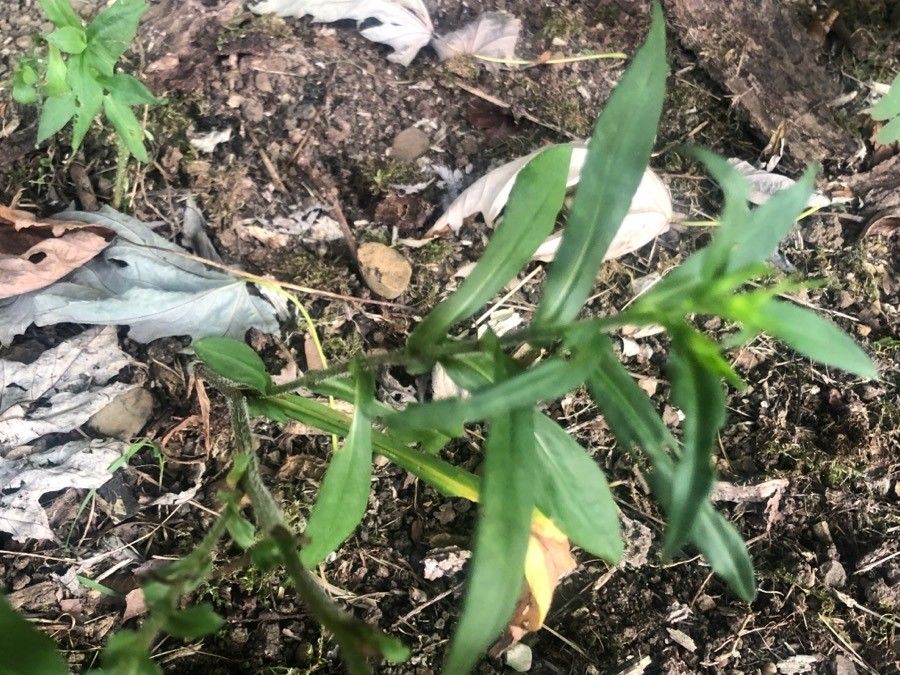
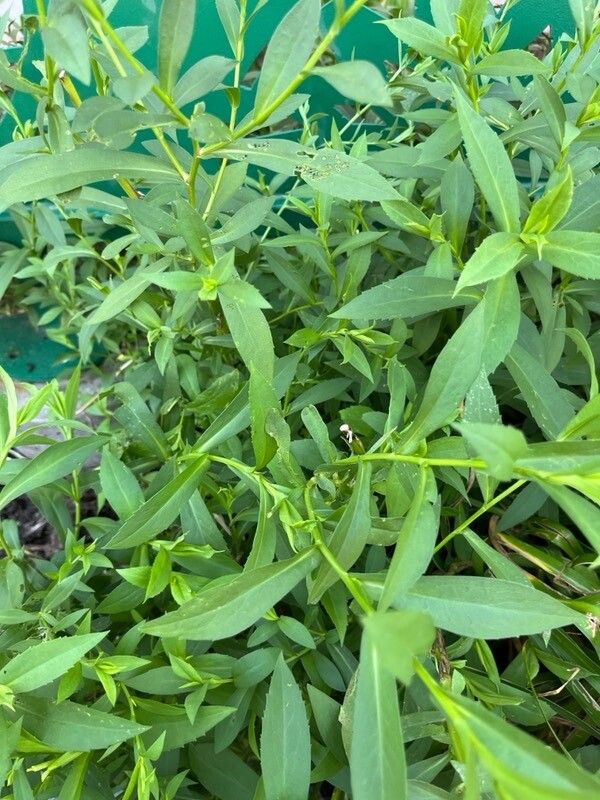
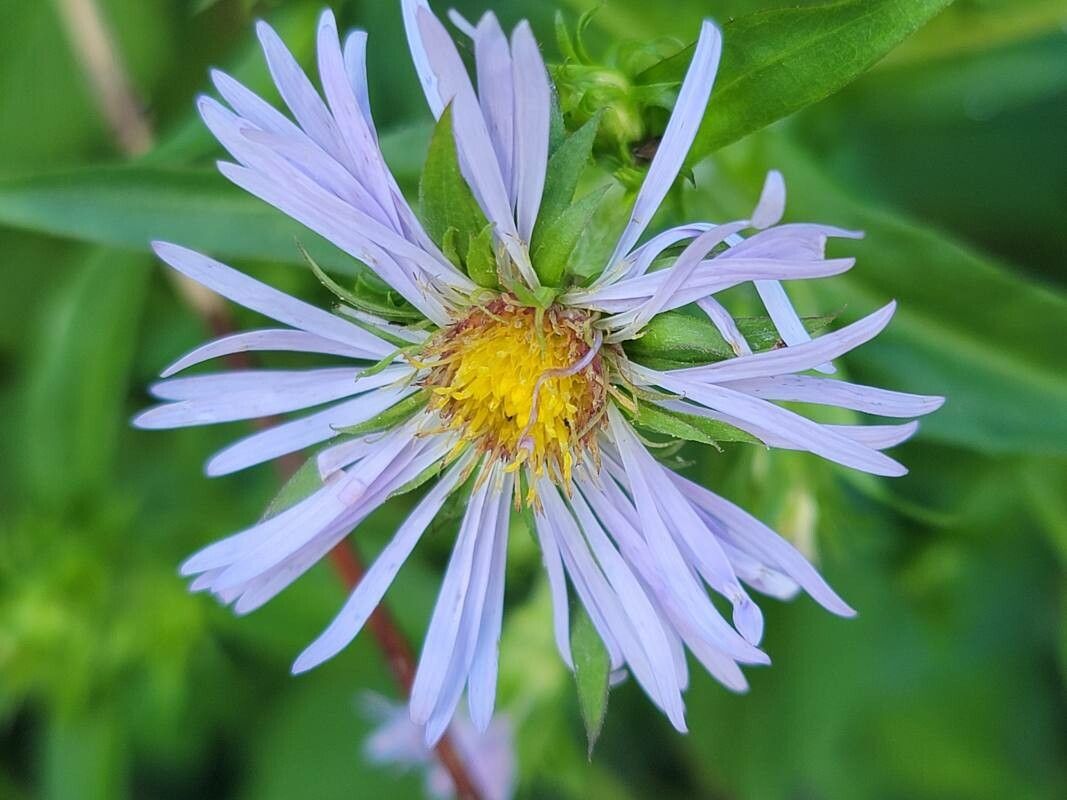
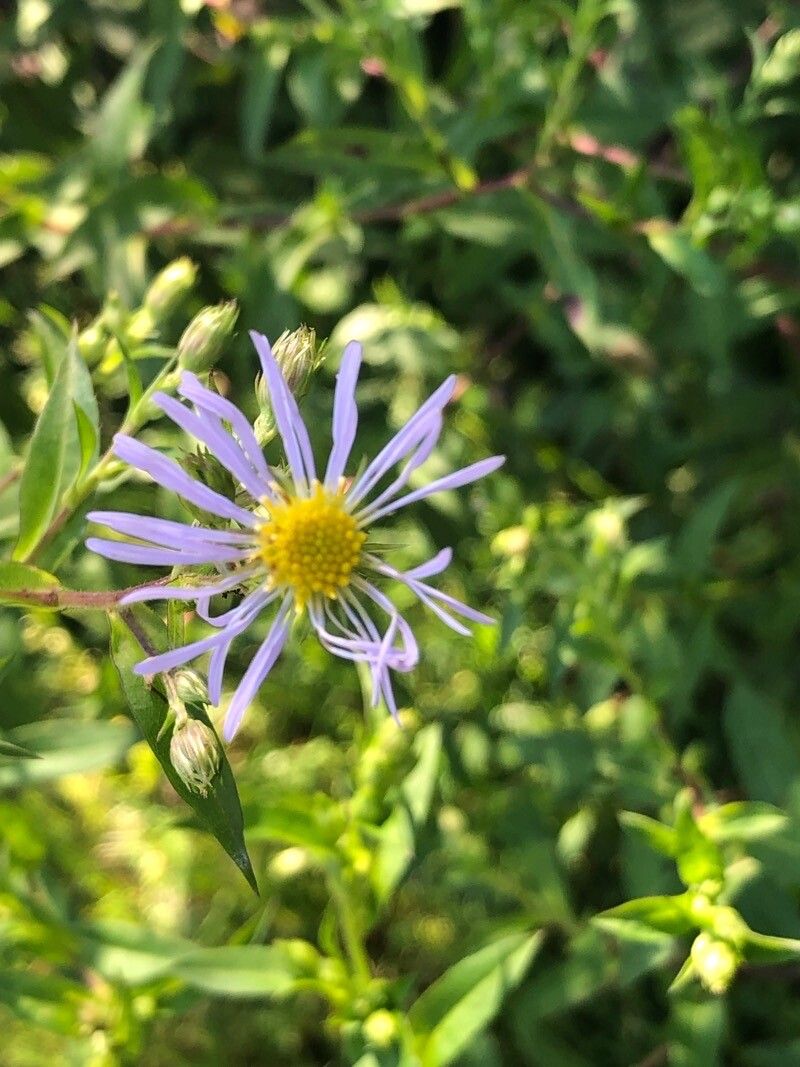
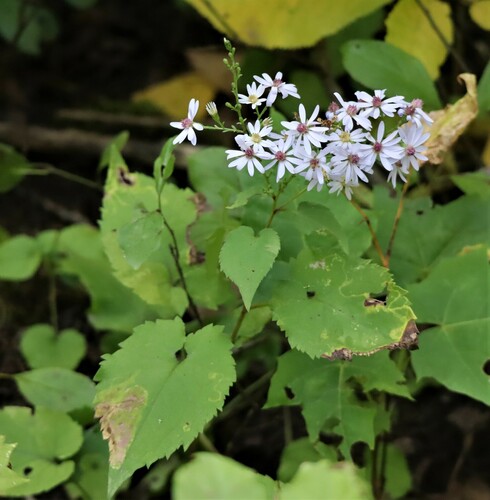
Symphyotrichum puniceum (formerly Aster puniceus), is a species of flowering plant in the family Asteraceae native to eastern North America. It is commonly known as purplestem aster, red-stalk aster, red-stemmed aster, red-stem aster, and swamp aster. It also has been called early purple aster, cocash, swanweed, and meadow scabish.Its range extends from the edges of the Great Plains to the Atlantic coast, and from the Gulf coast of Texas north to southern Ungava Bay in the north of Quebec. It is adventive in Europe.
The purplestem aster is fairly disease-resistant and generally not prone to illness. However, it can be affected by pests and diseases present in its environment. These problems are usually not severe. In terms of care, the plant requires moderate maintenance. It should be pruned regularly to maintain a neat appearance and support healthy growth. Fertilizing can also help encourage flowering. The purplestem aster is suitable for anyone with outdoor space, such as a garden or patio, and does not demand extensive gardening experience. It may need more attention when grown indoors.
How to keep Symphyotrichum Puniceum.
Light
Purplestem aster grows best with ample daily light for healthy development. While it can tolerate moderately exposed conditions, it truly does best in intense light. Native to open habitats, it shows a preference for plenty of light. Both too much and too little light can hinder its growth or lead to wilting.
Water
The purplestem aster, native to moist environments, thrives with consistent moisture and can withstand brief dry periods. To keep this herbaceous perennial healthy, water it weekly. During its growing season, rainwater further promotes its lush growth and vitality.
Temperature
The purplestem aster thrives in its native conditions characterized by cold winters and warm summers. It tolerates temperatures ranging from 32 to 90 ℉ (0 to 32 ℃), with an optimal range of 50 to 77 ℉ (10 to 25 ℃). During colder months, it is recommended to adjust indoor temperatures to 50 to 60 ℉ (10 to 15 ℃) to support proper growth and development.
Fertilizer
One spring application of fertilizer is generally enough for Purplestem aster, although multiple feedings can maximize growth. Feed every month to every month and a half. Fertilization improves the appearance and function of the leaves, maintaining even color and a healthy texture. It also promotes root development and nutrient uptake for the plant's long-term health.
Pruning
The purplestem aster benefits greatly from pruning between early and late spring, which helps stimulate its growth. Important techniques include cutting the old stems down to the base, thinning out crowded areas to improve air circulation, and deadheading flowers to extend their blooming period. By pruning at the right time, you can enhance the plant's health and appearance while also helping to prevent disease.
Botanical profile.
- Plant Type
- Herb
- Life Cycle
- Perennial
- Genus
- Symphyotrichum
- Family
- Asteraceae
- Hardiness Zone
- 3-8
- Mature Height
- 1.83 m to 2.44 m
- Mature Spread
- 91 cm
- Leaf Color
- Green
- Leaf Type
- Deciduous
- Flower Color
- Purple, Lavender
- Flower Size
- 2.54 cm to 5.08 cm
- Bloom Time
- Mid summer, Late summer
- Planting Time
- Autumn
- Harvest Time
- Fall
Other names.
Reader questions.
How should I water my Purplestem aster?
To ensure the health of the Purplestem aster, it is recommended to use filtered water at room temperature or slightly warmer. Tap water may contain harmful particles that could affect the plant's wellbeing. As the Purplestem aster thrives in warm environments, it is best to avoid using cold water as it may shock the plant. Another important consideration is to avoid overhead watering, as this can cause issues with the foliage. Instead, simply apply filtered room temperature water directly to the soil until it is completely soaked. This method benefits the plant by keeping the roots moist and helping them spread through the soil to absorb essential nutrients.
Why should I add fertilizer to my Purplestem aster plant?
The main structure of the Purplestem aster is made up of its leaves. Fertilization is a crucial way to make sure these leaves not only look great but also function properly. By fertilizing correctly, you can ensure that your Purplestem aster keeps its leaves a consistent color and maintains a healthy texture. Fertilization doesn't just have an impact on what we can see above the soil surface; it also helps the plant develop new roots and maintain existing ones. This means that fertilization not only keeps your plant healthy in the present, but it also improves its ability to absorb nutrients from the soil in the future.
What are the sunlight requirements for Purplestem aster?
Purplestem aster requires abundant exposure to light each day for its healthy growth, thriving best under full sun conditions, which means above 6 hours of sunlight daily. It can also tolerate partial sun, about 3-6 hours of sunlight, but shows optimal growth in environments that mimic its natural, open habitats. As sunlight moves through your garden, pay attention to the balance of light and shade, adjusting the plant's location accordingly to ensure it receives the perfect amount of light.
What are the ideal growing conditions for Purplestem aster?
Purplestem aster, scientifically known as Symphyotrichum puniceum, thrives in an environment that emulates its native habitat with cold winters and warm summers. The temperature range suitable for its growth is between 32 to 90°F (0 to 32°C), ideally from 50 to 77°F (10 to 25°C). During the colder seasons, it's recommended to maintain indoor temperatures between 50 to 60°F (10 to 15°C) to support its proper growth and development. Despite its strong resistance to cold, precautions should be taken if winter temperatures are expected to drop below -35°C by covering the plant with protective materials like soil or straw. To counteract winter drought and water scarcity, it's advisable to water the plant abundantly before the first freeze of autumn, ensuring the soil stays moist going into the freezing period.
What should I do if I give too much or too little water to my Purplestem aster?
Overwatering is a common issue for Purplestem aster and can cause wilting, yellowing leaves, and diseases like root rot, mold, and mildew. On the other hand, underwatering is less common due to the plant's drought tolerance, but it can still cause brittle, brown leaves. It is important to recognize the signs of overwatering early and reduce watering immediately. If the soil drains poorly, replace it with a well-draining potting mix. If underwatering is detected, simply increase watering until the signs subside.
When should I fertilize my Purplestem aster?
If you grow your Purplestem aster outdoors, it will start growing new leaves in early spring. This is the signal to start fertilizing for the year. Normally, one application of fertilizer is sufficient for the aster. However, if you want to maximize its growth, you can fertilize multiple times throughout the spring and early summer. In this case, you should feed it about once every month to a month and a half.
Can artificial lighting be used for Purplestem aster and how?
Yes, artificial lighting can be utilized for Purplestem aster, especially when natural sunlight is insufficient. This is particularly useful during winter or in spaces that do not receive enough sunlight. LED lights are recommended due to their ability to provide specific wavelengths of light needed by plants. Full sun plants require 30-50W/sq ft, partial sun plants need 20-30W/sq ft, and full shade plants need 10-20W/sq ft of artificial light. The light source should be placed 12-36 inches above the plant for 8-12 hours per day to mimic natural daylight hours.
How does Purplestem aster respond to low temperatures?
Purplestem aster is remarkably cold-tolerant, preferring temperatures to remain above 0°C during winter while still capable of withstanding conditions down to -30°C. However, if temperatures drop below -35°C, you may not observe immediate harm during winter, but the plant's ability to sprout in the spring could be diminished, showing decreased sprouting or, in severe cases, no sprouting at all. To address this, it is recommended to remove any parts of the plant in spring that have failed to sprout.
How much water does my Purplestem aster need?
If your Purplestem aster is in a pot, the most precise way to determine if it needs water is by checking the soil with your finger. If the top two to three inches of soil are dry, it's time to water it. If you have your Purplestem aster planted in the ground outdoors, you can use the same method to test the soil. Again, if the top few inches of soil are dried out, it's time to water. Generally, during spring and early fall, watering once a week using this method should be sufficient. However, during extremely hot weather, you may need to water two or more times per week. It's worth noting that mature, well-established Purplestem asters have a remarkable ability to withstand drought.
When is the best time to not put fertilizer on my Purplestem aster?
During the late fall and winter, your Purplestem aster goes into a dormant phase when it doesn't produce new growth. To take care of it properly, avoid fertilizing it during this time. In the spring and summer, if you choose to fertilize, start reducing the amount as summer approaches because the growth rate of the Purplestem aster slows down. Overall, it's not a good idea to fertilize the Purplestem aster when the weather is too hot or the soil is excessively dry. Doing so can stress the plant and cause it to die prematurely.
What are the symptoms of inadequate light for Purplestem aster?
Symptoms of inadequate light in Purplestem aster include smaller new leaves, leggy or sparse growth, faster leaf drop, slower or no new growth, lighter-colored new leaves, chlorosis, sunscald, leaf curling, wilting, and leaf scorching. These symptoms highlight the importance of adequate sunlight for the plant's health, indicating either too little or too much exposure to sunlight.
What should I do if the Purplestem aster is exposed to high temperatures?
Purplestem aster should ideally be kept below 32°C during the hotter months. Exposure to temperatures above 35°C could result in the leaves becoming lighter in color, prone to curling, susceptible to sunburn, and could lead to the wilting and drying out of the entire plant in severe cases. To mitigate these issues, you should trim away any sunburned and dried-up parts of the plant. Relocating the plant to a shaded area during the midday and afternoon sun, or employing a shade cloth, can help prevent further damage. Additionally, watering the plant in the morning and evening will help keep the soil adequately moist and protect the plant from heat stress.