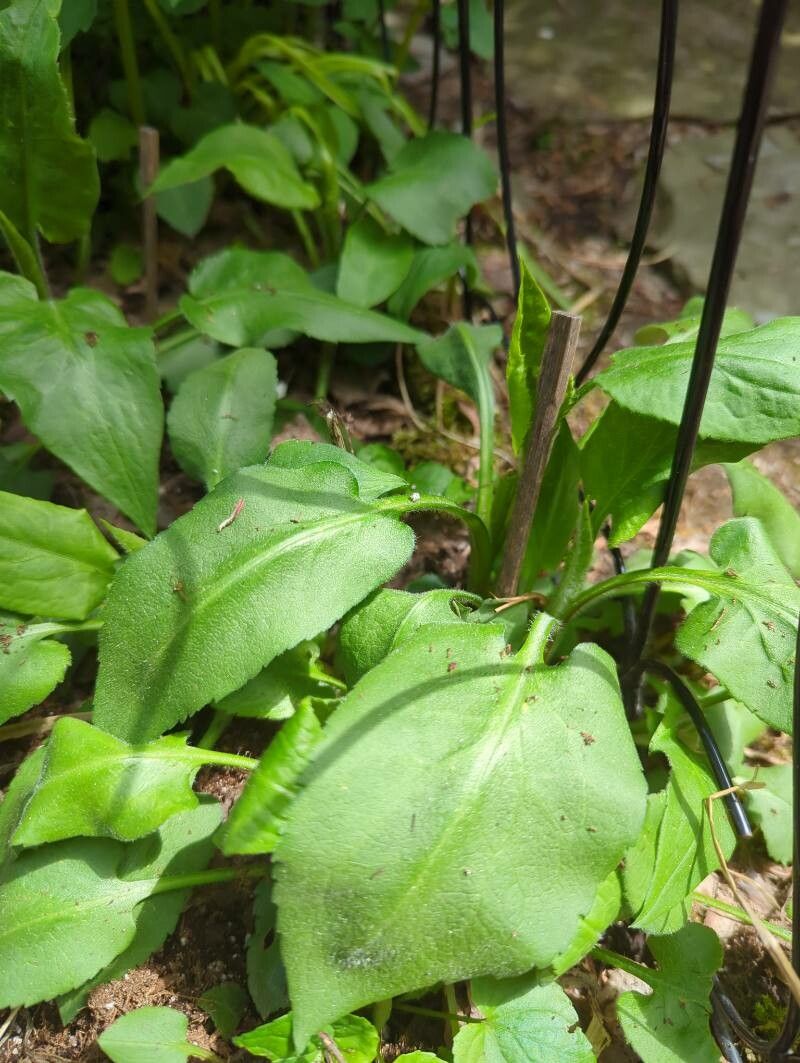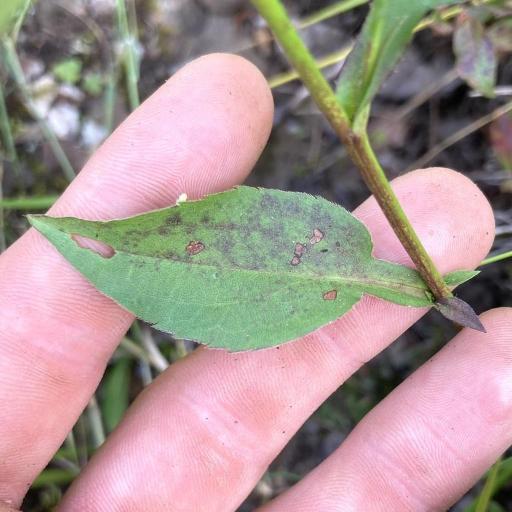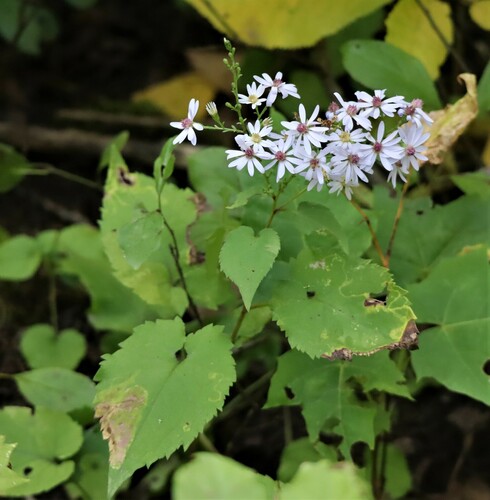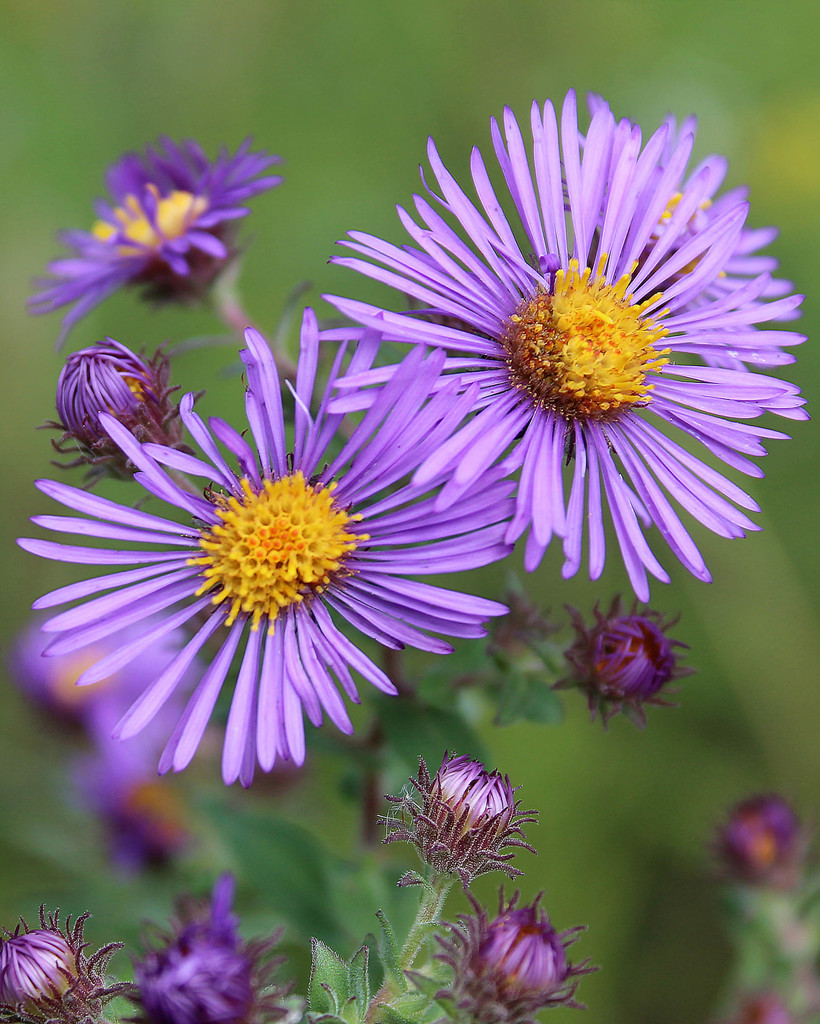
Symphyotrichum novae-angliae (formerly Aster novae-angliae) is a species of flowering plant in the aster family (Asteraceae) native to central and eastern North America. Commonly known as New England aster, hairy Michaelmas-daisy, or Michaelmas daisy, it is a perennial, herbaceous plant usually between 30 and 120 centimeters (1 and 4 feet) tall and 60 to 90 cm (2 to 3 ft) wide. The usually deep purple flowers have up to 100 ray florets which are rarely pink or white. These surround the flower centers which are composed of just as many tiny yellow disk florets. The plant grows naturally in clumps, with several erect stems emerging from a single point. The stems are stout, hairy, and mostly unbranched. The untoothed, lance-shaped leaves clasp the stem with earlobe-like appendages, and the lower stem leaves often wither by the time of flowering. New England aster generally grows in wet environments but also has been found in dry soil or sand. The seeds and nectar of this mostly conservationally secure species, which blooms August to November, are important to a wide variety of animals, including birds, bees, and butterflies. It has been introduced to Europe, Central Asia, Hispaniola, New Zealand, and some western states and provinces of North America. The naturally-occurring hybrid species of New England aster and white heath aster (Symphyotrichum ericoides) is named Symphyotrichum × amethystinum and is commonly known as amethyst aster. It can grow where the two parents are in close proximity. There are roughly 50 cultivars of Symphyotrichum novae-angliae available, including the award-winners 'Brunswick', 'Helen Picton', and 'James Ritchie'. It has been used by indigenous Americans, such as the Cherokee, Iroquois, and Potawatomi, to heal multiple ailments.
New England Aster: The New England aster is perhaps the most renowned of all asters. Known for their vibrant fall blooms, asters are quintessential autumn flowers. The New England region of the United States is particularly famous for attracting autumn travelers, partly due to the beauty of these flowers. New England asters are popular in floral arrangements and commonly found in local florist shops, thanks to their suitability as cut flowers.
New england aster has strong resistance to disease and is generally not prone to illness. Still, it can be affected by pests and diseases present in its surroundings. These infections are typically not serious. Regarding care, this plant needs moderate maintenance. It should be pruned regularly to keep a neat appearance and support healthy growth. Applying fertilizer can also help encourage flowering. New england aster is appropriate for anyone with an outdoor area, like a garden or patio, and does not demand extensive care experience. It may need more attention when kept indoors.
How to keep Symphyotrichum Novae Angliae.
Light
The New England aster thrives in full, intense daylight, like the meadows where it naturally grows. It tolerates partial shade and can adapt to less intense light. Excessive light can cause it to wilt, while too little can impede healthy growth and flowering.
Water
The New England aster, well-suited to temperate climates, thrives with consistent moisture and benefits from well-hydrated soil, though it can withstand brief dry spells. To encourage optimal growth, it should be watered weekly, reflecting the rainfall of its native habitat. When cultivated primarily outdoors, providing adequate water is crucial during its vibrant flowering phase.
Temperature
Originally from New England, new england aster does best in a cool to moderate temperature range of 41 to 90 ℉ (5 to 32 ℃). In summer, give it partial shade and keep the soil evenly moist so the plant can tolerate warmer weather. In winter, apply mulch around the base to shield it from cold snaps.
Fertilizer
The best time to fertilize a New England aster is in early spring, as it comes out of dormancy and begins active growth. Fertilization supplies essential nutrients for healthy development. Although New England aster has relatively modest fertilizer requirements, applying fertilizer annually can improve its survival and encourage fuller, longer-lasting blooms.
Pruning
The New England aster, known for its vibrant fall blooms, thrives best with annual pruning conducted between early and late spring. Pruning up to one-third of the plant promotes bushier growth and helps manage its height. Additionally, deadheading not only enhances flowering but also improves air circulation and reduces the risk of disease. It is important to use clean, sharp tools for maintenance tasks.
Pot & Repot
When repotting New england aster, select a container 1-2 inches (2.5–5.1 cm) larger that offers ample drainage. Use a well-draining potting mix. Repot in spring or fall, making sure the root ball sits slightly lower than the rim of the flower pot. Water thoroughly after repotting and place the plant in a warm spot with indirect sunlight.
Botanical profile.
- Plant Type
- Herb
- Life Cycle
- Perennial
- Genus
- Symphyotrichum
- Family
- Asteraceae
- Hardiness Zone
- 4-8
- Mature Height
- 0.3 m to 1.22 m
- Mature Spread
- 61 cm to 91 cm
- Leaf Color
- Green
- Leaf Type
- Deciduous
- Flower Color
- Purple, Pink, White, Blue
- Flower Size
- 3.81 cm
- Bloom Time
- Mid summer, Late summer
- Planting Time
- Spring
- Harvest Time
- Fall
- Native Area
- Eastern North America
Other names.
Reader questions.
When Should I Water My New England Aster?
Proper watering is essential for the well-being of the New England Aster (Symphyotrichum novae-angliae), as it supports various physiological functions and promotes vibrant blooms. Check the soil's dryness by inserting your finger one to two inches deep into the soil; if it feels dry, it's time to water. Decreased flowering, wilting leaves, and paler leaf color can also indicate the need for water. It's important to avoid both overwatering and underwatering to keep the plant healthy and prevent diseases or stress.
Why should I put plant food on my New England aster?
Fertilization is important for the New England aster for a few reasons. Firstly, it provides essential nutrients for the plant's growth above and below the ground. However, the New England aster doesn't require a lot of fertilization overall. While it can survive without it, annual fertilization is beneficial in keeping the plant alive and promoting longer-lasting, better quality flowers. Therefore, those who want their New England aster to flourish should remember to fertilize it every year.
What are the sunlight requirements for New England Aster?
New England Aster thrives best when exposed to full sunlight, requiring more than 6 hours of sunlight daily to flourish. It can also adapt to partial sun, with about 3-6 hours of sunlight. Observing how sunlight moves through your garden helps in choosing spots that strike the perfect balance between light and shade, which is crucial for the plant's happiness and growth.
What are the ideal growing conditions for New England Aster?
New England Aster, botanically known as Symphyotrichum novae-angliae, thrives in a cool to moderate temperature range, specifically between 41 to 90°F (5 to 32°C). During the hotter summer months, it's beneficial for the plant to receive partial shade and regular watering to cope with higher temperatures. In preparation for winter, mulching around the base of the plant can help protect it from cold snaps. Despite its strong cold resistance, when winter temperatures are anticipated to fall below -30°C, additional cold protection is advisable, such as covering the plant with soil or straw. Moreover, watering the plant abundantly before the first freeze ensures the soil stays moist and prevents drought and water shortages through winter and the early spring.
How Should I Water My New England Aster?
Watering New England Aster involves maintaining moist but well-draining soil without overwatering to avoid root rot. Techniques include bottom-watering by placing the pot in a tray of water for 20-30 minutes or using a narrow-spouted watering can to direct water to the base of the plant while avoiding moisture on the foliage. Using a moisture meter can help in maintaining the right soil moisture level. Allowing the soil to partially dry out between waterings encourages healthy root growth. Regular monitoring and adjusting watering frequency based on soil moisture content are crucial for the plant's health.
What is the ideal time to fertilize my New England aster?
The best time to fertilize a New England aster is in late winter to early spring. This is when the plant is coming out of its dormant phase and beginning to grow actively. Fertilizing at this time promotes healthy growth and sets the plant up for a successful season. It is also possible to fertilize a New England aster in the fall, although early spring is generally the most beneficial time. It is not recommended to fertilize the plant during the summer or winter seasons.
How does New England Aster react to different lighting conditions?
New England Aster requires maximum daylight intensity for optimal growth, much like its native meadow habitat. While it tolerates partially shaded conditions and can adapt to less intense light, both overexposure and insufficient light exposure can pose risks. Overexposure may lead to withering, while not enough light can impede healthy growth and blooming. In indoor conditions, where natural sunlight may be limited, especially during winter or in less sunny areas, artificial lighting becomes essential. Choosing the right type of artificial light, like LED lights, and ensuring plants receive adequate wattage and duration of light can promote healthier growth.
How does New England Aster react to low temperatures?
New England Aster exhibits impressive cold tolerance, optimally growing when temperatures are above 5°C. However, it should ideally not be exposed to temperatures dropping below -25°C. If temperatures plummet below -30°C, the plant might not show immediate distress during the winter, but there could be noticeable issues with sprouting in spring, such as reduced sprouting or failure to sprout at all. The recommended solution for such occurrences is to remove any parts of the plant that have not sprouted in the spring.
How Much Water Does New England Aster Really Need?
The amount of water the New England Aster needs varies based on factors like pot size, root depth, and plant size. Ensure the plant is in a well-drained pot and water deeply enough to reach the roots, generally enabling watering every 2-3 days during hot, dry periods. Signs of proper hydration include healthy green foliage and firm stems. Overwatering or underwatering can lead to issues such as yellow leaves, root rot, or reduced blooming. Balance is key, ensuring consistently moist soil without waterlogging.
When is the best time to not give fertilizer to my New England aster?
To properly fertilize your New England aster, it's best to avoid fertilizing during most of the year. Late winter and early spring are the ideal times for fertilization, as this plant has low fertilization needs and one annual feeding is sufficient. Fertilizing throughout spring, summer, and fall can lead to overfertilization and its associated complications. However, if you missed fertilizing in the spring, it is acceptable to fertilize in the fall. During the winter, when the New England aster is in a dormant phase and not actively growing, fertilization is unnecessary and not recommended.
What are the signs of inadequate light in New England Aster?
When New England Aster is placed in rooms with inadequate lighting, the plant may not show immediate signs of light deficiency. However, symptoms can include smaller new leaves, leggy or sparse growth, faster leaf drop, slower or halted new growth, lighter-colored new leaves, and conditions like chlorosis (leaves turning yellow due to a lack of chlorophyll), sunscald, leaf curling, wilting, and leaf scorching. These symptoms either indicate insufficient light or damage from excessive sunlight.
What should you do if New England Aster experiences high temperatures?
During the summer, it's crucial to keep the New England Aster's surrounding temperature below 32°C. Exposure to temperatures above 35°C can cause the leaves to lighten in color, become prone to curling, and in severe cases, lead to sunburn or cause the entire plant to wilt and dry out. To counteract damage from high temperatures, trim away any sunburned or dried parts of the plant. Moving the plant to a shadier location or employing a shade cloth to provide protection from the midday and afternoon sun can prove beneficial. Additionally, watering the plant in the mornings and evenings will help maintain soil moisture and ensure the health of the plant during periods of high heat.