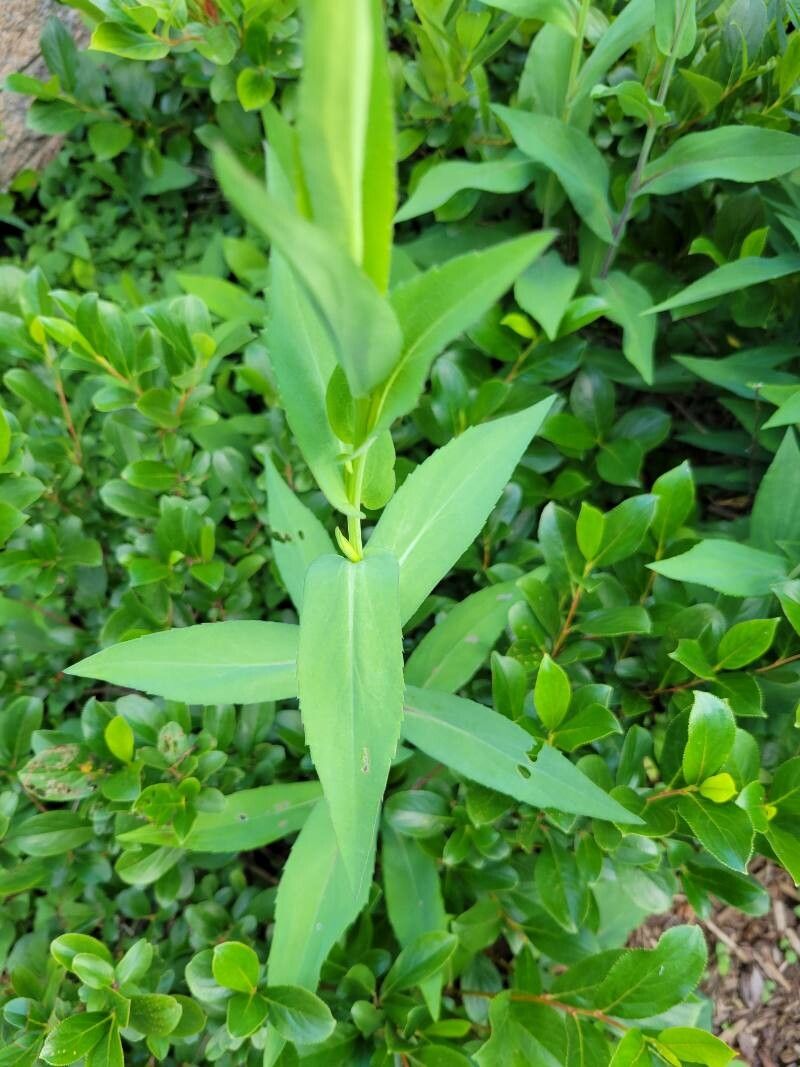
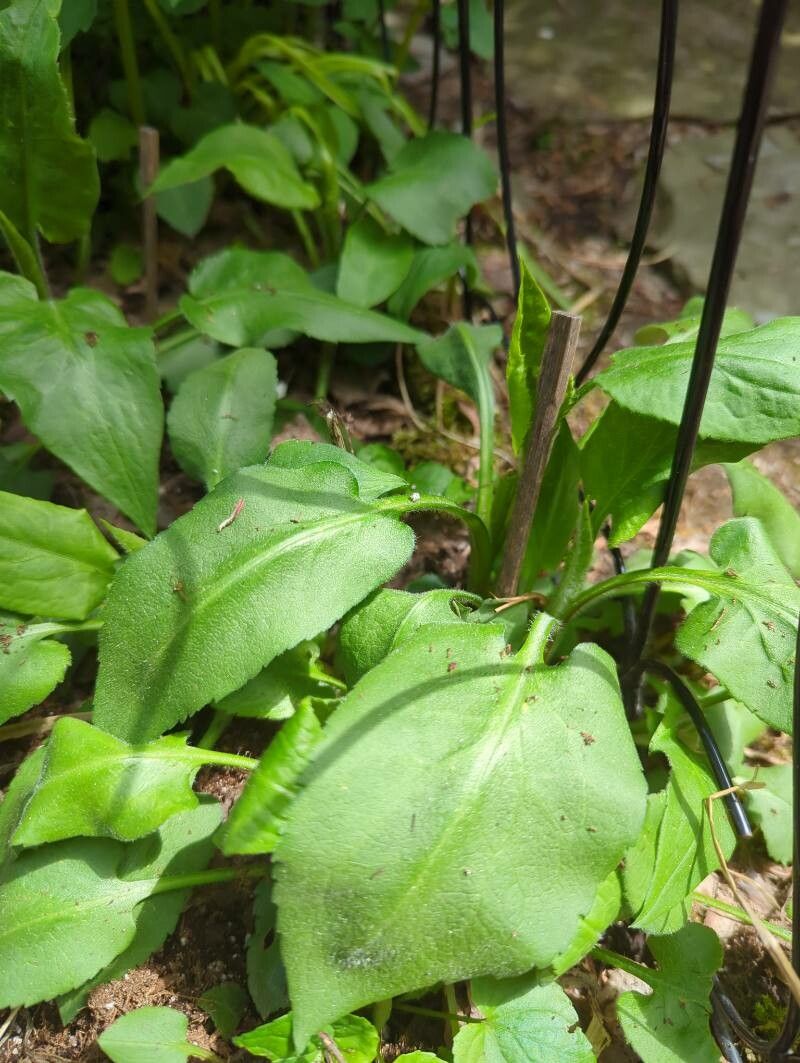
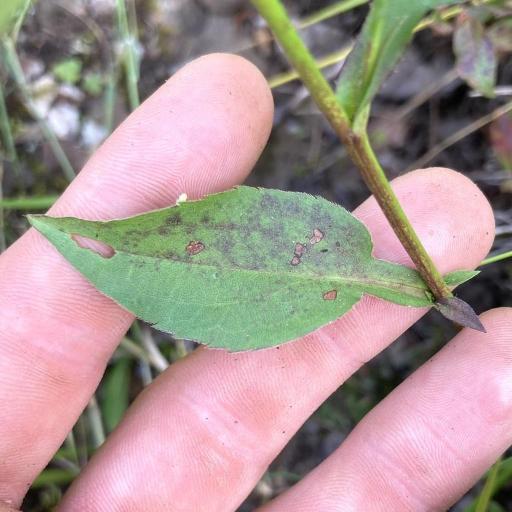
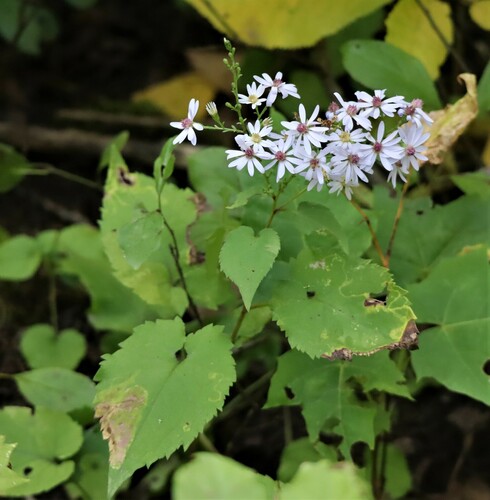
Symphyotrichum laeve, commonly known as smooth blue aster, is a perennial herbaceous plant in the Asteraceae family. Native to North America, it thrives in various habitats such as prairies, meadows, and open woods. The plant can grow up to 3 feet tall and features smooth stems with alternate leaves that are lance-shaped or elliptical.
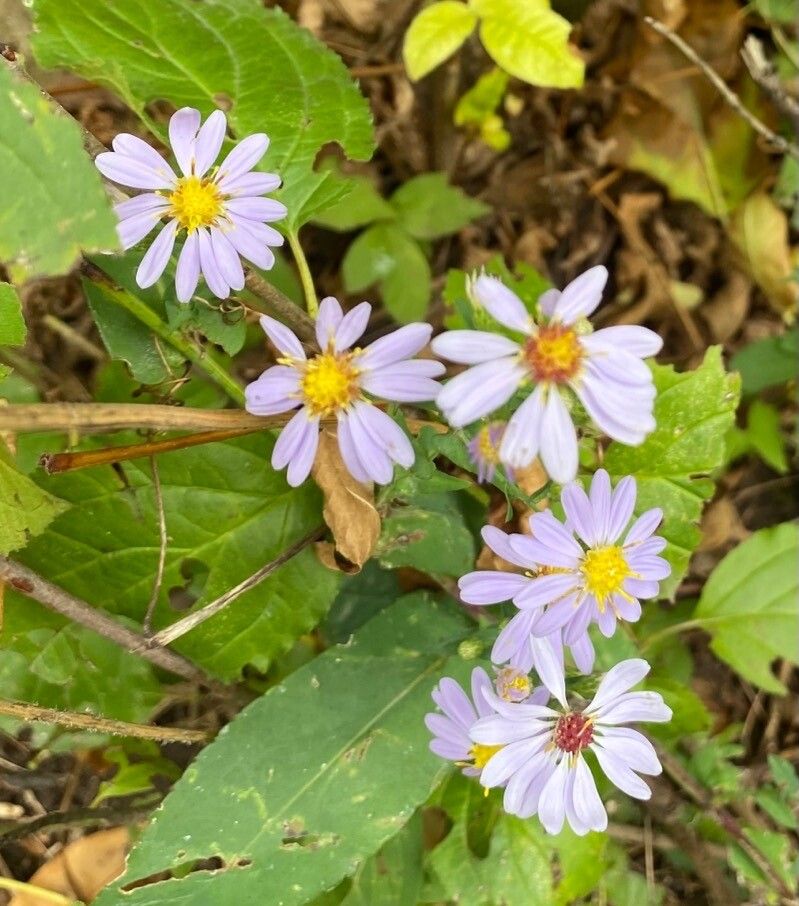
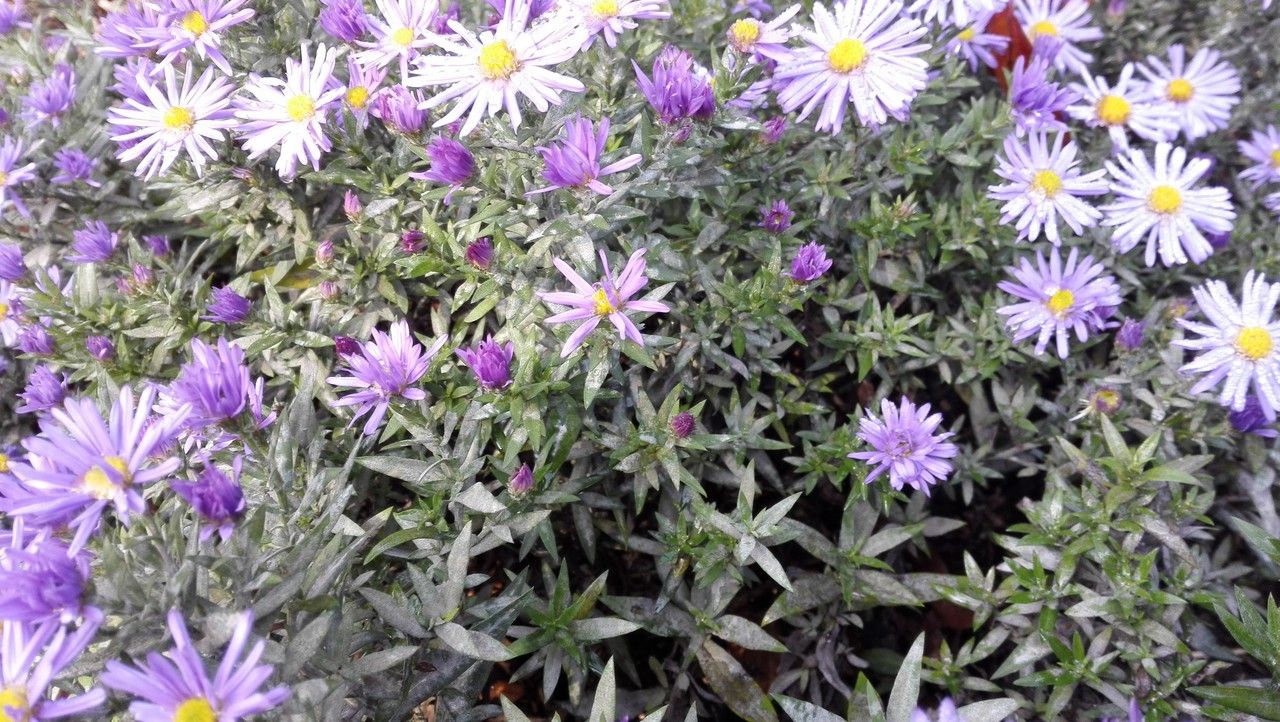
The flowers of Symphyotrichum laeve are small and daisy-like, with blue-purple petals surrounding a yellow center disk. They bloom from late summer through fall, attracting bees, butterflies, and other pollinators. The plant thrives in full sun or partial shade with well-drained soil.
Native Americans have historically used Symphyotrichum laeve for medicinal purposes to treat ailments such as fever, coughs, and colds. Additionally, its attractive flowers make it a popular choice for gardens and landscaping projects.
Overall, Symphyotrichum laeve is a visually appealing perennial herbaceous plant that offers ecological benefits by attracting pollinators. Its medicinal value further underscores its importance, making it a significant species in the conservation of North America's flora biodiversity.
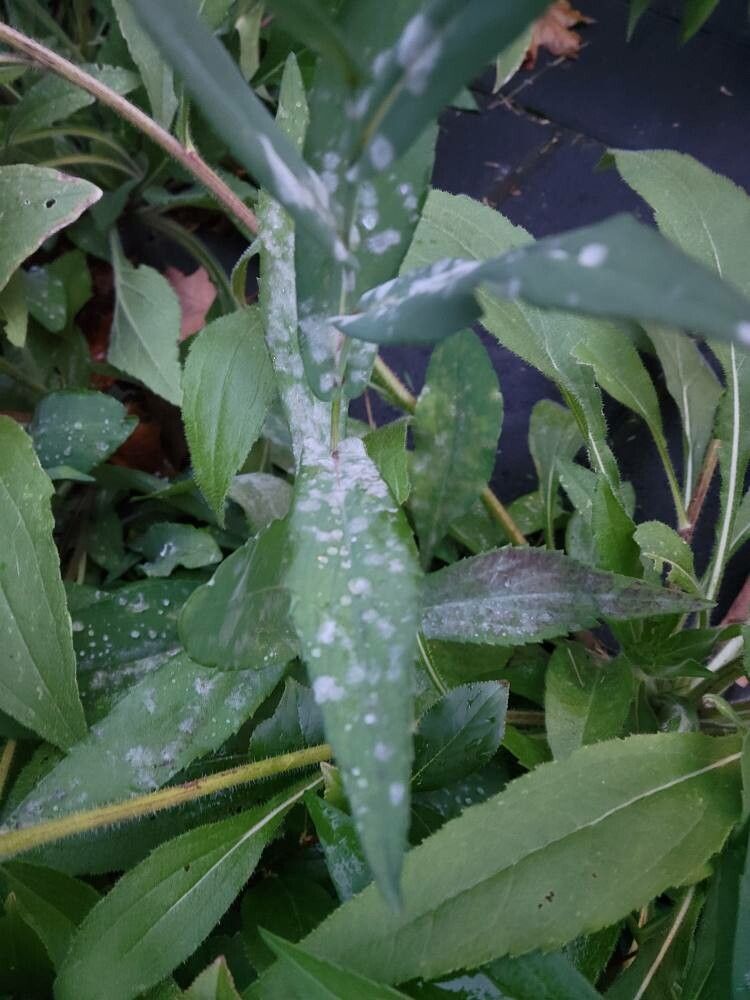
Smooth blue aster has good resistance to disease and is generally not likely to suffer from illnesses. However, it can be vulnerable to pests and diseases present in its environment. These problems are usually minor. Regarding care, this plant needs moderate maintenance. It should be pruned regularly to preserve a neat appearance and support healthy growth. Fertilizing can also help encourage flowering. The smooth blue aster is well suited to anyone with an outdoor area, like a garden or patio, and does not demand extensive gardening experience. It may need more attention if kept indoors.
How to keep Symphyotrichum Laeve.
Light
The smooth blue aster generally grows best when it receives a generous amount of sunlight throughout the day. It can, however, tolerate periods when the light is somewhat dappled or diffused. Heavy shade or extended exposure to intense light can impair its growth and health.
Water
The Smooth Blue Aster is native to North American prairies and prefers moderate moisture levels, though it can tolerate short periods of drought. It thrives with a weekly watering schedule that balances dryness and humidity. During its active growth season, it will need more frequent watering.
Temperature
Smooth blue aster favors temperatures between 41 and 89 ℉ (5 to 32 ℃). It is native to temperate areas and needs mild conditions. In hot months, providing shade or extra watering is recommended to avoid wilting. In colder seasons it can withstand sub-freezing temperatures and even a light frost, though offering some protection from strong winds is advisable to prevent damage.
Fertilizer
Typically, one spring application of fertilizer is adequate for Smooth blue aster, although several feedings can boost growth to its fullest. Fertilize about once every month to a month and a half. Fertilization improves the leaves' appearance and performance, encouraging even color and a healthy texture. It also promotes root development and nutrient uptake, supporting the plant's long-term health.
Pruning
The smooth blue aster showcases vibrant blue flowers and has a robust growth habit. To encourage denser growth and more blooms, prune the stems to one-third of their length from early to late spring. It's also important to remove any damaged branches to improve air circulation. Align your pruning practices with the smooth blue aster's growth cycle to maintain its health and vibrant appearance.
Pot & Repot
When repotting Smooth blue aster, select a pot 1-2 inches (2.5–5.1 cm) larger with good drainage. Use a well-draining potting mix. Repot in spring or fall, making sure the root ball sits slightly below the rim of the pot. Water thoroughly after repotting and place it in a warm location with indirect sunlight.
Botanical profile.
- Plant Type
- Herb
- Life Cycle
- Perennial
- Genus
- Symphyotrichum
- Family
- Asteraceae
- Hardiness Zone
- 4-8
- Mature Height
- 20 cm to 61 cm
- Mature Spread
- 61 cm
- Leaf Color
- Green
- Leaf Type
- Deciduous
- Flower Color
- Purple, Lavender, White
- Flower Size
- 1.27 cm to 2.54 cm
- Bloom Time
- Mid summer, Late summer
- Planting Time
- Summer
- Harvest Time
- Fall
- Native Area
- Mexico
Other names.
Reader questions.
How can I water my Smooth blue aster effectively?
To ensure the health of the Smooth blue aster while watering, it's best to use filtered water at room temperature or slightly warmer. Tap water often contains harmful particles that can affect the plant negatively. Since the Smooth blue aster is accustomed to a warm environment, using cold water may shock it. It's also recommended to avoid overhead watering to prevent issues with the foliage. Instead, apply filtered room temperature water directly to the soil until it is completely soaked. This method benefits the plant by thoroughly moistening the roots, allowing them to spread and gather the necessary nutrients from the soil.
Why should I add fertilizer to my Smooth blue aster plant?
The main structure of the Smooth blue aster is formed by its leaves. Fertilization plays a crucial role in maintaining the appearance and functionality of these leaves. By properly fertilizing your plant, you can ensure that its leaves maintain consistent color and a healthy texture. Fertilization also has benefits below the soil, promoting the generation of new roots and the maintenance of existing ones. This not only keeps your plant healthy in the present, but also enhances its ability to absorb nutrients from the soil in the future.
What are the sunlight requirements for Smooth Blue Aster?
Smooth Blue Aster thrives best in conditions where it can receive a generous amount of sunlight throughout the day, favoring full sun with exposure to above 6 hours of sunlight, but can also do well in partial sun, with about 3-6 hours of sunlight. It's vital to ensure that the plants are positioned in areas where they can extract the optimal benefit from sunlight exposure while being mindful to avoid locations with dense shade or prolonged intense light exposure which could negatively impact their growth and health. Observing how sunlight moves through your garden can help in choosing spots that strike the perfect balance between light and shade.
What are the ideal temperature conditions for growing Smooth Blue Aster?
Smooth Blue Aster thrives in temperatures ranging from 41 to 89 °F (5 to 32 °C), making it well-suited for temperate regions. The plant prefers mild temperatures and during hot months, measures such as providing shade or additional watering are suggested to prevent wilting. Conversely, it can tolerate sub-freezing temperatures and a light frost in colder seasons, although providing protection from strong winds is beneficial. It is particularly cold-resistant and usually doesn't require special frost protection measures unless winter temperatures are expected to drop below -30°C. In such cases, covering the plant with soil or straw can offer cold protection. Additionally, watering the plant abundantly before the first freeze in autumn helps ensure the soil remains moist and prevents drought and water scarcity during winter and early spring.
What should I do if I give too much or too little water to my Smooth blue aster?
Overwatering is a more common issue than underwatering for the health of your Smooth blue aster. If this species receives too much water, its stems and leaves may wilt and turn yellow. Over time, overwatering can also lead to diseases like root rot, mold, and mildew, which can be fatal to your plant. Underwatering is less likely, as the Smooth blue aster is fairly tolerant to drought. However, when it does happen, the leaves may become brittle and brown. It's important to recognize the signs of overwatering early on. Some diseases caused by overwatering, like root rot, may be irreversible if not addressed promptly. If you notice early signs, reduce your watering schedule and check the soil drainage. If the soil doesn't drain well, replace it with a loose, well-draining potting mix. If you suspect underwatering, simply water more regularly until the signs improve.
When should I fertilize my Smooth blue aster plant?
If you grow your Smooth blue aster outdoors each year, you will notice new growth shooting out in early spring. This is the signal to start fertilizing. One application of fertilizer in the spring should suffice, but if you want maximum growth, you can fertilize multiple times throughout the spring and early summer, about once every month to a month and a half.
How does artificial lighting support Smooth Blue Aster indoors?
Artificial lighting plays a crucial role for indoor Smooth Blue Asters, especially in scenarios where natural sunlight is insufficient. Using artificial lights, such as LED lights that can be customized to provide specific wavelengths needed by the plants, helps in simulating the natural sunlight conditions. To mimic outdoor conditions, consider the type of artificial light, ensuring full sun plants receive 30-50W/sq ft, partial sun plants get 20-30W/sq ft, and full shade plants obtain 10-20W/sq ft of light. The light source should ideally be placed 12-36 inches above the plant to mimic natural light, and plants should be exposed to artificial light for 8-12 hours per day to promote healthy growth.
How does Smooth Blue Aster react to extremely low temperatures?
Smooth Blue Aster is cold-tolerant, best thriving when temperatures stay above 5°C. During winter, it's advised to keep it above -25°C. Exposure to temperatures below -30°C doesn't typically result in noticeable changes during winter; however, it can lead to decreased sprouting or a complete lack of sprouting in the spring. To manage this, it's recommended to remove any parts of the plant that have failed to sprout in the spring.
How many times a week should I water my Smooth blue aster?
If your Smooth blue aster is in a pot, you can check if it needs water by sticking your finger into the soil. If the top two to three inches of soil are dry, it's time to water it. If you're growing the Smooth blue aster outdoors in the ground, you can use the same method to test the soil. If the top few inches of soil are dry, it's time to water. In the spring and early fall, you'll usually need to water this plant once a week. During extremely hot weather, you may need to water it twice a week or more. However, mature and well-established Smooth blue asters can handle drought well.
When is the best time to not fertilize my Smooth blue aster?
During the late fall and winter, your Smooth blue aster goes into a dormant phase and stops producing new growth. It is important to avoid fertilizing your Smooth blue aster during this time. In spring and summer, if you decide to fertilize multiple times, gradually reduce the rate of fertilization as summer approaches. This is because the growth rate of your Smooth blue aster will slow down during this time. In general, it is not recommended to fertilize your Smooth blue aster when the weather is unusually hot or when the soil is extremely dry. Fertilizing in these conditions can cause stress and lead to premature death of your Smooth blue aster.
What are the symptoms of lighting issues in Smooth Blue Aster?
Symptoms indicating lighting issues in Smooth Blue Aster can range from growth-related issues to physical damage to the plant. Insufficient light can lead to smaller new leaves, leggy or sparse growth, premature leaf drop, slower or halted new growth, and leaves developing irregular color patterns or appearing pale, indicating a lack of chlorophyll and essential nutrients. Conversely, excessive sunlight can cause chlorosis, sunscald, leaf curling, wilting, and leaf scorching. These symptoms highlight the plant's struggle to maintain optimum health under adverse lighting conditions.
How should Smooth Blue Aster be cared for in high temperatures?
During the summer, it is important to ensure that Smooth Blue Aster is kept below 32°C. Exposure to temperatures above 35°C can cause the leaves to lighten in color, become prone to curling, suffer from sunburn, and in severe cases, result in the entire plant wilting and drying out. To mitigate these issues, sunburned and dried-up parts should be trimmed away. Moving the plant to a location that offers protection from the midday and afternoon sun, or using a shade cloth to create shade, can be effective. Additionally, watering the plant in the morning and evening helps maintain soil moisture and supports the plant's health during high temperatures.