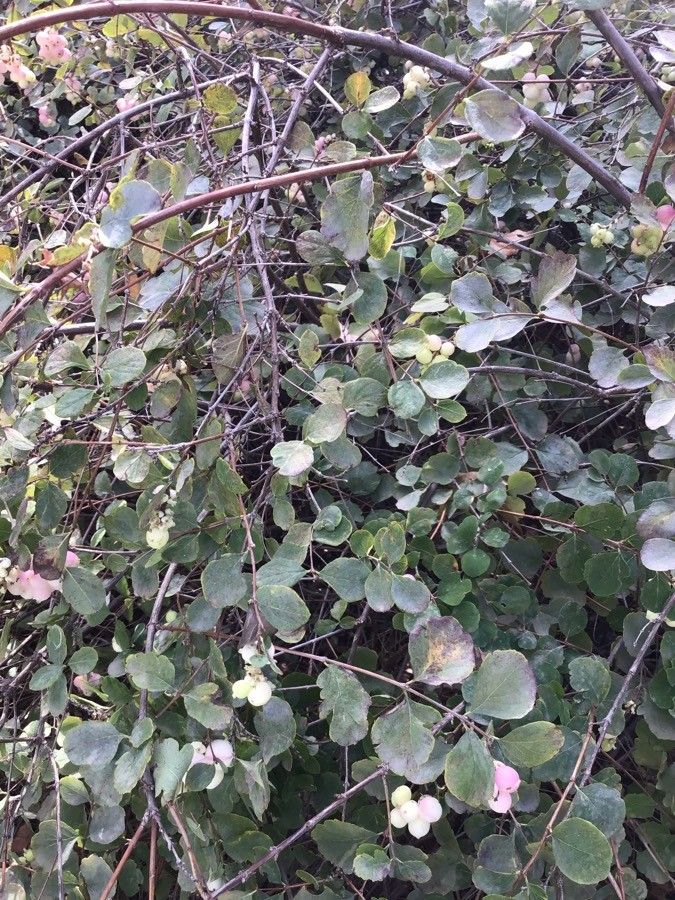
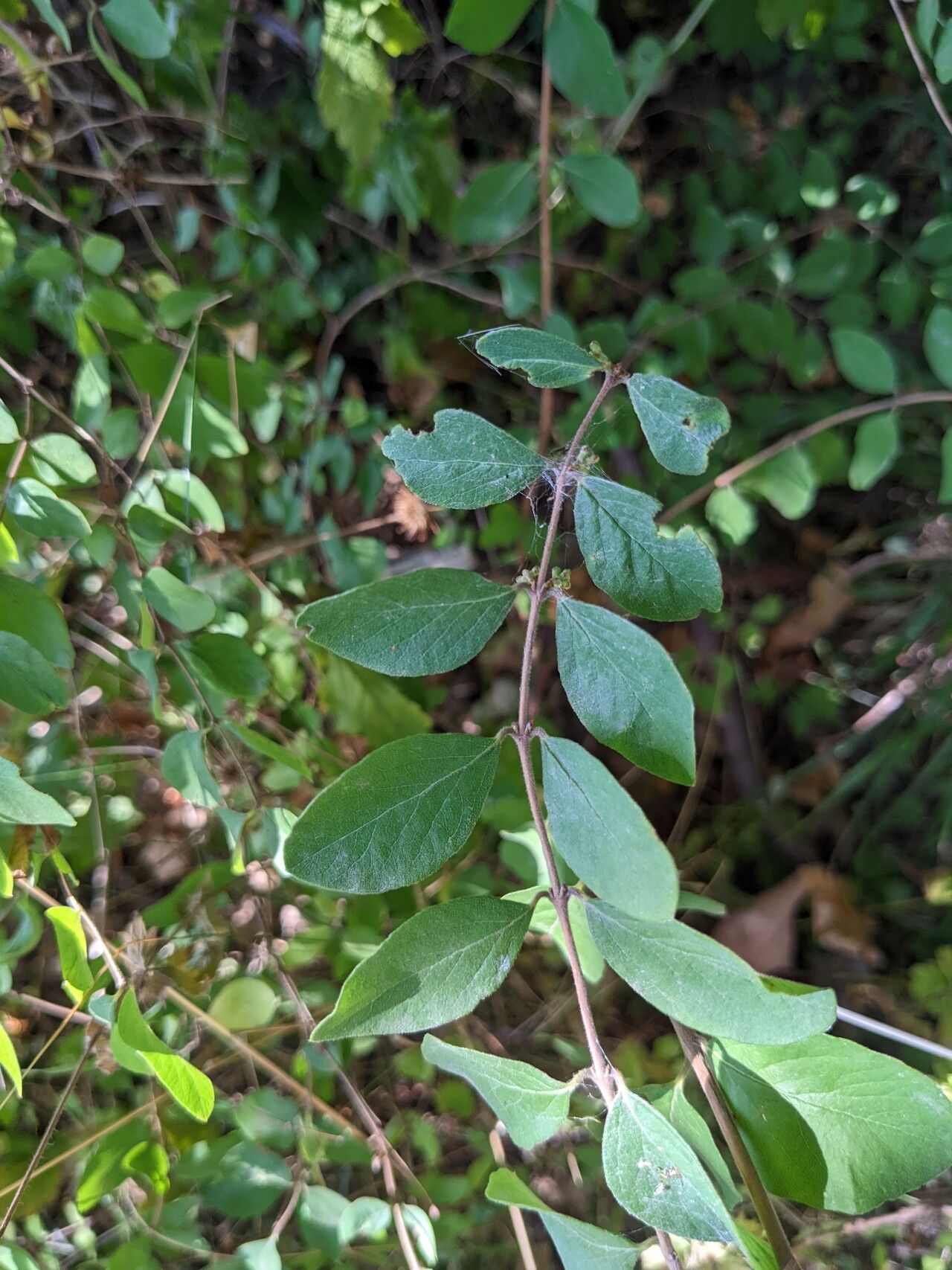
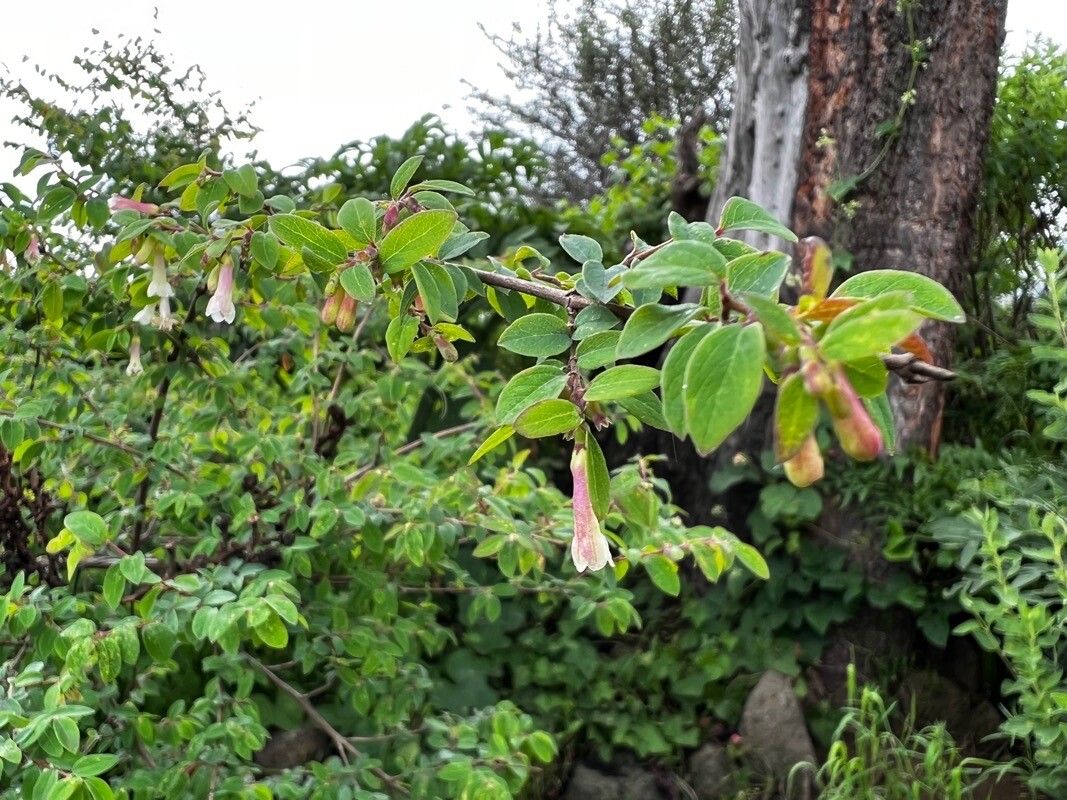
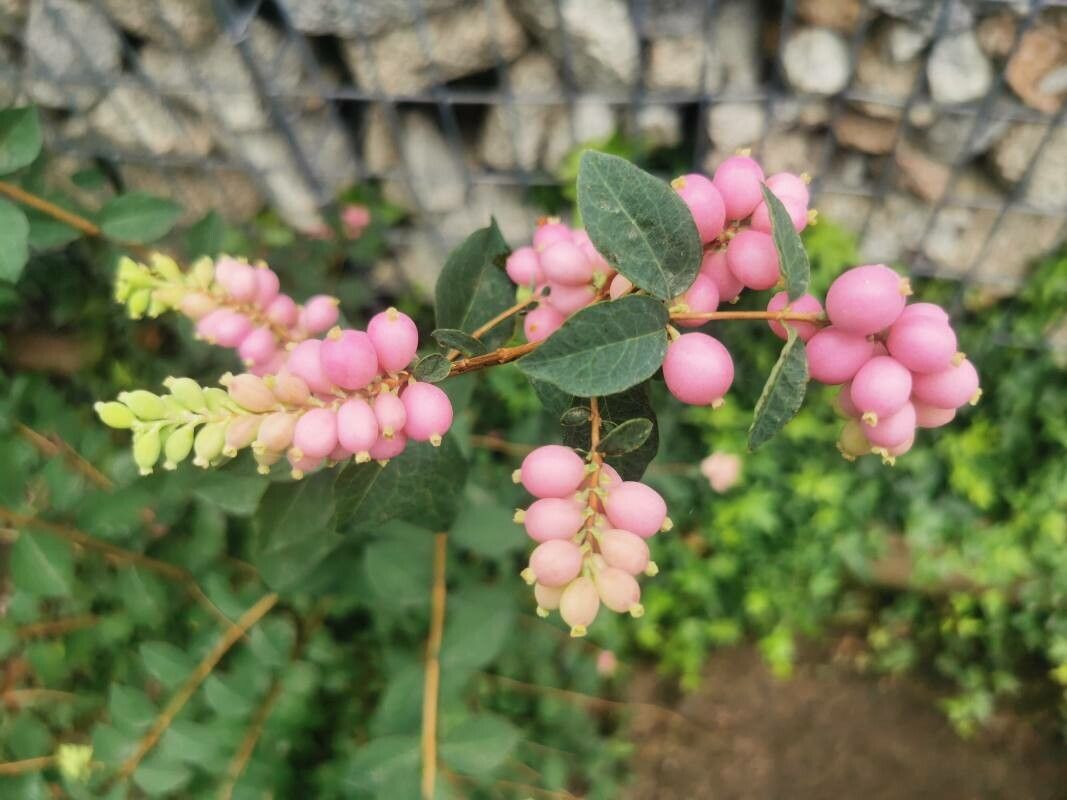
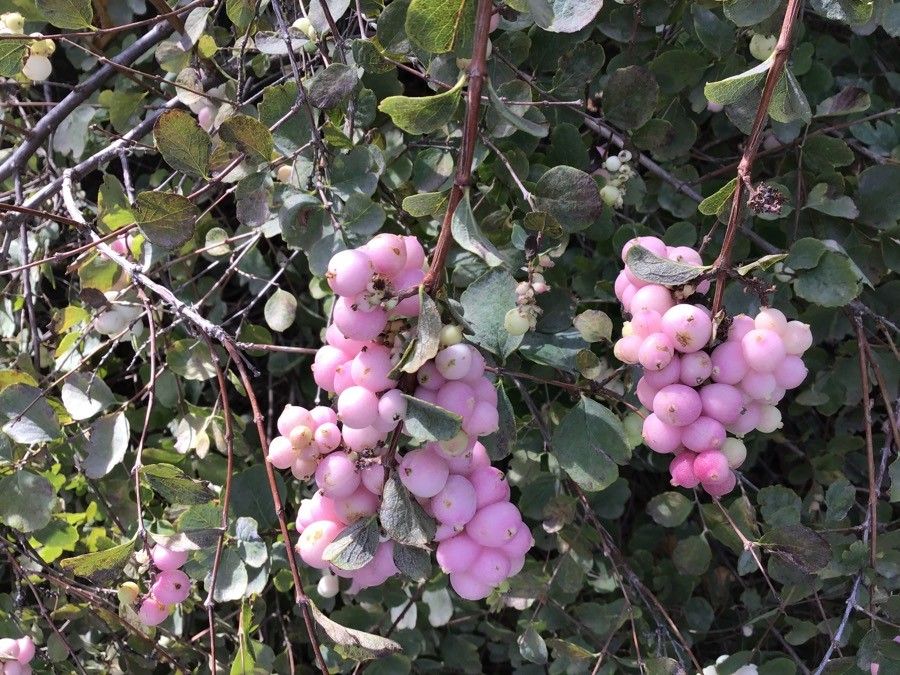
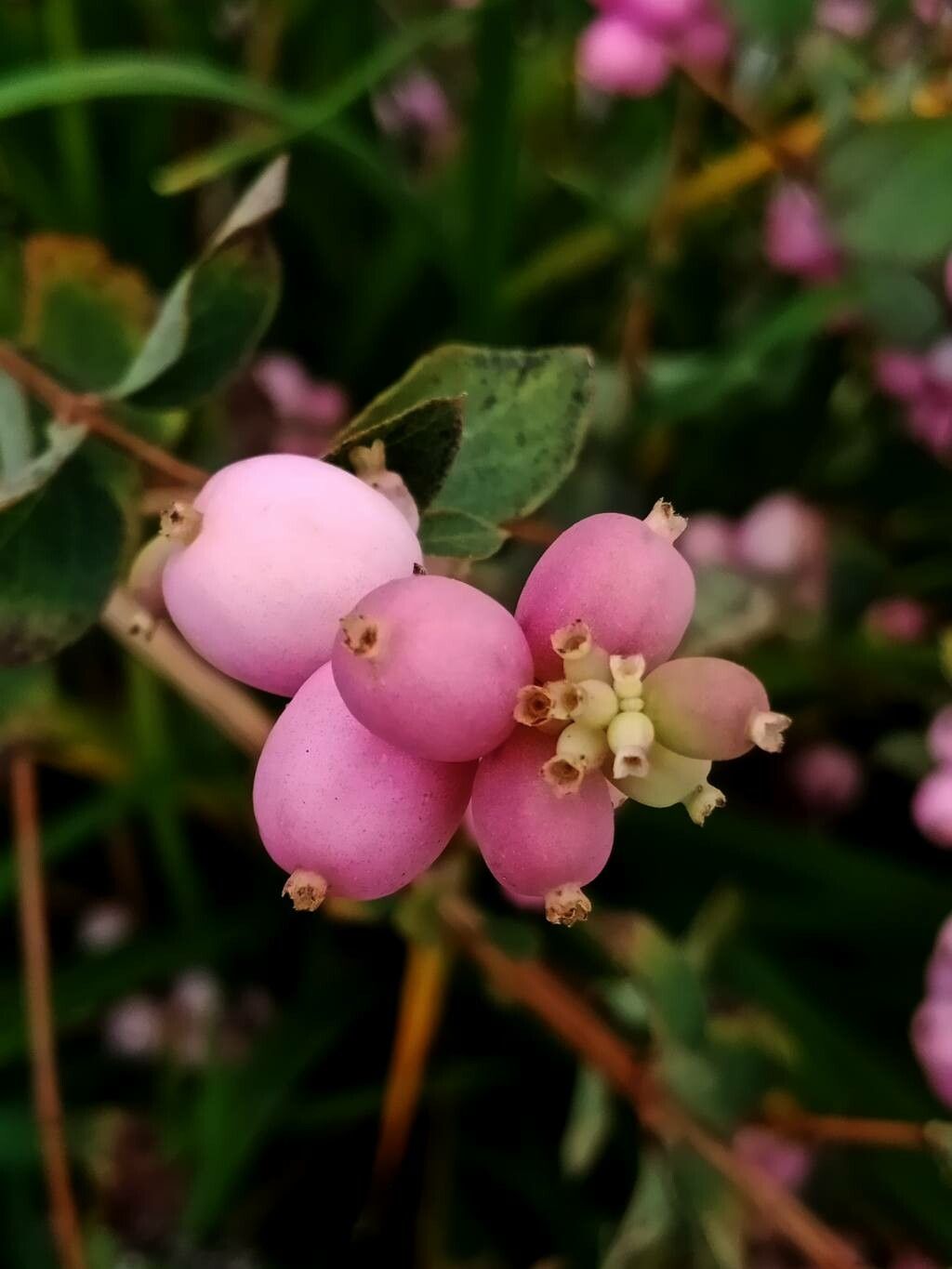
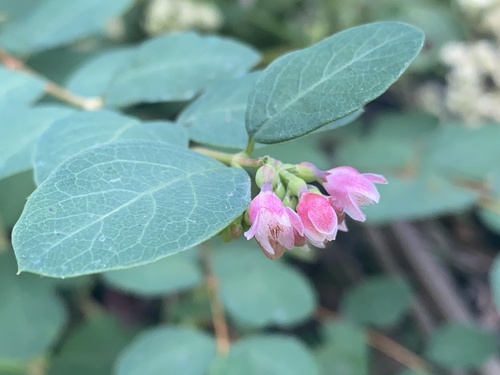
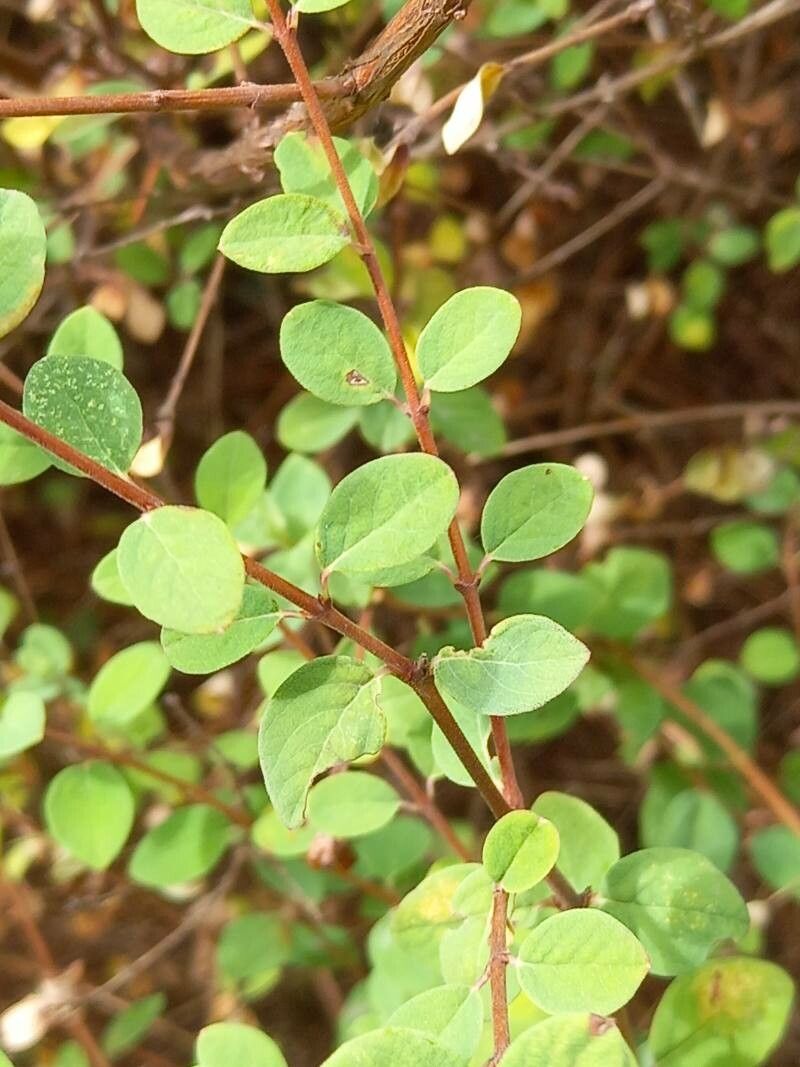
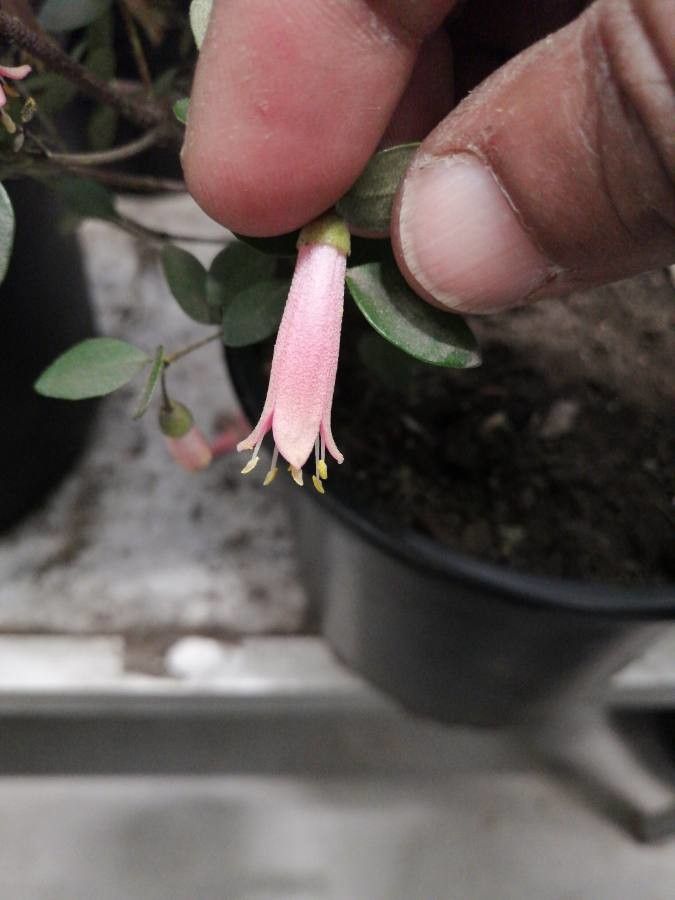
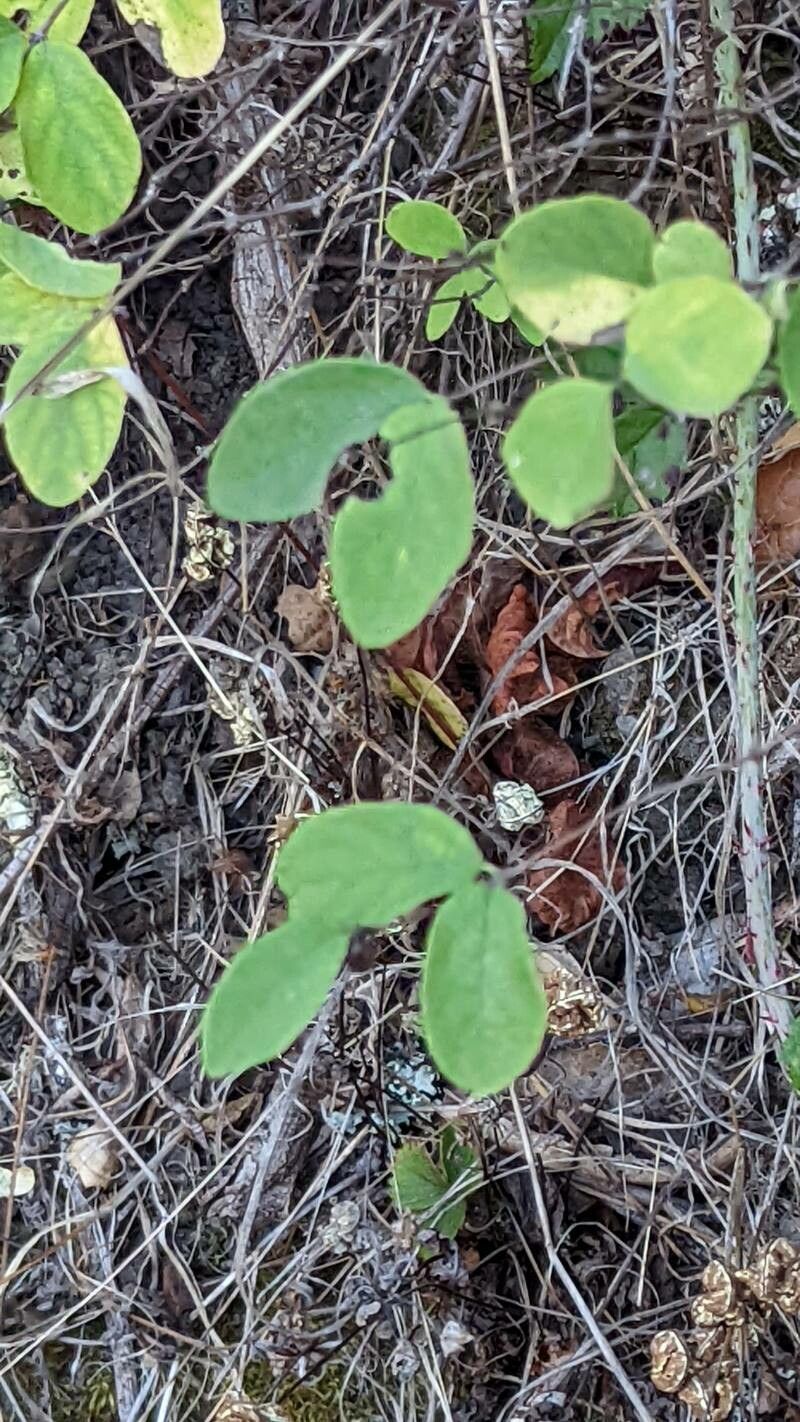
Symphoricarpos microphyllus, commonly known as littleleaf snowberry, is a small deciduous shrub native to western North America. It typically reaches a height of 1 to 3 feet and has small, oval-shaped leaves that are dark green. During the summer, the plant produces clusters of small pink or white flowers, which are followed by white berries that persist into the winter months. Littleleaf snowberry is often used as an ornamental plant in gardens and landscaping due to its attractive foliage and berries. In addition to its aesthetic appeal, it provides food and shelter for wildlife such as birds and small mammals. The plant prefers well-drained soils in full sun or partial shade but can tolerate a wide range of soil types and conditions, making it an adaptable species for various environments.
Pink snowberry is resistant to disease and generally not susceptible to illnesses. Regarding care, this plant is fairly low-maintenance. When grown outdoors it needs minimal watering, and larger plants typically do not require pruning. Smaller plants, however, should be pruned after they bloom. Pink snowberry is suitable for anyone with outdoor space, such as a garden or deck, and does not demand a lot of care experience.
How to keep Symphoricarpos Microphyllus.
Light
Pink snowberry is native to habitats like forest understories or rocky areas, where it receives natural shade. It prefers partial sun but can tolerate full sun or full shade, illustrating its versatile and hardy nature.
Temperature
Pink snowberry is highly adaptable to a wide range of climatic conditions, whether enduring hot summers or cold winters. Still, it has a preferred temperature range for growth. If temperatures become too high, the plant can experience heat and humidity stress, which may lead to its death. In areas where temperatures approach the lower limit of its cold tolerance, it is important to provide insulation to protect the plant.
Fertilizer
Timing is essential when fertilizing Pink snowberry. Apply fertilizer in early spring and continue monthly until early summer. Fertilizer promotes attractive blooms and provides energy during both dormant and active growth periods.
Pruning
The pink snowberry shrub is known for its small pink berries and dense foliage. To maintain its health and appearance, early spring pruning is essential. Focus on removing any damaged branches and thinning out crowded areas to improve air circulation. This practice encourages healthy growth, boosts berry production, and enhances the plant's visual appeal. Be sure to use clean, sharp tools to prevent the spread of disease.
Botanical profile.
- Plant Type
- Shrub
- Life Cycle
- Perennial
- Genus
- Symphoricarpos
- Family
- Caprifoliaceae
- Hardiness Zone
- 4-8
- Mature Height
- 0.91 m to 2.13 m
- Mature Spread
- 0.91 m to 1.52 m
- Leaf Color
- Dark Green
- Leaf Type
- Deciduous
- Flower Color
- Pink, White
- Flower Size
- 0.51 cm to 0.76 cm
- Bloom Time
- Early summer, Mid summer
- Planting Time
- Spring
- Harvest Time
- Late summer, Early fall, Mid fall
- Native Area
- Honduras, Mexico, Guatemala
Other names.