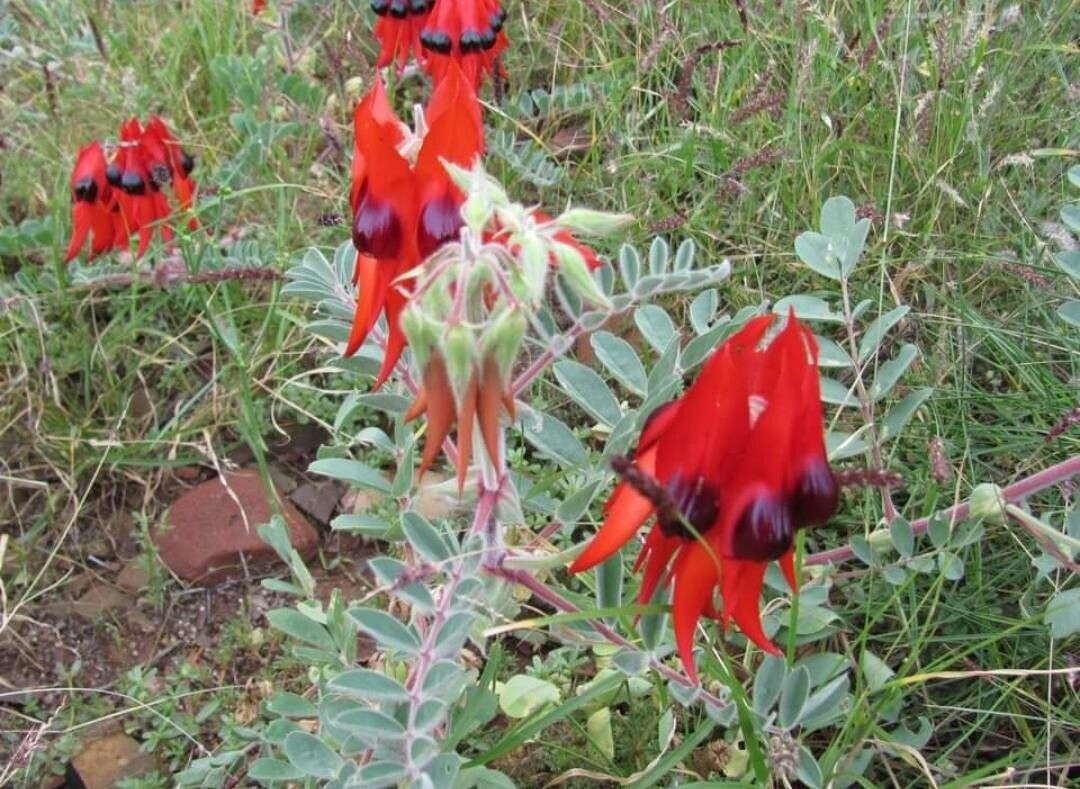
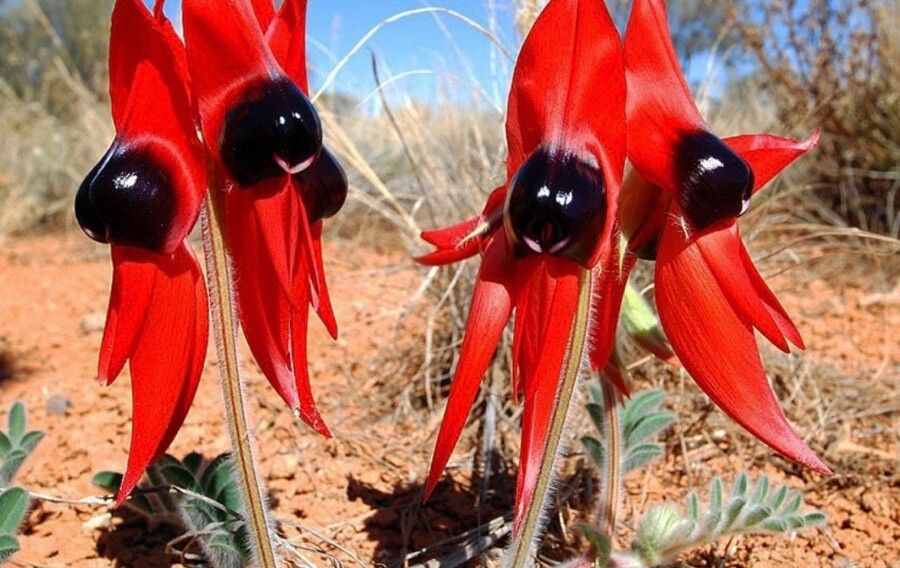
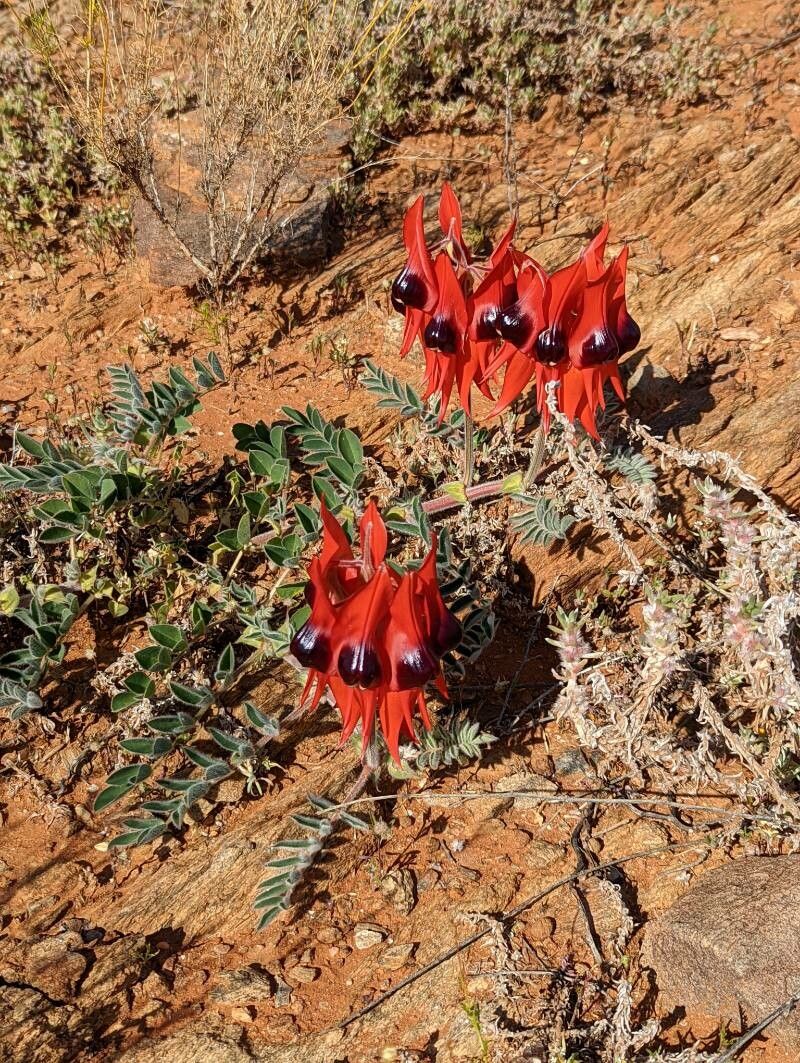
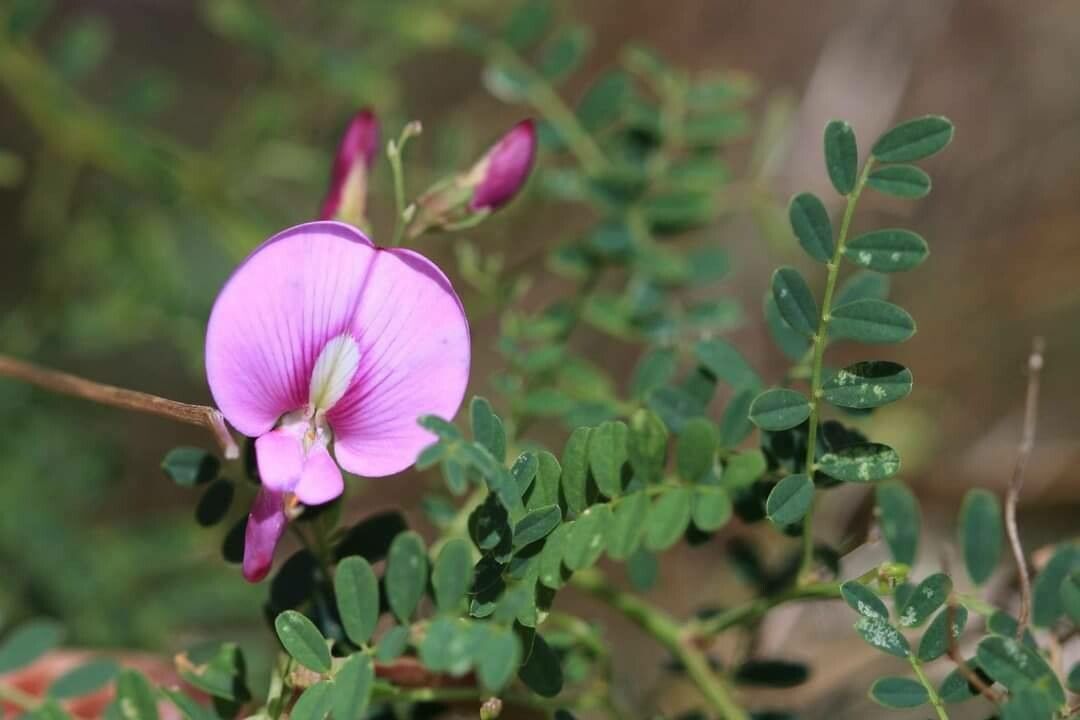
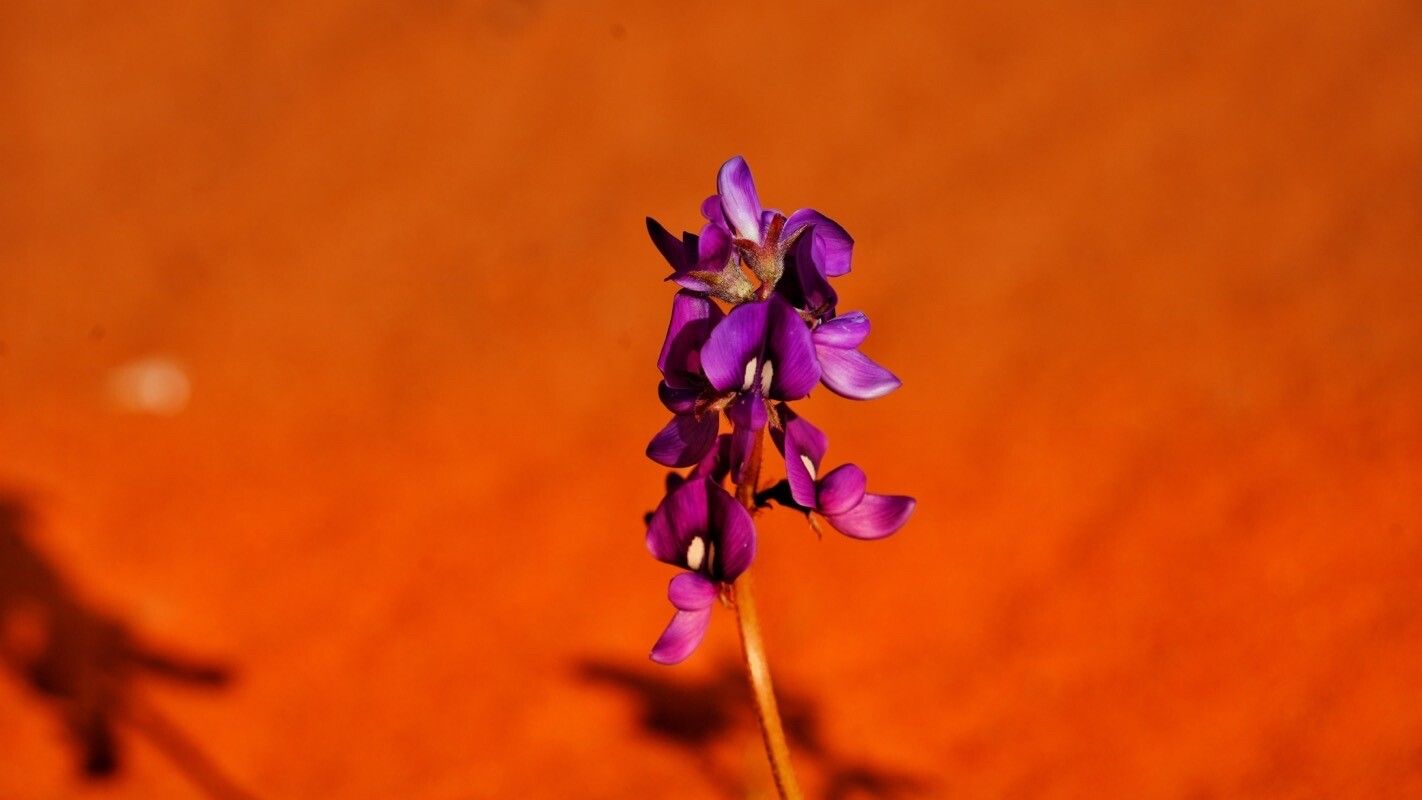
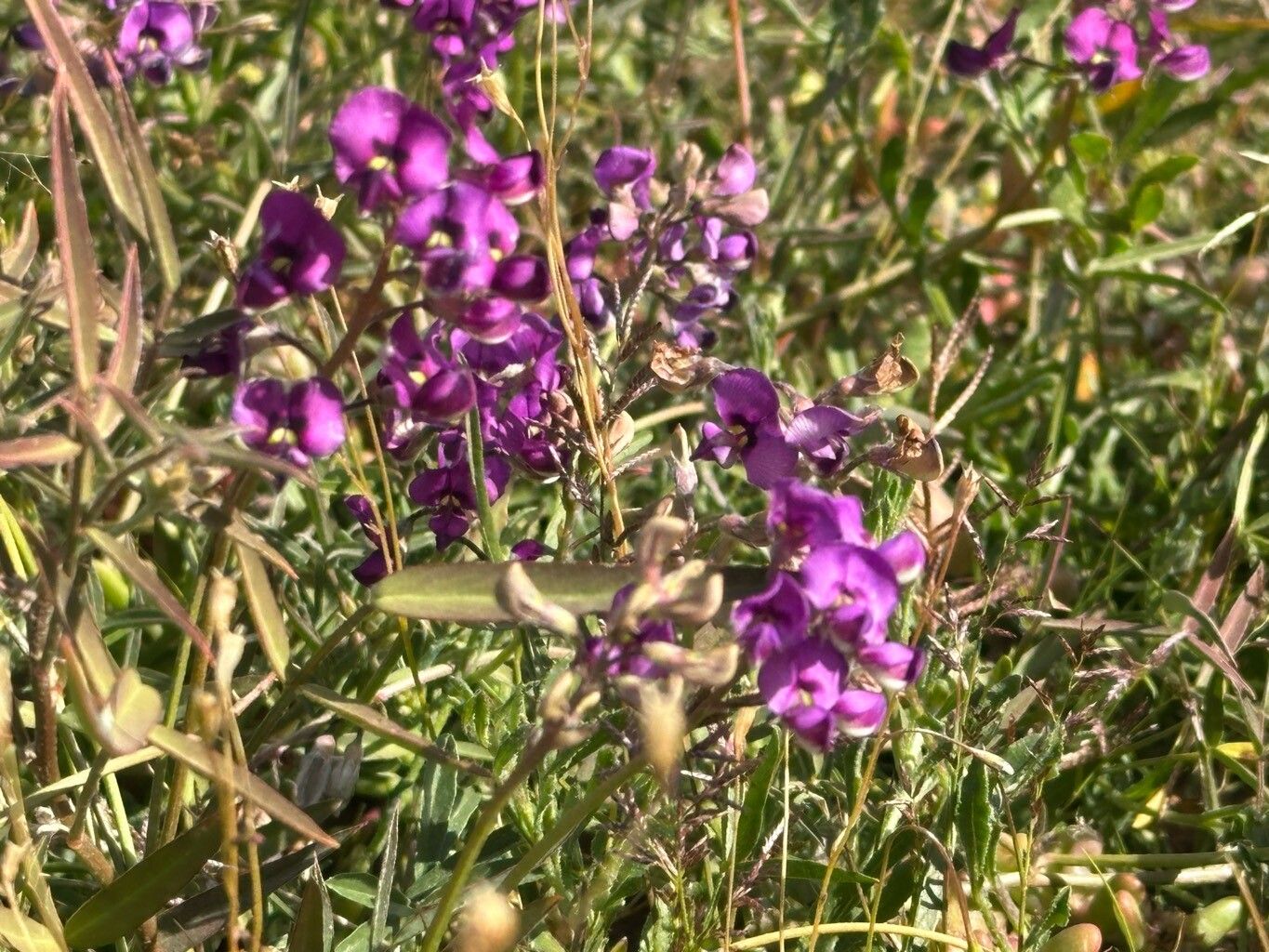
Swainsona formosa, Sturt's desert pea, is an Australian plant in the genus Swainsona, named after English botanist Isaac Swainson, famous for its distinctive blood-red leaf-like flowers, each with a bulbous black centre, or "boss". It is one of Australia's best known wildflowers. It is native to the arid regions of central and north-western Australia, and its range extends into all mainland Australian states with the exception of Victoria.
Sturt's desert pea has strong resistance to disease and is usually not susceptible to illnesses. However, it can be affected by pests and diseases present in its surroundings. Such infections are typically not serious. For care, the plant is of moderate maintenance. It should be pruned regularly to keep a neat appearance and support healthy growth. Fertilizing can also help encourage flowering. Sturt's desert pea is appropriate for anyone with outdoor space, such as a garden or patio, and does not demand extensive care experience. It may need more attention when grown indoors.
How to keep Swainsona Formosa.
Light
Sturt's desert pea thrives when exposed to ample sunlight all day long. Both excessive and insufficient light can harm its growth. Native to sun-drenched habitats, Sturt's desert pea has adapted to those conditions to achieve optimal nutrient uptake. Its light requirements are largely the same at different stages of growth.
Water
Sturt's desert pea is well-suited for arid environments, demonstrating exceptional drought tolerance. It flourishes with deep watering every two weeks and prefers well-draining soil when grown indoors. The plant adapts its growth based on the amount of rainfall it receives. This resilience enables Sturt's desert pea to thrive even in conditions of low humidity and sporadic moisture availability.
Temperature
Sturt's desert pea can tolerate a wide range of temperatures, though its distribution may still be restricted by different combinations of moisture and heat. It grows best in warm summer conditions with sufficient rainfall or watering. Extended periods of cloudy, rainy weather and prolonged high temperatures can raise the risk of the plant dying. In winter, adequate protection from cold can increase its chances of survival.
Fertilizer
The best time to fertilize a Sturt's desert pea is in early spring, as it comes out of dormancy and begins active growth. Fertilization supplies essential nutrients needed for healthy development. Although Sturt's desert pea has relatively low fertilizer requirements, applying fertilizer annually can improve its survival and encourage better, longer-lasting flowers.
Pruning
Sturt's desert pea is known for its vibrant flowers and pinnate leaves. To keep the plant healthy, it should be pruned in late winter or early spring. Focus on trimming leggy shoots and removing any dead stems. This encourages bushy growth and helps prevent disease. Be careful not to prune too heavily, as this can harm the plant's delicate root system and hinder its regrowth.
Pot & Repot
Repot Sturt's Desert Pea every 2-3 years in early spring, using a wide and shallow container. After repotting, make sure the plant receives plenty of sunlight and minimal water to mimic its natural arid environment. Keep in mind that Sturt's Desert Pea thrives on neglect, so avoid over-caring for it.
Botanical profile.
- Plant Type
- Herb
- Life Cycle
- Perennial, Annual
- Genus
- Swainsona
- Family
- Leguminosae
- Hardiness Zone
- 9-11
- Mature Height
- 0.49 m to 2.13 m
- Mature Spread
- 30 cm to 61 cm
- Leaf Color
- Green, Gray, Silver
- Leaf Type
- Evergreen
- Flower Color
- Red
- Flower Size
- 8.89 cm
- Bloom Time
- All year round
- Planting Time
- Spring, Summer
- Harvest Time
- Late spring, Summer, Fall, Winter, Early spring, Mid spring
Other names.
Reader questions.
What are the sunlight requirements for Sturt's desert pea?
Sturt's desert pea requires substantial exposure to the sun, needing above 6 hours of sunlight daily for optimal growth. It thrives in full sun, characteristic of its origin in sun-drenched habitats, which is critical for its nutritional uptake. The plant's light requirements remain consistently high regardless of its growth stage. Ensuring the perfect balance of light and shade is essential for the health and happiness of your plants, so it's important to watch how sunlight moves through your garden and choose planting spots accordingly.
How can artificial lighting be used for indoor plants?
Indoor Sturt's desert peas require adequate lighting, especially when natural sunlight is insufficient, such as during winter or in less sunny spaces. Artificial lights provide a vital solution by promoting faster, healthier growth. For indoor plants, it's recommended to choose the right type of artificial light, such as LED lights which can be customized to provide specific wavelengths of light needed by plants. Full sun plants need 30-50W/sq ft, partial sun plants need 20-30W/sq ft, and full shade plants need 10-20W/sq ft of artificial light. The light source should be placed 12-36 inches above the plant to mimic natural sunlight, and the duration of exposure should be 8-12 hours per day to mimic natural daylight hours for your plant species.
What are the signs of inadequate lighting for Sturt's desert pea?
When Sturt's desert pea is placed in rooms with inadequate lighting, several symptoms may manifest, including small leaves where new leaves grow smaller than the mature ones, leggy or sparse growth resulting in a stretched appearance, faster leaf drop as the plant sheds older leaves to conserve resources, slower or no new growth as the plant enters survival mode, lighter-colored new leaves indicating a lack of chlorophyll and essential nutrients, chlorosis where leaves lose their green color and turn yellow, sunscald characterized by pale or necrotic areas on the plant tissue, leaf curling as a defense mechanism against excessive sunlight, wilting due to loss of turgor pressure, and leaf scorching where leaves show brown, dry patches.
What solutions can be applied for Sturt's desert pea suffering from light deficiency?
To address light deficiency in Sturt's desert pea, gradual adaption to sunlight is key. For indoor plants, progressively move them to sunnier locations each week until they receive at least 6 hours of direct sunlight daily, utilizing a south-facing window for maximum exposure. If the plant is large or not easily movable, consider using artificial light, such as keeping a desk or ceiling lamp on for at least 8 hours a day or investing in professional plant grow lights. For outdoor plants, avoid sudden changes in light intensity to prevent sunburn and move them gradually to sunnier spots. Minimizing obstructions is crucial for both indoor and outdoor plants; for example, pruning branches and leaves of nearby trees can allow sunlight to reach your plants. Transplanting smaller plants during their dormant period (late winter or early spring) to a location with ample sunlight and good drainage can also improve their light exposure. It's important to note that parts of the plant that have been affected by insufficient sunlight may not recover fully, but new growth will be healthy after increasing the light exposure.