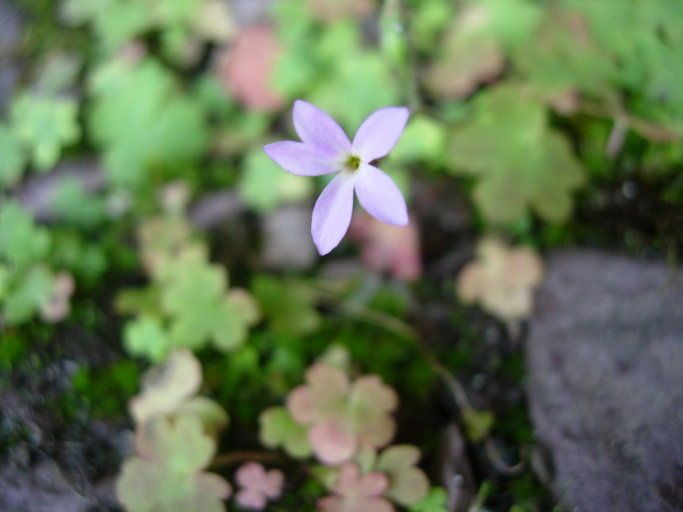
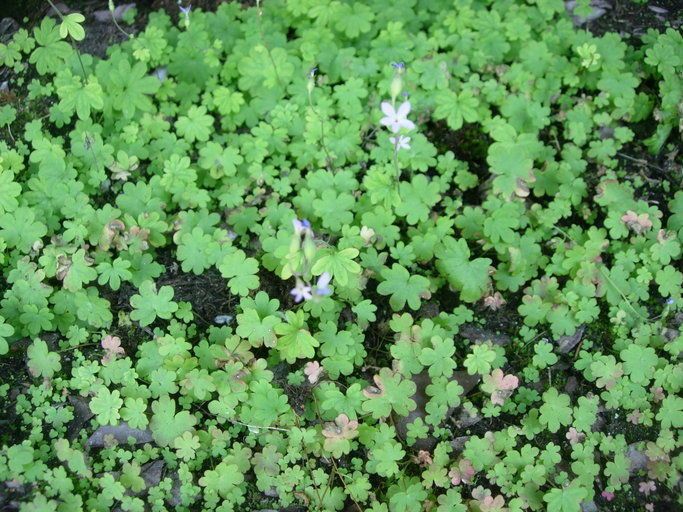
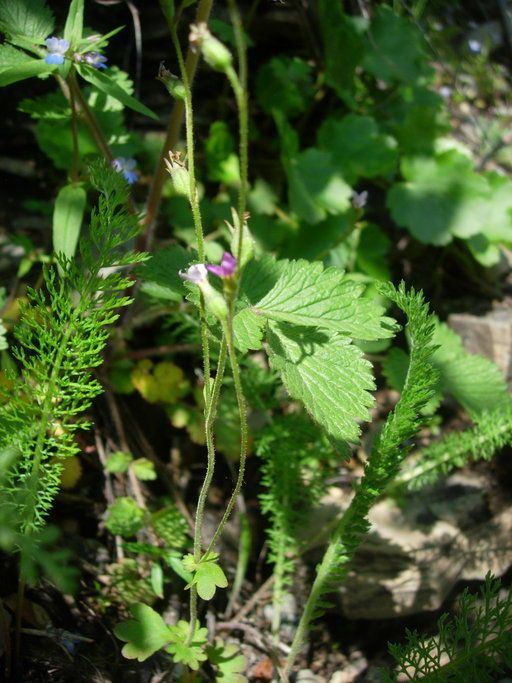
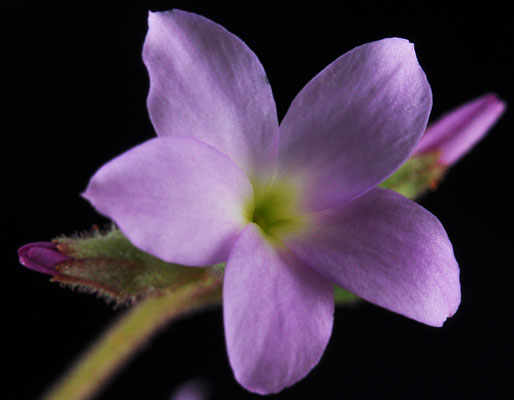
Suksdorfia violacea is an uncommon species of herbaceous flowering plant in the saxifrage family known by the common name violet suksdorfia. In 1879 Asa Gray named the genus Suksdorfia after Wilhelm Nikolaus Suksdorf who had first collected a specimen of S. violacea in 1878 near Mount Adams-White Salmon, Washington and sent it to Gray for assistance in classifying it. Gray and Suksdorf had a long and close working relationship, and Gray initially identified and named various species found by Suksdorf. Its conservation status has been rated by NatureServe as "G4 – Apparently Secure".
Violet suksdorfia is relatively disease-resistant and generally not prone to illnesses. Nonetheless, it can be affected by pests and diseases present in its surroundings. These problems are typically not serious. Regarding care, this plant needs moderate maintenance. It should be pruned regularly to preserve a tidy appearance and encourage healthy growth. Fertilizing can also help stimulate flowering. Violet suksdorfia is suitable for anyone with outdoor space, such as a garden or patio, and does not demand extensive plant-care experience. It may need more attention if grown indoors.
How to keep Suksdorfia Violacea.
Light
Violet suksdorfia is native to habitats like forest understories and rocky sites, where it grows in natural shade. It prefers partial sun but can adapt to full sun or full shade, showing its versatile and hardy nature.
Temperature
Violet suksdorfia can tolerate a wide range of temperature conditions, but its range may still be restricted by various combinations of water availability and heat. It performs best in warm summer climates with sufficient rainfall or watering. Extended periods of cloudy, rainy weather, or prolonged high temperatures can raise the chance of Violet suksdorfia dying. In winter, protecting the plant from cold can increase its likelihood of survival.
Fertilizer
Typically one fertilizer application in spring is enough for Violet suksdorfia, though repeated feedings can boost growth. Apply fertilizer about every month to six weeks. Feeding improves the leaves' appearance and function, maintaining even color and a healthy texture. It also encourages root development and enhances nutrient uptake for the plant's long-term health.
Botanical profile.
- Plant Type
- Herb
- Life Cycle
- Perennial
- Genus
- Suksdorfia
- Family
- Saxifragaceae
- Mature Height
- 10 cm to 40 cm
- Leaf Type
- Semi-evergreen
Other names.