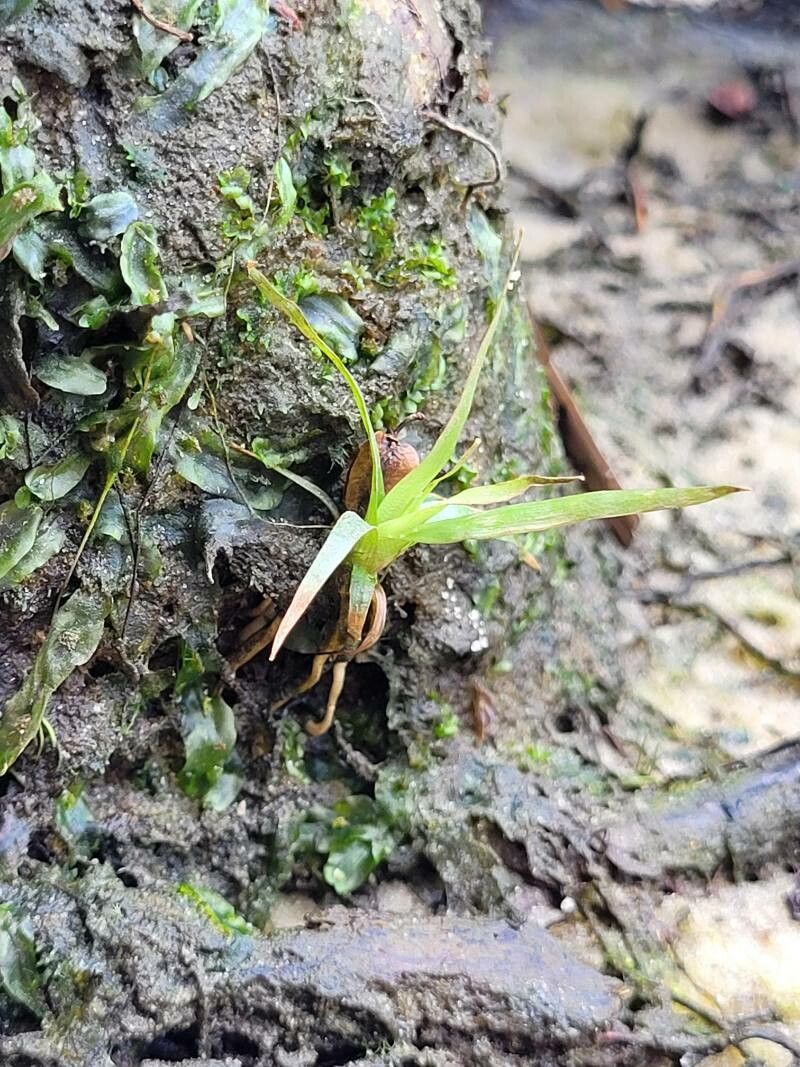
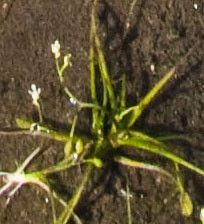
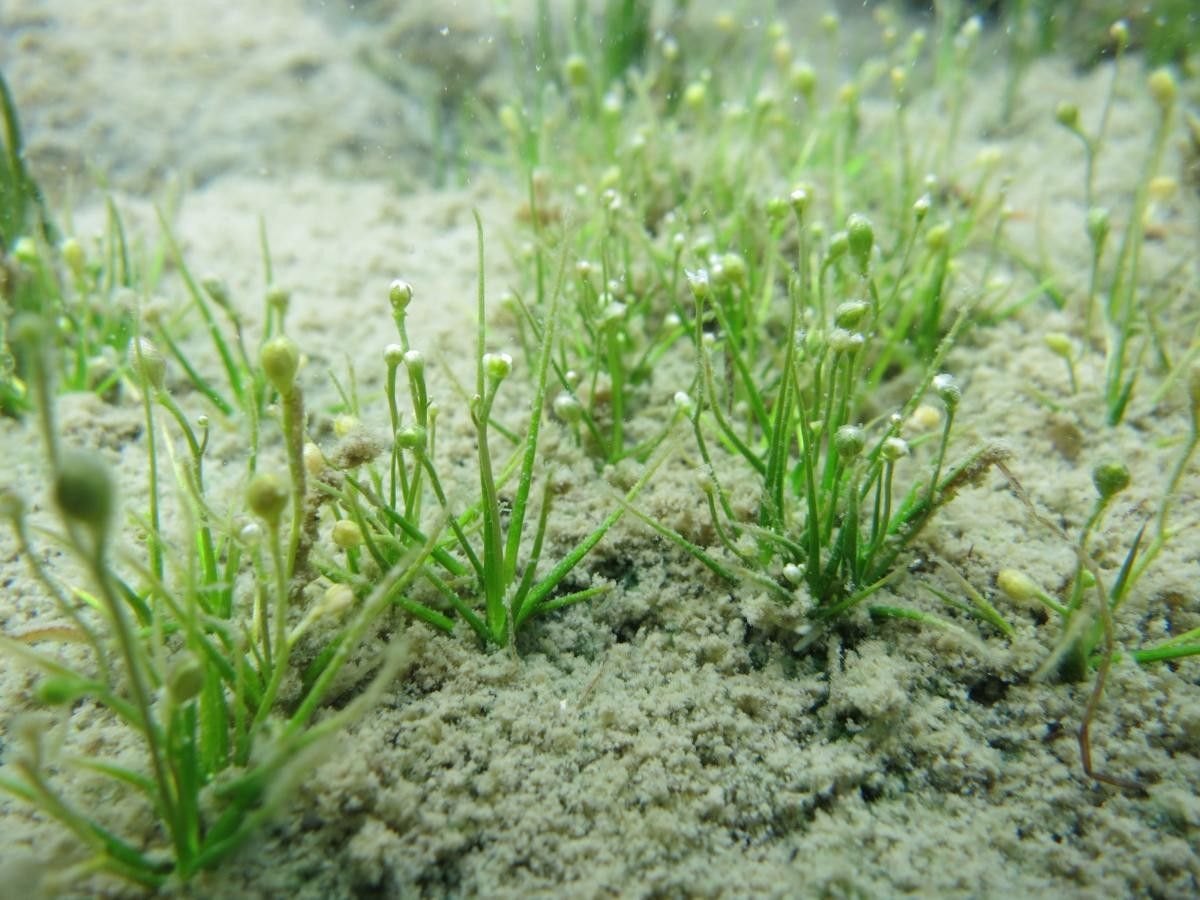
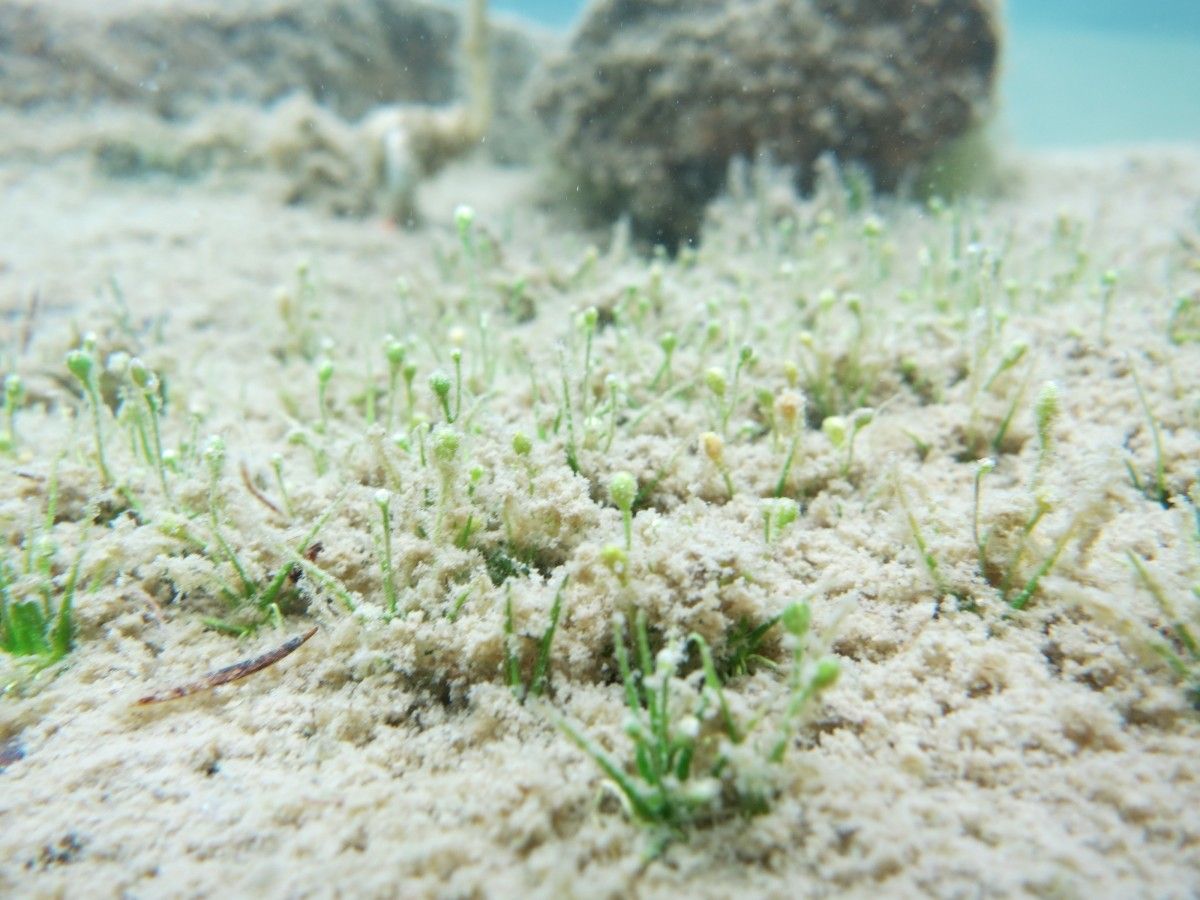
Subularia aquatica is an aquatic plant in the family Brassicaceae which is known by the common name water awlwort. This is a small herb with awl-like leaves (generally cylindrical but tapering to a sharp point), and growing from a corm above a network of bright white roots. Tiny flowers, each only about a millimeter long, are borne on stalks. Flowers which rise above the surface of the water open, while those that remain submersed stay closed and self-pollinate. The seeds come inside tiny inflated pods. There are two varieties of water awlwort; S. a. var. aquatica is native to Eurasia and S. a. var. americana is native to northern North America. There may also be a Mexican subspecies. This plant grows in ponds, marshes, peat bogs, and other shallow, cold water bodies, often in gravel or sand.
Awlwort is fairly resistant to disease and typically does not suffer from many illnesses. Still, it can be affected by pests and diseases present in its environment. These issues are generally mild. Regarding upkeep, the plant needs a moderate level of care. Regular pruning is necessary to preserve its appearance and encourage healthy growth. Applying fertilizer can also assist in boosting flowering. Awlwort is a good choice for anyone with outdoor space like a garden or patio and does not demand extensive gardening experience. When kept indoors, it may need extra attention.
How to keep Subularia Aquatica.
Light
Awlwort comes from bright, open habitats and grows best in full sun. It can tolerate partial sun but favors direct sunlight for optimal growth. This plant, which can be annual or biennial, is recognized for its sun-loving character.
Water
Awlwort thrives in freshwater habitats and requires consistent moisture to grow well. To maintain ideal conditions, water the plant weekly. While it is commonly grown outdoors, it can tolerate short periods of submersion due to its adaptation to varying water levels, a trait that reflects its native wetland origins.
Fertilizer
Awlwort benefits from regular, dilute fertilizer applications to encourage healthy leaf growth. Feed Awlwort about once a month in the summer. Nitrogen is important for the foliage, and providing nitrogen-rich supplements helps Awlwort do well.
Pruning
Awlwort is a small perennial plant with grass-like leaves. To maintain its health, prune it in the early to late spring as new growth starts to appear. Focus on removing only the dead foliage to minimize stress on the plant. Minimal pruning helps improve air circulation, which reduces the risk of disease. Make sure to use clean, sharp tools for effective and healthy cutting.
Botanical profile.
- Plant Type
- Herb
- Life Cycle
- Annual
- Genus
- Subularia
- Family
- Brassicaceae
- Leaf Type
- Deciduous
- Flower Color
- White
- Bloom Time
- Spring, Summer, Fall
Other names.