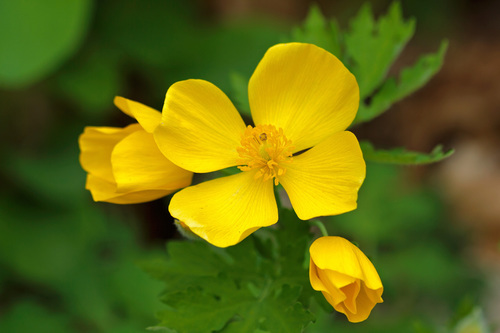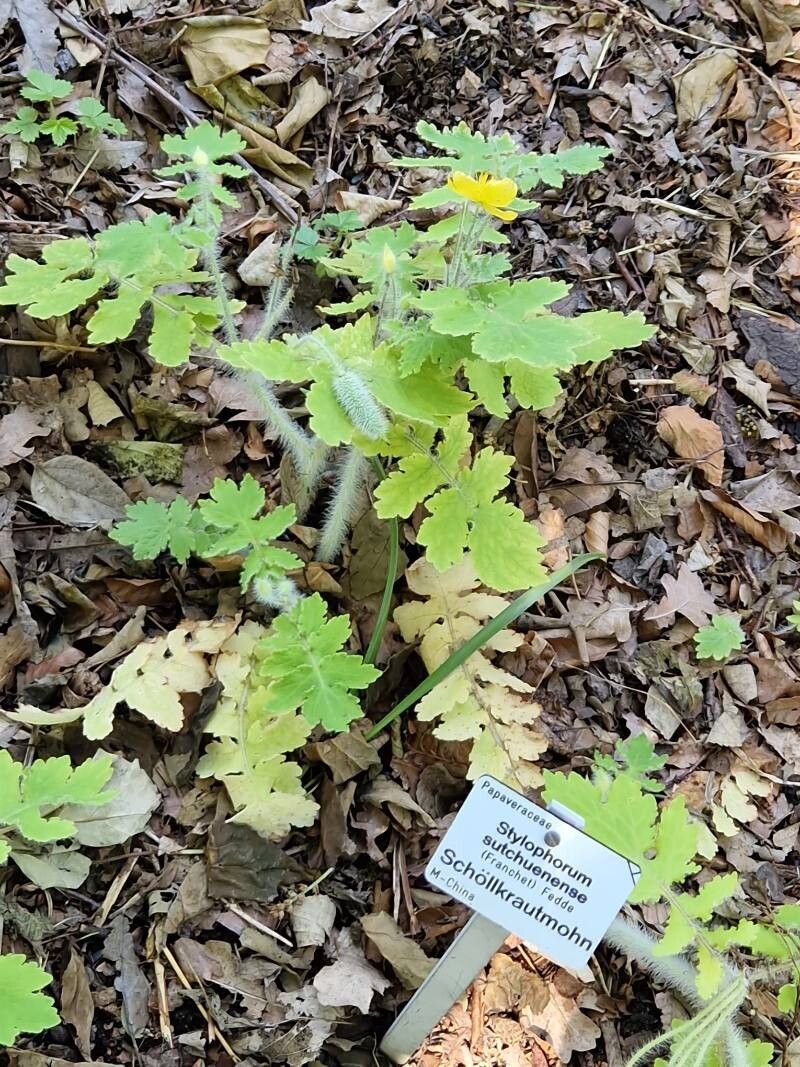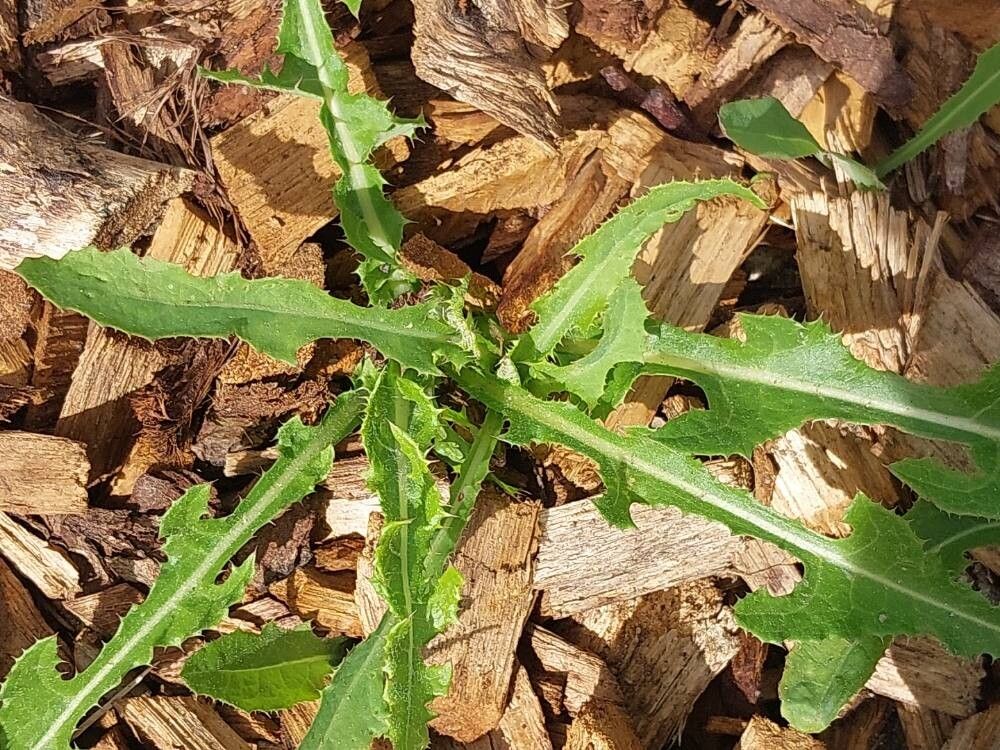
Stylophorum lasiocarpum, the Chinese celandine poppy, is a species of flowering plant in the family Papaveraceae, native to central China. A biennial or short-lived perennial reaching 45 cm (1.5 ft), it is hardy to USDA zone 4, and is readily available from commercial suppliers. It produces a succession of yellow flowers from late spring to late summer, and its seed capsules explosively release their seeds when ripe.
Chinese celandine poppy is fairly disease-resistant and typically not prone to illnesses. However, it can be affected by pests and diseases present in its environment. These problems are usually mild. For care, the plant requires moderate maintenance. It should be pruned regularly to keep a pleasing appearance and support healthy growth. Fertilizing can also help encourage flowering. The Chinese celandine poppy is suitable for anyone with outdoor space, such as a garden or patio, and does not demand extensive gardening experience. It may need more care when grown indoors.
How to keep Stylophorum Lasiocarpum.
Light
The Chinese celandine poppy is indigenous to areas like forest understories or rocky spots, which provide it with natural shade. It thrives in a partial sun situation, however, it has the ability to adjust to both full sun and full shade conditions, exhibiting its adaptive and robust characteristics.
Water
The Chinese celandine poppy, native to damp forest floors, thrives in environments with high humidity, evenly moist soil, and filtered light. To maintain its required moisture balance, it should be watered weekly. As an herbaceous perennial, this plant also benefits from natural rainfall during its growing season.
Temperature
The Chinese celandine poppy is capable of surviving in a broad spectrum of temperature conditions, though its range may be constrained by various mixtures of hydration and thermal circumstances. It flourishes optimally in hot climates over the summer provided there is ample rain or watering. Extended spans of overcast and wet weather, concurrently with elevated heat for lengthy periods can escalate the odds of the Chinese celandine poppy perishing. During the winter, appropriate shielding from the cold can enhance the plant's ability to survive.
Fertilizer
The most suitable period for applying fertilizer to a Chinese celandine poppy is early spring, as it's transitioning from dormancy to an active growth phase. Fertilization imparts crucial nutrients for its wholesome growth. While the fertilization requirements of the Chinese celandine poppy are fairly minimal, fertilizing every year can improve the plant's resilience and stimulate higher-quality blossoms that last longer.
Pruning
The Chinese celandine poppy is known for its vibrant yellow flowers and appealing foliage. To keep the plant healthy and vigorous, it's important to prune it from early to late spring. During pruning, remove spent blooms and dead stems. This will not only improve the plant's health but also enhance air circulation, particularly in crowded areas. Always use clean, sharp tools to minimize stress on the plant and prevent infections.
Botanical profile.
- Plant Type
- Herb
- Life Cycle
- Perennial
- Genus
- Stylophorum
- Family
- Papaveraceae
- Hardiness Zone
- 5-8
- Mature Height
- 30 cm to 46 cm
- Mature Spread
- 46 cm
- Leaf Color
- Green, Dark Green
- Leaf Type
- Deciduous
- Flower Color
- Yellow
- Flower Size
- 2.54 cm to 5.08 cm
- Bloom Time
- Early spring, Mid spring
- Planting Time
- Spring, Summer, Autumn
- Harvest Time
- Late spring, Early summer
- Native Area
- China