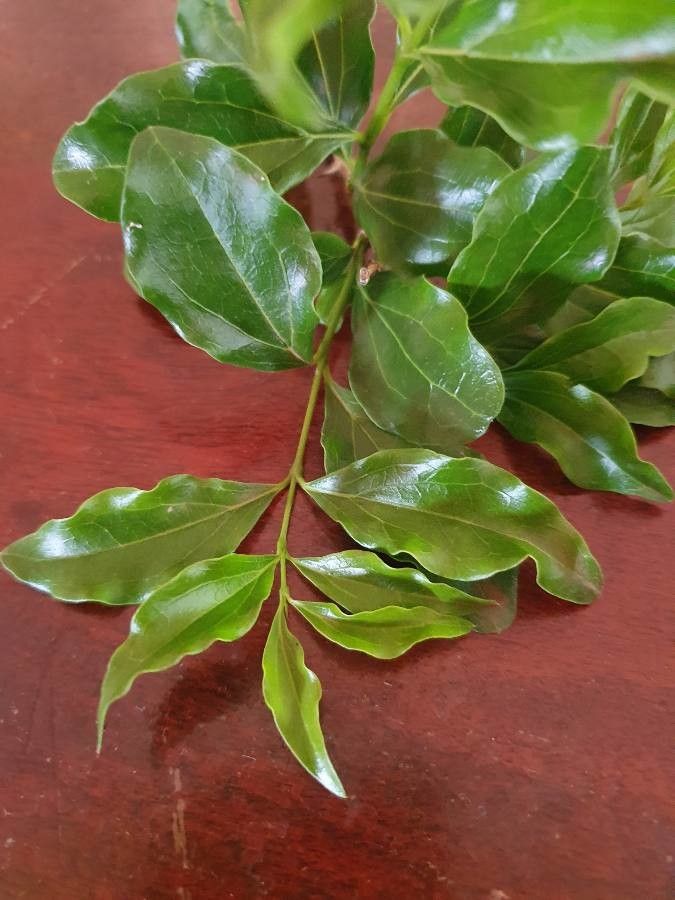
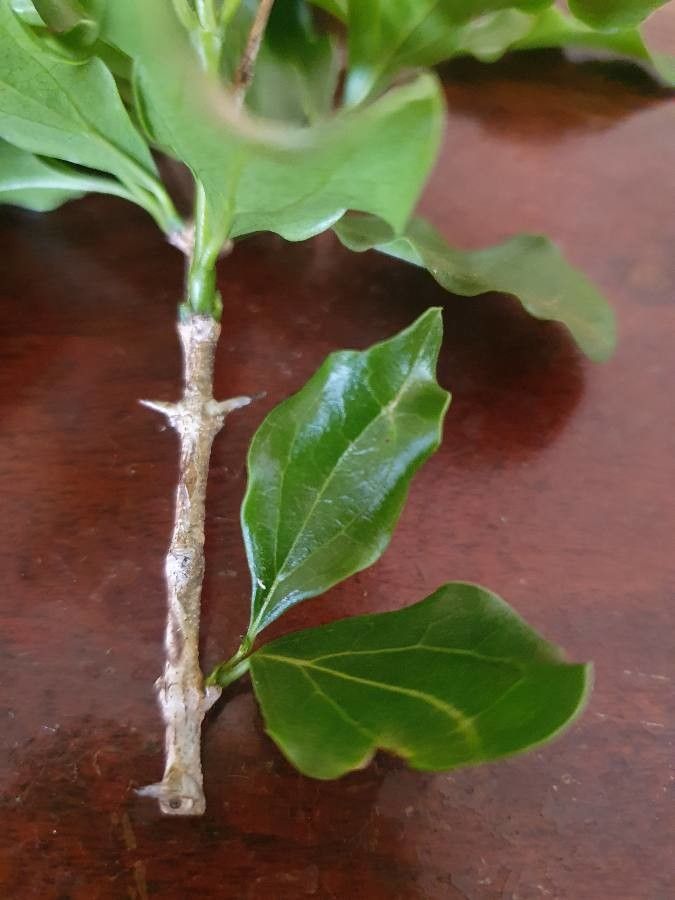
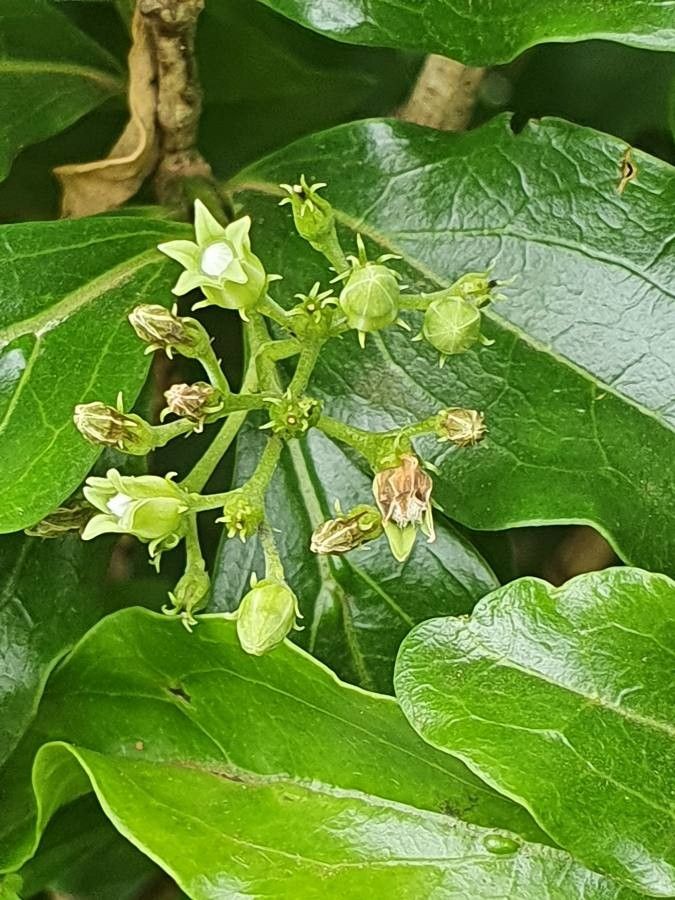
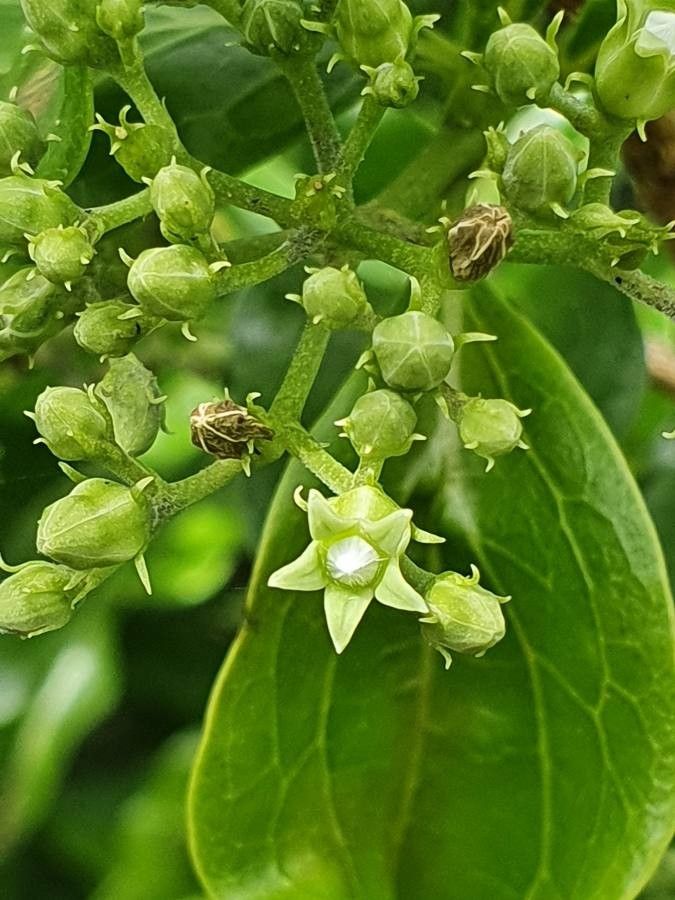
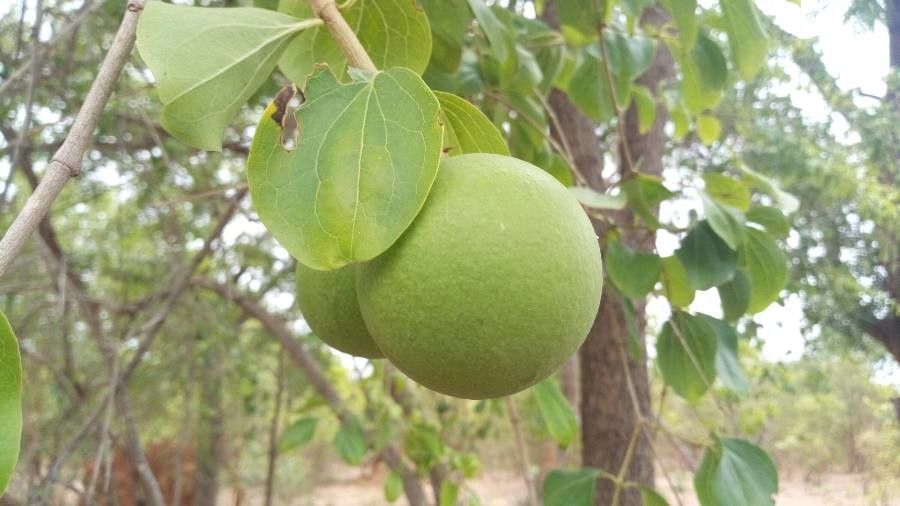
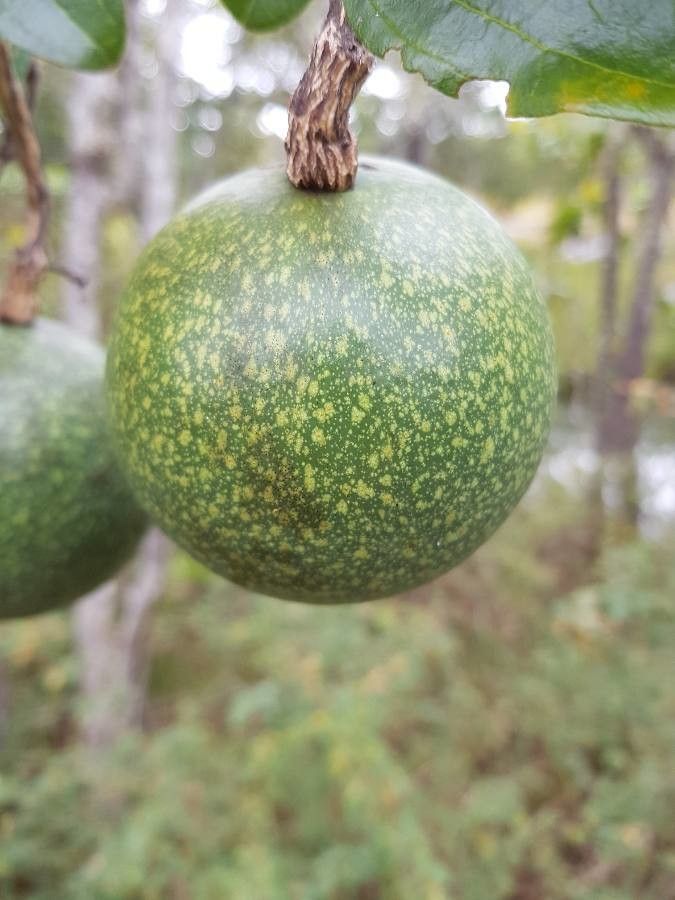
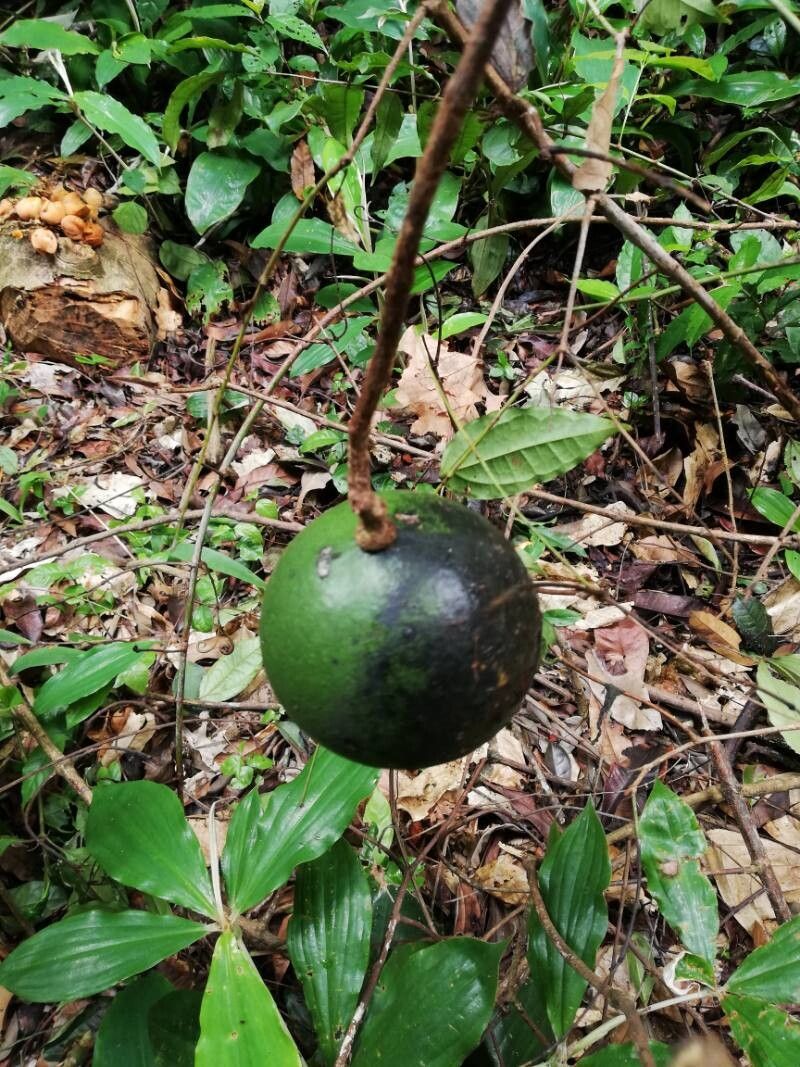
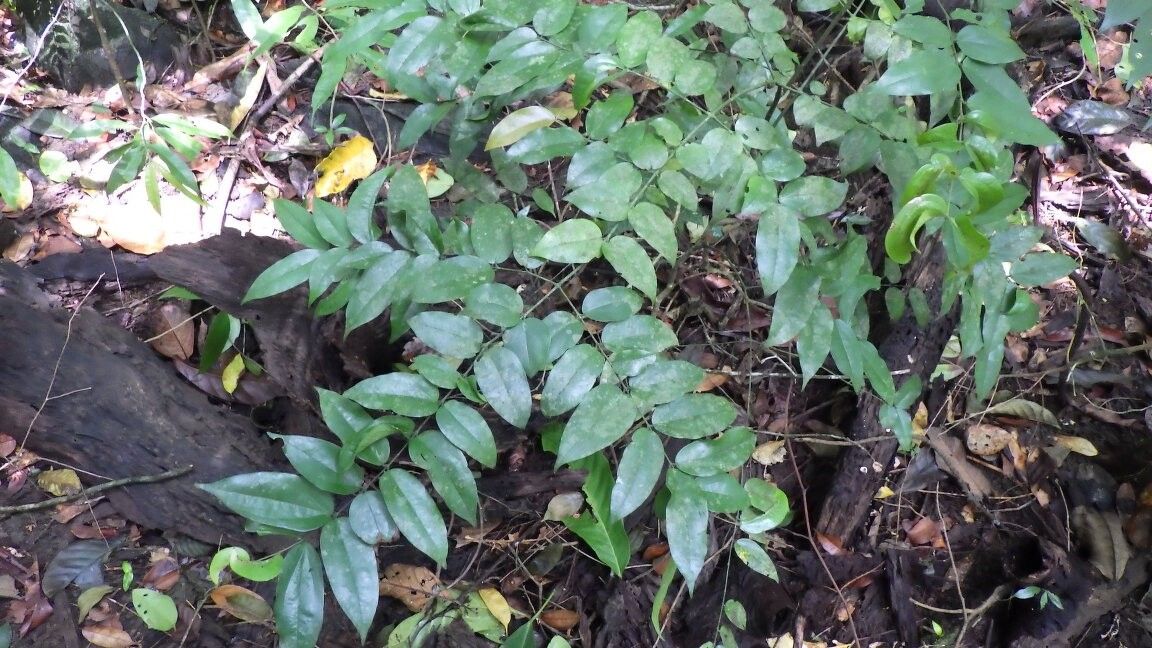
Strychnos spinosa, the Natal orange, is a tree indigenous to tropical and subtropical Africa. It produces sweet-sour, yellow fruits, containing numerous hard brown seeds. Greenish-white flowers grow in dense heads at the ends of branches (Sep-Feb/Spring - summer). The fruits tend to appear only after good rains. It is related to the deadly Strychnos nux-vomica, which contains strychnine. The smooth, hard fruit are large and green, ripen to yellow colour. Inside the fruit are tightly packed seeds, which may be toxic, surrounded by a fleshy, brown, edible covering. Animals such as baboon, monkeys, bushpig, nyala and eland eat the fruit. The leaves are a popular food source for browsers such as duiker, kudu, impala, steenbok, nyala and elephant.
The Natal orange has good resistance to disease and is generally not susceptible to illnesses. Carewise, this plant is fairly low-maintenance. When grown outdoors it needs only minimal watering, and larger specimens usually do not require pruning. Smaller plants, however, should be pruned after they finish blooming. The Natal orange is suitable for anyone with outdoor space, such as a garden or deck, and does not demand extensive gardening experience.
How to keep Strychnos Spinosa.
Light
Natal orange comes from open habitats, like sunny meadows and the edges of forests, where light is abundant. It performs best in full sun but can tolerate partial sun, adapting well to different light conditions.
Water
The Natal orange, originally from the dry regions of Africa, is highly drought-tolerant and only needs watering every 2-3 weeks. It thrives in savannas by storing water efficiently, making it perfect for xeriscaping and rock gardens where water is scarce.
Humidity
This plant prefers dry conditions, so don't mist it. However, watering it less often can also thrive in higher humidity.
Temperature
The Natal orange comes from tropical areas where the climate is usually warm and humid. Consequently, it is adapted to high heat and humidity. It is sensitive to sudden temperature shifts and prefers a steady temperature, so avoiding indoor fluctuations is important. It generally does not tolerate cold and needs higher temperatures to grow. If the ambient temperature falls too low, the plant may stop growing or even die.
Fertilizer
Use organic fertilizers (for example, fish emulsion or compost) instead of chemical fertilizers for Natal orange. Supply higher amounts of nitrogen and phosphorus to young plants in spring. Incorporate compost or fertilizer into the soil before or after planting. For mature plants, apply a balanced fertilizer or one targeted to specific deficiencies in spring. Nutrient deficiency causes small leaves, short branches, yellow or bronze leaves, acidic fruits, premature fruit fall, and fruit splitting.
Pruning
To keep a Natal orange plant healthy and looking its best, it's important to prune it selectively. This should be done from early to late winter while the plant is dormant. Start by shaping the plant and cutting away any dead branches. A light trim will help maintain its natural form. Additionally, thinning out congested areas will improve airflow, reducing the risk of disease and promoting better fruit production. Good pruning also enhances the plant's overall aesthetic appeal.
Botanical profile.
- Plant Type
- Shrub
- Life Cycle
- Perennial
- Genus
- Strychnos
- Family
- Loganiaceae
- Hardiness Zone
- 11
- Mature Height
- 0.91 m to 9.14 m
- Mature Spread
- 3.05 m to 4.88 m
- Leaf Color
- Green
- Leaf Type
- Evergreen
- Flower Color
- White
- Flower Size
- 0.51 cm
- Bloom Time
- Late spring, Early summer, Mid summer
- Planting Time
- Spring, Summer, Autumn, Winter
- Harvest Time
- Late summer, Fall
- Native Area
- Burkina Faso, Somalia, Angola, Namibia, Madagascar, Nigeria, Guinea-Bissau, Kenya, Uganda, Tanzania, Zimbabwe, Benin, Sierra Leone, Equatorial Guinea, Cameroon, Liberia, Mozambique, Ghana, Ethiopia, Botswana, Congo, Central African Republic, Malawi, South Africa, Zambia, Sudan, Guinea, Togo, Senegal, Eswatini, Côte d'Ivoire, Gambia, Congo (DRC), Gabon
Other names.
Reader questions.
How should I water my Natal orange tree?
Your Natal orange is not picky about how you water it, so you can use any common watering tool. Whether it's a watering can, hose, or cup, any of these options will work well. It's important to water directly into the soil, ensuring equal moisture distribution to all parts of the root system. Using filtered water is recommended to avoid harmful particles from tap water. Additionally, using water at or slightly above room temperature is best, as extreme temperatures can be shocking to the Natal orange. However, the Natal orange usually responds well to any type of water.
What are the sunlight requirements for Natal orange?
Natal orange, scientifically known as Strychnos spinosa, thrives in environments that provide ample light, akin to its native habitats of sunny meadows and forest edges. It requires full sun, defined as above 6 hours of sunlight daily, for optimal growth. However, it can also adapt well to partial sun conditions, receiving about 3 to 6 hours of sunlight. It's important to monitor the movement of sunlight through your garden to position your plants in spots that ensure a healthy balance between light and shade.
What do I need to do if I give my Natal orange tree too much water or too little water?
When caring for outdoor plants, especially those that have been recently planted or are still seedlings, it's important to prevent them from becoming dehydrated. Make sure to consistently water these plants for the first few months while they are still small or newly planted. Once the roots have established, Natal orange plants can largely rely on rainfall. If you have potted Natal orange plants, be cautious of overwatering. If you accidentally overwater, take immediate action to rectify the situation. First, cease watering the plant to minimize the impact of overwatering. Next, remove the Natal orange plant from its pot to check the roots. If no root rot is present, you may be able to return the plant to its container. However, if there are signs of root rot, trim any affected roots and consider applying a fungicide to prevent further damage. Finally, repot the Natal orange in well-draining soil. On the other hand, if your Natal orange is underwatered, simply increase the frequency of watering. This is usually an easy fix, as the leaves of the plant will droop, dry out, and potentially fall off. Once properly watered, the leaves should regain their fullness relatively quickly. Act promptly to adjust your watering schedule when you notice signs of underwatering.
What are the symptoms of light deficiency in Natal orange?
When Natal orange does not receive adequate sunlight, it may exhibit various symptoms of light deficiency. These include smaller new leaves, leggy or sparse growth, faster leaf drop, slower or halted new growth, and paler or irregularly colored new leaves. Additionally, the plant may suffer from chlorosis, resulting in yellowing leaves, or experience sunscald, leaf curling, wilting, and leaf scorching from excessive sunlight exposure. These symptoms highlight the plant's sensitivity to both under and overexposure to sunlight.
How often should I give water to my Natal orange plant?
To properly care for most outdoor plants, relying on rainfall is usually sufficient. However, if your area experiences a lack of rainfall, you will need to water your plants adequately. During the spring and fall, watering every 2 weeks should be enough. In the summer, you'll need to water more frequently, while in the winter, water sparingly as plants require less water during this time. It may even be unnecessary to water at all during the winter. If your Natal orange plant is young or newly planted, it will require more frequent watering to help it establish and mature. For potted plants like the Natal orange, there are two ways to determine when to water. The first is by setting a regular watering schedule, usually once every week or two. However, this approach may not always account for the specific growing conditions of your Natal orange. Another option is to base your watering frequency on soil moisture. Ideally, wait for the top two to four inches of soil (about ⅓ to ½ the depth of the pots) to dry out completely before watering again.
How can I ensure my Natal orange gets enough light, especially indoors?
To promote healthy growth for Natal oranges indoors, especially when natural light is limited, consider using artificial lighting. LED lights are effective as they can be customized to provide specific wavelengths needed by the plants. The recommended artificial light intensity is 30-50W/sq ft for full sun plants and 20-30W/sq ft for partial sun plants. Place the light source 12-36 inches above the plant and ensure it receives 8-12 hours of light per day, mimicking natural daylight hours. Gradually moving your plants to sunnier locations each week can also help, as can keeping them near a south-facing window with the curtains open during the day for maximum sunlight exposure.
How much water does my Natal orange tree need?
When watering your Natal orange, you might be surprised to learn that it doesn't always require a lot of water. If only a few inches of soil have dried since the last watering, giving it about five to ten ounces of water will support healthy growth. You can also determine the amount of water based on the moisture of the soil. Take note of how many inches of soil have dried out between waterings. To ensure that your Natal orange gets enough moisture, water it until all the soil layers that have dried out since the last watering are moistened. If more than half of the soil has dried out, consider giving more water than usual. In those cases, continue watering until you see excess water draining from the pot's drainage holes. If your Natal orange is planted outside in a well-watered area, it may not need additional watering. When the Natal orange is young or establishing itself, it should receive 1-2 inches of rain per week. As it grows and becomes established, it can rely solely on rainwater. Only during hot weather with no rainfall for 2-3 weeks should you consider giving it a full watering to prevent stress.
What are some outdoor care tips for Natal orange experiencing insufficient sunlight?
For Natal oranges planted outdoors and suffering from insufficient sunlight, a gradual adjustment to sunlight is key. Begin by moving your plants to gradually sunnier locations each week, minimizing the risk of sunburn by avoiding drastic changes in light intensity. If the plant is small or has unobstructed growth, consider transplanting it during its dormant period in late winter or early spring to a location with better sunlight exposure and good drainage. Pruning nearby trees that block sunlight can also improve light availability.
How can I know if I'm giving my Natal orange tree enough water?
The Natal orange often suffers from overwatering, which is a more common issue. If you notice yellowing leaves or leaves falling off, this could indicate overwatering. Additionally, overwatering can cause your plant to shrink in size and promote root rot. On the other hand, an underwatered Natal orange will start to droop and may have brown or brittle leaves. Regardless of whether you see signs of overwatering or underwatering, it is important to take action and restore the plant's health.
How do I water my Natal orange tree at different stages of growth?
When the Natal orange is young, especially in its seedling stage, it requires more water compared to when it is fully grown. It is crucial to keep the soil consistently moist during the early stages of its life to promote root development. This also applies if you have moved a Natal orange to a different location for growth. Additionally, providing adequate care will result in the plant producing beautiful flowers and fruits. If your Natal orange is currently in a flowering or fruiting phase, it is advisable to increase the amount of water to support these structures.
How do I make sure my Natal orange tree gets enough water all year round?
The watering needs of your Natal orange will be influenced by the changing seasons. In the hottest summer months, especially if it's in a sunny location, you'll likely have to water it more often. The intense summer sunlight dries out the soil quickly, so you'll need to water more frequently. On the other hand, during the winter when the plant isn't actively growing, it requires less water. You can water it once every 2 to 3 weeks or even skip watering sometimes. If you're growing the plant indoors, be cautious of appliances like air conditioners as they can dry out the plant faster, necessitating more frequent watering.
What's the difference in watering my Natal orange plant inside vs outside?
Depending on the circumstances, your Natal orange tree may not require any additional watering when it is grown outdoors and can rely solely on rainwater for survival. However, in areas with little to no rainfall, it is advisable to water the plant approximately every two weeks. If you are living outside the plant's natural hardiness zone, it is recommended to grow it indoors instead. When grown indoors, it is important to regularly check the soil moisture level as it can dry out faster when placed in a container or exposed to HVAC units like air conditioners. These drying factors may necessitate more frequent watering compared to when the plant is grown outdoors.