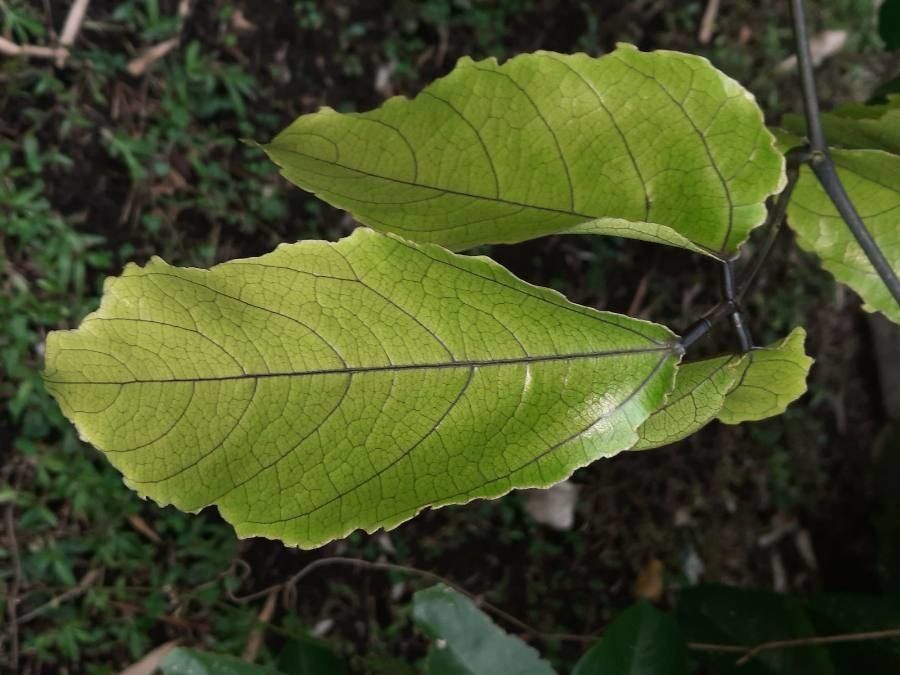
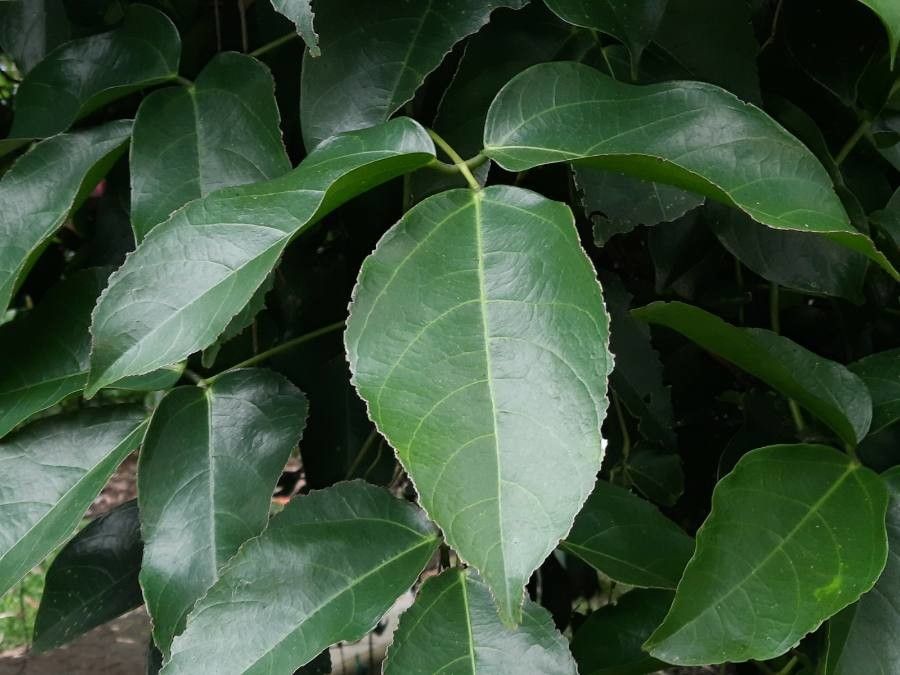
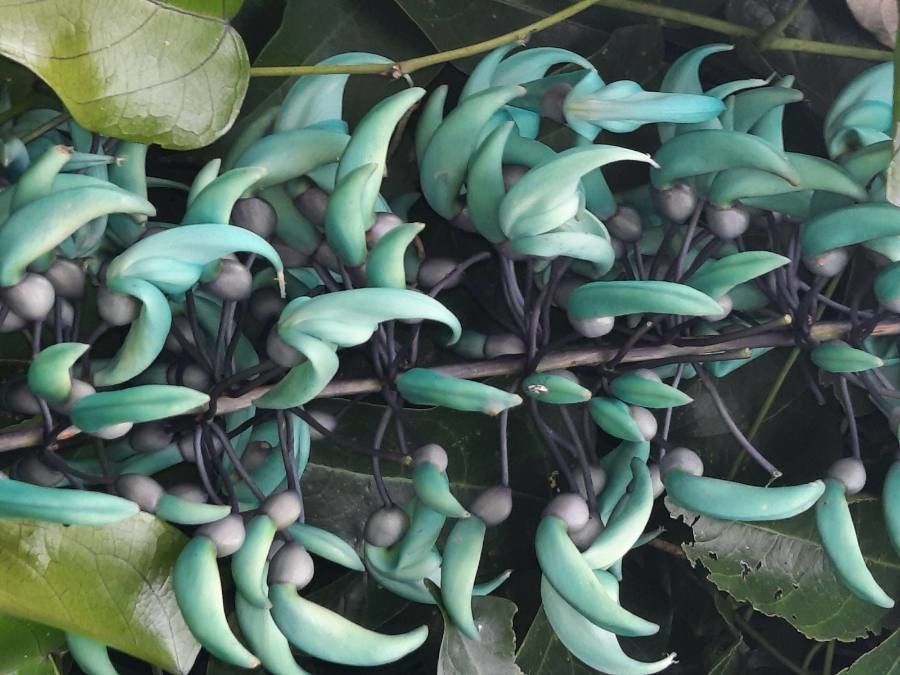
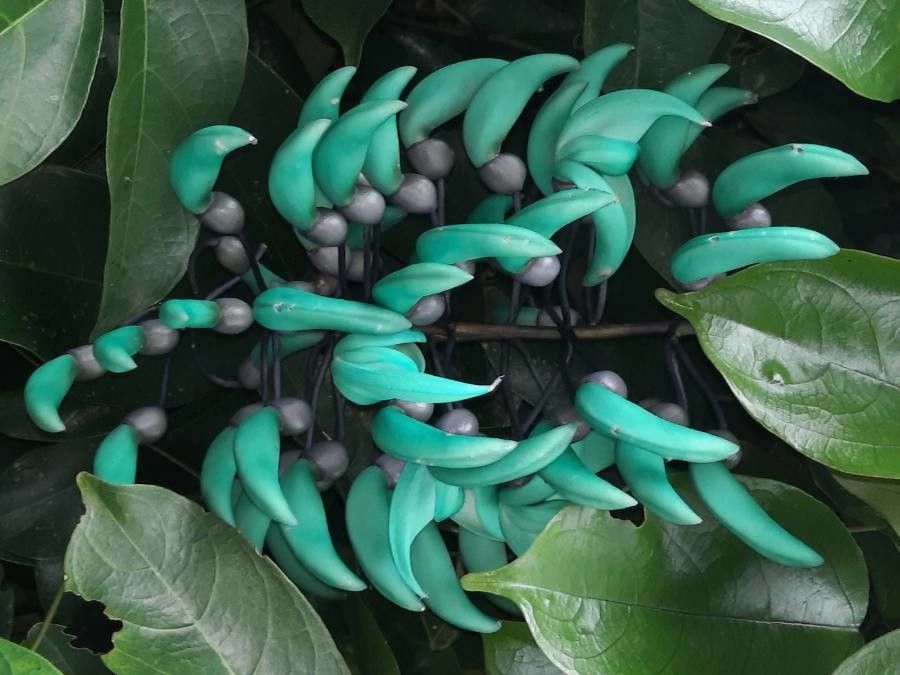
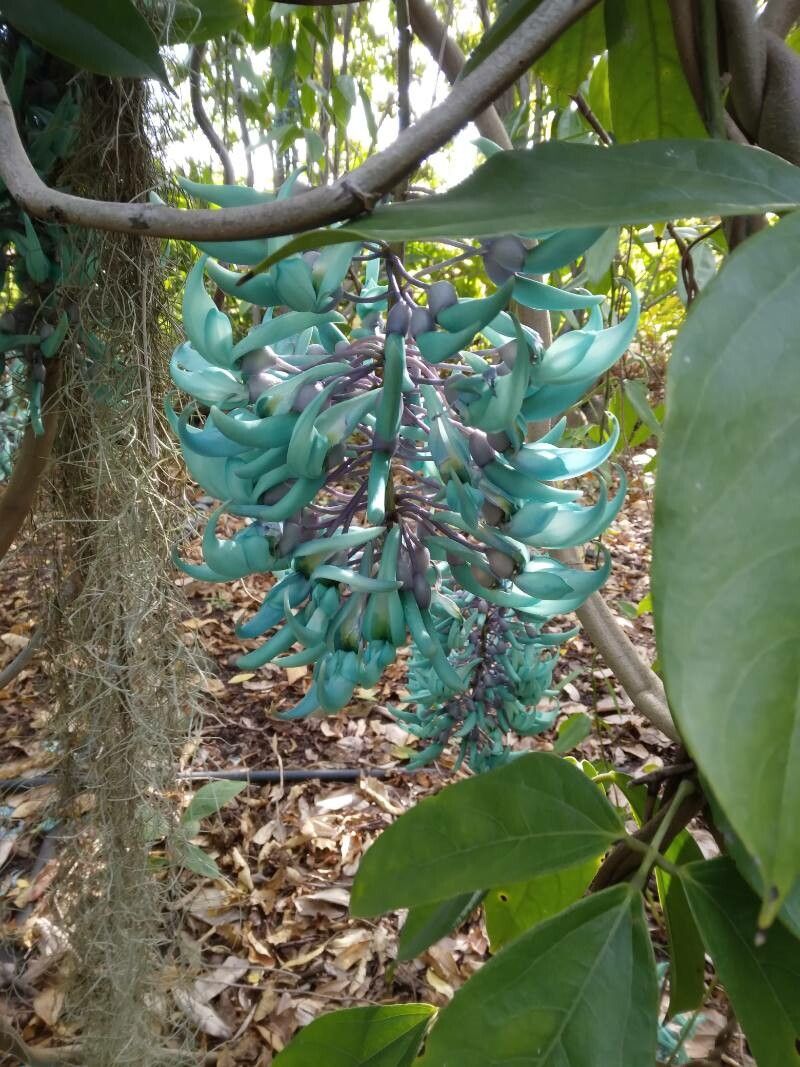
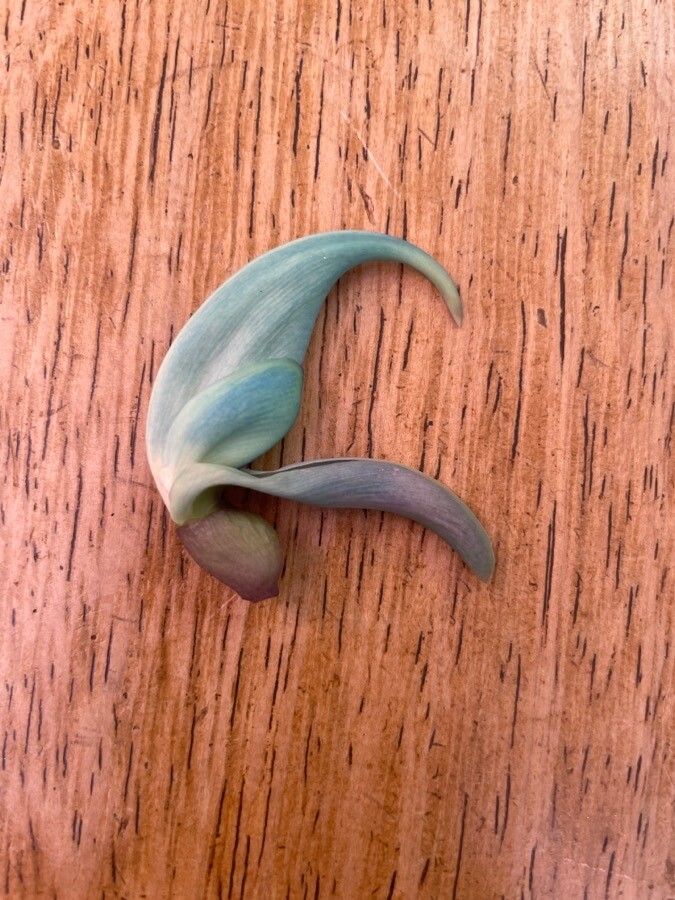
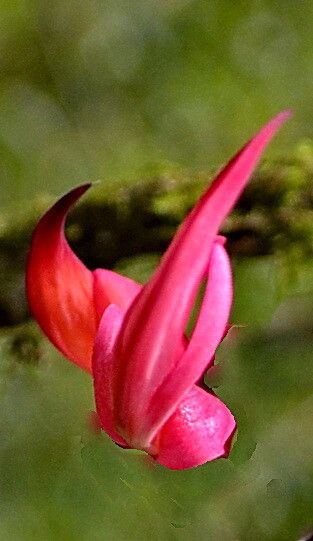
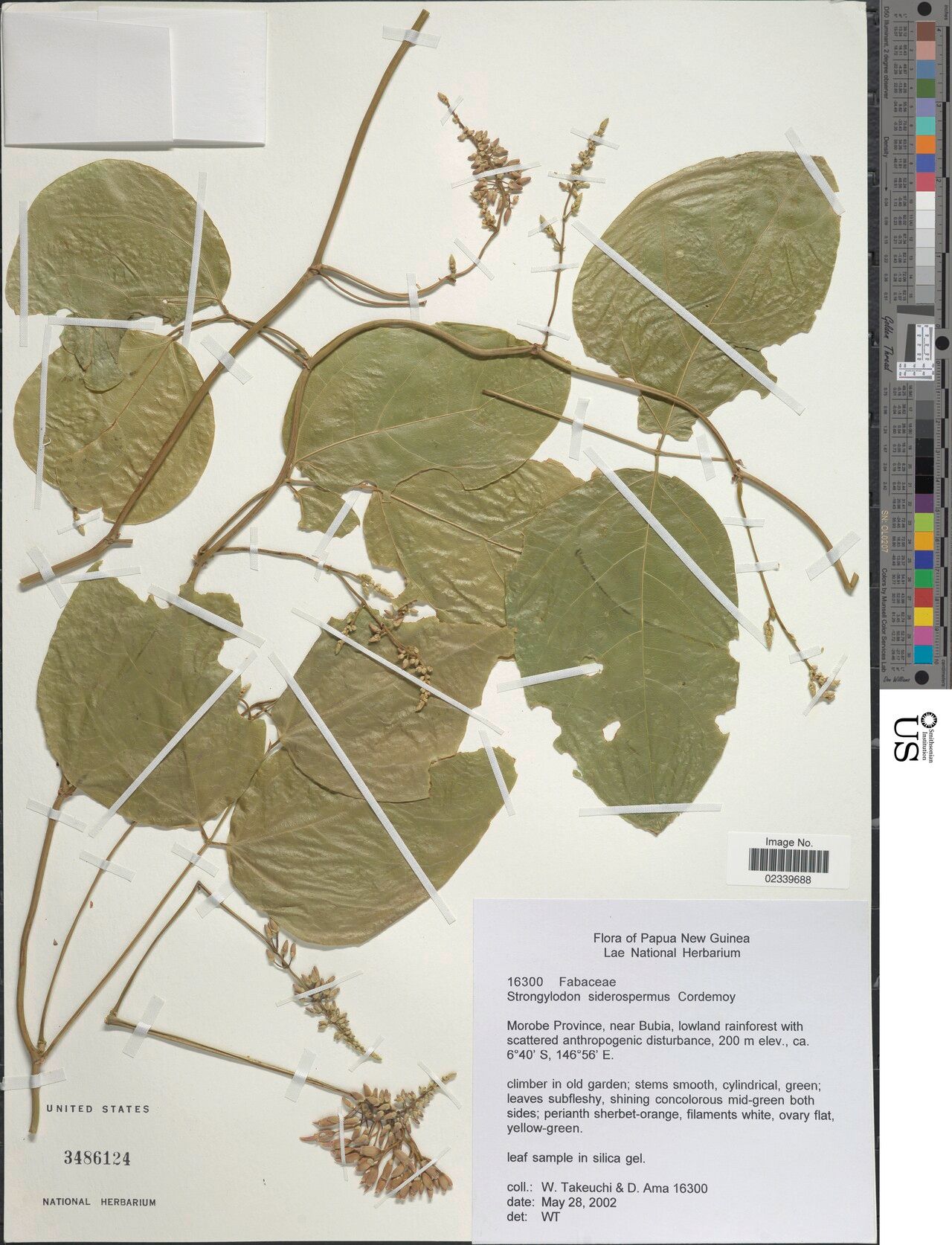
Strongylodon macrobotrys, commonly known as the jade vine or emerald creeper, is a stunning tropical plant native to the Philippines. It belongs to the legume family and is renowned for its striking turquoise-blue flowers that hang in long clusters. These flowers are pollinated by bats and are followed by long, flat seed pods.
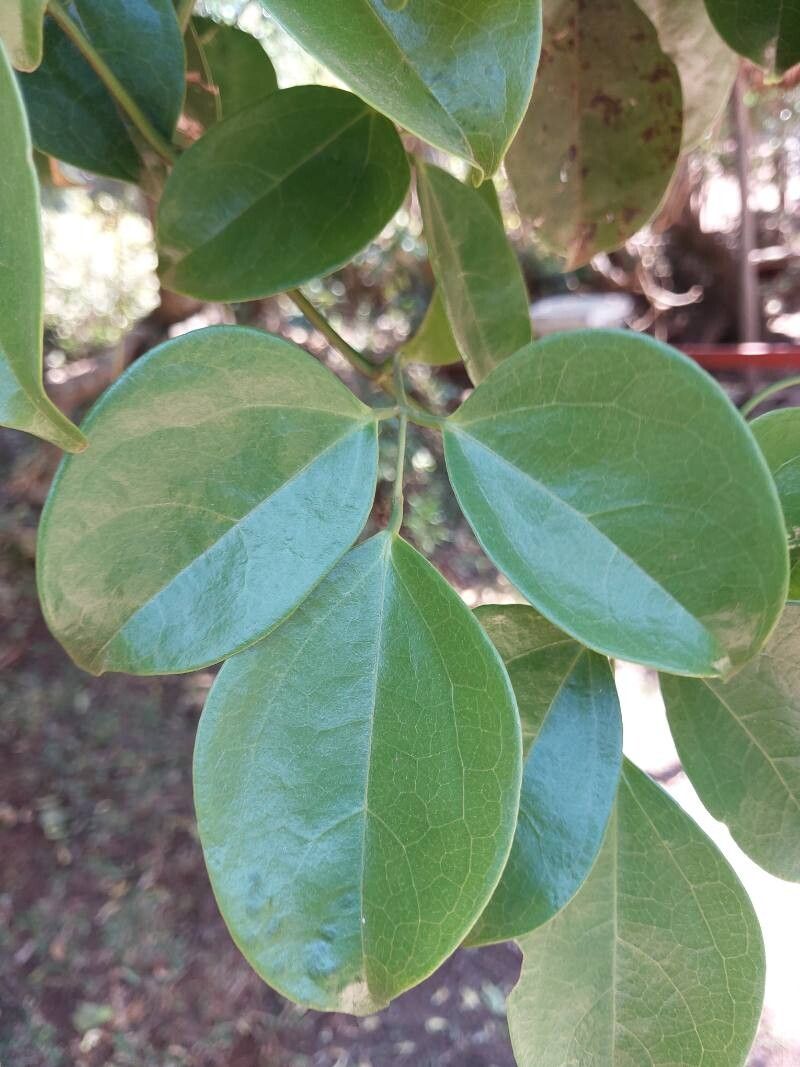
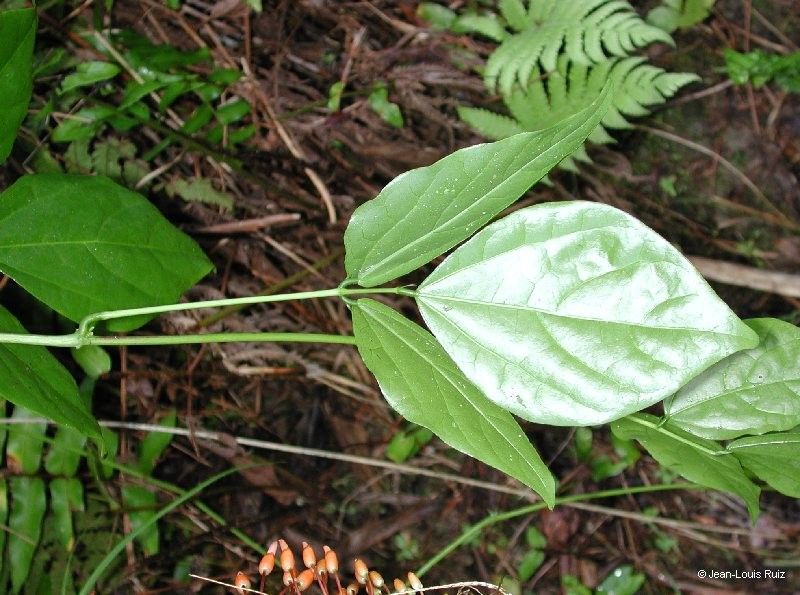
The plant features a woody stem that can grow up to 18 meters in length and produces large leaves with three leaflets. It thrives in warm temperatures and high humidity, making it an ideal choice for tropical gardens or indoor spaces with adequate light.
Jade vine is considered a rare species due to habitat loss in its native range. However, it has gained popularity among gardeners worldwide for its unique beauty and ability to attract pollinators such as butterflies and hummingbirds.
In addition to its ornamental value, Strongylodon macrobotrys also possesses medicinal properties. Traditionally, its leaves have been used to treat various ailments such as fever, coughs, headaches, and stomach pains.
Overall, Strongylodon macrobotrys is an exquisite plant that enhances any environment with its beauty while also offering medicinal benefits, making it a valuable addition both aesthetically and medicinally.
Jade Vine is highly resistant to disease and is usually not susceptible to illnesses. With regard to care, this plant is fairly low-maintenance. Planted outdoors, it needs only light watering, and larger specimens typically don't require pruning. Smaller plants, however, should be pruned after they finish blooming. Jade Vinet is appropriate for anyone who has an outdoor area, such as a garden or deck, and it does not demand much gardening experience.
How to keep Strongylodon Macrobotrys.
Light
The Jade Vine grows best in dappled sunlight but can tolerate full, unobstructed sun. Native to environments that combine sun and shade, too much exposure can scorch the leaves, while too little light can inhibit growth. Different developmental stages are not significantly affected by the amount of sunlight.
Water
The jade vine thrives in high humidity and needs consistent moisture to support its lush growth. To achieve this, it should be watered weekly. As an evergreen plant, it benefits from stable moisture levels throughout the year, which is particularly important for its outdoor growth. This care helps the jade vine display its vigorous climbing habit and stunning turquoise flowers.
Humidity
This plant needs special care because it loves high humidity levels of 60-80% or more. The best way to achieve this is by placing a humidifier near the plant. Daily misting is also essential! Make sure the room has good ventilation.
Temperature
Jade Vine is native to tropical forests and needs a warm climate. It can withstand temperatures from 68 to 100 °F (20 to 38 ℃). For best growth, keep it within this temperature range year-round.
Fertilizer
The best time to fertilize a Jade Vine is in early spring, when it comes out of dormancy. This encourages overall growth and flower development. Fertilizing improves the foliage, stems, and branches, while encouraging flowers that are large, bright, and long-lasting. It helps move nutrients from the roots to the flowers and enhances the plant’s health and resistance to disease.
Pruning
The Jade Vine boasts stunning turquoise flowers and requires pruning in early spring for optimal shape and growth. To achieve this, trim any dead or weak stems and thin out dense areas to improve air circulation. Be sure to use clean tools to prevent disease, as this will promote flowering and enhance the plant's overall health.
Pot & Repot
To help your Jade Vine thrive, plant it in a sturdy pot filled with a well-draining soil mix. Repot the plant every 2 to 3 years during the spring. When repotting, provide support for the vine and maintain high humidity and indirect light conditions to encourage recovery and growth. With proper care, your Jade Vine will produce stunning turquoise blooms.
Toxicity
The jade vine is not considered poisonous to humans or animals. In fact, the flowers of the vine are edible and often harvested as vegetables in the Philippines. These vines are completely safe to have around children and pets.
Further reading →
The toxicity and danger assessments provided are for reference only. We do not assure their accuracy, so it's crucial not to depend on them. Seek professional advice when necessary for accurate guidance.
Botanical profile.
- Plant Type
- Vine
- Life Cycle
- Perennial
- Genus
- Strongylodon
- Family
- Fabaceae
- Hardiness Zone
- 10-12
- Mature Height
- 9.14 m to 15.24 m
- Mature Spread
- 10.06 m
- Leaf Color
- Green
- Leaf Type
- Evergreen
- Flower Color
- Blue, Green
- Flower Size
- 5.08 cm to 7.62 cm
- Bloom Time
- Mid spring, Late spring, Early summer
- Planting Time
- Spring, Autumn
- Harvest Time
- Mid summer
- Native Area
- Philippines
Other names.
Reader questions.
How should I water my Jade Vine in the most effective way?
To ensure excellent root development, consider these tips for watering your plants. Place a garden hose at the base of the plant, avoiding direct spraying of the leaves. If the plants are outdoors and exposed to direct sunlight, the leaves may require more watering. Using bubblers or soaker hoses can help moisten the roots evenly. When adding or removing plants, make sure to cover the entire garden or bed with soaker hoses to encourage deep root growth. After watering, drain any excess water and allow the soil to dry before watering again. Watering at ground level is recommended to prevent diseases. On sunny days, spraying the entire bush with water can be beneficial. Whether your Jade Vine is potted or in the ground, it is best to provide deep watering rather than light sprinkling.
Why should I add fertilizer to my Jade Vine?
Fertilization plays a crucial role in promoting the overall health and well-being of a Jade Vine plant. By providing the necessary energy and nutrients, fertilization allows the plant to develop lush foliage and strong stems and branches. However, the true value of fertilization for gardeners lies in its ability to enhance the growth of the plant's flowers. Fertilizer facilitates the production of large, vibrant, and long-lasting flowers by aiding the efficient transfer of fuel from the roots to the stems and ultimately to the flowers. Additionally, proper fertilization helps maintain the plant's overall health, enabling it to better resist diseases.
What are the sunlight requirements for Jade Vine?
Jade Vine requires varied amounts of sunlight depending on its growth stage. It flourishes under partial sun, which is about 3-6 hours of sunlight daily, and can also endure full sun, which is above 6 hours of sunlight daily. It's important to observe how sunlight moves through your garden to find spots that offer the right balance of light and shade, ensuring the plant's health and happiness.
What is the best temperature for Jade Vine?
To help your tropical plants thrive, it's best to maintain a temperature range of 75℉ to 90℉ (25-32℃). While different species can tolerate temperatures outside this range, sticking within a few degrees of these limits will ensure optimal growth. However, there are extreme temperature limits to be aware of. Anything below 50℉ (10℃) or above 95℉ (35℃) can hinder growth and cause issues with the leaves and stems. Low temperatures are particularly damaging, as even a light frost can lead to the death of your tropical plants. In fact, cellular death can occur rapidly, with some species dying within 12 to 24 hours.
What should I do if I give the Jade Vine too much or too little water?
An overwatered Jade Vine may exhibit yellow leaves, leaf drop, and wilting. The plant's appearance may be dull and unhealthy, with mushy stems. To address these symptoms, it is advisable to adjust your watering schedule accordingly. However, wilting can also be a sign of under watering, evident by crispy and dry leaves. In this case, check the soil moisture level and provide a thorough watering if necessary. On the path to recovery, the Jade Vine may still exhibit dryness and yellowing due to root damage. Once it returns to normal, the yellowing of leaves will cease. When keeping a Jade Vine indoors, regularly check the moisture levels in the pot, avoiding overwatering and watching for signs of black spots. If these spots appear, allow the soil to dry out by refraining from watering for a few days. Overwatering can lead to root rot, so if discolored and slimy roots are present, consider transferring the plant to a different pot. Take precautions to prevent root rot by ensuring the soil doesn't become too soggy. When planting a Jade Vine outdoors, make sure to dig a bit deeper. If you find the soil to be excessively dry, it may indicate underwatering, necessitating adequate watering to assist the plant's recovery.
When should I fertilize my Jade Vine?
To properly fertilize a Jade Vine, it is best to do so during early spring when the plant is coming out of dormancy and preparing to bloom. This will provide the necessary energy for growth and flower development. However, fertilizing during this time is not the only option. Another feeding at the end of the season, during fall, can also be beneficial, though it does not need to be as large as the initial one. Some gardeners choose to fertilize while planting, but this is not always required.
How does sunlight affect Jade Vine's growth?
Sunlight plays a crucial role in the growth of Jade Vine. Originating from environments with a mix of sun and shadow, excessive exposure to sunlight can lead to leaf scorch, while insufficient light may stunt the plant's growth. The plant's various growth stages don't significantly differ in their sunlight needs, but overall, a balanced exposure is key to its health.
Does the Jade Vine need different temperatures at different stages of growth?
Jade Vine doesn't need temperature changes to transition between growing phases, but it's important to maintain consistency. Fluctuating temperatures can slow down its growth, regardless of the phase it's in. Therefore, keeping the plant in a controlled environment is advised. The optimal temperature range is between 75℉ (25℃) and 90℉ (32℃), with staying above the lower limit being crucial. While temperatures above 90℉ (32℃) are not ideal, this tropical plant can still tolerate them reasonably well. However, temperatures below 50℉ (10℃), especially 40℉ (5℃), will start to cause direct damage to this species that loves heat.
How frequently should I water my Jade Vine?
The Jade Vine prefers deep, infrequent watering. When planted in pots, it is important to soak them in a gallon of water each time, as the limited water storage in pots causes the soil to dry out quickly. In cold regions, watering is needed every 3 to 5 days. It is best to water early in the morning when the soil is dry, both outdoors and indoors. You can check if watering is necessary by examining the soil. When the top 2-3 inches of soil is dry, it is time for a full watering. During hot days, check the soil moisture daily as heat can rapidly dry out the pot's soil. For garden irrigation, water once a week when living in a hot climate. Only water when about 2 to 3 inches of soil become dry. Take rainfall into consideration and avoid overwatering to prevent root rot. If there is ample rainfall, additional watering may not be necessary. Jade Vine typically grows during spring and fall. When outdoors, adding 3 to 4 inches deep of mulch helps conserve water. Sandy soil requires more frequent watering due to its fast drainage, while clay soil needs less frequent watering, with intervals of 2-3 days to dry the plant and prevent root rot. To keep track of watering, mark the dates on a calendar and pay attention to drooping leaves as a sign that watering may be needed.
When is it not a good time to fertilize my Jade Vine?
During the winter, the Jade Vine enters a dormant phase and does not require fertilizer. Fertilizing at this time increases the risk of overfertilization. The Jade Vine's main feeding times are in early spring and fall, so it generally does not need fertilizer during most of spring and summer. It is also advisable to hold off on fertilizer if the plant is facing excessively hot or dry conditions.
Can artificial lighting be used for Jade Vine indoors?
Yes, artificial lighting is a viable solution for growing Jade Vine indoors, especially when natural sunlight is insufficient. Optimal growth can be achieved with adequate lighting, mimicking natural sunlight conditions. LED lights are recommended for their ability to provide specific wavelengths needed by plants. The lighting requirement varies with the type of plant: full sun plants need 30-50W/sq ft, partial sun plants need 20-30W/sq ft, and full shade plants need 10-20W/sq ft. The light source should be placed 12-36 inches above the plant for 8-12 hours daily to mimic natural daylight hours.
Does Jade Vine require varying temperatures throughout the year?
Jade Vine does not require different temperatures for different seasons. The key to caring for it year-round is maintaining an optimal temperature range. To achieve this, it is recommended to keep the plant indoors. This way, you have control over the temperature regardless of the outdoor climate. In addition to temperature, light is also important for tropical species like Jade Vine. These plants prefer partial or filtered sunlight. When growing indoors, it is best to provide bright but indirect light. Too much direct sunlight can harm the plant's leaves and hinder its growth.