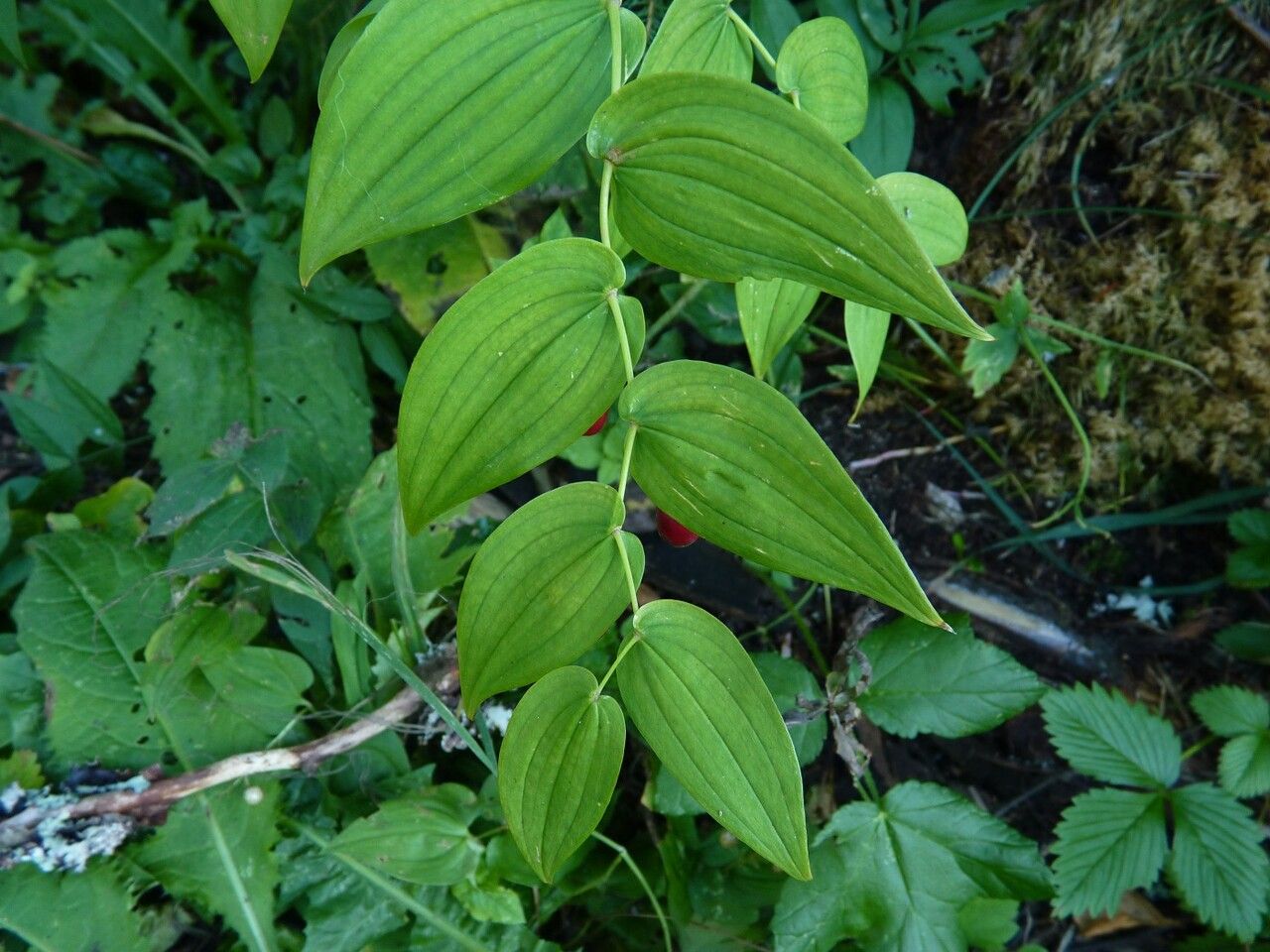
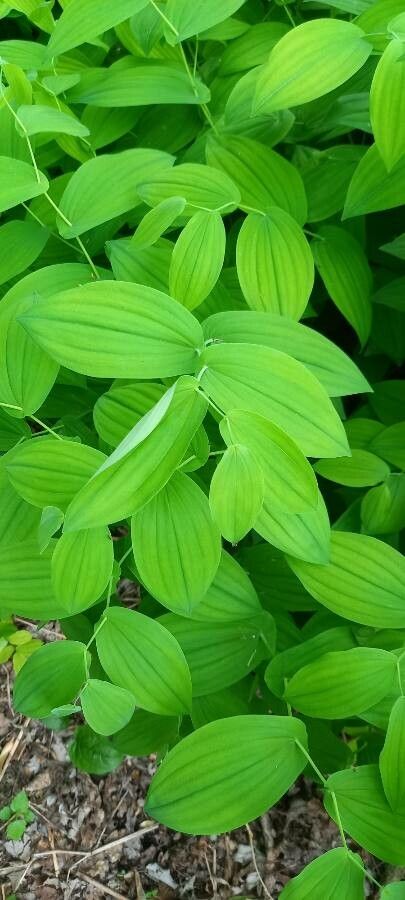
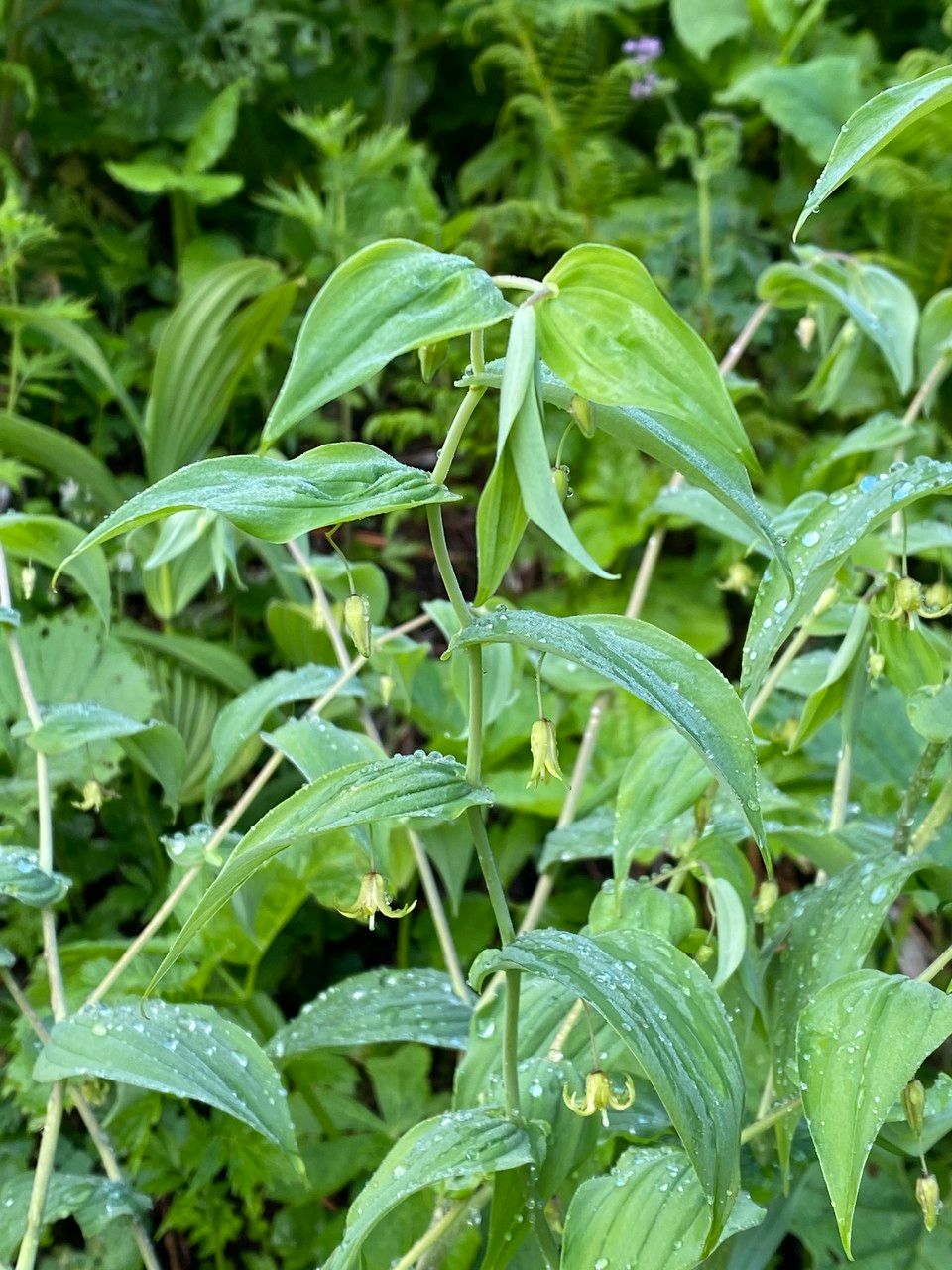
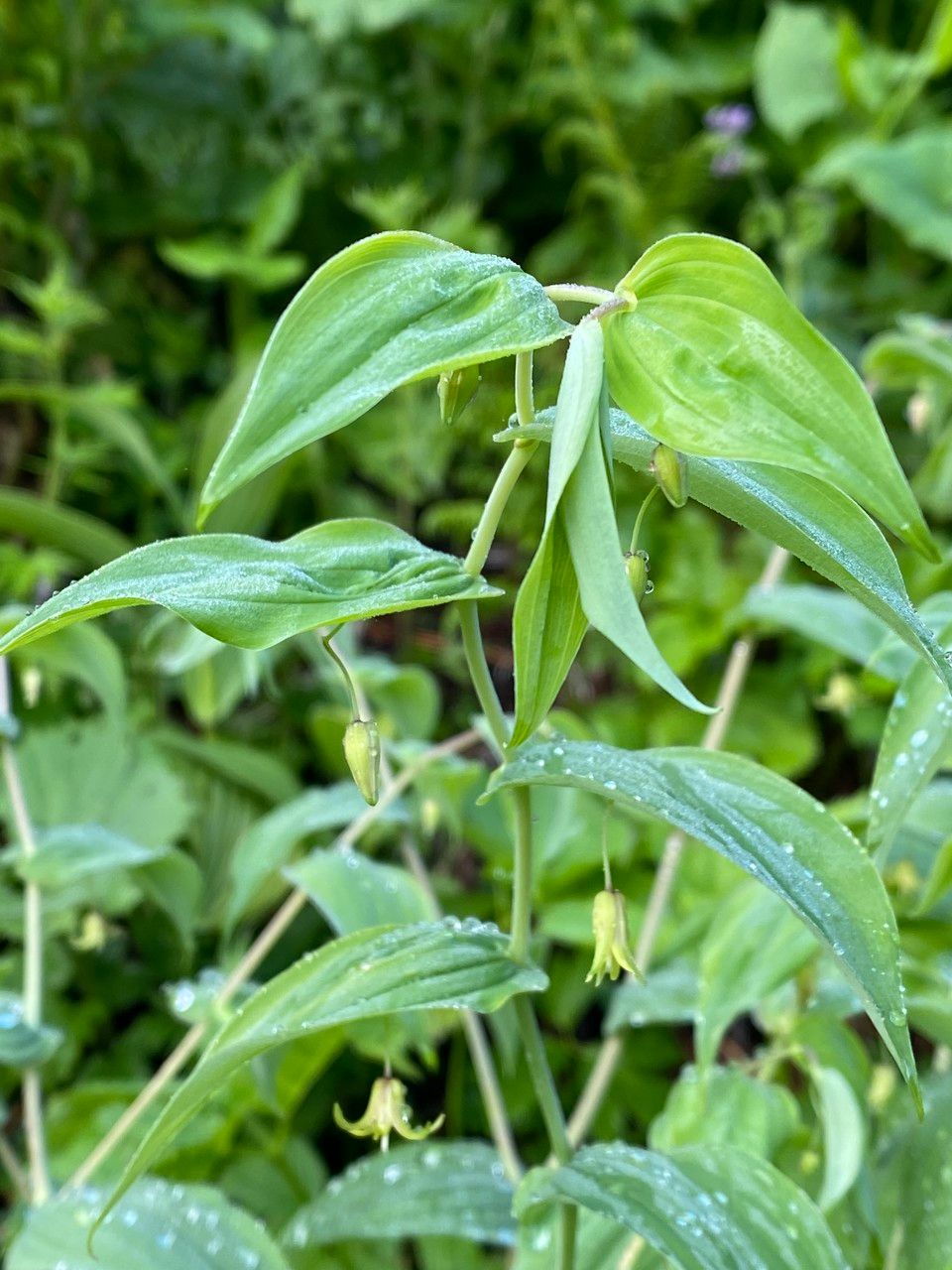
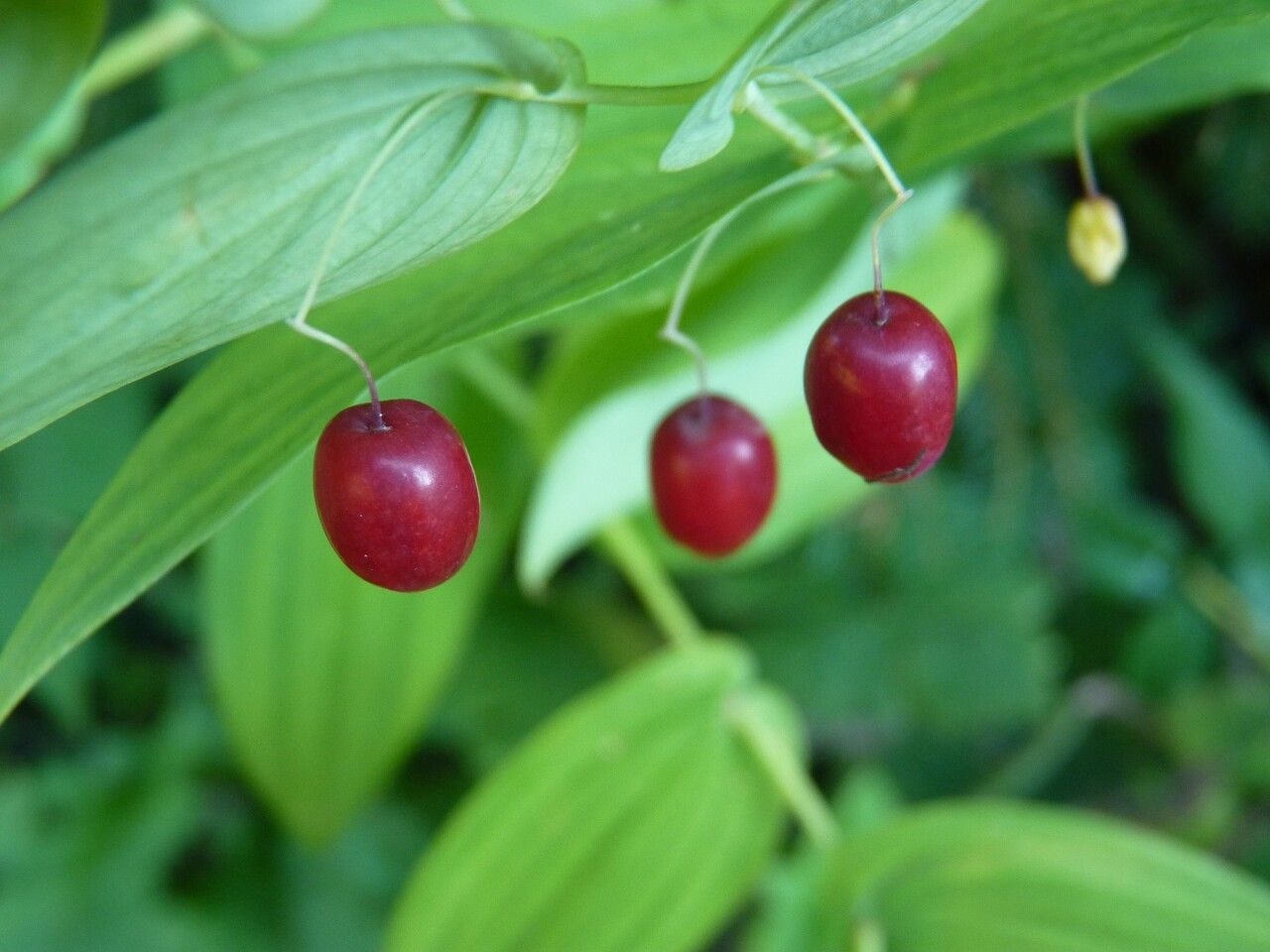
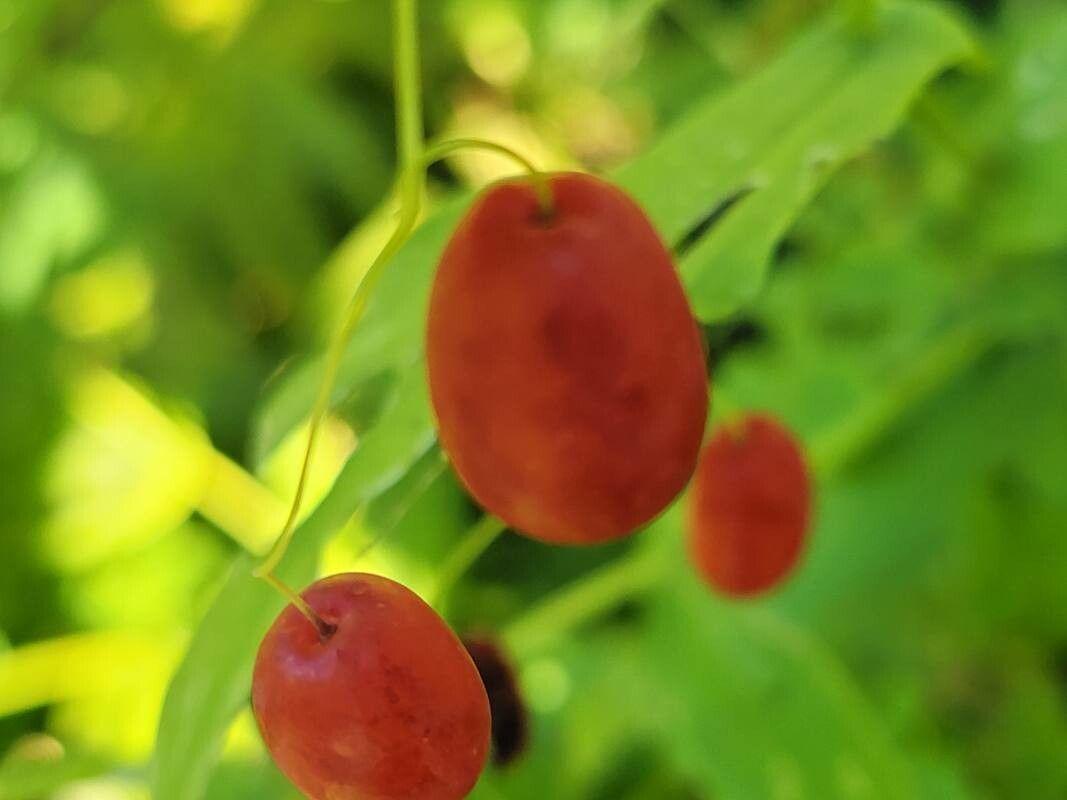
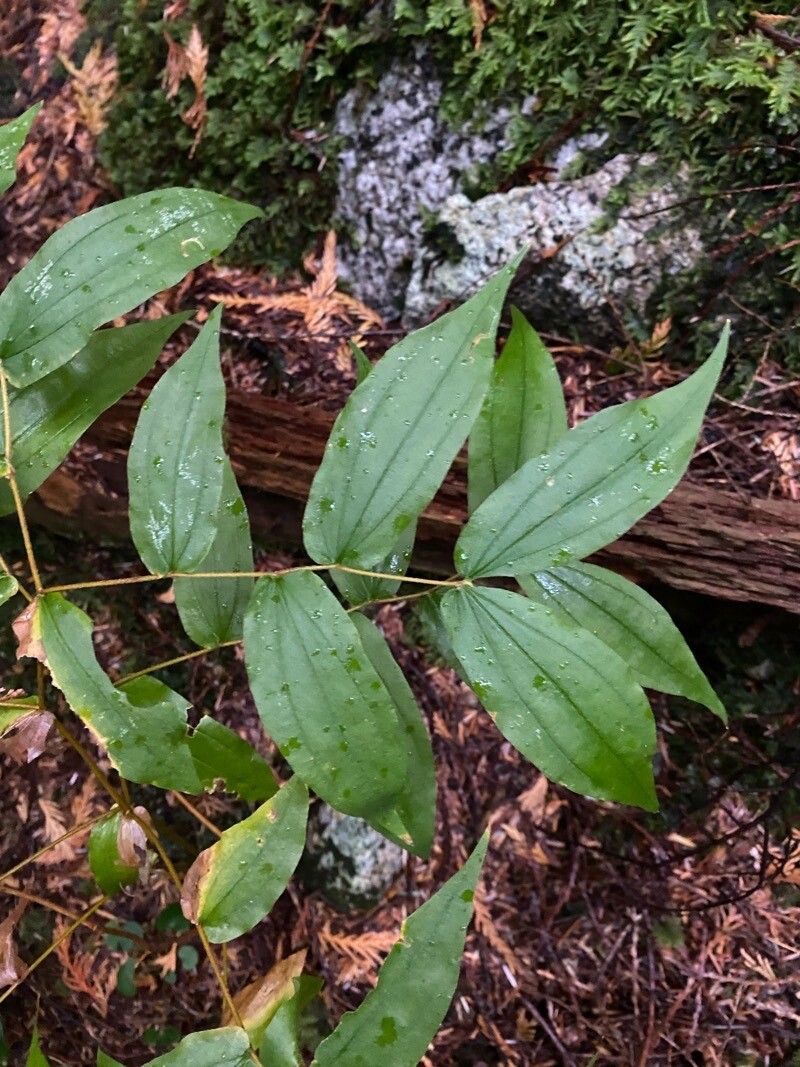
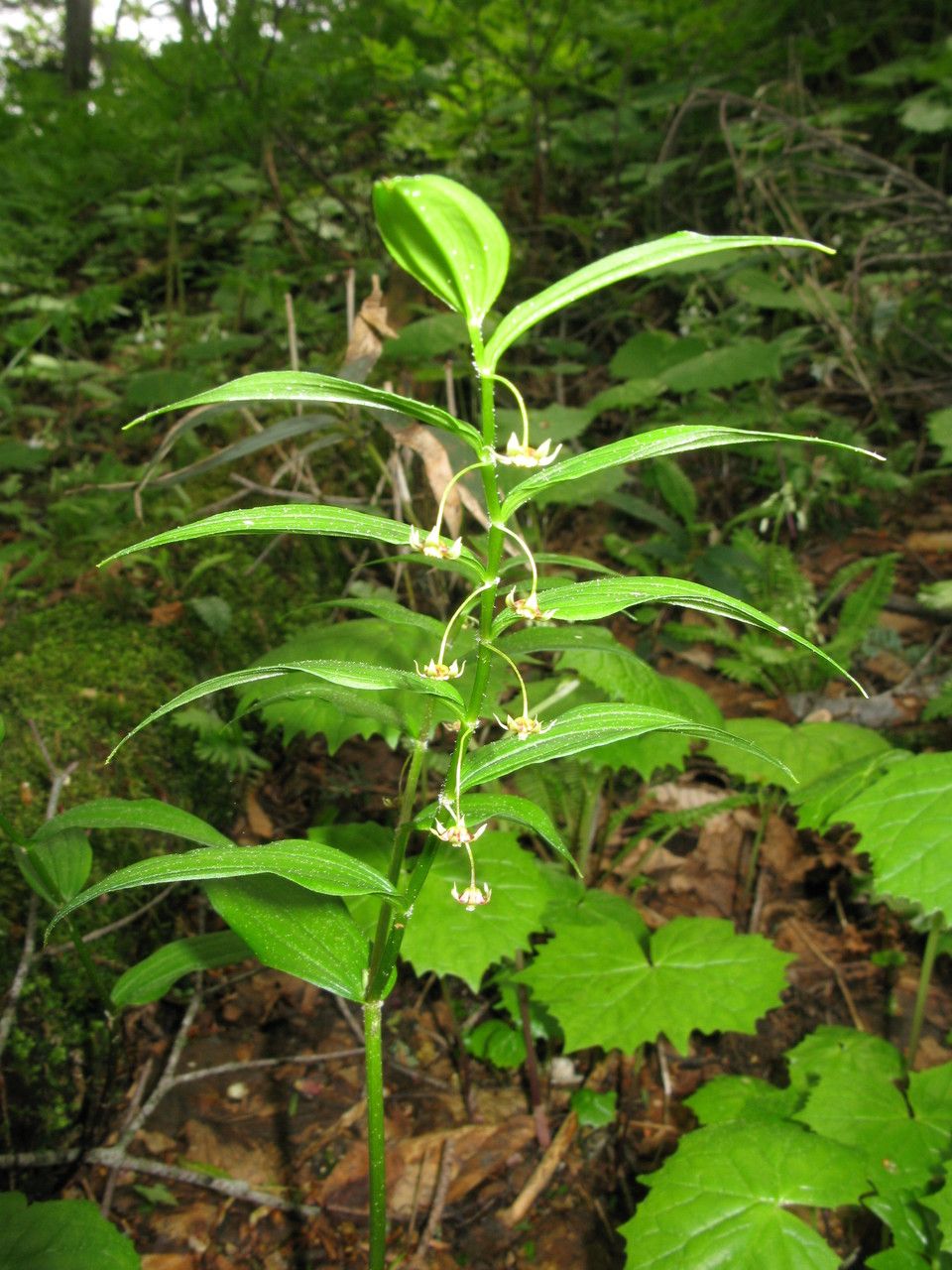
Streptopus amplexifolius (twistedstalk, clasping twistedstalk, claspleaf twistedstalk, white twisted-stalk, or watermelon berry) is a species of flowering plant in the family Liliaceae, native to North America, Europe and Asia. It is a herbaceous perennial plant growing to 40–100 cm tall, with alternate, oblong-lanceolate leaves 5–14 cm long. The greenish-white flowers hang from axils on 1–2 cm thin kinked pedicels, each flower with six white tepals, 9–15 mm long. The plants leaves completely encircle the stem, and the stems have a kink at each leaf axil giving the plants stem a "twisted" and wiry appearance. The plants grow in a creeping habit in moist, dense undergrowth.
Claspleaf twistedstalk has strong disease resistance and is usually not vulnerable to illnesses. Still, it can be affected by pests and diseases present in its environment. Such infections are generally mild. For care, this plant is of moderate maintenance. It requires regular pruning to keep an attractive appearance and support healthy growth. Fertilizing can also encourage flowering. Claspleaf twistedstalk is well suited for anyone with outdoor space like a garden or patio and does not demand much gardening experience. It may need more attention when grown indoors.
How to keep Streptopus Amplexifolius.
Light
The claspleaf twistedstalk prospers in dappled sunlight or in locations with lower light levels, reflecting its origin in cooler, forested habitats. Excessive light can cause stress, while too little light may stunt its growth. Its sun requirements do not change significantly across different growth stages.
Water
Claspleaf twistedstalk thrives in moist, shaded environments, and it prefers evenly moist soil with some drought tolerance. It requires weekly watering, but be careful not to oversaturate the roots. Typically grown outdoors, this plant benefits from mulching, which helps retain moisture and mimics its natural woodland habitat.
Temperature
Claspleaf twistedstalk is native to regions where temperatures range from 41 to 89.6°F (5 to 32°C). It prospers in cool-to-warm environments. Seasonal adjustments are seldom needed except in cases of extreme heat or freezing temperatures.
Fertilizer
The primary time to fertilize Claspleaf twistedstalk is in early spring when the flowers are forming. Using the proper fertilizer promotes stronger blooms and helps Claspleaf twistedstalk produce attractive flowers. Fertilizing in early spring ensures good flowering during the season and supplies energy for dormant growth phases.
Pruning
Clasp Leaf Twistedstalk is a perennial plant with arching stems and clasping leaves that requires minimal pruning. The best time for pruning is from early to late spring. Focus on removing any dead or damaged stems to maintain the plant's health and shape, which will also improve air circulation and reduce the risk of disease. Make sure to use clean, sharp tools for optimal regrowth.
Botanical profile.
- Plant Type
- Herb
- Life Cycle
- Perennial
- Genus
- Streptopus
- Family
- Liliaceae
- Hardiness Zone
- 4-8
- Mature Height
- 0.3 m to 1.07 m
- Mature Spread
- 30 cm
- Leaf Color
- Green
- Leaf Type
- Deciduous
- Flower Color
- White
- Flower Size
- 0.76 cm to 1.27 cm
- Bloom Time
- Mid spring, Late spring
- Planting Time
- Spring, Summer, Autumn
- Harvest Time
- Mid summer, Late summer, Early fall
- Native Area
- Austria, Czech Republic, Slovakia, Montenegro, Bulgaria, Poland, Croatia, Slovenia, Ukraine, China, Russia, Serbia, Germany, Italy, Spain, Switzerland, Denmark, Japan, Koppen, Romania, France
Other names.
Reader questions.
What should I do if I give too much or too little water to my Claspleaf twistedstalk?
Overwatering is a more common issue for Claspleaf twistedstalks and can cause wilting, yellowing, and diseases like root rot. Underwatering is less common but can lead to brittle, brown leaves. It's important to notice signs of overwatering early and reduce watering immediately. Check the soil's drainage and replace it with a well-draining mix if needed. If underwatering is the issue, water more regularly until the signs improve.
Why should I put plant food on my Claspleaf twistedstalk?
The Claspleaf twistedstalk relies on its leaves for structure, and fertilization plays a crucial role in maintaining their appearance and function. By properly fertilizing your plant, you can ensure that the leaves retain a consistent color and healthy texture. Moreover, fertilization also benefits the root system, as it helps generate new roots and maintain existing ones. This means that fertilization not only supports the plant's current health but also enhances its ability to absorb nutrients from the soil in the long run.
What are the sunlight requirements for Claspleaf twistedstalk?
Claspleaf twistedstalk requires about 3-6 hours of sunlight for partial sun conditions and less than 3 hours of sunlight for full shade conditions. It is important to monitor how sunlight moves through your garden to find spots that provide the ideal balance of light and shade, ensuring the plant's well-being. Excessive light may cause stress, reflecting its origin in cooler, forested habitats. However, too little light may also stunt its growth, indicating the necessity of understanding and providing the right amount of sunlight or shade.
What is the best temperature for Claspleaf twistedstalk?
The temperature needs of Claspleaf twistedstalk vary depending on the time of year. There are two main seasons to consider: the growing season and the dormancy season. During the growing season, when the plant is sprouting, the ideal temperature range is between 65-80℉ (18-27℃). If it gets colder than 15℉ (-10℃), the plant may suffer and its leaves may brown and wilt. However, if it's just a short cold snap, Claspleaf twistedstalk might be able to survive with some assistance. On the other hand, during the warmer parts of the year, it's important to protect the plant from temperatures that are too high. The upper limit for this plant's temperature range is 95-105℉ (35-40℃). Anything hotter than that can damage the leaves and blooms, causing wilting, drooping, and even sunburn. Thankfully, there are several quick and easy ways to address this issue.
How much should I water my Claspleaf twistedstalk?
If your Claspleaf twistedstalk plant is in a pot, the most precise way to determine if it needs water is by checking the soil. Simply plunge your finger into the soil and if you find that the top two to three inches are dry, it's time to water it. The same method can be used for Claspleaf twistedstalk plants grown outdoors in the ground. Once again, if the top few inches of soil have dried out, it's time to give it some water. Generally, during spring and early fall, you will likely need to water this plant once a week using this method. However, during extremely hot weather, you may need to increase watering frequency to about twice or more per week. Despite this, mature and well-established Claspleaf twistedstalk plants have an impressive ability to withstand drought.
When should I fertilize my Claspleaf twistedstalk plant?
If you grow your Claspleaf twistedstalk outdoors each year, new growth will shoot out in early spring. This is a sign that it's time to start fertilization for the year. Usually, a single application of fertilizer in the spring is sufficient for the plant to thrive. However, if you want to maximize growth, you can fertilize multiple times throughout the spring and early summer. In this case, you can feed your Claspleaf twistedstalk about once every month to a month and a half.
How can artificial lighting be used for Claspleaf twistedstalk?
Artificial lighting is essential for indoor Claspleaf twistedstalk plants when natural sunlight is insufficient, especially during winter or in less sunny locations. LED lights are recommended because they can be customized to offer specific wavelengths needed for the plant. Full sun plants require 30-50W/sq ft, partial sun plants need 20-30W/sq ft, and full shade plants require 10-20W/sq ft of artificial light. The light source should be placed 12-36 inches above the plant and provided for 8-12 hours per day to mimic natural daylight hours and promote optimal growth.
The Claspleaf twistedstalk plant needs specific temperatures during its first year or while it is a seedling.
If you have just planted a Claspleaf twistedstalk for the first time outside, you will need to take extra care during the coldest months. Frost can severely damage the plant and prevent it from growing back in the spring. To protect it, make sure the temperature stays above 40℉(5℃) by either bringing it indoors or using mulch or fabric barriers. It's also best to plant the Claspleaf twistedstalk in a shadier spot during its first year or two because smaller plants have a harder time regulating their temperature in the heat. Limit direct sunlight to no more than five hours per day, especially if it's above 80℉(27℃). Using shadecloth and regularly watering or misting the plant will help control the summer heat.
How much water does my Claspleaf twistedstalk plant need?
When watering your Claspleaf twistedstalk, make sure to not be shy about giving it enough water. When the first two to three inches of soil are dry, it's best to thoroughly soak the soil by supplying enough water. To ensure you've added enough water, let it flow through the drainage holes at the bottom of the pot. If you don't see excess water draining, you may have underwatered the plant. However, be careful not to let water accumulate inside the soil, as it can harm the plant. On the other hand, if water does not drain through the pot, it may indicate poorly draining soils, which is detrimental to the plant's health and should be avoided. If the plant is outside, 1 inch of rain per week will be enough.
When is the best time to not fertilize my Claspleaf twistedstalk?
During late fall and winter, your Claspleaf twistedstalk enters a dormant phase without new growth. It's best to refrain from fertilizing it during this time. If you do fertilize during spring and summer, start reducing the frequency as summer approaches, as growth rate slows. It's generally not recommended to fertilize during extremely hot or dry weather, as it can cause stress and premature death for your Claspleaf twistedstalk.
What symptoms indicate light deficiency in Claspleaf twistedstalk?
Symptoms of light deficiency in Claspleaf twistedstalk include smaller new leaves, leggy or sparse growth, faster leaf drop, slower or no new growth, lighter-colored new leaves, and symptoms of excessive sunlight exposure like chlorosis, sunscald, leaf curling, wilting, and leaf scorching. These symptoms demonstrate the plant's struggle to adapt to insufficient light, impacting its health and growth. Adjusting the light conditions to suit the plant's requirements can help mitigate these symptoms.
How can I keep Claspleaf twistedstalk safe from very hot or very cold temperatures?
During the growing season, if temperatures drop below 15℉(-10℃), there are ways to protect Claspleaf twistedstalk from frost or cold damage. If you are growing it in a container, simply bring the container indoors in bright, indirect light until temperatures rise above the lower threshold. For ground-planted Claspleaf twistedstalk, you can use mulch or horticultural fabric to create a barrier that insulates the plant from frost and cold wind. On the other hand, if temperatures rise above 80℉(27℃) in the shade during the day, take precautions with sunlight exposure. Limit the plant's exposure to six hours or less of sunlight per day, particularly in the morning hours. To reduce direct sunlight, you can use shade cloth or fine plastic mesh. Installing a misting system that releases cooling mist around the plant's base throughout the day can also lower ground temperatures.