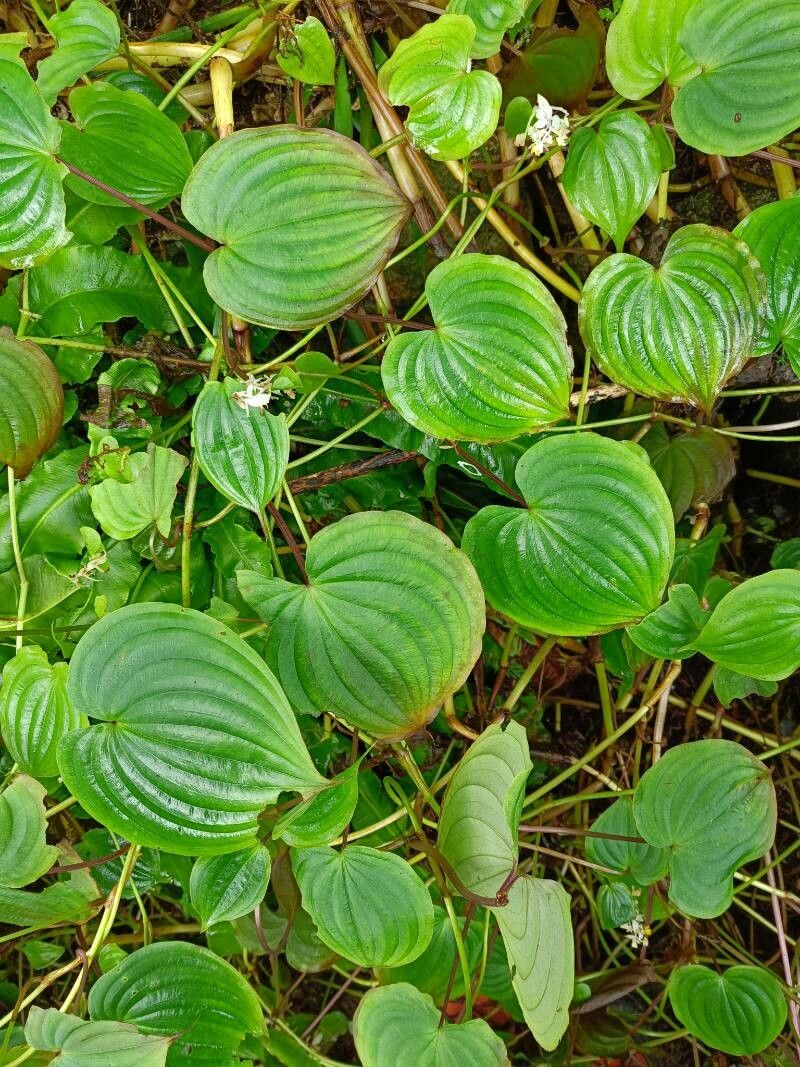
Streptolirion is a genus of climbing monocotyledonous flowering plants in the dayflower family. It consists of a single species, namely Streptolirion volubile. It has a broad distribution in Asia, from China's western Hubei Province as well as the Russian Far East, Korea and Japan in the northeast, south to Vietnam and west to India. Currently two subspecies are accepted: S. volubile subsp. volubile and S. volubile subsp. khasianum, with the latter being a stronger climber covered with erect brown hairs. Streptolirion can be distinguished from the closely related climber Spatholirion by the former's two-seeded carpels and inflorescences that are all subtended by large involucral bracts. They bear yellow hairs below the anthers, which are believed to increase floral attraction by contrasting with the petals or suggesting additional pollen is present. Despite the large range, an analysis of chromosomes found major differences between Japanese and Indian populations, suggesting that additional species may be yet unrecognized.
Climbing twisted-lily is resistant to disease and is generally not susceptible to illnesses. Regarding care, this plant is fairly low-maintenance. When grown outdoors it needs little watering, and larger specimens typically do not require pruning. Smaller plants, however, should be pruned after they finish blooming. Climbing twisted-lily is suitable for anyone with an outdoor area, such as a garden or deck, and does not demand much gardening experience.
How to keep Streptolirion Volubile.
Light
The climbing twisted-lily prospers in abundant sunlight but can also tolerate dimmer conditions. Although the plant comes from environments with plentiful sun, it has adapted to stretches with reduced solar exposure. Excessive or insufficient light, however, can adversely affect the plant’s health and growth.
Water
The climbing twisted-lily flourishes in tropical rainforests, where it benefits from high humidity and frequent rainfall. While it thrives in humid conditions, it also shows moderate tolerance to drought. To mimic its natural environment, weekly watering is recommended. However, during its winter dormancy, watering should be reduced to ensure a healthy growth cycle.
Temperature
Originating from temperate regions, the climbing twisted-lily performs best in temperatures of 68 to 95°F (20 to 35 ℃). In colder months it may need a warmer indoor location or a temperature-controlled space to satisfy its preferred temperature range.
Fertilizer
Timing is essential for fertilizing the Climbing twisted-lily. Apply fertilizer in early spring and continue doing so monthly until early summer. Fertilizer encourages attractive blooms and supplies energy during both dormant and active growth phases.
Pruning
The climbing twisted-lily has twining stems and attractive foliage. To maintain its health and appearance, prune in early spring to remove damaged growth and control its size, which encourages better flowering. Light pruning helps improve air circulation and light penetration, fostering strong and visually pleasing growth without stressing the plant.
Pot & Repot
Repot the climbing twisted-lily every 2 to 3 years in early spring, using a slightly larger pot. After repotting, place it in a location with bright, indirect light and keep the soil consistently moist. The climbing twisted-lily is resilient and doesn't require special care during its recovery period.
Botanical profile.
- Plant Type
- Vine
- Life Cycle
- Perennial
- Genus
- Streptolirion
- Family
- Commelinaceae
- Hardiness Zone
- 9
- Mature Height
- 2.44 m to 3.05 m
- Mature Spread
- 1 cm to 2 cm
- Leaf Color
- Green
- Leaf Type
- Deciduous
- Flower Color
- White
- Flower Size
- 0.51 cm to 0.76 cm
- Bloom Time
- Summer, Early fall
- Planting Time
- Spring, Summer, Autumn
- Harvest Time
- Late summer, Fall
Other names.
Reader questions.
What are the sunlight requirements for Climbing twisted-lily?
The Climbing twisted-lily requires full sun, defined as more than 6 hours of sunlight per day, but it can also thrive in partial sun, which means about 3-6 hours of sunlight. It's important to monitor the movement of sunlight through your garden to ensure that your plants receive the appropriate balance of light and shade for optimal growth. Despite its preference for abundant sunshine, the Climbing twisted-lily has adapted to endure less illuminated conditions, making it a versatile plant for various lighting environments.
What is the optimal temperature range for Climbing twisted-lily?
Climbing twisted-lily, a plant native to temperate climates, thrives best in temperatures ranging from 68 to 95°F (20 to 35°C). It favors a temperate environment and during cooler seasons, may require to be moved indoors or to a temperature-controlled setting to align with its preferred temperature conditions.
How does inadequate or excessive sunlight affect the Climbing twisted-lily?
Inadequate light exposure can lead to several health issues for the Climbing twisted-lily, such as smaller new leaves, leggy or sparse growth, faster leaf drop, slower or no new growth, lighter-colored new leaves, and symptoms of chlorosis and sunscald. On the other hand, excessive sunlight can cause leaf curling, wilting, leaf scorching, and other damages, indicating the importance of finding a lighting balance to prevent health and growth problems.
How should Climbing twisted-lily be protected from cold temperatures?
Climbing twisted-lily possesses some degree of cold tolerance and generally does not necessitate additional protection when temperatures are above 0°C. However, in anticipation of temperatures dropping below freezing, temporary protective measures should be employed. Wrapping the plant with plastic film, fabric, or other suitable materials can help shield it against the cold. It's important to remove these protections once temperatures are on the rise to prevent any potential damage.
What artificial lighting recommendations are there for the Climbing twisted-lily?
For indoor plants like the Climbing twisted-lily, artificial lighting can be a vital solution during low-light conditions, especially in winter or less sunny spaces. It's advisable to choose the right type of artificial light, such as LED lights, that can provide specific wavelengths needed for plant growth. Full sun plants need 30-50W/sq ft, partial sun plants require 20-30W/sq ft, and full shade plants need 10-20W/sq ft of artificial light. The appropriate distance for placing the light source is 12-36 inches above the plant, and the duration should mimic natural daylight hours, typically 8-12 hours per day.
What are the symptoms and solutions for Climbing twisted-lily exposed to low temperatures?
When exposed to temperatures below -5°C, Climbing twisted-lily may exhibit symptoms such as drooping leaves. While plants can recover from mild exposure, severe cold can cause leaves to wilt and detach. To manage frost damage, trim the frostbitten areas. To prevent recurrence, wrap the plant in non-woven fabric or cloth and create a wind barrier before exposure to low temperatures.
What are the solutions for addressing lighting issues with the Climbing twisted-lily?
To ensure optimal growth for indoor Climbing twisted-lilies, gradually increase sunlight exposure to at least 6 hours daily using a south-facing window or artificial lighting if the plant is large or not easily movable, keeping a light source on for a minimum of 8 hours daily. For outdoor plants, gradually adapting them to brighter spots can help avoid sunburn. Remove any obstructions to sunlight and consider transplanting smaller plants to sunnier locations during their dormant period. While parts of the plant affected by low light may not recover, new growth after adjusting lighting conditions will be healthier.
How does high temperature affect Climbing twisted-lily and what are the solutions?
During hot summers, it's vital to keep Climbing twisted-lily below 35°C to avoid stress from high temperatures, which can lead to lighter leaf color, dry and withered leaf tips, curled leaves, and susceptibility to sunburn. To alleviate high temperature stress, prune sunburned or dried areas. Relocate the plant to shaded areas during peak sunlight hours or use a shade cloth. Ensure the soil remains moist by watering in the morning and evening.