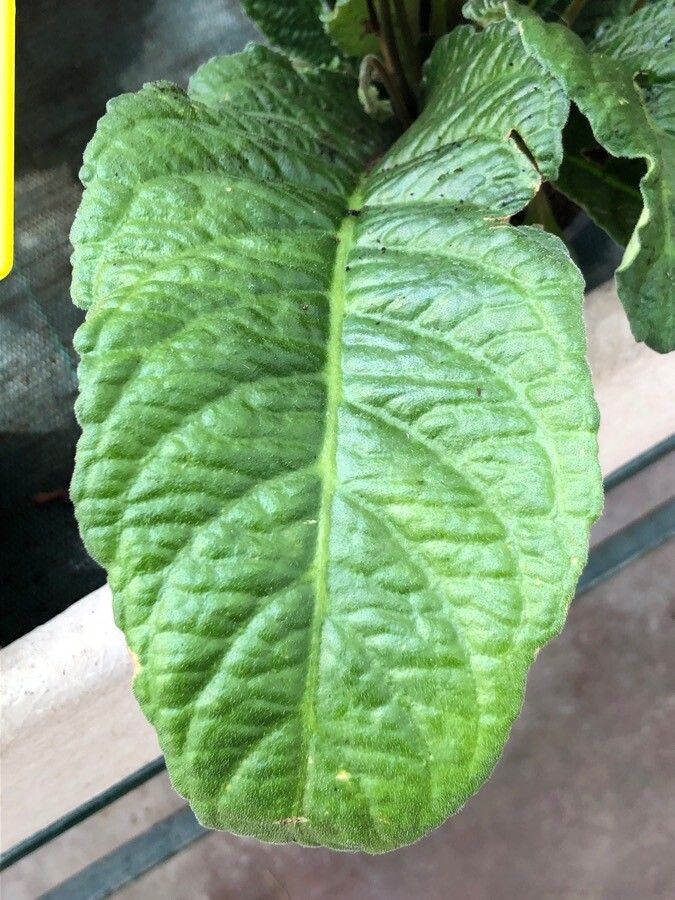
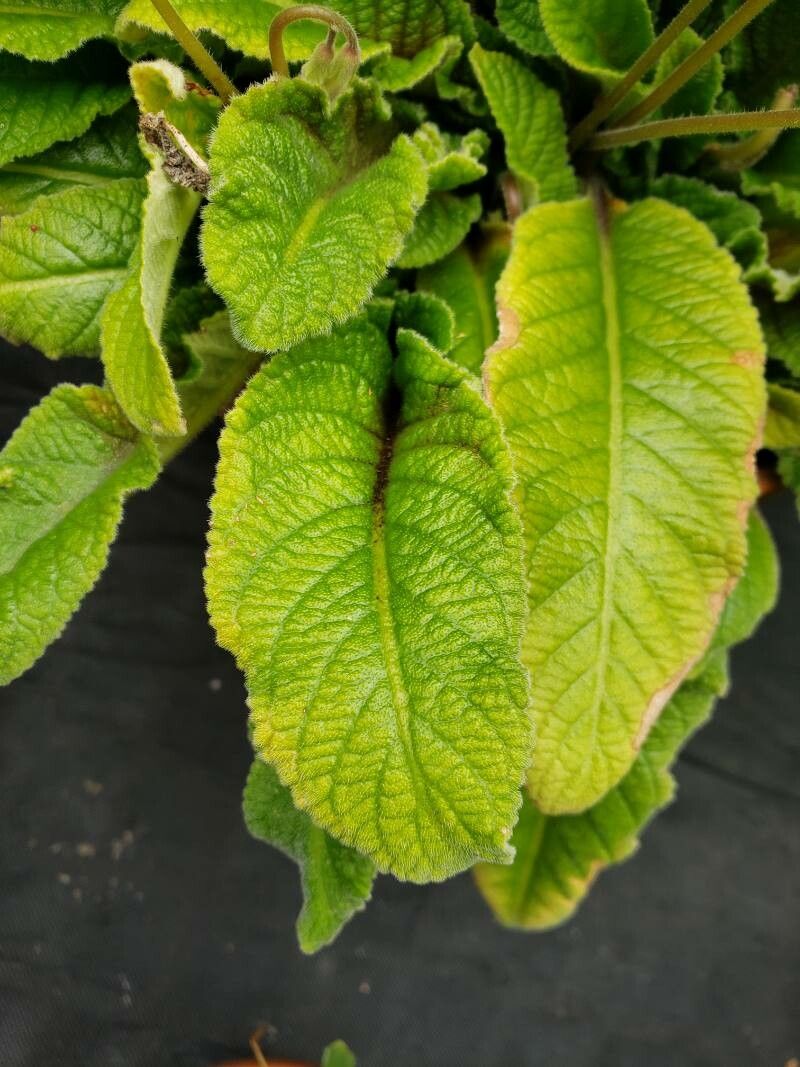
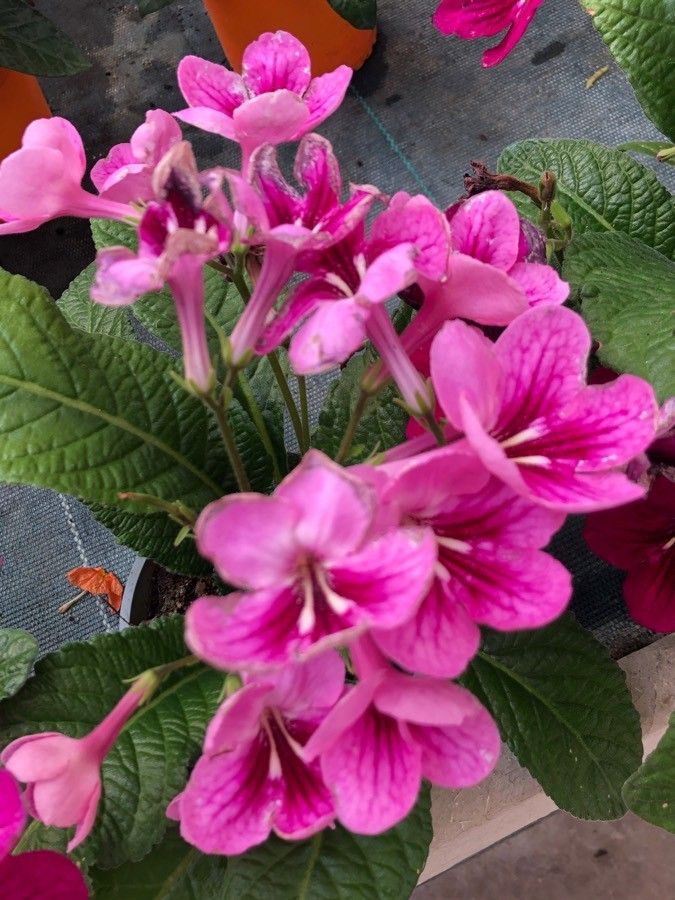
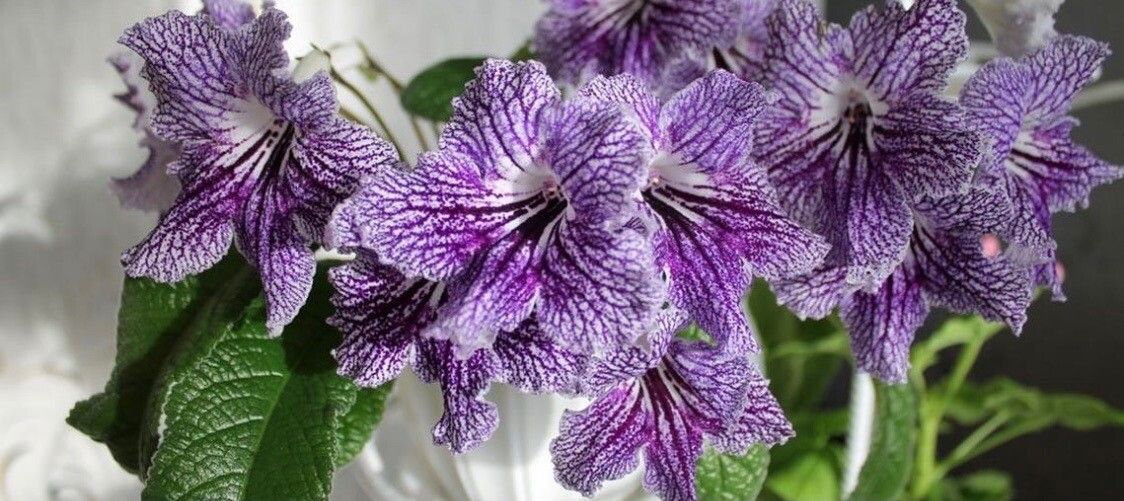
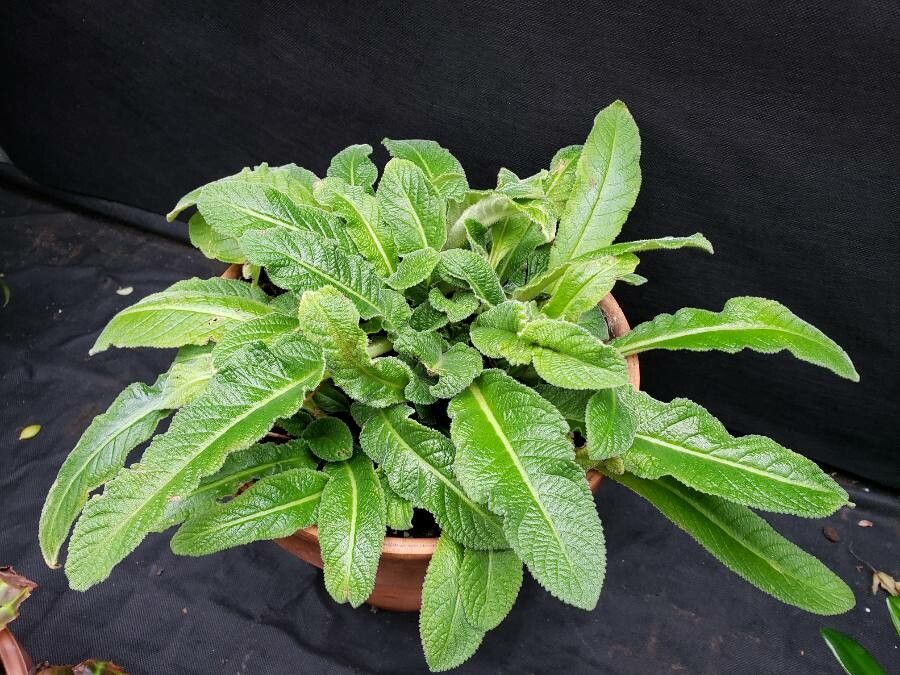
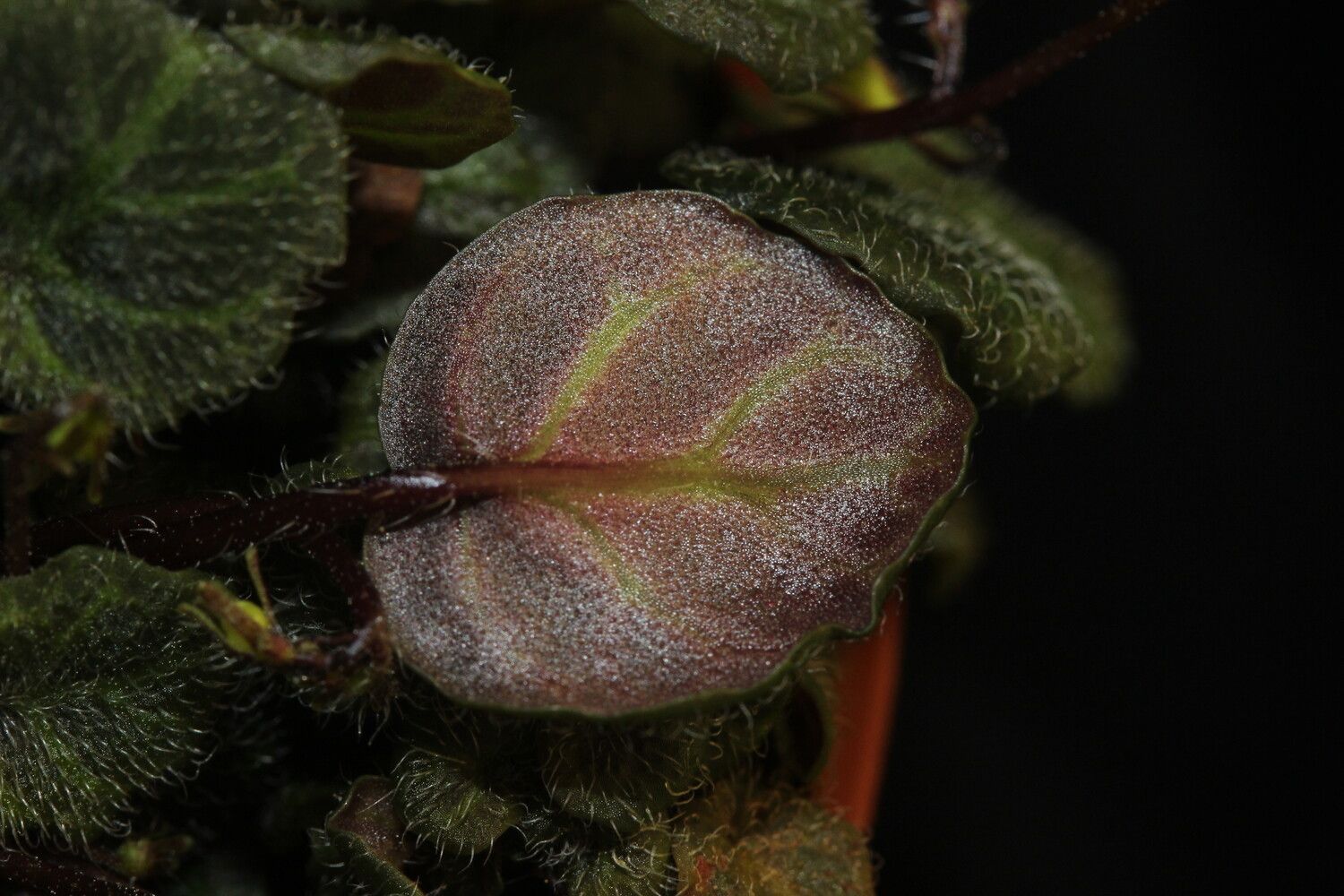
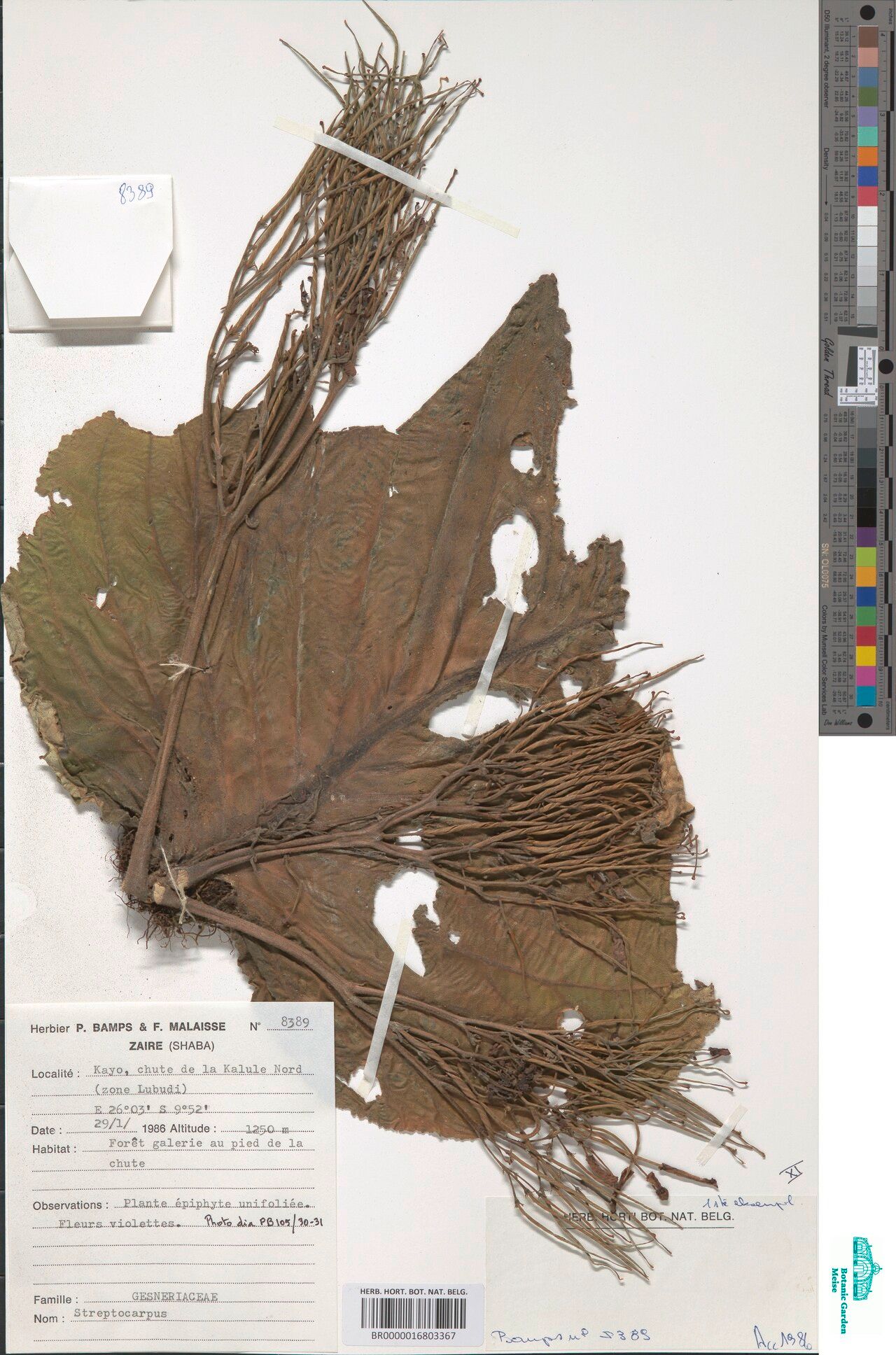
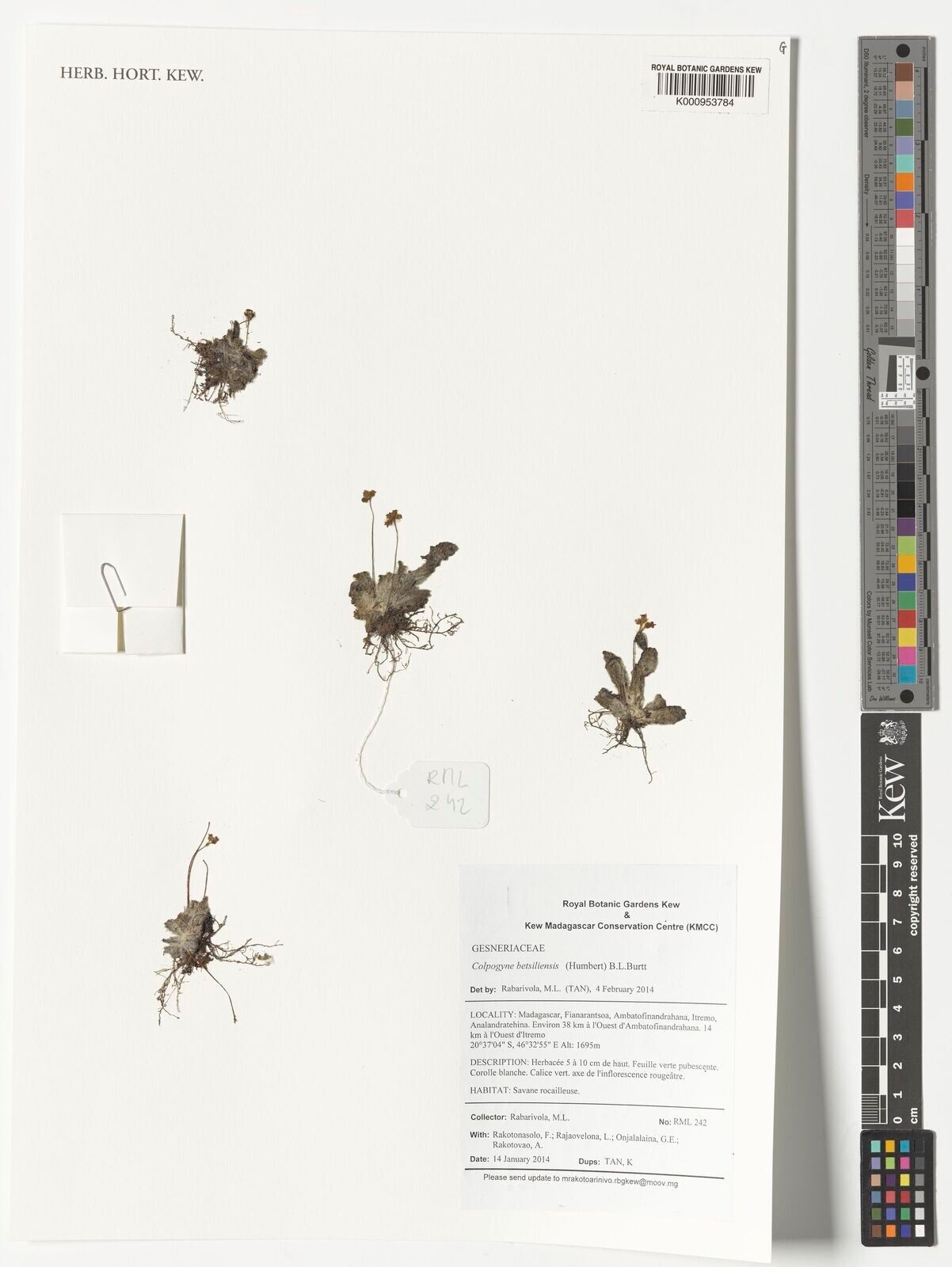
Streptocarpus albus is a species of flowering plant in the Gesneriaceae family, native to the tropical regions of Africa and Madagascar. This plant features a rosette of dark green, glossy leaves with a slightly hairy texture. The leaves are oval-shaped with pointed tips and wavy edges.
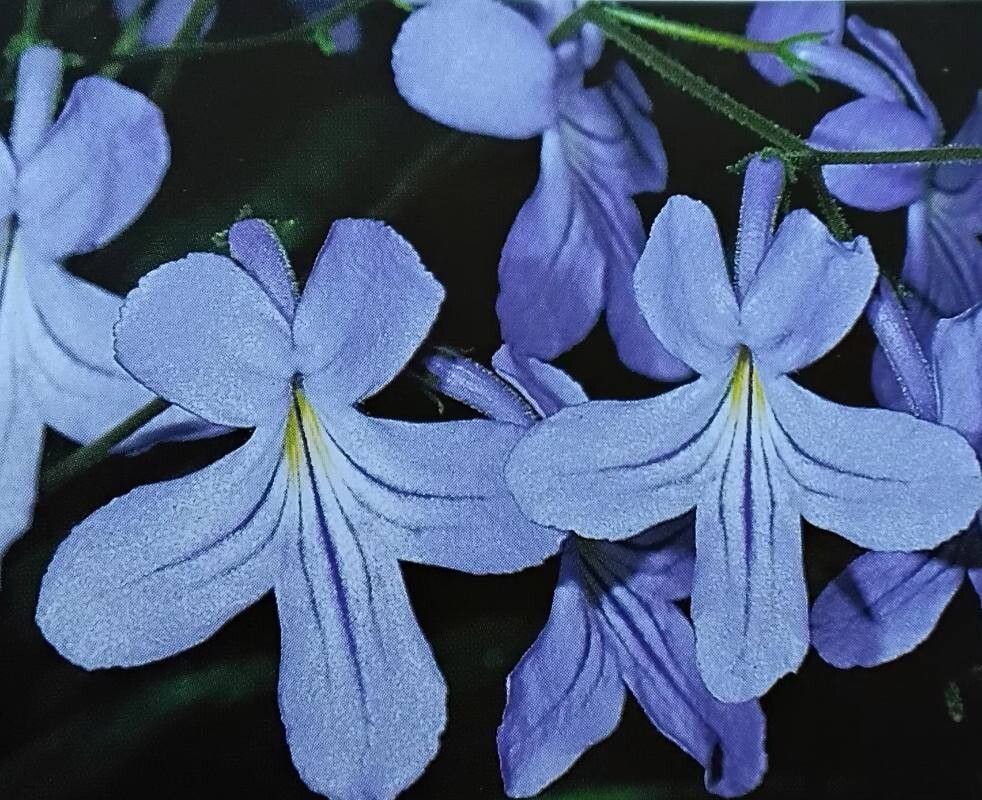
The flowers of Streptocarpus albus are white and trumpet-like, composed of five petals. They bloom in clusters on long stems that rise above the foliage, making them a striking addition to any garden or indoor space.
Streptocarpus albus thrives in well-draining soil and prefers partial shade or filtered sunlight. While it requires regular watering, it is important not to overwater, as this can cause root rot.
Often grown as an ornamental houseplant due to its attractive foliage and beautiful flowers, Streptocarpus albus can also be used in outdoor gardens, provided it is protected from direct sunlight.
Overall, Streptocarpus albus is an easy-to-care-for plant that adds beauty and elegance wherever it is grown.
Streptocarpus albus has strong resistance to disease and is generally not prone to illness. However, it can be vulnerable to leaf spots when light and ventilation are poor and when watering is excessive. Its care level is considered easy, since it only needs regular watering and little else. Streptocarpus albus is appropriate for people who lack the time and energy to carry out regular care.
How to keep Streptocarpus Albus.
Light
Streptocarpus albus is native to habitats such as forest understories and rocky areas, where it occurs in natural shade. It prefers partial sun but can tolerate full sun or full shade, illustrating its versatile and hardy nature.
Temperature
Streptocarpus albus can tolerate a wide range of temperatures, but its distribution may still be restricted by different combinations of water and heat. It performs best in warm summer climates with sufficient rainfall or watering. Extended periods of cloudy, rainy weather, as well as prolonged high temperatures, can raise the chance of Streptocarpus albus dying. In winter, adequate protection from cold can enhance the plant's survival rate.
Fertilizer
The best time to fertilize Streptocarpus albus is in early spring, when it is coming out of dormancy and starting active growth. Fertilization supplies essential nutrients for healthy development. Although Streptocarpus albus has relatively low fertilizer requirements, feeding it once a year can improve its survival and encourage better, longer-lasting blooms.
Pot & Repot
When repotting Streptocarpus albus, select a pot 1-2 inches (2.5–5.1 cm) larger with good drainage. Use a well-draining potting mix. Repot in spring or fall, making sure the root ball sits slightly lower than the rim of the flower pot. Water thoroughly after repotting and place in a warm spot with indirect sunlight.
Botanical profile.
- Plant Type
- Herb
- Life Cycle
- Perennial
- Genus
- Streptocarpus
- Family
- Gesneriaceae
- Hardiness Zone
- 10-11
- Mature Height
- 15 cm to 30 cm
- Mature Spread
- 20 cm to 40 cm
- Leaf Color
- Light Green, Forest Green
- Leaf Type
- Evergreen
- Flower Color
- White
- Flower Size
- 2.03 cm to 4.06 cm
- Bloom Time
- All year round
- Planting Time
- Spring, Summer
- Harvest Time
- Late spring, Summer, Fall, Winter, Early spring, Mid spring
Other names.