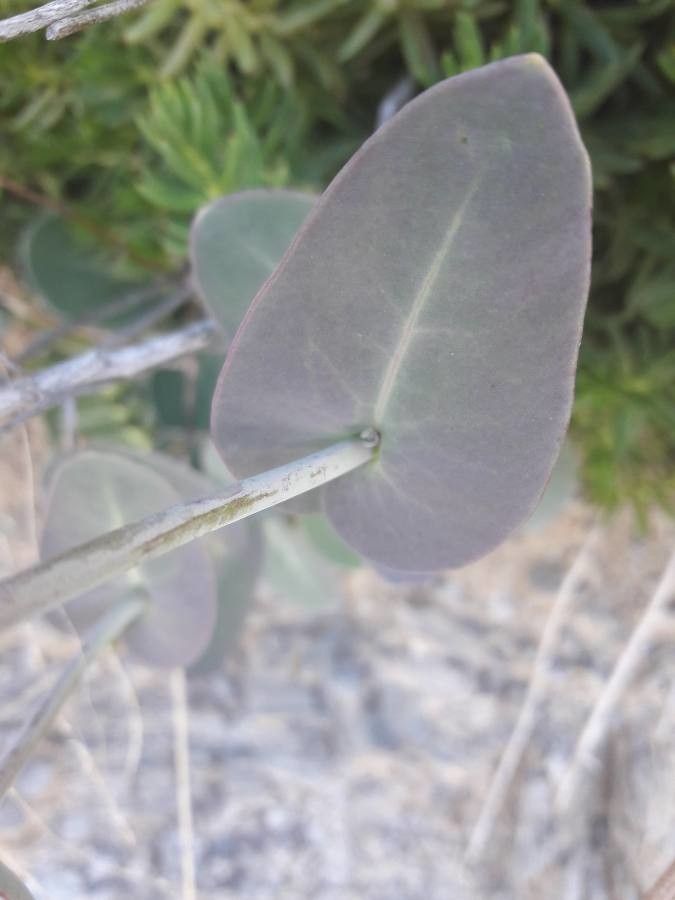
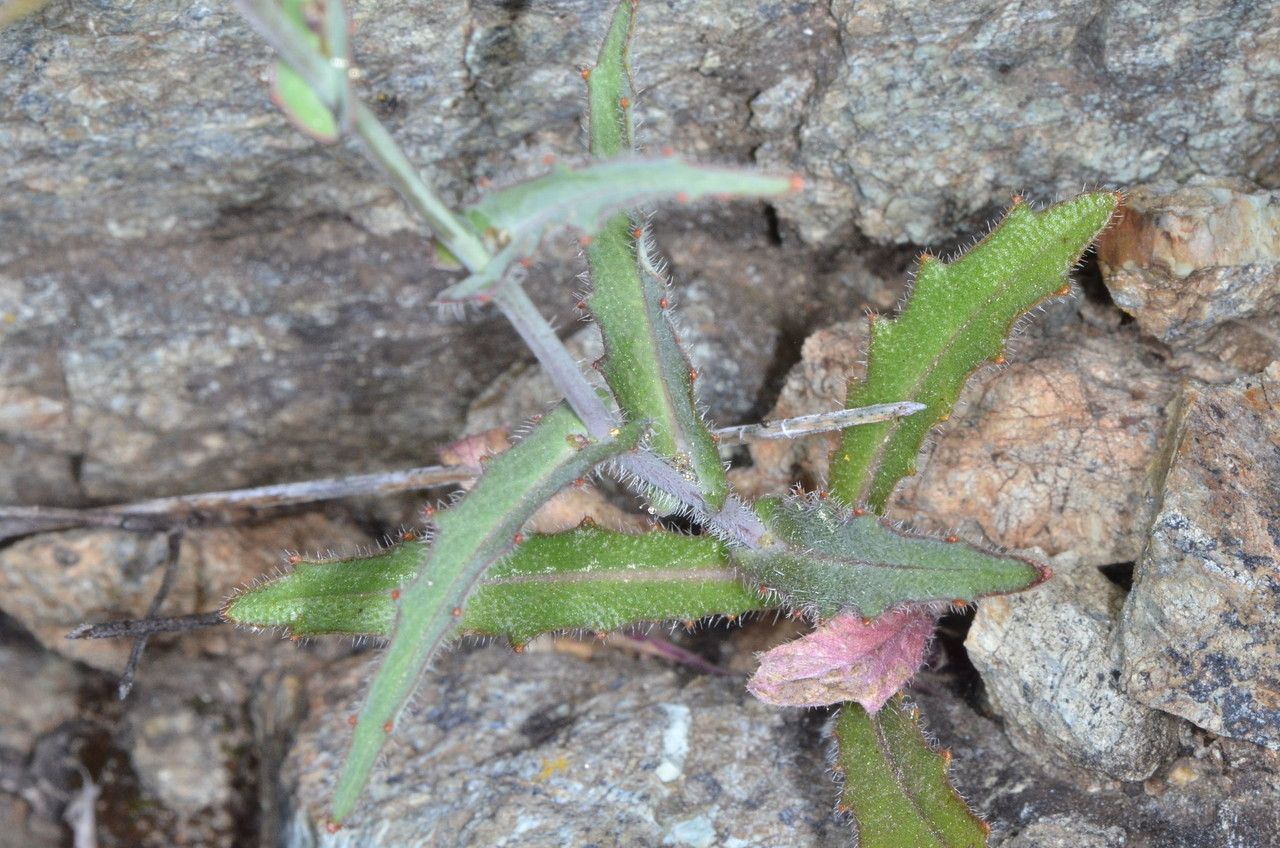
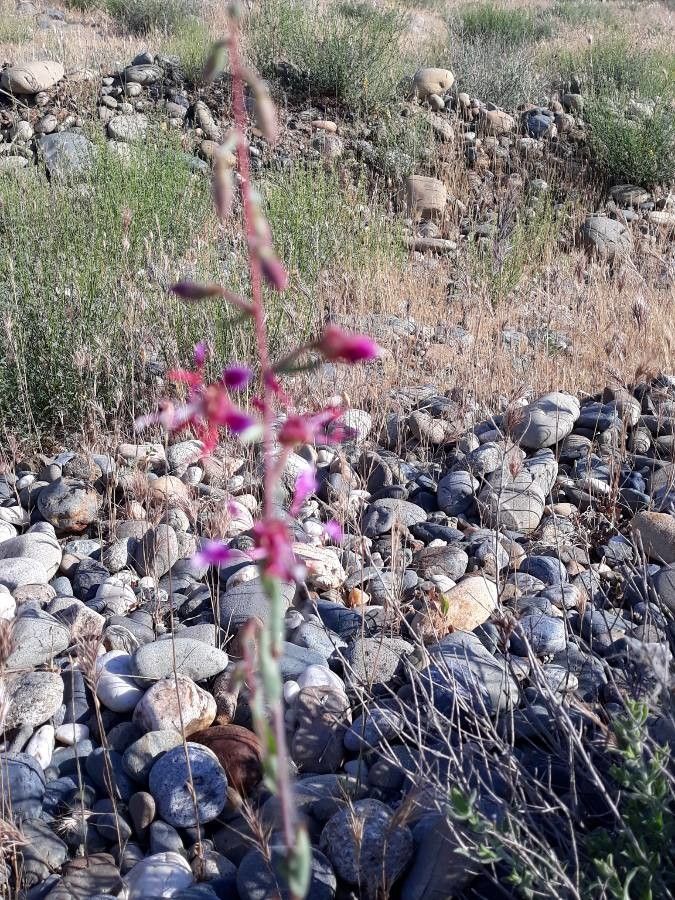
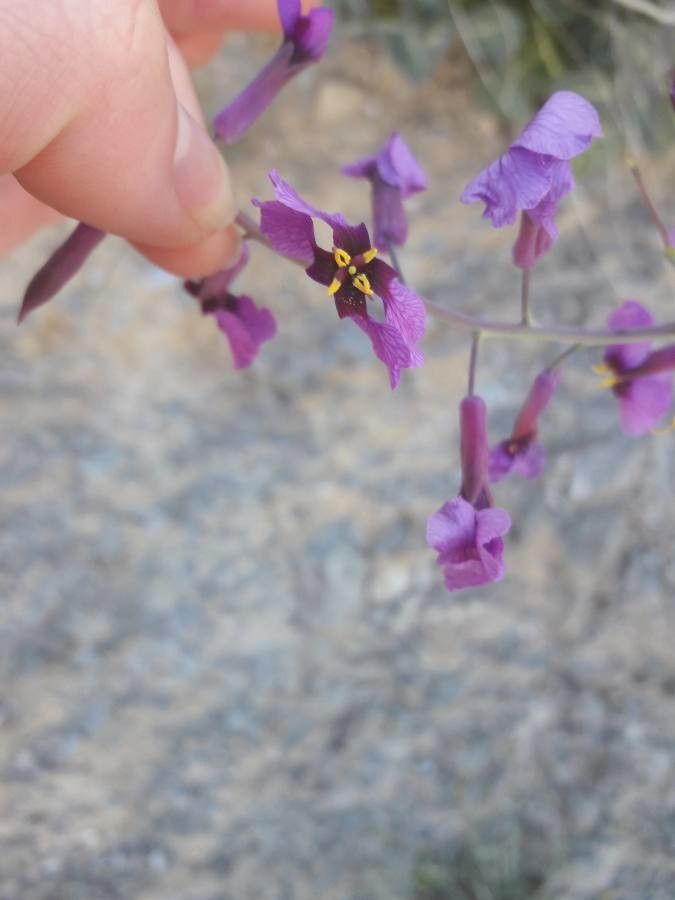
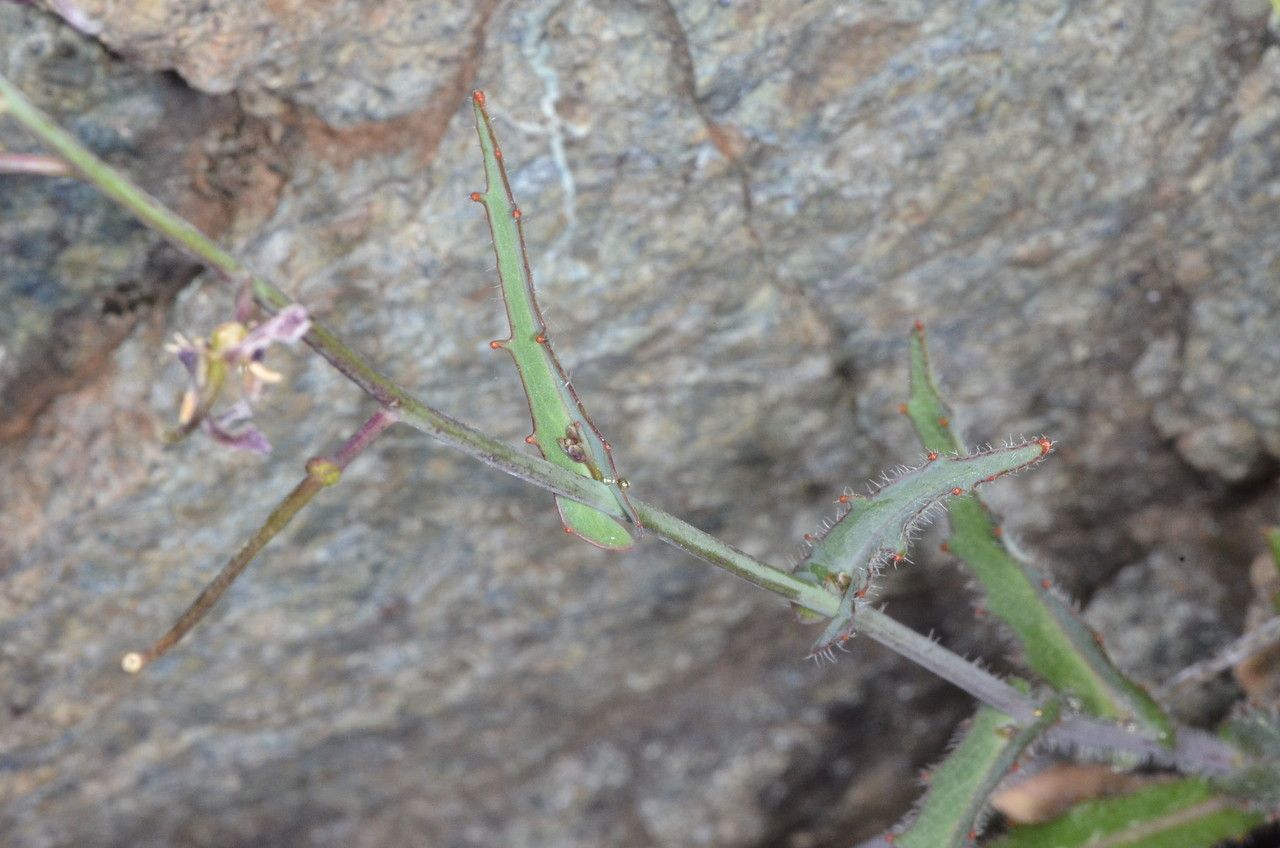
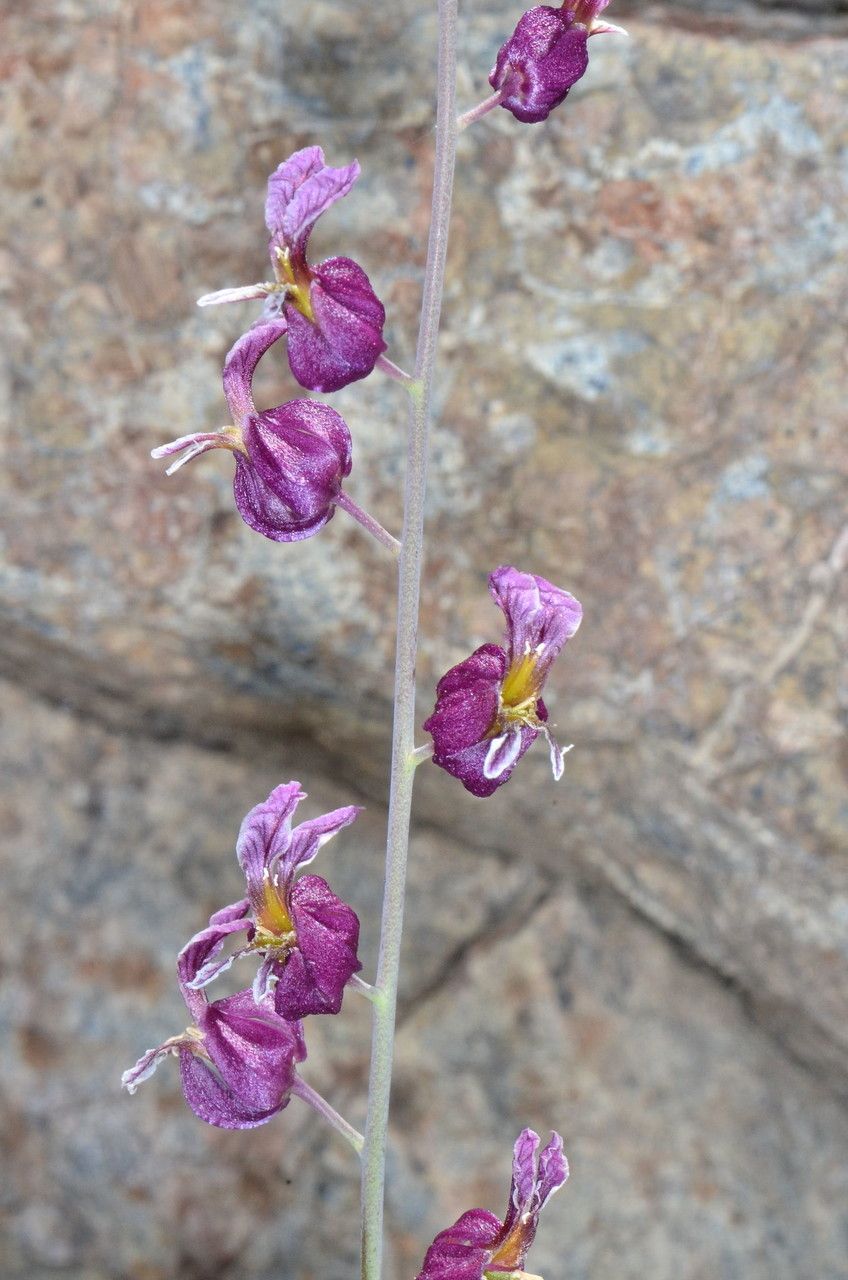
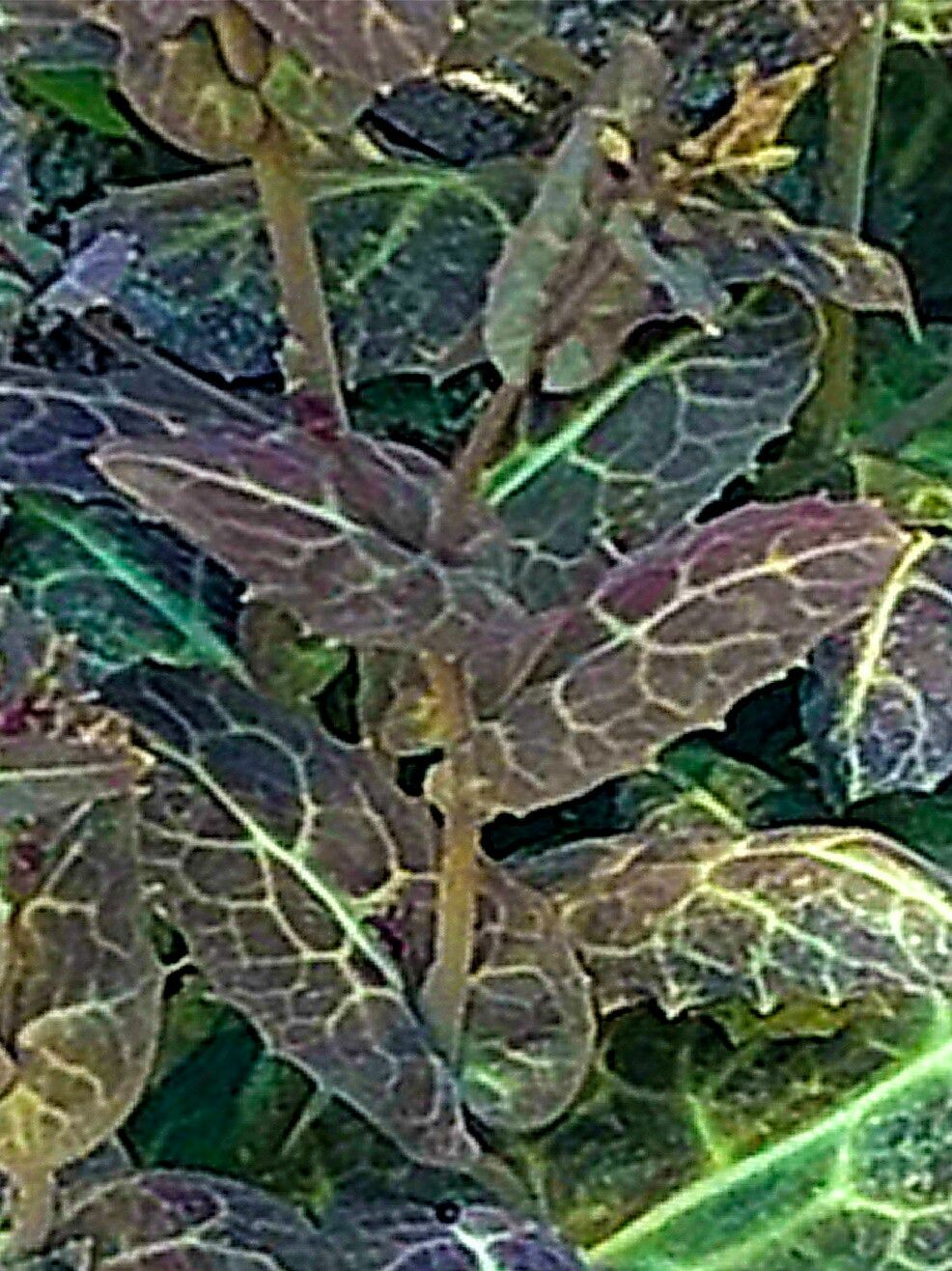
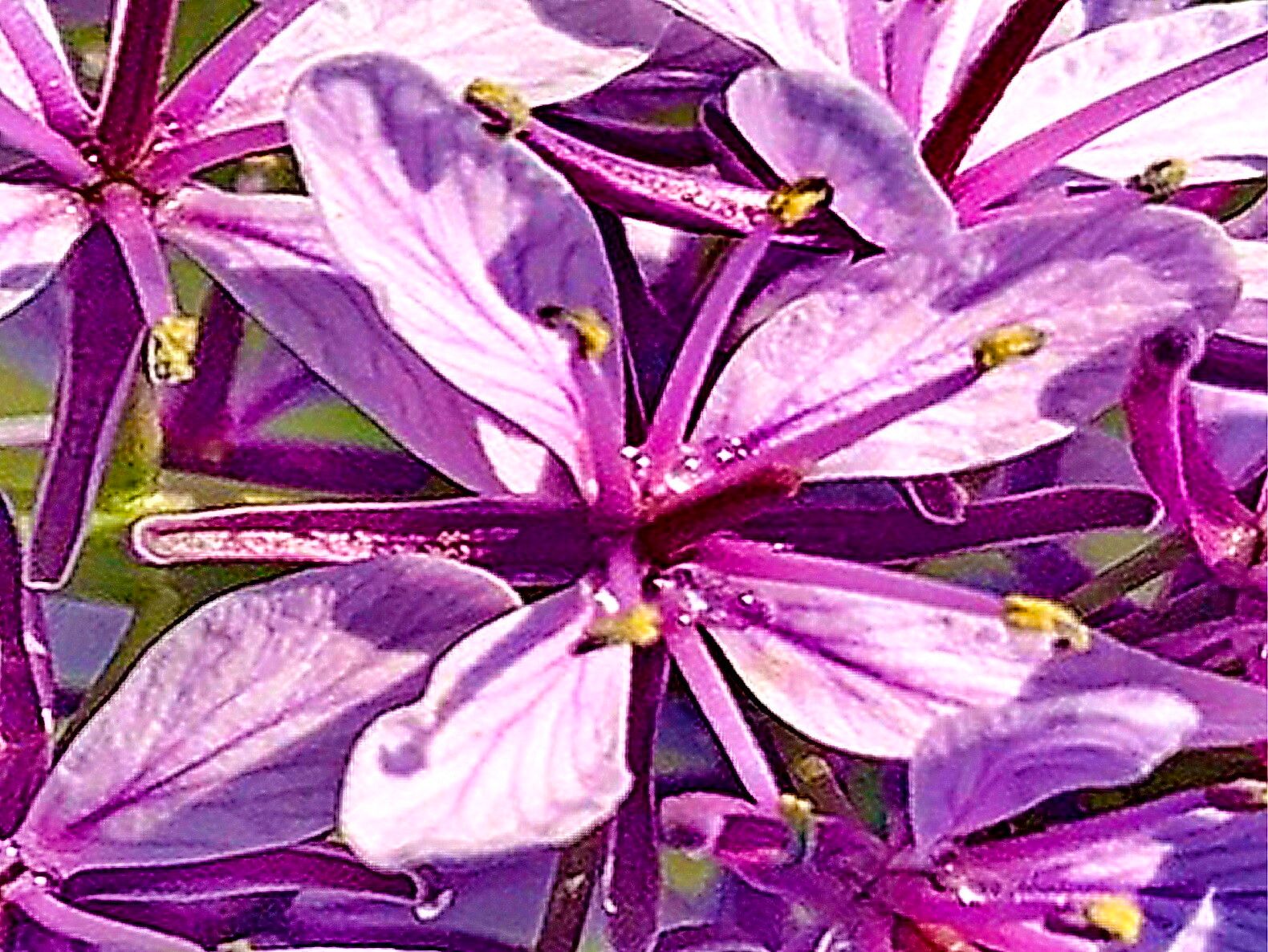
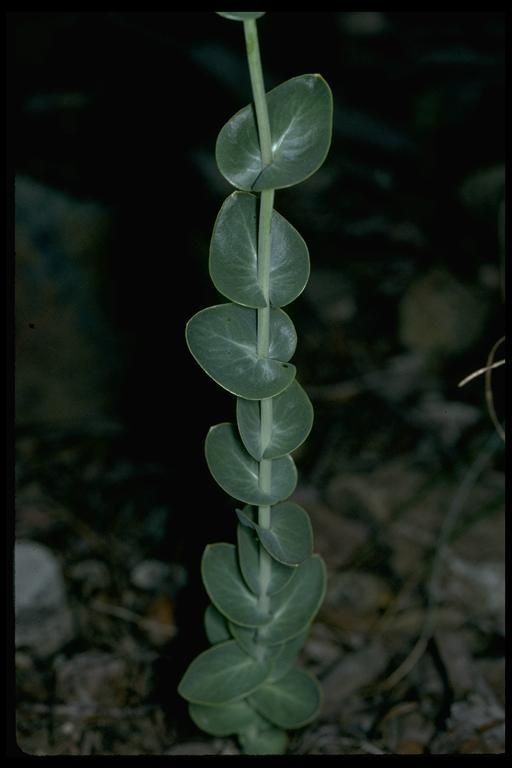
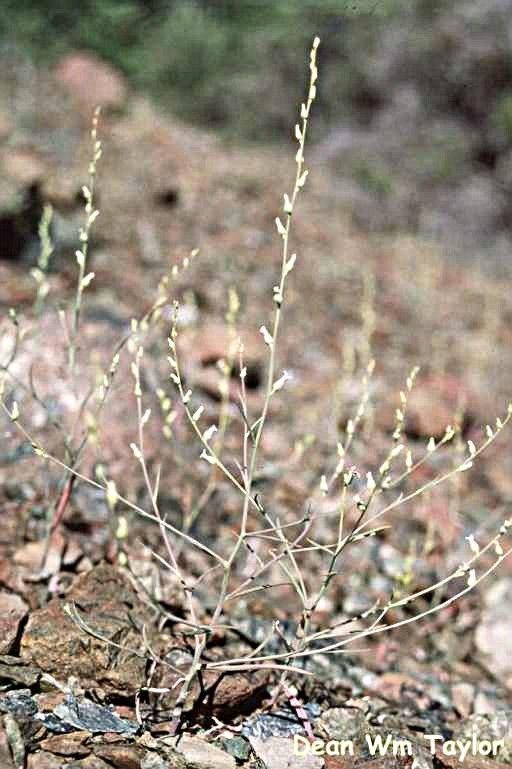
Streptanthus glandulosus is a species of flowering plant in the mustard family known by the common name bristly jewelflower. It is native to California and southwestern Oregon, where it grows in many types of habitat, including grassland, chaparral, and woodlands. Genetic and other analyses indicate that it is a species complex with ten subspecies which evolved as populations were isolated from each other. The complex includes subspecies previously considered separate species, such as the rare Tiburon jewelflower (ssp. niger) endemic to the San Francisco Bay Area. Plants in the complex are variable. In general they are annual herbs growing 10 centimeters to over a meter in height. They may be hairless to hairy to bristly. The ephemeral basal leaves have blades borne on winged petioles. Leaves higher on the stem are linear to lance-shaped and clasp the stem at their bases. Flowers occur at intervals along the upper stem. Each flower has an urn-shaped calyx of sepals one half to over one centimeter long which can be most any color from white to yellowish to pink or purple to nearly black. Purple, white, or purple-veined white petals emerge from the tip. The fruit is a straight or curving silique up to 11 centimeters long.
Secund jewelflower has strong resistance to disease and is generally not susceptible to illnesses. Nonetheless, it can be affected by pests and diseases present in its environment; these issues are typically mild. As for care, this plant needs moderate maintenance. It should be pruned regularly to preserve a neat appearance and encourage healthy growth. Fertilizing can also support better flowering. Secund jewelflower is well suited for anyone with outdoor space, such as a garden or patio, and does not demand extensive plant-care experience. It may require additional attention if kept indoors.
How to keep Streptanthus Glandulosus.
Light
Secund jewelflower comes from bright, open habitats where it thrives in full sun. It can tolerate partial sun but favors direct sunlight for optimal growth. This annual or biennial plant is noted for its sun-loving nature.
Temperature
Secund jewelflower can tolerate a wide range of temperatures, though its distribution may still be restricted by different combinations of moisture and heat. It performs best in warm summer climates with sufficient rainfall or regular watering. Extended periods of cloudy, rainy weather or prolonged high temperatures can increase the chance of Secund jewelflower dying. In winter, adequate protection from cold can raise the plant's likelihood of survival.
Fertilizer
Secund jewelflower are regarded as heavy nutrient feeders. They need frequent, low-dose applications of nitrogen and potassium fertilizers and periodic applications of phosphorus, micronutrients, sulfur, and magnesium to maintain good growth and bright coloration. Continuous fertilization throughout the growing season prevents deficiency symptoms and maintains optimal growth.
Pruning
The Secund Jewelflower is known for its striking leaves and unique flowers. To promote healthy growth and vibrant blooms, prune it in early spring to remove any damaged stems. This practice not only improves air circulation and maintains the plant’s vigor, but also helps prevent disease, following trusted horticultural guidelines.
Botanical profile.
- Plant Type
- Herb
- Life Cycle
- Biennial, Perennial
- Genus
- Streptanthus
- Family
- Brassicaceae
- Hardiness Zone
- 7-10
- Mature Height
- 30 cm to 91 cm
- Mature Spread
- 20 cm to 40 cm
- Leaf Color
- Green, Dark Green
- Leaf Type
- Deciduous
- Flower Color
- Purple, White
- Flower Size
- 1.02 cm to 2.03 cm
- Bloom Time
- Spring
- Planting Time
- Spring, Summer
- Harvest Time
- Late spring, Early summer, Mid summer
Other names.