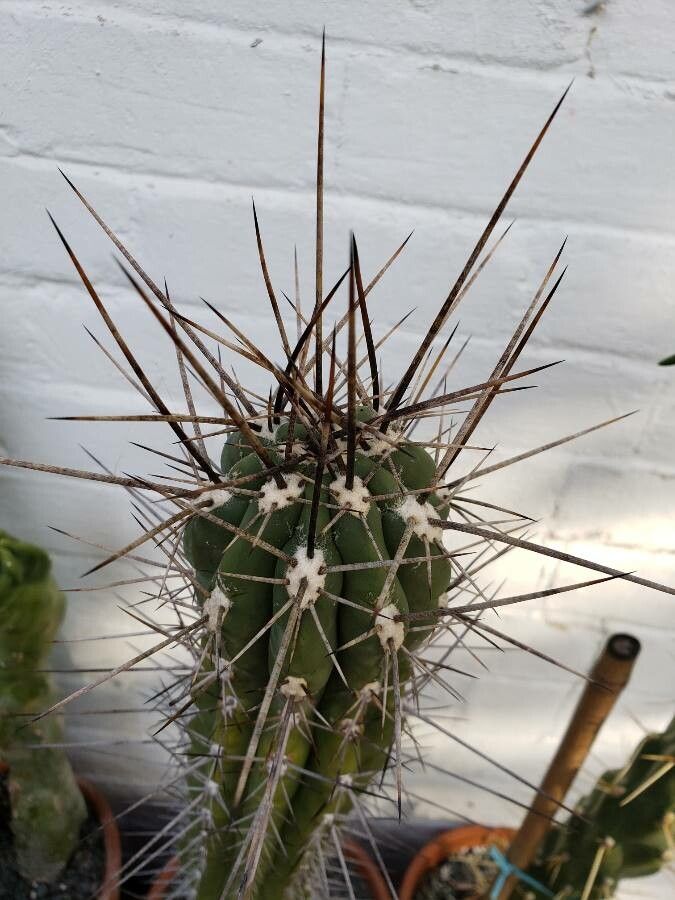
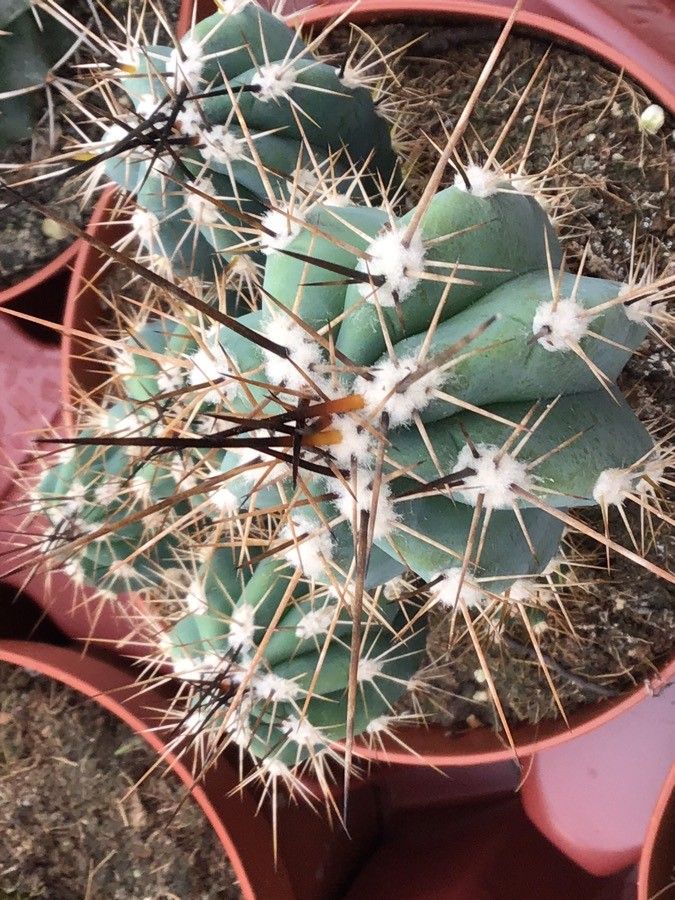
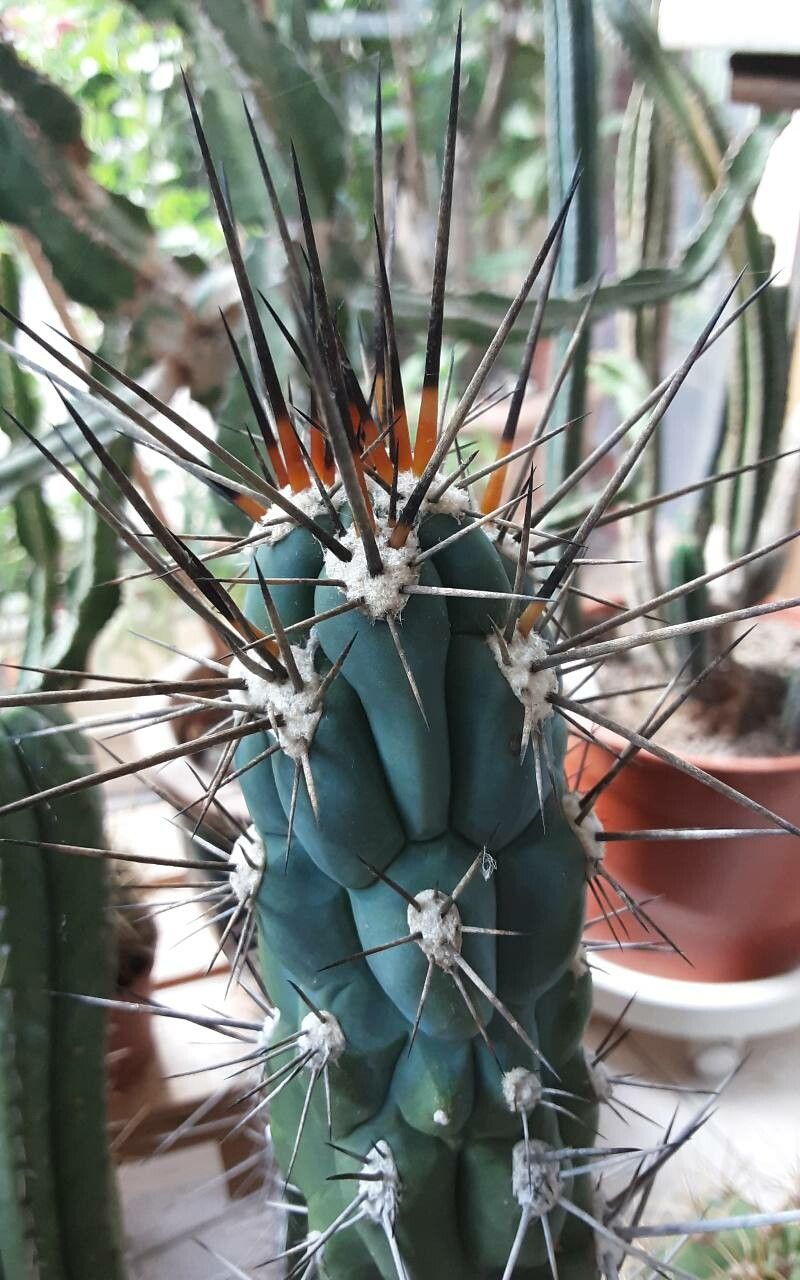
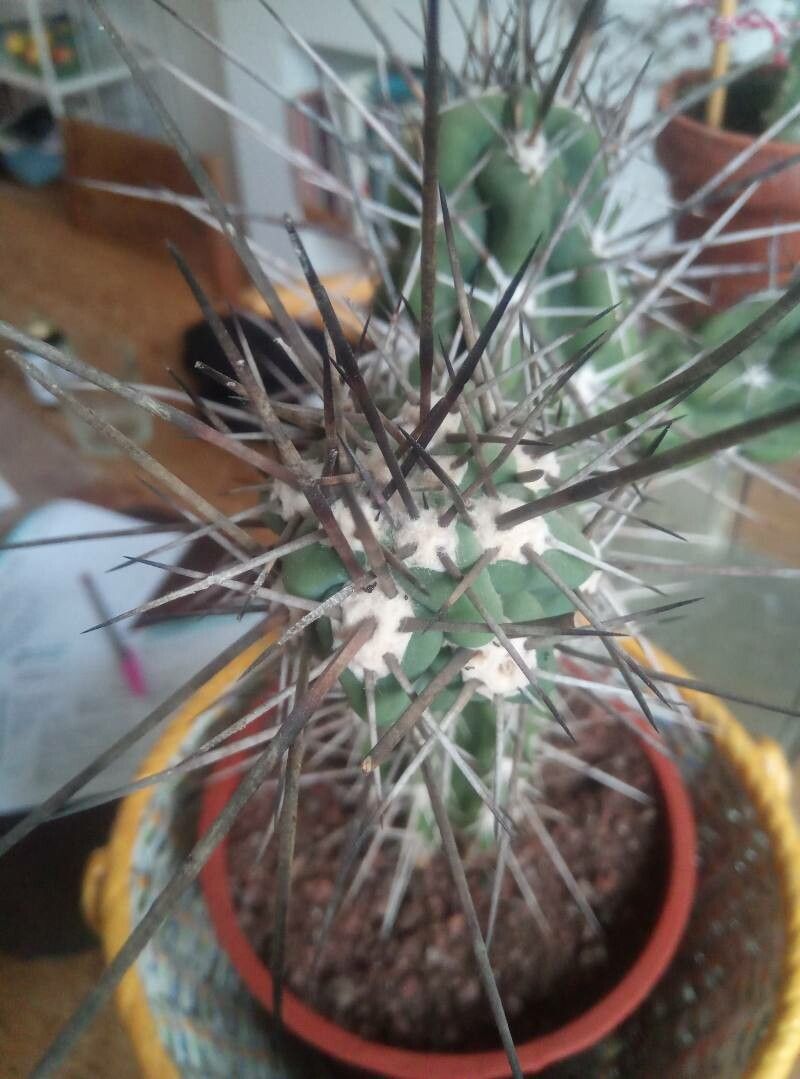
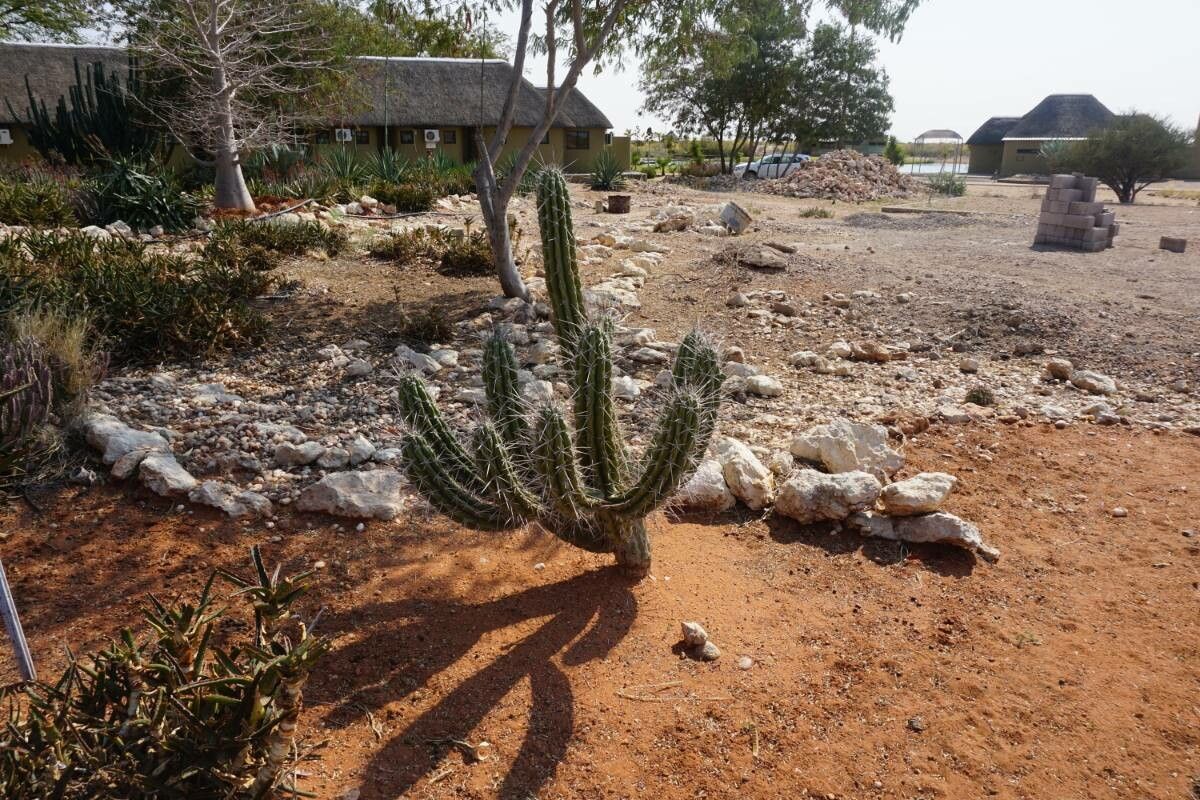
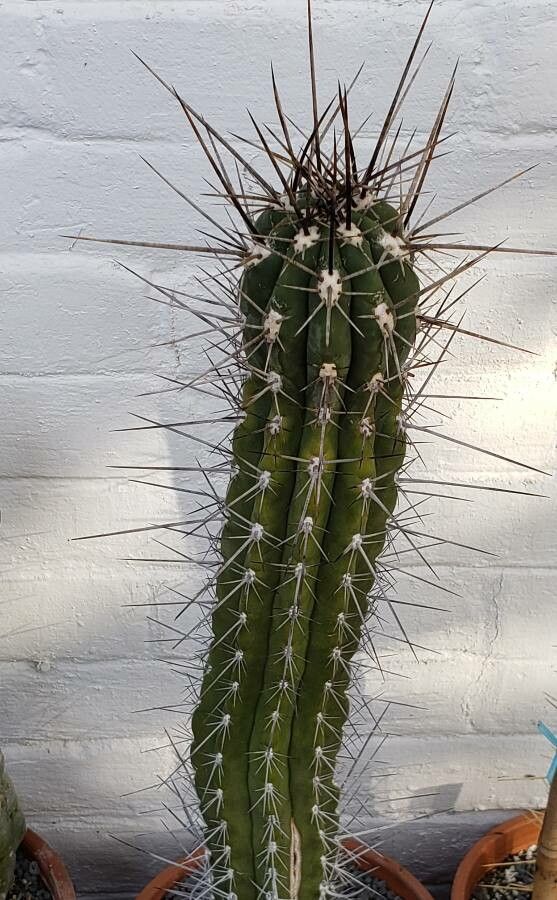
Stetsonia coryne, commonly known as the Argentine saguaro or toothpick cactus, is a cactus species native to Argentina. This tall and slender columnar cactus can reach heights of up to 30 feet and diameters of up to 6 inches. It features a greenish-blue hue and white spines that can grow up to 2 inches long. During the summer, the Stetsonia coryne produces white or cream-colored flowers.
The Argentine saguaro thrives in well-drained soil with full sun exposure, making it ideal for arid regions. It is drought-tolerant and can endure long periods without water, thanks to its capacity to store water in its stem.
For centuries, indigenous people have used Stetsonia coryne for its anti-inflammatory properties in traditional medicine. Additionally, its unique appearance makes it a popular ornamental plant.
Overall, Stetsonia coryne is a fascinating and resilient species of columnar cactus. It adds beauty and character to any environment while also offering medicinal benefits when used appropriately.
Toothpick cactus is fairly resistant to diseases and can handle usual care conditions without becoming ill easily. That said, it can be vulnerable to mealybugs; these pests may inflict some harm but are typically not a major danger. Regarding its care needs, Toothpick cactus is drought-tolerant and does not require frequent watering. It can endure extended periods without water and needs little fertilizer. Conversely, if lighting is poor and it is given too much water, it is very prone to root rot. All in all, Toothpick cactus is a good choice for people who prefer low-maintenance plants, though meeting its basic needs remains important. It is especially appropriate for those who are often away for long stretches and might forget to water regularly.
How to keep Stetsonia Coryne.
Light
The toothpick cactus is a sun-loving plant that comes from habitats with plentiful sunlight. For healthy growth, it does best when given constant, unobstructed sun exposure. However, too much exposure can cause scorching, and too little light can lead to slower growth or wilting.
Water
The toothpick cactus is well-adapted to arid conditions and thrives with very little moisture, demonstrating excellent drought tolerance. It should be watered sparingly, about once every three weeks, allowing the soil to dry out completely between waterings. Typically grown outdoors, the toothpick cactus conserves water by closing its stomata during periods of intense heat, exemplifying its adaptations to desert environments.
Humidity
This plant prefers dry conditions, so don't mist it. However, watering it less often can also thrive in higher humidity.
Temperature
Toothpick cactus performs best in warm conditions and requires higher temperatures during the growing season to stimulate growth and metabolism. It prefers abundant sunlight, proper moisture, and good airflow. However, it is vulnerable to harm from very low temperatures and from excessive watering. It's important to maintain a balance and to avoid both overly high temperatures and excessively dry conditions.
Fertilizer
For the Toothpick cactus, light applications of fertilizer once or twice a year during the growing season are sufficient. Avoid fertilizing in winter and in summer when it is dormant. Reduce fertilizer for plants that have been repotted and wait a couple of months after repotting before applying fertilizer. Fertilizing helps maintain healthy growth and promotes blooms.
Pruning
The toothpick cactus needs very little pruning. Simply remove any withered flowers and branches to help the plant direct nutrients toward healthy growth.
Pot & Repot
Repot your toothpick cactus every 2-3 years in the spring. Use a well-draining pot that adequately supports the cactus's size. After repotting, minimize watering until you see new growth, which indicates the transplant was successful. Providing ample recovery time and proper care is essential to ensure your columnar desert cactus thrives.
Toxicity
Not generally described as toxic, although one source describes it as toxic to cats and dogs. Therefore, it is best not to ingest the stem as this could cause stomach upsets. The seeds and fruits are sometimes eaten by humans.
Further reading →
The toxicity and danger assessments provided are for reference only. We do not assure their accuracy, so it's crucial not to depend on them. Seek professional advice when necessary for accurate guidance.
Botanical profile.
- Plant Type
- Succulent
- Life Cycle
- Perennial
- Genus
- Stetsonia
- Family
- Cactaceae
- Hardiness Zone
- 9-11
- Mature Height
- 3.05 m to 10.67 m
- Mature Spread
- 3.05 m to 4.88 m
- Leaf Color
- Green, Blue
- Leaf Type
- Deciduous
- Flower Color
- White
- Flower Size
- 12.70 cm to 15.24 cm
- Bloom Time
- Summer
- Planting Time
- Spring
- Harvest Time
- Late summer, Early fall, Mid fall
- Native Area
- Bolivia
Other names.
Reader questions.
What are the essential care tips for Toothpick cactus?
Toothpick cactus, known botanically as Stetsonia coryne, thrives in warm environments. It requires higher temperatures during the growing season to promote growth and metabolism, while also enjoying ample sunlight, appropriate moisture levels, and good ventilation. It's crucial to protect the cactus from excessively low temperatures and overwatering, aiming for a balanced environment that avoids overly high temperatures and dry conditions. During winter, the cactus enters a dormant state and should be moved indoors if temperatures drop below 5°C, particularly near a south-facing window to maximize sunlight exposure. Supplemental lighting can be used if natural light is insufficient. Watering should be reduced or stopped when temperatures fall below 20°C to prevent root rot, and for outdoor plants, watering should cease during cold temperatures. Temporary greenhouses or wrapping the plants with insulating materials may also benefit the cactus in cold weather.
How do low temperatures affect Toothpick cactus and what are the solutions?
Toothpick cactus prefers high temperatures and struggles in cold conditions, with optimal growth above 20°C. It's essential to keep the cactus above 5°C during winter to avoid damage. Exposure to temperatures below 1°C can weaken the plant, leading to wilting and a high risk of root rot. Frost damage might not be immediately apparent, but affected plants will gradually wither. To treat frost-damaged Toothpick cactus, trim off the frostbitten areas and check for root rot. Roots afflicted by rot should be removed, and the plant can be propagated through cuttings. Moving the cactus to a warmer indoor setting near a south-facing window ensures adequate sunlight, while supplemental lighting can be used if natural light is insufficient.
What should be done if a Toothpick cactus is exposed to high temperatures?
During summer, it's vital to keep Toothpick cactus below 41°C to prevent heat stress. Temperatures above 45°C can halt the plant's growth, leading to water loss, wilting, and an increased risk of sunburn. In such cases, the sunburned and rotten parts of the cactus should be removed. To aid recovery and encourage new growth, protect the plant from the harsh afternoon sunlight. If root rot is observed, cease watering until fresh roots start to develop. Implementing these steps will help the cactus recover from high temperature stress and maintain its health.