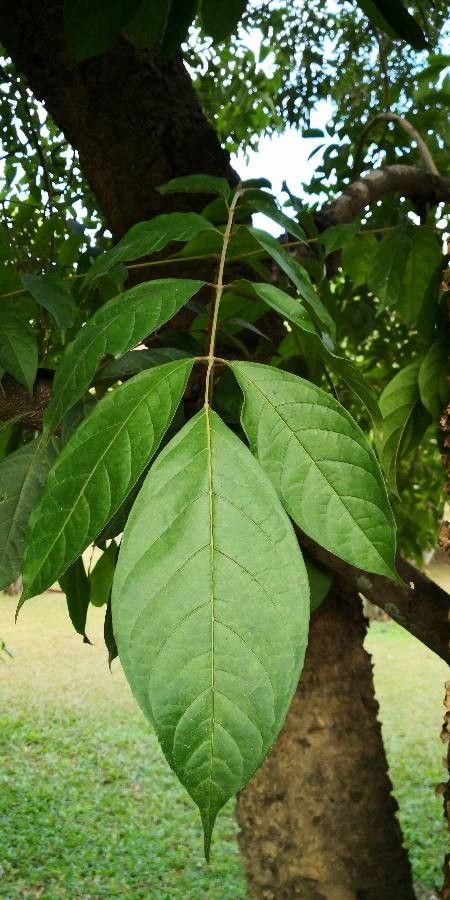
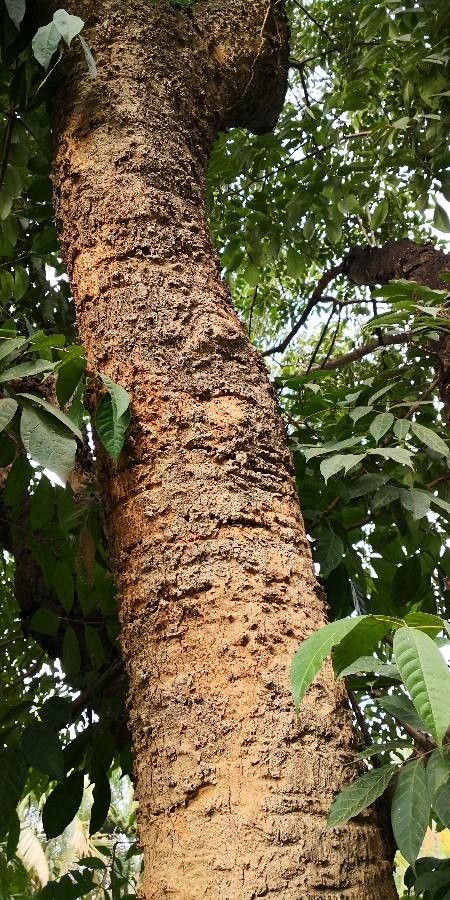
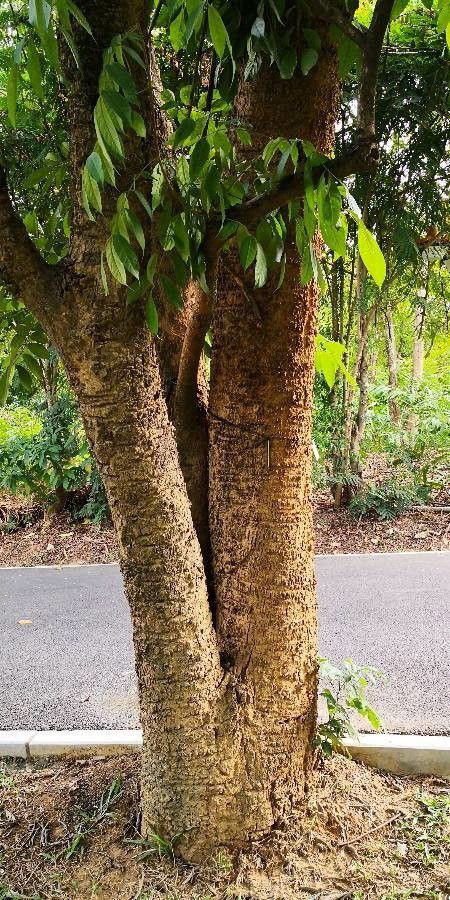
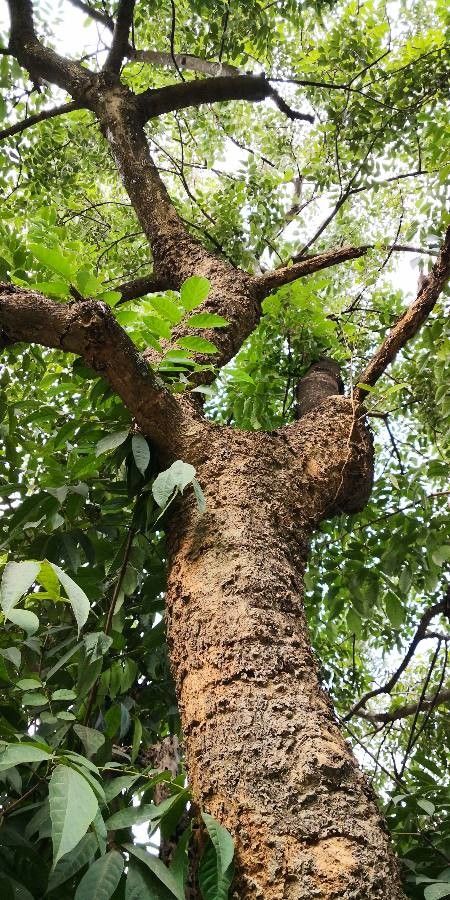
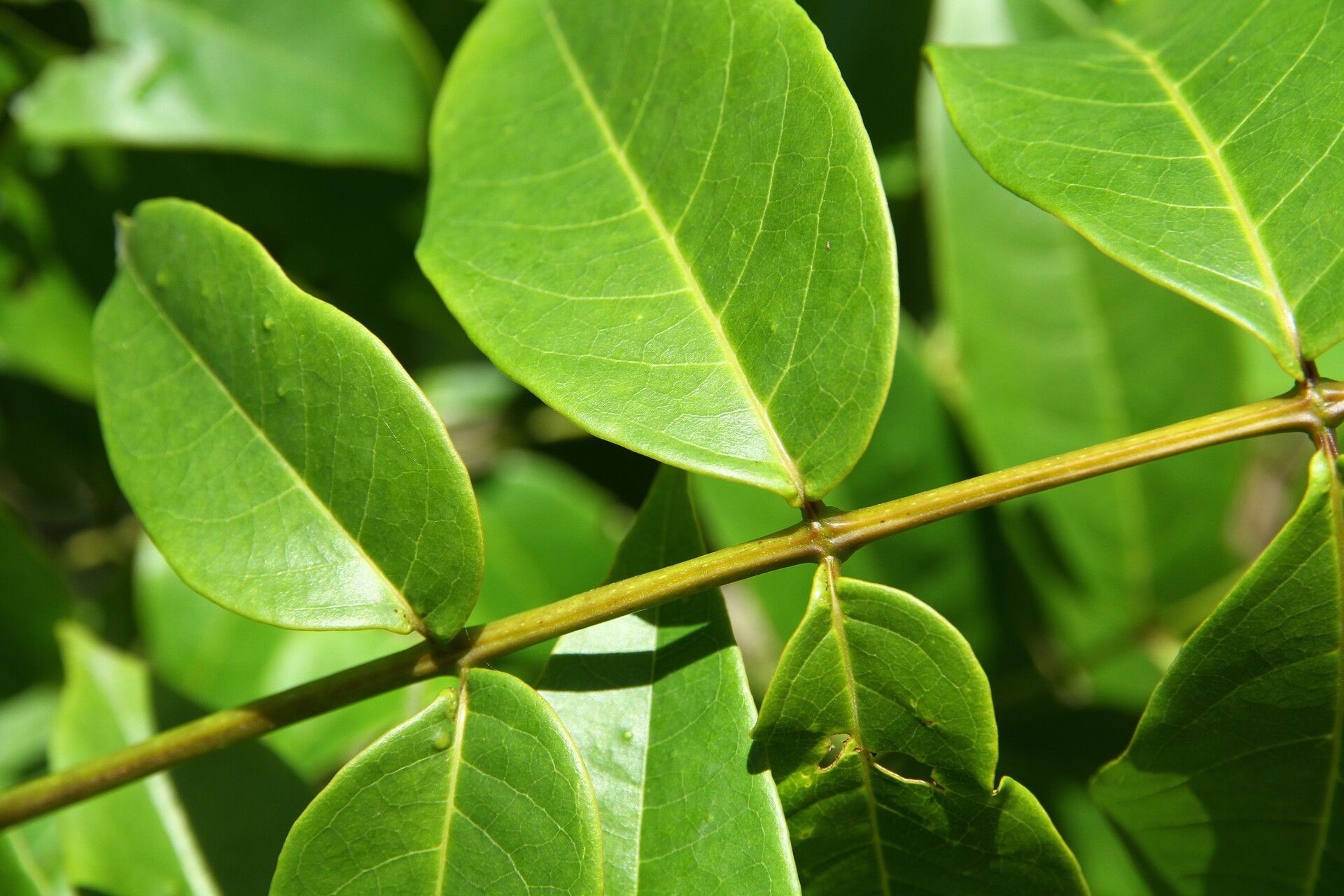
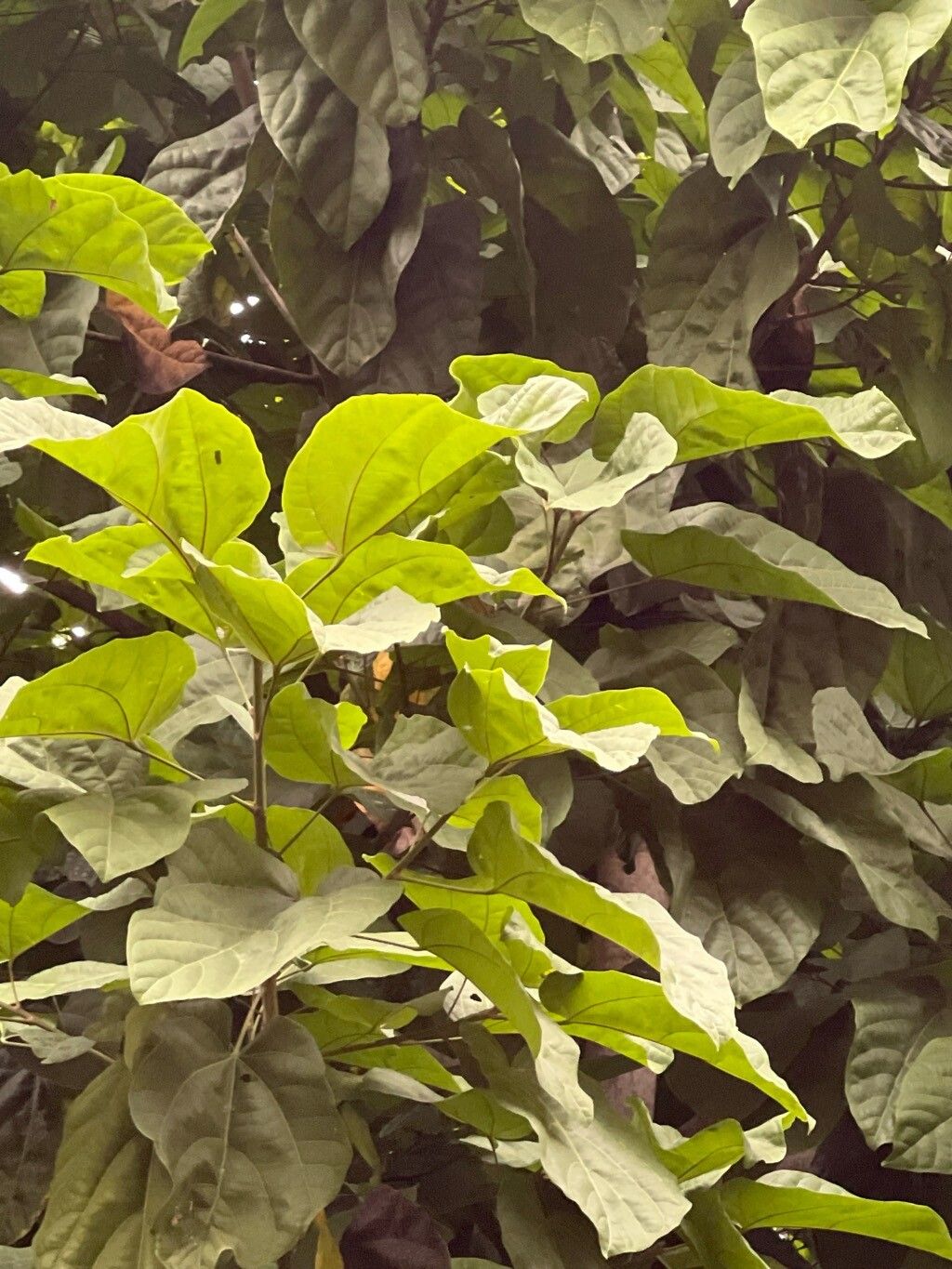
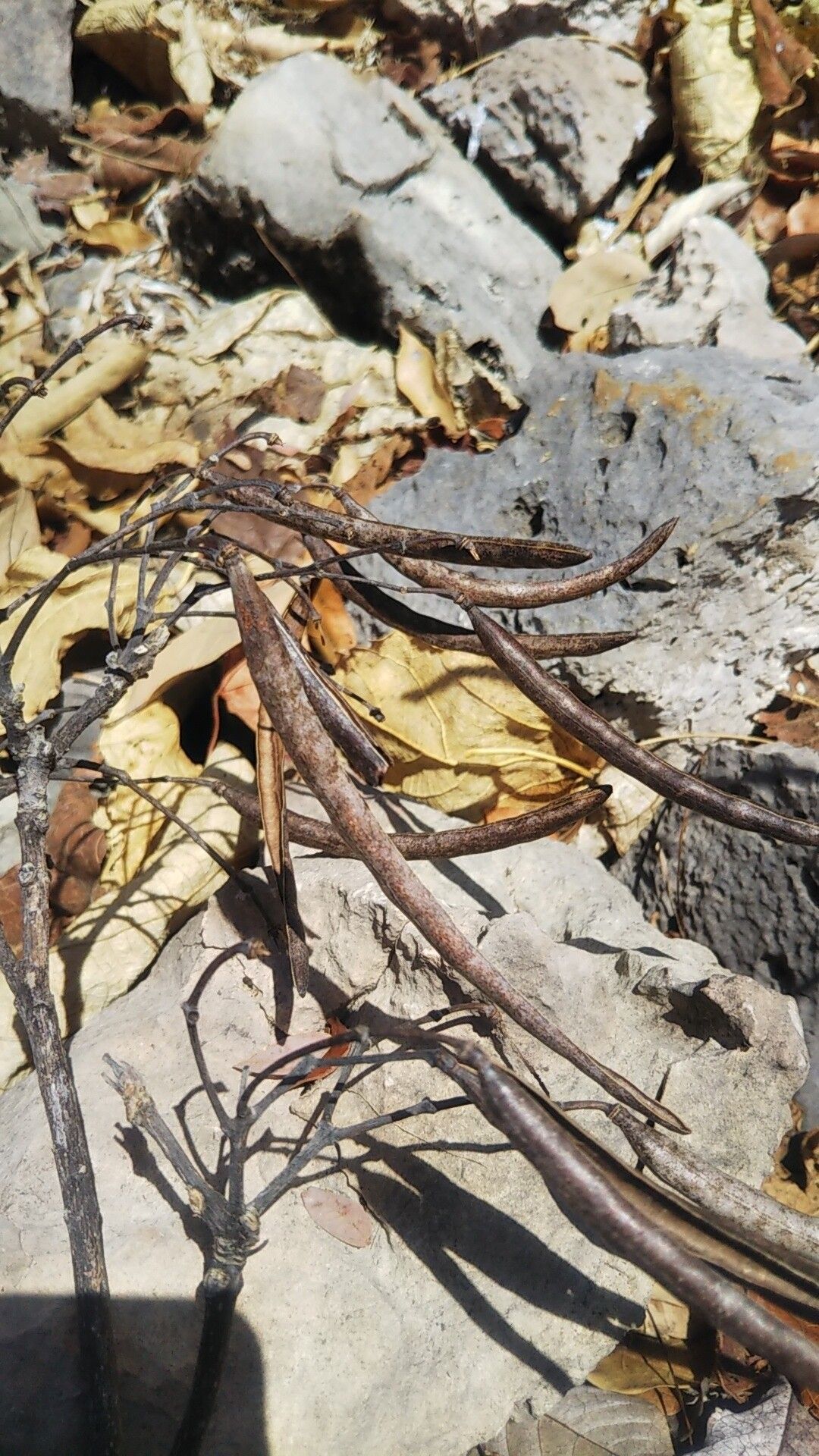
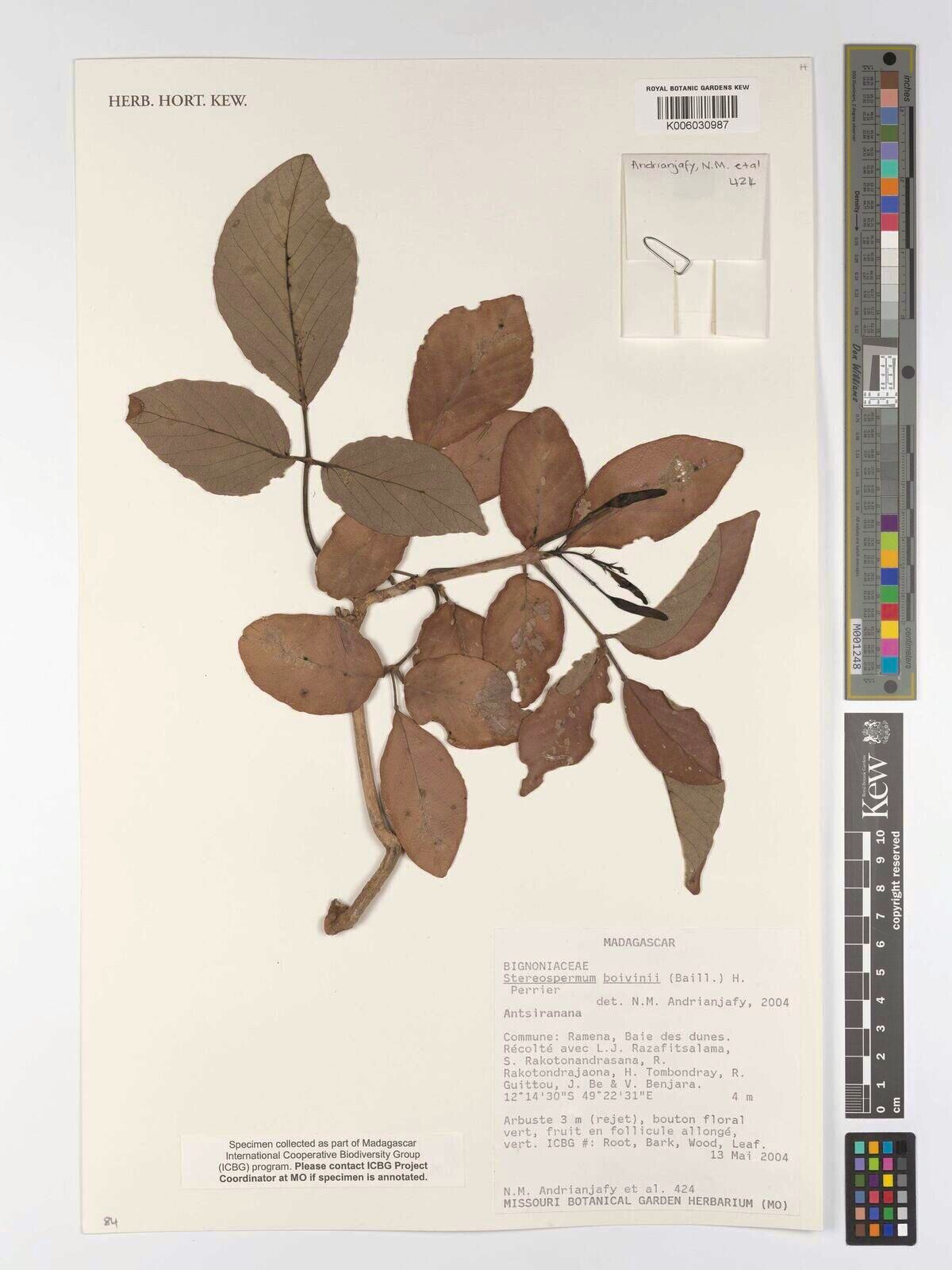
Stereospermum tetragonum, the yellow snake tree, is 15–20 m tall, trunk 15–25 cm in diam, large leaves 25–50 cm; leaflets 3–6 on each side of midrib, long elliptic, 8-14 X 2.5–6 cm. Large, pale yellow, trumpet shaped flowers occur in panicles. Flowers are pale yellow, slightly curved, about 2 cm, upper lip 2-lobed, lower lip 3-lobed, tomentose at mouth, tube terete. The fruit is long, 4-angular, slightly curved, 30–70 cm, about 1 cm in diameter. This, probably, is the source of its common name, snake tree. Also known as Stereospermum colais, it is found in India, Myanmar and Sri Lanka: where it is "common in moist deciduous forests and occasional in openings or margins of evergreen forests, up to 1200 m."In Vietnam, Stereospermum colais is known as quao núi. Its young leaves can be eaten as a vegetable in Vietnam's Central Highlands.
The yellow snake tree is resistant to disease and is usually not susceptible to illnesses. With regard to care, this plant is fairly low maintenance. When grown outdoors it needs only light watering, and larger plants typically do not require pruning. Smaller plants, however, should be trimmed after they finish blooming. The yellow snake tree is appropriate for anyone with an outdoor area, such as a garden or a deck, and does not demand much gardening experience.
How to keep Stereospermum Tetragonum.
Light
The yellow snake tree grows best in places that get plenty of sunlight all day, though it can also survive with less light. Native to regions characterized by open skies, its healthiest growth depends on those conditions. A lack of sunlight can slow its development, while too much sunlight can cause stress.
Temperature
Yellow snake tree originates from areas with average temperatures of 68 to 100 °F (20 to 38 ℃). The plant prefers warm conditions and may need supplemental heating in colder weather.
Fertilizer
The best time to fertilize a Yellow snake tree is in early spring, when it comes out of dormancy. This encourages overall growth and the development of flowers. Fertilizing improves the foliage, stems, and branches, and promotes flowers that are larger, more vivid, and longer lasting. It also helps move nutrients from the roots to the blooms and strengthens the plant's health and resistance to disease.
Botanical profile.
- Plant Type
- Tree
- Life Cycle
- Perennial
- Genus
- Stereospermum
- Family
- Bignoniaceae
- Hardiness Zone
- 11
- Mature Height
- 14.94 m to 20.12 m
- Mature Spread
- 10.06 m to 14.94 m
- Leaf Color
- Green, Dark Green
- Leaf Type
- Evergreen
- Flower Color
- Pink, Purple
- Flower Size
- 2.03 cm
- Bloom Time
- Late spring, Early summer, Mid summer
- Planting Time
- Spring, Summer, Autumn, Winter
- Harvest Time
- Late summer, Early fall, Mid fall
- Native Area
- Nepal, Sri Lanka, India, Malaysia, Cambodia, Vietnam, Myanmar, Bhutan, Singapore, Bangladesh, Laos, Thailand, China