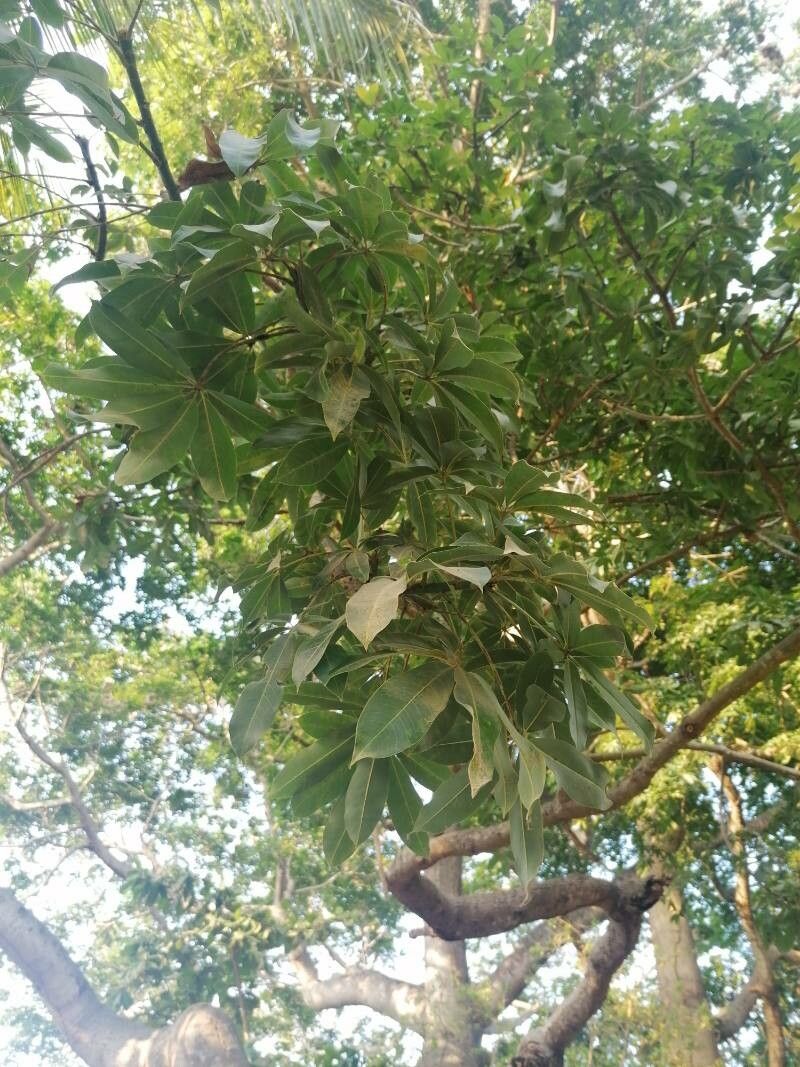
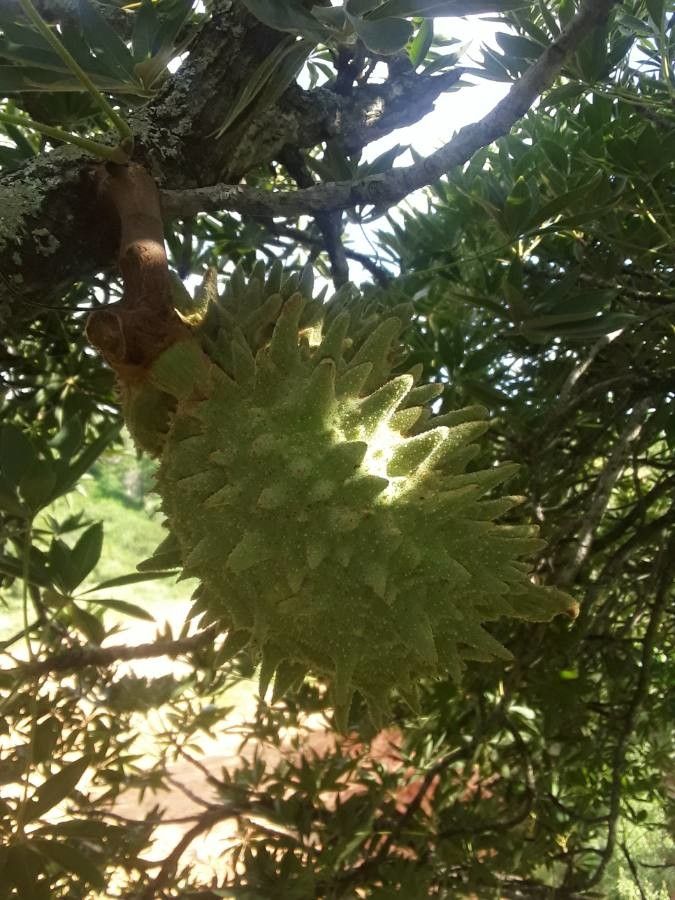
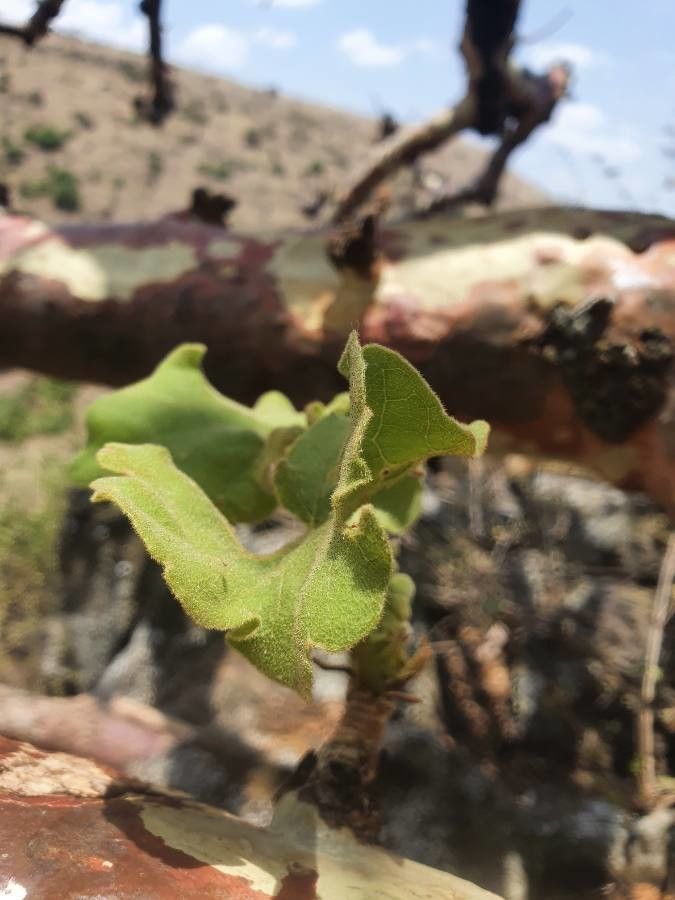
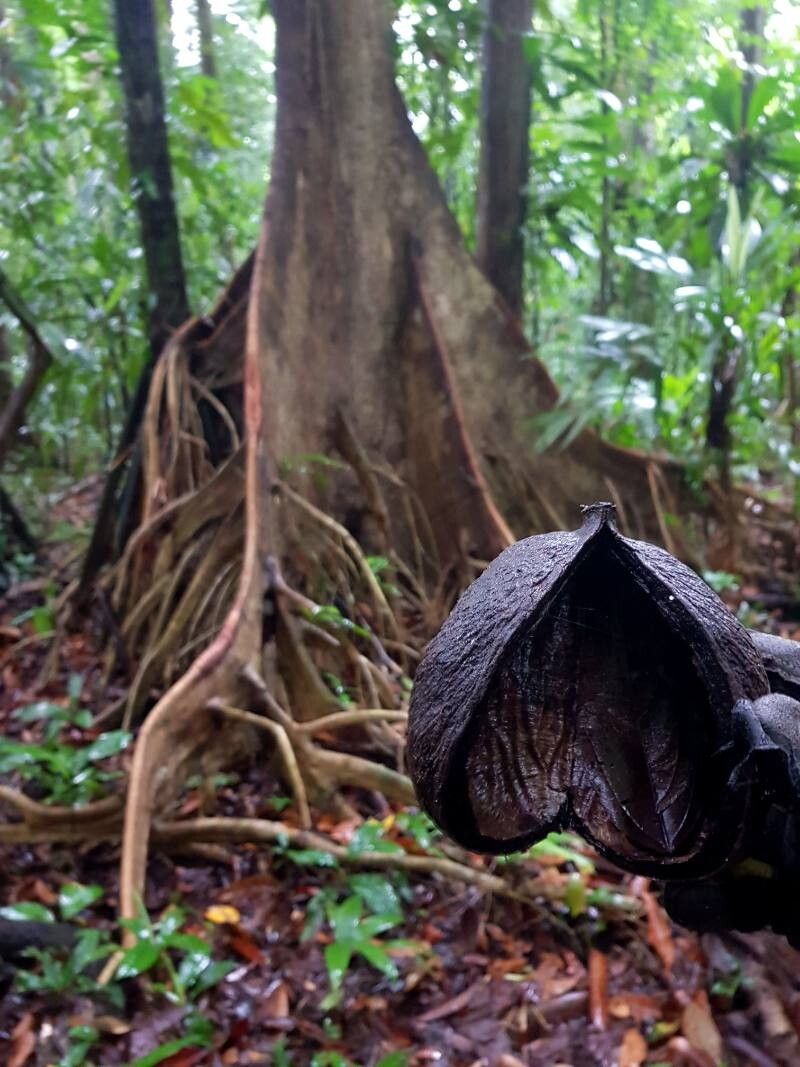
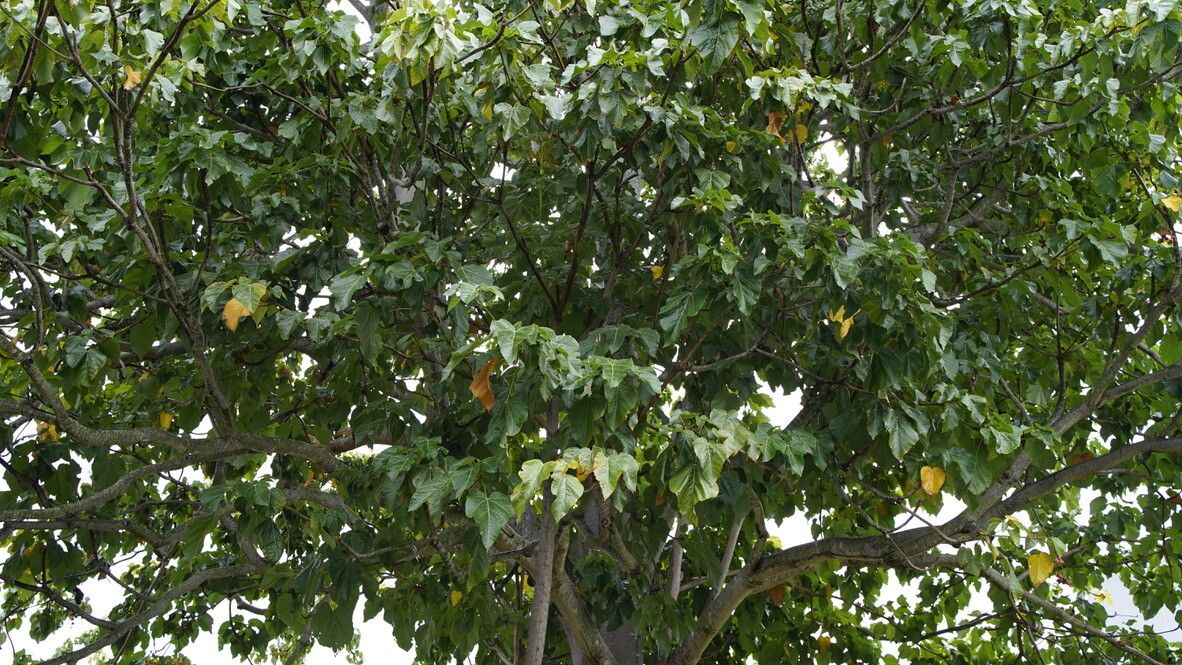
Sterculia murex, commonly known as the Indian Almond or Beach Almond tree, is a deciduous tree belonging to the family Malvaceae. Native to tropical regions of Asia, including India, Sri Lanka, and Malaysia, this tree can grow up to 20 meters in height. It has a spreading canopy adorned with large, dark green leaves.
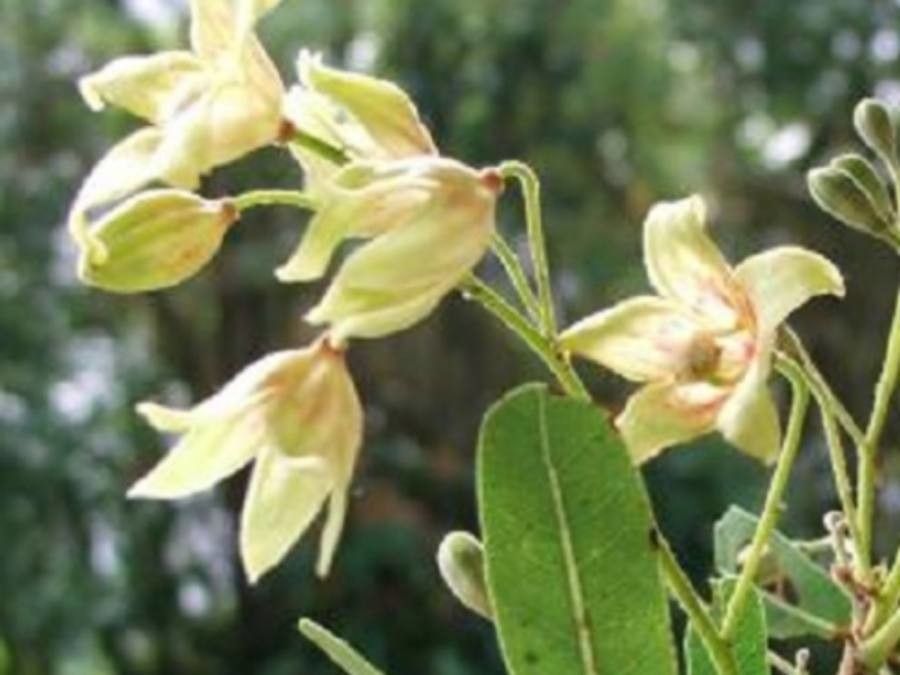
From December to February, the Indian Almond tree produces small, greenish-yellow flowers. These flowers give way to woody fruits that resemble almonds, though they are not suitable for human consumption due to their bitter taste. Nevertheless, these fruits are an important food source for birds and other wildlife.
The bark of Sterculia murex possesses medicinal properties and is traditionally used in Ayurvedic medicine to treat various ailments such as diarrhea, dysentery, skin diseases, and fever.
The wood of the Sterculia murex tree is known for its durability and is often used in furniture making, while its leaves serve as fodder for livestock. Additionally, the tree helps prevent soil erosion in coastal areas where it naturally grows.
In summary, the Sterculia murex tree serves multiple purposes. It has medicinal applications, contributes to the local ecosystem, and provides valuable resources such as durable wood and livestock fodder. This makes it an ecologically significant and valuable plant species.
Lowveld chestnut shows strong disease resistance and is generally not prone to diseases. In terms of care, the plant is fairly low-maintenance. When planted outdoors it needs minimal watering, and larger specimens usually do not require pruning. Smaller plants, however, should be pruned after they have bloomed. Lowveld chestnut is suitable for anyone with an outdoor space, such as a garden or deck, and does not require a lot of care experience.
How to keep Sterculia Murex.
Temperature
Lowveld chestnut comes from tropical areas, where the climate is generally warm and humid. Consequently, it is well suited to high temperatures and humidity. It does not tolerate sudden temperature changes and prefers a stable thermal environment, so avoiding temperature fluctuations indoors is important. It usually cannot withstand cold and requires warmer conditions to grow. If the ambient temperature drops too low, the plant may stop growing or even die.
Fertilizer
Feeding is essential for caring for the Lowveld chestnut. Regular fertilization during the growing season maintains the energy for its showy foliage and supports overall growth. Skipping fertilization can cause unhealthy leaves, reduced ornamental value, and stunted or weak growth that is prone to breaking.
Botanical profile.
- Plant Type
- Tree
- Life Cycle
- Perennial
- Genus
- Sterculia
- Family
- Malvaceae
- Hardiness Zone
- 10
- Native Area
- South Africa
Other names.