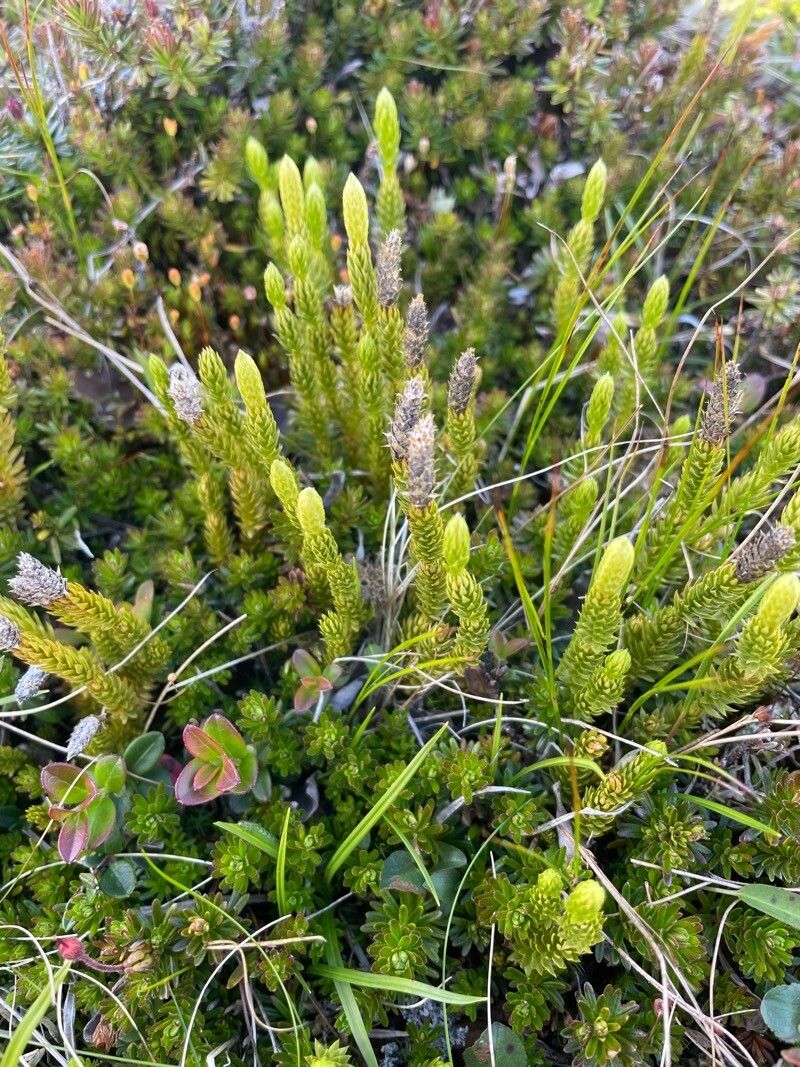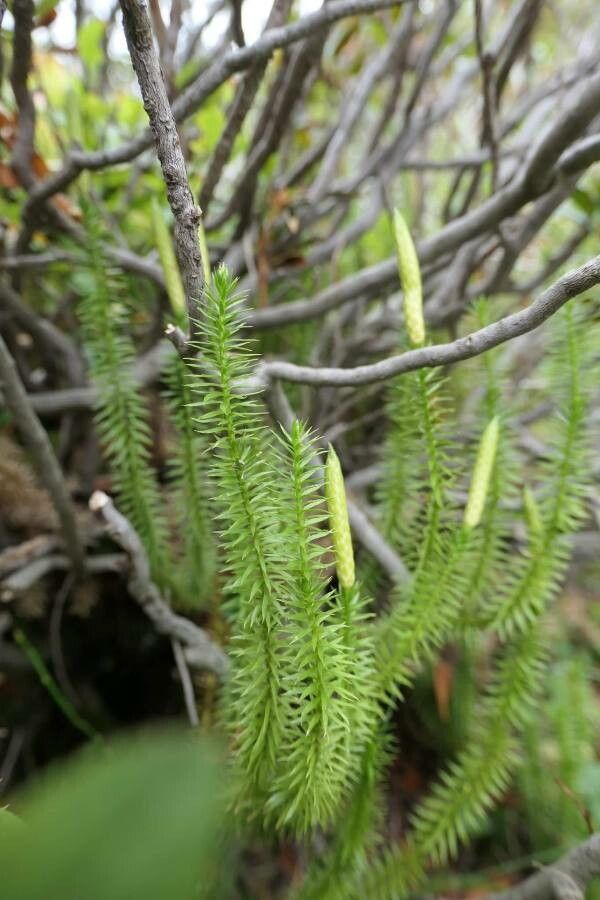
Spinulum annotinum, synonym Lycopodium annotinum, known as interrupted club-moss, or stiff clubmoss, is a species of clubmoss native to forests of the colder parts of North America, as well as Asia, and most of Europe. It is an evergreen perennial pteridophyte. The genus Spinulum is accepted in the Pteridophyte Phylogeny Group classification of 2016, but not in other classifications, which submerge the genus in Lycopodium.
Interrupted clubmoss shows good resistance to disease and generally is not prone to illnesses. Nevertheless, it can be vulnerable to pests and diseases found in its environment. Such infections are typically mild. For care, this plant requires a moderate level of maintenance. It should be pruned regularly to keep a tidy appearance and support healthy growth. Fertilizing can also encourage flowering. Interrupted clubmoss is suitable for anyone with outdoor space, such as a garden or patio, and does not demand extensive care experience. It may need more attention when grown indoors.
How to keep Spinulum Annotinum.
Light
The Interrupted clubmoss is indigenous to natural habitats like forest understories or rocky regions, where it is typically shaded. It has a preference for partial sunlight conditions, but it also has the capability to adapt to full sunlight or complete shade, showcasing its adaptable and robust traits.
Water
Interrupted clubmoss flourishes in consistently moist soil and needs weekly watering to prevent waterlogging. This humidity-loving evergreen also benefits from regular misting in dry conditions. Providing adequate water is crucial for maintaining its vibrant foliage and encouraging growth throughout the year, especially in indoor settings.
Temperature
The Interrupted clubmoss possesses the capacity to adjust to a broad spectrum of thermal conditions. However, various combinations of heat and water conditions may still restrict its distribution. The plant flourishes optimally in summer environments that are warm and receive sufficient rain or water. On the other hand, extended durations of overcast and rainy weather, as well as sustained high heat, can heighten the risk of the Interrupted clubmoss perishing. Ensuring adequate cold protection during winter can enhance the survival probability of the plant.
Fertilizer
Typically, a one-time fertilizer application in the spring is enough for Interrupted clubmoss, though more frequent feedings can optimize its growth. Administer nutrients every one to one and a half months. Fertilization improves the look and performance of the leaves, promoting uniform color and robust texture. Moreover, it boosts root development and the absorption of nutrients, contributing to the plant's overall health in the long run.
Pruning
Interrupted clubmoss serves as a hardy ground cover. To promote growth, prune it from early to late spring, but be careful not to overdo it, as heavy pruning can stunt its development. Light pruning, on the other hand, helps improve the density and appearance of the foliage. Always use clean, sharp tools for precise cuts and to minimize the risk of infection.
Botanical profile.
- Plant Type
- Herb
- Life Cycle
- Perennial
- Genus
- Spinulum
- Family
- Lycopodiaceae
- Hardiness Zone
- 2-6
- Mature Height
- 8 cm to 30 cm
- Mature Spread
- 30 cm to 61 cm
- Leaf Color
- Green
- Leaf Type
- Semi-evergreen
- Flower Color
- White, Yellow, Green
- Planting Time
- Spring, Autumn