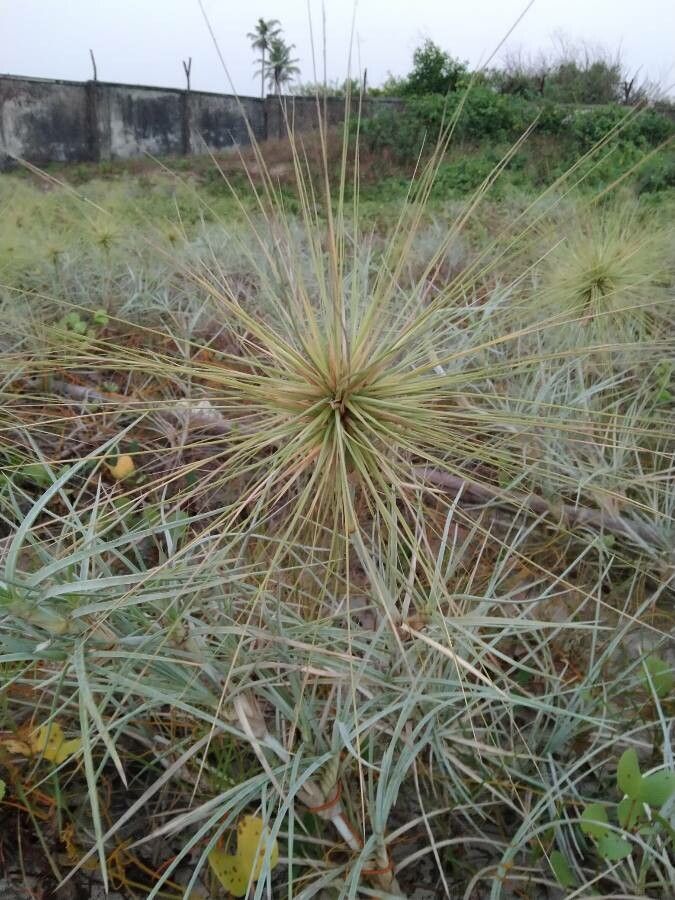
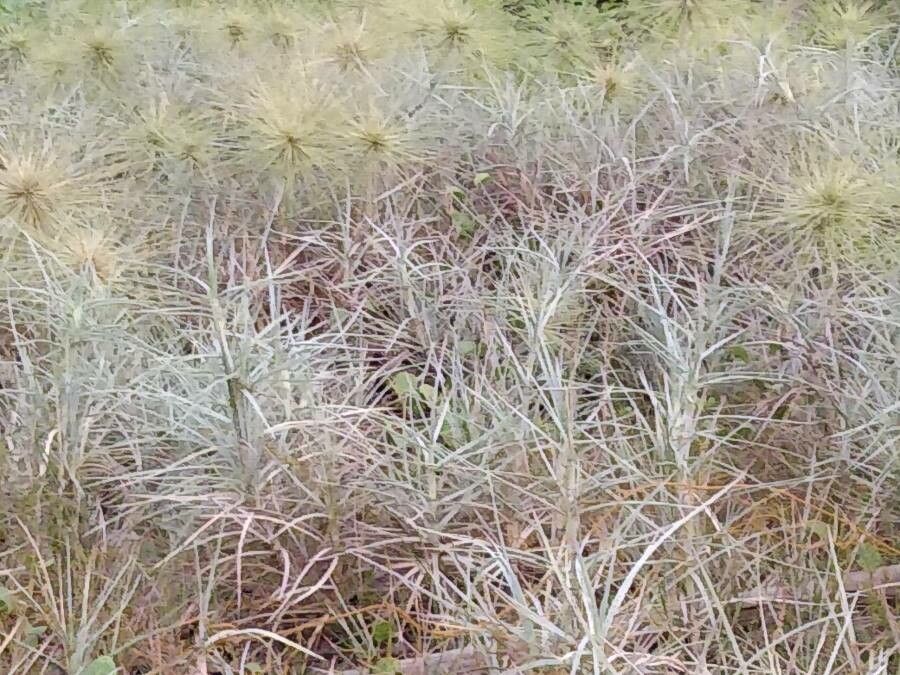
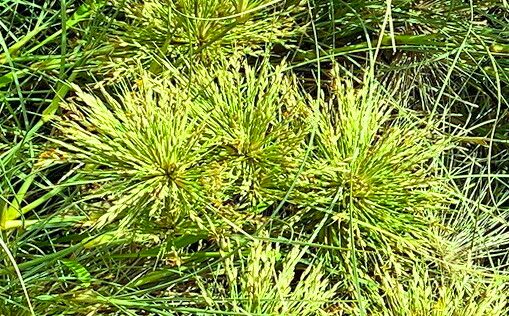
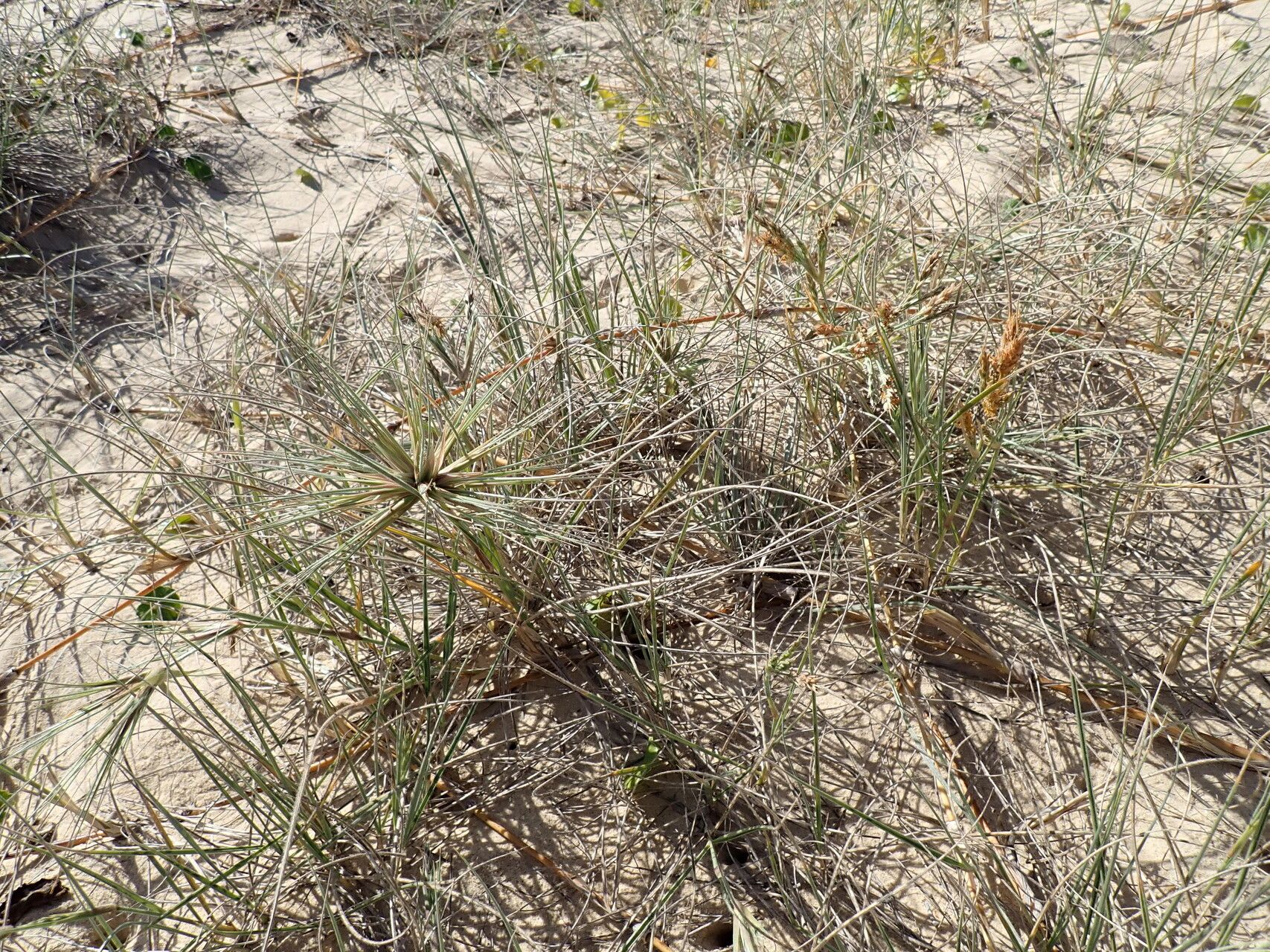
Spinifex littoreus is a species of herb in the family Poaceae. The species is similar to Spinifex longifolius. It is native to tropical and subtropical areas of Asia and Australia.The species is dioecious. It has been suggested that the species might give an significant model for studying the regulation as well as the evolutionary history of C4 and CAM photosynthesis.
Ravan's moustache is fairly disease-resistant and generally not prone to illnesses. However, it can be vulnerable to pests and diseases present in its environment. Such infections are usually not serious. In terms of care, the plant requires moderate maintenance. It should be pruned regularly to maintain a neat appearance and healthy growth. Fertilizing can also help encourage flowering. Ravan's moustache is suitable for anyone with outdoor space, like a garden or patio, and does not demand extensive care experience. It may need more attention when grown indoors.
How to keep Spinifex Littoreus.
Light
Ravan's moustache is a sun-loving, perennial herbaceous plant native to open habitats, commonly flourishing in meadows and grasslands. It prefers full sun but can also tolerate partial sun.
Water
Ravan's moustache, a plant native to coastal sand dunes, thrives in well-drained soils and can withstand drought conditions. Adapted to salty environments, it benefits from weekly watering and grows best in full sunlight, which helps manage water effectively.
Temperature
Ravan's moustache is a versatile plant that does well in temperatures ranging from 41 to 95 °F (5 to 35 ℃). Native to temperate regions, it prefers milder climates but can adapt to seasonal temperature fluctuations with proper care.
Fertilizer
One fertilizer application in spring is generally enough for Ravan's moustache, though repeated feedings can boost growth. Apply fertilizer every month to six weeks. Fertilizing improves the leaves' appearance and function, promoting even color and a healthy texture. It also encourages root development and nutrient uptake for long-term plant health.
Pruning
Ravan's Moustache is a hardy coastal grass that benefits from pruning in early spring. By removing dead stems and trimming excessive growth, you can encourage vigorous growth and abundant blooms while reducing the risk of disease. Regular pruning not only improves the plant's health but also enhances its appearance. Make sure to use clean, sharp tools for the best results.
Botanical profile.
- Plant Type
- Herb
- Life Cycle
- Perennial
- Genus
- Spinifex
- Family
- Poaceae
- Hardiness Zone
- 5-9
- Mature Height
- 91 cm
- Mature Spread
- 0.49 m to 2.13 m
- Leaf Color
- Green, Blue
- Leaf Type
- Evergreen
- Flower Color
- Yellow, Green, Brown
- Flower Size
- 0.10 cm to 0.20 cm
- Bloom Time
- Summer, Early fall, Mid fall
- Planting Time
- Spring, Summer, Autumn
- Harvest Time
- Late summer, Fall, Early winter
- Native Area
- Sri Lanka, India, Malaysia, Indonesia, Cambodia, Vietnam, Myanmar, Japan, Philippines, Bangladesh, Pakistan, Thailand, China
Other names.
Reader questions.
What are the sunlight requirements for Ravan's moustache?
Ravan's moustache requires full sun exposure for optimal growth, meaning it should receive more than 6 hours of sunlight daily. While it thrives in full sunlight, the plant can also tolerate partial sun conditions, making it a versatile choice for various garden spots. It's essential to watch how sunlight moves through your garden over the day to choose locations that offer a balance of light and shade, ensuring the plant's health and happiness.
What is the ideal temperature range for Ravan's moustache?
Ravan's moustache, known botanically as Spinifex littoreus, thrives in a broad temperature range from 41 to 95 °F (5 to 35 °C). This versatile plant is native to temperate environments and has a strong preference for milder climates, though it can adapt to seasonal temperature fluctuations with the right care approach. It has a significant cold resistance, indicating that special frost protection measures are typically not required during the winter months. Nevertheless, in environments where winter temperatures are anticipated to drop below -25°C, it's crucial to provide cold protection by covering the plant with soil or straw. Additionally, watering the plant abundantly before the first freeze of autumn to maintain moist soil can help prevent drought and water scarcity for the plant during the winter and early spring periods.
How can artificial lighting be used for indoor plants?
Artificial lighting is crucial for indoor plants, especially when natural sunlight is insufficient. LED lights are recommended for their ability to provide specific wavelengths needed for plant growth. For optimal growth, full sun plants should have 30-50W/sq ft, partial sun plants 20-30W/sq ft, and full shade plants 10-20W/sq ft of artificial light. The light source should be placed 12-36 inches above the plants, mimicking natural sunlight as closely as possible, and plants typically require 8-12 hours of light per day.
How does Ravan's moustache respond to low temperatures?
Ravan's moustache is considerably cold-tolerant, flourishing best when temperatures remain above 5°C. Throughout the winter season, it's advised to keep the plant's environment above -20°C to avoid damage. Although Ravan's moustache may not show noticeable changes when temperatures fall below -25°C during winter, such conditions might lead to a reduced sprouting rate or even a complete lack of sprouting in the spring. The recommended solution for these instances is to remove any parts of the plant that have failed to sprout once spring arrives, thus helping the plant to recover and continue its growth cycle.
What are the symptoms of inadequate lighting for Ravan's moustache?
Symptoms of inadequate lighting in Ravan's moustache include smaller new leaves, leggy or sparse growth, faster leaf drop, slower or no new growth, lighter-colored new leaves, chlorosis, sunscald, leaf curling, wilting, and leaf scorching. These symptoms can indicate whether the plant is receiving too little or too much sunlight, affecting its overall health and growth.
How does Ravan's moustache handle high temperatures?
During the summer months, it's crucial to ensure that the temperature surrounding Ravan's moustache does not exceed 35°C. Exposure to temperatures above 38°C can result in the leaves of the plant lightening in color, becoming prone to curling, suffering from sunburn, and in severe cases, the entire plant may wilt and dry out. To mitigate these issues, the recommended actions include trimming away any sunburned or dried-up parts of the plant, relocating the plant to a spot that is shaded during the midday and afternoon sun, or using a shade cloth to provide necessary shade. Additionally, watering the plant in the morning and evening will help keep the soil moist and support the plant's health during high temperatures.
What are the solutions for Ravan's moustache facing inadequate sunlight?
For indoor Ravan's moustache plants, gradually increase exposure to direct sunlight to at least 6 hours daily or use artificial light for large plants. Outdoor plants should be moved to sunnier spots gradually to avoid sunburn. Reducing obstructions like pruning trees can increase sunlight exposure. For ground-planted varieties, consider transplanting to a sunnier location during the plant's dormant period. Note that while affected parts may not recover, new growth will be healthy with increased light exposure.