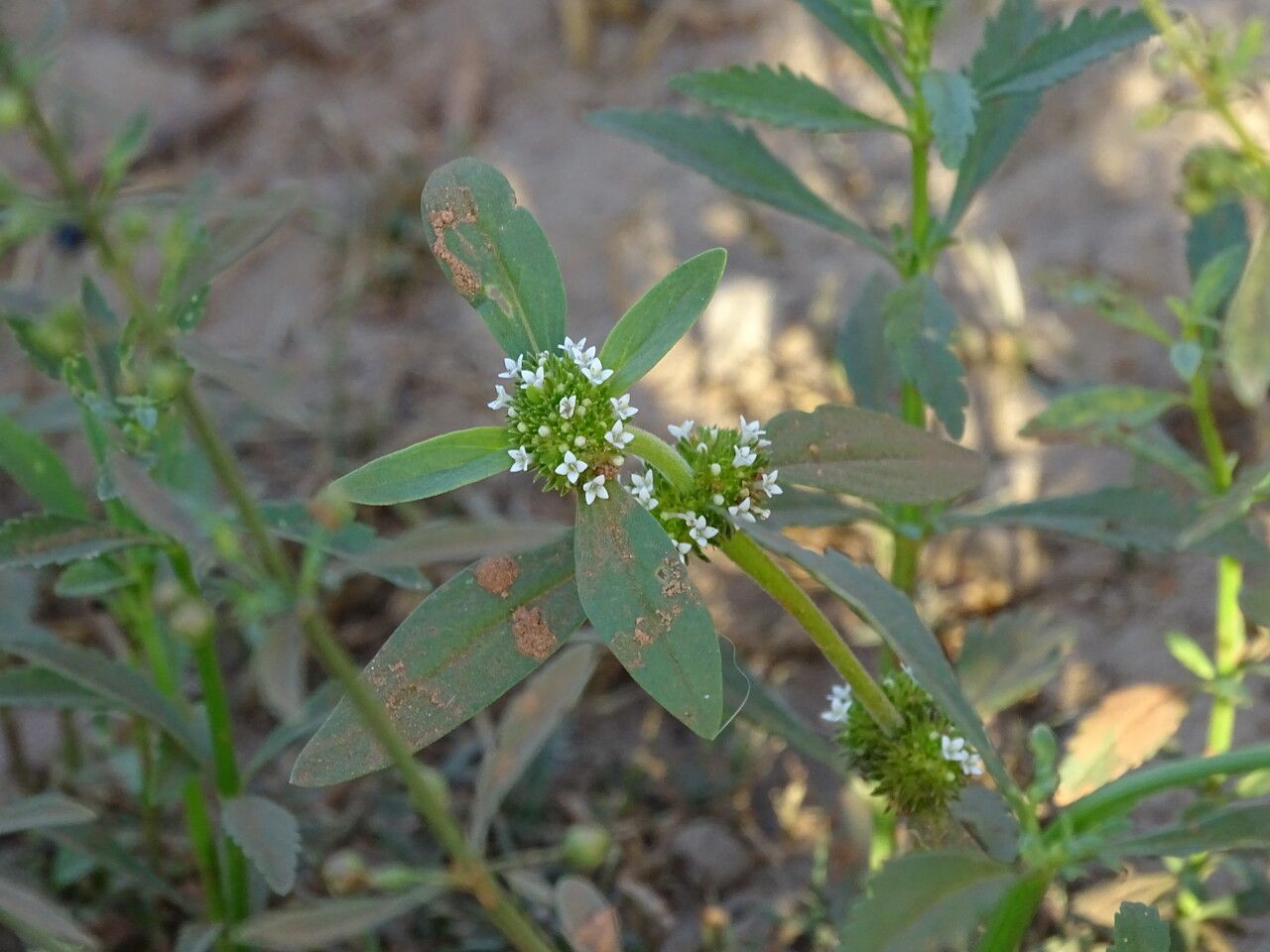
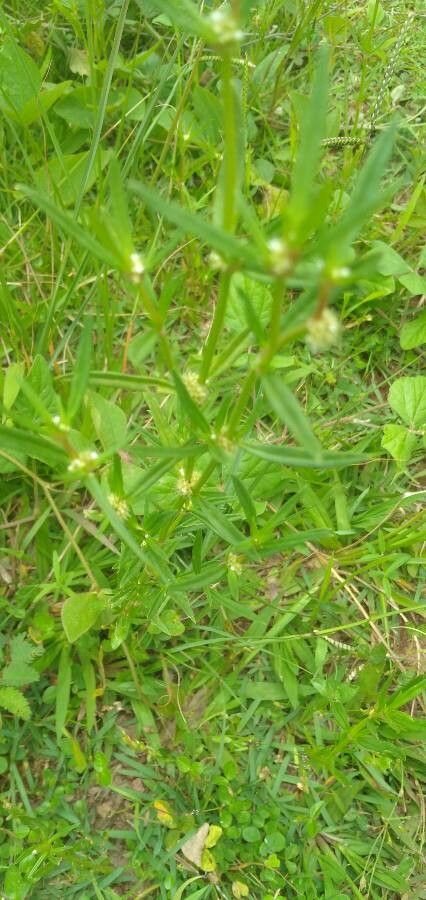
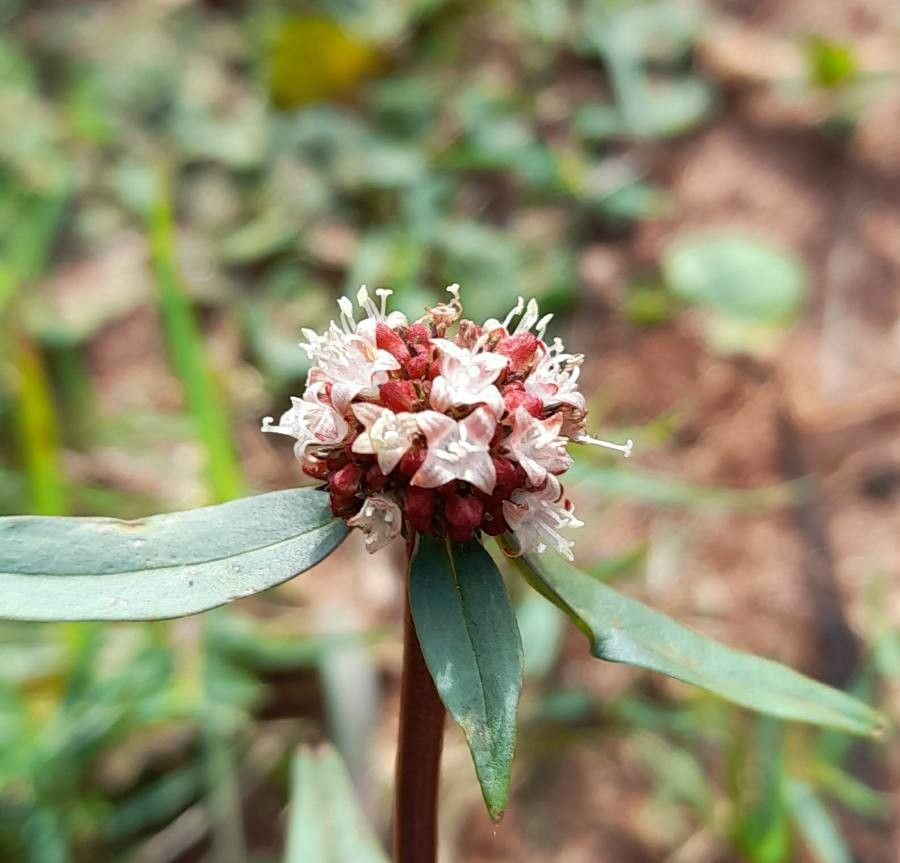
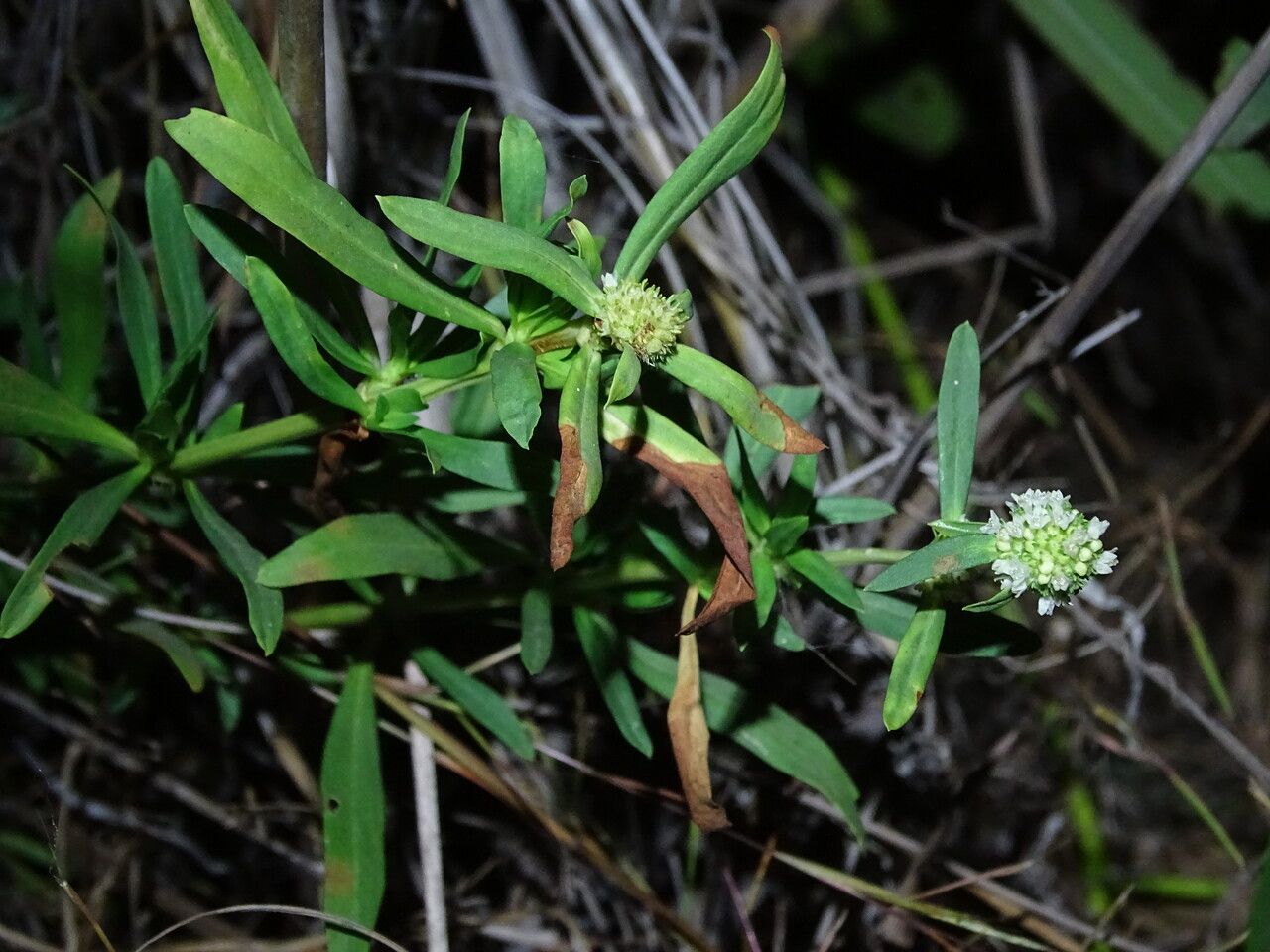
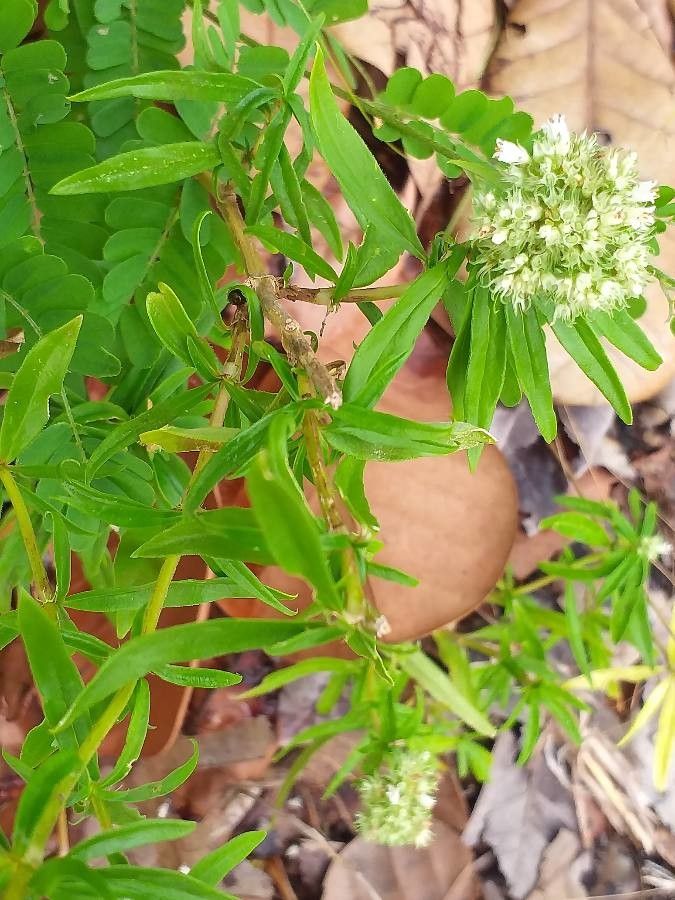
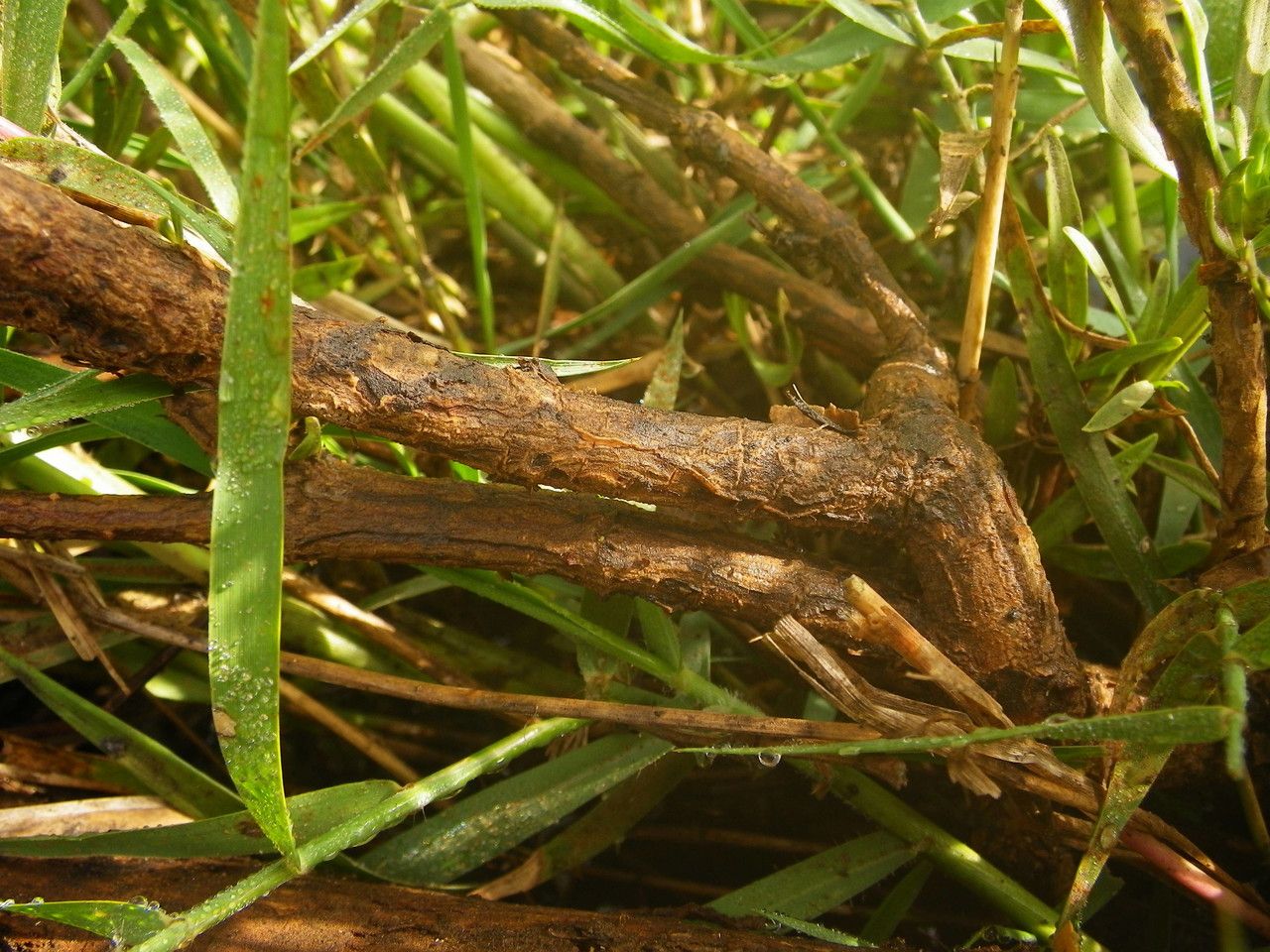
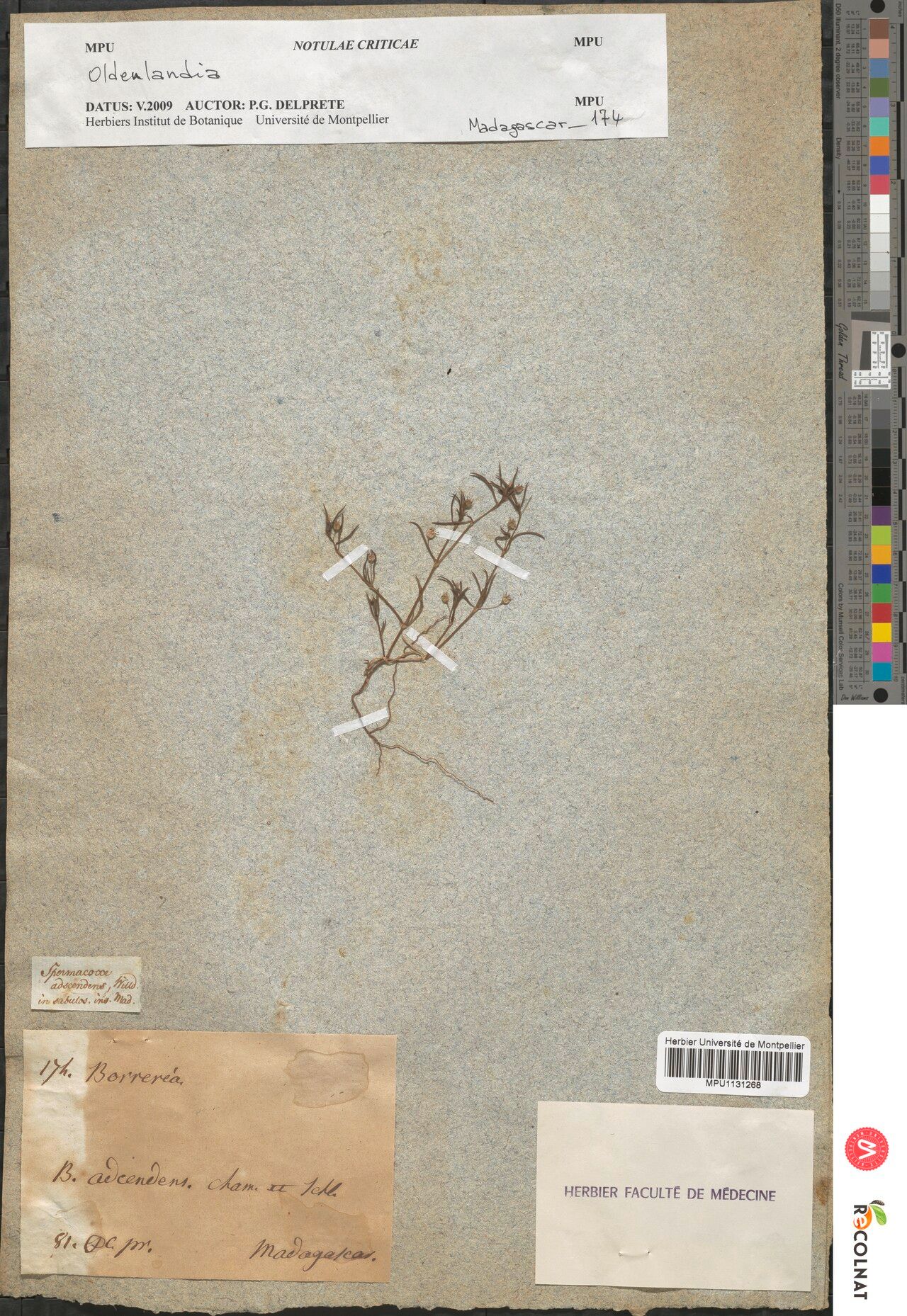
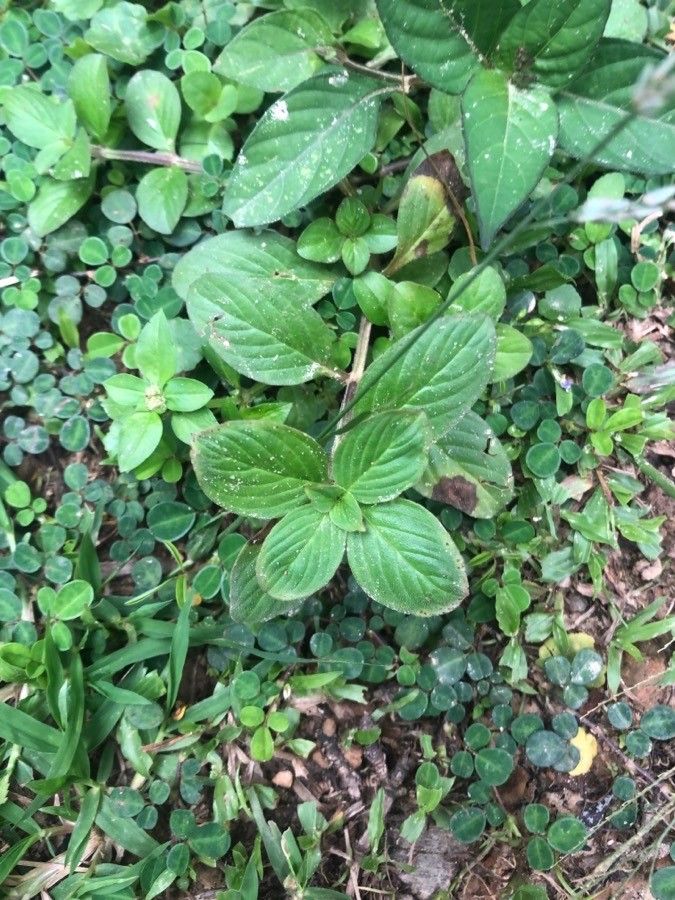
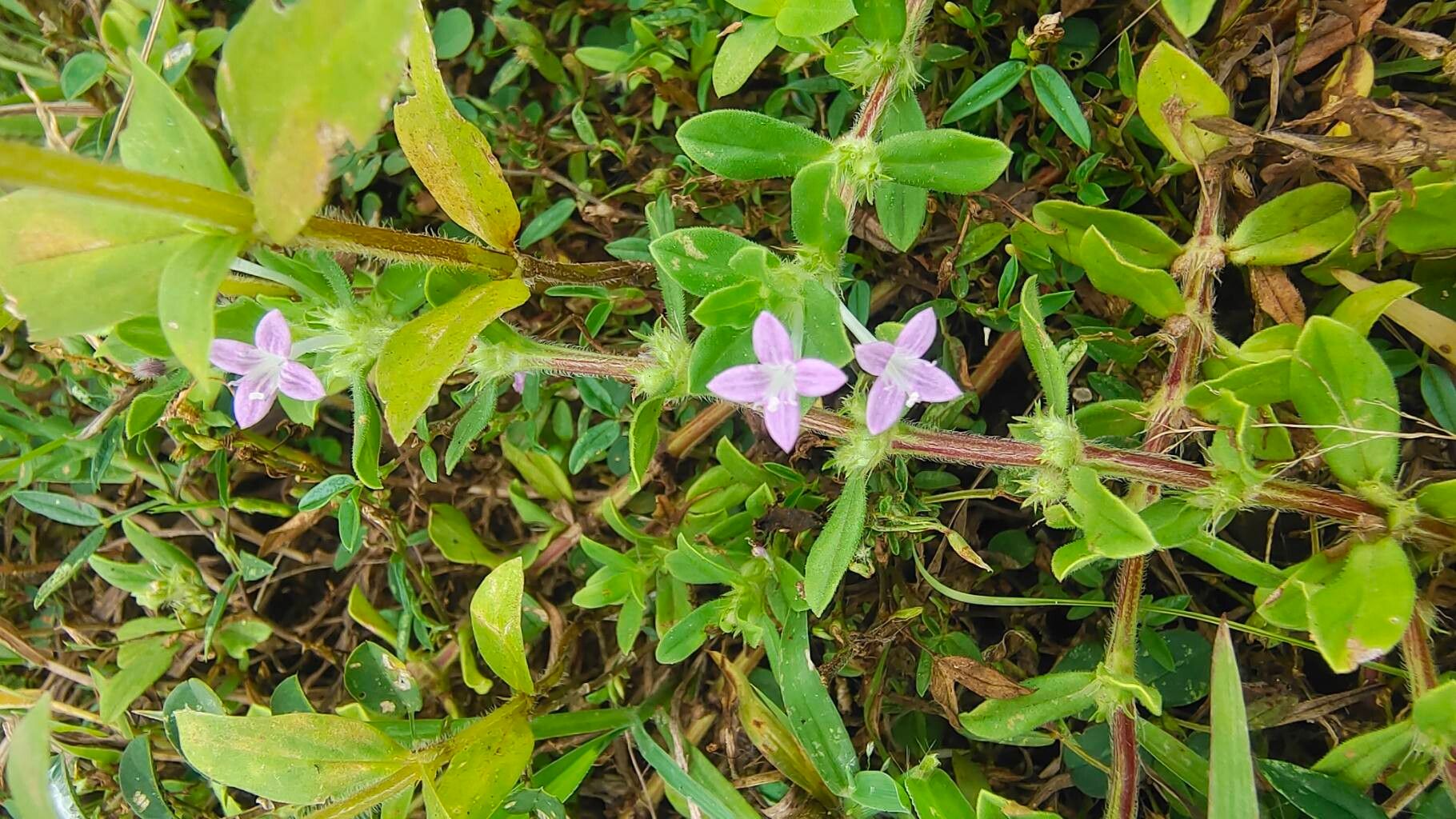
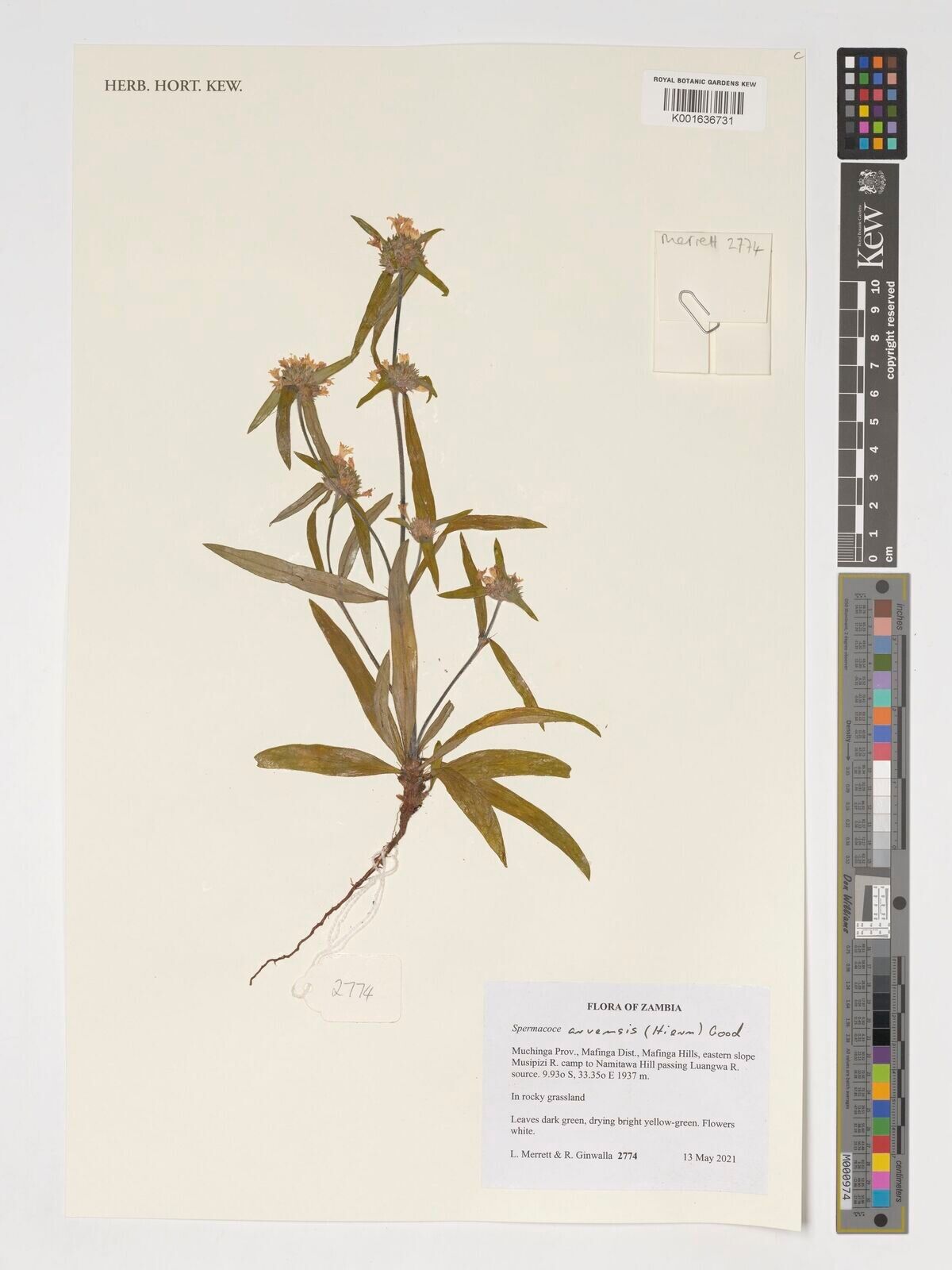
Spermacoce verticillata, commonly known as Whorled False Buttonweed, is a perennial herbaceous plant belonging to the Rubiaceae family. It thrives in tropical and subtropical regions across Africa, Asia, Australia, and the Americas.
The plant features a slender stem that can grow up to 60 cm in height. Its leaves are arranged in whorls of four or five and are opposite in positioning. The leaves, which are lanceolate or elliptic with smooth margins, can reach up to 5 cm in length.
Spermacoce verticillata produces small white flowers clustered at the ends of branches. Each flower has four petals and measures approximately 2 mm in width.
This plant is valued for its medicinal properties, which include anti-inflammatory, analgesic, and antipyretic effects. These properties make it useful for treating various ailments such as reducing fever and alleviating pain.
Beyond its medicinal uses, Spermacoce verticillata is an essential food source for many insects, including bees that pollinate its flowers.
In summary, Spermacoce verticillata is an intriguing herbaceous plant with significant medicinal and ecological benefits, making it a critical component of various ecosystems around the globe.
Shrubby false buttonweed shows strong resistance to disease and is generally not susceptible to illnesses. In terms of care, this plant is fairly low-maintenance. When grown outdoors it needs minimal watering, and larger specimens typically do not require pruning. Smaller plants, however, should be pruned after they finish blooming. Shrubby false buttonweedt is appropriate for anyone with an outdoor area, such as a garden or deck, and does not call for extensive care experience.
How to keep Spermacoce Verticillata.
Light
The bush-like false buttonweed primarily flourishes in regions with ample light exposure, promoting its growth. It can tolerate partial shade, meaning it can still live under less ideal light conditions, but this may affect its growth rate. This plant is originally from places where light is plentiful. Too much light might result in leaf scorching, while too little can cause stunted growth.
Water
Shrubby false buttonweed is a plant native to tropical regions, where it favors high humidity and consistent moisture. To keep it healthy, water the plant every 2-3 weeks. This schedule helps meet its moisture needs while maintaining its drought resilience. Typically grown outdoors, shrubby false buttonweed benefits from natural rainfall, which supports its growth cycles.
Temperature
The shrubby false buttonweed originates from regions where the temperature fluctuates between 68 and 95 °F (20 to 35 ℃). The best growth of this plant happens within this specific temperature limit. To preserve its health, seasonal modifications might be needed to manage any extreme conditions.
Fertilizer
For the purpose of encouraging healthy development, feed your Shrubby false buttonweed at the start of spring. Consistent fertilization boosts the overall wellbeing of the plant, leading to robust growth and durability in harsh environments, along with an increase in resistance to disease and pests. Adhere to a particular fertilization timetable for your Shrubby false buttonweed to guarantee bright, deeply colored leaves and a plush look.
Pruning
Shrubby false buttonweed is a perennial plant characterized by its small white flowers and whorled leaves. To promote healthy growth and prevent it from becoming invasive, prune the plant between early and late winter. During pruning, remove old stems and dead wood. Always use clean, sharp tools to ensure effective cuts. For additional guidance, consult horticultural resources.
Botanical profile.
- Plant Type
- Shrub
- Life Cycle
- Perennial
- Genus
- Spermacoce
- Family
- Rubiaceae
- Hardiness Zone
- 9-10
- Mature Height
- 20 cm to 40 cm
- Mature Spread
- 2.13 m
- Leaf Color
- Green, Dark Green
- Leaf Type
- Evergreen
- Flower Color
- White
- Flower Size
- 2.54 cm
- Bloom Time
- All year round
- Planting Time
- Spring, Summer
- Harvest Time
- All year round
- Native Area
- Belize, Honduras, Mexico, Guatemala, Peru, Dominican Republic, Panama, Colombia, Paraguay, Haiti, Bolivia, Venezuela, Guyana, Brazil, Nicaragua, Ecuador, Suriname, Costa Rica
Other names.
Reader questions.
What should I do if I give too much or too little water to my Shrubby false buttonweed?
Outdoor plants, especially newly planted plants or plant seedlings, are often prone to lack of watering. It is important to remember to keep watering enough for a few months, especially when the tree is small or just planted. Once the roots are established, Shrubby false buttonweed can rely on rain for most of its moisture. If you have planted your Shrubby false buttonweed in pots, overwatering is more likely to occur. In case you accidentally overwater your plant, there are steps you can take to remedy the situation. First, stop watering your plant immediately to minimize the effects of overwatering. Then, remove your Shrubby false buttonweed from its pot to inspect its roots. If the roots appear healthy and free from root rot, you can return the plant to its container. However, if you notice signs of root rot, trim away the affected roots and consider applying a fungicide to prevent further damage. Finally, repot your Shrubby false buttonweed in well-draining soil. On the other hand, if your Shrubby false buttonweed is underwatered, the solution is simple. Water the plant more frequently. When a plant is underwatered, its leaves may droop, dry out, and fall off. However, with sufficient watering, the leaves will quickly regain their fullness. So, please adjust your watering frequency as soon as you notice signs of underwatering.
What are the sunlight requirements for Shrubby false buttonweed?
Shrubby false buttonweed, also known as Spermacoce verticillata, requires full sun, meaning it needs more than 6 hours of sunlight daily, to thrive optimally. However, it can also tolerate partial sun, approximately 3-6 hours of sunlight. It's essential to watch how sunlight moves through your garden to find spots that offer the right balance of light for the plant's health. Light exposure is fundamental for its growth, though it can survive in partial shade, which might limit its growth.
What is the optimal temperature range for the growth of Shrubby false buttonweed?
The optimal temperature range for the growth of Shrubby false buttonweed (Spermacoce verticillata) is between 68 to 95 °F (20 to 35 °C). This range allows the plant to grow optimally. If the temperature falls below or exceeds this range, special care may be needed to maintain the plant's health.
How often do I need to water my Shrubby false buttonweed?
Most outdoor plants can rely on rainfall for their water needs. However, if your area doesn't get enough rain, you should water your plants every 2 weeks in the spring and fall. In the summer, you'll need to water them more frequently. In winter, when plants grow slower and need less water, you can water them sparingly or not at all. If you have a young or newly planted Shrubby false buttonweed, you should water it more often to help it establish and grow into a drought-tolerant plant. For potted plants, there are two main ways to determine how often to water your Shrubby false buttonweed. One way is to follow a set watering schedule, such as watering once a week or every other week. However, this may not always be accurate as it doesn't consider the specific conditions of your plant's environment. Another approach is to base your watering frequency on the moisture level of the soil. It's best to wait until the top two to four inches of soil, about ⅓ to ½ of the pot's depth, have completely dried out before watering again. Remember to adjust your watering frequency based on the season, as your plant will have higher water needs during the summer.
How can artificial lighting be used for indoor Shrubby false buttonweed?
Indoor Shrubby false buttonweed can benefit from artificial lighting when natural sunlight is insufficient, especially in winter or in less sunny spaces. For optimal growth under artificial lighting, consider the following: Choose LED lights for their ability to provide specific wavelengths of light required by your plants. Full sun plants need 30-50W/sq ft, partial sun plants require 20-30W/sq ft, and full shade plants should have 10-20W/sq ft. Place the light source 12-36 inches above the plant, and ensure it mimics the length of natural daylight hours, typically 8-12 hours per day.
Does Shrubby false buttonweed require any special care in cold temperatures?
Shrubby false buttonweed has some cold tolerance and generally does not require special care when the temperature is above 0°C. However, if temperatures are expected to drop below freezing, it is necessary to protect the plant temporarily. Cold protection can be achieved by wrapping the plant with materials such as plastic film, fabric, or other insulating materials. Once the temperature rises again, the protective coverings should be removed promptly to avoid any potential damage to the plant.
How much water does my fake buttonweed plant need?
When watering your Shrubby false buttonweed, you might be surprised to learn that it doesn't always require a large amount of water. If only a few inches of soil have dried since the last watering, giving it about five to ten ounces of water each time can promote healthy growth. You can also determine the amount of water needed based on the moisture level of the soil. Make note of how many inches of soil have dried between waterings. To ensure the plant receives adequate moisture, water enough to dampen all the dry soil layers since the last watering. If more than half of the soil has dried, it's advisable to provide more water than usual. In such cases, continue watering until excess water drains from the pot's drainage holes. If your Shrubby false buttonweed is placed in an outdoor area that receives ample rain, additional watering may not be necessary. For young or newly established plants, ensure they receive 1-2 inches of rain per week. As they grow and establish, they can rely solely on rainwater. Only in hot weather conditions without rainfall for 2-3 weeks, consider giving them a thorough watering to prevent stress.
What are the symptoms of inappropriate light exposure for Shrubby false buttonweed?
Symptoms of insufficient light for Shrubby false buttonweed include smaller new leaves, leggy or sparse growth, faster leaf drop, and slower or halted growth. Leaves may also develop lighter colors or become yellow (chlorosis) due to insufficient light. Excessive sunlight exposure can lead to sunscald, leaf curling, wilting, and leaf scorching, which are harmful to the plant's health.
How should I care for Shrubby false buttonweed in case of low temperature damage?
If Shrubby false buttonweed experiences low temperatures, especially below -5°C, the leaves might droop and, in severe cases, wilt and fall off. To manage this, trim off the frost-damaged parts of the plant. To prepare for future low temperatures, protect the plant by wrapping it with non-woven fabric or cloth and constructing a wind barrier to shield it from cold winds.
How do I know if I'm giving enough water to my Shrubby false buttonweed?
Overwatering is a common issue for the Shrubby false buttonweed, and there are signs to watch for. When overwatered, this plant will have yellowing leaves and may drop some leaves. Overwatering can also cause the plant's structure to shrivel and lead to root rot. On the other hand, an underwatered Shrubby false buttonweed will wilt and may have brown or brittle leaves. No matter whether you see signs of overwatering or underwatering, you should take action to restore your plant's health.
What solutions are available for Shrubby false buttonweed experiencing light-related issues?
To address light-related issues in Shrubby false buttonweed, gradually increase sunlight exposure to at least 6 hours daily by moving the plant to a sunnier location each week. If the plant is indoors and large or not easily movable, consider using artificial lighting, like a desk or ceiling lamp, for at least 8 hours daily, or invest in professional plant grow lights. Outdoors, move your plants gradually to adapt to sunnier spots while avoiding sudden changes to prevent sunburn. If obstructions block sunlight, prune trees or branches that create shade or transplant smaller plants to a location with ample sunlight and good drainage.
What care does Shrubby false buttonweed need in high temperatures?
During high temperatures, particularly above 95°F (35°C), precautions should be taken to prevent damage to Shrubby false buttonweed. If temperatures rise above 105°F (41°C), the leaves may lighten in color, tip dry, curl, and the plant can become more susceptible to sunburn. To care for it, trim away sunburned and dried parts of the plant. Moving the plant to a shaded area or using a shade cloth can protect it from midday and afternoon sun. Additionally, watering the plant in the morning and evening helps keep the soil moist and the plant hydrated.