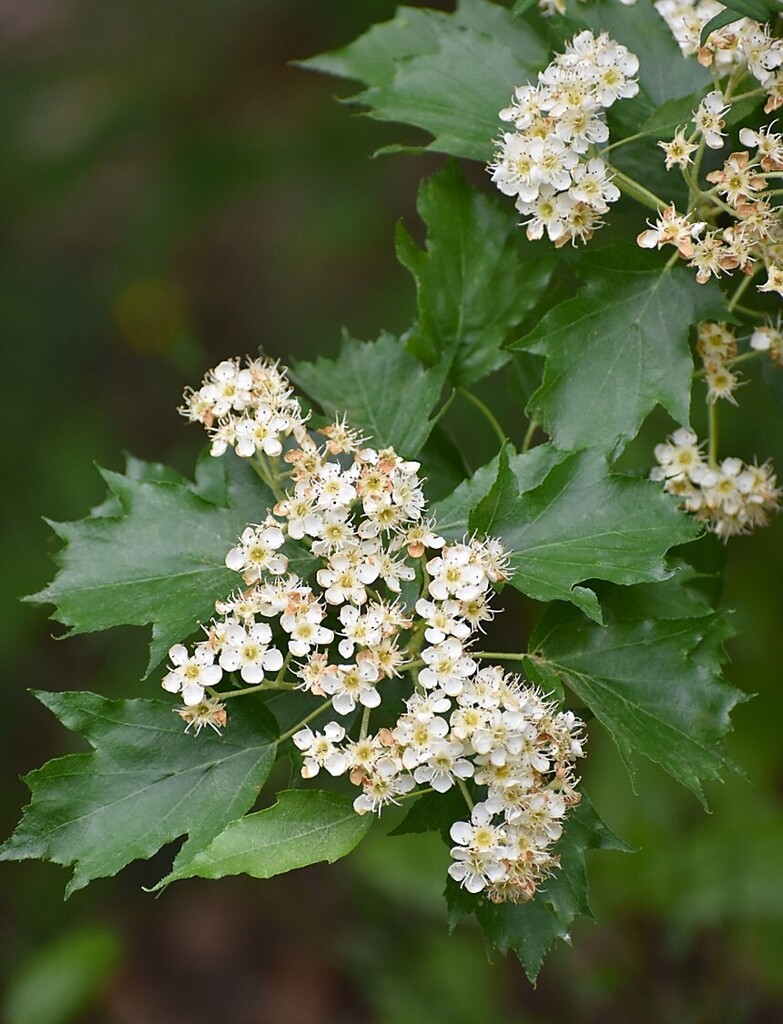
Sorbus torminalis, commonly known as the Wild Service Tree, is a deciduous species belonging to the Rosaceae family. Native to Europe and Western Asia, it can reach heights of up to 20 meters. Its bark is distinctive, featuring a grey-brown color with deep fissures.
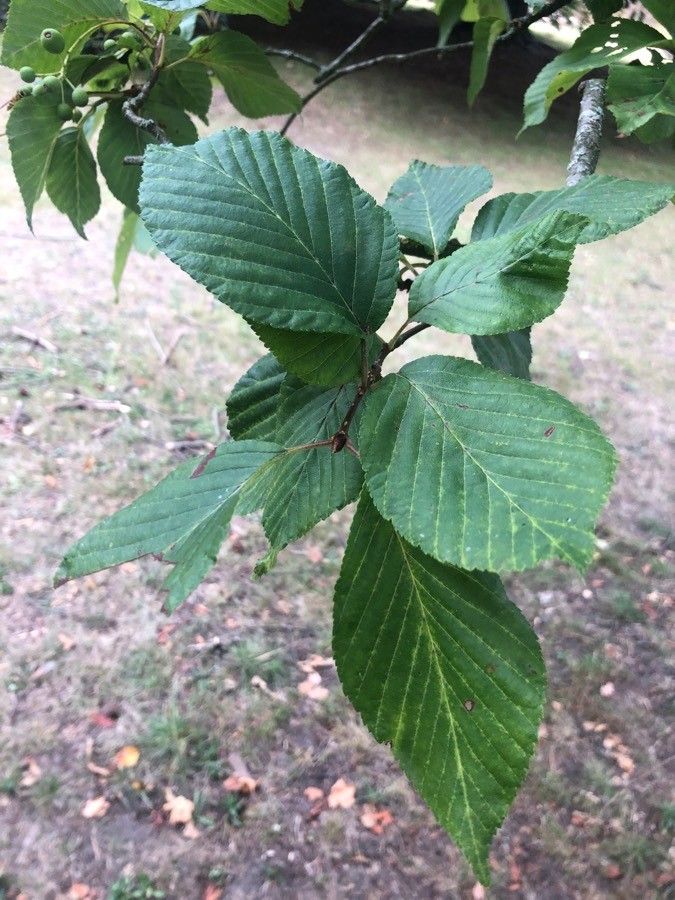
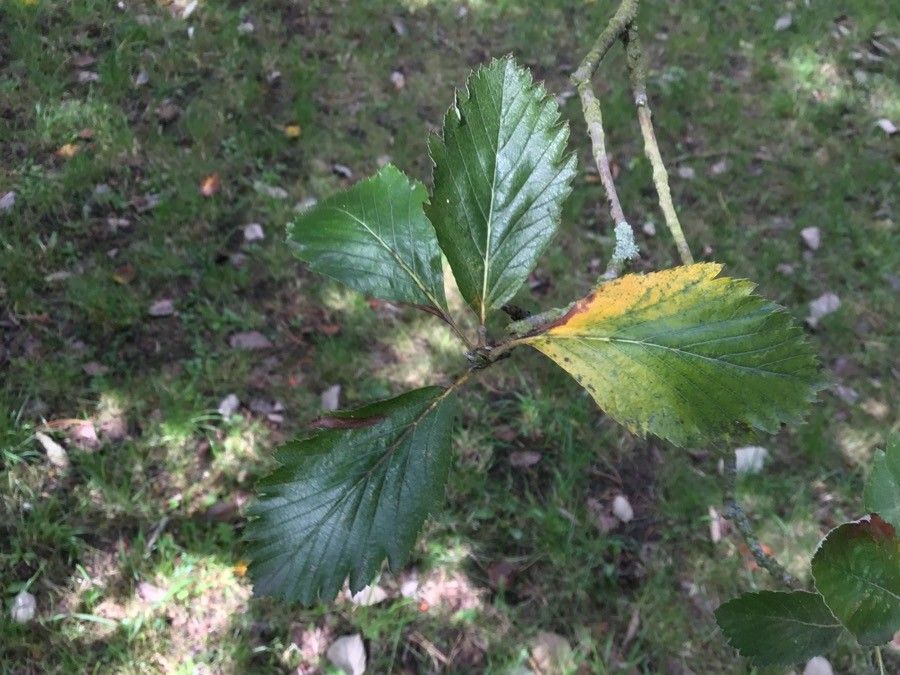
The leaves of Sorbus torminalis are oval-shaped with serrated edges, measuring up to 15 cm in length. In autumn, they turn vibrant shades of yellow or red before falling off for the winter.
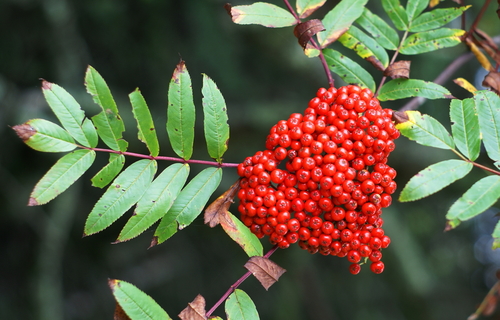
From May to June, the Wild Service Tree produces small, white flowers that are followed by small, red-brown fruits known as "chequers." These fruits have a tart taste and were historically used to make jams, jellies, and alcoholic beverages.
Sorbus torminalis prefers well-drained soils but can tolerate various soil types. It thrives in full sun or partial shade and is commonly found on hillsides or along riverbanks.
In addition to its ornamental value as an attractive shade tree with striking autumn foliage, Sorbus torminalis has been historically used for its medicinal properties, particularly its anti-inflammatory effects. The bark, rich in tannins, was also once used to produce dyes.
Overall, Sorbus torminalis is a fascinating deciduous tree species that offers both aesthetic appeal and practical uses.
The wild service tree has strong resistance to disease and is generally not vulnerable to illnesses. In terms of care, this species is fairly low-maintenance. When planted outdoors it needs minimal watering, and larger specimens usually do not require pruning. However, smaller plants should be pruned after they have finished blooming. The wild service tree is suitable for anyone with outdoor space, such as a garden or a deck, and does not demand extensive care experience.
How to keep Sorbus Torminalis.
Light
The wild service tree grows best in abundant light but can tolerate somewhat shaded spots. Its native habitats are bright environments that support its healthy growth. At every stage of growth, plenty of sunlight encourages its development. Insufficient sun can hinder growth, while excessive sunlight may potentially harm the plant.
Water
The wild service tree grows best in well-drained soils with moderate moisture levels and typically needs watering every two weeks. It can adapt to drier conditions and thrives with outdoor cultivation. Adding mulch around the tree helps retain soil moisture and mimics its natural woodland habitat, further supporting its growth.
Humidity
This plant needs special care because it loves high humidity levels of 60-80% or more. The best way to achieve this is by placing a humidifier near the plant. Daily misting is also essential! Make sure the room has good ventilation.
Temperature
The wild service tree originates from habitats where temperatures range from 41 to 95 °F (5 to 35 ℃). Generally, conditions within this range are preferable. Monitor weather patterns and make protective adjustments as seasonal temperatures fluctuate.
Fertilizer
Timing matters when fertilizing the wild service tree. Apply fertilizer in early spring and continue once a month up to early summer. Fertilizer promotes attractive blooms and supplies energy during both dormant and active growth stages.
Pruning
The wild service tree has serrated leaves and produces speckled berries from its small white flowers. To maintain its health and appearance, prune the tree in early spring by removing any dead or diseased branches. This will improve airflow, promote healthier growth, enhance the tree's structure, and increase fruit production. Be sure to use clean, sharp tools for effective pruning.
Botanical profile.
- Plant Type
- Tree
- Life Cycle
- Perennial
- Genus
- Sorbus
- Family
- Rosaceae
- Hardiness Zone
- 5-9
- Mature Height
- 15.24 m to 21.34 m
- Mature Spread
- 11.89 m
- Leaf Color
- Green, Red, Brown
- Leaf Type
- Deciduous
- Flower Color
- White
- Flower Size
- 0.76 cm to 1.27 cm
- Bloom Time
- Late spring, Early summer
- Planting Time
- Spring
- Harvest Time
- Mid summer
Other names.
Reader questions.
How should I water my Wild service tree in the best way?
To ensure excellent root development, consider these watering methods for your plants. Place a garden hose at the base of the plant, avoiding direct spraying of the leaves. If your plants are outdoors and exposed to direct sunlight, keep in mind that the leaves may require more water. For moistening the roots, you can use bubblers or soaker hoses for individual plants or the entire garden or bed. When adding or removing plants, use soaker hoses to encourage deep root growth. After watering, drain any excess water and allow the soil to dry before watering again. To prevent diseases, water at ground level rather than spraying the leaves. On sunny days, it may be beneficial to spray the entire bush with water. Whether your plants are in pots or in the ground, remember that Wild service trees prefer deep watering rather than light sprinkling.
Why should I put fertilizer on my Wild service tree?
There are several important reasons to fertilize a Wild service tree. One of the most obvious is that it will help the tree produce beautiful blooms. Fertilizing in early spring is particularly effective for ensuring abundant flowers during that season. Additionally, fertilizer provides the tree with extra energy to store in the ground during its dormant phases. By giving the tree nutrients during fall planting or late spring, it will have more energy to utilize when it starts growing again.
What are the sunlight requirements for the Wild Service Tree?
The Wild Service Tree requires full sun, which means it needs more than 6 hours of sunlight daily, but it can also grow in partial sun, receiving about 3-6 hours of sunlight. It's important to observe how sunlight moves through your garden to find the perfect balance of light and shade, ensuring the tree's well-being. This tree thrives under abundant light conditions and can tolerate somewhat shaded areas. Its natural habitats are well-illuminated, fostering healthy growth through all its stages. However, too little sun can hinder growth, and too much direct exposure can be harmful.
What temperatures are suitable for the wild service tree?
The wild service tree thrives in temperatures ranging from 41 to 95 °F (5 to 35 °C), indicative of its strong adaptability to varying weather conditions. Though the tree is notably resistant to cold, enduring without special frost protection measures in winter, it's important to provide extra care if temperatures are expected to plummet below -25°C by wrapping the trunk and branches with insulating materials such as non-woven fabric. Additionally, ensuring the soil around the wild service tree remains moist before the arrival of the first freeze is essential for maintaining its health during the colder months.
What should I do if I give too much or too little water to a Wild service tree?
If you notice that an overwatered Wild service tree has yellow, wilting leaves and mushy stems, it's important to adjust your watering schedule. On the other hand, if the leaves are crispy and dry, it could indicate under watering. In either case, it's important to check the moisture levels of the soil and water accordingly. While enough water will help the plant recover, it may still have dry and yellow leaves due to damaged roots. Once it returns to normal, the yellowing should stop. When caring for a Wild service tree indoors, be cautious not to overwater and look for signs of black spots. If present, allow the soil to dry out by withholding water for a few days. Overwatering can lead to root rot, so it's crucial to prevent this by avoiding overly soggy soil. When planting the tree outdoors, dig a little deeper and check the soil moisture with your fingers. If it feels too dry, it may be underwatered, and adequate watering is necessary for recovery.
When should I put fertilizer on my Wild service tree?
To ensure effective fertilization for Wild service trees, timing is crucial. If fertilizer is applied too early while the trees are still dormant, it will be ineffective and easily washed away by rainwater, leading to waste and pollution. It is recommended to apply the first round of fertilizer in early spring, and continue to fertilize once a month until early summer.
How can artificial lighting be used for the Wild Service Tree indoors?
Indoor Wild Service Trees require adequate lighting for optimal growth, especially when natural sunlight is insufficient, such as during winter or in less sunny spaces. Artificial lights, particularly LED lights customized to the specific wavelengths needed by plants, provide a vital solution. Full sun plants need 30-50W/sq ft of artificial light, partial sun plants need 20-30W/sq ft, and full shade plants need 10-20W/sq ft. The light source should be placed 12-36 inches above the plant, mimicking natural sunlight conditions, and kept on for 8-12 hours per day to promote faster, healthier growth.
How does low temperature affect the wild service tree and what should be done?
The wild service tree is admirably cold-tolerant, ideally flourishing when temperatures remain above 5 °C. Even as the tree withstands temperatures down to -20 °C, exposure to colder conditions below -25 °C might not immediately manifest damage during winter. However, as spring arrives, the aftermath becomes evident through brittle, dry branches, and a lack of new shoots. The recommended remedial action in spring is to prune any branches that failed to produce new leaves, thereby encouraging healthier growth.
How frequently should I give water to my Wild service tree?
The Wild service tree prefers deep and infrequent watering, especially when planted in pots. To prevent the soil from drying out too quickly in pots, soak them with a gallon of water each time. In colder regions, water every 3 to 5 days, preferably in the morning when the soil is dry. You can check if watering is needed by assessing the top 2-3 inches of soil – if it's dry, it's time for a full watering. On hot days, monitor the moisture daily to prevent the potting soil from drying out. If you have a garden, irrigation is also necessary. In hot climates, water once a week and only when the 2-3 inches of soil become too dry. Take rainfall into account and avoid overwatering to prevent root rot. Adding mulch 3-4 inches deep around outdoor plants helps conserve water. Sandy soil requires more frequent watering, while clay soil can go 2-3 days without water to avoid root rot. Mark the watering dates on your calendar and be attentive to drooping leaves, which may indicate a delay in watering.
When is the best time to not fertilize my Wild service tree?
To properly fertilize Wild service tree, it is important to avoid using fertilizers with excessive nitrogen content. This could lead to an abundance of leaves but limited blooming. It is advisable to opt for a fertilizer with lower nitrogen levels in comparison to other nutrients. It is also recommended to refrain from fertilizing the tree after early autumn, as this can result in excessive growth just before winter. Additionally, during hot and dry periods, it is not advisable to fertilize the Wild service tree since dry soil is not as effective in delivering the fertilizer, and it may stimulate growth that requires more water than is available. It is best to apply fertilizer earlier in the season when temperatures are cooler. Lastly, bear in mind that Wild service tree can absorb excess fertilizer that may have been applied to neighboring plants or lawns. Care should be taken to prevent inadvertently providing the tree with an excessive amount of fertilizer.
What are the signs of insufficient or excessive sunlight in the Wild Service Tree?
When the Wild Service Tree experiences insufficient sunlight, it may show signs like smaller new leaves, leggy or sparse growth, faster leaf drop, slower or halted growth, and lighter-colored or chlorotic new leaves. Excessive sunlight can cause sunscald, leaf curling, wilting, leaf scorching, and a breakdown of chlorophyll leading to chlorosis. These symptoms highlight the tree's sensitivity to light conditions, indicating when adjustments are needed to ensure its health.
What impact does high temperature have on the wild service tree, and how can it be managed?
During the summer months, it is crucial to ensure that temperatures around the wild service tree do not exceed 35 °C. Surpassing this threshold to temperatures above 38 °C may cause the leaves to lighten in color, tips to dry and wither, and increases the plant's vulnerability to sunburn. Managing these symptoms involves trimming away the affected parts, relocating the plant to a shaded area or employing a shade cloth to protect it from the most intense midday and afternoon sun. Additionally, watering the plant during the cooler morning and evening hours is essential to keep the soil adequately moist.