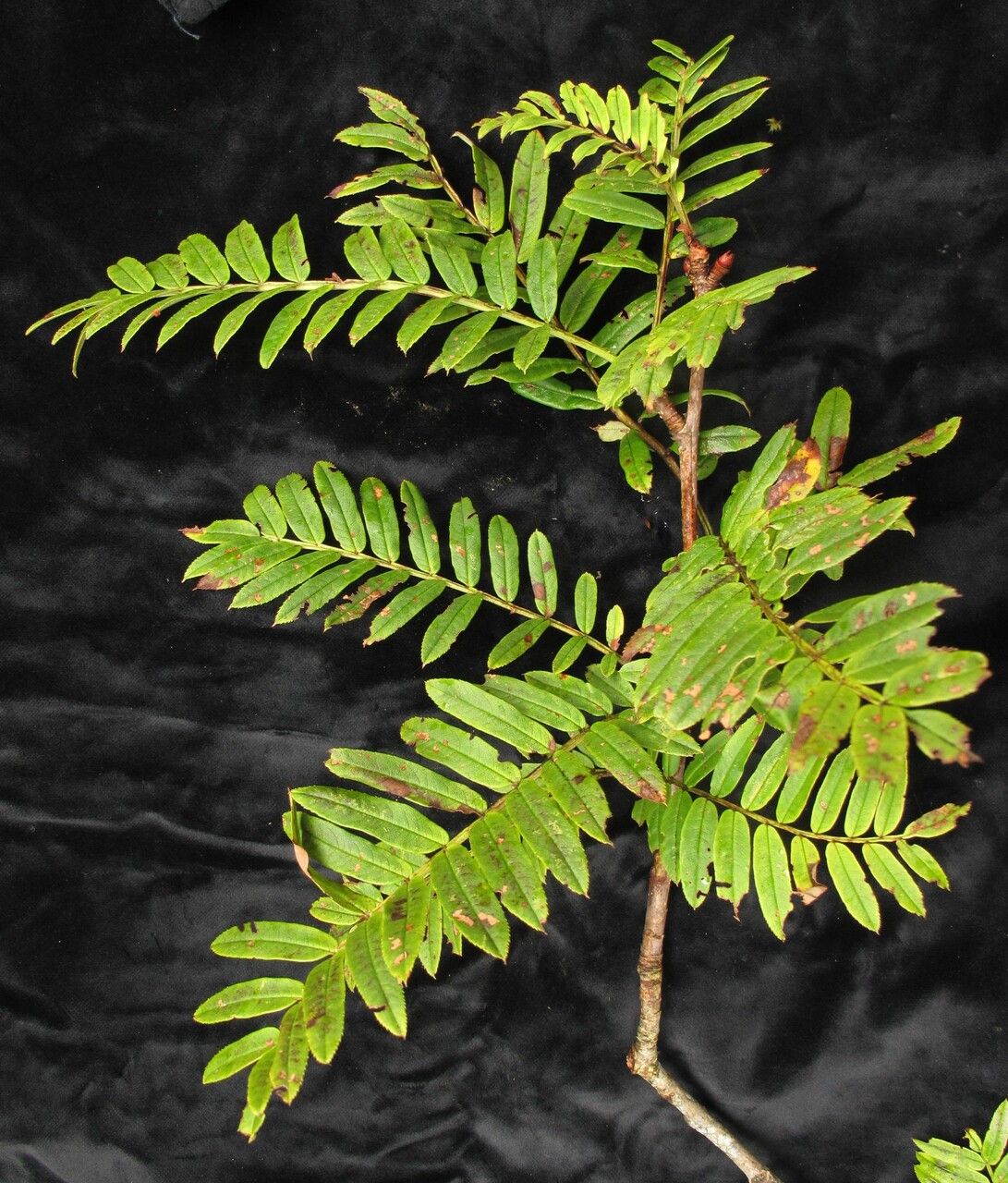
Sorbus mougeotii, the Vosges whitebeam or Mougeot's whitebeam, is a species of whitebeam native to the mountains of central and western Europe from the Pyrenees east through the Alps to Austria, and north to the Vosges Mountains.
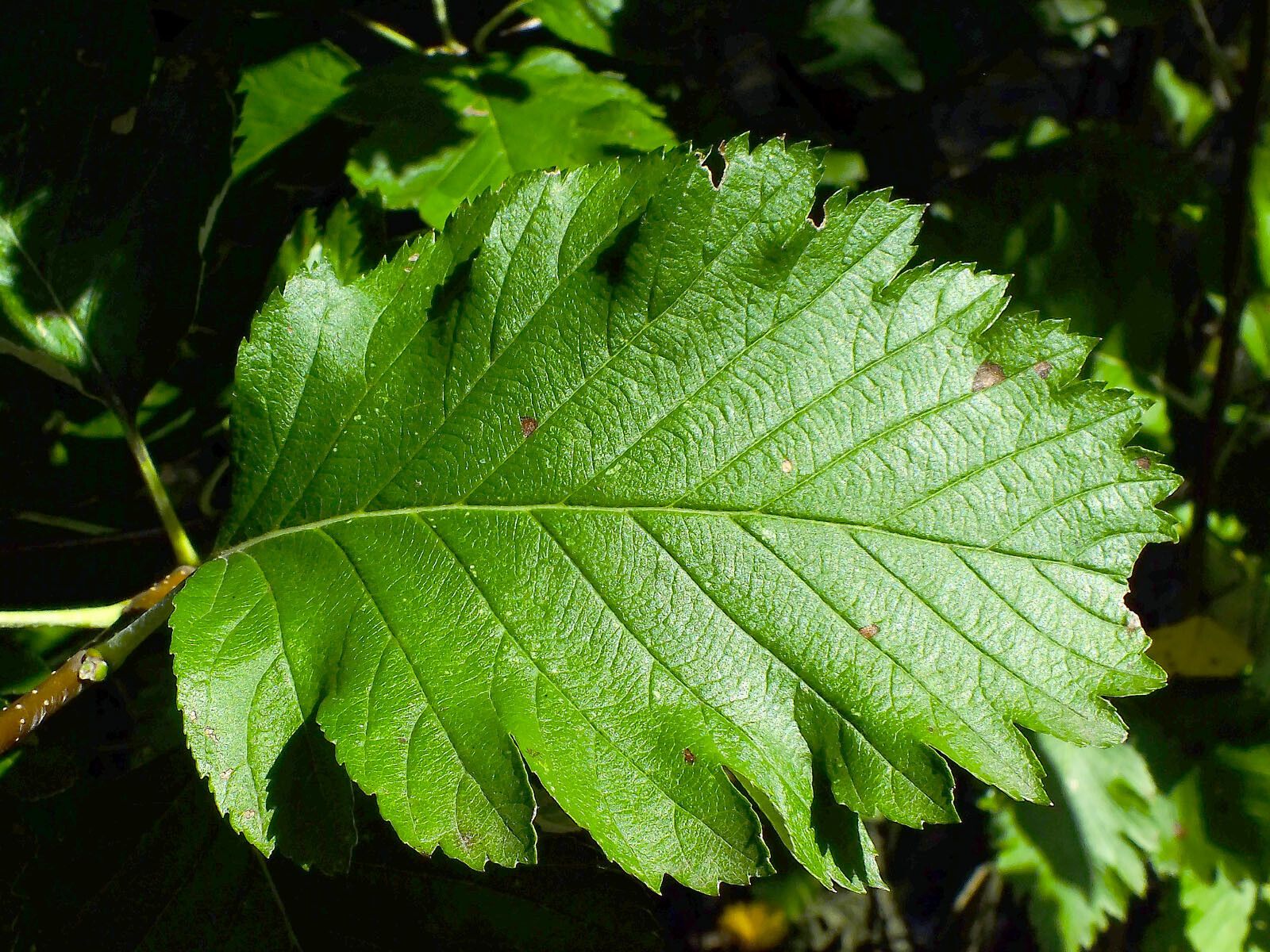
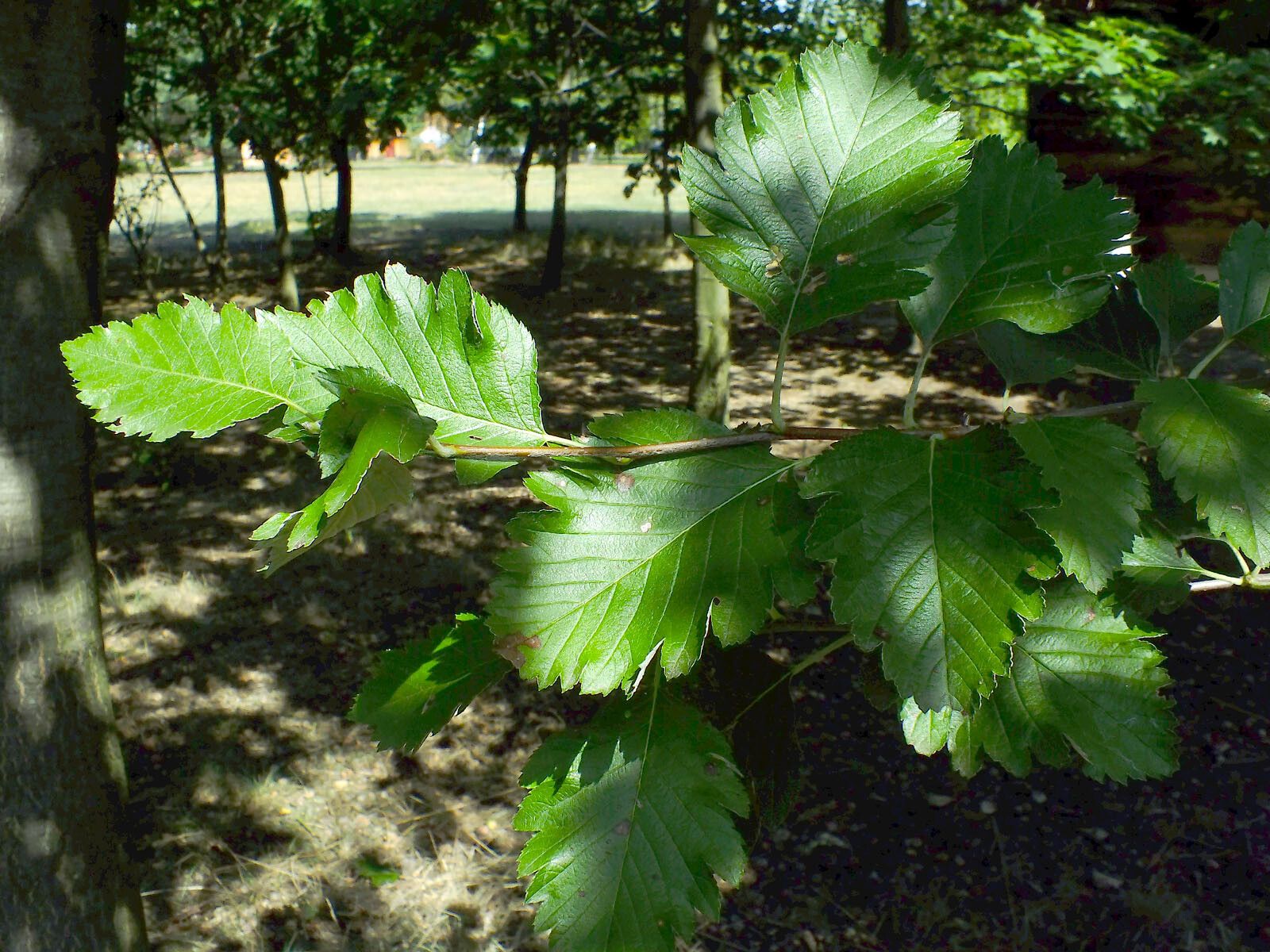
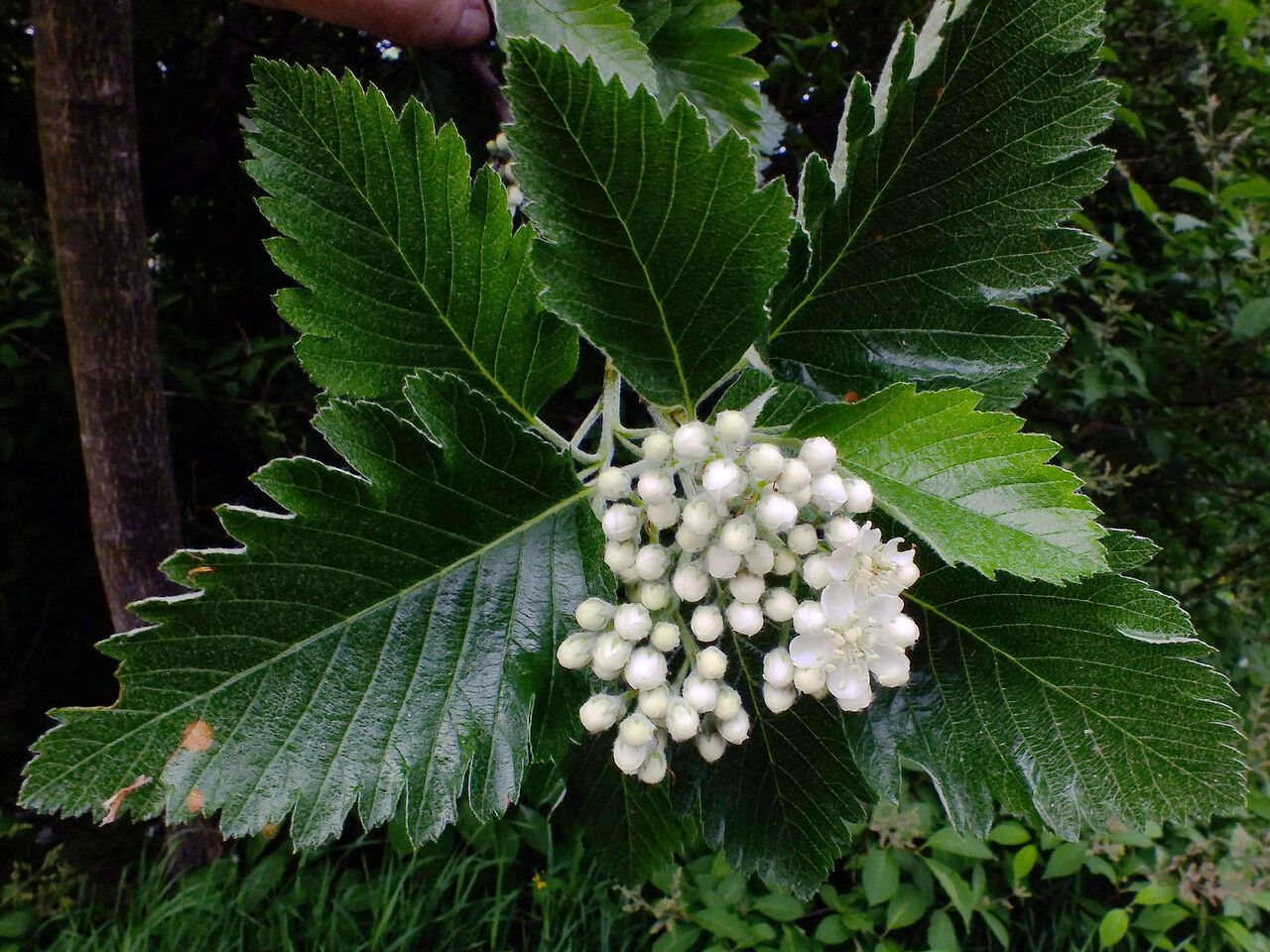
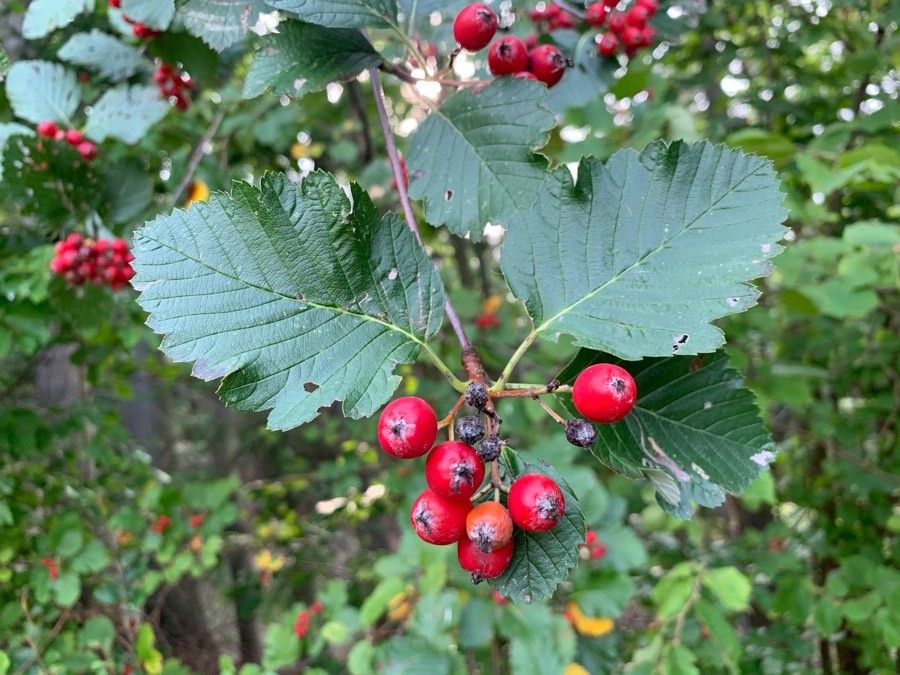
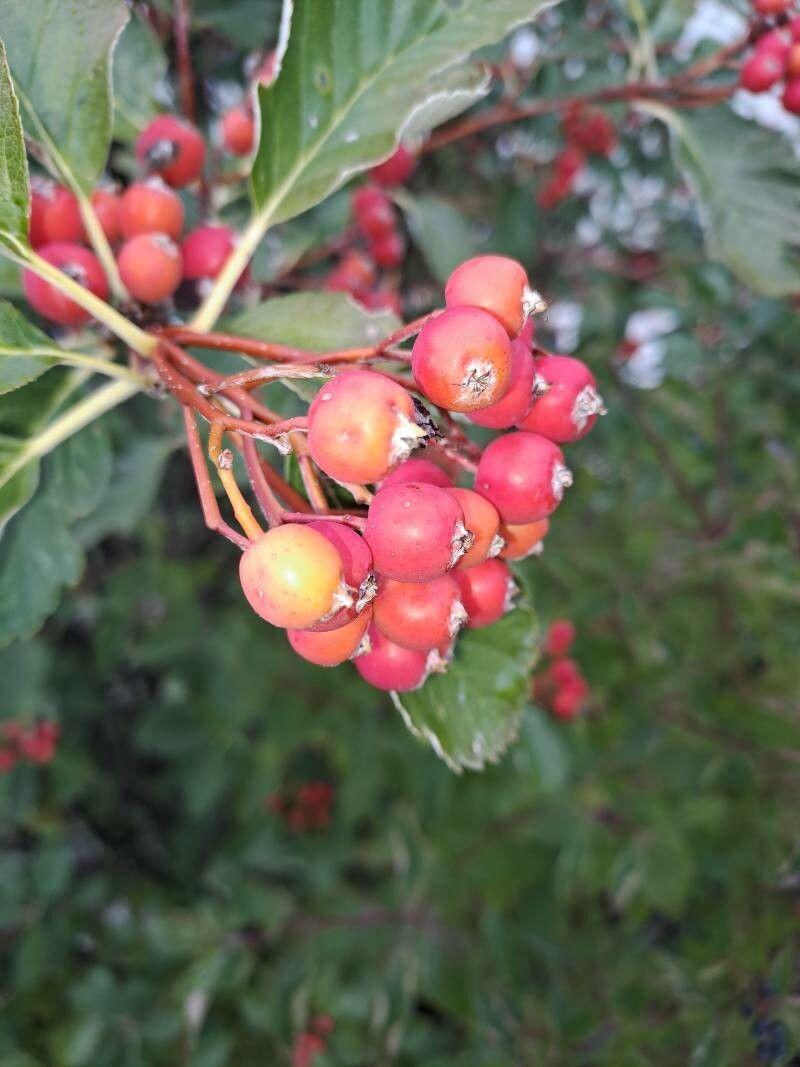
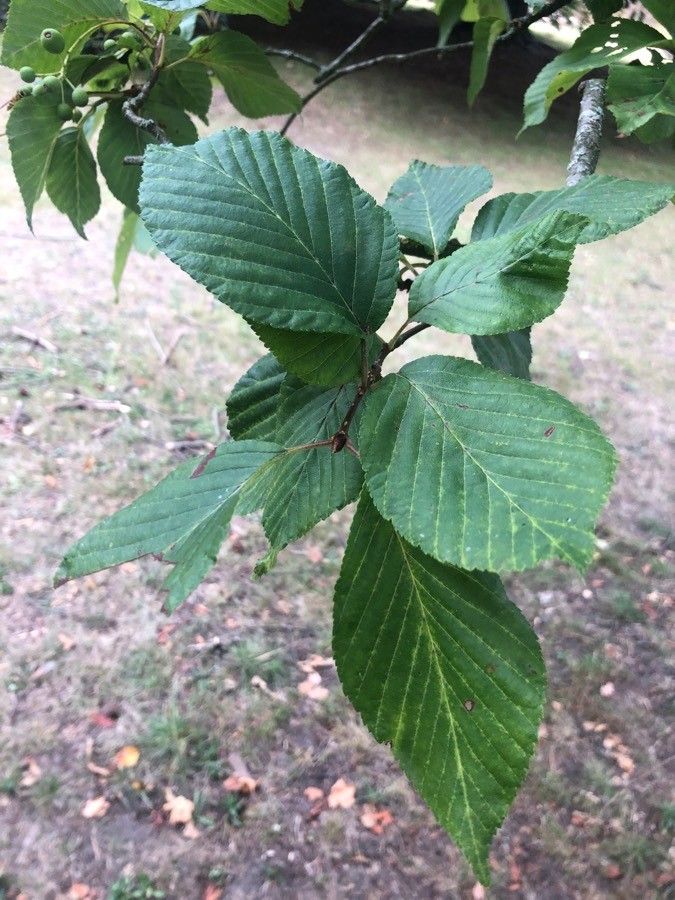
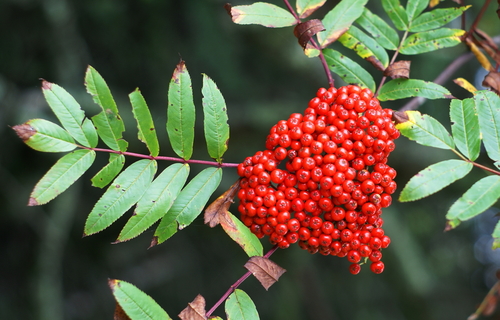
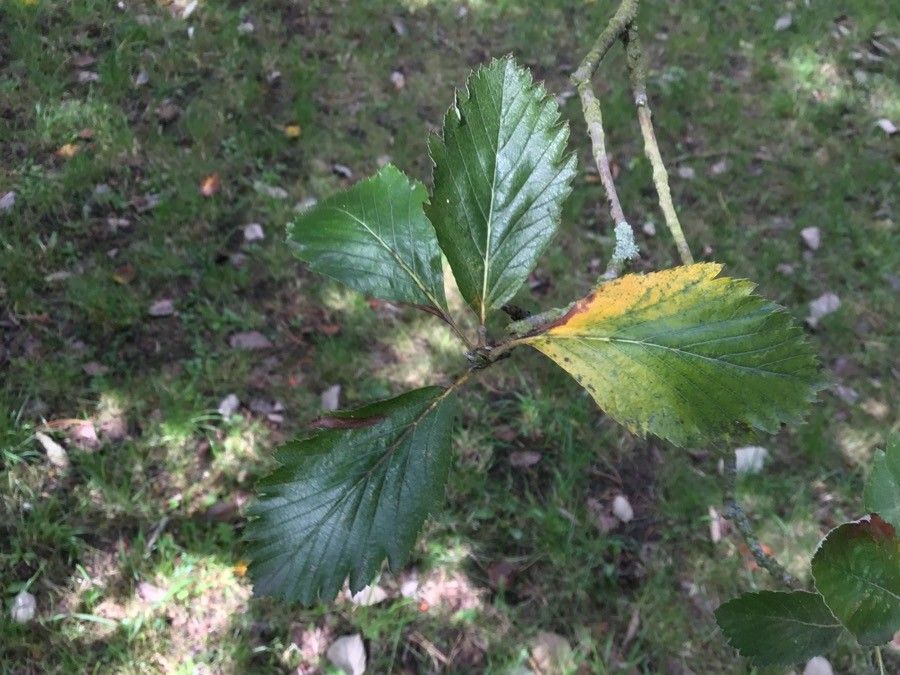
It is a deciduous shrub or small tree growing to 8–10 m (rarely 20 m) tall, often multi-stemmed, with trunks up to 30 cm (rarely 50 cm) diameter and grey bark; the crown is dense, broad ovoid, with numerous erect branches. The leaves are glossy dark green above, and densely hairy with white hairs beneath, 6–10 cm long and 3–5 cm broad, broadest near the middle, shallowly lobed with seven to twelve forward-pointing lobes on each side of the leaf, bluntly pointed at the apex, and serrated margins. The autumn colour is dull grey-brown. The flowers are 10 mm diameter, with five white petals and 20 yellowish-white stamens; they are produced in corymbs 5–10 cm diameter in late spring. The fruit is a globose pome 10–12 mm diameter, bright red, maturing in mid autumn. The fruit is dryish, and eaten by thrushes and waxwings, which disperse the seeds.Its closest relatives are some of the endemic British whitebeams, notably Sorbus anglica, which differs only in slightly broader leaves. It is also closely related to Sorbus intermedia (Swedish whitebeam), which differs in having the leaves grey-white below and more deeply lobed, with the lobes spreading rather than forward-pointing, the fruit oval and less bright red, and in forming a stouter tree with a single trunk and more horizontal branching. All are tetraploid apomictic species which breed true without pollination, and ultimately of hybrid origin between Sorbus aria and Sorbus aucuparia.
Mougeot's whitebeam demonstrates strong resistance to disease and is generally not susceptible to illnesses. As for care, the plant is fairly low-maintenance. When grown outdoors it needs minimal watering, and larger specimens typically do not require pruning. Smaller plants, however, should be pruned after they finish blooming. Mougeot's whitebeam is suitable for anyone with an outdoor area, such as a garden or deck, and does not demand much care experience.
How to keep Sorbus Mougeotii.
Light
Mougeot's whitebeam comes from open habitats, like sunny meadows and forest edges, which offer plentiful light. It does best in Full Sun but can also tolerate Partial Sun, adapting well to a variety of sunlight conditions.
Water
Mougeot's whitebeam has moderate water needs. It is drought-tolerant but benefits from occasional moisture. This plant typically requires watering every 2 to 3 weeks, maintaining a balance between hydration and dryness. As a deciduous outdoor plant, its water needs change with the seasons, especially during the growth season when rainfall is beneficial.
Temperature
Mougeot's whitebeam is highly adaptable to a variety of climate conditions, whether in scorching summers or cold winters. Nevertheless, it has an optimal temperature range for growth. If temperatures become too high, the plant is vulnerable to heat and humidity stress, which can cause it to die. In areas where temperatures approach the lower limit of its cold tolerance, taking insulating measures to protect the plant is important.
Fertilizer
Timing is essential for feeding Mougeot's whitebeam. Apply fertilizer in early spring and continue monthly up to early summer. The fertilizer encourages attractive flowering and supplies energy during both dormant and active growth periods.
Pruning
Mougeot's whitebeam showcases white flowers and red berries, which thrive after early spring pruning. To promote healthy growth, remove any dead wood and shape the tree naturally. This will enhance air circulation and allow more light to penetrate. Be sure to use clean, sharp tools to maintain the tree's health and resilience, which will also improve its appearance and vitality.
Botanical profile.
- Plant Type
- Tree, Shrub
- Life Cycle
- Perennial
- Genus
- Sorbus
- Family
- Rosaceae
- Hardiness Zone
- 4-7
- Mature Height
- 2.13 m to 14.94 m
- Mature Spread
- 9.14 m
- Leaf Color
- Green, Dark Green
- Leaf Type
- Deciduous
- Flower Color
- White
- Flower Size
- 1.02 cm to 1.52 cm
- Bloom Time
- Mid spring, Late spring
- Planting Time
- Spring, Summer, Autumn
- Harvest Time
- Late summer, Early fall, Mid fall
Other names.
Reader questions.
What's the best way to water my Mougeot's whitebeam?
To ensure excellent root development, consider placing a garden hose at the base of your plants. It's important to avoid directly spraying the leaves and know that if your plants are outdoors and exposed to direct sunlight, their leaves may require more watering. You can use bubblers or soaker hoses to keep the roots moist. When adding or removing plants, use soaker hoses that cover the entire garden or bed to help push the roots deeper. After watering, drain any excess water and allow the soil to dry before watering again. To prevent diseases, water at ground level. On sunny days, you might want to spray the entire bush with water. Regardless of whether your plants are potted or in the ground, remember that Mougeot's whitebeam prefers deep watering rather than light sprinkling.
What are the sunlight requirements for Mougeot's whitebeam?
Mougeot's whitebeam requires full sun, defined as over 6 hours of sunlight daily, to thrive but can also tolerate partial sun, approximately 3-6 hours of sunlight. It's vital to observe the movement of sunlight through your garden to choose the best spots that provide the right balance of light and shade, ensuring the plant's happiness. Originating from sunny meadows and forest edges, which provide ample light, Mougeot's whitebeam is well adapted to various sunlight conditions.
What should I do if I give too much/not enough water to Mougeot's whitebeam?
When a Mougeot's whitebeam plant is overwatered, it may exhibit yellowing, dropping, and wilting leaves. The plant may also appear dull and unhealthy, with mushy stems. It is advisable to adjust your watering schedule to prevent these problems. Conversely, wilting could also be a sign of under watering, which causes crispy and dry leaves. When the soil is dry, watering alone may not be sufficient, and a thorough watering is recommended. However, even with enough water, the plant may still have dry and yellow leaves due to root damage, which takes a few days to recover. Therefore, it is important to always check the moisture levels when keeping Mougeot's whitebeam indoors and avoid overwatering. The presence of black spots on the leaves indicates the need to let the soil dry by refraining from watering for a few days. Overwatering can result in root rot, so it is crucial to transfer the plant to a different pot if discolored and slimy roots are observed. It is essential to prevent root rot by not allowing the soil to become too soggy. When planting Mougeot's whitebeam outdoors, it is recommended to check the soil moisture level by digging a bit deeper. If the soil is too dry, it signifies underwatering, and adequate watering is necessary for the plant's recovery.
How can artificial lighting benefit indoor plants, and what are the recommendations for Mougeot's whitebeam?
Artificial lighting can offer a vital solution for indoor plant growth when natural sunlight is insufficient. It promotes faster, healthier growth by mimicking natural light conditions. For Mougeot's whitebeam, LED lights are recommended because they can provide specific wavelengths needed for the plant. Full sun plants require 30-50W/sq ft of artificial light, while partial sun plants need 20-30W/sq ft. The light source should be placed 12-36 inches above the plant, and most plants need 8-12 hours of light per day to mimic natural daylight hours.
How often do I need to water my Mougeot's whitebeam tree?
The Mougeot's whitebeam prefers deep, infrequent watering. It's important to give them a gallon of water at a time, especially if they are planted in pots. Potted plants have limited water storage, so the soil dries out faster. If you live in a cold region, you'll need to water every 3 to 5 days. Water them in the morning when the soil is dry, either outdoors or indoors. You can check if the plant needs watering by observing the moisture level in the soil. When the top 2-3 inches of soil are dry, it's time for a thorough watering. During hot weather, you may need to check the soil moisture daily as the heat can quickly dry out the pot. For plants in a garden, irrigation is necessary. In a hot climate, watering once a week is usually sufficient. Only water when the top 2-3 inches of soil are too dry, indoors or outdoors. Take into account the amount of rainfall the plant has received and avoid overwatering to prevent root rot. If there has been a lot of rain, additional watering may not be necessary. Mougeot's whitebeam typically grows during spring and fall. If they are outdoors, using a layer of mulch about 3 to 4 inches deep can help conserve water. Sandy soil drains faster, so plants in this type of soil will need more frequent watering. On the other hand, clay soil retains moisture better, so plants in clay soil can go for 2-3 days without watering to allow the plant to dry out and prevent root rot. To keep track of watering schedules, you can mark the date on a calendar and pay attention to any wilting or drooping leaves, which may indicate that watering is needed.
What are the symptoms of light deficiency and excessive sunlight in Mougeot's whitebeam?
Light deficiency in Mougeot's whitebeam may manifest as small new leaves, leggy or sparse growth, faster leaf drop, slower or no new growth, and lighter-colored new leaves. Excessive sunlight can cause chlorosis (leaves turning yellow), sunscald (damage from intense sunlight), leaf curling (to reduce exposure), wilting (from water loss), and leaf scorching (brown, dry edges). These symptoms indicate a need to adjust the plant's light exposure for optimal health.
How much water should I give my Mougeot's whitebeam tree?
The Mougeot's whitebeam generally requires about a gallon of water on a regular basis. For potted plants, it is recommended to water them deeply until water begins to drip from the bottom of the pot. Allow the soil to dry before watering again. To track the amount of water given to your plant each week, you can use a water calculator or a moisture meter. During the flowering period, provide ample water but allow the moisture to evaporate to prevent root rot. If the Mougeot's whitebeam is planted outside and receives sufficient rainfall, additional watering may not be necessary. However, when the plant is young or newly planted, ensure it receives 1-2 inches of rain per week. As the Mougeot's whitebeam grows, it can typically rely on rainfall alone. Only in extreme heat or when there is no rainfall for 2-3 weeks should you consider giving the plant a full watering during the cooler parts of the day to protect it from heat damage. Additional watering will be needed during extended dry spells.
What solutions are recommended for addressing light-related issues in Mougeot's whitebeam?
To address light-related issues, gradually moving Mougeot's whitebeam to a sunnier spot is advised, aiming for at least 6 hours of direct sunlight daily for indoor plants, and using a south-facing window or artificial lighting if necessary. For outdoor plants, avoid sudden changes in light to prevent sunburn. Reducing obstructions and transplanting during the plant's dormant period can improve sunlight access. Note that affected parts may not recover, but new growth will be healthy after increasing light exposure.
Should I change how often I water my Mougeot's whitebeam based on the time of year or the weather?
The Mougeot's whitebeam plant needs regular watering when it comes to outdoor cultivation, but only in persistent dry weather. During the spring and fall, the soil should be kept moist but not soggy, providing alternating dry and moist conditions for optimal growth. In the summer, hot weather causes water to evaporate quickly, so extra watering is necessary if there is a lack of rainfall. However, during winter, the plant requires less water as it goes dormant and loses its leaves. A well-draining but moisture-retentive soil mixture, like terracotta, can help with water evaporation during this period. The plant can rely on fall and winter rains to survive, and watering can be skipped once it starts leafing out and going dormant. When the temperature becomes warmer in the spring, watering can be resumed to encourage growth and blooming. Proper drainage is crucial to prevent ponding or drought, especially during the winter. When the plant is potted, it has limited root growth, so regular watering is necessary, especially in the summer. Avoid shallow sprinkles that only reach the leaves as they can promote fungal growth and instead focus on deep soaking once or twice a week, depending on the weather. Even during dormancy in the fall and winter, the plants should not be allowed to dry out completely. However, overwatering should be avoided, as the plants do not like to sit in water for too long, and poor drainage can lead to death during winter. Additionally, applying mulch can help reduce stress, conserve water, and promote healthy blooms.
What do I need to watch out for when watering my Mougeot's whitebeam in different seasons, climates, or during different growing periods?
When planting Mougeot's whitebeam in the ground, it primarily relies on rain. However, if there is no rainfall for 2-3 weeks, it's important to water the plants deeply. If watering in summer, do it in the morning to avoid stressing the roots due to temperature differences. Don't water the bushes when it's too hot outside. Start mulching them in the spring when the ground is not too cold. The age of the plants is important, as newly planted ones often fail due to lack of water. Once the plants are established, reduce watering. In fall and winter, reduce watering further, especially if the soil has water-retaining material. Dry winds in these seasons can cause them to dry out, especially newly planted ones. Windy seasons require more watering. Plants in pots dry out faster and need more watering. Look out for signs such as less blooming and drying leaves. Watering potted plants can be complex and require fluctuating frequencies. Avoid letting the pot sit in water and don't use containers with saucers, bowls, or trays. Overwatering in fall can discolor the foliage. Regardless of climate or season, prevent overwatering. During the flowering months, increase watering frequency, but reduce it once the plants are fully grown. Water them adequately every 3 to 5 days, but don't follow a strict schedule. Check soil moisture by sticking a finger in the pot or using a moisture meter. Avoid overwatering or underwatering to prevent root rot and plant death.
Why is it necessary to water my Mougeot's whitebeam tree?
To ensure the health of the Mougeot's whitebeam, it is important to water it properly. The amount of water required depends on the weather and the type of soil. It is important to keep the soil moist, but not waterlogged. When planting the tree in the ground, be sure to provide enough mulch and avoid underwatering. For potted plants, water the base until it is moist. If growing for foliage, water the tree to a depth of 10 to 20 inches. During rainy periods, refrain from watering and allow the rainwater to provide the necessary nutrients.