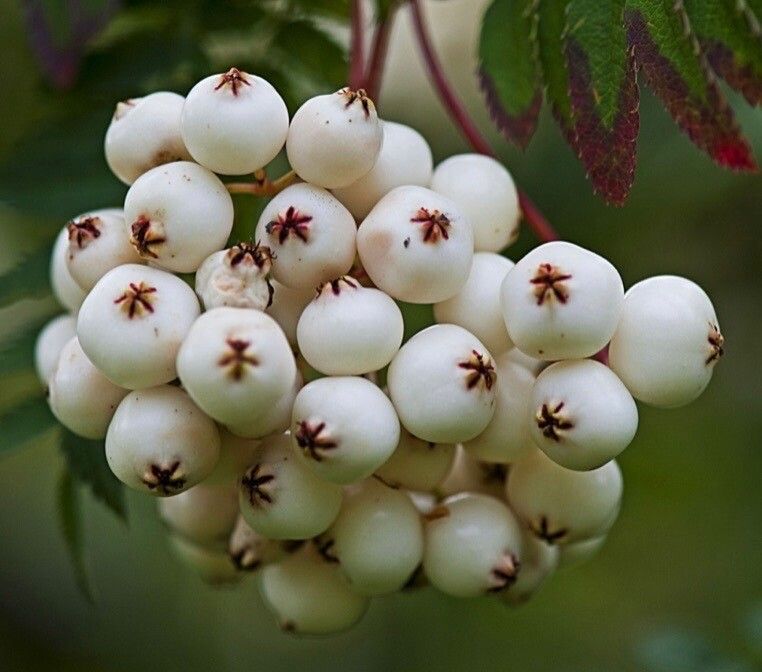
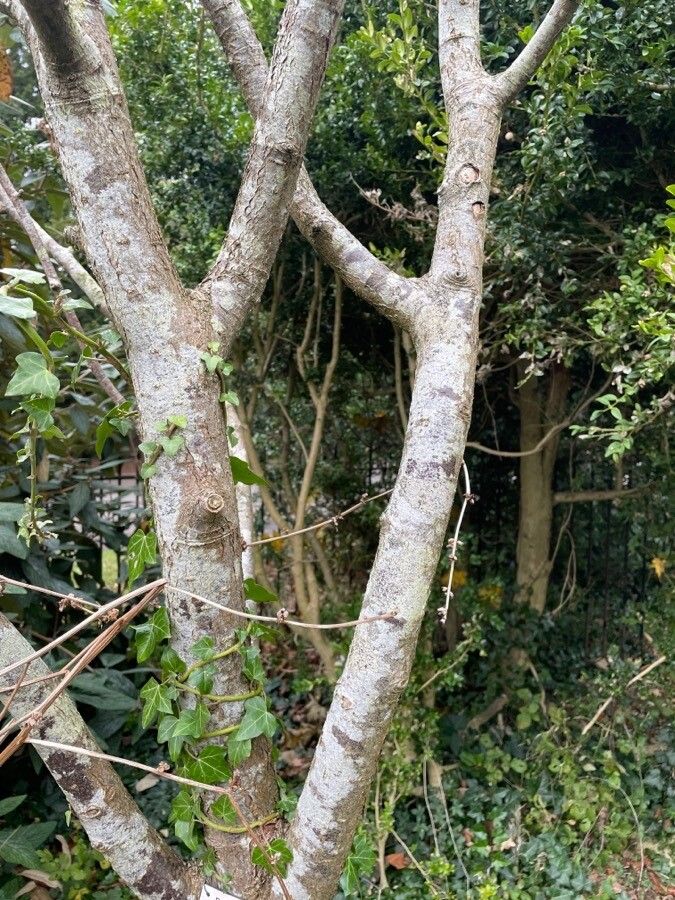
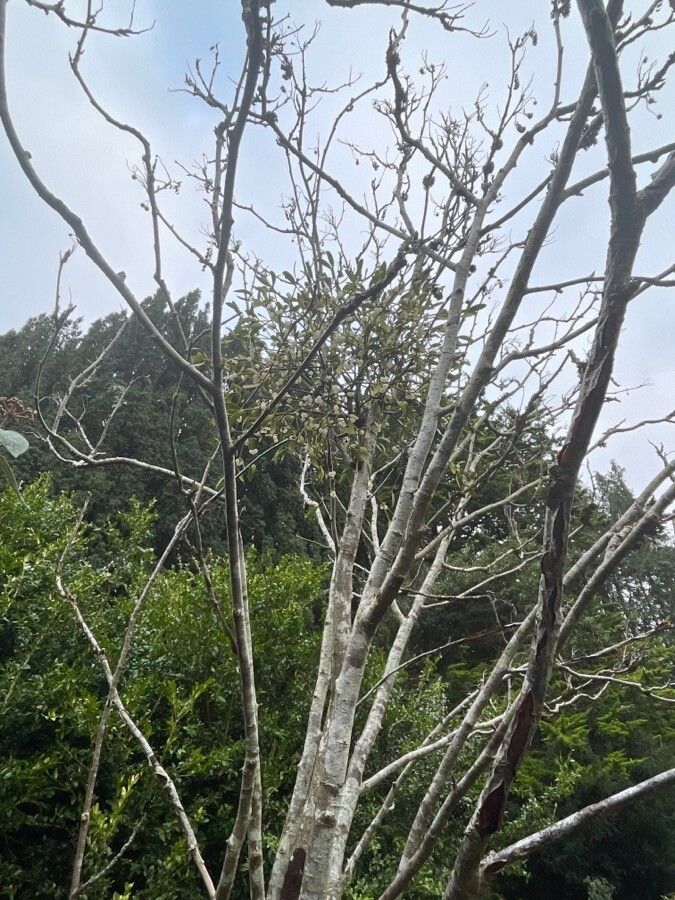
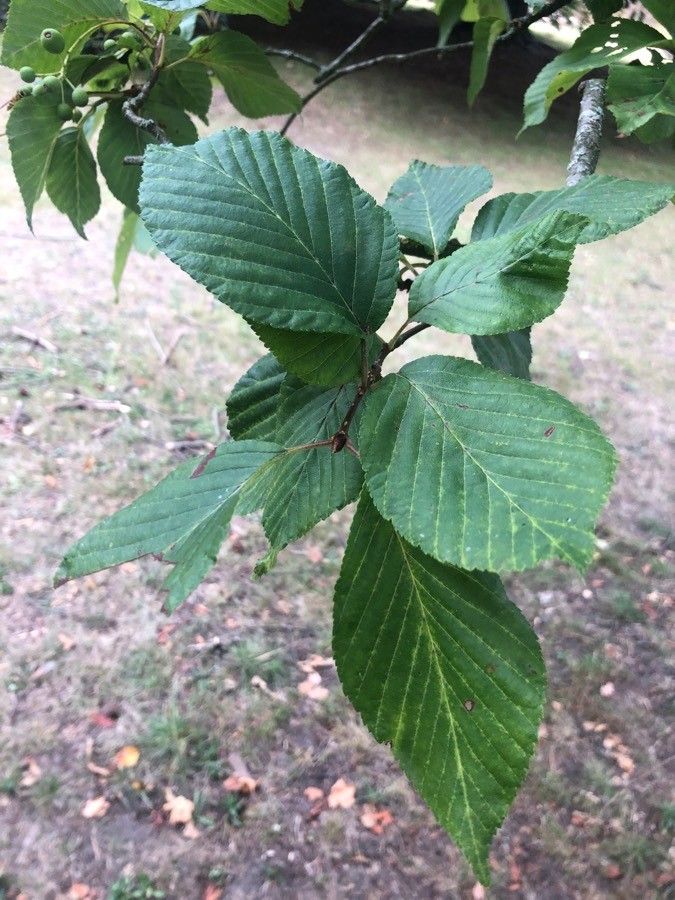
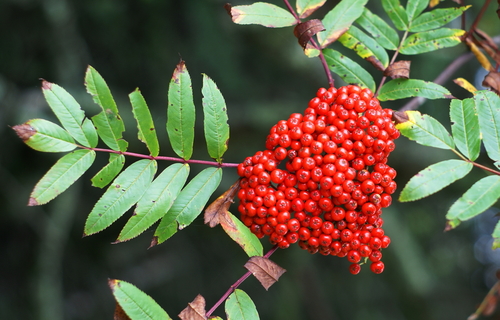
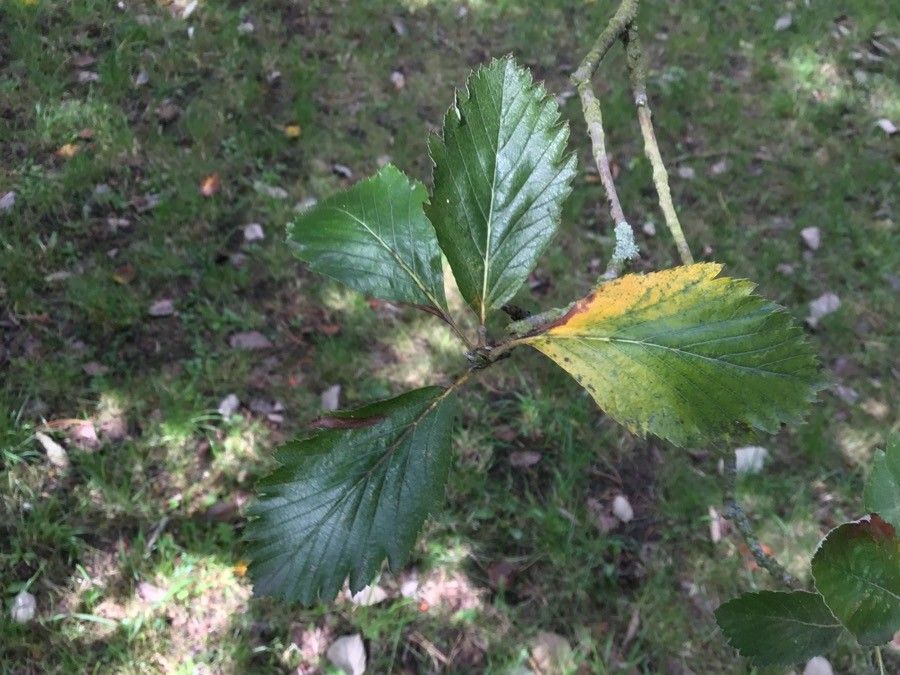
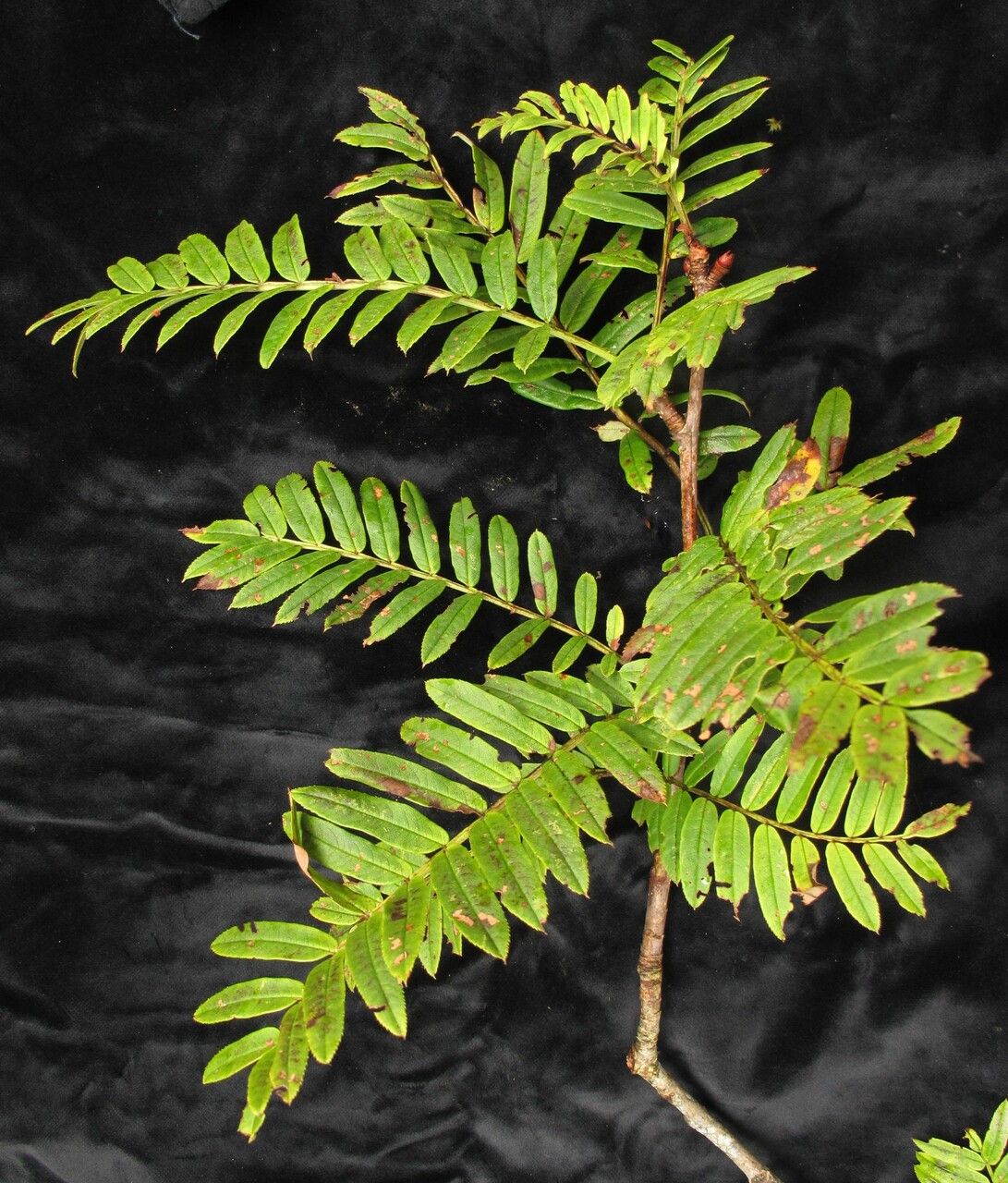
Sorbus cashmiriana, the Kashmir rowan, is a species of flowering plant in the family Rosaceae, native to the western Himalayas, including Kashmir. It is a small, usually short-lived deciduous tree growing to 6–8 m (20–26 ft), with a trunk up to 25 cm (10 in) in diameter. The bark is smooth grey or red-grey. The leaves are 15–23 cm (6–9 in) long, pinnate, with 15–21 leaflets, dark green on top and lighter green underneath, the petiole reddish, the leaflets 3–5.5 cm (1–2 in) long and 1.5–2 cm broad, with serrated margins. The flowers are 7–10 mm in diameter, with five very pale pink petals and pale yellowish stamens, produced in corymbs in the spring. Pollination is by insects. The fruit is a white to whitish-pink pome 12–15 mm in diameter, ripening in the autumn and often persisting long after the leaf fall into winter.
Kashmir rowan shows strong resistance to disease and is typically not susceptible to illnesses. Regarding maintenance, this species is fairly easy to care for. Planted outdoors, it needs only light watering, and mature specimens usually do not require pruning. Young or smaller plants, however, should be trimmed after flowering. Kashmir rowan is appropriate for anyone with outdoor space—like a garden or a deck—and does not demand extensive gardening experience.
How to keep Sorbus Cashmiriana.
Light
Kashmir rowan is native to open habitats, such as sunny meadows and forest margins, which provide abundant light. It does best in Full Sun but can also tolerate Partial Sun, demonstrating adaptability to various sunlight conditions.
Water
The Kashmir rowan, a tree native to mountainous regions, thrives with moderate moisture and can tolerate short periods of dryness. It should be watered every 1-2 weeks, although its water needs decrease during dormancy in the colder months. While it prefers outdoor conditions, the Kashmir rowan requires balanced watering for optimal health.
Temperature
Kashmir rowan is highly adaptable to different climate conditions, from blistering summers to freezing winters. That said, it needs a certain temperature range for optimal growth. If temperatures rise too much, the plant can experience heat and humidity stress that may be fatal. In locations where temperatures approach the lower bound of its cold tolerance, taking measures to insulate and protect the plant is necessary.
Fertilizer
Proper timing is important when fertilizing Kashmir rowan. Apply fertilizer in early spring and then every month until early summer. Fertilizer encourages attractive blooms and supplies energy during both dormant and active growth periods.
Botanical profile.
- Plant Type
- Tree
- Life Cycle
- Perennial
- Genus
- Sorbus
- Family
- Rosaceae
- Hardiness Zone
- 4-7
- Mature Height
- 7.92 m
- Mature Spread
- 7.92 m
- Leaf Color
- Green, Dark Green
- Leaf Type
- Deciduous
- Flower Color
- White
- Flower Size
- 1.02 cm to 1.52 cm
- Bloom Time
- Mid spring, Late spring
- Planting Time
- Summer, Autumn
- Harvest Time
- Late summer, Fall
- Native Area
- Pakistan, India, Afghanistan
Other names.