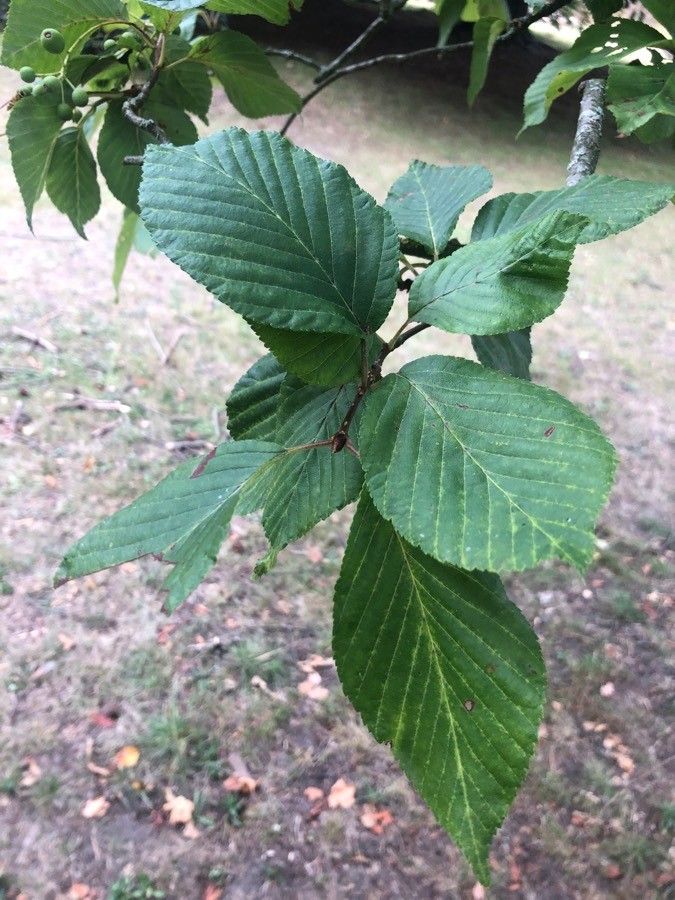
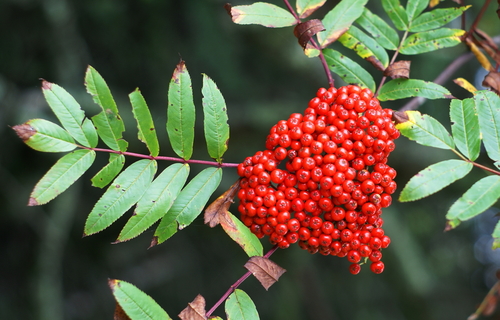
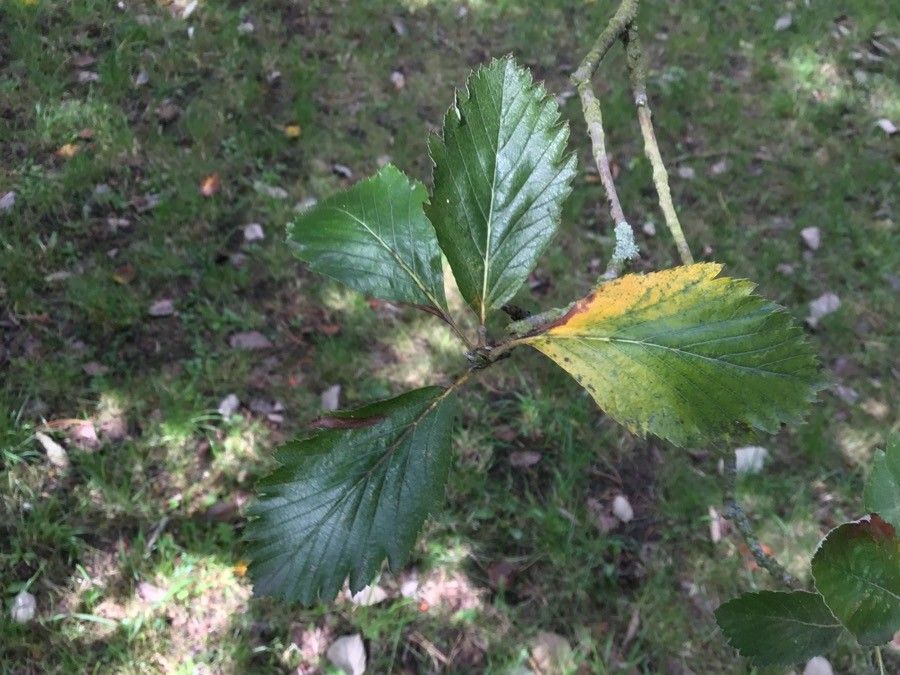
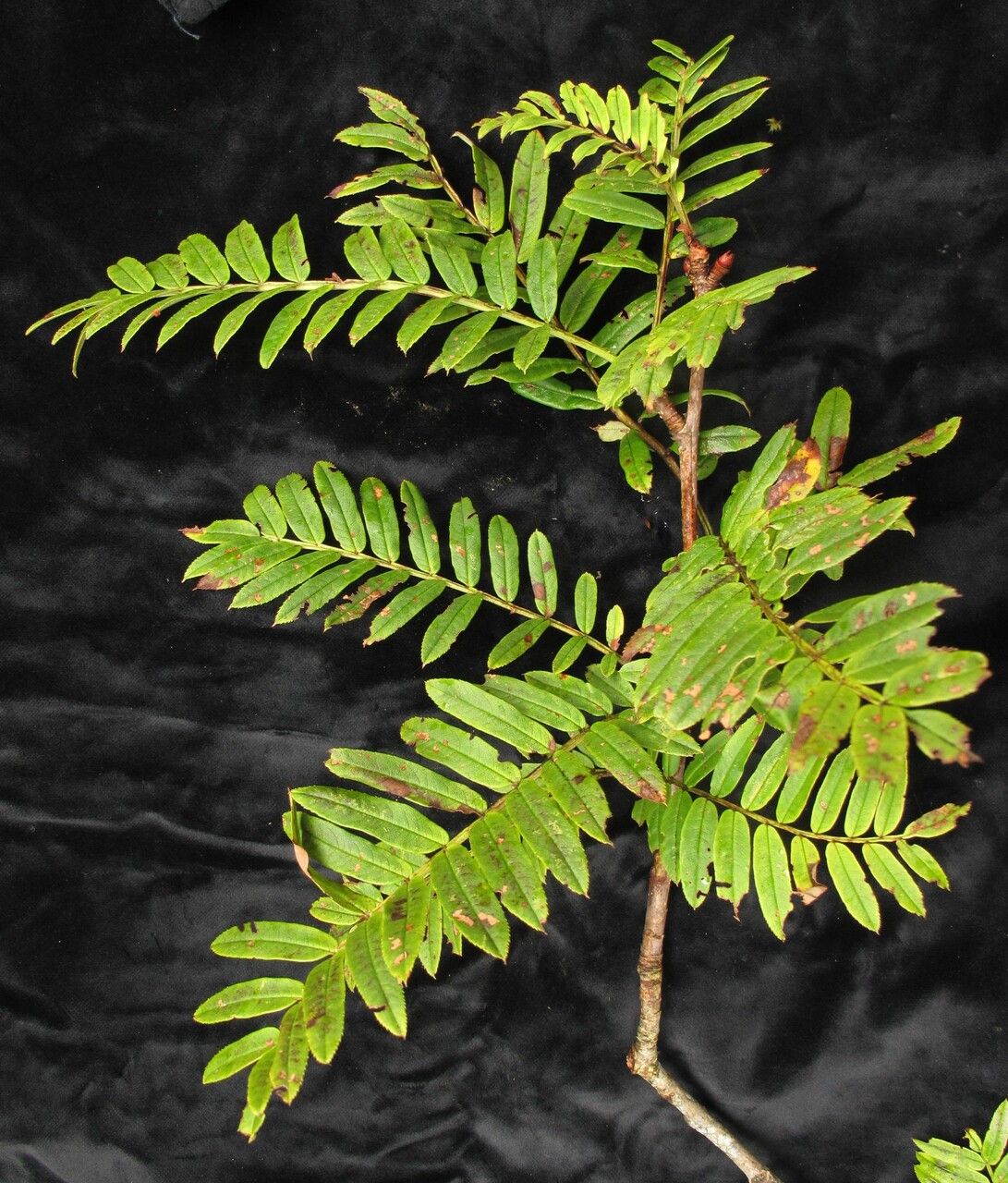
Sorbus aucuparia, commonly called rowan (UK: /ˈrəʊən/, US: /ˈroʊən/) and mountain-ash, is a species of deciduous tree or shrub in the rose family. It is a highly variable species, and botanists have used different definitions of the species to include or exclude trees native to certain areas; a recent definition includes trees native to most of Europe and parts of Asia, as well as northern Africa. The range extends from Madeira, the British Isles and Iceland to Russia and northern China. Unlike many plants with similar distributions, it is not native to Japan.The tree has a slender trunk with smooth bark, a loose and roundish crown, and its leaves are pinnate in pairs of leaflets on a central vein with a terminal leaflet. It blossoms from May to June in dense corymbs of small yellowish white flowers and develops small red pomes as fruit that ripen from August to October and are eaten by many bird species. The plant is undemanding and frost hardy and colonizes disrupted and inaccessible places as a short-lived pioneer species. The fruit and foliage have been used in the creation of dishes and beverages, as a folk medicine, and as fodder for livestock. Its tough and flexible wood has traditionally been used for woodworking. It is planted to fortify soil in mountain regions or as an ornamental tree and has several cultivars.
The European mountain-ash is a plant commonly cultivated to help stabilize soil in mountainous regions. During May and June, it blooms with clusters of dense yellow and white flowers. Following this, it bears attractive red, spherical fruits. As this species is native to Europe, it is aptly named the European mountain-ash.
The European mountain ash is resistant to disease and usually isn’t susceptible to illnesses. As for care, this plant is fairly low-maintenance. When grown outdoors it needs only light watering, and larger specimens typically don’t need pruning. Smaller plants, though, should be pruned after they finish blooming. European mountain asht is appropriate for anyone with an outdoor area, such as a garden or a deck, and doesn’t require much gardening experience.
How to keep Sorbus Aucuparia.
Light
The European mountain ash is suited to abundant sunlight for active growth yet tolerates situations where sunlight is scarce. Its native habitat accounts for this characteristic. Still, excessive sun may impede its growth, whereas insufficient light can cause stunted development or possibly lead to disease.
Water
The European mountain-ash is native to the cooler climates of Europe and thrives best in moderate moisture conditions. It prefers well-drained soil and typically needs watering every one to two weeks. This tree adapts well to temperate zones, where it can flourish outdoors with minimal supplemental irrigation, relying mainly on natural rainfall.
Humidity
This plant needs special care because it loves high humidity levels of 60-80% or more. The best way to achieve this is by placing a humidifier near the plant. Daily misting is also essential! Make sure the room has good ventilation.
Temperature
The European mountain ash favors growing in its native habitat with cool to moderate temperatures and is typically found in mountainous areas. It prefers a temperature range of 32 to 90 ℉ (0 to 32 ℃). During colder seasons, it is advisable to protect the plant with mulch to help stabilize soil temperature and prevent frost damage.
Fertilizer
Fertilize your European mountain ash in early spring to encourage healthy growth. Regular feeding improves overall health, leading to vigorous growth, better tolerance of harsh conditions, and increased resistance to pests and diseases. Follow a consistent fertilization schedule for your European mountain ash to keep foliage vibrant with deep color and a lush appearance.
Pruning
To ensure the health and shape of a European mountain-ash, it is best to prune it in early spring. Focus on removing any damaged branches during this time. Thinning the branches improves air circulation, which helps reduce the risk of diseases. Additionally, removing any suckers prevents them from sapping the tree's energy. Pruning during the tree's dormant period maximizes flowering and fruiting potential. Always use clean, sharp tools for precise cuts.
Botanical profile.
- Plant Type
- Tree, Shrub
- Life Cycle
- Perennial
- Genus
- Sorbus
- Family
- Rosaceae
- Hardiness Zone
- 3-8
- Mature Height
- 6.1 m to 14.94 m
- Mature Spread
- 2.13 m to 6.1 m
- Leaf Color
- Green, Yellow, Red, Orange
- Leaf Type
- Deciduous
- Flower Color
- White
- Flower Size
- 0.76 cm to 1.02 cm
- Bloom Time
- Late spring, Early summer
- Planting Time
- Spring, Autumn
- Harvest Time
- Mid summer, Late summer, Early fall
- Native Area
- Asia and Europe
Other names.
Reader questions.
When should I water my European Mountain-ash?
Watering your European Mountain-ash requires attention to several indicators to maintain its health and growth. The ideal time to water is when the top 1-2 inches of soil feel dry to the touch, indicating the plant needs hydration. Additionally, observe the leaves for signs of thirst; drooping or wilting leaves suggest the need for water. The season also affects watering frequency; in dry or hot weather, the European Mountain-ash will require more frequent watering, while in rainy seasons, it's crucial to ensure the soil isn't waterlogged. Over or under-watering has serious consequences, such as root rot or plant death, so it's essential to water the plant properly by recognizing these signs and considering the ambient temperature and humidity.
Why should I add fertilizer to my European mountain-ash tree?
To grow a healthy European mountain-ash, it is important to regularly fertilize regardless of the type you have. This will provide the necessary nutrients for stronger growth, enabling the plant to withstand challenging conditions and fight off diseases and pests. Maintaining the foliage's attractiveness is crucial, so implementing a consistent fertilization schedule specific to your European mountain-ash is crucial. This will result in vibrant, lush leaves with a deep color.
What are the sunlight requirements for plants?
Plants have varying sunlight requirements to thrive. Full sun plants need over 6 hours of sunlight daily, whereas partial sun plants require about 3-6 hours of sunlight. It's crucial to observe the movement of sunlight through your garden, selecting locations that provide an ideal balance of light and shade to ensure the well-being of your plants. This consideration helps in choosing the right spot for planting, ensuring plants receive the appropriate amount of sunlight for their growth and health.
What are the ideal growing conditions for European mountain-ash?
The European mountain-ash thrives in native environments with cool to moderate temperatures, commonly found in mountainous regions. Its preferred temperature range is 32 to 90°F (0 to 32°C). To protect the plant in colder seasons, it's suggested to use mulch to regulate soil temperature and prevent frost damage, although it possesses strong cold resistance and usually doesn't require special frost protection measures. Before the first freeze in autumn, watering the plant abundantly to keep the soil moist is recommended, helping prevent drought and water scarcity during the winter and early spring.
How should I water my European Mountain-ash?
Watering a European Mountain-ash should be done with care to ensure the plant's optimal growth in moist, well-drained soils. Utilize a standard watering can with a rose spout to mimic gentle rainfall, avoiding soil displacement around the roots. To ensure precise watering, a moisture meter can be a valuable tool in avoiding over- or under-watering. It's important to water the soil directly, rather than the foliage, to prevent fungal diseases. Ideally, water in the early morning to avoid wet conditions that can encourage disease. Providing thorough watering and allowing the top layer of soil to dry before the next watering will help maintain optimal hydration without waterlogging the soil.
When should I fertilize my European mountain-ash tree for the best results?
To ensure healthy growth, it is best to fertilize your European mountain-ash in late winter or early spring. This will provide the necessary nutrients for the tree to thrive once the weather warms up. If you live in a warm climate region, it can be beneficial to give your tree another round of fertilizer in early fall. This not only adds nutrients to the soil for the next growing season, but also helps the tree withstand the cold winter without foliage damage. Fertilizing earlier in the year will give the new branches ample time to grow and be more resilient against the winter cold.
How do European mountain-ash trees adapt to sunlight?
The European mountain-ash is well-adapted to receive ample sunlight for its active growth and can also withstand conditions where sunlight is not abundantly available. Originating from habitats that support its need for copious sunshine, the tree, however, may experience hindered growth if exposed to too much sun, while insufficient sunlight can lead to stunted development or potential disease onset. The balance of light is thus key to its healthy growth.
How can I protect European mountain-ash from low temperatures?
European mountain-ash is cold-tolerant and fares best above certain temperature thresholds. In the case of exceptionally cold winters where temperatures drop significantly, it's important to provide cold protection by wrapping the trunk and branches with non-woven fabric or cloth. If the winter temperatures are anticipated to fall below the plant's cold tolerance limit, taking these steps can help prevent damage. Additionally, after the cold season, pruning dead branches that fail to produce new leaves in spring is advisable.
How much water does European Mountain-ash really need?
The amount of water required by a European Mountain-ash varies based on several factors, including the size of the pot, root depth, and the overall size of the plant. The plant's shallow root system, around 30-40 cm deep, necessitates keeping the topsoil moist during watering sessions. Typically, 1-2 liters of water per session is sufficient, although this can vary. Observing the plant's health is crucial; lush green foliage indicates proper hydration, whereas yellow or wilted leaves may suggest overwatering. It's essential to avoid both overwatering and underwatering to prevent root rot and ensure the plant's healthy growth. Regular checks of soil moisture and observation of the plant's condition will help maintain proper hydration levels.
When is it not a good time to fertilize my European mountain-ash tree?
There are a few times during the year when it is not recommended to fertilize your European mountain-ash. The first is in the early and mid-winter months when the plant is dormant and does not require feeding. Another time to avoid fertilization is during late spring and throughout summer. These seasons tend to be hotter and drier, which can have a negative impact on the plant if it is fertilized. To prevent any issues, it is best to follow a fertilization schedule that includes feeding only in early spring and early fall.
What role does artificial lighting play for indoor plants?
Artificial lighting is essential for indoor plants, especially when natural sunlight is insufficient, such as in winter or in spaces with less sunlight. Artificial lights, like LED lights, can provide the specific wavelengths needed for plants' growth, promoting faster, healthier development. Full sun plants require 30-50W/sq ft, partial sun plants 20-30W/sq ft, and full shade plants 10-20W/sq ft of artificial light. The distance between the light source and the plant should be 12-36 inches, with most plants requiring 8-12 hours of light per day to mimic natural daylight conditions.
What should I do if my European mountain-ash experiences high temperatures?
During summer, it's important to ensure the European mountain-ash does not exceed its maximum tolerable temperature. Exceeding this temperature can lead to lighter leaf coloration, dry and withered leaf tips, and increased susceptibility to sunburn. To mitigate these effects, you should trim away sunburned and dried-up parts and provide shade during the midday and afternoon sun, either by moving the plant to a more suitable location or using a shade cloth. Also, watering the plant in the morning and evening to keep the soil moist is beneficial for its health.