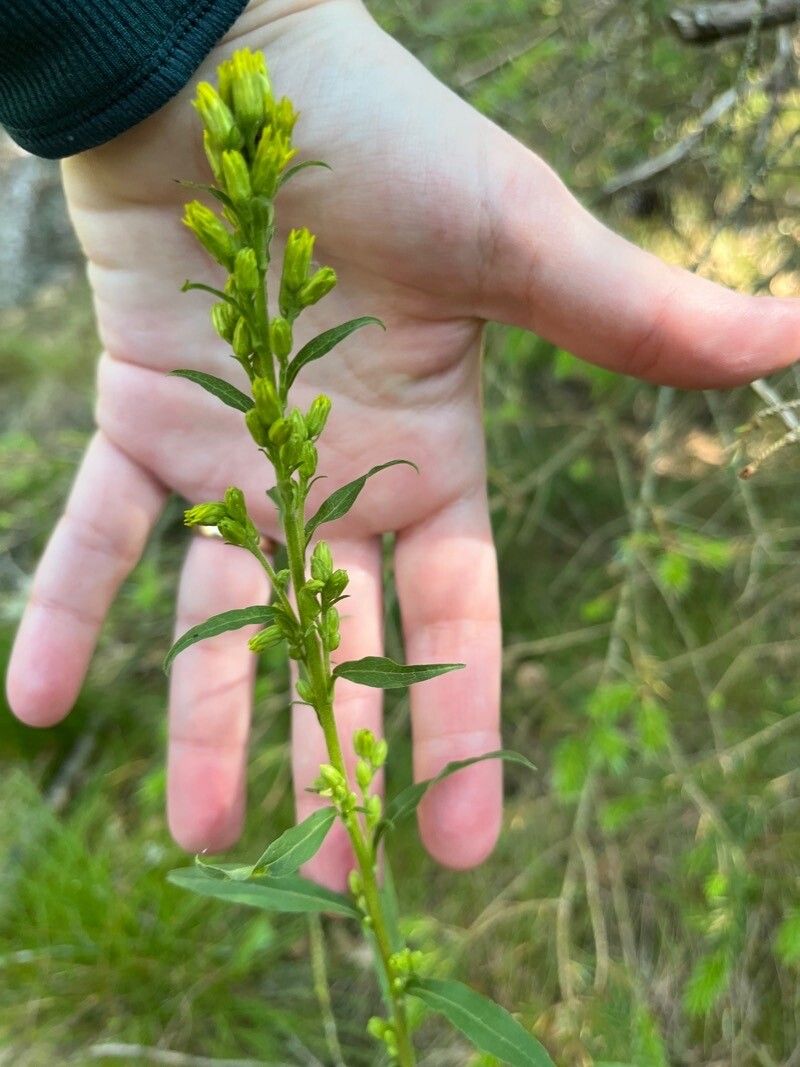
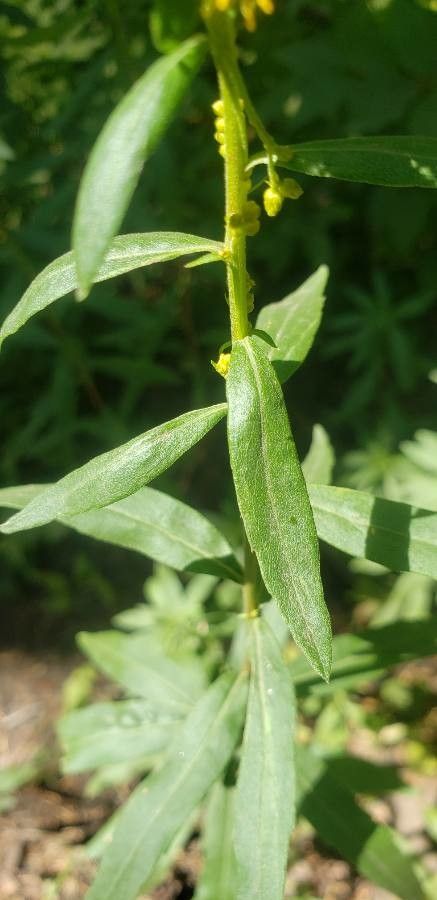
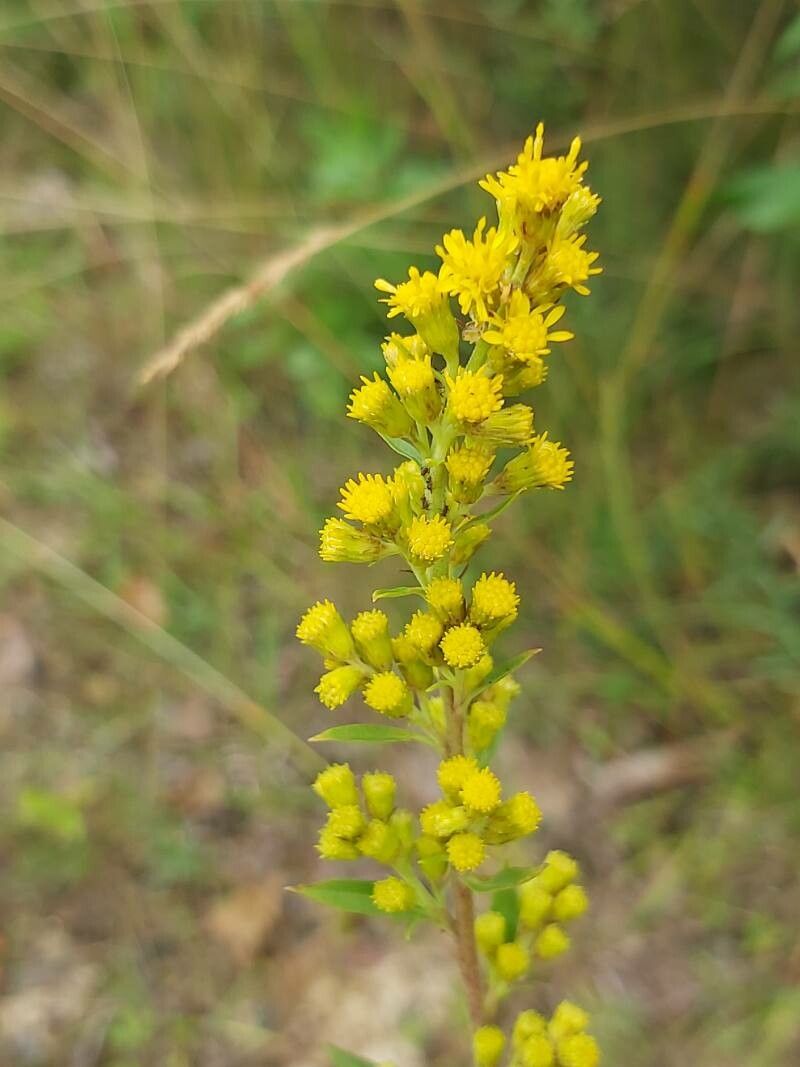
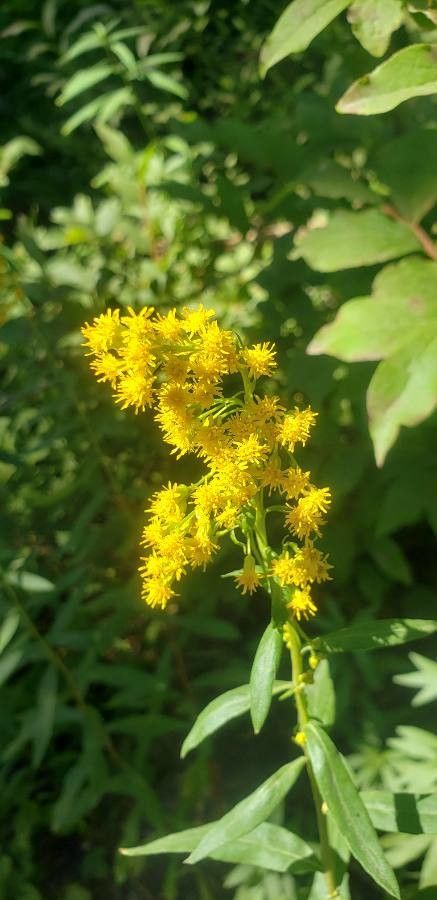
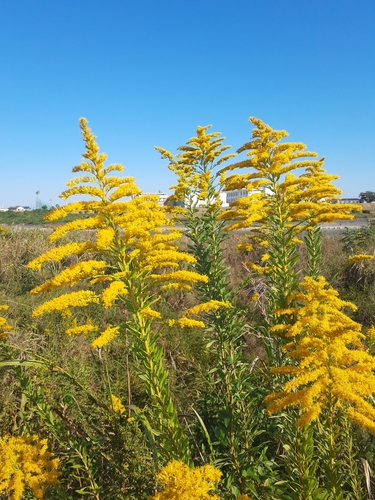
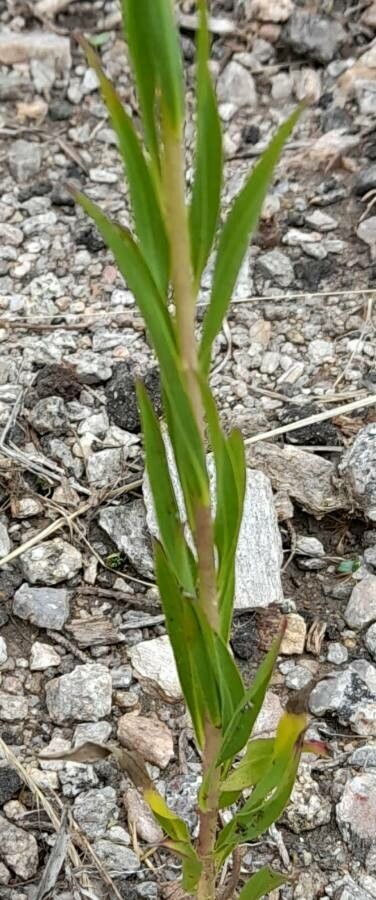
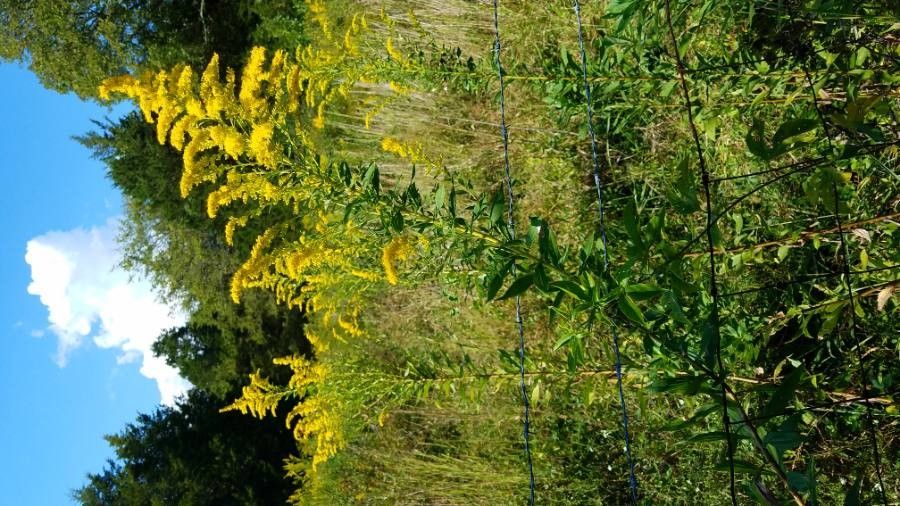
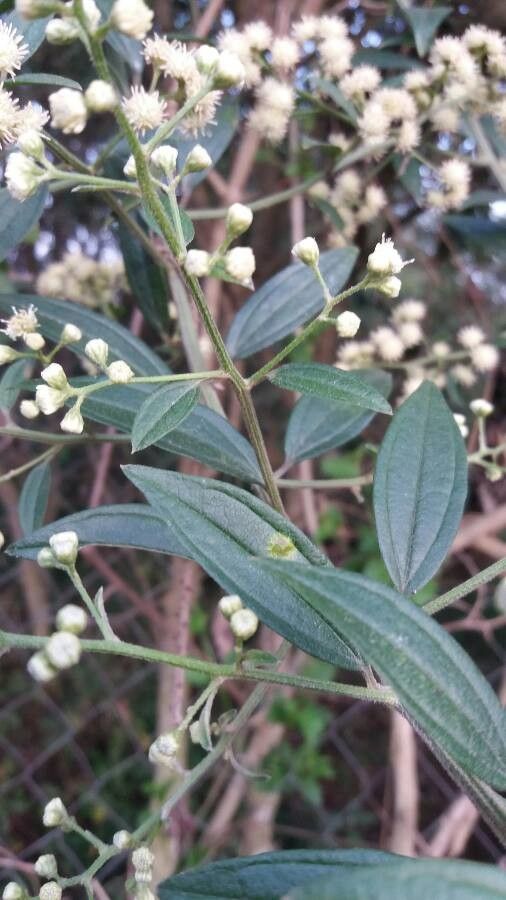
Solidago puberula, the downy goldenrod, is a plant species native to eastern North America from Nova Scotia and Ontario south to Florida and Louisiana. Two subspecies are commonly recognized: Solidago puberula subsp. puberula Solidago puberula subsp. pulverulentaSubsp. pulverulenta has smaller but more numerous leaves, generally 50–110 leaves 10–40 mm (0.39–1.57 in) long halfway up the stem, as opposed to 10-60 leaves 40–50 mm (1.6–2.0 in) long for subsp. puberula. Solidago puberula is a perennial herb up to 100 cm (39.5 in) tall, with a branched woody rootstock. It can have 1-5 puberulent (hairy) stems. Leaves are toothed, tapering at the tip, puberulent on both sides. Flowering heads number 15–250, in an elongate, paniculiform array. Ray flowers are yellow, 9–16 per head. Disc flowers number 6–15 per head, each up to 3 mm (0.12 in) long.
Downy goldenrod is fairly disease-resistant and usually not prone to illnesses. That said, it can be vulnerable to pests and diseases present in its environment. These problems are typically minor. For care, the plant requires moderate maintenance. It should be pruned regularly to keep a neat appearance and support healthy growth. Fertilizing can also help encourage flowering. Downy goldenrod is well suited for anyone with outdoor space, such as a garden or patio, and does not demand extensive care experience. It may need more attention when grown indoors.
How to keep Solidago Puberula.
Light
Downy goldenrod does best in sites that receive plentiful light for most of the day, which encourages strong growth and abundant flowering. In its native habitat it is usually found in areas with substantial daily sun exposure. Too little light can hinder its growth, while too much may result in leaf scorch.
Water
Downy goldenrod thrives in open woodlands and prairies, where it prefers moderate moisture, ideally supplemented by weekly watering. While it can tolerate occasional dry spells, it flourishes in humid environments, which are crucial for its optimal growth. Seasonal rainfall patterns in temperate regions significantly affect its growth cycles and flowering.
Temperature
Downy goldenrod is native to temperate regions and prefers a temperature range of 32 to 95°F (0 to 35°C). Suitable seasonal temperature adjustments should be made to accommodate winter dormancy and active summer growth.
Fertilizer
The best time to fertilize Downy goldenrod is in early spring, when it is coming out of dormancy and starting active growth. Fertilization supplies essential nutrients needed for healthy development. Although Downy goldenrod has fairly low fertilizer requirements, applying fertilizer annually can improve its survival and encourage better, longer-lasting flowers.
Pruning
The downy goldenrod has vibrant yellow flowers and hairy stems. In order to promote the plant's health, prune it between early and late spring by removing any dead stems. Cutting the plant back by one-third will encourage bushier growth and more blooms. Be sure to sterilize your tools before pruning to prevent the spread of disease. This practice not only enhances the plant's appearance and structure but also helps prevent legginess.
Pot & Repot
Downy goldenrod thrives when planted in pots with excellent drainage. Proper drainage prevents waterlogging, which supports healthy root development and enhances the plant's overall vitality.
Botanical profile.
- Plant Type
- Herb
- Life Cycle
- Perennial
- Genus
- Solidago
- Family
- Asteraceae
- Hardiness Zone
- 3-9
- Mature Height
- 30 cm to 91 cm
- Mature Spread
- 61 cm
- Leaf Color
- Green
- Leaf Type
- Deciduous
- Flower Color
- Yellow, Gold
- Flower Size
- 0.76 cm
- Bloom Time
- Late summer, Early fall, Mid fall
- Planting Time
- Spring, Autumn
- Harvest Time
- Fall
Other names.
Reader questions.
What are the sun requirements for Downy goldenrod?
Downy goldenrod requires specific sun conditions to flourish. For full sun, it needs above 6 hours of sunlight, and for partial sun, about 3-6 hours of sunlight is necessary. Observing how sunlight moves through your garden helps in choosing the perfect spots that offer a balance of light and shade, ensuring your plants' happiness. It is essential for the vigorous growth and prolific flowering of Downy goldenrod that it receives abundant light for the majority of the day, as it thrives in its natural habitat under substantial daily sunlight exposure.
What are the essential growing conditions for Downy goldenrod?
Downy goldenrod, also known as Solidago puberula, thrives in temperate zones and prefers temperatures between 32 to 95°F (0 to 35°C). It is adapted to strong cold resistance, meaning special frost protection measures are not typically necessary. However, in regions where winter temperatures may fall below -35°C, protective measures such as covering the plant with soil or straw are recommended. To prepare for winter dormancy and to ensure the plant has adequate water during the colder months, it's advisable to water it abundantly before the first freeze, ensuring the soil stays moist through winter and early spring.
How can artificial lighting be used for Downy goldenrod?
When natural sunlight is insufficient for Downy goldenrod, especially during winter or in less sunny spaces, artificial lighting provides a vital alternative. It promotes faster and healthier growth by mimicking natural sunlight conditions. LED lights are popular for indoor plant lighting as they can be customized to offer the specific wavelengths needed by the plants. Full sun plants should receive 30-50W/sq ft, partial sun plants 20-30W/sq ft, and full shade plants 10-20W/sq ft of artificial light. The light source should be placed 12-36 inches above the plant, and most plants require 8-12 hours of light per day.
How does Downy goldenrod respond to low temperatures, and what are the recommended solutions?
Downy goldenrod is notable for its cold tolerance, preferring temperatures above 0°C and typically remaining viable above -30°C. Although it can withstand temperatures down to -35°C without noticeable changes during winter, temperatures below this threshold may lead to a decrease in spring sprouting or a complete lack of sprouting. The recommended solution for plants that have experienced such cold is to carefully remove any parts that have failed to sprout in the spring, allowing for healthier regrowth.
What are the symptoms of inadequate lighting for Downy goldenrod?
Downy goldenrod shows several symptoms when exposed to inadequate lighting. These include small and lighter-colored new leaves, leggy or sparse growth, faster leaf drop, and a halt in new growth indicating the plant's struggle in poor light conditions. Additionally, symptoms like chlorosis, where leaves lose their green color and turn yellow, sunscald with pale or necrotic areas on the plant, leaf curling as a defense mechanism against extreme sunlight, wilting due to loss of turgor pressure, and leaf scorching characterized by brown, dry edges on leaves can also occur. These symptoms highlight the plant's need for appropriate sunlight to maintain its health and vitality.
What should be done if Downy goldenrod experiences high temperatures?
In the summer, maintaining Downy goldenrod's temperature below 35°C is vital for its health. Exposure to temperatures above 38°C can cause the leaves to lighten, become prone to curling, suffer sunburn, and in extreme cases, lead to the wilting and drying of the plant. To mitigate these effects, it's advisable to trim away sunburned and dried parts, move the plant to a shaded area during the midday and afternoon sun, or use a shade cloth to protect it. Additionally, watering the plant in the morning and evening can help keep the soil consistently moist and support the plant's well-being.
What solutions exist for Downy goldenrod facing insufficient light?
To address insufficient light for Downy goldenrod, indoor solutions include gradually moving the plant to sunnier locations to receive at least 6 hours of direct sunlight daily, using south-facing windows for maximum exposure, and considering artificial lights for additional support. Outdoors, it's recommended to adjust the plant's position to sunnier spots gradually to prevent sunburn. For ground settings, reducing sunlight obstructions by pruning nearby trees and considering transplanting smaller plants during their dormant period to sunnier locations can significantly improve light access. While parts of the plant affected by insufficient sunlight may not recover, increasing light exposure will ensure new growth is healthy.