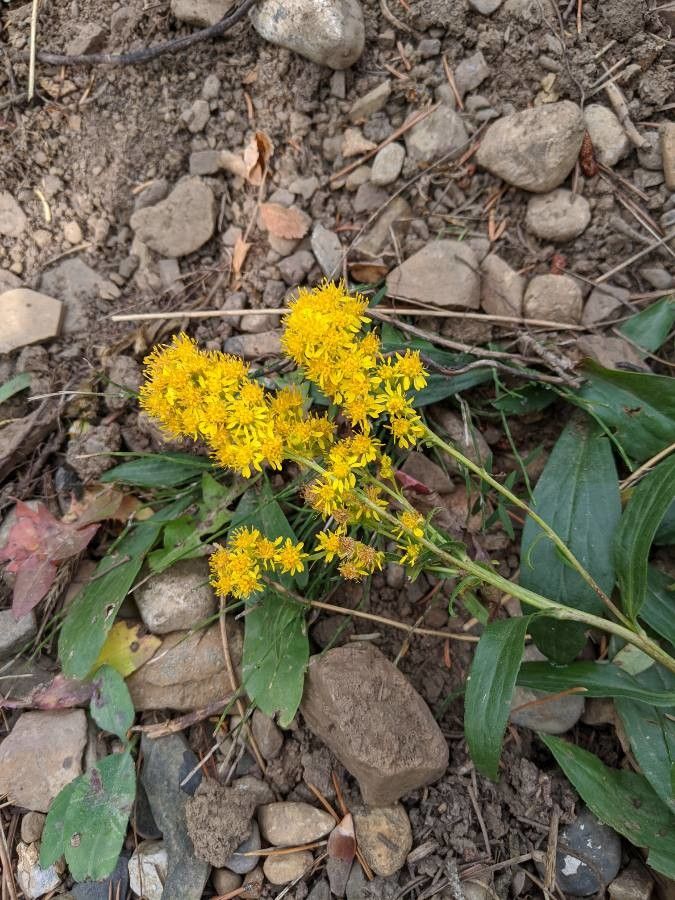
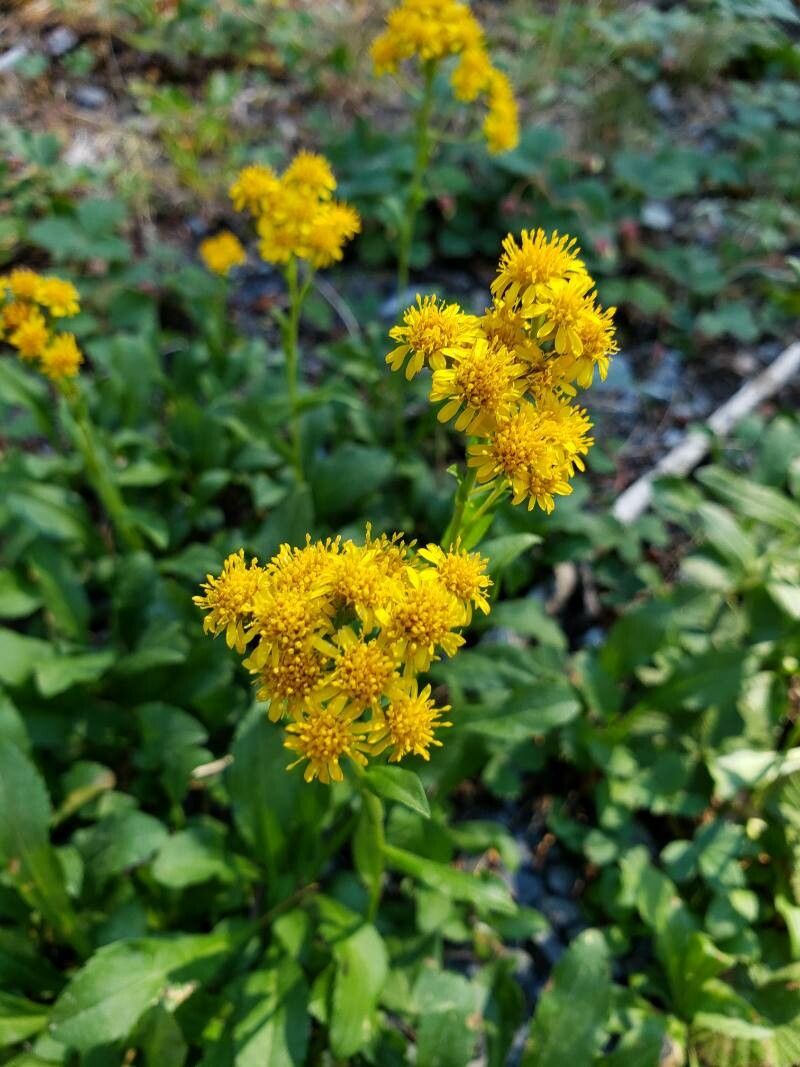
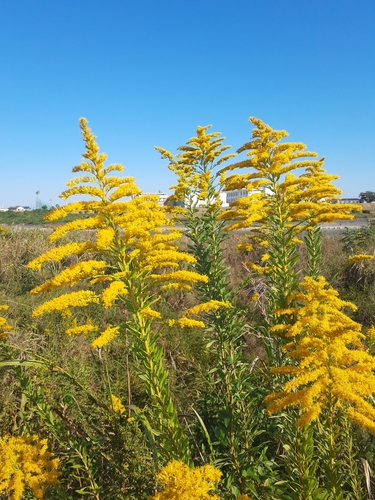
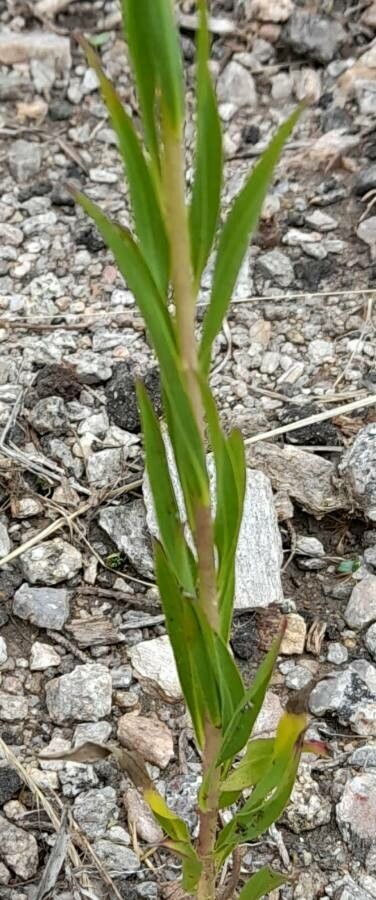
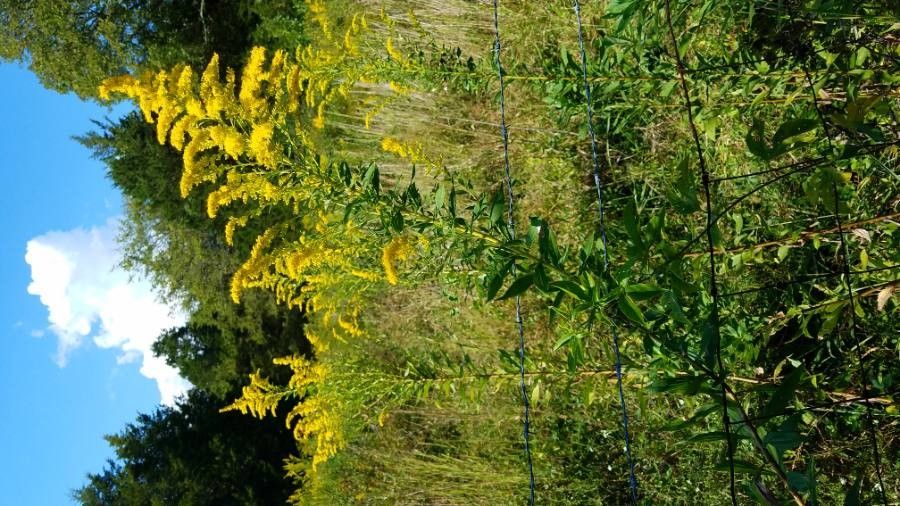
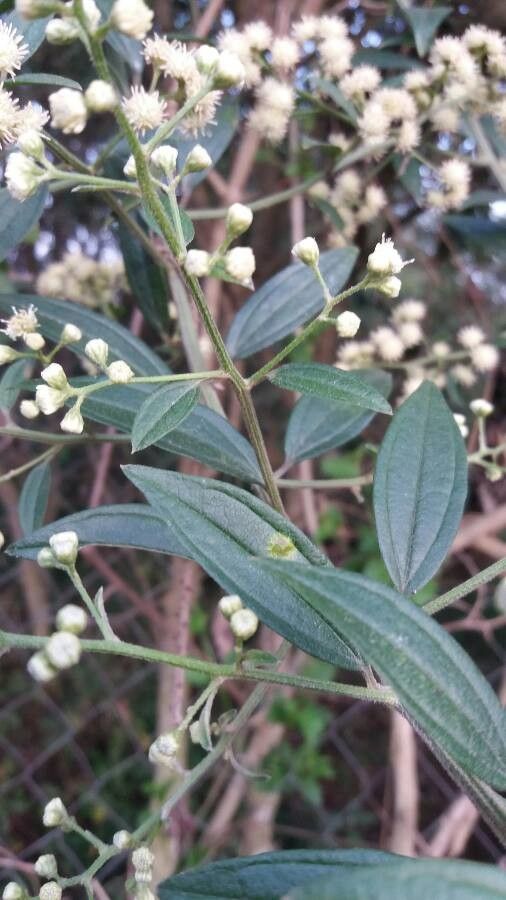
Solidago multiradiata, commonly known as the Rocky Mountain goldenrod, is a perennial herbaceous plant in the Asteraceae family. Native to North America, it thrives in various habitats, including meadows, prairies, and open woodlands. The plant typically reaches a height of 1 to 2 feet and has a bushy appearance with numerous small yellow flowers that bloom in late summer or early fall.
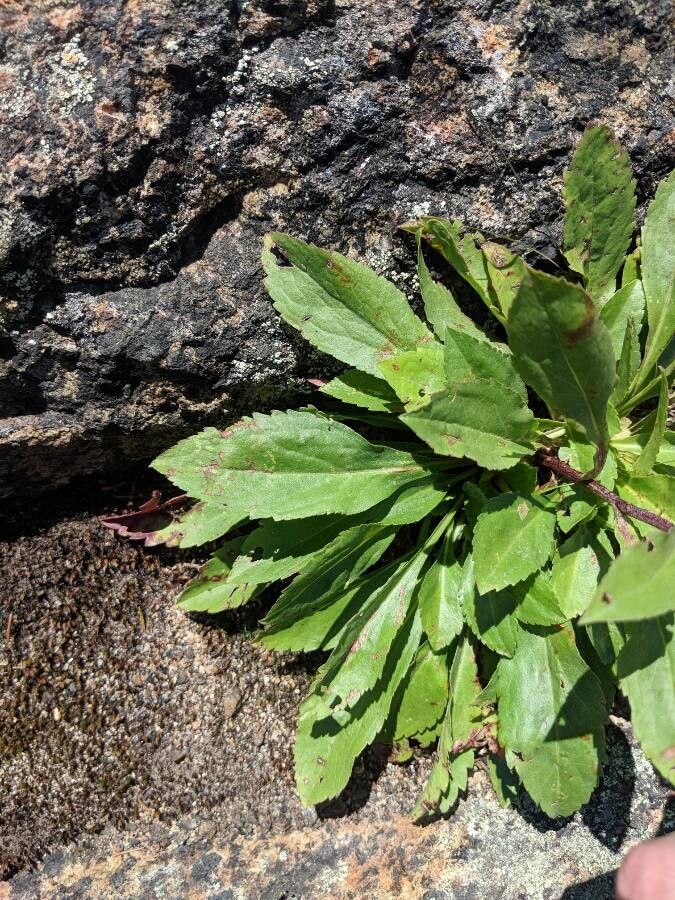
The leaves of Solidago multiradiata are lance-shaped with serrated edges, arranged alternately along the stem. The stem is smooth or slightly hairy and features numerous branches, adding to its bushy look.
Rocky Mountain goldenrod possesses several medicinal properties, including anti-inflammatory, antiseptic, and diuretic qualities. These make it useful for treating ailments such as urinary tract infections (UTIs) and arthritis pain, among others.
Additionally, Solidago multiradiata is an important food source for pollinators like bees and butterflies, thanks to its nectar-rich flowers. It also provides habitat for various bird species, which feed on its seeds during the winter months.
Overall, Solidago multiradiata is an important native species that plays a crucial role in maintaining ecological balance while offering medicinal benefits, making it a valuable addition to any garden or natural landscape.
Largeleaf goldenrod has strong resistance to disease and is generally not prone to illnesses. However, it can be vulnerable to pests and diseases present in its environment, and these problems are typically minor. In terms of care, the plant requires moderate maintenance. It should be pruned regularly to keep a tidy appearance and support healthy growth. Fertilizing can also help encourage flowering. Largeleaf goldenrod is suitable for anyone with outdoor space, such as a garden or patio, and does not demand extensive care experience. It may need more attention when grown indoors.
How to keep Solidago Multiradiata.
Light
Largeleaf goldenrod is a sun-loving, perennial herbaceous plant native to open habitats, commonly found in meadows and grasslands. It prefers full sun but can also tolerate partial sun.
Temperature
Largeleaf goldenrod can tolerate a broad range of temperatures, but its distribution may still be restricted by particular combinations of moisture and heat. It performs best in warm summer conditions with sufficient rainfall or watering. Extended periods of cloudy, rainy weather, as well as prolonged high temperatures, can raise the risk of Largeleaf goldenrod dying. In winter, protecting it from cold can increase the plant's chances of survival.
Fertilizer
The best time to fertilize a Largeleaf goldenrod is in early spring, as it exits dormancy and starts active growth. Fertilizing supplies essential nutrients needed for healthy development. Although Largeleaf goldenrod has fairly low fertilizer requirements, applying fertilizer annually can improve its survival and encourage better, longer-lasting blooms.
Pruning
The Rocky Mountain goldenrod is a hardy perennial known for its bright yellow flowers. To maintain its health, prune it in early spring by removing dead stems and thinning out crowded areas to enhance airflow. Be careful not to over-prune, as this can cause stress to the plant. With the right care, you can enjoy vibrant blooms and vigorous growth. For more detailed instructions, consult horticultural resources.
Pot & Repot
For thriving rocky mountain goldenrod, it's essential to have excellent drainage in pots. Good drainage prevents root rot and promotes healthy growth, so choosing the right pot and soil mix is crucial for successful cultivation.
Botanical profile.
- Plant Type
- Herb
- Life Cycle
- Perennial
- Genus
- Solidago
- Family
- Asteraceae
- Hardiness Zone
- 3-8
- Mature Height
- 30 cm to 91 cm
- Mature Spread
- 30 cm to 61 cm
- Leaf Color
- Green, Dark Green
- Leaf Type
- Deciduous
- Flower Color
- Yellow, Gold
- Flower Size
- 0.51 cm to 0.76 cm
- Bloom Time
- Mid summer, Late summer, Early fall
- Planting Time
- Spring, Summer, Autumn
- Harvest Time
- Early fall, Mid fall
Other names.
Reader questions.
What are the sunlight requirements for Rocky Mountain Goldenrod (Solidago multiradiata)?
Rocky Mountain Goldenrod (Solidago multiradiata) thrives in conditions where it can receive full sun, defined as more than 6 hours of sunlight per day, or partial sun, which entails about 3 to 6 hours of sunlight. It's important to observe the way sunlight moves through your garden throughout the day to choose the best spots that offer a healthy balance of light and shade for these plants. This ensures their well-being and promotes optimal growth.