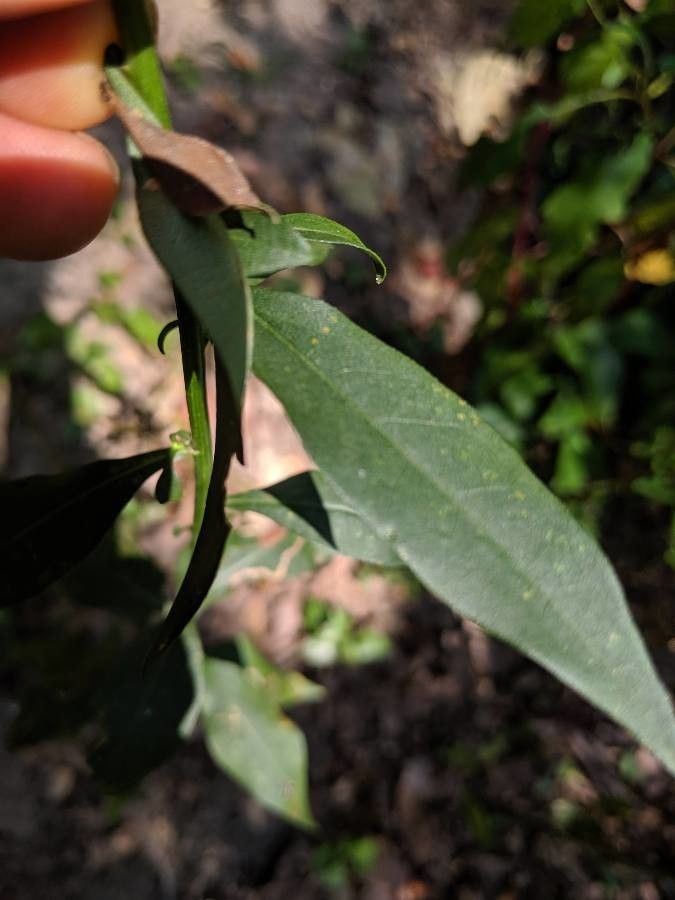
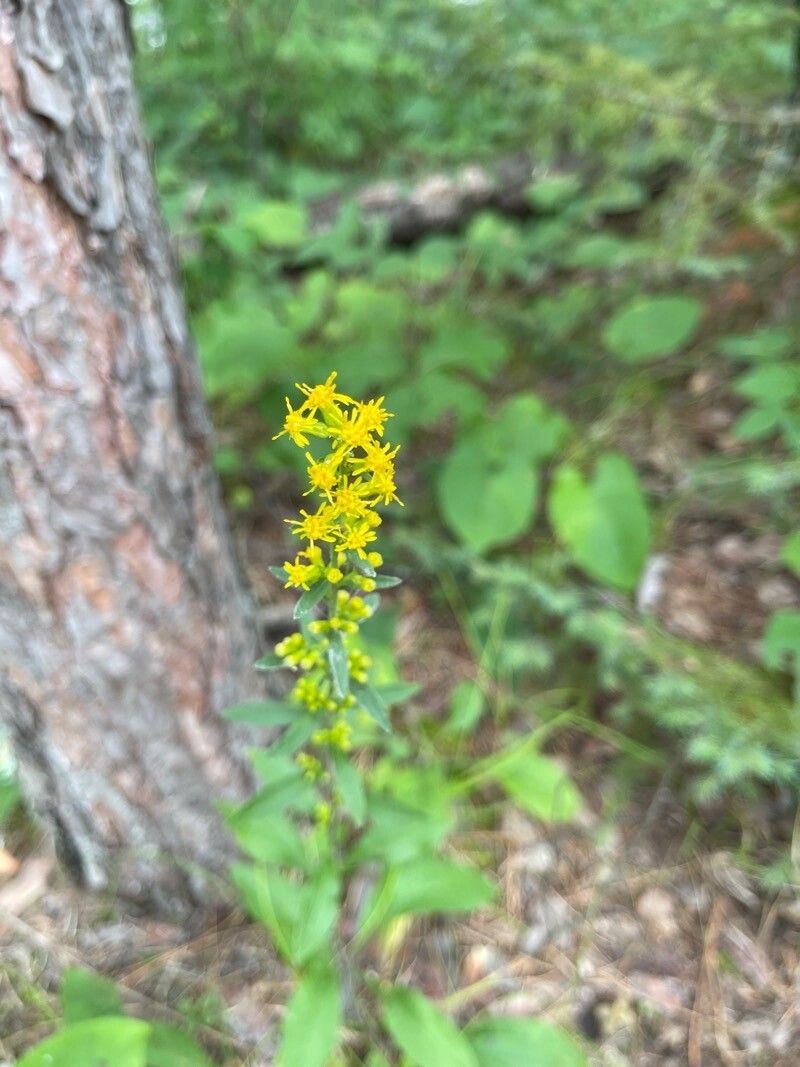
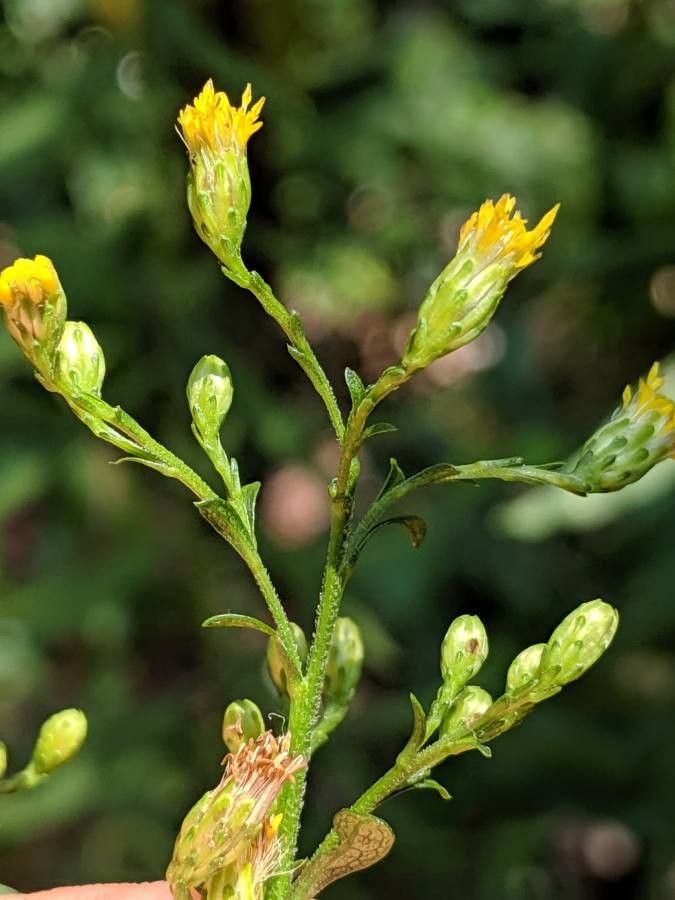
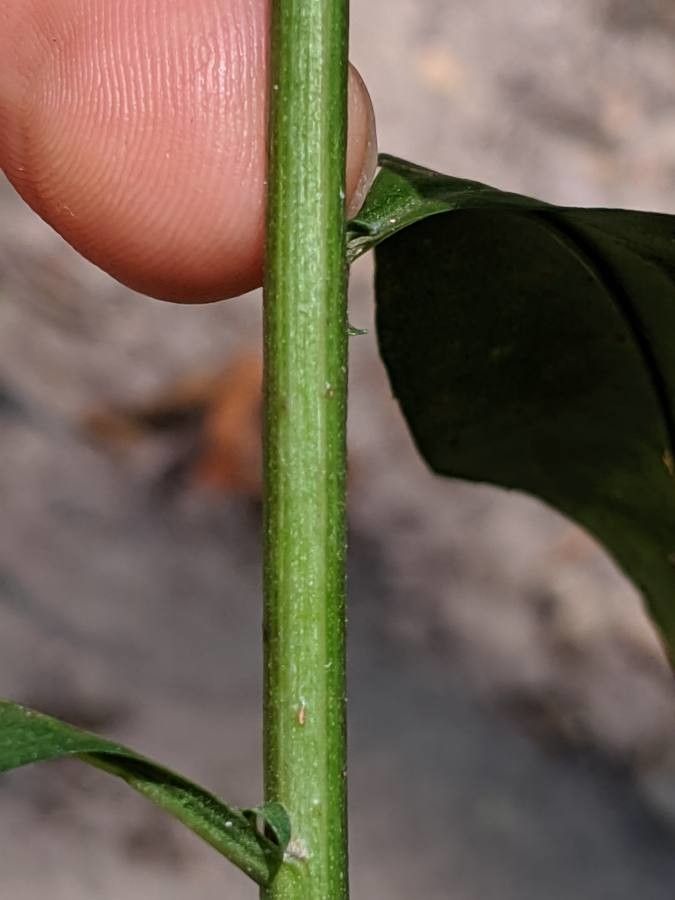
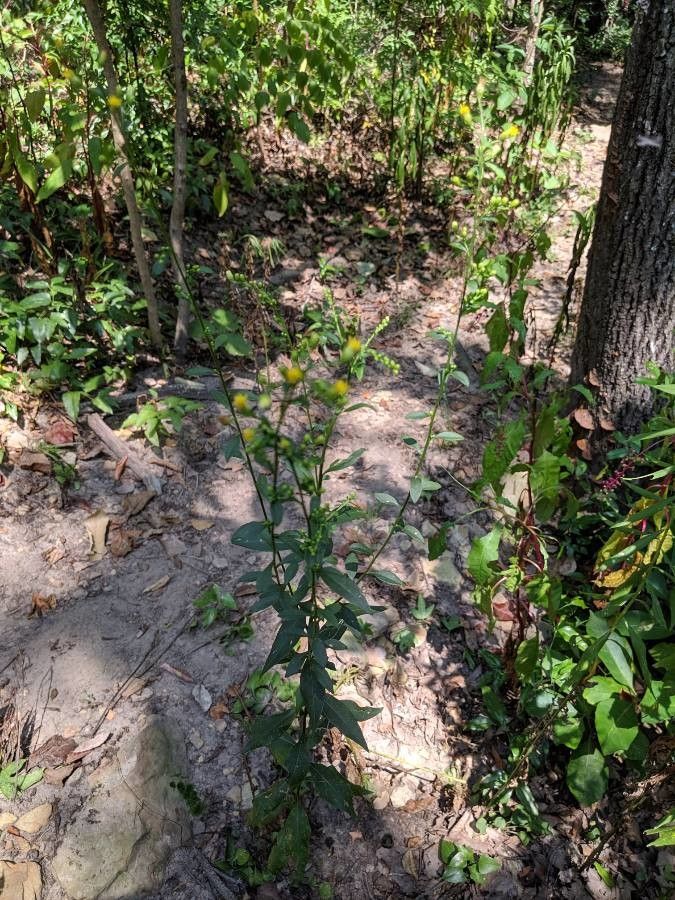
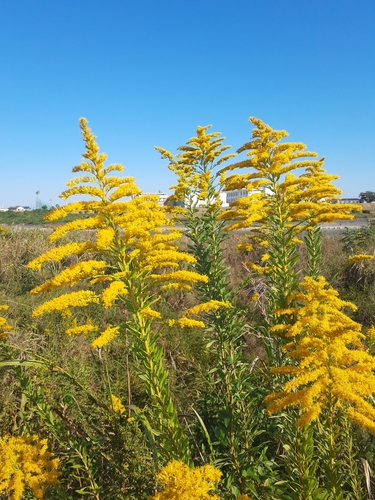
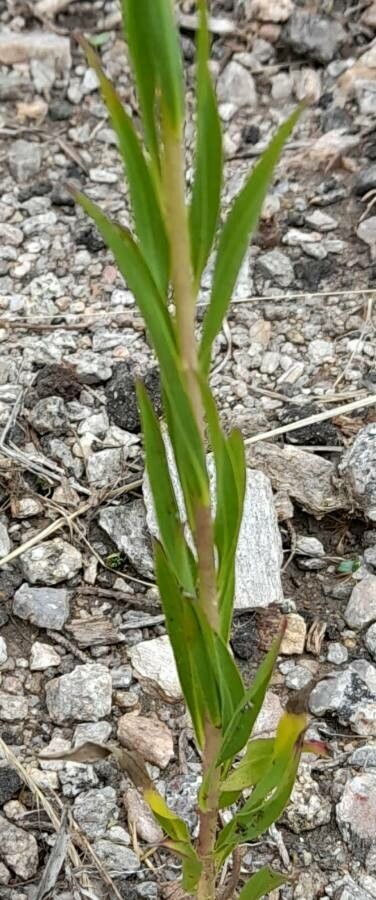
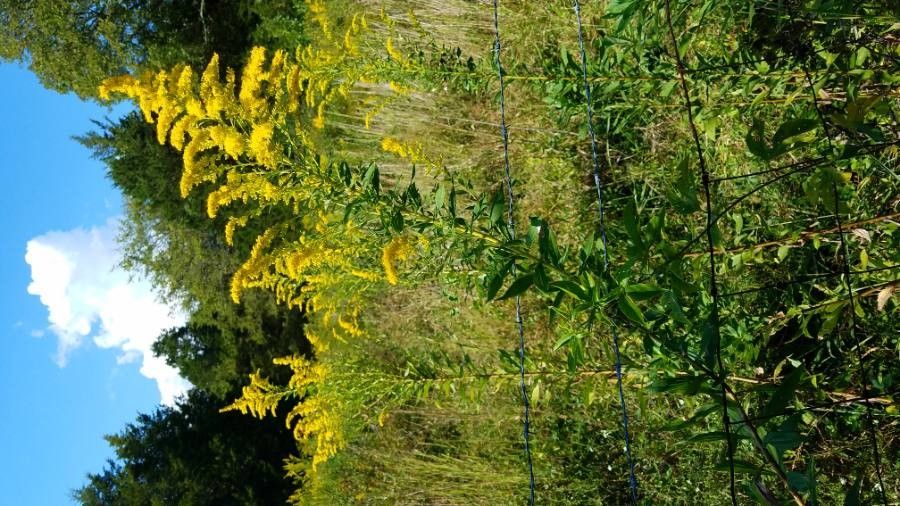
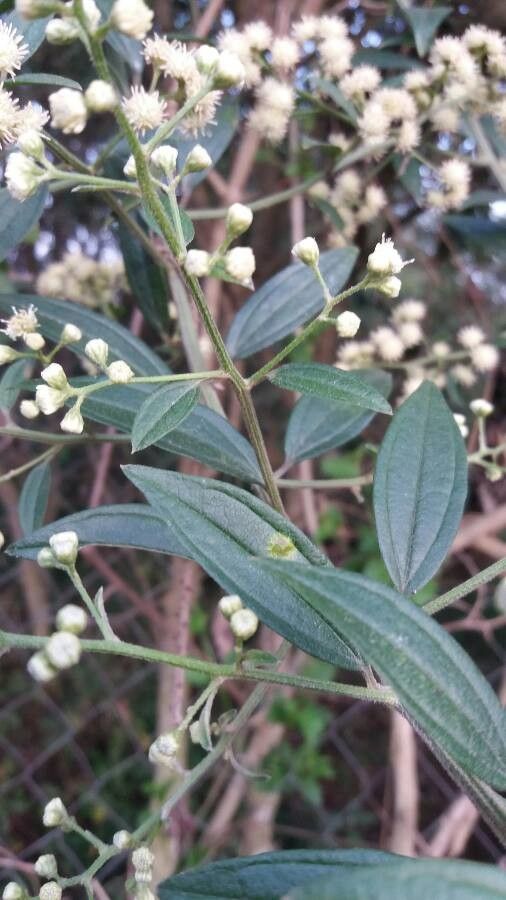
Solidago hispida, the hairy goldenrod, is North American species of flowering plants in the family Asteraceae. Its native range extends from Newfoundland west to Saskatchewan, and south as far as Oklahoma, Louisiana, and Georgia.Solidago hispida is a perennial herb up to 100 cm (39 in) tall, with a branching underground caudex. Leaves are egg-shaped (ovate) or elliptical, up to 20 cm (8 in) long. One plant can produce more than 250 small yellow flower heads in branching arrays at the tops of the stems.
Hairy goldenrod has good resistance to disease and is generally not prone to illnesses. However, it can be vulnerable to pests and diseases present in its environment. These infections are typically not severe. Regarding care, this plant needs moderate maintenance. It should be pruned regularly to preserve a tidy appearance and encourage healthy growth. Fertilizing can also help encourage flowering. Hairy goldenrod is suitable for anyone with outdoor space, such as a garden or patio, and does not require extensive experience in plant care. It may need more attention when grown indoors.
How to keep Solidago Hispida.
Light
Hairy goldenrod is a sun-loving perennial herbaceous plant that originates in open habitats and commonly thrives in meadows and grasslands. It prefers full sun but can also tolerate partial sun.
Temperature
Hairy goldenrod can tolerate a wide range of temperatures, though its distribution may still be constrained by particular combinations of moisture and heat. It does best in warm summer conditions with sufficient rainfall or regular watering. Extended periods of cloudy, rainy weather or prolonged high temperatures can increase the chance of Hairy goldenrod dying. In winter, adequate protection from cold can improve the plant’s survival.
Fertilizer
The best time to fertilize a Hairy goldenrod is in early spring, as it comes out of dormancy and starts active growth. Fertilizing supplies essential nutrients for healthy development. While Hairy goldenrod has relatively low fertilizer requirements, an annual application can improve its survival and encourage better, longer-lasting flowers.
Pruning
Hairy goldenrod benefits greatly from early spring pruning, which helps remove dead stems, improve airflow, and shape its growth. Trim up to one-third of the old growth to encourage vigorous blooming. Be sure to clean your tools to prevent disease, keeping the plant healthy and attractive throughout the growing season.
Pot & Repot
For optimal growth and to prevent waterlogging, hairy goldenrod needs excellent drainage in pots to maintain healthy roots.
Botanical profile.
- Plant Type
- Herb
- Life Cycle
- Perennial
- Genus
- Solidago
- Family
- Asteraceae
- Hardiness Zone
- 3-9
- Mature Height
- 30 cm to 91 cm
- Mature Spread
- 20 cm to 40 cm
- Leaf Color
- Green, Dark Green
- Leaf Type
- Deciduous
- Flower Color
- Yellow, Gold
- Flower Size
- 0.51 cm to 1.02 cm
- Bloom Time
- Late summer, Early fall, Mid fall
- Planting Time
- Spring, Summer
- Harvest Time
- Fall
Other names.
Reader questions.
What are the sun requirements for Hairy goldenrod?
Hairy goldenrod, or Solidago hispida, thrives in conditions ranging from full sun to partial sun. For full sun, the plant requires more than 6 hours of sunlight daily. In the case of partial sun, about 3 to 6 hours of sunlight daily is sufficient. It's important to observe the way sunlight moves through your garden, finding spots that provide a healthy balance of light and shade. This careful placement ensures your Hairy goldenrod's well-being by meeting its light requirements.