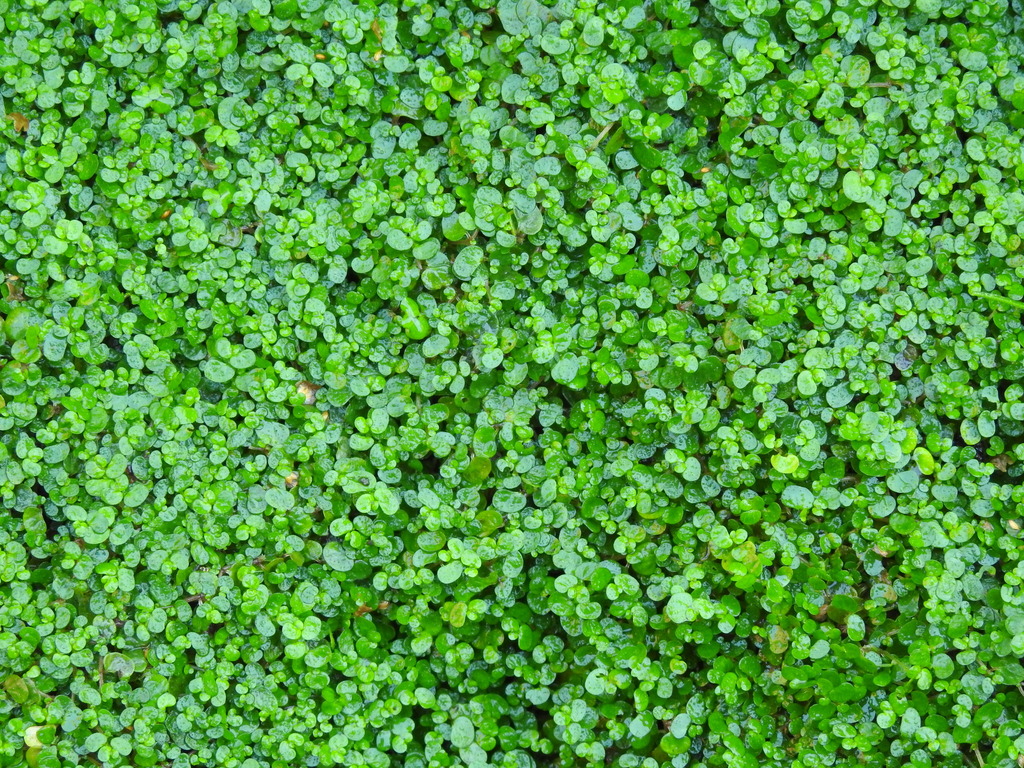
Soleirolia soleirolii, commonly known as baby's tears or mind-your-own-business, is a low-growing perennial plant in the nettle family. Native to the Mediterranean region, it has gained popularity as a houseplant due to its delicate and attractive appearance.
This plant features small, round, bright green leaves that grow in clusters on thin stems. It can reach up to 10 cm in height and spreads rapidly through creeping stems that root at nodes.
Soleirolia soleirolii prefers moist soil with good drainage but can tolerate dry spells. It thrives in bright yet indirect light conditions, making it an ideal indoor plant for low-light areas.
As the name implies, baby's tears is an aggressive spreader, making it easier to manage as a container plant or in an ornamental terrarium. It is also ideal for terrariums housing small amphibians, where it helps create a humid, tropical environment. FUN FACT · FROM THE LIBRARY
One of the major benefits of the baby's tears plant is its minimal maintenance requirements. It needs regular watering, occasional fertilization with a balanced fertilizer during the growing season, and pruning of any dead or yellowing leaves.
In addition to its aesthetic appeal as a houseplant, Soleirolia soleirolii has medicinal properties, including anti-inflammatory effects on skin irritations when applied topically. Its creeping nature makes it an excellent ground cover for outdoor gardens or terrariums.
Overall, Soleirolia soleirolii is an excellent choice for indoor plant enthusiasts. Its easy care requirements and aesthetic appeal make it perfect for any home décor style!
The "Mother of Thousands" plant was first collected in Corsica by an amateur botanist named Henri-Augustin Soleirol in the 19th century. He helped make the plant commercially available, and it was named Soleirolia soleirolii in his honor.
Baby's tears has strong disease resistance and is generally not prone to illness. However, it can develop leaf spots if light and ventilation are poor and watering is excessive. The plant's care level is considered easy, since it only needs regular watering and little else. Baby's tears is appropriate for people who do not have the time or energy to devote to regular care.
How to keep Soleirolia Soleirolii.
Light
Baby's tears grows best with moderate sunlight but can also do well in shadier spots. This plant's ability to thrive comes from the environment it originated in, where it adapted to various sunlight levels. However, too much sun can cause damage, while too little may restrict its growth.
Water
Baby's tears is a plant that naturally grows in the humid undergrowth of the Mediterranean. It thrives in moist soil and high humidity. To keep it healthy, water it weekly, ensuring it stays hydrated but not waterlogged. This plant is ideal for indoor cultivation, and should be planted in well-draining containers to maintain the necessary moisture without becoming overly wet.
Humidity
This plant will thrive in moderate humidity, which is probably the level in your home. However, misting it a few times a week can be very beneficial. Make sure the room has good ventilation.
Temperature
In its natural habitat, baby's tears favors temperatures of 20 to 38 °C (68 to 100 °F). When cultivated, it can tolerate temperatures as low as 10 °C (50 °F) but is susceptible to frost. In hot summer months, giving it partial shade or misting helps keep its temperature around 20–22 °C (68–72 °F).
Fertilizer
Baby's tears will need the most fertilizer during its active growth period, which occurs mainly in spring, summer, and early fall. Fertilizing supplies essential nutrients the soil may lack, supporting healthy root and stem growth and the attractive foliage that is a defining feature of this plant.
Pruning
Baby's Tears is a low-growing, evergreen perennial with dense, mat-forming foliage. To encourage growth, prevent legginess, and improve air circulation, prune it from early to late spring. Be sure to use clean, sharp tools to minimize the risk of disease and keep the plant looking its best.
Pot & Repot
When you repot Baby's tears, select a pot 1–2 inches (2.5–5.1 cm) larger that has good drainage. Fill it with a well-draining potting mix. Repot in spring or fall, making sure the root ball sits just below the pot's rim. Water thoroughly after repotting, then set the pot in a warm location with indirect sunlight.
Toxicity
Baby's tears are non-toxic to humans and animals.
Further reading →
The toxicity and danger assessments provided are for reference only. We do not assure their accuracy, so it's crucial not to depend on them. Seek professional advice when necessary for accurate guidance.
Botanical profile.
- Plant Type
- Herb
- Life Cycle
- Perennial
- Genus
- Soleirolia
- Family
- Urticaceae
- Hardiness Zone
- 9-11
- Mature Height
- 8 cm to 15 cm
- Mature Spread
- 0.91 m to 1.83 m
- Leaf Color
- Green, Yellow
- Leaf Type
- Evergreen
- Flower Color
- White, Pink
- Flower Size
- 0.10 cm to 0.20 cm
- Bloom Time
- Late spring, Early summer, Mid summer
- Planting Time
- Spring, Summer, Autumn
- Harvest Time
- Late spring, Summer, Early fall, Mid fall
- Native Area
- Italy, France
Other names.
Reader questions.
How should I water my Baby's Tears plant?
To properly water the Baby's tears plant, it is recommended to use filtered water at room temperature. Tap water may contain harmful particles, so filtering it is preferable. The water should be at room temperature or slightly warmer since the plant originates from warm environments and cold water can be a shock to its system. Instead of overhead watering, it is best to directly apply the filtered room temperature water to the soil until it is fully soaked. This method benefits the plant by moisturizing the roots and facilitating their spread in the soil, aiding nutrient absorption.
Why is it important to feed my Baby's tears?
All plants, including the Baby's tears, rely on soil nutrients for their growth. However, it is not always guaranteed that the soil in which your plants grow will have all the necessary nutrients. To ensure that your garden plants get the right nutrients, fertilization and soil amendments are important. For the Baby's tears plant specifically, it needs fertilizer to support the development of healthy roots and stems throughout the growing season. Fertilization also plays a role in enhancing the appearance of its leaves, which is especially important since the plant's foliage is its main ornamental feature.
What are the sunlight requirements for Baby's tears?
Baby's tears, or Soleirolia soleirolii, require a moderate amount of sunlight to thrive, optimally around 3-6 hours daily, but they can also grow in shadier areas with less than 3 hours of sunlight. It's important to watch the movement of sunlight through your garden to choose spots that ensure a balance of light and shade, catering to the plant's needs. Too much direct sunlight can damage the plant, while insufficient light may impede its growth.
What are the ideal growing conditions for Baby's Tears in terms of temperature?
Baby's Tears thrives in its native growth environment with temperatures ranging between 20 to 38°C (68 to 100°F). For cultivation, it can withstand temperatures as low as 10°C (50°F), but it's sensitive to frost and extreme heat. During hot summer months, partial shade or misting helps maintain its temperature around 20-22°C (68-72°F). It's crucial to avoid temperatures near or below freezing, as this can harm the plant. In winter, keeping the temperature above 20°C benefits its growth. Outdoor plants should be moved indoors during autumn to a bright spot away from direct heat sources.
What do I do if I give my baby too much or too little water when they cry?
Caring for your Baby's tears plant can be a bit tricky when it comes to watering. Both overwatering and underwatering can harm the plant, but overwatering is a more common issue. If you give the plant too much water, its stems and leaves may wilt and turn yellow. Over time, this can even lead to diseases like root rot, mold, and mildew, which can kill the plant. On the other hand, underwatering is less likely to happen because the Baby's tears plant can tolerate drought fairly well. However, if it does occur, you'll notice that the leaves become brittle and brown. It's important to be observant and catch the signs of overwatering early on. Some of the diseases caused by overwatering, such as root rot, may not be fixable if you wait too long. If you see early signs of overwatering, reduce your watering schedule right away. Also, check the quality of the soil. If it drains poorly, replace it with a loose, well-draining potting mix. On the other hand, if you see signs of underwatering, simply water the plant more regularly until the signs go away.
When should I fertilize my Baby's tears plant?
Baby's tears require the most fertilizer when they are actively growing, which happens during the spring, summer, and early fall. During this time, you should fertilize them regularly, about every two to four weeks. As winter approaches, you can gradually decrease the amount of fertilizer you give them until you stop completely, as the Baby's tears will have less growth during this season.
How do I use artificial lighting for Baby's tears indoors?
When natural sunlight is not enough, artificial lighting becomes crucial for the growth of Baby's tears indoors. Indoor plants benefit from adequate lighting, especially during winter or in less sunny spaces. LED lights are recommended for their ability to be customized to specific wavelengths needed by plants. Full sun plants require 30-50W/sq ft, partial sun plants need 20-30W/sq ft, and full shade plants require 10-20W/sq ft of light. The light source should be placed 12-36 inches above the plant, simulating natural sunlight, and plants generally need 8-12 hours of light per day.
How does Baby's Tears react to low temperatures, and what measures should be taken if exposed?
Baby's Tears prefer warm conditions and doesn't tolerate low temperatures well, thriving best above 20°C. Exposure to temperatures below -5°C can cause the leaves to lighten and eventually turn brown or black after frost damage, accompanied by wilting and drooping. To remedy frost damage, trim the affected parts and move the plant to a warmer indoor setting, preferably near a south-facing window for sunlight. Avoid placing it near heaters or air conditioning vents to prevent air dryness.
How often should I water my Baby's tears? How often should I give water to my Baby's Tears plant?
If your Baby's tears plant is in a pot, the most accurate way to determine if it needs water is by checking the soil with your finger. If the top two to three inches of soil are dry, it is time to water it. If you are growing Baby's tears outdoors in the ground, you can use a similar method to test the soil. When the top few inches of soil have dried out, it is time to water. This method typically requires watering once a week during spring and early fall. However, during extremely hot weather, you may need to increase watering to twice or more per week. It's important to note that mature, well-established Baby's tears plants have the ability to withstand drought.
When is it better not to put fertilizer on my Baby's Tears plant?
Throughout most of the year, including spring, summer, and most of the fall, it is important to regularly feed your Baby's tears. However, there are two exceptions. Firstly, if you notice that your Baby's tears has received too much fertilizer or has been fertilized incorrectly, causing fertilizer burn or other issues, you need to address these before returning to a regular feeding schedule. Secondly, during winter, when the plant enters a dormant phase, you should not fertilize it. Feeding the plant during this time is unnecessary, unhelpful to its growth, and likely to cause fertilizer burn. This is especially relevant if you are growing the plant indoors in a cold winter area.
What are the signs of inadequate lighting in Baby's tears?
Signs of inadequate lighting in Baby's tears include smaller new leaves, leggy or sparse growth due to longer spaces between stems or leaves, premature leaf drop as older leaves are shed early to conserve resources, slowed or halted new growth indicating survival mode, lighter colored or pale new leaves suggesting a lack of chlorophyll, chlorosis or yellowing leaves, sunscald showing as bleached areas, leaf curling as a defense against excessive sunlight, wilting from rapid water loss, and leaf scorching characterized by brown, dry edges.
What should be done if Baby's Tears is exposed to high temperatures?
During summer, Baby's Tears should be kept below 38°C to prevent heat stress. Exposure to temperatures above 43°C can lighten the leaf color and increase susceptibility to sunburn. To manage heat damage, remove sunburned or dried parts and relocate the plant to an area shaded from the intense midday and afternoon sun. Ensuring the soil remains moist with morning and evening watering is also crucial for recovering from and preventing further high temperature stress.