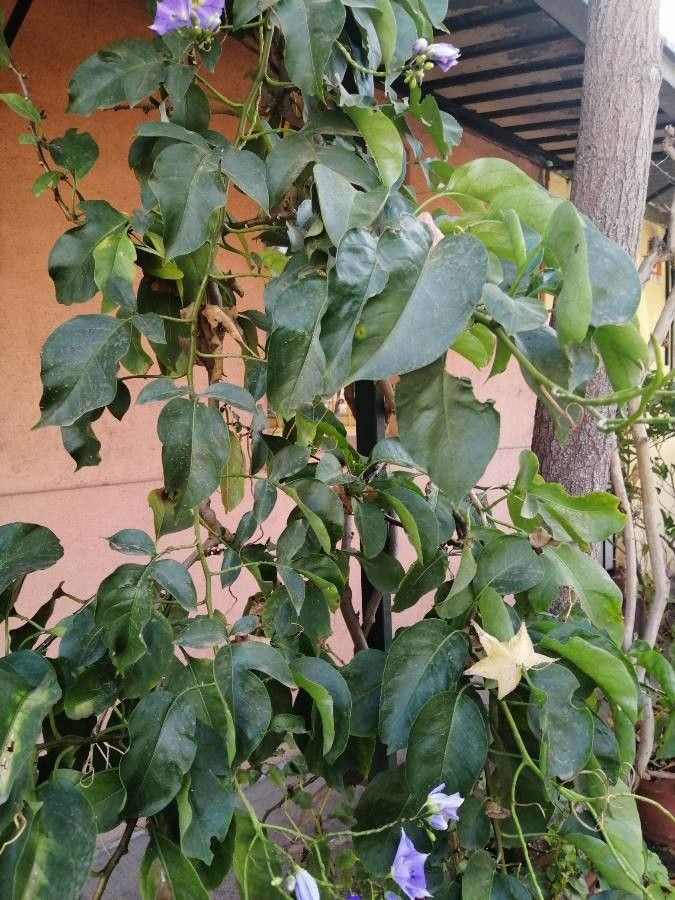
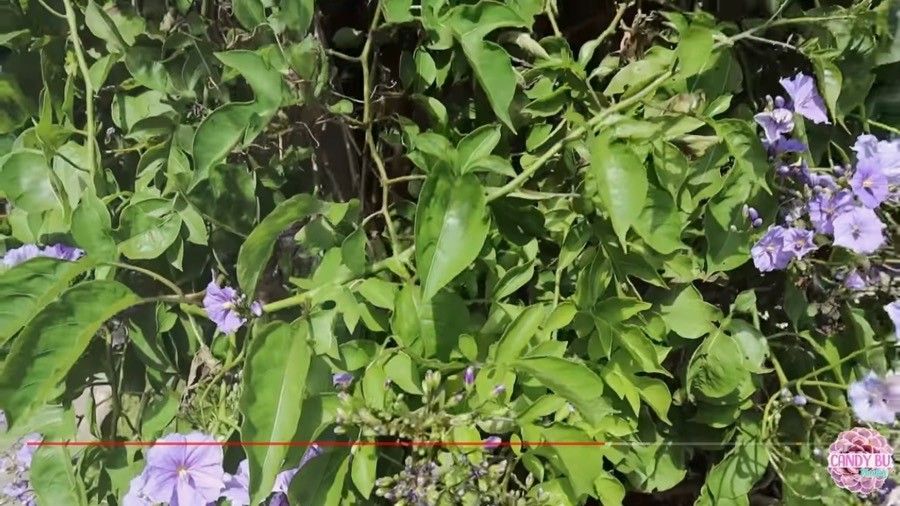
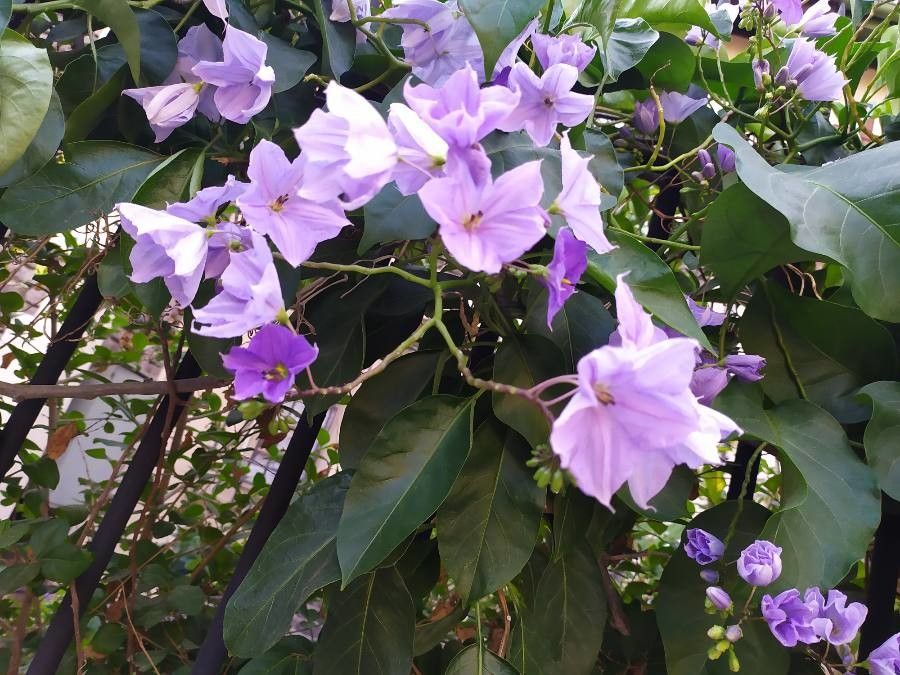
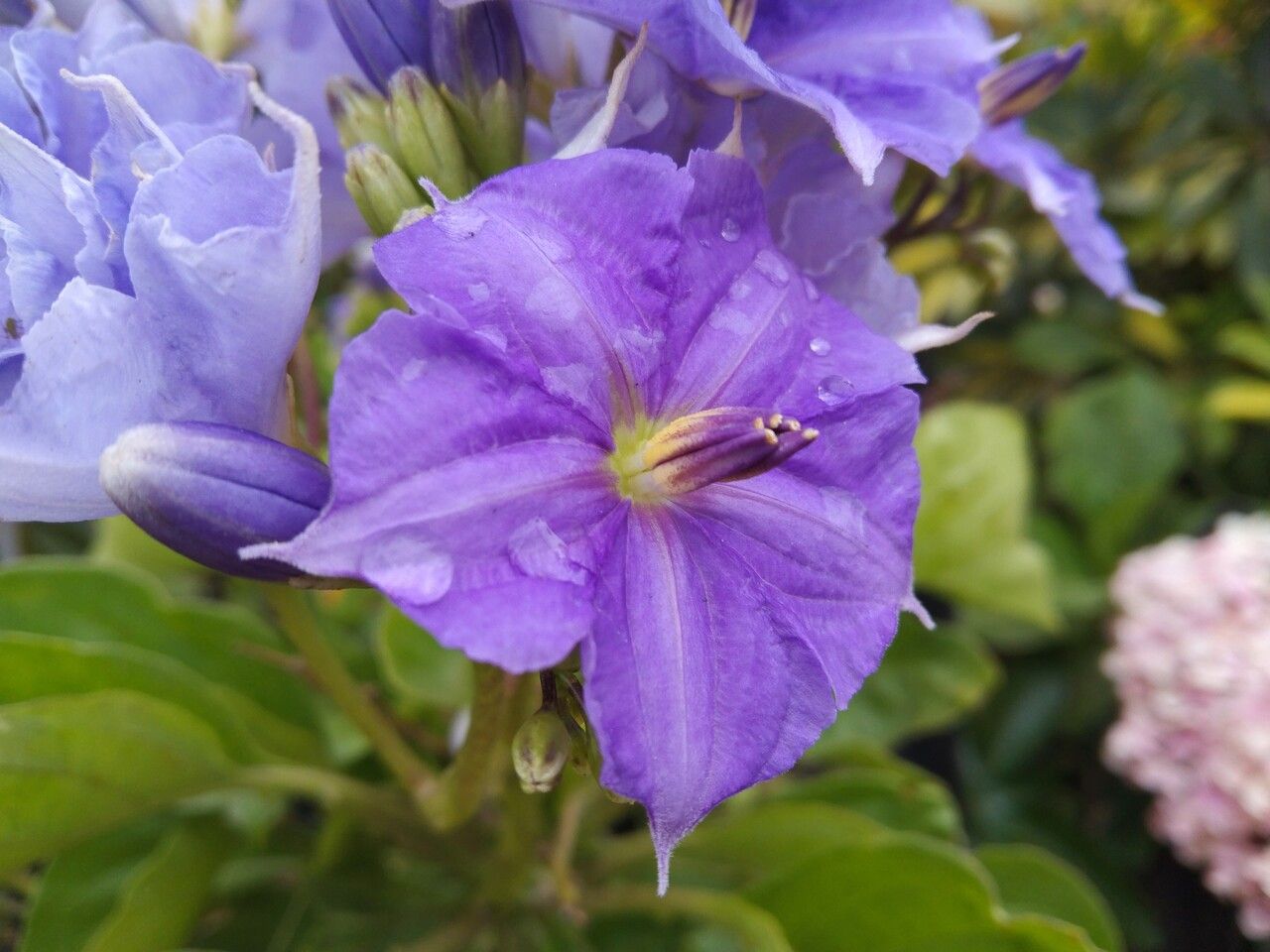
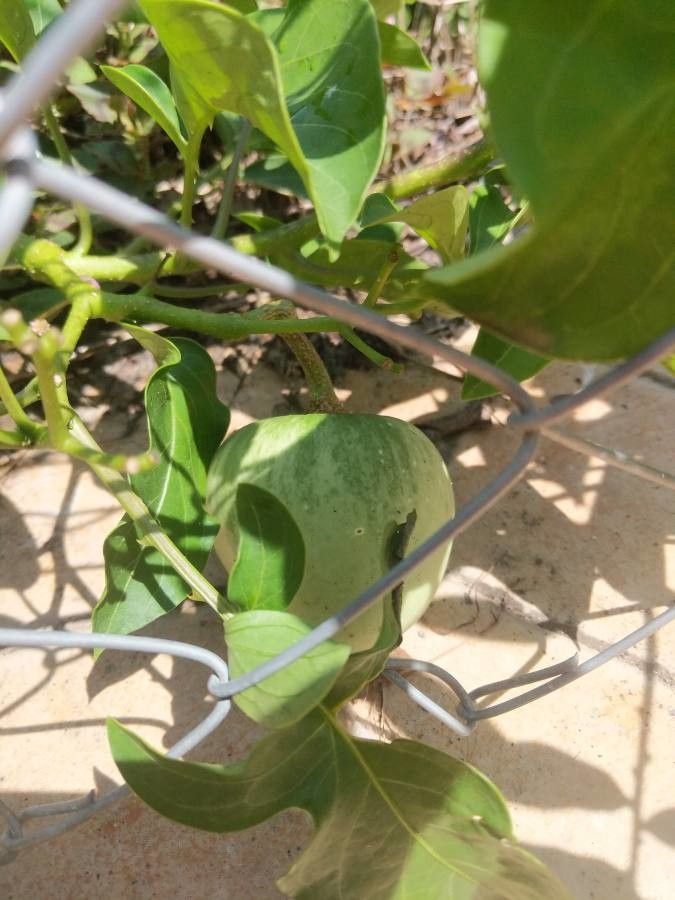
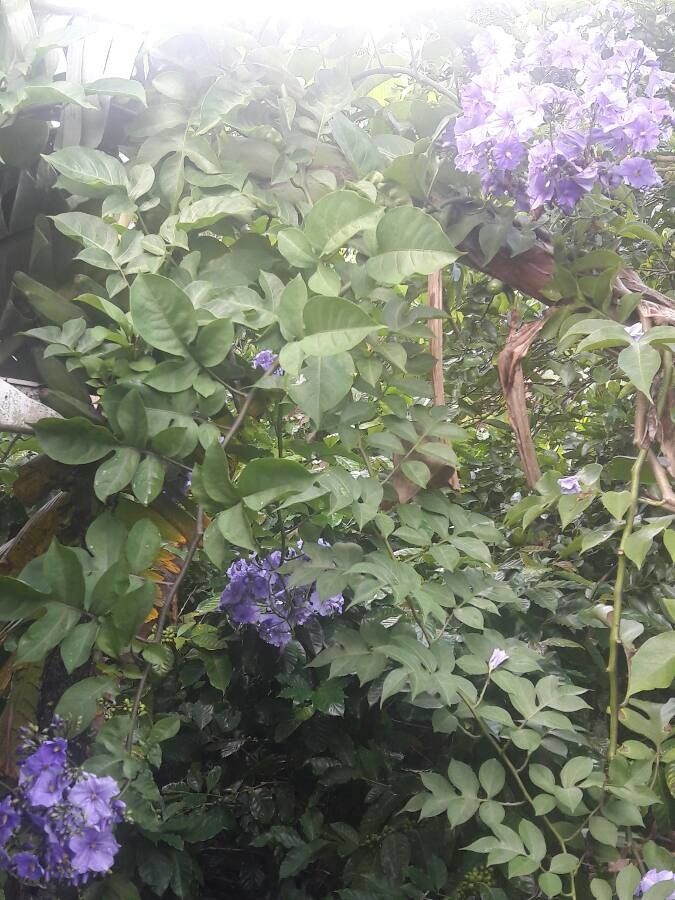
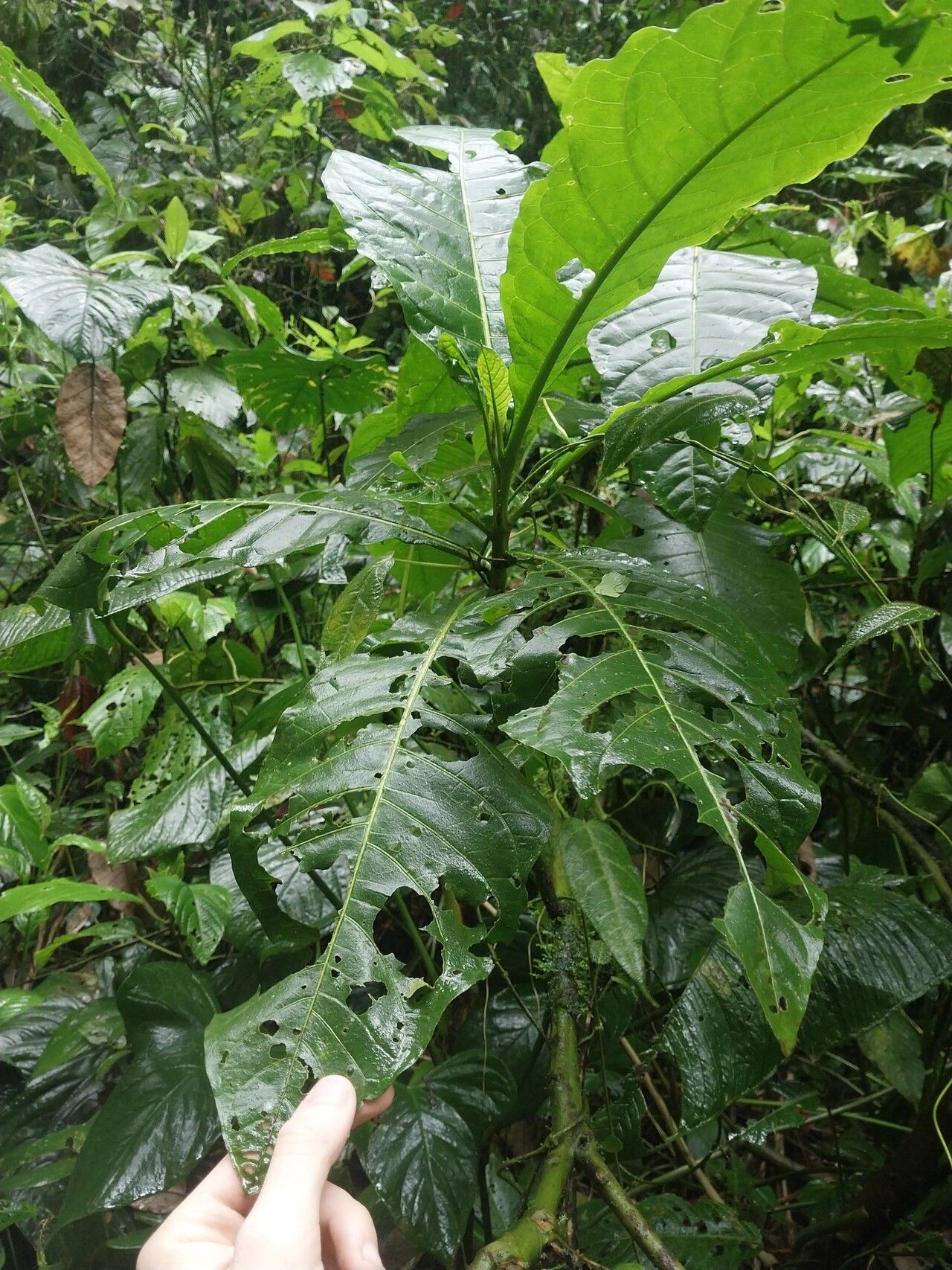
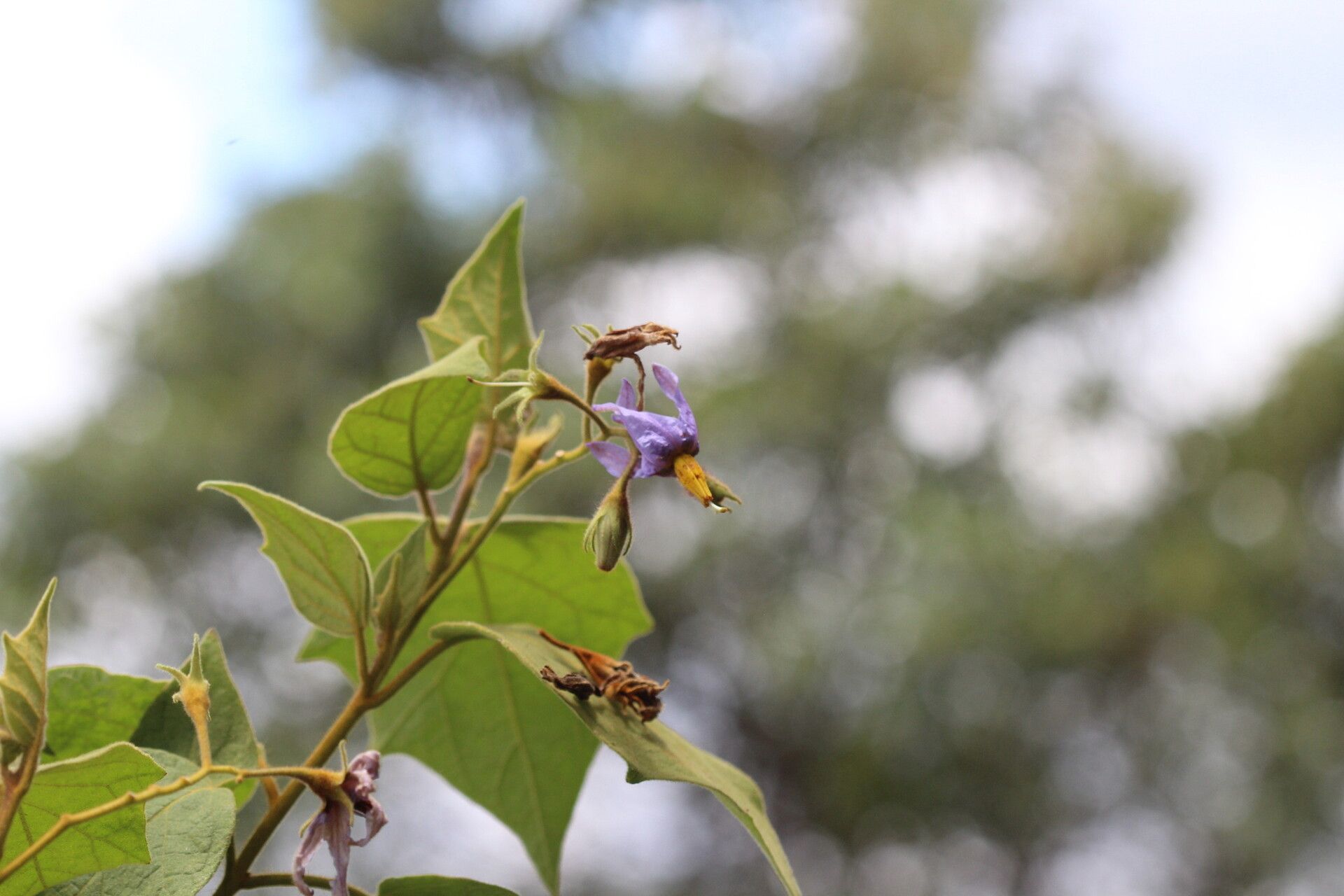
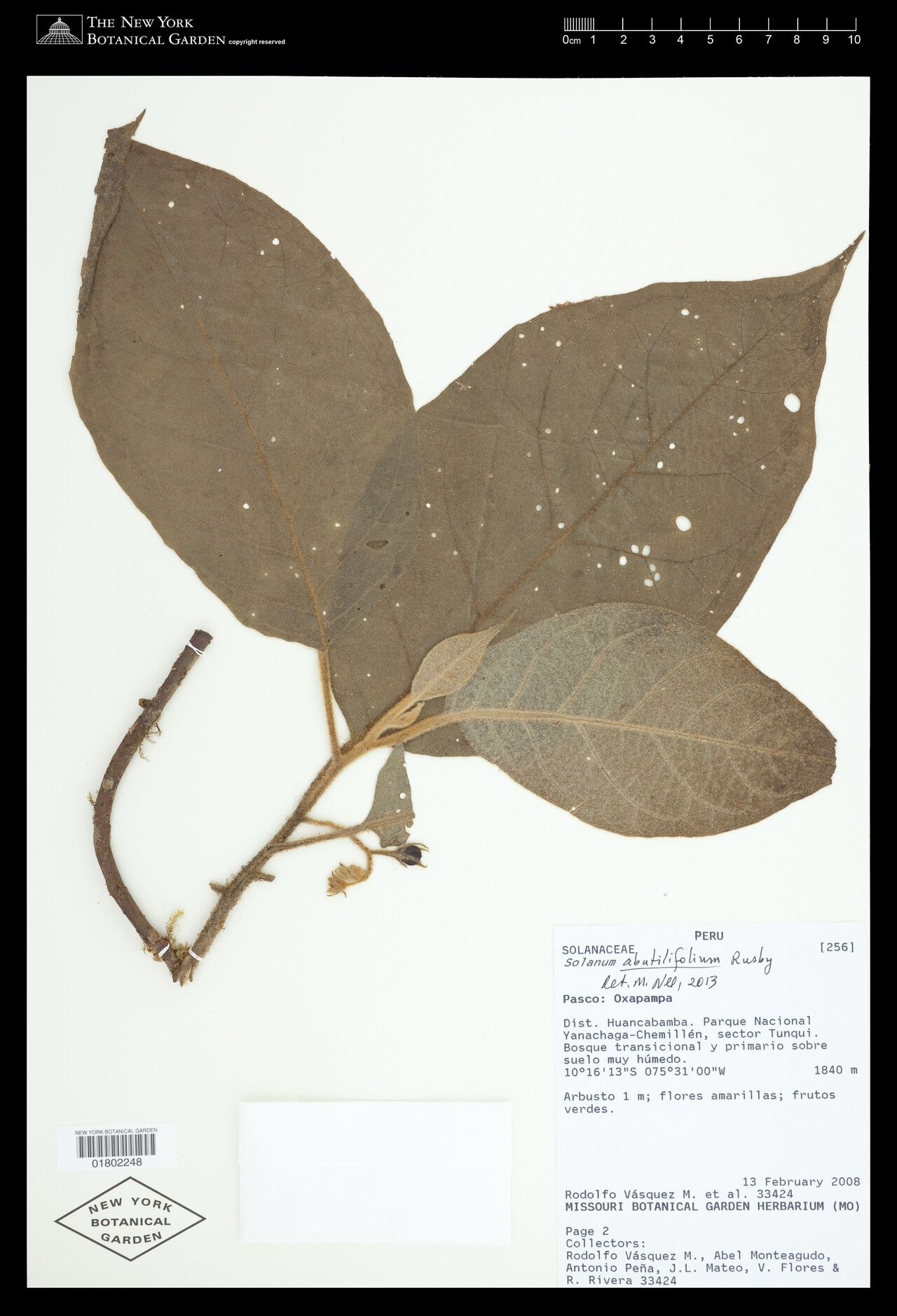
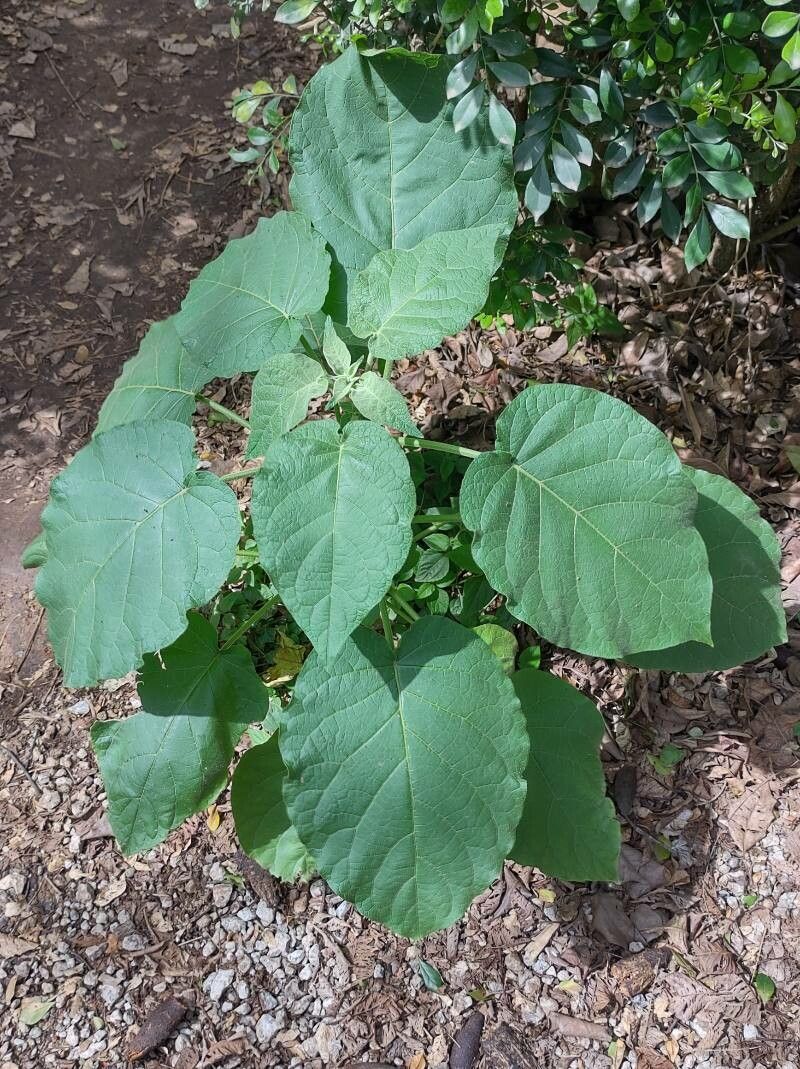
Solanum wendlandii, the giant potato creeper, potato vine, Costa Rican nightshade, divorce vine, or paradise flower, is a species of flowering plant in the family Solanaceae. It is native to Mexico, Central America, and northwest South America, and has been widely introduced as an ornamental to other tropical locales, including the Caribbean, Africa, Nepal, Java, and many islands in the Indian and Pacific Oceans. A robust vine reaching 15 ft (4.6 m), its long-lasting dark purple flowers eventually fade to white.
The giant potato creeper has strong resistance to disease and is generally not susceptible to illnesses. As for care, this plant is fairly low-maintenance. When grown outdoors it needs little watering, and larger specimens usually do not require pruning. Smaller plants, however, should be pruned after they finish blooming. The giant potato creeper is suitable for anyone with outdoor space, such as a garden or a deck, and does not demand much gardening experience.
How to keep Solanum Wendlandii.
Light
The giant potato creeper comes from open habitats, like sunny meadows and forest edges, which supply plenty of light. It does best in full sun but can also endure partial sun, handling a range of sunlight conditions.
Water
The giant potato creeper thrives in moist, humid environments and does best when watered every 1-2 weeks. While it is drought-tolerant, it benefits from consistent moisture. Typically grown outdoors, the giant potato creeper prefers rainy climates to maintain the optimal water balance.
Temperature
Giant potato creeper comes from tropical areas, where the climate is generally warm and humid. Consequently, it is adapted to high temperatures and humidity. It does not tolerate sudden temperature changes and prefers a steady temperature, so indoor temperature fluctuations should be avoided. It typically cannot withstand cold and needs higher temperatures to grow. If the ambient temperature falls too low, the plant may stop growing or even die.
Fertilizer
The best time to fertilize a Giant potato creeper is in early spring, as it comes out of dormancy. This supports overall growth and flower formation. Fertilizing improves the foliage, stems, and branches, and encourages flowers that are large, vivid, and long-lasting. It helps move nutrients from the roots to the flowers and enhances the plant's health and resistance to disease.
Pruning
Regular pruning in early spring helps the giant potato creeper thrive, promoting both growth and flowering. When pruning, concentrate on removing dead wood and shaping the plant to improve air circulation and manage its size. Be sure to use clean tools to prevent the spread of disease. For more detailed guidance, consult horticultural guides to maintain healthy foliage and control the plant's spread.
Botanical profile.
- Plant Type
- Vine
- Life Cycle
- Perennial
- Genus
- Solanum
- Family
- Solanaceae
- Hardiness Zone
- 10-12
- Mature Height
- 3.05 m to 6.1 m
- Mature Spread
- 2.13 m to 3.96 m
- Leaf Color
- Dark Green, Forest Green
- Leaf Type
- Evergreen
- Flower Color
- Lavender, Purple
- Flower Size
- 5.08 cm to 6.35 cm
- Bloom Time
- All year round
- Planting Time
- Spring, Summer, Autumn
- Harvest Time
- All year round
- Native Area
- Colombia, Honduras, Mexico, Venezuela, Peru, Nicaragua, Costa Rica, Panama
Other names.