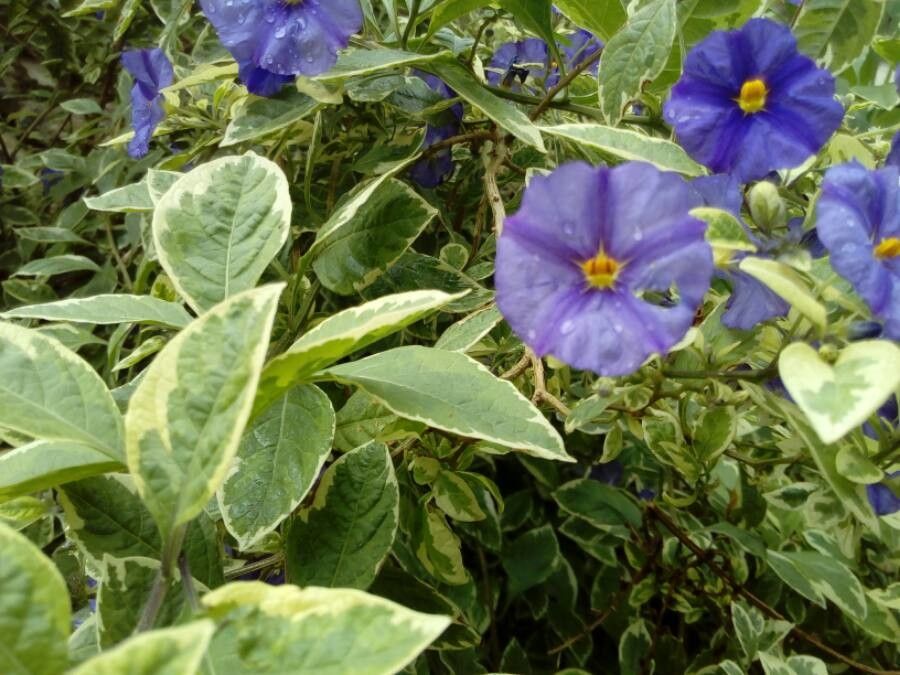
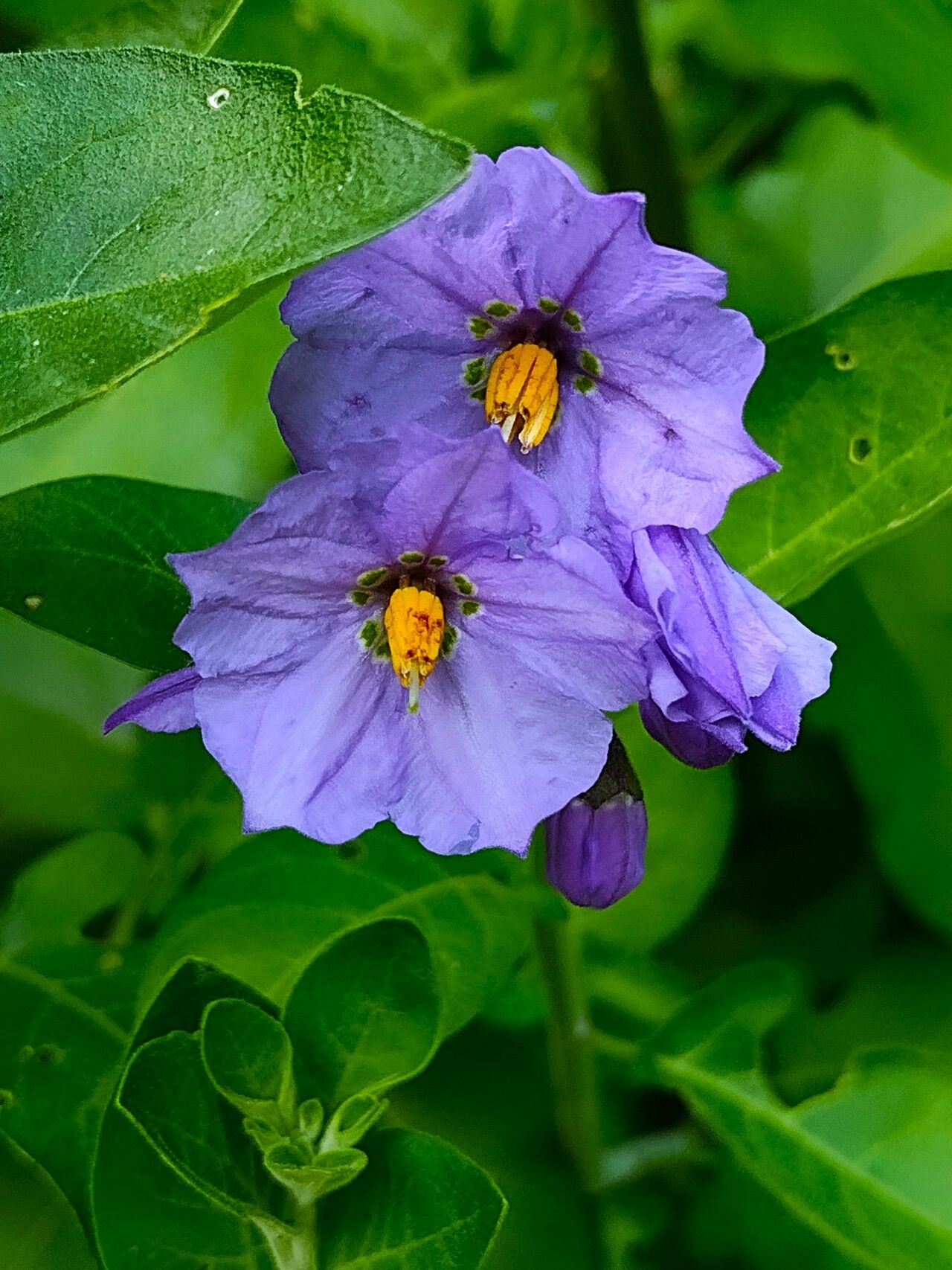
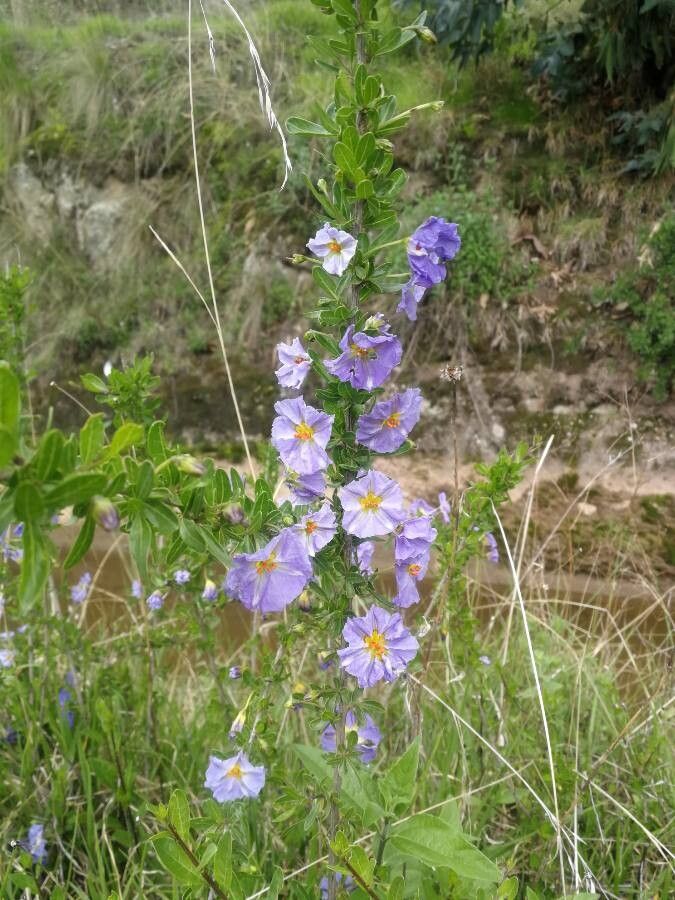
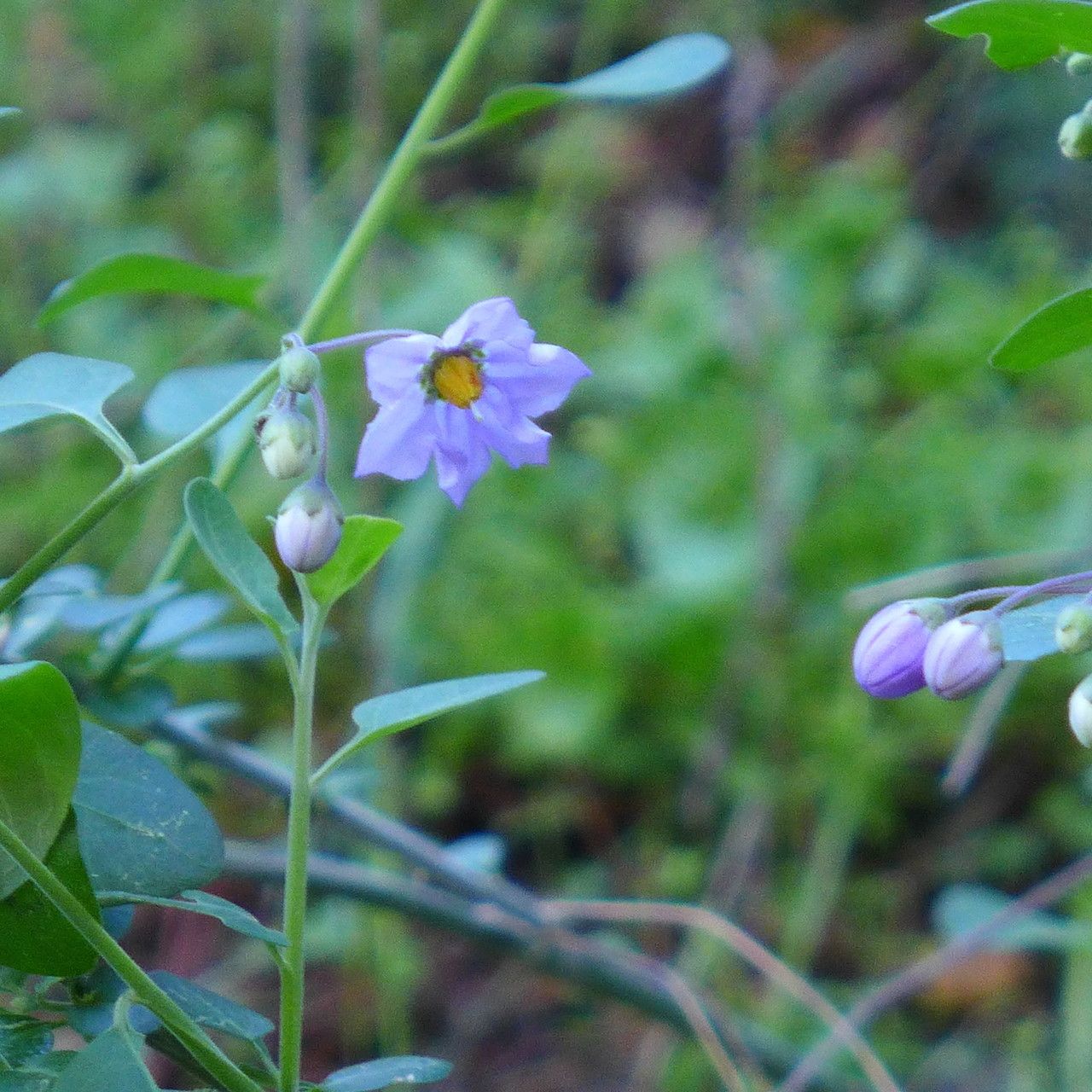
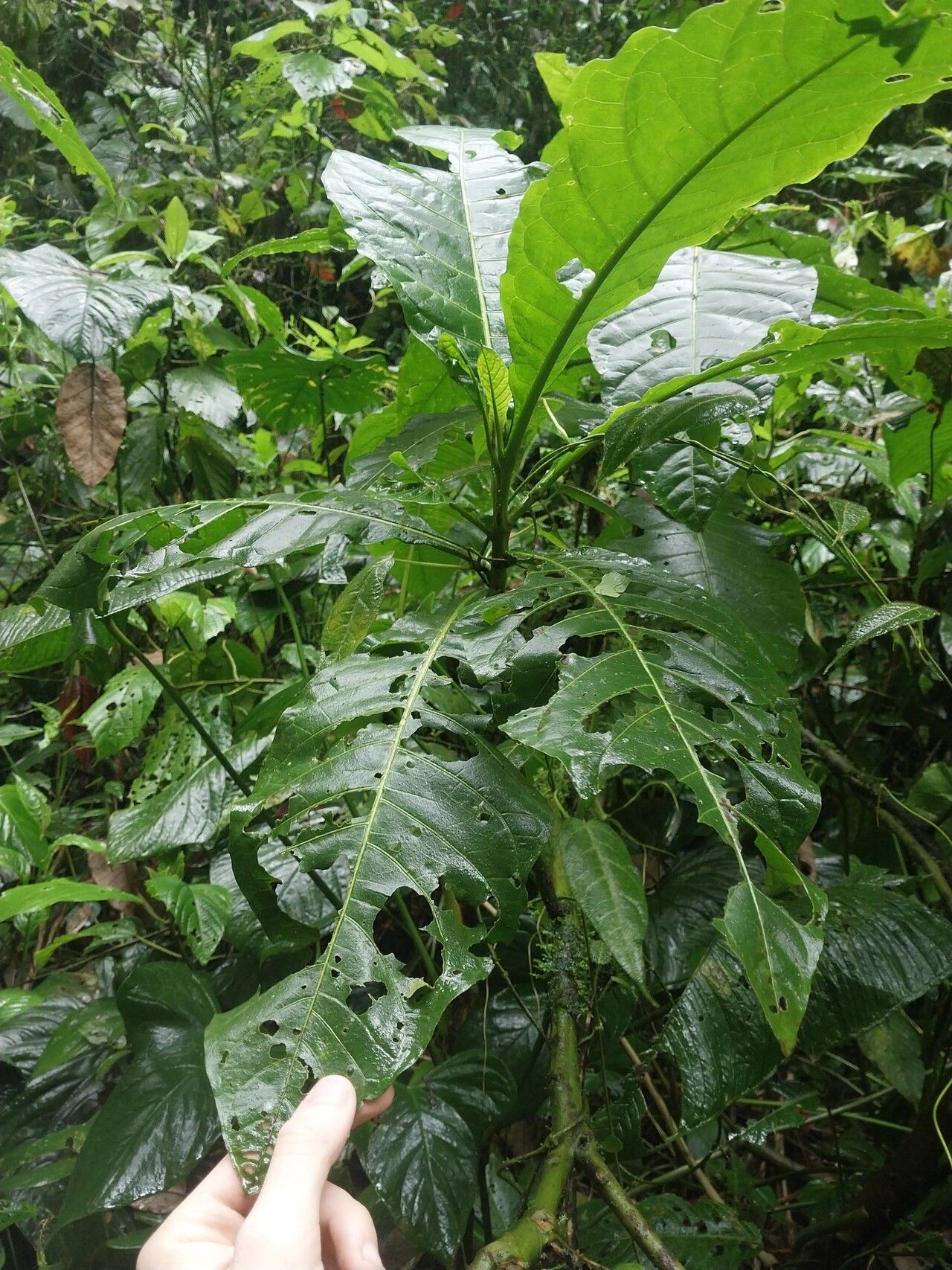
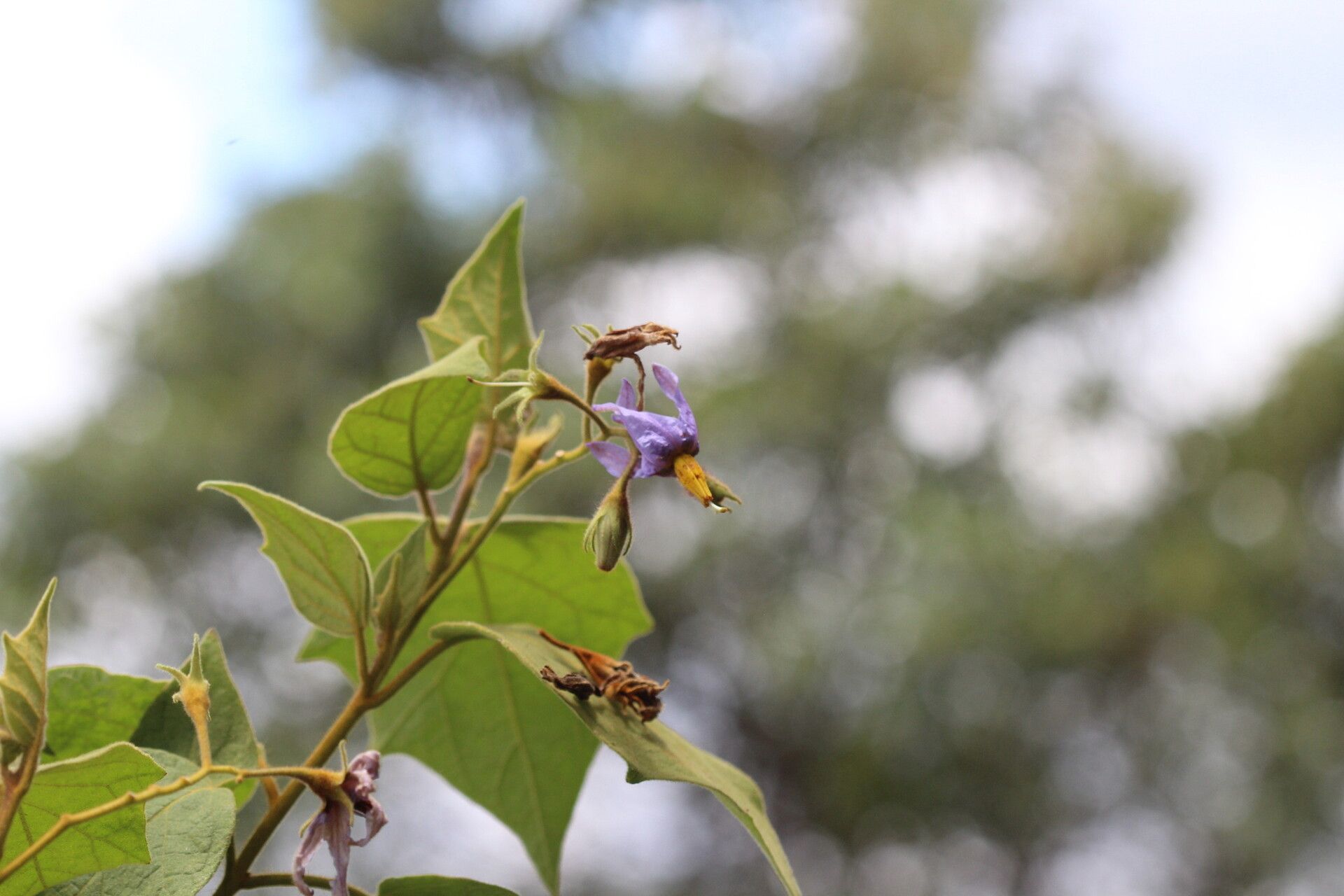
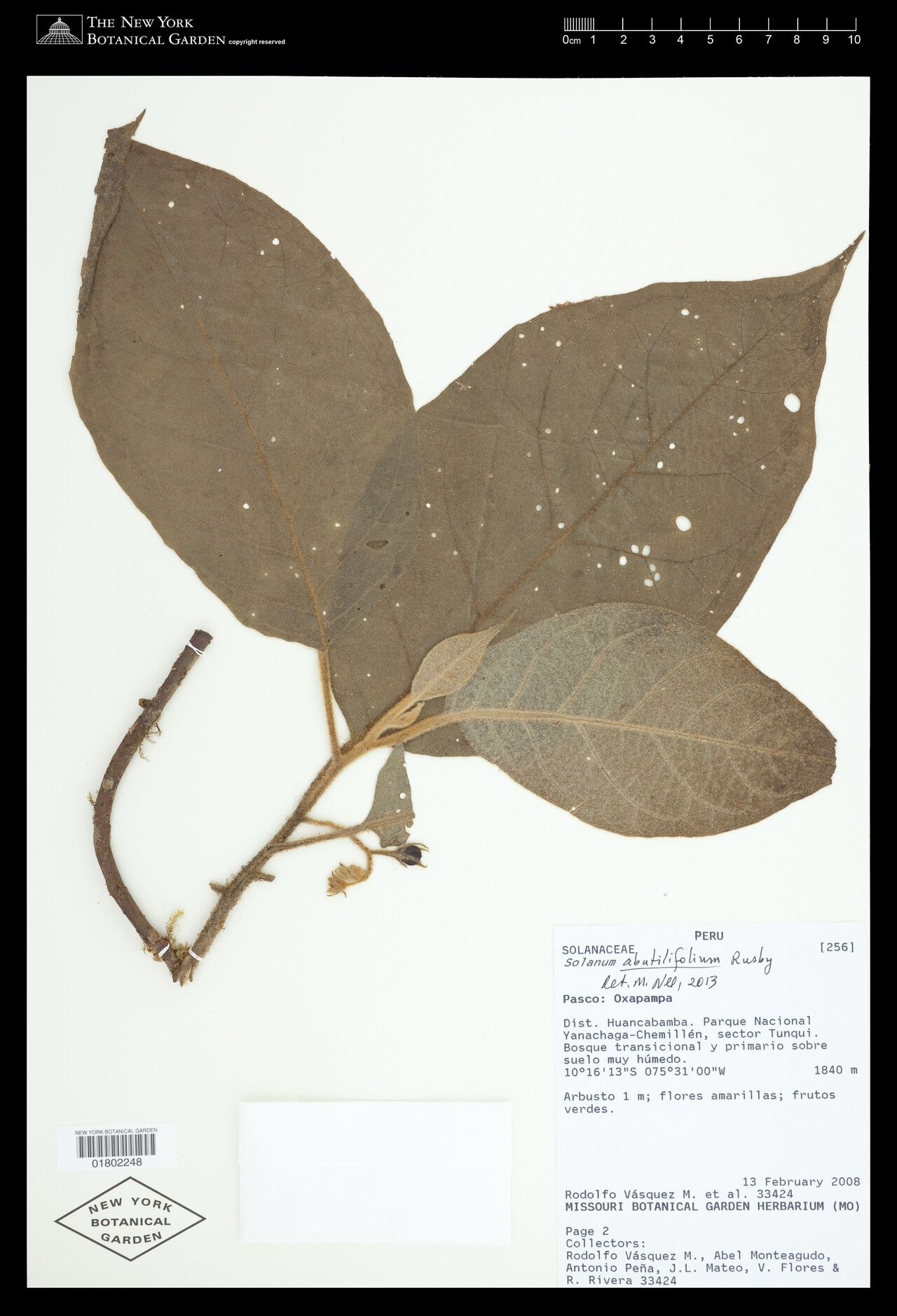
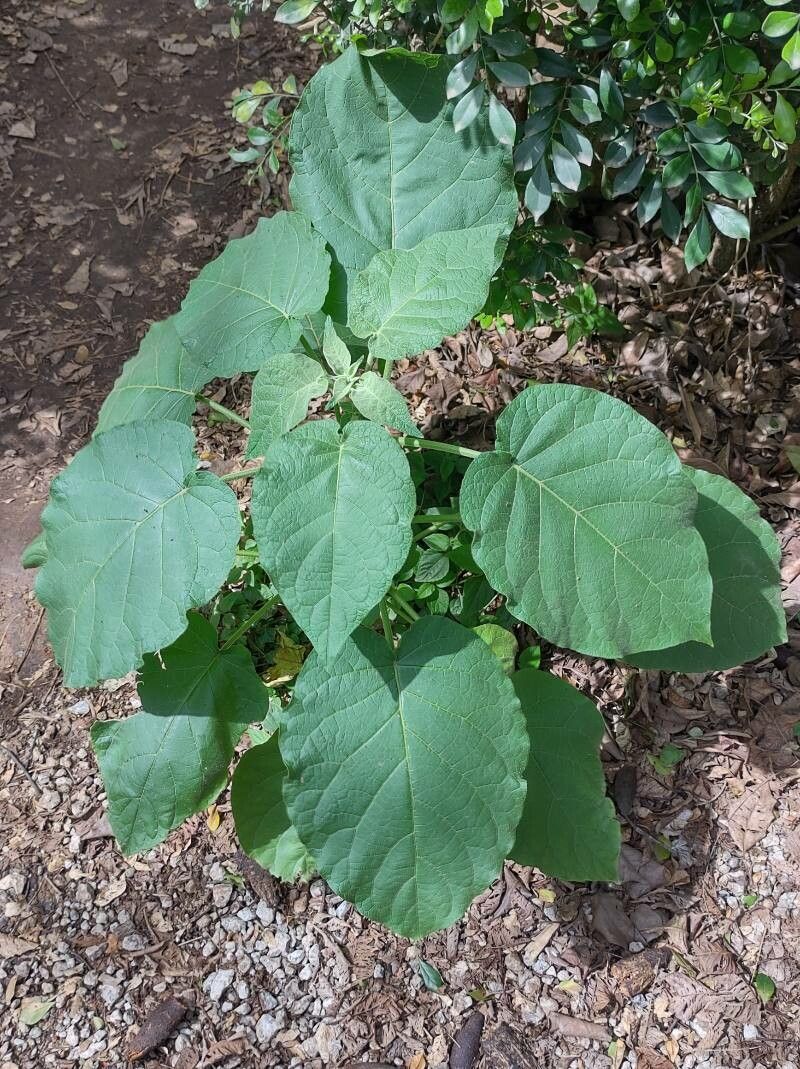
Solanum umbelliferum is a species of nightshade known commonly as bluewitch nightshade, or bluewitch. It can be found in chaparral habitat and low-elevation oak woodlands in California and parts of Baja California and Arizona. It is a small perennial herb or subshrub with dark gray-green oval-shaped leaves on hairy green stems that grow to a maximum height of one meter. It has bright purple or blue frilly flowers with thick yellow anthers at the center. The flowers close into spherical buds overnight. It bears small round green fruits which turn purple when ripe and resemble tiny eggplants. It is a tough shrub which can grow in rocky and clay soils and springs up in areas recovering from wildfires or other disturbances. Like most other members of genus Solanum, S. umbelliferum contains toxic alkaloids.
Black nightshade has good resistance to disease and is generally not prone to illnesses. However, it can be vulnerable to pests and diseases present in its surroundings. Such infections are usually mild. Care-wise, this plant needs moderate maintenance. It should be pruned regularly to maintain a neat appearance and support healthy growth. Fertilizing can also help encourage flowering. Black nightshade is appropriate for anyone with outdoor space, such as a garden or patio, and does not demand extensive care experience. It may need more attention when grown indoors.
How to keep Solanum Umbelliferum.
Light
Black nightshade flourishes with abundant light for maximum growth, yet it can also tolerate reduced light exposure, bestowing upon it a degree of hardiness. Sunlight is essential for its positive development, and fluctuating light levels can influence its growth, while severe light deficiency may lead to weakness. The environment from where it originates provides considerable sunlight, with only occasional partial shading.
Water
Bluewitch nightshade, native to arid regions, is exceptionally drought-tolerant and thrives with very little moisture. It requires watering only every 2-3 weeks, which makes it perfect for xeriscaping and low-water landscapes. Its resilience and adaptability are key features that contribute to its suitability for such environments.
Temperature
Native to temperate zones, black nightshade thrives best in a temperature spectrum of 68 to 95°F (20 to 35°C). Any deviation from this optimal temperature range necessitates environmental modifications to encourage maximum growth.
Fertilizer
Black nightshade thrives when it receives regular, diluted amounts of fertilizer, as it encourages the proper development of leaves. During the summer, it is recommended to fertilize Black nightshade about once a month. Nitrogen plays a significant role in leaf growth, and providing Black nightshade with a nitrogen-rich supplement can contribute to its flourishing condition.
Pruning
Bluewitch nightshade features delicate blue-violet flowers and thrives in well-drained soil. To maintain its health, prune the plant in early spring by removing dead stems and thinning crowded areas to improve air circulation. Using clean cuts and sterilized tools encourages healthy growth and blooms, while also preventing disease. This care will ensure a vibrant display in your garden.
Botanical profile.
- Plant Type
- Herb
- Life Cycle
- Annual, Perennial, Biennial
- Genus
- Solanum
- Family
- Solanaceae
- Hardiness Zone
- 5-10
- Mature Height
- 0.3 m to 1.22 m
- Mature Spread
- 61 cm
- Leaf Color
- Green, Purple
- Leaf Type
- Deciduous
- Flower Color
- White
- Flower Size
- 0.51 cm to 1.02 cm
- Bloom Time
- Late spring, Early summer, Mid summer
- Planting Time
- Spring
- Harvest Time
- Mid summer, Late summer
- Native Area
- Burkina Faso, Libya, India, Nigeria, Slovenia, Guinea-Bissau, Belarus, Cameroon, Ethiopia, Latvia, Netherlands, Tunisia, Bulgaria, Bangladesh, Laos, Chad, China, Afghanistan, Kyrgyzstan, Kazakhstan, Japan, Finland, Eswatini, Djibouti, Egypt, Angola, Austria, Namibia, Zimbabwe, Uzbekistan, Russia, Estonia, Ghana, Botswana, France, Nepal, Tajikistan, Sudan, Mauritania, Armenia, Poland, Greece, Norway, Switzerland, United Kingdom, Algeria, Turkey, Sweden, Slovakia, Montenegro, Croatia, Morocco, Uganda, Tanzania, Germany, Sierra Leone, Indonesia, Mozambique, Romania, Belgium, Portugal, Saudi Arabia, Malawi, Cyprus, Turkmenistan, Ukraine, Lebanon, Syria, Italy, Senegal, Iran, Côte d'Ivoire, Azerbaijan, Kuwait, Malaysia, Eritrea, Yemen, Kenya, Mali, Iraq, Liberia, Congo, Czech Republic, South Africa, Zambia, Serbia, Lithuania, Spain, Denmark, Myanmar, Albania, Ireland, Hungary, Thailand, Gabon
Other names.
Reader questions.
How can I water my Bluewitch nightshade plant in the best way?
Your Bluewitch nightshade is not fussy about how you water it. You can use any regular watering tool like a watering can, hose, or even a cup. It's important to water the soil directly and make sure all areas of the soil are evenly moistened to provide water to the entire root system. Using filtered water is recommended to avoid harmful particles present in tap water. It's also better to use water at or slightly above room temperature as extremely cold or hot water can be a bit shocking for the Bluewitch nightshade. However, generally, this plant responds well to any type of water you give it.
What are the sunlight requirements for Bluewitch Nightshade?
Bluewitch nightshade thrives best under abundant light, requiring more than 6 hours of sunlight to be classified under 'full sun' conditions, and can also manage in 'partial sun' environments with about 3-6 hours of sunlight. It is noted for its resilience in varying light conditions, though its health is influenced by the presence or absence of adequate sunlight. Observing your garden's sunlight movement is crucial to choosing spots that provide a balance of light and shade, ensuring the plant's well-being.
What is the optimal temperature range for growing Bluewitch nightshade?
Bluewitch nightshade, or Solanum umbelliferum, thrives in environments with temperatures ranging from 59 to 100.4 °F (15 to 38 °C). This plant prefers mild to warm temperatures for optimal growth. It has some cold tolerance and generally does not require any additional cold protection measures if the temperature remains above -5°C. However, in harsher seasons or if temperatures are expected to drop below -5°C, it is recommended to take temporary measures for cold protection, such as wrapping the plant with materials like plastic film or fabric, which should be removed once temperatures rise again.
What do I need to do if I give my Bluewitch nightshade too much or too little water?
For outdoor plants, particularly newly planted ones or seedlings, they can suffer from lack of watering. It's important to consistently water them for a few months until they establish their roots. Once the roots are established, outdoor plants can rely on rainwater. When you have Bluewitch nightshade planted in pots, overwatering is more common. If you accidentally overwater your Bluewitch nightshade, take immediate action to fix the situation. Firstly, stop watering the plant to minimize the impact of overwatering. Then, remove the plant from its pot to inspect the roots. If there is no sign of root rot, you can return the plant to its container. In case root rot is present, trim any affected roots and consider applying a fungicide to prevent further damage. Finally, repot the Bluewitch nightshade in well-draining soil to promote healthy growth. In the case of underwatering, simply water the Bluewitch nightshade more frequently. Signs of underwatering include drooping and drying out of leaves, which should regain fullness after sufficient watering. Make sure to adjust your watering frequency once you notice signs of underwatering.
What should I do if natural sunlight is insufficient for Bluewitch Nightshade?
In cases where natural sunlight is insufficient, especially during winter or in less sunny spaces, artificial lighting can be a vital solution. For indoor plants, including Bluewitch nightshade, adequate lighting promotes faster and healthier growth. LED lights are recommended due to their ability to mimic specific wavelengths needed by plants. For full sun plants like Bluewitch nightshade, 30-50W/sq ft of artificial light is ideal. The light source should be placed 12-36 inches above the plant to mimic natural sunlight, and it's important to simulate the natural daylight hours, usually 8-12 hours per day, depending on the plant species.
How does low temperature affect Bluewitch nightshade and what are the solutions?
Bluewitch nightshade has a moderate tolerance to low temperatures and performs best when kept above 15°C. During winter, it's important to ensure the temperature remains above -5°C. If the temperature falls below -10°C, the leaves may begin to droop, and in severe cases, they can wilt and eventually fall off. To mitigate damage from frost, affected parts should be trimmed off. Before facing low temperatures again, protect the plant by wrapping it with materials like non-woven fabric or cloth and construct a wind barrier to shield it from cold winds.
How much water does my Bluewitch nightshade need?
Most outdoor plants grow naturally with rainfall, but if your area doesn't get much rain, you'll need to water them every 2 weeks in the spring and fall. In the summer, you'll need to water them more often. In the winter, when plants grow slower and need less water, you can water them less frequently or not at all. If you have a young or newly planted Bluewitch nightshade, it's important to water it more often to help it establish and grow. Mature and drought-tolerant plants will require less frequent watering. For potted plants, there are two main ways to determine how often to water your Bluewitch nightshade. The first option is to follow a set watering schedule, such as once every week or every other week. However, this may not always work since it doesn't consider specific growing conditions. Another approach is to check the soil moisture. Wait until the top 2 to 4 inches of soil, about ⅓ to ½ of the pot's depth, are completely dry before watering again. This method allows you to adjust the watering frequency based on the season, as the plant's water needs are highest during summer.
What are the symptoms of light deficiency in Bluewitch Nightshade?
When Bluewitch nightshade experiences insufficient light, it may show symptoms such as smaller new leaves, leggy or sparse growth, faster leaf drop, slower or halted growth, and lighter-colored or yellowing leaves (chlorosis). Excessive sunlight can also cause adverse effects like sunscald, leaf curling, wilting, leaf scorching, and chlorosis. These symptoms indicate the plant's struggle with adapting to suboptimal light conditions, impacting its health and growth.
How does high temperature affect Bluewitch nightshade and what are the solutions?
During the warmer months, it is crucial to keep the Bluewitch nightshade below 38°C. Should the temperature exceed 43°C, the leaves may start to change color, become dry and withered at the tips, curl, and the plant might become more prone to sunburn. In such instances, trim away the sunburned and dried parts of the plant. Relocate the plant to a shaded location during the peak sun hours, or use a shade cloth for protection. Additionally, watering the plant in the morning and evening can help keep the soil adequately moist, mitigating the stress from high temperatures.
How much water does my Bluewitch nightshade plant need?
To water your Bluewitch nightshade, you don't always need to use a lot of water. If only a few inches of soil have dried since your last watering, giving it about five to ten ounces of water each time should be enough for healthy growth. You should also adjust the amount of water based on how dry the soil is. If more than half of the soil is dry, give it more water until you see water draining from the pot's holes. If your Bluewitch nightshade is outside and gets plenty of rain, you might not need to water it additionally. When it's young or establishing, it needs around 1-2 inches of rain per week. As it grows, it can survive solely on rainwater, but if there is no rainfall for 2-3 weeks during hot weather, give it a thorough watering to prevent stress.
What are the solutions for light-related issues in Bluewitch Nightshade?
To address light-related issues in Bluewitch nightshade, gradually increase sunlight exposure to achieve at least 6 hours of direct sunlight daily, using a south-facing window for indoor plants and ensuring clear curtains during the day. For outdoor plants, move them gradually over weeks to sunnier locations, avoiding sudden light intensity changes to prevent sunburn. If natural light is insufficient, consider using artificial light for at least 8 hours daily or invest in professional plant grow lights. Reducing obstructions that block sunlight or transplanting to a better-lit location can also help, ensuring the plant's new growth is healthy even if previously affected areas don't recover.
How do I know if I'm watering my Bluewitch nightshade plant enough?
The Bluewitch nightshade is often overwatered, leading to a few noticeable signs. Typically, an overwatered plant will have yellowing leaves and may even lose some leaves. Additionally, overwatering can make the plant shrink and contribute to root rot. On the contrary, an underwatered Bluewitch nightshade will also start to wilt and may have brown or brittle leaves. Whether you notice signs of overwatering or underwatering, it's important to take action to revive your Bluewitch nightshade's health.