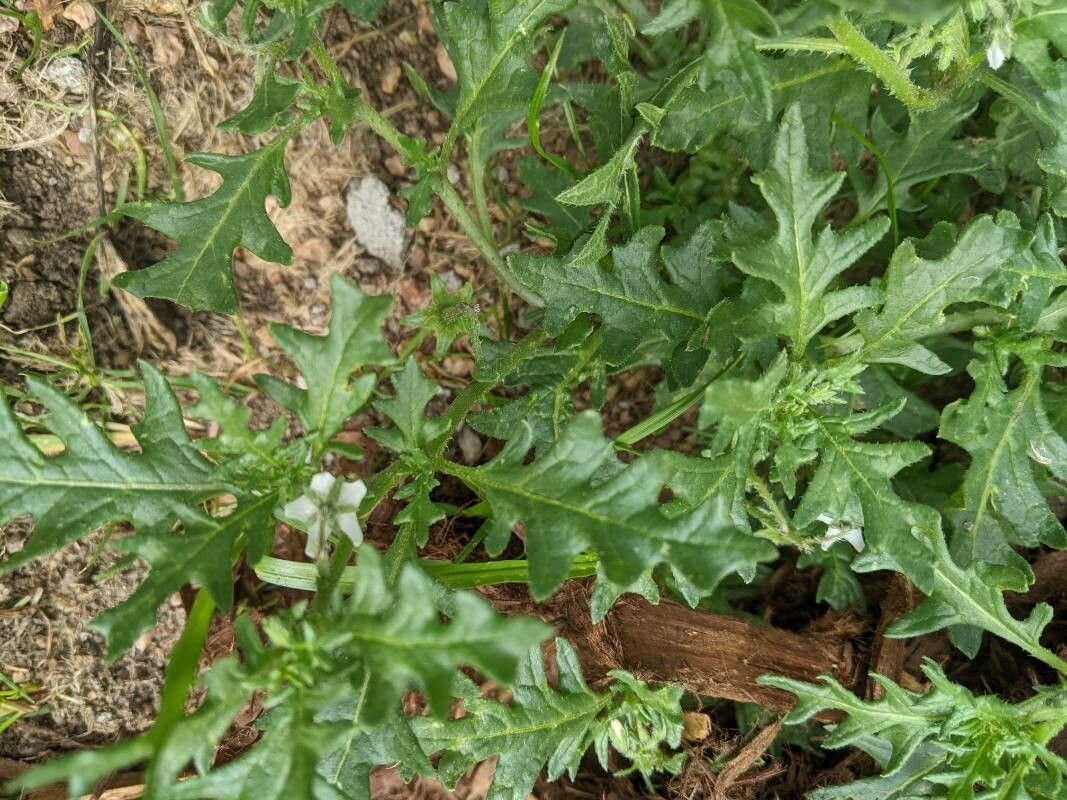
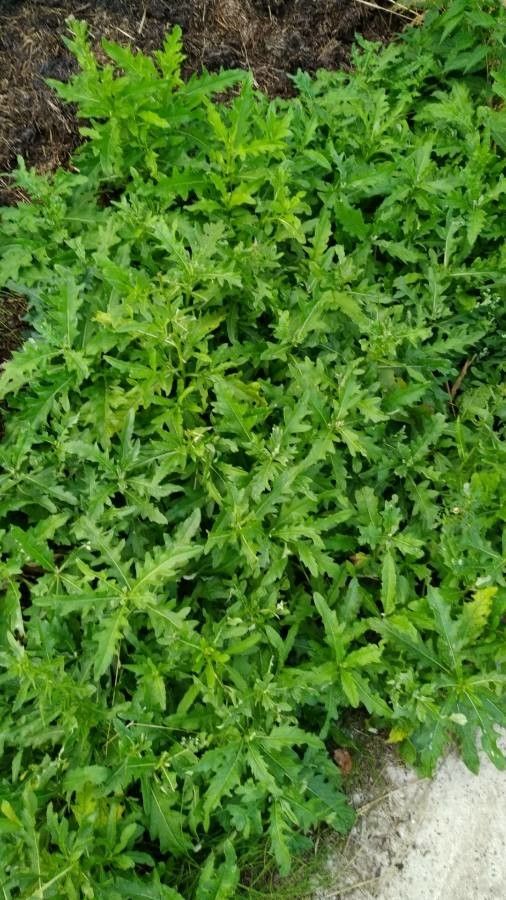
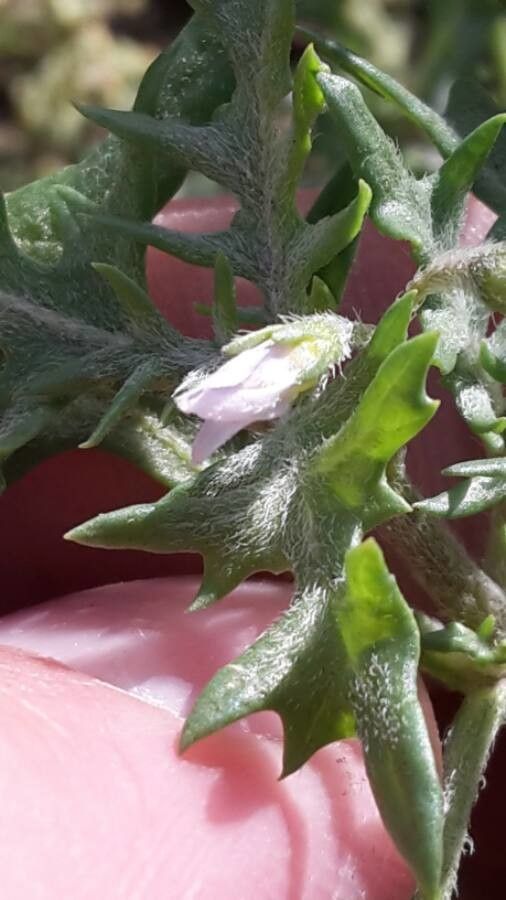
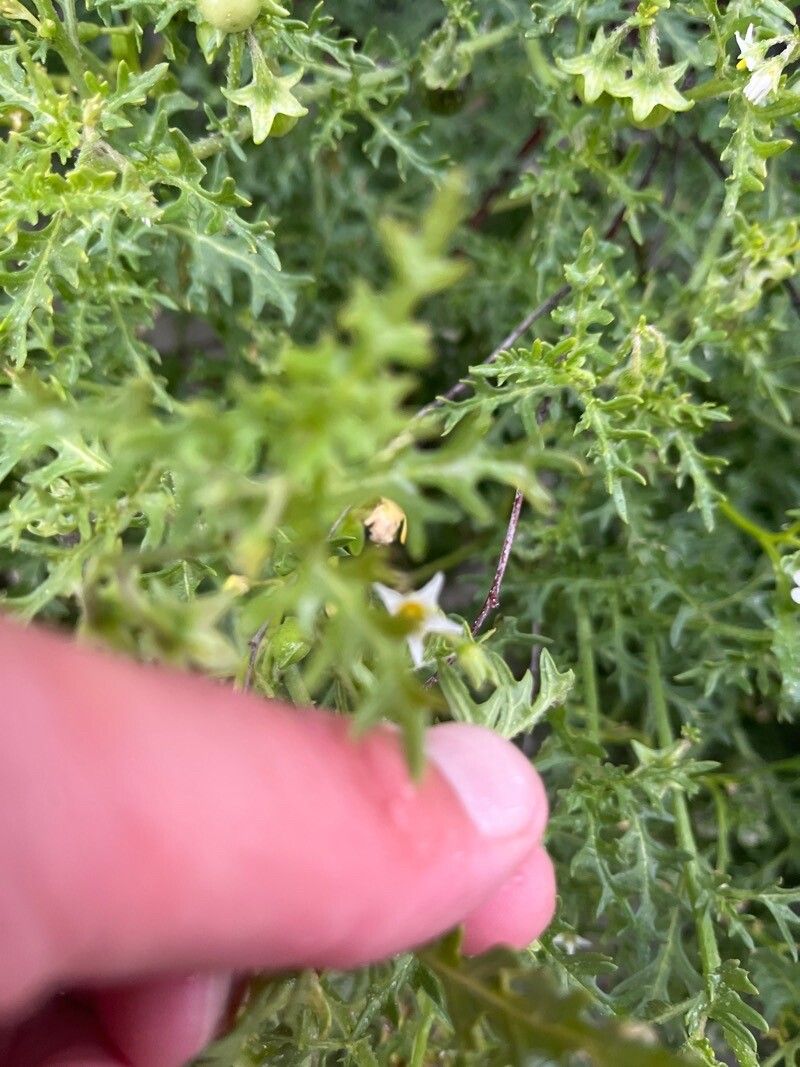
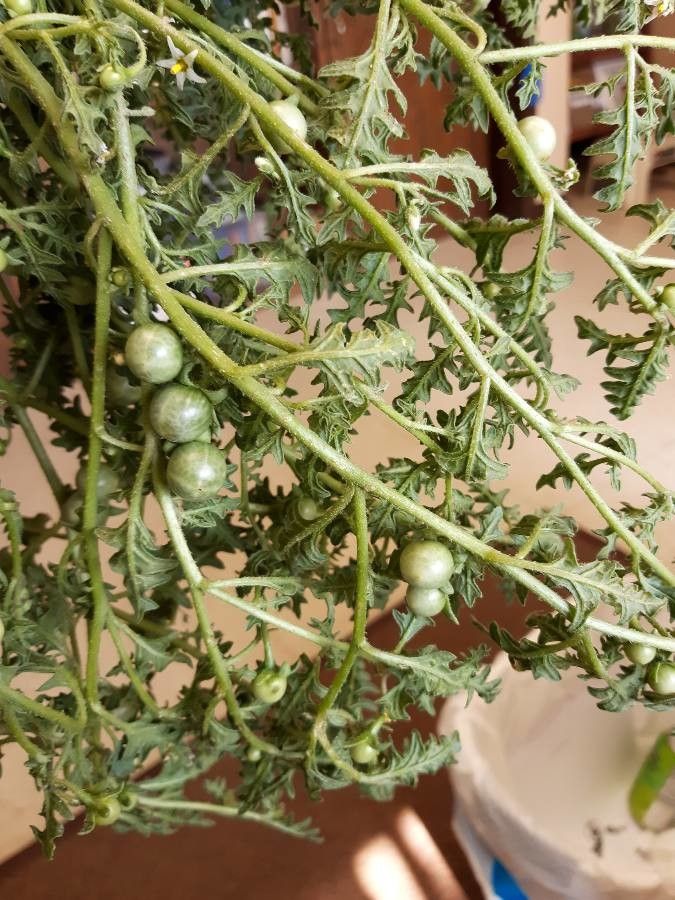
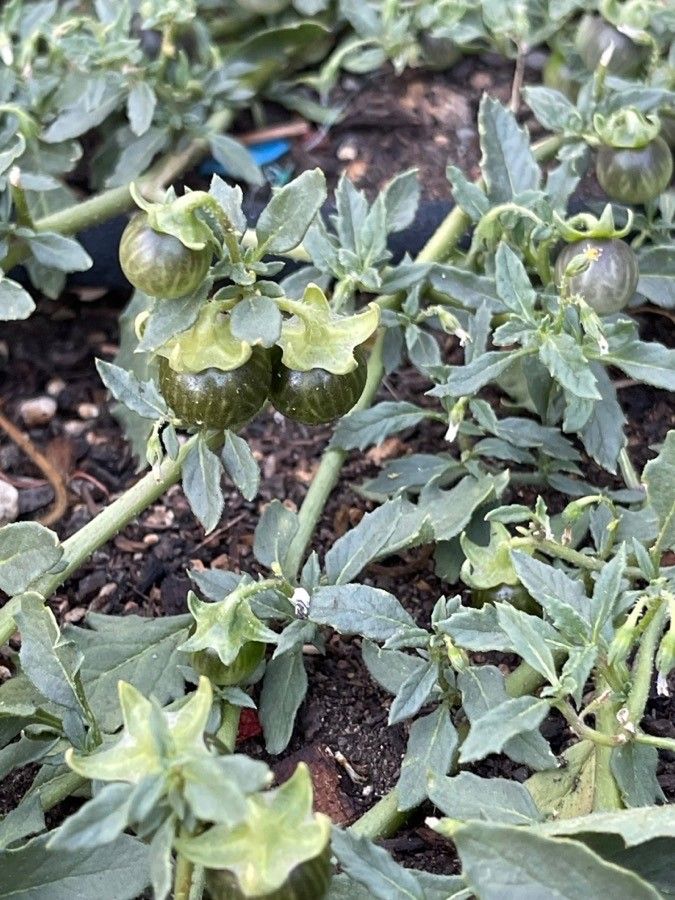
Solanum triflorum is a species of nightshade known by the common names cutleaf nightshade and small nightshade. It is native to Argentina, but it is known on other continents, including Europe and Australia, as an introduced species and sometimes a weed. It is present throughout much of North America, where it is possibly non-native as well. It grows in many types of habitat, including disturbed areas. It is an annual herb producing spreading, decumbent stems up one meter long. It is hairy, the hairs sometimes associated with glands. The leaves are a few centimeters long and are deeply cut into toothlike lobes. The inflorescence bears two or three flowers each just under a centimeter wide when fully open. The flower is usually white, but is occasionally purple-tinged. The fruit is a berry roughly a centimeter wide.
Cutleaf nightshade has strong resistance to disease and is generally unlikely to suffer from illnesses. Still, it can be vulnerable to pests and diseases found nearby. Such infections are typically mild. Regarding care, this plant is moderately demanding. It should be pruned on a regular basis to preserve its appearance and encourage healthy growth. Applying fertilizer can also support better flowering. Cutleaf nightshade is appropriate for anyone with outdoor areas like a garden or patio and does not demand extensive gardening experience. It may need more attention when cultivated indoors.
How to keep Solanum Triflorum.
Light
Cutleaf nightshade comes from bright, open habitats where it performs best in full sun. It can withstand some partial shade but prefers direct sunlight for optimal growth. This plant, which is annual or biennial, is noted for its sun-loving habit.
Water
Cutleaf nightshade, which comes from regions with moderate moisture levels, thrives with consistent soil moisture and should be watered weekly. It balances its drought tolerance with its need for hydration, adapting its growth cycle to the seasonal rainfall patterns. As an herbaceous species, it generally flourishes when grown outdoors.
Temperature
Cutleaf nightshade can tolerate a broad range of temperatures, but its distribution may still be restricted by particular combinations of moisture and heat. It performs best in warm summer conditions with sufficient rainfall or irrigation. Extended periods of cloudy, rainy weather, as well as prolonged high heat, can raise the chance of Cutleaf nightshade dying. In winter, protecting the plant from cold can increase its likelihood of surviving.
Fertilizer
Cutleaf nightshade benefits from regular, low-strength fertilizer applications to encourage healthy leaf growth. You should feed Cutleaf nightshade about once a month during the summer. Nitrogen is important for foliage, and supplying nitrogen-rich sources helps Cutleaf nightshade thrive.
Pruning
Cutleaf nightshade is an annual plant featuring deeply lobed leaves and small white or purple flowers. To encourage healthy growth, prune the plant from early to late spring. During pruning, remove any unhealthy stems and trim back overlong branches. Be sure to make clean cuts to improve air circulation and prevent disease.
Botanical profile.
- Plant Type
- Herb
- Life Cycle
- Annual
- Genus
- Solanum
- Family
- Solanaceae
- Hardiness Zone
- 4-9
- Mature Height
- 15 cm to 30 cm
- Mature Spread
- 30 cm to 61 cm
- Leaf Color
- Green, Dark Green
- Leaf Type
- Semi-evergreen
- Flower Color
- White
- Flower Size
- 1.02 cm to 1.52 cm
- Bloom Time
- Late spring, Summer
- Planting Time
- Spring, Summer, Autumn
- Harvest Time
- Mid summer, Late summer, Early fall, Mid fall
- Native Area
- Ecuador, Peru
Other names.
Reader questions.
How should I water my Cutleaf nightshade plant?
There are different ways to water Cutleaf nightshade, such as using a garden hose with a spray nozzle or a watering can. This plant is not too particular about the type of water it receives, whether it's rainwater, tap water, or filtered water. It's best to avoid watering from overhead to prevent damage to the leaves and flowers and reduce the risk of disease. Setting up a drip irrigation system is often the most effective method for watering Cutleaf nightshade, as it ensures even and direct water application to the soil. For Cutleaf nightshade in a container, you can use similar watering techniques, but with tools like a cup, watering can, or tap to water the soil directly.
What are the sunlight requirements for Cutleaf nightshade?
Cutleaf nightshade, known scientifically as Solanum triflorum, thrives best in environments that mimic its native habitat, which is bright and open, ensuring it receives plenty of sunlight. Specifically, for optimal growth, it needs full sun, defined as more than six hours of sunlight daily. However, it can also tolerate partial sun, about 3-6 hours of sunlight per day. It's essential to observe how sunlight moves through your garden throughout the day so you can choose planting spots that provide the right balance of light and shade, ensuring your plant's happiness and health.
What is Cutleaf Nightshade?
Cutleaf Nightshade, scientifically known as Solanum triflorum, is a plant identified by its unique botanical name. However, additional details about its essentials, symptoms, or other specific characteristics have not been provided.
What should I do if I give my Cutleaf nightshade plant too much or too little water?
To fix underwatering for Cutleaf nightshade, simply water it more often when you notice it lacks moisture. Overwatering is a bigger problem because it can cause diseases and plant decline. To avoid this, choose a sunny location with good drainage. If you overwater a potted Cutleaf nightshade, consider switching it to a new pot with loose soil and efficient drainage.
How do you provide adequate lighting for indoor Cutleaf nightshade plants?
For indoor Cutleaf nightshade plants, when natural sunlight is insufficient, artificial lighting serves as a crucial alternative to promote healthy plant growth. Choose the right type of artificial light—LED lights are a popular choice for their customizability to provide specific wavelengths needed by plants. The amount of artificial light required varies: full sun plants need 30-50W per square foot, partial sun plants need 20-30W per square foot, and full shade plants need 10-20W per square foot. The light source should be placed 12-36 inches above the plant to mimic natural sunlight adequately. Additionally, most plants benefit from 8-12 hours of light per day, so adjust the duration to meet your plant's specific needs.
How often do I need to water my Cutleaf nightshade plant?
Cutleaf nightshade requires regular watering throughout its growing season. In spring, it is recommended to water the plant once a week. As the season progresses and temperatures rise, you might need to increase watering to two or three times per week. However, exceeding this rate can harm the Cutleaf nightshade. Regardless of how often you water, it is important to keep the soil relatively moist but not wet. Watering Cutleaf nightshade in a pot is slightly different. The soil in a pot can heat up and dry out faster, so it is necessary to water container-grown Cutleaf nightshade a few times per week, compared to just once per week for plants in the ground.
What are the signs of inadequate light for Cutleaf nightshade, and how do you address them?
When Cutleaf nightshade does not receive enough light, it may show several symptoms including small or pale new leaves, leggy growth, rapid leaf drop, a cessation of new growth, or even symptoms of chlorosis and sunscald. To address these issues indoors, gradually move your plant to a sunnier location or use artificial light sources to ensure it receives at least 6 hours of direct sunlight daily. For outdoor plants, it's also essential to gradually move them to sunnier spots to prevent sunburn. If obstructions like trees are blocking sunlight, consider pruning or transplanting smaller plants during their dormant period to a location with better sunlight and drainage. Remember, whilst parts of the plant that suffered from insufficient light may not recover, new growth should be healthy with improved light conditions.
How much water should I give my Cutleaf nightshade plant?
There are a few ways to determine how much water to give your Cutleaf nightshade. Some gardeners prefer to check the soil for moisture and water until the top six inches feel moist. Another option is to use a set measurement of about two gallons per week, considering factors like heat and soil dryness. However, following these guidelines strictly may result in overwatering if your plant requires less water. When growing Cutleaf nightshade in a container, you need a different approach. Make sure to water all the dry layers of soil and check for moisture by inserting your finger or observing water trickling out of the drainage holes.
How do I know if I am giving enough water to my Cutleaf nightshade plant?
Cutleaf nightshade plants can be a challenge to water properly. On one hand, their deep roots require weekly watering to keep the soil moist. But on the other hand, they are highly vulnerable to root rot, which can cause browning. While underwatering is less likely to occur since these plants can survive without additional watering for a while, if you wait too long, wilting and dry leaves may occur.
How often should I water my Cutleaf nightshade throughout the year?
As the season progresses, the water requirements of your Cutleaf nightshade plant will increase. During spring, it is sufficient to water the plant once a week. However, as the summer heat sets in, you will need to increase the frequency of watering, sometimes up to three times per week. This is particularly important for Cutleaf nightshade plants grown in containers, as the soil in containers tends to dry out faster in warm weather. In autumn, when the plant is still blooming, you can slightly reduce the amount of water it receives, as the temperature has likely cooled down and the sun is not as intense as it was during summer.
How do I water my Cutleaf nightshade at different stages of growth?
Cutleaf nightshade goes through different growth stages throughout the year, each with varying water needs. When starting as a seed, it's important to provide ample water for germination. During this stage, it is necessary to water frequently to maintain consistent moisture in the soil. As the plant grows above the soil, it will require slightly less water than in the seedling phase. Once the plant reaches maturity, watering about once per week is sufficient. However, during flower development, it may be beneficial to increase watering slightly to support the process.
How is watering Cutleaf nightshade different when grown inside or outside?
Most Cutleaf nightshade plants prefer to grow outdoors for a few reasons. Firstly, these plants tend to grow quite tall, making it challenging to accommodate them indoors. Secondly, Cutleaf nightshade requires a higher amount of daily sunlight than what most indoor locations can provide. However, if you are able to create a suitable indoor growing environment, you should be prepared to water your Cutleaf nightshade more frequently compared to outdoor growth. This is because indoor spaces generally have drier conditions, often due to HVAC units. Additionally, soil in containers can dry out faster than soil in the ground.