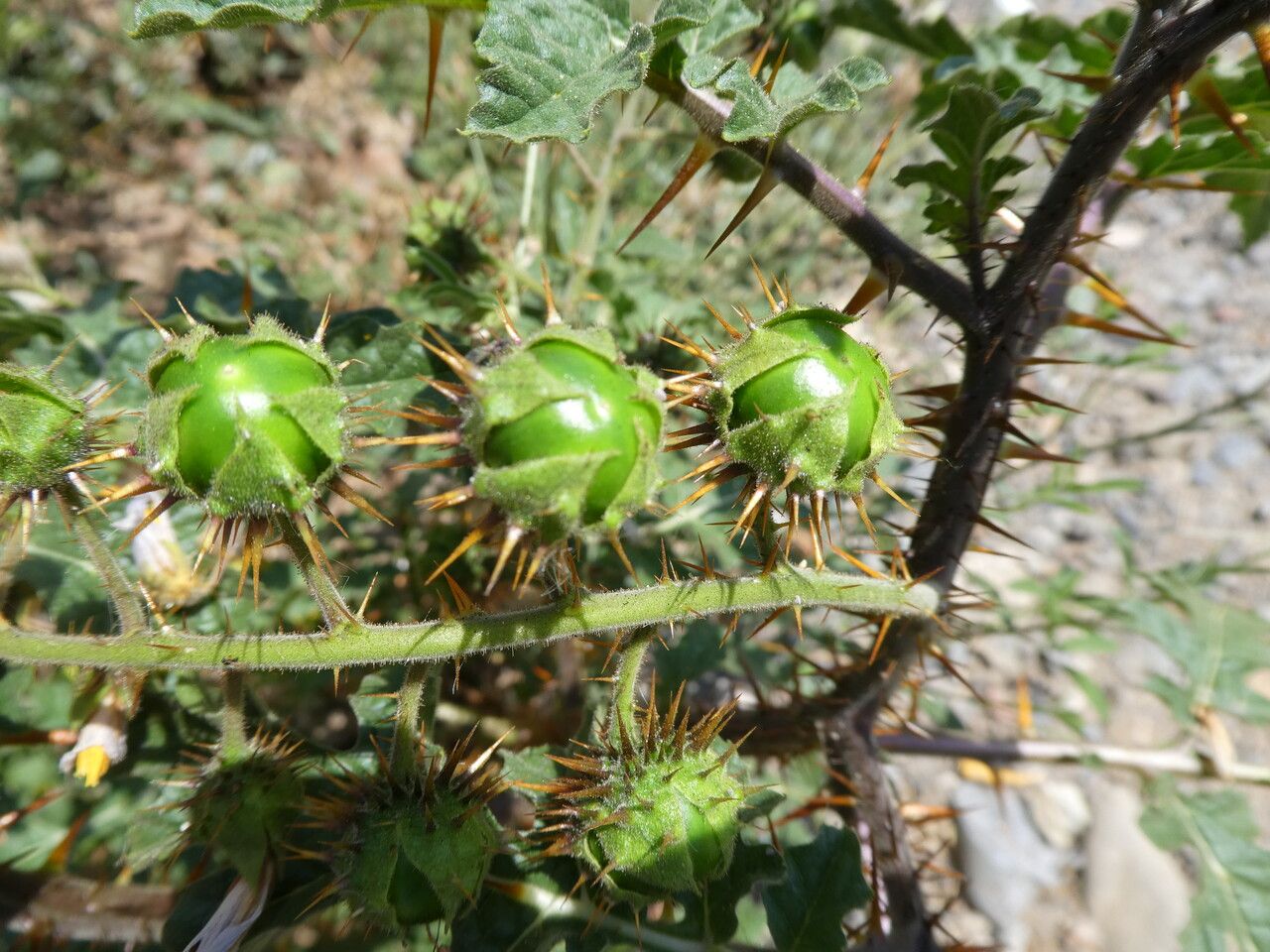
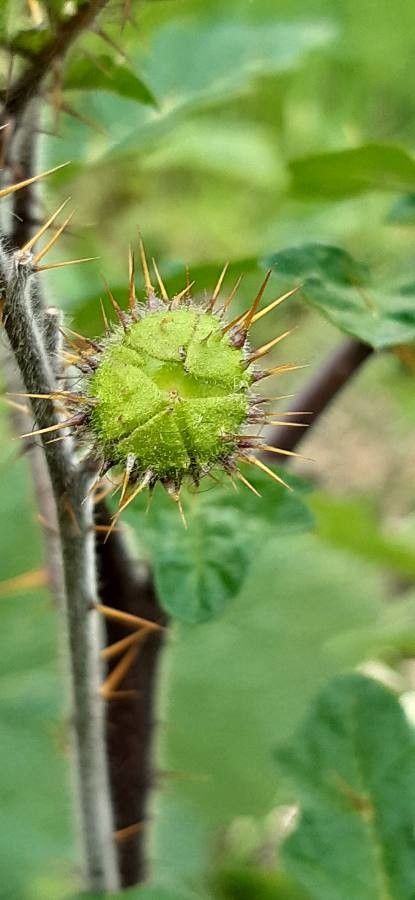
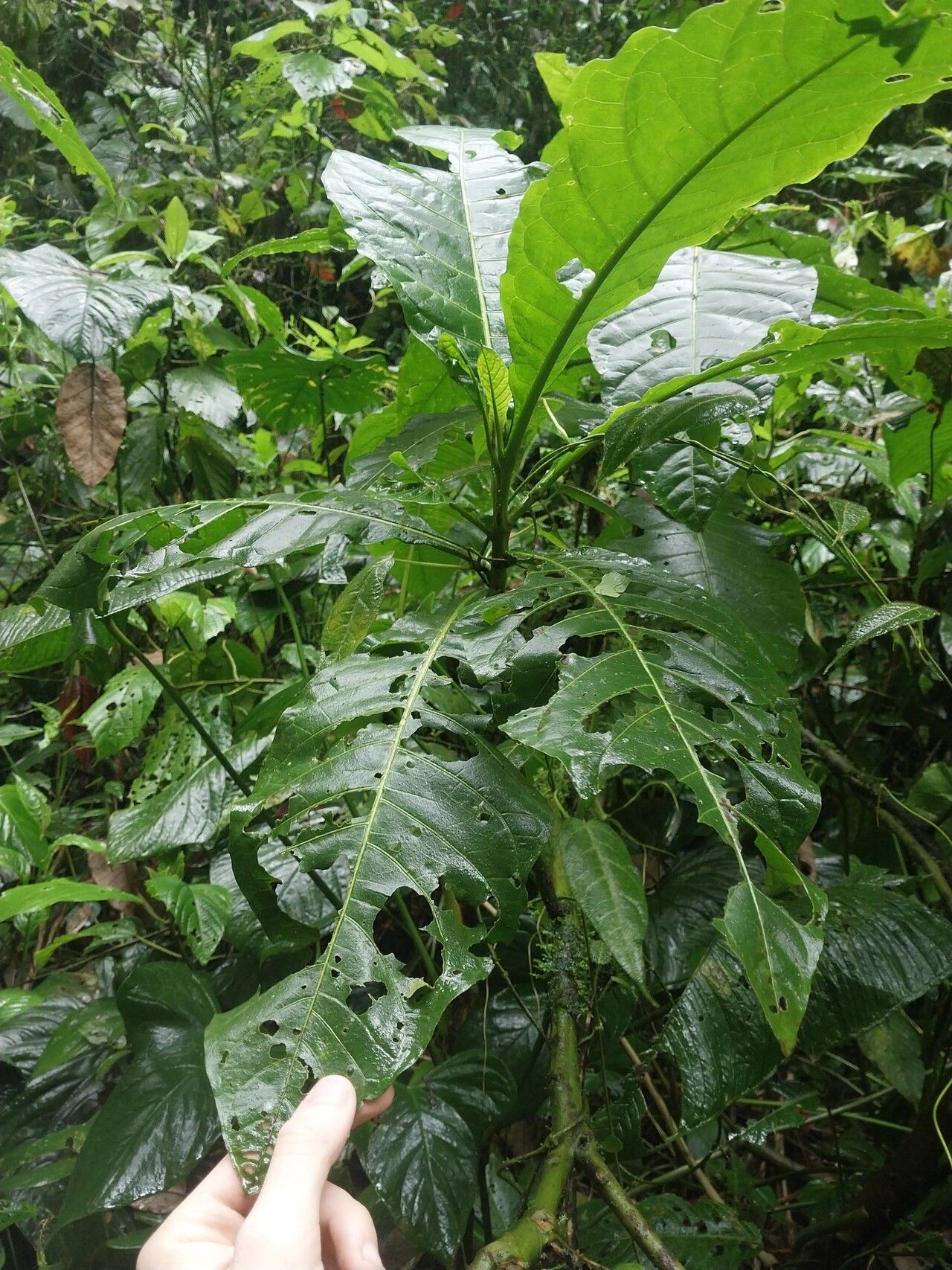
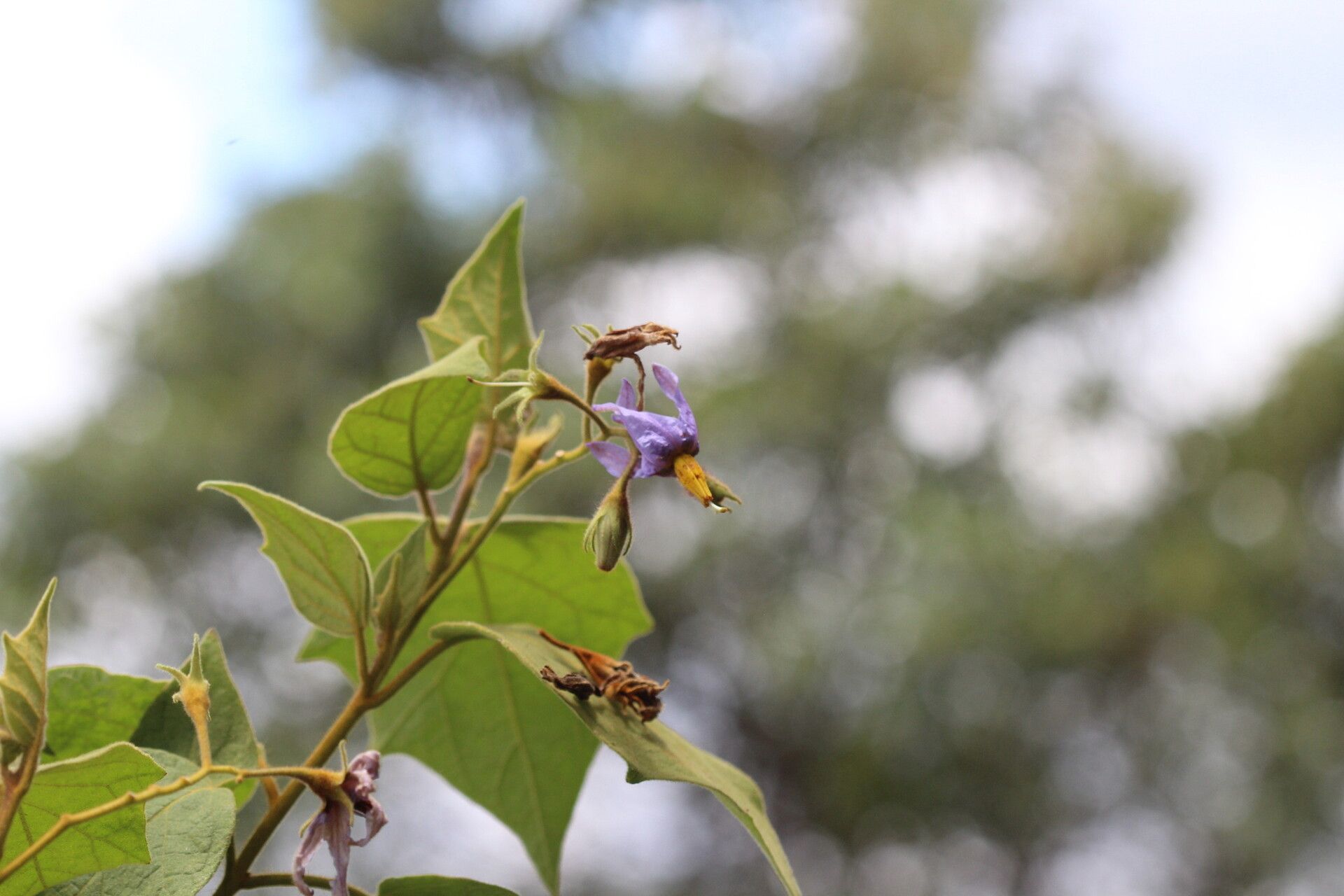
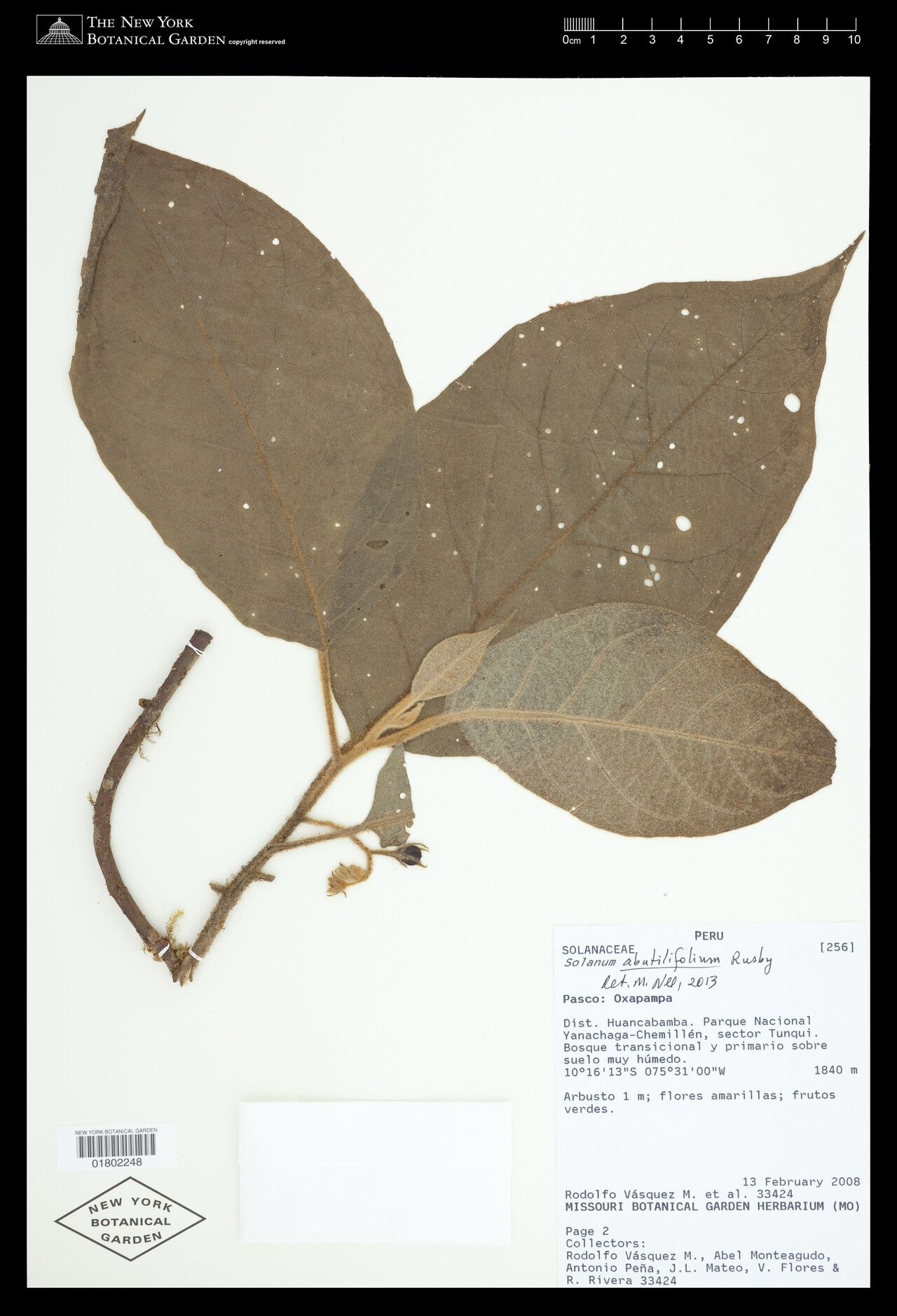
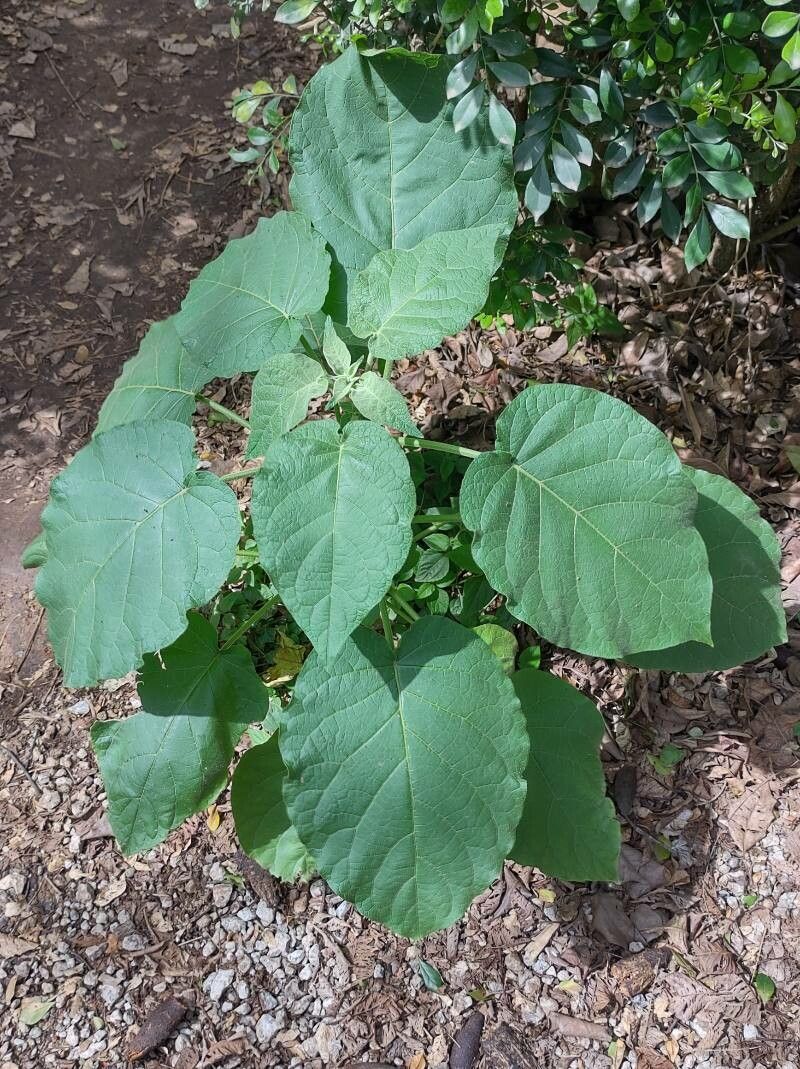
Solanum sisymbriifolium, commonly known as Sticky Nightshade or the Five Minute Plant, is a fast-growing annual species within the Solanaceae family. Native to South America, it has since spread and naturalized in many regions worldwide.
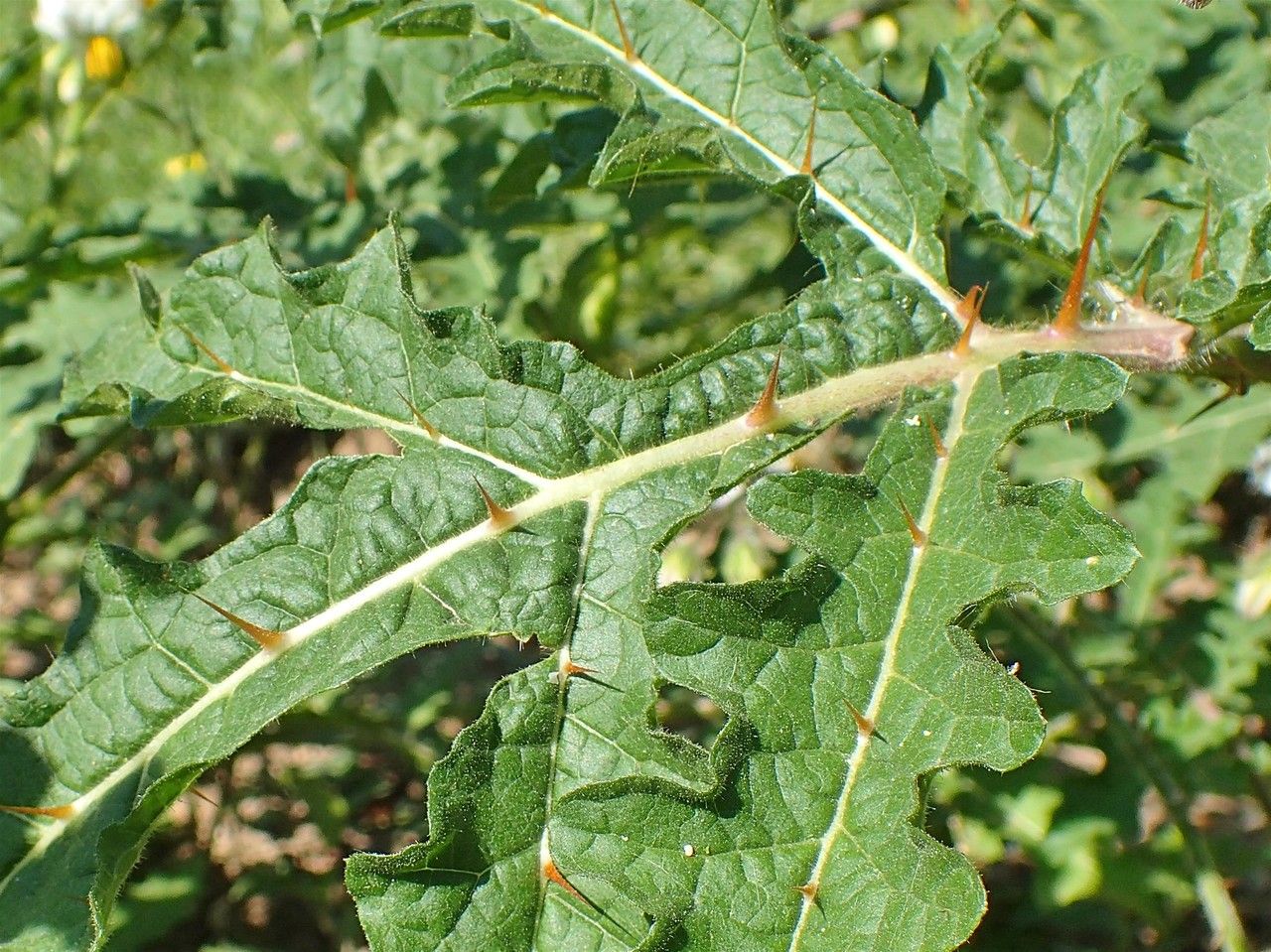
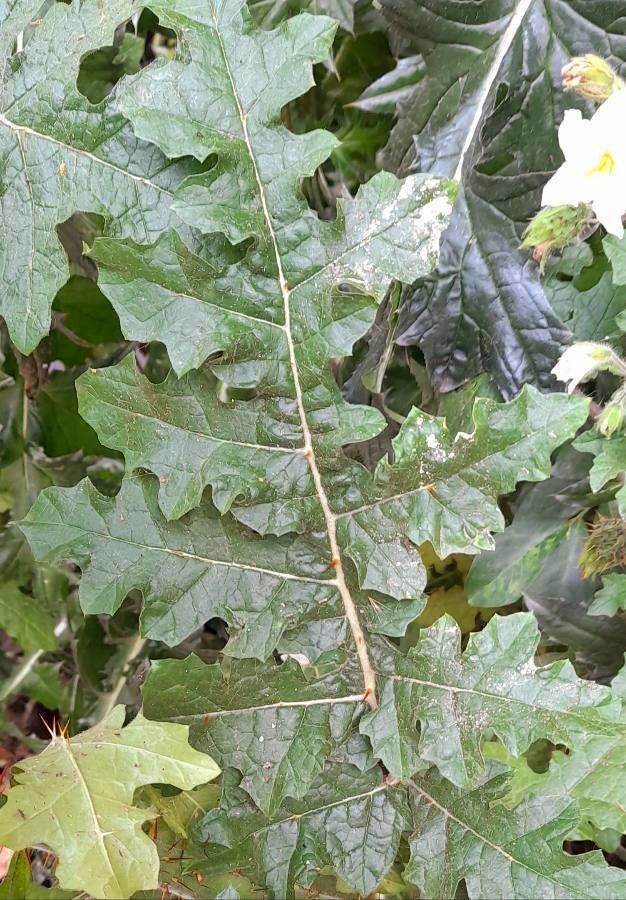
Reaching heights of 1 to 2 meters, the plant has a bushy appearance with numerous branches. Its alternate leaves are ovate or lanceolate with serrated edges, covered in sticky hairs, a feature that contributes to its common name.
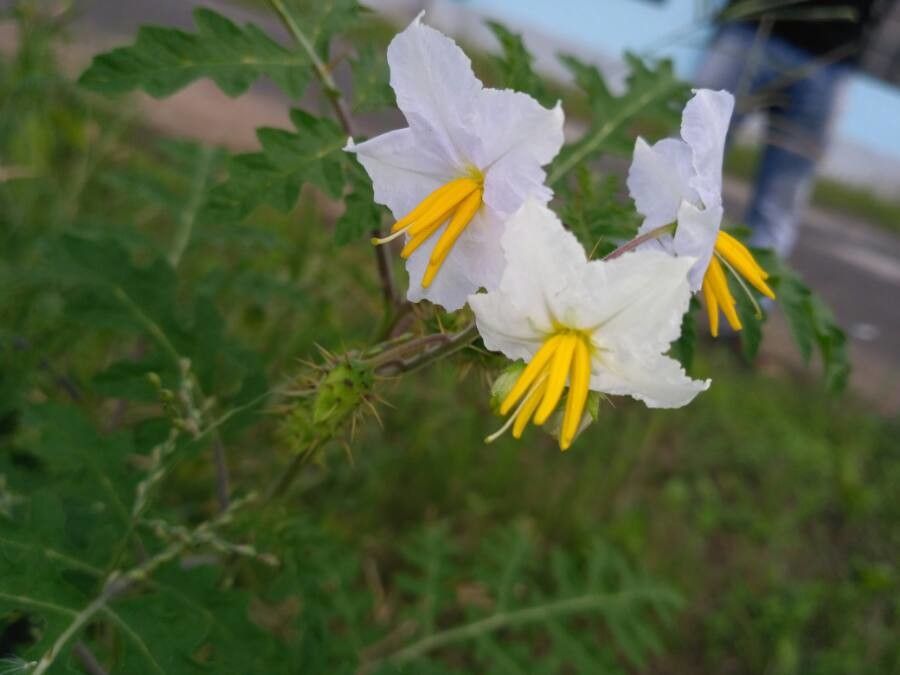
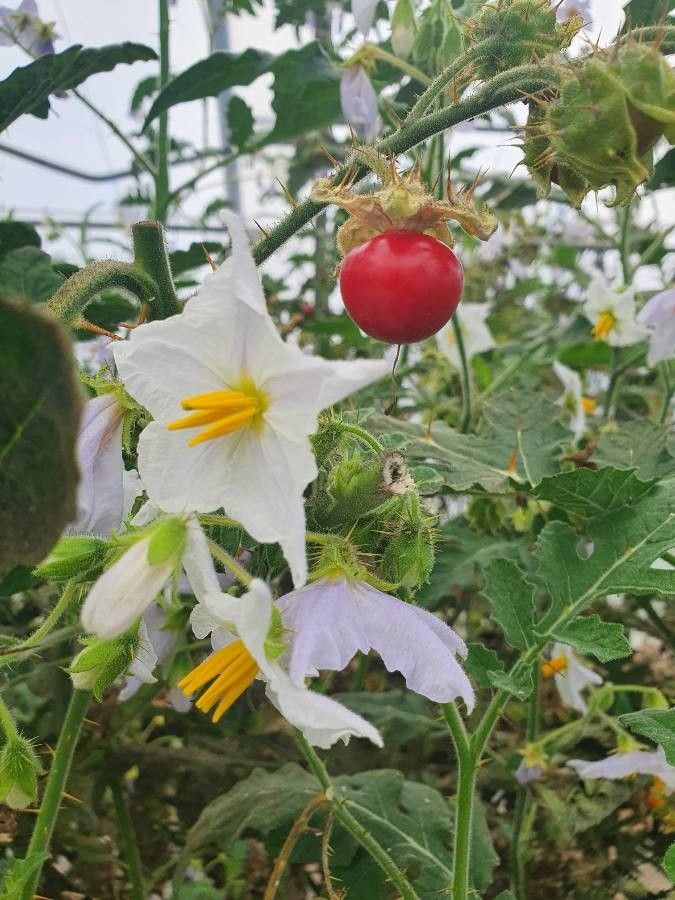
The plant's flowers are small and either white or pale blue, clustered at the ends of branches. Its fruit is a small green berry that turns yellow upon ripening.
Solanum sisymbriifolium is notable for its medicinal properties, containing alkaloids such as solanine, which have been used to treat various conditions like fever, inflammation, and pain. Additionally, it is an important food source due to its high protein content, making it an ideal fodder crop for livestock.
Overall, Solanum sisymbriifolium is a significant plant species due to its medicinal benefits and nutritional value, holding both ecological and economic importance.
Sticky Nightshade has strong resistance to disease and is typically not prone to illnesses. Still, it can be vulnerable to pests and diseases that exist nearby. Such infections tend to be mild. Regarding care, the plant is medium maintenance. It should be pruned regularly to preserve a neat appearance and encourage healthy growth. Applying fertilizer can also encourage more flowering. Sticky Nightshade is appropriate for anyone with outdoor areas like a garden or patio and does not demand extensive gardening experience. It may need extra attention if kept indoors.
How to keep Solanum Sisymbriifolium.
Light
The sticky Nightshade prospers in radiant light throughout the day, which enables healthy growth. During its various growth stages it needs an abundance of sunlight. Coming from habitats where the sun is plentiful, the sticky Nightshade is not averse to excessive illumination. However, a lack of sunlight can impede its proper growth.
Water
Sticky nightshade flourishes in areas with varying moisture levels and needs regular watering for best growth. It prefers soil that is consistently moist, ideally with weekly watering. When grown outdoors in temperate zones, sticky nightshade benefits from seasonal rains, which improve its hydration and aid its growth cycles.
Temperature
Sticky Nightshade originates from regions where temperatures range from 68 to 100.4°F (20 to 38°C). It generally does best in sunny locations with a moderate level of warmth. To mimic its natural habitat, maintain those temperatures. Seasonal adjustments may be necessary.
Fertilizer
When most of Sticky Nightshade’s blooms have opened to full size, resume fertilizing. At the height of flowering, apply fertilizer every three to four weeks, weather permitting. Then, once Sticky Nightshade begins to produce fewer new blooms, stop fertilizing — there’s no need to feed the plant when it can’t produce additional flowers.
Botanical profile.
- Plant Type
- Herb
- Life Cycle
- Annual, Perennial, Biennial
- Genus
- Solanum
- Family
- Solanaceae
- Hardiness Zone
- 6-11
- Mature Height
- 0.91 m to 1.52 m
- Mature Spread
- 49 cm to 91 cm
- Leaf Color
- Green
- Leaf Type
- Semi-evergreen
- Flower Color
- White
- Flower Size
- 3.56 cm to 5.08 cm
- Bloom Time
- Late spring, Early summer, Mid summer
- Planting Time
- Spring, Summer, Autumn
- Harvest Time
- Summer
- Native Area
- Uruguay, Colombia, Paraguay, Argentina, Bolivia, Peru, Brazil, Ecuador
Other names.
Reader questions.
What should I do if I give my Sticky Nightshade plant too much or too little water?
To address underwatering Sticky Nightshade, simply water it more regularly when you notice it lacks moisture. Overwatering, on the other hand, can be a serious problem that may lead to diseases and death if not detected early. To prevent this, choose a suitable location with ample sunlight to dry the soil and good drainage to prevent waterlogging. If you overwater the plant in a pot, consider changing it to a new pot with better drainage and loose soil.
Why do I need to give nutrients to my Sticky Nightshade plant?
Plants, including Sticky Nightshade, require nutrients to survive. This is well-known to gardeners of all skill levels. Without a food source, Sticky Nightshade will not survive long after the initial pollination. To ensure the plant thrives and produces large, beautiful flowers throughout the blooming season, it is crucial to provide the appropriate nutrients in the right quantities. Additionally, fertilizer plays a key role in helping Sticky Nightshade develop a strong and healthy root system. Given its thin and easily damaged roots, this plant can greatly benefit from fertilization during planting. This not only promotes stability but also sets the foundation for an impressive flowering display. By fertilizing at the correct time, Sticky Nightshade's flowering period can be significantly prolonged.
What are the sunlight requirements for Sticky Nightshade?
Sticky Nightshade (Solanum sisymbriifolium) thrives under conditions of abundant sunlight throughout its growth stages. It requires more than 6 hours of sunlight daily, categorized as full sun exposure. This plant originates from habitats where sunlight is plentiful, hence it prospers in bright environments, although it can suffer from a lack of sunlight, which hampers its growth.
What is the native environment of Sticky Nightshade?
Sticky Nightshade, or Solanum sisymbriifolium, is native to environments experiencing temperatures ranging from 68 to 100.4°F (20 to 38°C). It flourishes best in areas that are sun-filled and maintain a fair level of heat. To ensure optimal growth, it's advised to replicate these temperature conditions, with adjustments as necessary according to season. Despite its strong cold resistance, in environments where winter temperatures might drop below -25°C, measures to protect the plant from frost should be considered, such as covering it with soil or straw. Additionally, watering the plant abundantly before the first freeze in autumn to maintain moist soil can help prevent drought and water scarcity during winter and early spring.
How often should I water my Sticky Nightshade plant?
Sticky Nightshade requires regular watering throughout the growing season. In spring, watering once a week is sufficient. As the weather gets warmer, you may need to increase watering to two or three times per week, but be careful not to exceed this rate as it can harm the plant. It's important to keep the soil moist but not wet, regardless of how often you water. When growing Sticky Nightshade in a pot, you'll need to water more frequently compared to planting it in the ground. Generally, watering a container-grown Sticky Nightshade a few times per week is recommended, whereas an in-ground plant only needs to be watered once a week.
When should I fertilize my Sticky Nightshade plant?
Sticky Nightshade experiences significant growth in the early growing season, after the last frost. It is recommended to fertilize the plant during this period, specifically during planting. You can apply fertilizer when you first plant it in the ground or in planters. This will be the only time you need to fertilize until later in the year when the blooms are fully developed. Once the season is in full swing and Sticky Nightshade has majority of its blooms at full size, it's time to start fertilizing again. You should fertilize approximately every three to four weeks, depending on the weather, when the blooms are at their peak. When Sticky Nightshade begins to produce fewer new blooms, you can stop fertilizing as there is no need to fertilize when the plant can no longer produce blooms.
Can Sticky Nightshade grow with artificial lighting?
Yes, Sticky Nightshade can grow with artificial lighting, especially when natural sunlight is insufficient. This is particularly useful in winter or less sunny spaces. For optimal growth, indoor settings require 30-50W/sq ft of artificial light for full sun plants, 20-30W/sq ft for partial sun plants, and 10-20W/sq ft for full shade plants. LED lights are recommended because they can be customized to provide specific wavelengths needed by plants. The lights should be placed 12-36 inches above the plant to mimic natural sunlight and left on for 8-12 hours per day.
How does Sticky Nightshade react to low temperatures?
Sticky Nightshade has a high tolerance for cold temperatures and typically thrives when the temperature is maintained above 20°C. Throughout the winter season, it is key to keep the temperature above 0°C. In cases where the temperature falls below -25°C, Sticky Nightshade might not display noticeable changes during the winter; however, its ability to sprout in the following spring could be reduced or completely halted. If such a situation arises, removing any parts of the plant that have failed to sprout in spring is recommended as a solution.
How much water does my Sticky Nightshade plant need?
There are a few ways to decide how much water you should give to your Sticky Nightshade plant. Some gardeners rely on the feel of the soil to determine when to water. They suggest watering until the top six inches of soil are moist. Another approach is to use a specific measurement. Generally, it is recommended to give your Sticky Nightshade about two gallons of water per week, adjusting based on temperature and soil moisture. However, be cautious not to overwater if your plant requires less. When growing Sticky Nightshade in a container, a different method is needed. You should water enough to moisten all the dried soil layers by checking with your finger. Another indication is when excess water starts to trickle from the pot's drainage holes.
When is it not recommended to use fertilizer on my Sticky Nightshade?
Regular fertilizing is important for Sticky Nightshade, but it should not be applied at the wrong time. There are certain situations, often related to climate or controllable factors, where it is necessary to hold back on fertilizer. For example, if there are severe or unexpected changes in the weather such as a sudden cold spell in the middle of summer, it is best to wait until the weather warms up again before fertilizing. Similarly, if the soil is too dry or compacted, fertilizer may go straight to the roots instead of being diffused through the soil. This is not ideal for the roots of Sticky Nightshade. It is also not advisable to fertilize when temperatures are extremely hot, as this can cause the fertilizer to break down too quickly. It is important to treat and resolve any pest or disease issues before resuming fertilizing.
What are the signs of inadequate sunlight in Sticky Nightshade?
When Sticky Nightshade is grown indoors or in conditions of insufficient light, it may exhibit symptoms such as smaller new leaves, leggy or sparse growth, faster leaf drop, slower or halted growth, lighter-colored new leaves, chlorosis, sunscald, leaf curling, wilting, and leaf scorching. These symptoms indicate the plant's struggle to adapt to poor lighting conditions. Chlorosis and sunscald suggest an adverse reaction to excessive sunlight, contrasting with other symptoms that arise from inadequate light exposure.
What should be done if Sticky Nightshade is exposed to high temperatures?
During the summer months, care should be taken to ensure that Sticky Nightshade is not exposed to temperatures exceeding 38°C. Situations where the temperature rises above 43°C can lead to the leaves becoming lighter in color, curling, becoming prone to sunburn, and in severe cases, may result in the entire plant wilting and becoming dry. To mitigate this, it is advisable to trim away any sunburned and dried-up plant parts and relocate the plant to a shaded area during the midday and afternoon sun, or use shade cloth for protection. Additionally, watering the plant in the morning and evening will help keep the soil moist, further preventing heat damage.