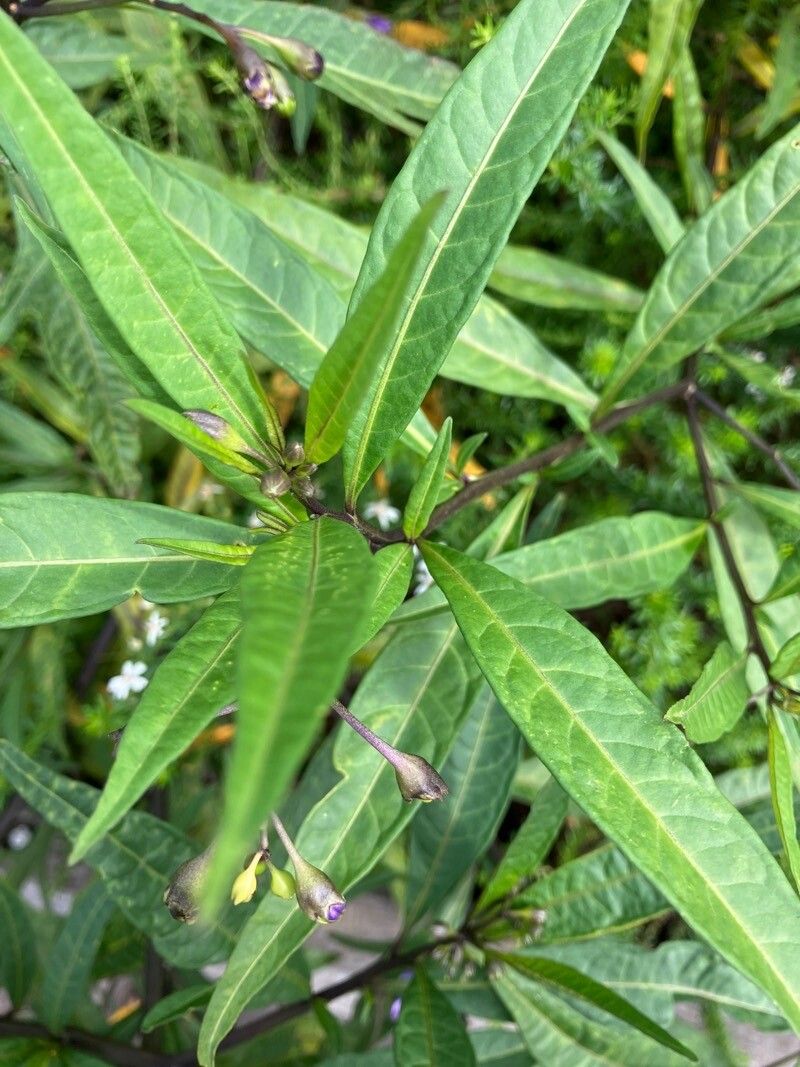
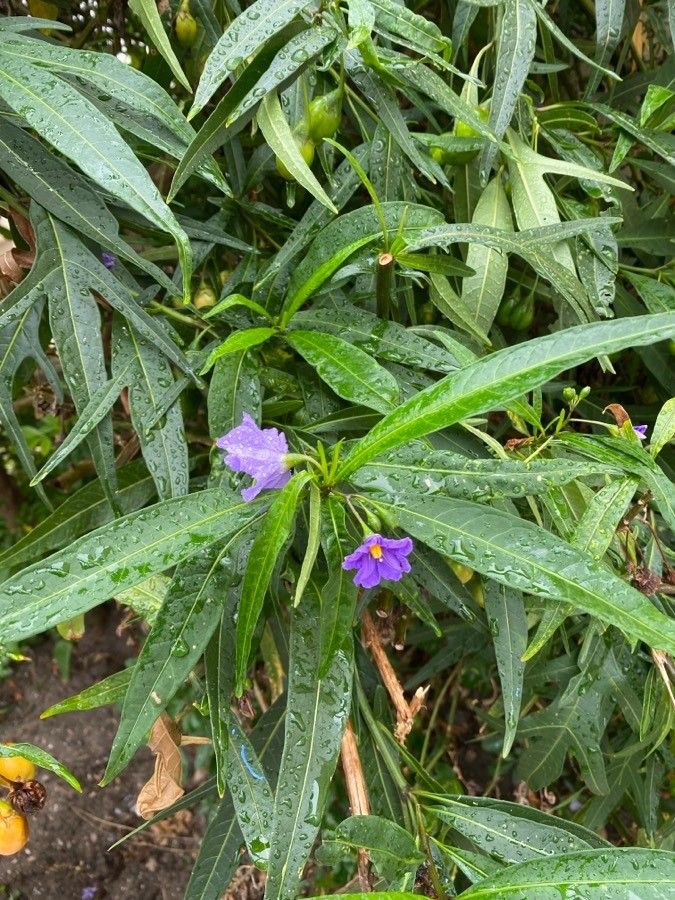
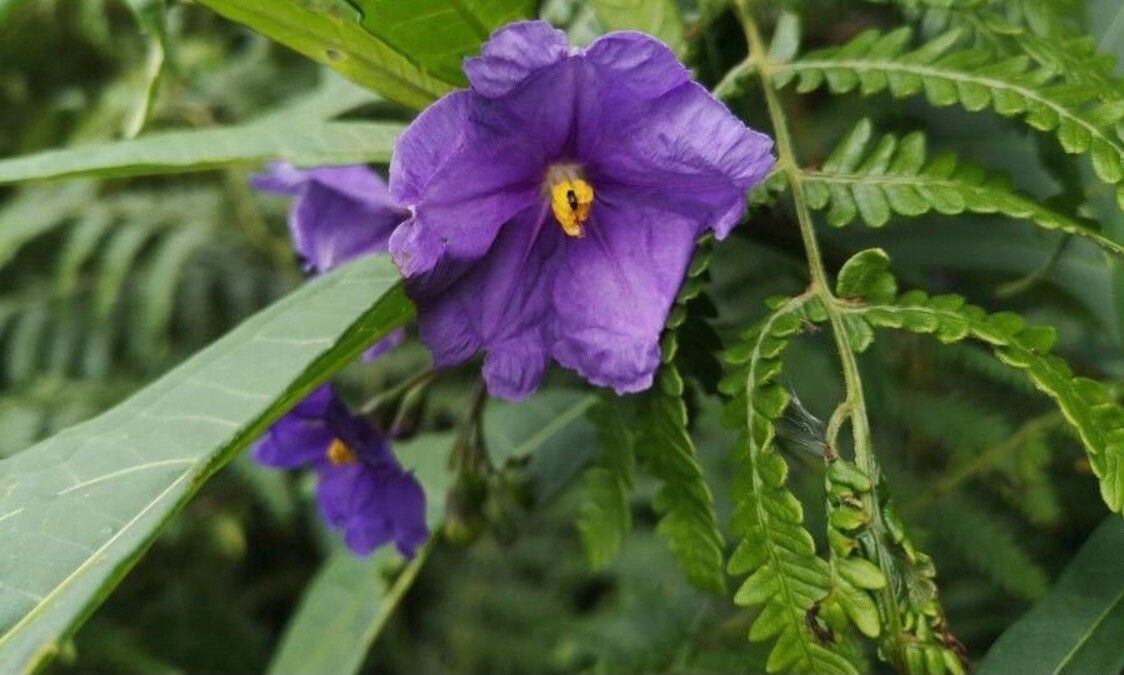
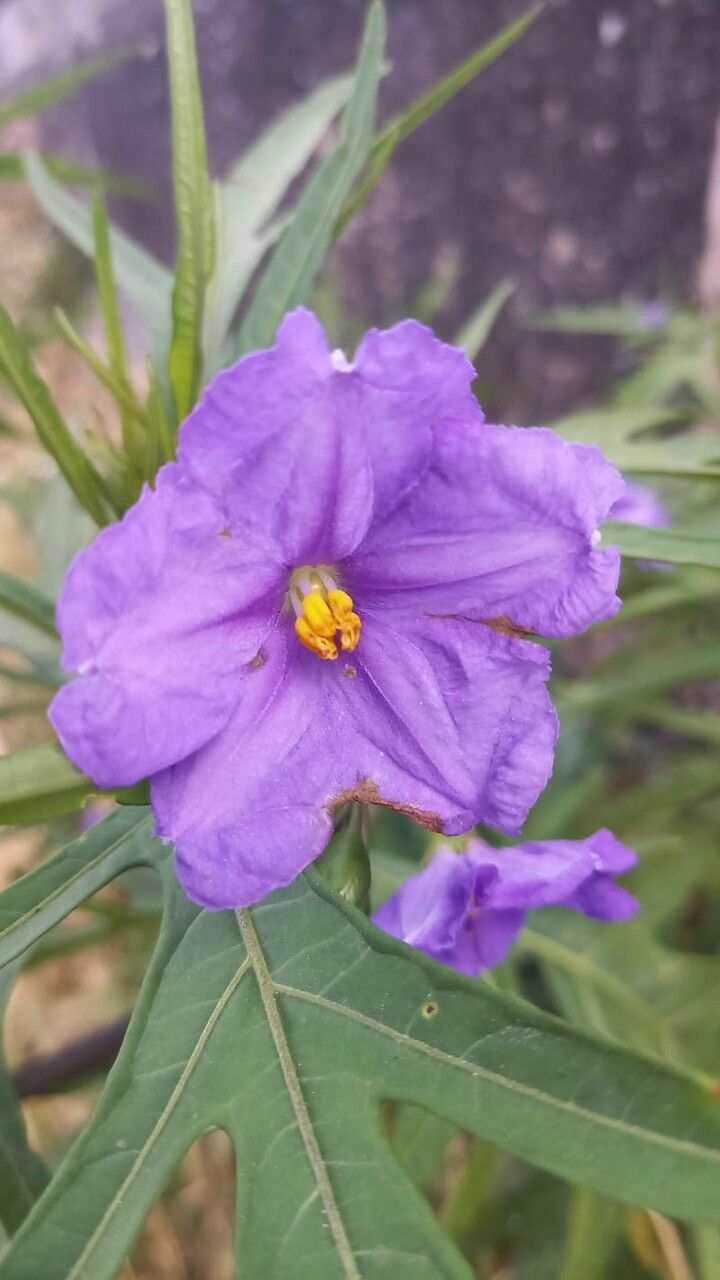
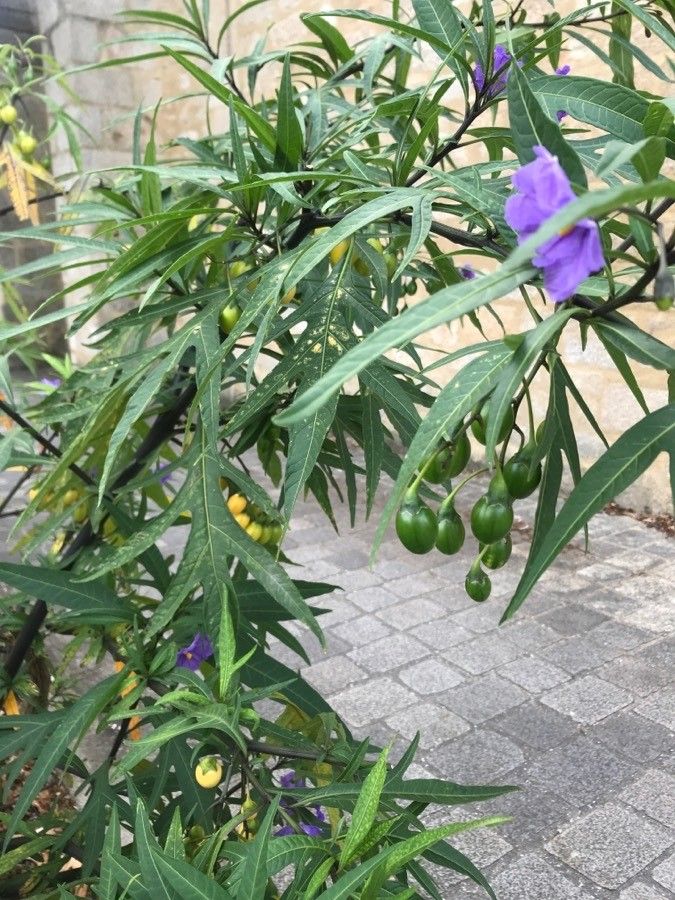
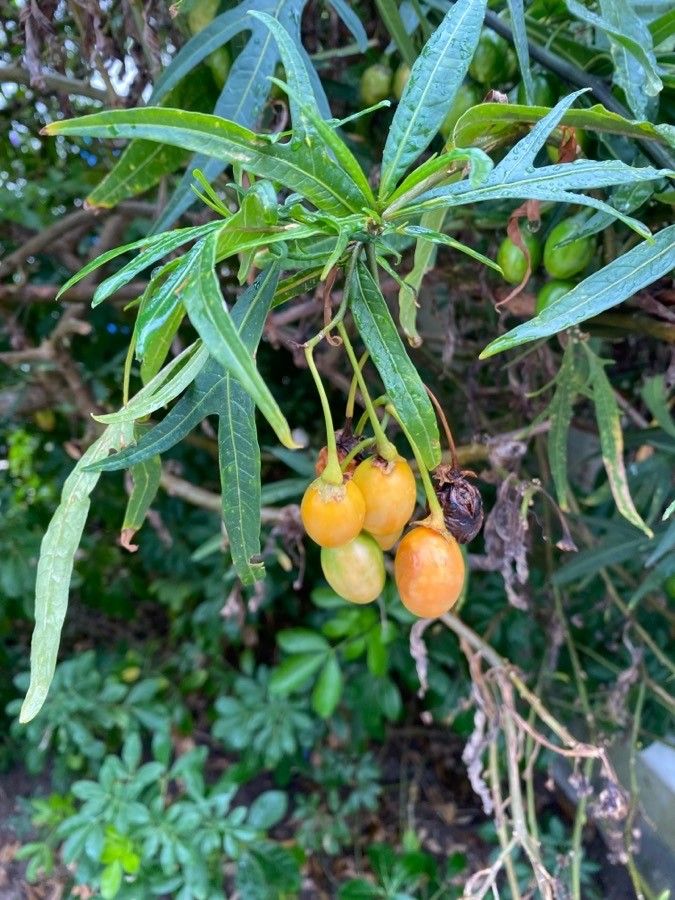
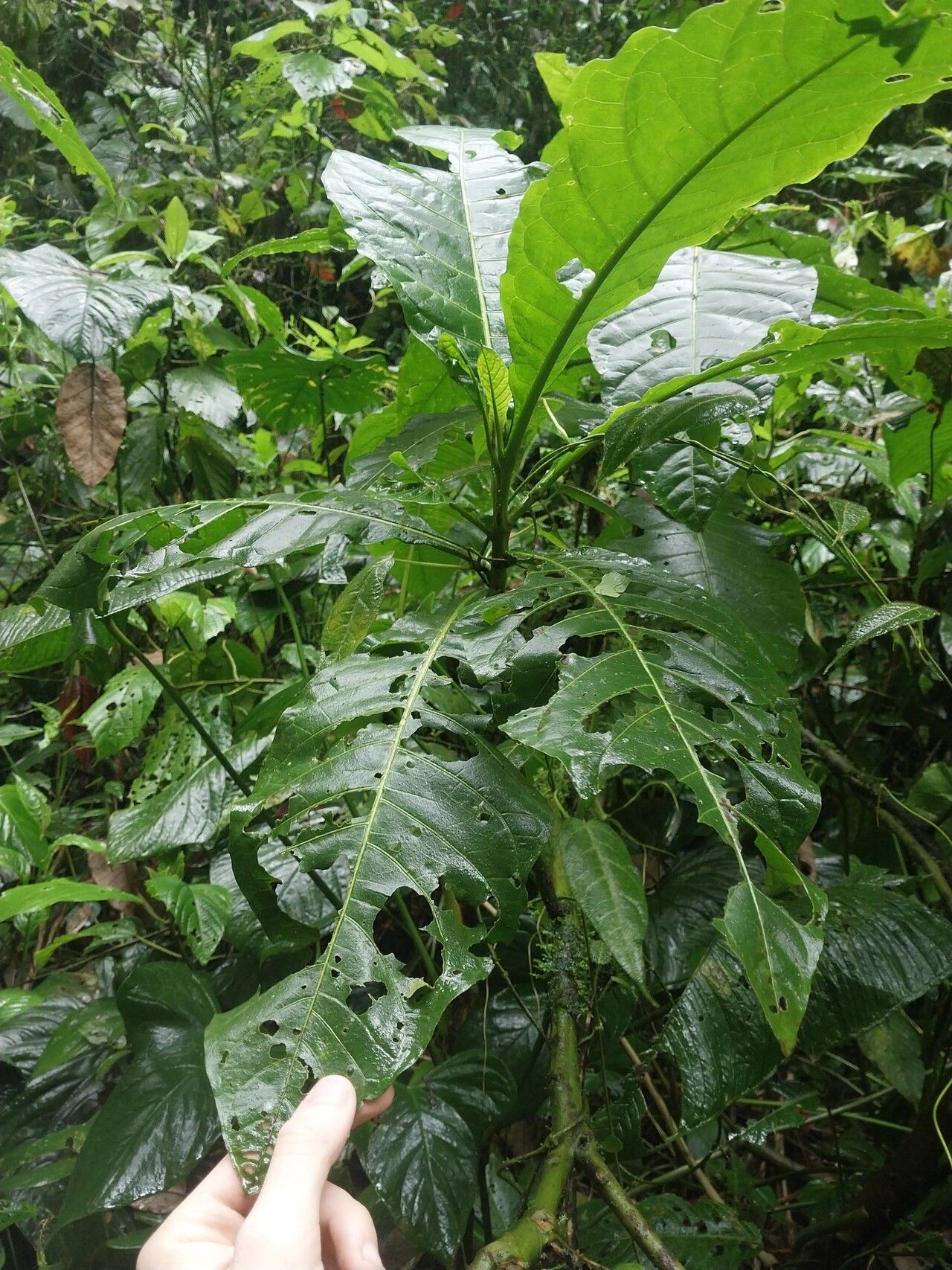
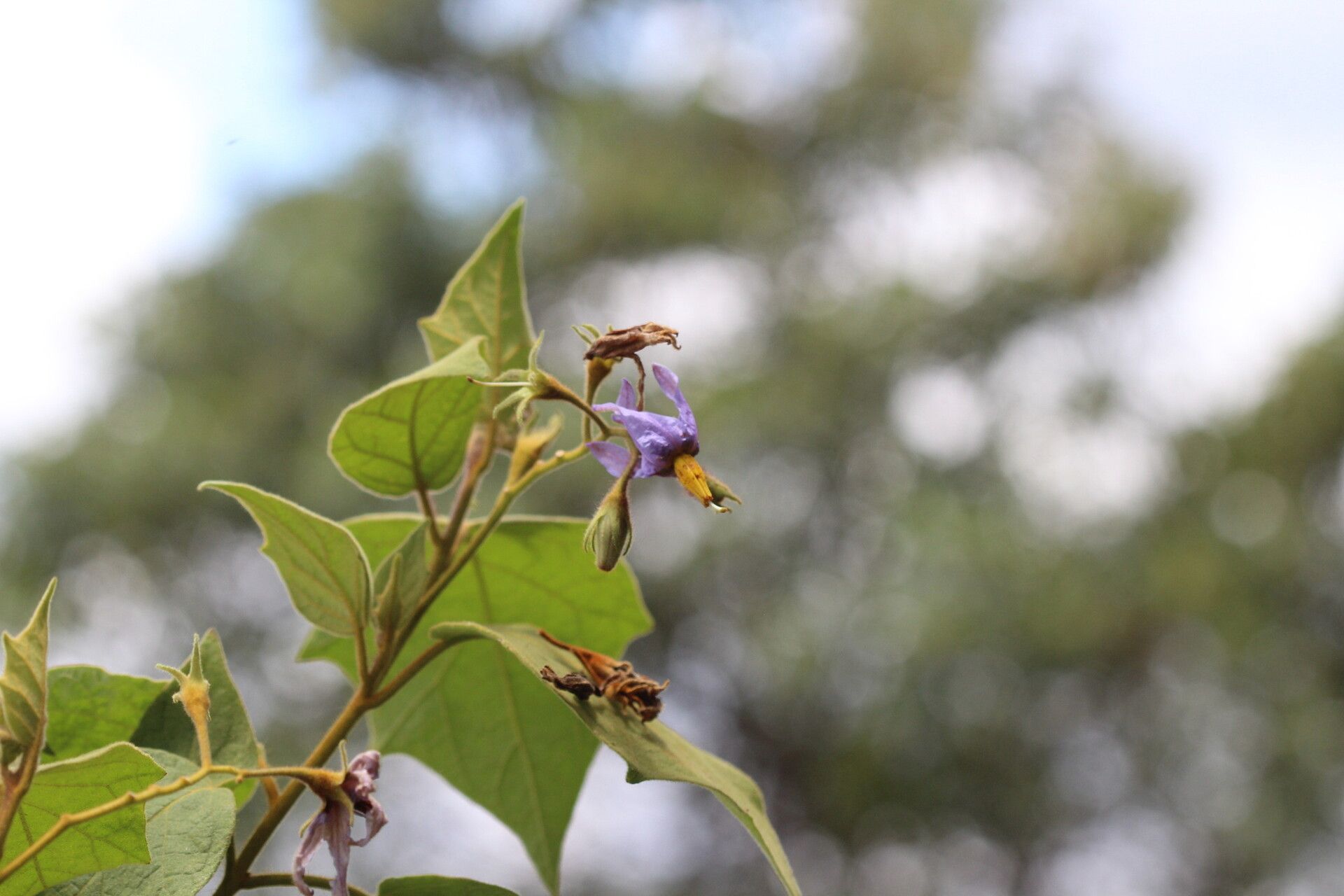
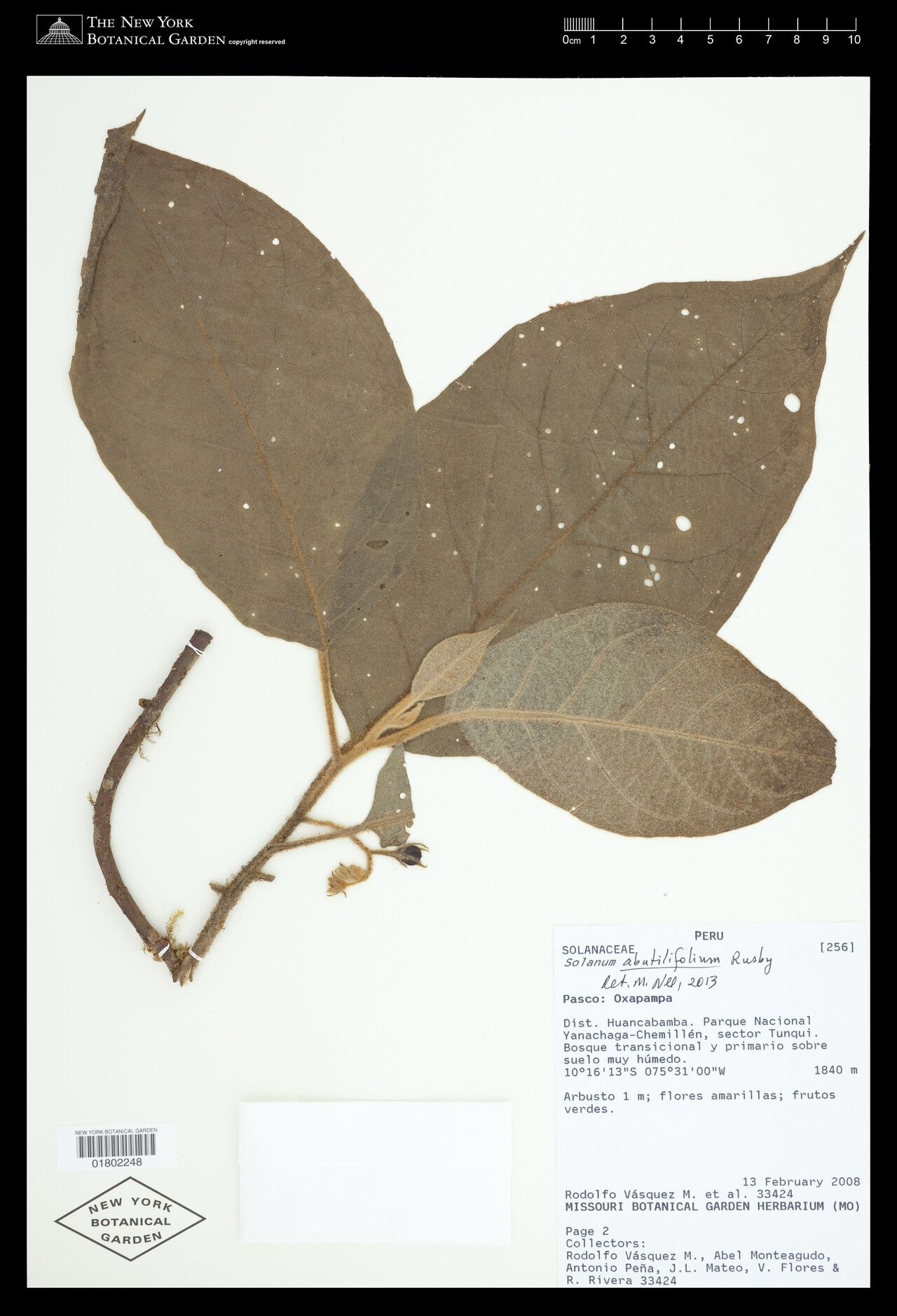
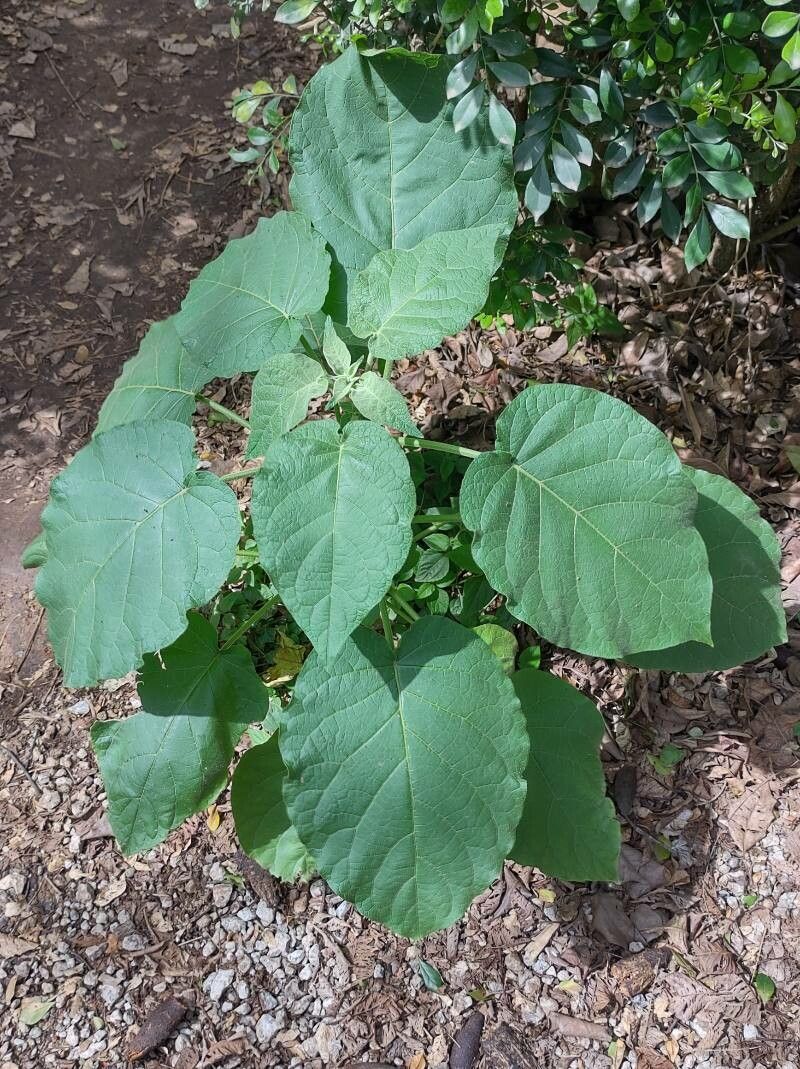
Forest nightshade is resistant to disease and is generally not prone to illnesses. Regarding care, this plant is fairly low-maintenance. Planted outdoors, it needs only minimal watering, and larger specimens typically do not require pruning. Smaller plants, however, should be trimmed after they finish blooming. Forest nightshade is suitable for anyone who has an outdoor area, such as a garden or deck, and does not demand much experience in plant care.
How to keep Solanum Nudum.
Light
Forest nightshade needs plenty of sunlight to stay healthy and thrive, although it tolerates spots where light is somewhat diffused. Its native habitat is open areas with strong sun exposure. Both too much and too little sunlight can hinder its optimal growth.
Water
Forest nightshade flourishes in humid conditions by efficiently absorbing moisture from its environment. It prefers soil that remains consistently moist, though it can tolerate brief dry periods. When watering, aim for every 2-3 weeks. If grown outdoors, the plant benefits from natural rainfall. To maintain humidity and support its evergreen foliage, misting is also recommended.
Temperature
Forest nightshade comes from tropical areas where the climate is generally warm and humid. Therefore it is well adapted to high temperatures and moisture. It does not tolerate sudden temperature shifts and prefers a steady thermal environment, so avoiding temperature fluctuations indoors is important. It usually cannot withstand cold and needs warmer conditions to develop. If the surrounding temperature becomes too low, the plant may stop growing or even die.
Fertilizer
Providing fertilizer is essential for caring for Forest nightshade. Consistent feeding during the growing season preserves the energy necessary for its showy foliage and encourages overall growth. Failing to fertilize can lead to unhealthy leaves, reduced ornamental value, and stunted or weak growth that is prone to breaking.
Pruning
Forest nightshade is a fast-growing shrub known for its vibrant purple flowers and toxic berries. To maintain its health and manage its growth, prune the plant in winter. Remove no more than one-third of its branches during pruning. This process improves airflow and light penetration, helping to control its invasive nature and contributing to a robust and attractive plant.
Botanical profile.
- Plant Type
- Tree, Shrub
- Life Cycle
- Perennial
- Genus
- Solanum
- Family
- Solanaceae
- Hardiness Zone
- 9-11
- Mature Height
- 1.52 m to 3.05 m
- Mature Spread
- 49 cm to 91 cm
- Leaf Color
- Green, Dark Green
- Leaf Type
- Evergreen
- Flower Color
- White
- Flower Size
- 0.76 cm to 1.02 cm
- Bloom Time
- Late spring, Summer, Early fall
- Planting Time
- Spring, Summer, Autumn
- Harvest Time
- Late summer, Fall
- Native Area
- Belize, Honduras, Mexico, Guatemala, Peru, Panama, Jamaica, Colombia, Cuba, Bolivia, Venezuela, El Salvador, Nicaragua, Ecuador, Costa Rica
Other names.
Reader questions.
How should I water my Forest nightshade plant?
Your Forest nightshade is not very particular about how you water it. You can use any common watering tool, such as a watering can, hose, or even a cup, to moisten the soil. It is important to water the plant directly on the soil, making sure all areas receive equal moisture for the entire root system. Using filtered water is recommended, as tap water may contain harmful particles for the plant. It's also beneficial to use water at or slightly above room temperature, as extreme temperatures can shock the Forest nightshade. However, this plant generally responds well to any water you provide.
What are the sunlight requirements for Forest Nightshade?
Forest Nightshade thrives in abundant sunlight, crucial for its health and flourishing. It requires full sun, which means it needs above 6 hours of sunlight, but can also tolerate partial sun, about 3-6 hours of sunlight. The original habitat of Forest Nightshade corresponds to open spaces with significant solar incidence, suggesting that both excessive and inadequate sunlight may impede its ideal growth.
What is the botanical name of Forest nightshade?
The botanical name of Forest nightshade is Solanum nudum.
What should I do if I give my Forest nightshade plant too much water or too little water?
Outdoor plants, especially newly planted ones or seedlings, can often suffer from insufficient watering. It's important to remember to water them adequately for the first few months, particularly when the plant is small or recently planted. Once the roots are established, the Forest nightshade can rely on rain for most of its water needs. If you have a potted Forest nightshade, be careful not to overwater it. In case you accidentally do, there are steps you can take to remedy the situation. First, stop watering the plant immediately to minimize the impact of overwatering. Next, remove the Forest nightshade from its pot to inspect the roots. If you find that the roots are not showing any signs of rot, you can return the plant to its container. However, if you do notice signs of root rot, trim the affected roots and consider applying a fungicide to prevent further damage. Finally, repot the Forest nightshade in well-draining soil. On the other hand, if your Forest nightshade is underwatered, simply increase the frequency of watering. This is often an easy fix as the leaves will droop, dry out, and fall off when the plant lacks water. Once you water it sufficiently, the leaves will quickly regain their fullness. It's important to adjust your watering frequency as soon as you notice underwatering occurring.
What is the warning about sunlight for garden plants?
The warning about sunlight for garden plants advises to watch how sunlight gracefully moves through your garden. This is to select spots that provide the perfect balance of light and shade for your plants, ensuring their happiness. It's essential to observe the plants' environment to ensure they receive the right amount of sunlight for optimal growth.
Are there any essentials, symptoms, or additional information provided for Forest nightshade?
No, there are no details provided about the essentials, symptoms, or additional information for Forest nightshade.
How frequently should I water my Forest nightshade?
If your area doesn't get a lot of rainfall, you may need to water your outdoor plants every 2 weeks in the spring and fall, and more frequently in the summer. In the winter, when plants need less water, you can water them less often or not at all. However, if your Forest nightshade is young or newly planted, you should water it more frequently to help it establish. For potted plants, you have two options for determining how often to water your Forest nightshade. One option is to set a regular watering schedule, such as once every week or every other week. Keep in mind that this may not always be the best approach, as it doesn't consider the specific conditions of your growing environment. Another option is to check the moisture levels of the soil. Wait until the top two to four inches of soil have completely dried out before watering again. This method is especially important during the summer when the plant needs more water.
How can artificial lighting benefit indoor plants?
Artificial lighting is vital for indoor plants, especially when natural sunlight is insufficient, like in winter or less sunny spaces. Artificial lights, such as LED lights, can be customized to provide specific wavelengths needed by the plants. Full sun plants require 30-50W/sq ft, partial sun plants need 20-30W/sq ft, and full shade plants need 10-20W/sq ft of artificial light. Place the light source 12-36 inches above the plant and mimic natural daylight hours, typically 8-12 hours of light per day, to promote faster, healthier growth.
How much water does my Forest nightshade plant need?
To water your Forest nightshade effectively, you don't always need to give it a lot of water. If only a few inches of soil have dried since your last watering, you can support healthy growth by giving it about five to ten ounces of water each time. You can also determine how much water to provide based on the moisture level of the soil. Keep track of how many inches of soil have dried out between waterings. To ensure your Forest nightshade gets enough moisture, water it enough to moisten all the dry soil layers since the last watering. If more than half of the soil has dried out, give it more water than usual. Keep watering until you see excess water draining from the pot's drainage holes. If your Forest nightshade is planted in a rainy outdoor area, it may not need extra watering. When it's young or establishing, make sure it receives 1-2 inches of rain per week. As it grows, it can rely solely on rainwater. Only if there is a hot weather period with no rainfall for 2-3 weeks should you consider giving it a full watering to prevent stress.
What symptoms indicate Forest Nightshade is getting insufficient light?
Symptoms of insufficient light in Forest Nightshade include small leaves, leggy or sparse growth, faster leaf drop, slower or no new growth, and lighter-colored new leaves. These signs indicate the plant is not receiving enough sunlight, affecting its health and growth. Additionally, chlorosis, sunscald, leaf curling, wilting, and leaf scorching can occur from excessive sunlight, showcasing the delicate balance needed for optimal plant health.
How can I know if I'm giving enough water to my Forest nightshade plant?
The Forest nightshade commonly experiences problems with overwatering, which can be identified by a few signs. Typically, an overwatered Forest nightshade will have yellowing leaves and may shed some. Additionally, overwatering can cause the plant's structure to shrivel and may lead to root rot. Alternatively, an underwatered Forest nightshade will also show signs of wilting and may have brown or brittle leaves. If you notice any signs of overwatering or underwatering, it is important to take action and restore the health of your Forest nightshade.
What solutions are available for Forest Nightshade receiving insufficient sunlight?
To address insufficient sunlight for Forest Nightshade: Indoors, gradually move plants to sunnier locations to ensure at least 6 hours of direct sunlight daily, or use artificial light for at least 8 hours daily if moving the plant isn't feasible. Outdoors, relocate your plants to sunnier spots gradually to prevent sunburn. In general, reducing obstructions like pruning trees can help, and for smaller plants, consider transplanting during their dormant period to a location with more sunlight and good drainage. Note that parts of the plant affected by low light may not recover, but new growth should be healthy after adjusting light exposure.