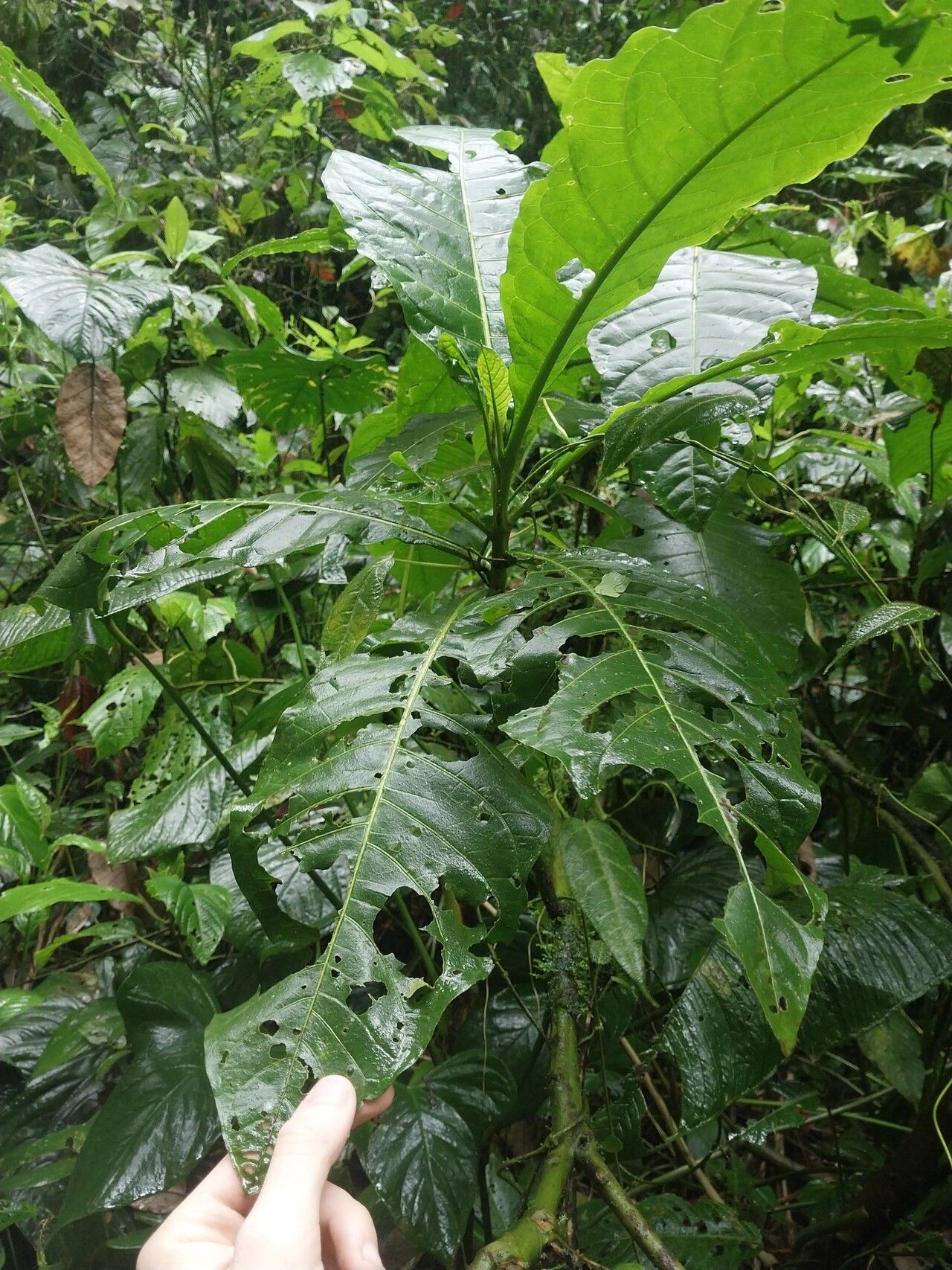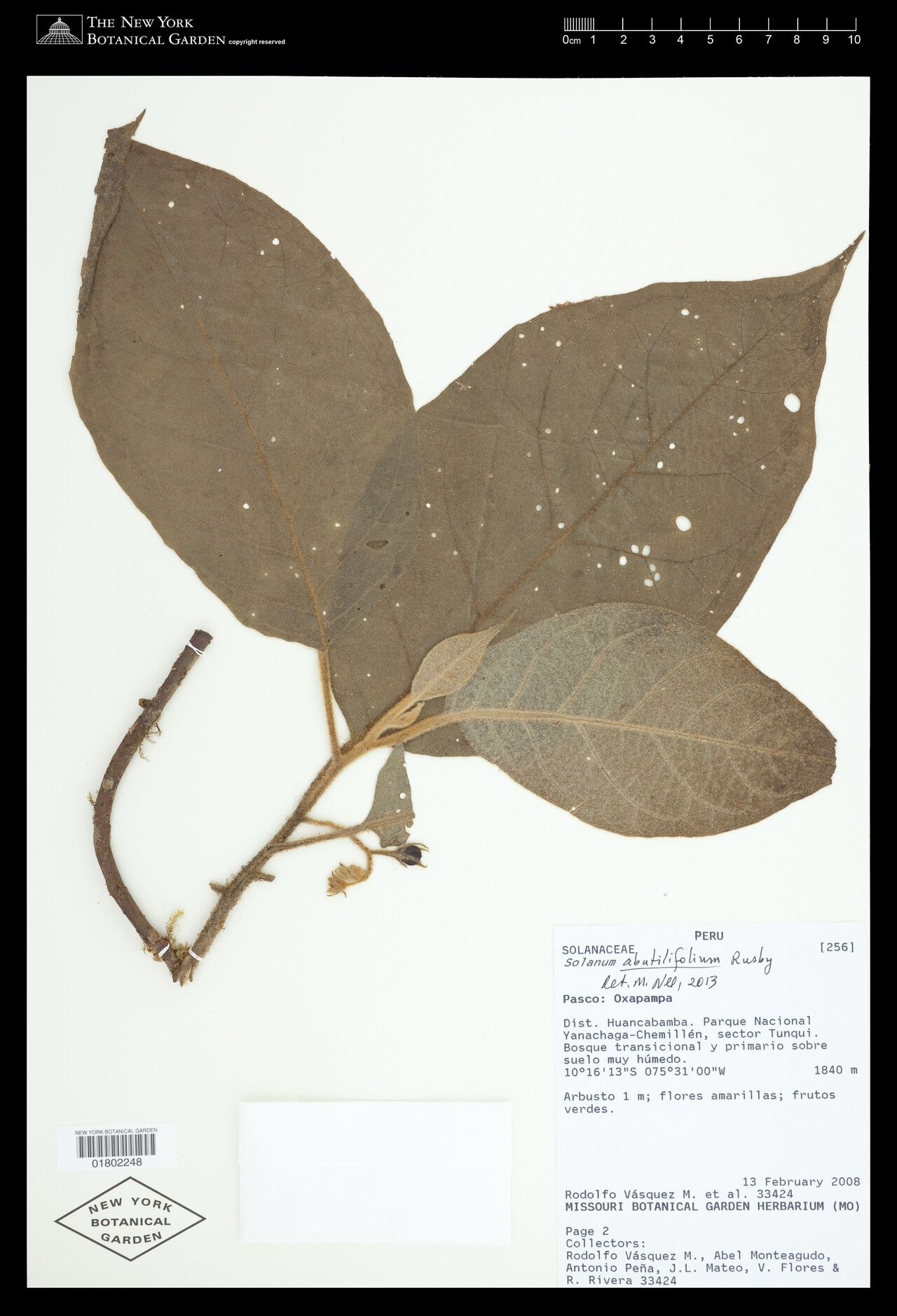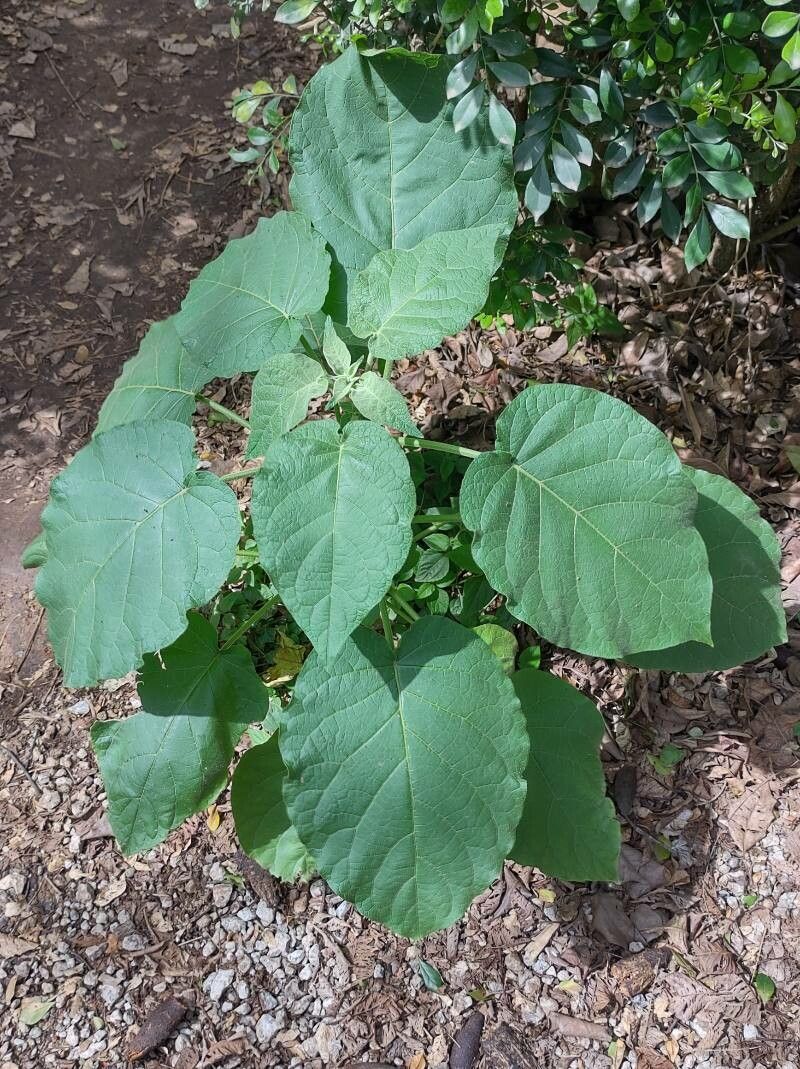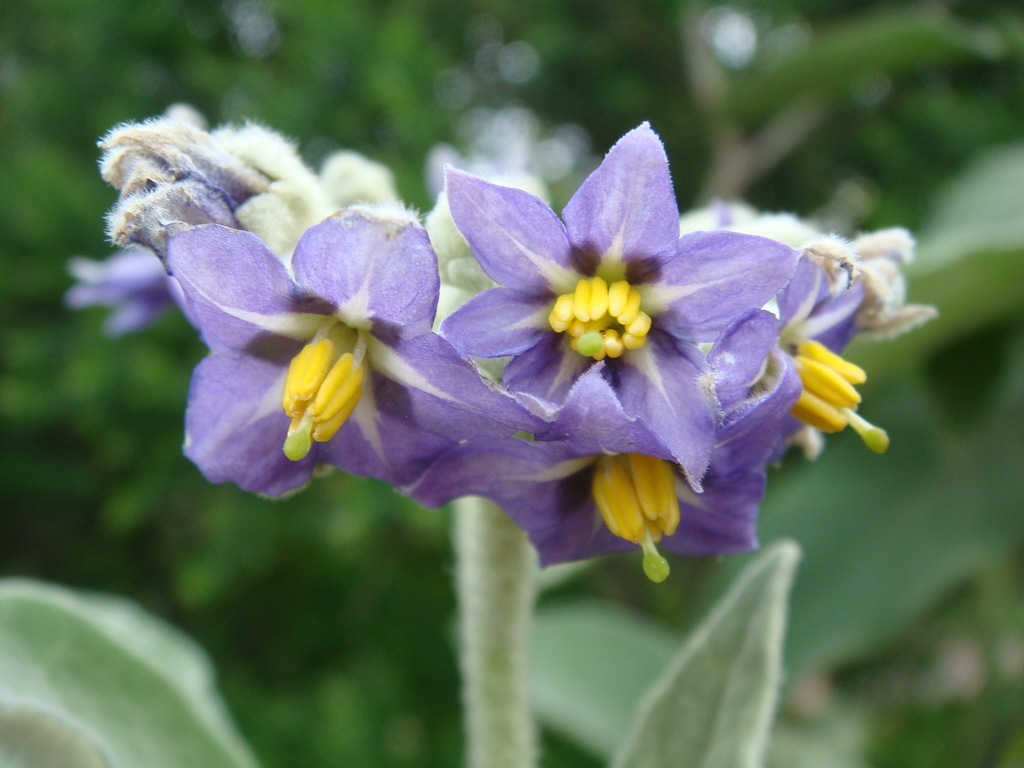
Solanum mauritianum, commonly known as Bugweed or Tree Tobacco, is a fast-growing evergreen shrub that belongs to the Solanaceae family. Native to South America, it has spread to various parts of the world, including Africa and Asia. The plant can reach up to 10 meters in height and features a dense canopy of dark green, slightly hairy leaves.
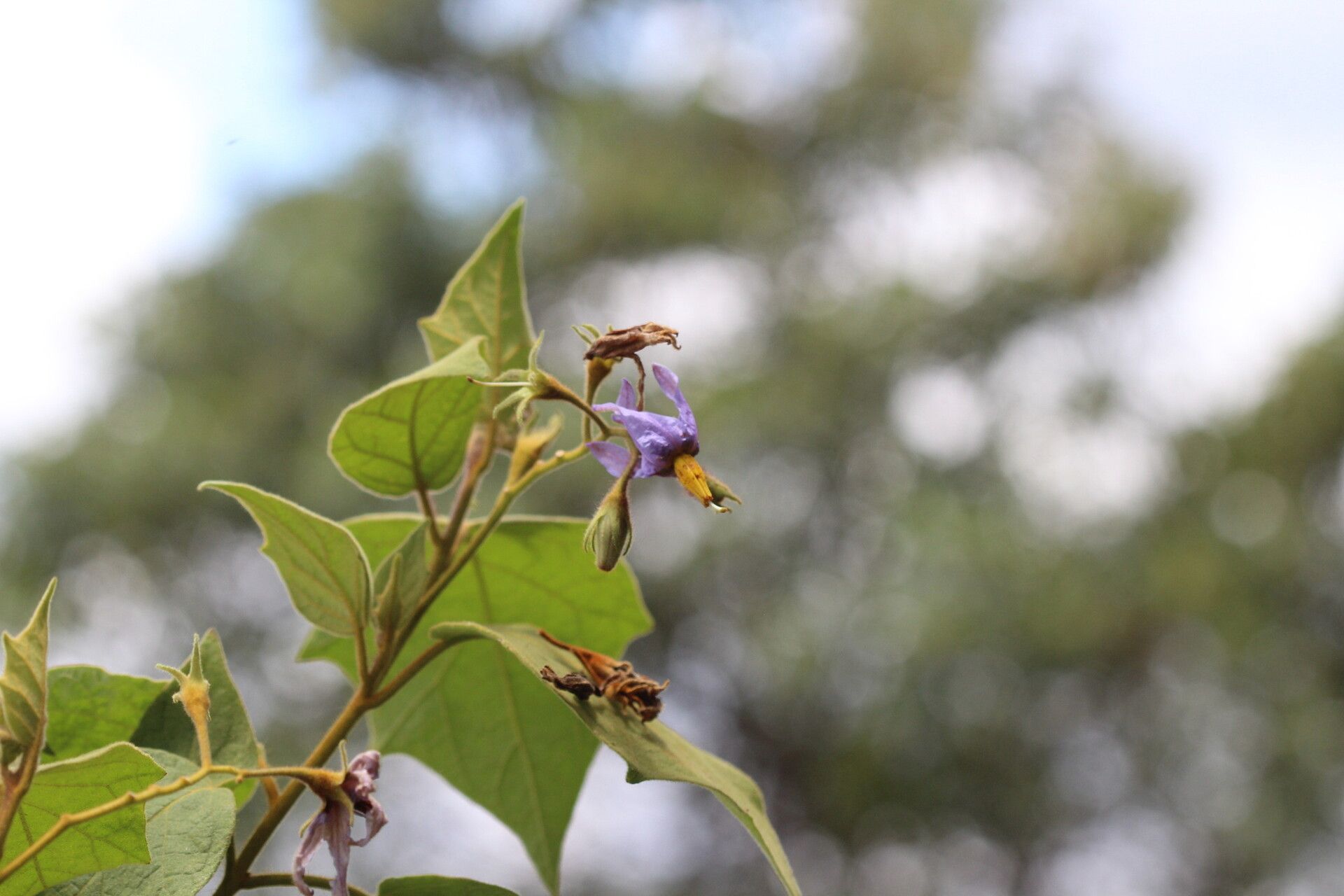
Bugweed produces small flowers that are either white or purple, followed by small green berries that turn yellow when ripe. Known for its medicinal properties, the plant contains alkaloids such as solanine, which have been used in traditional medicine to treat ailments like asthma, bronchitis, and rheumatism.
However, Solanum mauritianum is also considered an invasive species due to its rapid growth in disturbed areas such as roadsides and forest edges. It competes with native vegetation for resources, leading to reduced biodiversity.
Solanum mauritianum, commonly known as ear-leaved nightshade, is an invasive species that poses significant challenges in non-native environments, including disturbed areas, coastal regions, and riparian zones. It thrives particularly in high rainfall regions, such as those found in South Africa. This plant can grow in various soil types, which allows it to outcompete native vegetation and negatively impact forestry activities. FUN FACT · FROM THE LIBRARY
In summary, while Solanum mauritianum offers some medicinal benefits, it should be managed carefully to prevent its invasive spread in non-native ecosystems.
The ear-leaved nightshade, also known as tobacco bush, tobacco bush weed, tobacco weed, wild tobacco, or wild tobacco-tree, is scientifically referred to as Solanum mauritianum. The plant is characterized by its fairly large, hairy, oval-shaped leaves. However, it gets its name from the small, stemless, ear-shaped leaves found at the base of the larger leaves. The variety of tobacco-related names for the plant are commonly used in casual conversation.
Sticky Nightshade has strong resistance to disease and is typically not prone to illnesses. Still, it can be vulnerable to pests and diseases that exist nearby. Such infections tend to be mild. Regarding care, the plant is medium maintenance. It should be pruned regularly to preserve a neat appearance and encourage healthy growth. Applying fertilizer can also encourage more flowering. Sticky Nightshade is appropriate for anyone with outdoor areas like a garden or patio and does not demand extensive gardening experience. It may need extra attention if kept indoors.
How to keep Solanum Mauritianum.
Light
The sticky Nightshade prospers in radiant light throughout the day, which enables healthy growth. During its various growth stages it needs an abundance of sunlight. Coming from habitats where the sun is plentiful, the sticky Nightshade is not averse to excessive illumination. However, a lack of sunlight can impede its proper growth.
Water
Ear-leaved nightshade thrives in well-draining soils with occasional rainfall and is moderately drought-tolerant. Ideally, it should be watered every 2 to 3 weeks, allowing the soil to dry out between waterings. Typically grown outdoors, this plant is resilient in various climates and requires less frequent irrigation once it is established.
Temperature
Sticky Nightshade originates from regions where temperatures range from 68 to 100.4°F (20 to 38°C). It generally does best in sunny locations with a moderate level of warmth. To mimic its natural habitat, maintain those temperatures. Seasonal adjustments may be necessary.
Fertilizer
When most of Sticky Nightshade’s blooms have opened to full size, resume fertilizing. At the height of flowering, apply fertilizer every three to four weeks, weather permitting. Then, once Sticky Nightshade begins to produce fewer new blooms, stop fertilizing — there’s no need to feed the plant when it can’t produce additional flowers.
Botanical profile.
- Plant Type
- Herb
- Life Cycle
- Annual, Perennial, Biennial
- Genus
- Solanum
- Family
- Solanaceae
- Hardiness Zone
- 6-11
- Mature Height
- 0.91 m to 1.52 m
- Mature Spread
- 49 cm to 91 cm
- Leaf Color
- Green
- Leaf Type
- Semi-evergreen
- Flower Color
- White
- Flower Size
- 3.56 cm to 5.08 cm
- Bloom Time
- Late spring, Early summer, Mid summer
- Planting Time
- Spring, Summer, Autumn
- Harvest Time
- Summer
- Native Area
- Uruguay, Colombia, Paraguay, Argentina, Bolivia, Peru, Brazil, Ecuador
Other names.
Reader questions.
How should I water my Ear-leaved nightshade plant?
Your Ear-leaved nightshade is not particular about how you water it. You can use any common watering device, like watering cans, hoses, or cups. It's best to water this plant by applying the water directly to the soil. Make sure all areas of the soil are equally moistened to provide water to all parts of the root system. Using filtered water is helpful as tap water may have harmful particles. It's also recommended to use water that is at or slightly above room temperature to avoid shocking the plant. However, the Ear-leaved nightshade generally does well with any type of water.
What are the sunlight requirements for Ear-leaved nightshade?
The Ear-leaved nightshade, or Solanum mauritianum, thrives best in full sun conditions, requiring more than 6 hours of sunlight daily. It can also grow well under partial sun, with about 3-6 hours of sunlight. It's essential to monitor the movement of sunlight through your garden to find spaces that provide an optimal balance of light and shade, ensuring your plant's well-being. Originating from areas with abundant sunlight, the Ear-leaved nightshade benefits significantly from prolonged sun exposure, as it promotes the plant's health. However, insufficient sunlight can hinder its growth and vitality.
What is the ideal temperature range for Ear-leaved nightshade (Solanum mauritianum)?
Ear-leaved nightshade, scientifically known as Solanum mauritianum, thrives best in a temperature range of 68 to 100 °F (20 to 38 °C). This plant is native to temperate regions and prefers warm climates. To ensure optimum growth, it's crucial to maintain its preferred temperature, especially during cooler seasons by mimicking its natural warm environment. During winter, maintaining temperatures above 20°C is beneficial for the plant, and it is recommended to keep the plant indoors, away from cold temperatures that can cause harm, ensuring it's placed near a bright window but at a safe distance from heaters.
What should I do if I give my Ear-leaved nightshade plant too much or too little water?
Outdoor plants, especially newly planted ones or seedlings, can often suffer from a lack of watering. It is important to ensure consistent watering for the first few months, especially when the plant is small or recently planted. Once the roots are established, Ear-leaved nightshade can rely on rainwater most of the time. When you have an Ear-leaved nightshade in a pot, overwatering tends to be a common issue. If you accidentally overwater your plant, it is important to address the situation promptly. First, stop watering the plant immediately to minimize the impact of overwatering. Next, remove the Ear-leaved nightshade from its pot to check its roots. If there are no signs of root rot, you can return the plant to its container. However, if you do find any affected roots, trim them away and consider applying a fungicide to prevent further damage. Finally, repot the Ear-leaved nightshade in soil that drains well. In the case of underwatering, the solution is relatively simple. If the plant is underwatered, its leaves may become droopy, dry, and fall off. Once sufficient watering is provided, the leaves will quickly return to their fullness. Therefore, it is essential to adjust your watering frequency promptly if you notice underwatering occurring.
How do indoor Ear-leaved nightshade plants benefit from artificial lighting?
Indoor Ear-leaved nightshade plants require sufficient lighting to achieve optimal growth, especially in conditions where natural sunlight is inadequate, such as during winter or in less sunny spaces. Artificial lights, including LEDs which can be tailored to provide specific light wavelengths needed by plants, offer an effective solution. For plants needing full sun, 30-50W per square foot of artificial light is recommended, whereas partial sun plants require 20-30W, and full shade plants need 10-20W. The light source should be placed 12-36 inches above the plant to simulate natural sunlight effectively, and the lighting should be maintained for 8-12 hours per day to mimic the natural daylight hours a plant would receive outdoors.
How should I care for my Ear-leaved nightshade in cold weather?
In cold weather, Ear-leaved nightshade should be carefully protected from low temperatures as it prefers warmth, thriving above 20°C and needing to be kept above 0°C during winter. If temperatures fall to -5°C, the plant's leaves may lighten in color, and frost damage may cause them to turn brown or black with symptoms such as wilting and drooping appearing. To care for your plant in such conditions, trim off the frost-damaged parts and immediately move it to a warmer indoor location. It is best placed near a south-facing window for ample sunlight, but ensure it is not too close to heaters or air conditioning vents to avoid air dryness.
How often should I water my Ear-leaved nightshade plant?
Most outdoor plants can grow naturally with rainfall. If your area lacks rainfall, water your plants adequately every 2 weeks in spring and fall. Water more frequently in summer when plants need more hydration. In winter, when growth slows down and plants require less water, water sparingly or not at all. Young or newly planted Ear-leaved nightshade plants need more frequent watering to help them establish and become more adaptable and drought tolerant. For potted plants like the Ear-leaved nightshade, there are two main ways to determine watering frequency. One way is to follow a set schedule, watering about once a week or every other week. However, this approach may not work well as it doesn't consider the specific growing conditions for your plant. Another option is to base watering frequency on soil moisture. Typically, it's best to wait until the top two to four inches of soil, about ⅓ to ½ depth of the pot, have completely dried out before watering again. Keep in mind that during summer, when the plant's water needs are highest, a predetermined watering schedule may not be sufficient.
What are the symptoms of insufficient sunlight in Ear-leaved nightshade?
Symptoms of insufficient sunlight in Ear-leaved nightshade include smaller new leaves, leggy or sparse growth, faster leaf drop, slower or halted growth, and leaves with lighter colors or irregular patterns indicating a lack of chlorophyll. Furthermore, chlorosis, or the yellowing of leaves due to chlorophyll breakdown, sunscald presenting as pale or necrotic spots on the plant, leaf curling as a defense against excessive sunlight, wilting due to water loss, and leaf scorching marked by brown or crispy leaf edges can also occur. These symptoms reflect the plant's struggle with inadequate light exposure and suggest the need for remedial action to improve light access.
What should I do if my Ear-leaved nightshade experiences high temperatures?
Ear-leaved nightshade should ideally be kept below 100°F (38°C) during summer to avoid heat stress. If temperatures exceed 107°F (43°C), the plant may show signs of stress such as lighter leaf color and susceptibility to sunburn. In such cases, you should trim away the sunburned and dried-up parts of the plant. Then, move it to a shaded location, particularly to protect it from the midday and afternoon sun. It's also critical to water the plant in the morning and evening to maintain soil moisture, ensuring the plant remains healthy even during high temperatures.
How much water does my Ear-leaved nightshade plant need?
When watering your Ear-leaved nightshade, it usually doesn't require a large amount of water. If only a few inches of soil have dried since the last watering, you can give it about five to ten ounces of water. You can also determine the water volume based on how dry the soil is. If more than half of the soil is dry, you should give it more water than usual until excess water drains out of the pot's drainage holes. If the plant is planted outside and receives plenty of rain, it may not need additional watering. When the plant is young or still establishing, give it 1-2 inches of rain per week. As it grows, it can rely on rainwater unless there is a drought for 2-3 weeks without rainfall, in which case it could use a full watering to prevent stress.
How can you improve the light conditions for Ear-leaved nightshade?
To enhance light conditions for Ear-leaved nightshade, consider gradually moving the plants to sunnier locations, ensuring they receive at least 6 hours of direct sunlight daily. Utilize south-facing windows and keep curtains open during the day for maximum sunlight exposure indoors. When outdoor or ground planting, minimize obstructions like overhanging branches to increase sunlight accessibility. For indoor plants too large to move easily, artificial lighting such as desk, ceiling lamps, or professional grow lights can provide additional light needed for plant health. If relocating plants, do so during their dormant period for the best outcome, and be mindful that while parts of the plant affected by insufficient sun may not recover, new growth should be healthy following these adjustments.
How do I know if I'm giving enough water to my Ear-leaved nightshade?
The Ear-leaved nightshade commonly faces issues with overwatering, which can be identified by yellowing leaves, leaf drop, shriveling plant structure, and potential root rot. Conversely, an underwatered Ear-leaved nightshade will wilt and have brown or brittle leaves. Regardless of overwatering or underwatering signs, it is important to take action and restore the plant's health.