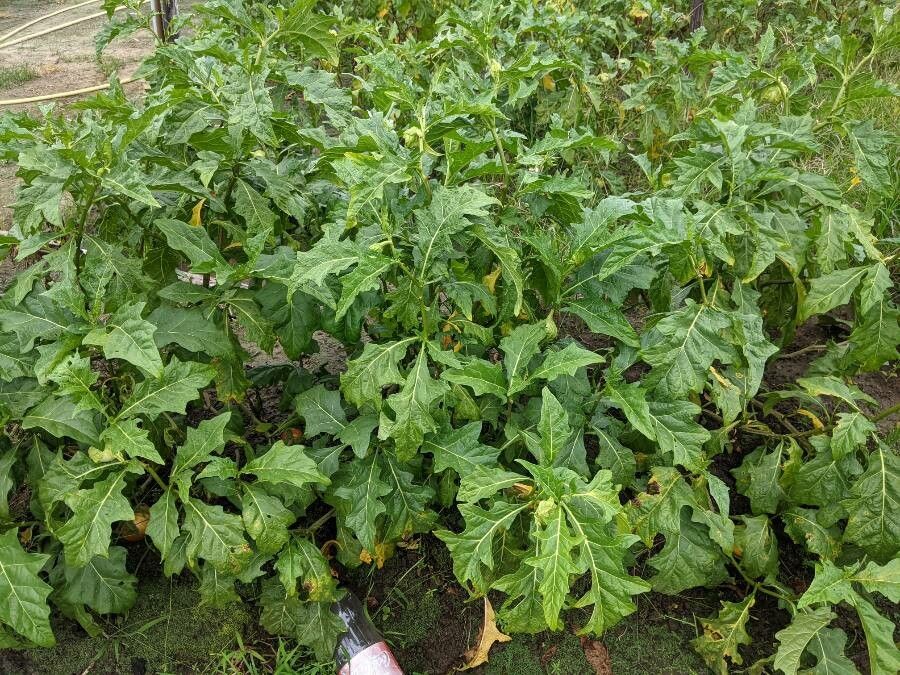
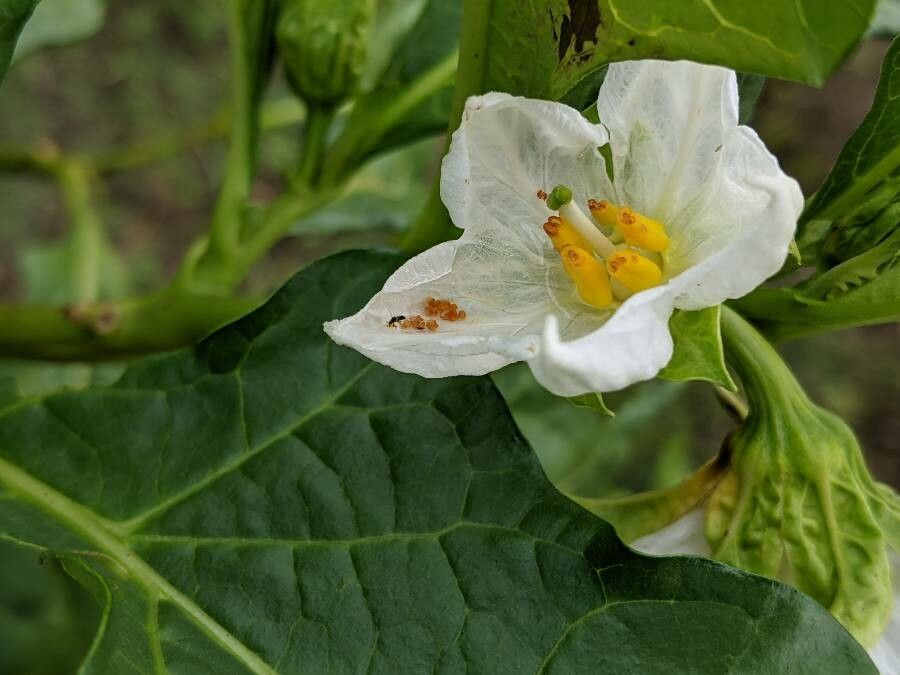
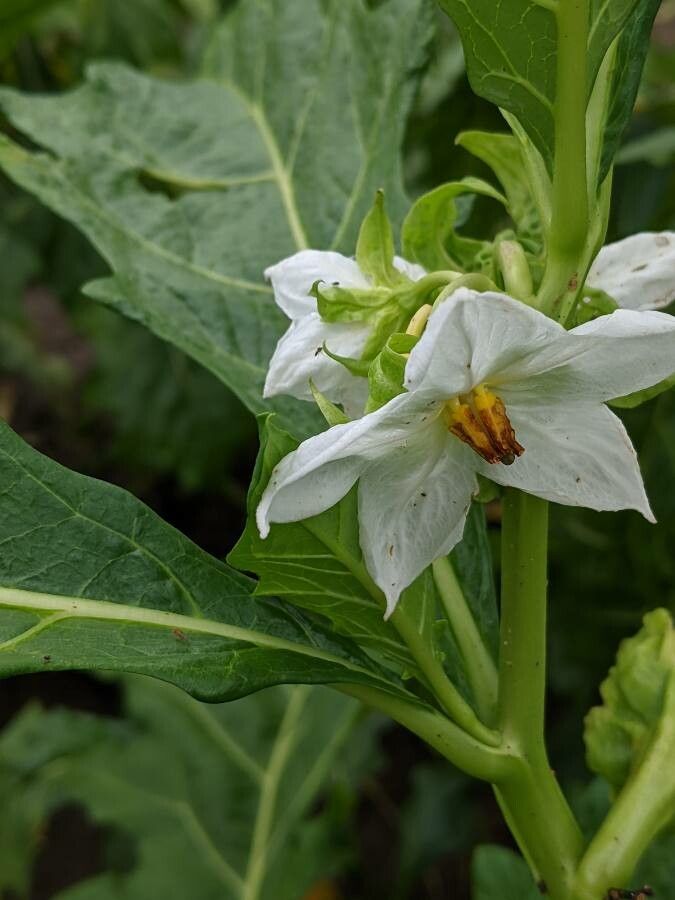
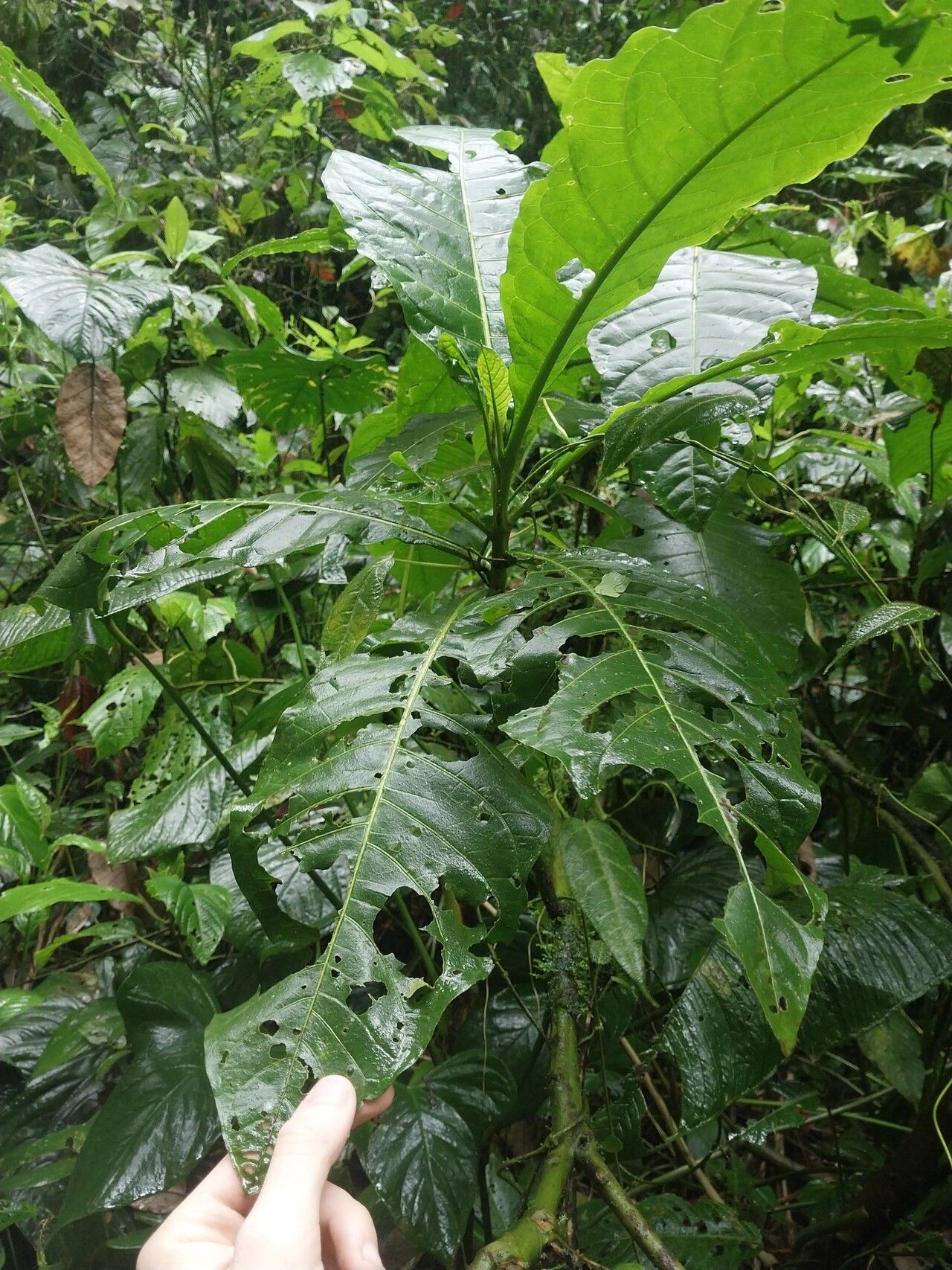
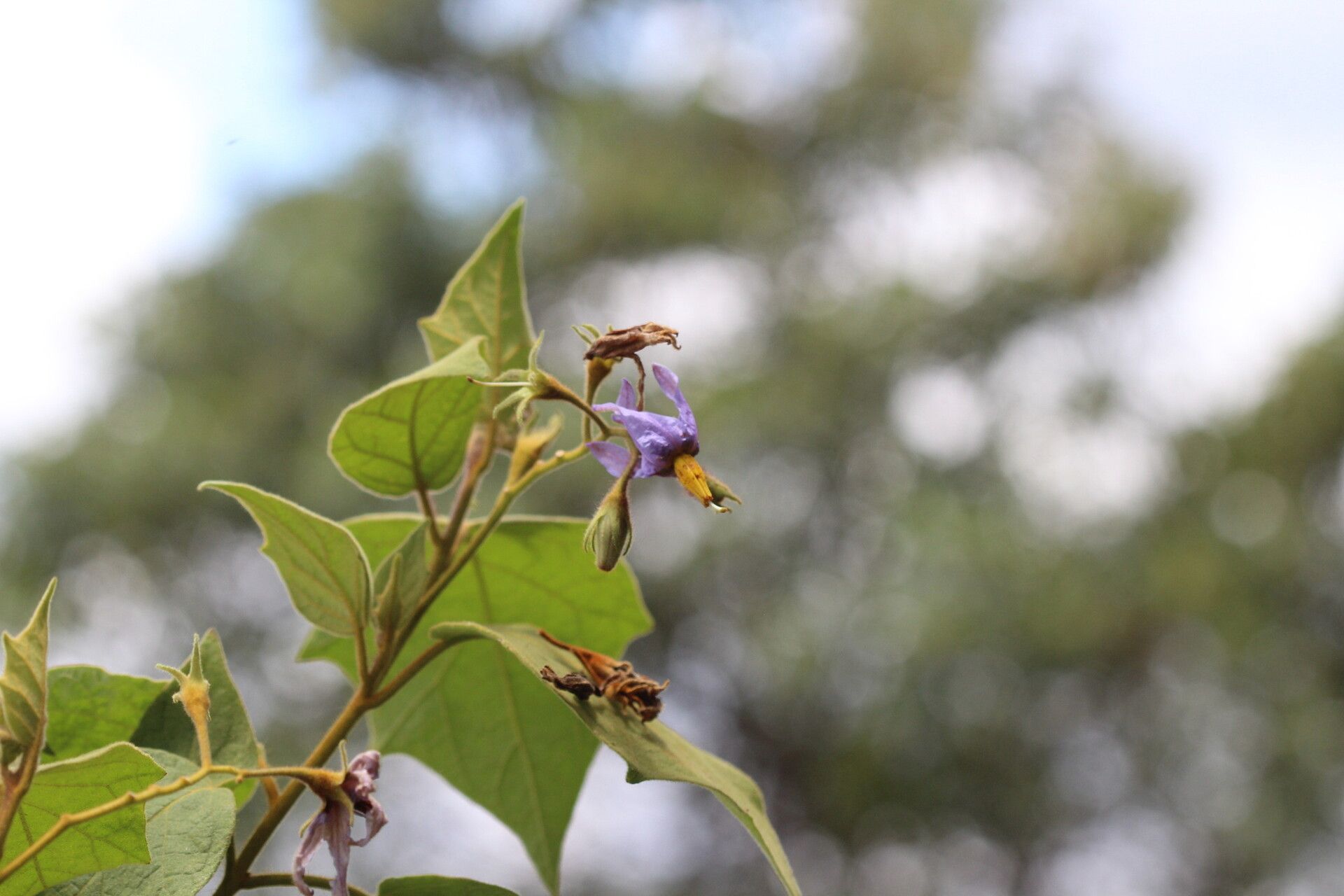
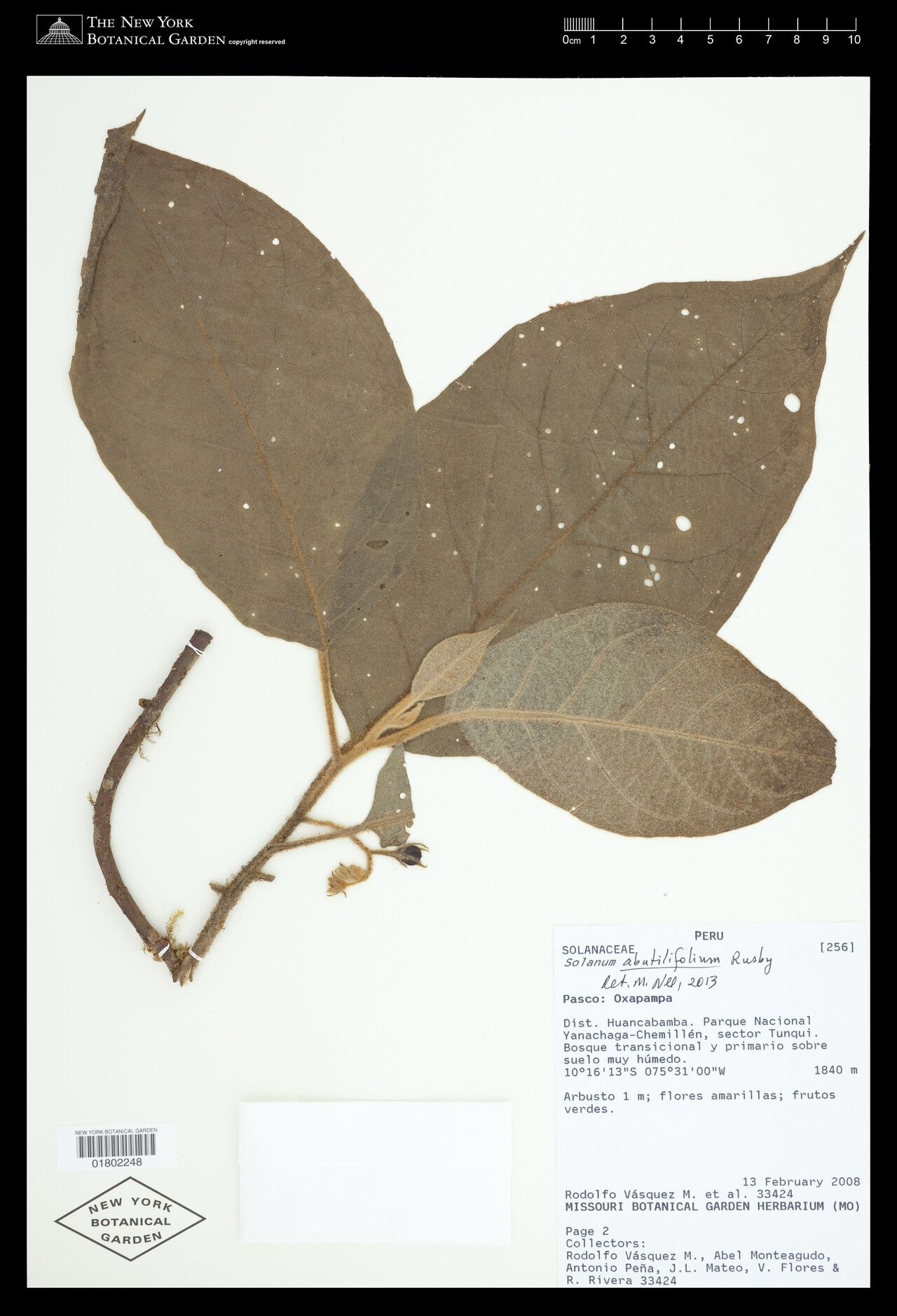
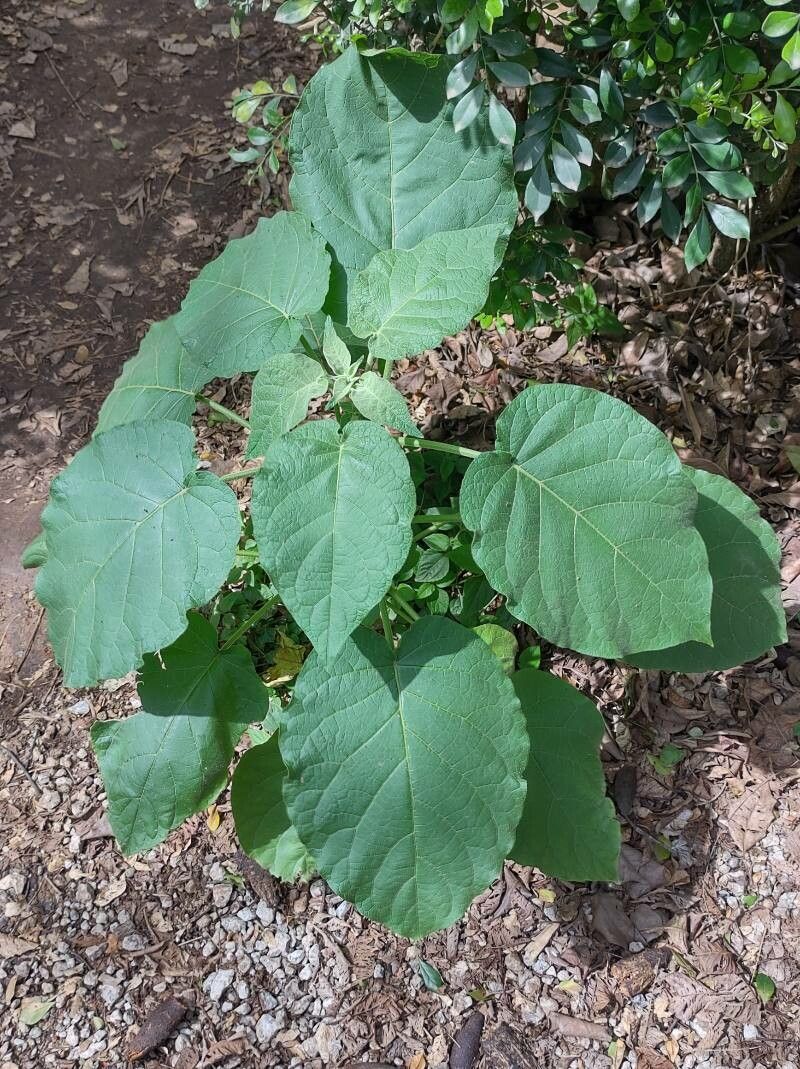
Solanum macrocarpon otherwise known as the African eggplant (Yoruba: Igba) (Igbo language/ Igbo): añara) , Surinamese eggplant (Sranang Tongo: Antroewa) or Vietnamese eggplant (Vietnamese: cà pháo) is a plant of the family Solanaceae. S. macrocarpon is a tropical perennial plant that is closely related to the eggplant. S. macrocarpon originated from West Africa, but is now widely distributed in Central and East Africa. The plant also grows in the Caribbean, South America, and some parts of Southeast Asia. S. macrocarpon is widely cultivated for its use as a food, its medicinal purposes, and as an ornamental plant.
The Quito orange displays moderate resistance to disease and is not highly prone to leaf spot or powdery mildew. It can incur some insect damage, but this is generally mild. Care is considered easy, requiring only regular watering and occasional fertilization. Pruning is typically not required. The Quito orange is suitable for most people to grow outdoors with little upkeep, and it can also be grown indoors with some attention.
How to keep Solanum Macrocarpon.
Light
Quito orange does best with ample sun exposure for vigorous growth. However, it can tolerate lower levels of sunlight without significant harm. This is connected to its native habitat, where sunlight is abundant. Still, too much or too little sun can adversely affect its growth, causing its lush leaves to wilt or become discolored.
Temperature
Quito orange is native to regions with temperatures between 68 and 100 °F (20 to 38 °C). Preferably, quito orange does best in warmer climates and should be kept within that temperature range for ideal growth. Seasonal weather may require adjustments.
Fertilizer
Use organic fertilizers (for example, fish emulsion or compost) instead of chemical fertilizers for Quito orange. Supply young plants with higher nitrogen and phosphorus in spring. Mix compost or fertilizer into the soil before or after planting. For mature plants, add a balanced fertilizer or one targeted to specific deficiencies in spring. Nutrient deficiency produces small leaves, short (stunted) branches, yellow to bronze foliage, acidic (sour) fruit, premature fruit drop, and fruit splitting.
Botanical profile.
- Plant Type
- Shrub
- Life Cycle
- Perennial
- Genus
- Solanum
- Family
- Solanaceae
- Hardiness Zone
- 10-12
- Mature Height
- 1.83 m
- Mature Spread
- 1.83 m
- Leaf Color
- Green, Gray
- Leaf Type
- Evergreen
- Flower Color
- Lavender
- Flower Size
- 3.05 cm to 4.06 cm
- Bloom Time
- All year round
- Planting Time
- Spring, Summer, Autumn
- Harvest Time
- All year round
- Native Area
- Colombia, Honduras, Venezuela, Peru, Costa Rica, Panama
Other names.